Ceuta comes up often when travellers plan a trip between Spain and Morocco, yet its actual role is rarely clear. Where exactly is this city? How does its border crossing with Morocco work? And above all, should you use it when your destination is Tangier, Tetouan or Chefchaouen? This guide answers point by point, with distances, documents and the routes visitors genuinely use.
Where Is Ceuta? Location and Landmarks
A Spanish City on the Southern Shore of the Strait
Ceuta is a Spanish autonomous city set on the north coast of Africa, at the entrance to the Strait of Gibraltar. It has roughly 84,000 inhabitants and occupies a hilly peninsula dominated by Monte Hacho. Around 20 kilometres of sea separate it from the Iberian Peninsula, which explains the fast ferry link from Algeciras in about an hour.
Two practical points are worth knowing before you travel. Ceuta is Spanish territory and therefore part of the European Union, but it sits outside the customs union and the common VAT area: customs checks apply both when entering Morocco and when returning to mainland Spain. It is also not a classic beach destination: people come for a stopover, an errand or a short city visit.
The Neighbouring Moroccan Towns
On the Moroccan side the geography is easy to remember, and it shapes every possible itinerary:
- Fnideq: the Moroccan town immediately south of Ceuta, a few hundred metres from the border post. This is where shared grand taxis and buses leave for the rest of northern Morocco.
- M’diq: a lively seaside resort about twenty kilometres away, very popular with Moroccan families in summer.
- Tetouan: a city of art and history whose medina is a UNESCO World Heritage site, some 40 kilometres to the south.
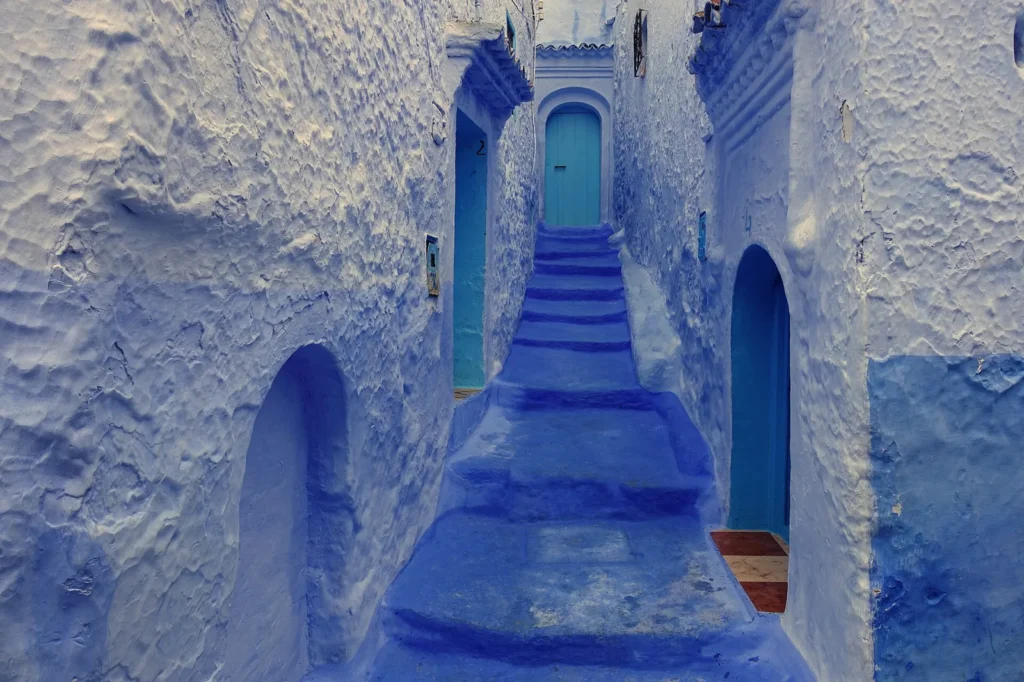
- Chefchaouen: the blue town of the Rif, about 100 kilometres away, reachable in roughly two hours by road from the border area.
- Tangier: the main hub of northern Morocco, about 70 kilometres to the west, with its port, high-speed rail station and international airport.
The Bab Sebta Border Post: How It Works
Location and Access
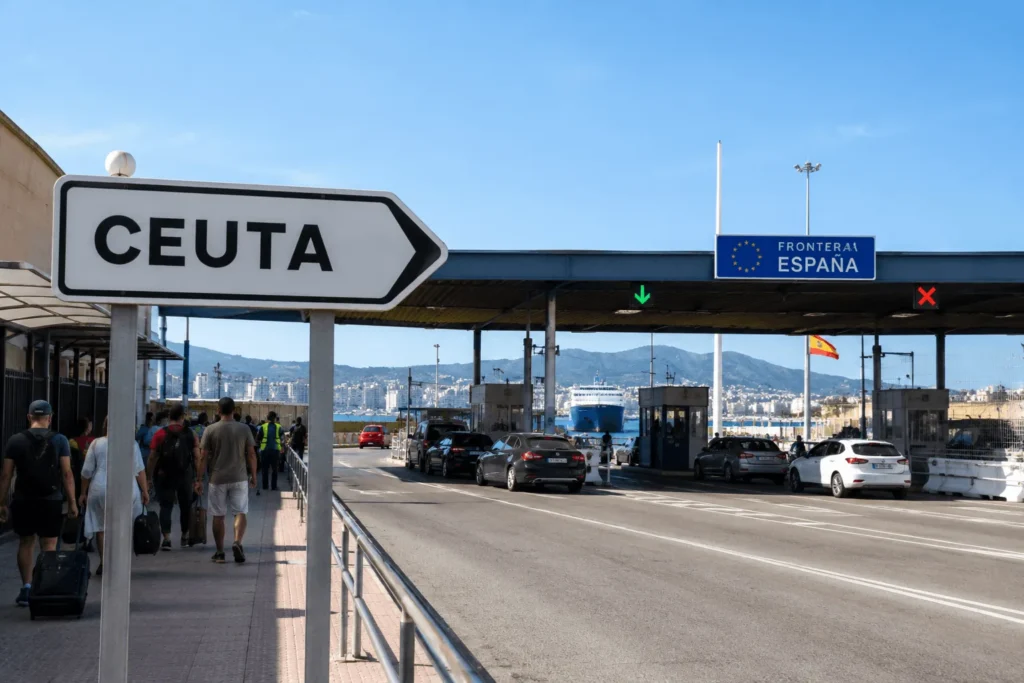
The only official crossing point between Ceuta and Morocco is called Bab Sebta on the Moroccan side and El Tarajal on the Spanish side. It lies at the southern tip of Ceuta, right by the sea, about 3 kilometres from the city centre. From Ceuta you reach it by taxi or on the city bus line that serves the area; there is no rail link.
Most travellers cross on foot, even those arriving by car: pedestrian lanes and vehicle lanes are separate, with their own booths. Once through on the Moroccan side, a short walk of a few dozen metres brings you to the grand taxi rank in Fnideq.
The Formalities to Expect
The formalities are identical to those at any Moroccan entry point, airports included. In practice you need:
- A valid passport. A national identity card is not enough to enter Morocco, even when arriving from Spanish territory.
- An entry form to complete on the Moroccan side (identity, purpose of stay, accommodation address). It is handed out on the spot; bringing a pen saves time.
- An entry stamp from the border police, together with an entry number you must keep until you leave the country.
- For nationals of the European Union, the United Kingdom, Switzerland, Canada and the United States, no visa is required for a tourist stay of under 90 days. Other nationalities should check beforehand: our guide to Morocco visa and entry requirements covers each case.
If you cross with a foreign-registered vehicle, two extra documents are required: proof of insurance valid in Morocco (a green card extended to the country, or a policy bought at the border counter) and a temporary vehicle import declaration, completed on site and handed back when you leave. Moroccan customs checks focus on the quantities of goods carried, so read up first with our article on Morocco customs and what you can bring.
Waiting Times and Crowds
Crossing times vary enormously with the hour and the season. Early on a weekday morning, clearing both sets of controls can take twenty to thirty minutes. Late in the day, at weekends, during Spanish school holidays or on the big summer return dates, the wait is easily counted in hours, especially in the vehicle lane.
Opening hours and procedures at the post can be adjusted by the authorities on either side. That is why you should never plan a flight, a ferry or a hotel booking around an optimistic estimate: check the state of the crossing with your accommodation or the local authorities the day before, and leave a comfortable margin.
Who Actually Uses This Crossing?
The Travellers Concerned
Bab Sebta accounts for a very small share of tourist entries into Morocco. The travellers who genuinely use it fall into a few profiles:
- Ceuta residents who travel regularly into northern Morocco for family, work or business reasons.
- People from southern Spain who combine a trip to Ceuta with a day in Tetouan or M’diq.
- Overland travellers driving down through Andalusia by car or camper van who prefer to enter Morocco from the north-east rather than via Tangier.
- Road-trip enthusiasts heading straight for the Mediterranean coastal route towards Al Hoceima and Nador.
Travellers Who Are Not Affected
The vast majority of international visitors have no reason to think about Ceuta at all. That applies if you fly into Marrakech, Casablanca, Agadir, Fes, Rabat or Tangier: you are hundreds of kilometres away, and your formalities are handled at the airport police desk. It also applies if you cross the strait by ferry to Tanger Med or Tangier City, if you travel on an organised tour, or if you are coming for business in Casablanca or Rabat. No classic tourist itinerary passes through Ceuta.
Getting to Morocco from Spain: the Ferry Is the Real Option
For almost every traveller, the simple and quick way to reach Morocco from Spain is the ferry across the Strait of Gibraltar. Two routes dominate, and they suit very different needs.
Tarifa to Tangier City: Best Without a Car
The Tarifa to Tangier City crossing takes about an hour and drops passengers at Tangier City port, a few minutes on foot from the medina and the seafront. It is by far the best option for a traveller without a vehicle: you step off the boat and you are already in town. Departures are frequent during the day and thinner out of season, and Moroccan police checks are often carried out on board during the crossing, which saves time on arrival.
Algeciras to Tanger Med: Best With a Vehicle
The Algeciras to Tanger Med route takes around an hour and a half and arrives at a large freight and passenger port some forty kilometres east of Tangier. It offers the highest number of daily sailings, including overnight ones, and handles cars, camper vans and trailers without difficulty. From Tanger Med, shuttles, grand taxis and trains connect to Tangier; the port is also the natural starting point for Tetouan and Chefchaouen.
Booking and Boarding Without Stress
- Book ahead in July, August and over long weekends: vehicle crossings sell out quickly.
- Arrive at the port at least an hour before departure, two hours with a vehicle.
- Keep your passport and boarding pass to hand: police checks sometimes happen on board, sometimes ashore.
- Carry a few dirhams in cash for your first journeys, as most grand taxis do not take cards.
- Compare the real cost with a direct flight: in some periods a ticket to Tangier or Casablanca works out cheaper than a crossing with a car.
Comparing the Entry Points into Northern Morocco
| Entry point | Time from Spain | Best for | Good to know |
|---|---|---|---|
| Ferry Tarifa – Tangier City | About 1 hr | Foot passengers | Arrival in central Tangier |
| Ferry Algeciras – Tanger Med | About 1 hr 30 | Cars and camper vans | Port 40 km from Tangier |
| Bab Sebta post (Ceuta) | 1 hr ferry then land crossing | Residents and local trips | Highly variable waits |
| Tangier Ibn Battouta Airport | Short flight from Europe | Short stays | Fast formalities |
| Mohammed V Airport, Casablanca | Flights from across Europe | Connections | The country’s largest hub |
Practical Tips for a Trouble-Free Crossing
- Travel early. Weekday morning slots are consistently the smoothest, at the border post as well as at the port.
- Do not rely on your bank card. Withdraw dirhams on arrival; cash machines are plentiful in Fnideq, Tetouan and Tangier.
- Keep every document. Entry form, entry number, vehicle paperwork: losing them complicates your departure from the country.
- Agree grand taxi fares before getting in, or ask for the per-seat price if you are happy to share the car.
- Sort out your medical cover. Travel insurance for Morocco with repatriation cover remains the most useful precaution for a road trip.
- Check the state of the crossing the day before with your hotel, a local agency or the authorities: hours can be adjusted without notice.
What to See on the Moroccan Side
Northern Morocco deserves far more than a quick transit. An hour’s drive from Fnideq brings you to the white medina of Tetouan, one of the best preserved in the country, with its craft workshops and ethnographic museum. The Mediterranean coast between M’diq and Cabo Negro lines up family beaches and marinas that buzz in summer.
Further south, Chefchaouen remains the most photographed stop in the Rif, with its blue lanes and walks out to the Akchour waterfalls. To the west, Tangier combines the Kasbah, Café Hafa, Cap Spartel and the Caves of Hercules, and serves as the departure point for the high-speed line to Rabat and Casablanca. Three to four days is enough to string these four destinations together without rushing.
Summary Table: Does Ceuta Concern You?
| Traveller profile | Concerned by Ceuta? | Recommendation |
|---|---|---|
| Tourist flying into Marrakech, Casablanca or Agadir | No | Nothing to do |
| Tourist arriving by ferry in Tangier | No | Nothing to do |
| Ceuta resident travelling to Morocco | Yes | Check crowds and opening hours |
| Spanish traveller on a day trip | Yes | Leave early, passport required |
| Road trip by car from Andalusia | Possible | Ferry to Tanger Med is often simpler |
| Traveller on an organised tour | No | Nothing to do |
| Business traveller to Casablanca or Rabat | No | Nothing to do |
Frequently Asked Questions About Ceuta and the Border
Where exactly is Ceuta?
Ceuta is a Spanish autonomous city on the north coast of Africa, at the entrance to the Strait of Gibraltar, facing the province of Cadiz. About 20 kilometres of sea separate it from the Iberian Peninsula.
What is the border post with Morocco called?
It is known as Bab Sebta on the Moroccan side and El Tarajal on the Spanish side. It is the only official crossing point, located south of Ceuta, about 3 kilometres from the city centre and a few hundred metres from Fnideq.
Do you need a passport to enter Morocco from Ceuta?
Yes. A valid passport is mandatory, including for Spanish and other European nationals. An identity card does not allow entry into Moroccan territory.
Do you need a visa for Morocco when crossing at Ceuta?
The rules are the same as at airports: no visa for a tourist stay of under 90 days for nationals of the European Union, the United Kingdom, Switzerland, Canada and the United States. Other nationalities should check before travelling.
How long does the border crossing take?
From around twenty minutes early on a weekday morning to several hours at busy times, especially in summer and on public holidays. Crossing by vehicle is almost always slower than crossing on foot.
Can you cross with a Spanish hire car?
Most Spanish rental companies prohibit taking the vehicle into Morocco. Check your contract before you set off: if it is prohibited, your insurance covers nothing beyond the border. Renting a car on the Moroccan side is often the simplest solution.
What is the best alternative to Ceuta for entering Morocco?
The Tarifa to Tangier City ferry for foot passengers, about an hour, and the Algeciras to Tanger Med ferry for vehicles, about an hour and a half. Direct flights to Tangier, Casablanca or Marrakech remain the fastest option from the rest of Europe.
How far is Ceuta from Tangier?
About 70 kilometres by road, a little over an hour’s drive via Fnideq and the motorway. Tetouan is around 40 kilometres away and Chefchaouen roughly 100 kilometres.
How do you reach Tetouan or Chefchaouen after the border?
Shared grand taxis leave Fnideq for Tetouan in about forty minutes. From Tetouan, buses and grand taxis serve Chefchaouen in around two hours. You can also negotiate a direct ride.
Is Ceuta worth visiting?
For half a day, yes: the Royal Walls, Plaza de Africa, the maritime park and the viewpoints over the strait from Monte Hacho are enough to fill a stopover. It is not a holiday destination in itself, but a pleasant stage between two crossings.
In Short
Ceuta is a Spanish autonomous city on the southern shore of the Strait of Gibraltar, with a single border post into Morocco, Bab Sebta, just before Fnideq. That crossing serves mainly residents and local journeys: the formalities are the same as anywhere else in Morocco, but the waiting times are unpredictable.
For a traveller who simply wants to reach Morocco from Spain, the ferry remains the most reliable answer: Tarifa to Tangier City in an hour without a car, Algeciras to Tanger Med in an hour and a half with a vehicle. Once across, Tetouan, M’diq, Chefchaouen and Tangier are all less than two hours away by road, and that is where the trip really begins.