Wondering whether to travel to Morocco in September 2026? It’s probably one of the best choices you can make all year. As summer winds down, the kingdom enters its finest shoulder season: the crushing heat of July and August eases off, the sea reaches its most pleasant temperature, the big summer crowds scatter with the back-to-school rush, and accommodation prices start to come down. Whether you dream of Atlantic beaches, Saharan dunes, Atlas peaks or thousand-year-old medinas, September offers an ideal window — provided you pick the right region. Here is the complete guide, region by region, to make the most of your trip.
In short: Morocco in September 2026
- Climate: an ideal shoulder season. September and October, along with April and May, are the best months to visit Morocco.
- Where the weather is best: the Atlantic coast (Essaouira, Agadir, Taghazout) and the High Atlas lead the way; the interior and the desert stay hot during the day.
- Swimming: the sea is at its warmest of the year, around 21-23 °C along the southern Atlantic.
- Crowds and prices: the back-to-school season empties the most touristy sites and often brings prices down compared with August.
- What to experience: surfing, the desert at the start of its season, trekking in the Atlas, imperial cities and music festivals.
- Rain: almost non-existent across nearly the entire country.
Why September is one of the best months to visit Morocco
Morocco has a highly contrasting climate depending on the region — Mediterranean along the coasts, semi-arid inland, continental in the mountains and desert-like in the south. At the height of summer, this diversity translates into extremes: over 40 °C in Marrakech or the Drâa Valley, a heat that makes sightseeing hard to bear. In September, the picture changes. The days stay bright and warm, but the furnace-like heat eases noticeably, especially from the second half of the month. The nights become breathable again, which makes sleeping and evening strolls far easier.
On top of this comes an often underestimated factor: the back-to-school season. In early September, European and Moroccan families return from holiday, children head back to school, and tourist pressure eases. The result: fewer people in the riads, monuments and souks, shorter queues, and accommodation rates that drop after the July-August peak. For anyone looking to combine good weather with peace and quiet, the September window is almost unbeatable.
Morocco weather in September: region by region
There is no single “Moroccan weather” in September, but as many climates as there are regions. Here is a quick overview, followed by a zone-by-zone breakdown to help you choose your destination.
| Region | Daytime (max) | The vibe in September |
|---|---|---|
| Atlantic coast (Essaouira, Agadir) | ~24-27 °C | Mild, breezy, ideal for beach and surf |
| Marrakech & interior (Fès, Meknès) | ~31-33 °C | Hot but dry, pleasant morning and evening |
| Desert & south (Merzouga, Zagora) | 35 °C and up | Still hot, the start of the good season |
| High Atlas (Imlil, Toubkal) | ~20-25 °C | Perfect for hiking |
| North & Mediterranean (Tangier, Chefchaouen) | ~28-30 °C | Bright, mild in the evening |
The Atlantic coast: September’s safe bet
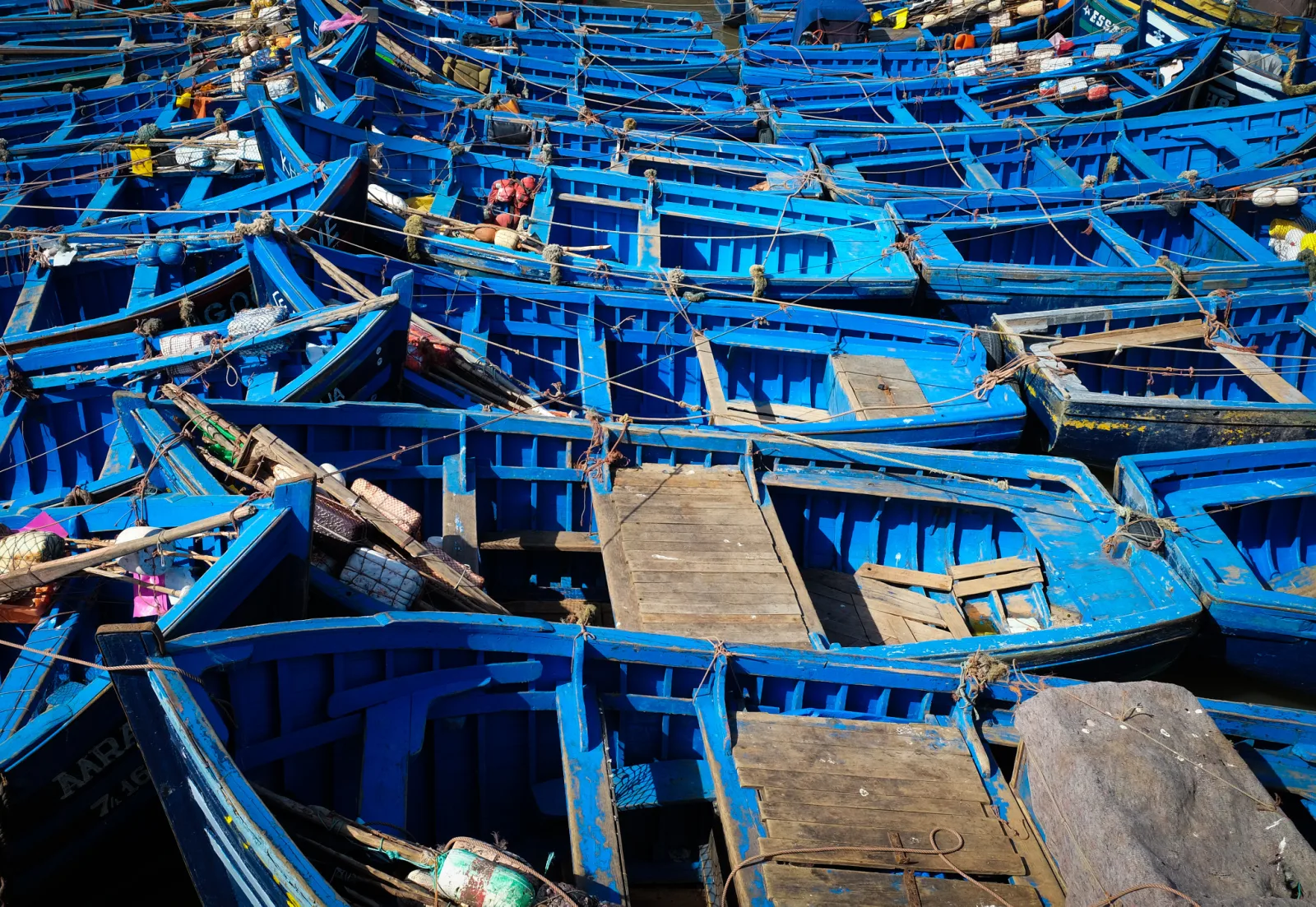
This is where September shines brightest. In Essaouira, the trade winds temper the heat all year round: highs hover around 24 °C, perfect for wandering the ramparts, the harbour and the long beach. In Agadir and Taghazout, the climate is warmer and more sheltered from the wind, with almost guaranteed sunshine and the sea at its best. The Atlantic coast is the number-one choice if you want to combine relaxation, swimming and sightseeing without suffering from the heat.
Marrakech and the interior
In Marrakech, expect daytime highs still around 33 °C, but with very dry air and evenings that turn mild again — a real relief after August. The imperial cities of Fès and Meknès see similar conditions, with peaks around 31 °C. The winning strategy inland: sightsee early in the morning and late in the afternoon, and take refuge in the gardens, museums and riads during the hottest hours. If Marrakech is your main destination, see our dedicated guide Marrakech in September 2026, with more detail on the city.
The desert and the deep south
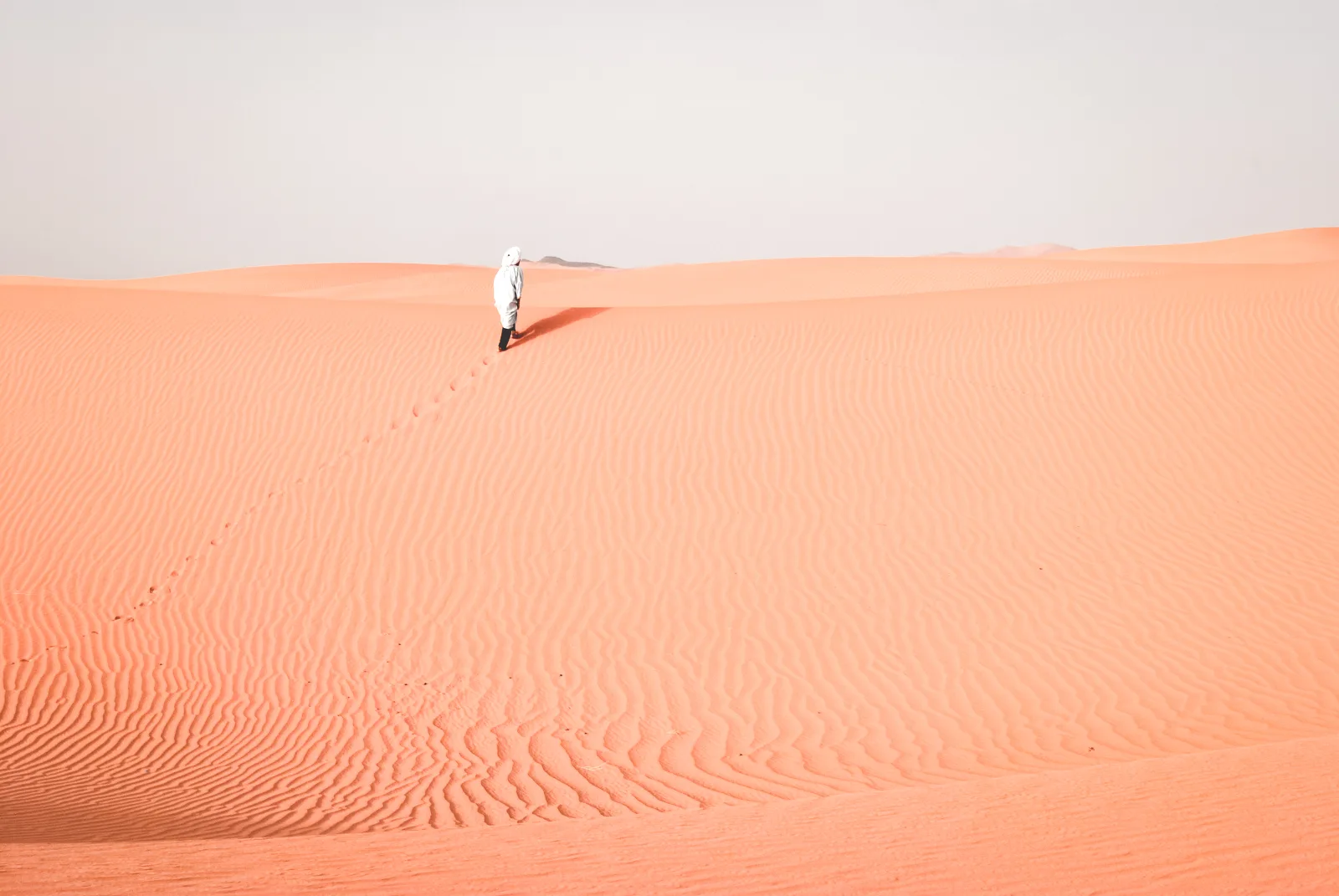
The dunes of Merzouga (Erg Chebbi) and the Zagora valley stay hot in September, often above 35 °C in the afternoon. But the month marks the start of the good season for the Sahara: nights under canvas become comfortable again and the sunrises over the dunes are magical. Late September is milder than the start. Plan to reach the desert late in the day and enjoy the cooler hours. From Marrakech, the adventure is easy to plan — see our guide to the Merzouga and Zagora desert.
The High Atlas: a hiker’s paradise
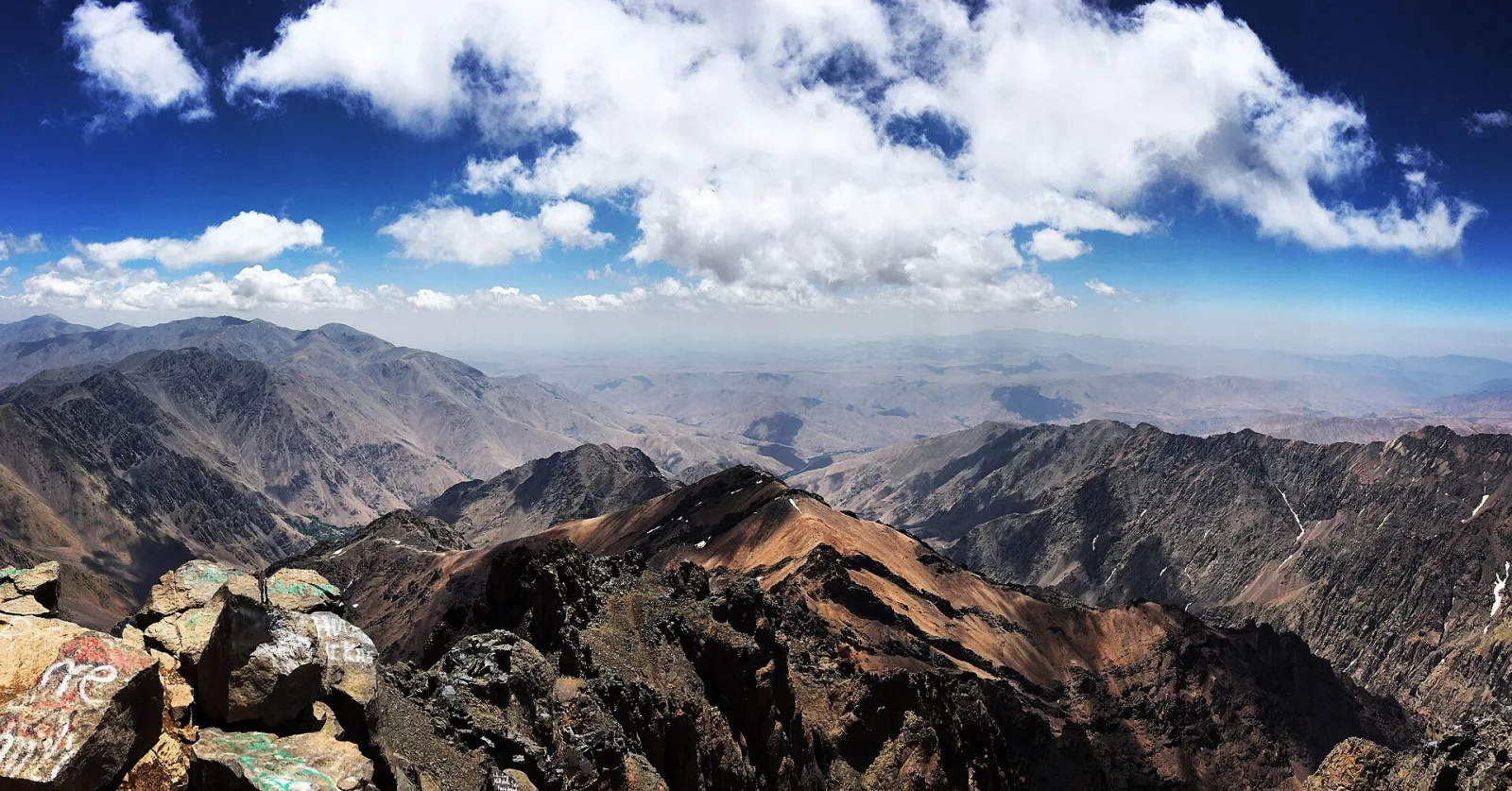
For mountain lovers, September is arguably the best month of the year. Temperatures at altitude are ideal for walking (20-25 °C during the day), the trails are clear and the snow hasn’t arrived yet. The village of Imlil, gateway to Toubkal (North Africa’s highest peak), buzzes with trekkers who come to enjoy this perfect window. See our guide Imlil and the ascent of Toubkal.
The North and the Mediterranean
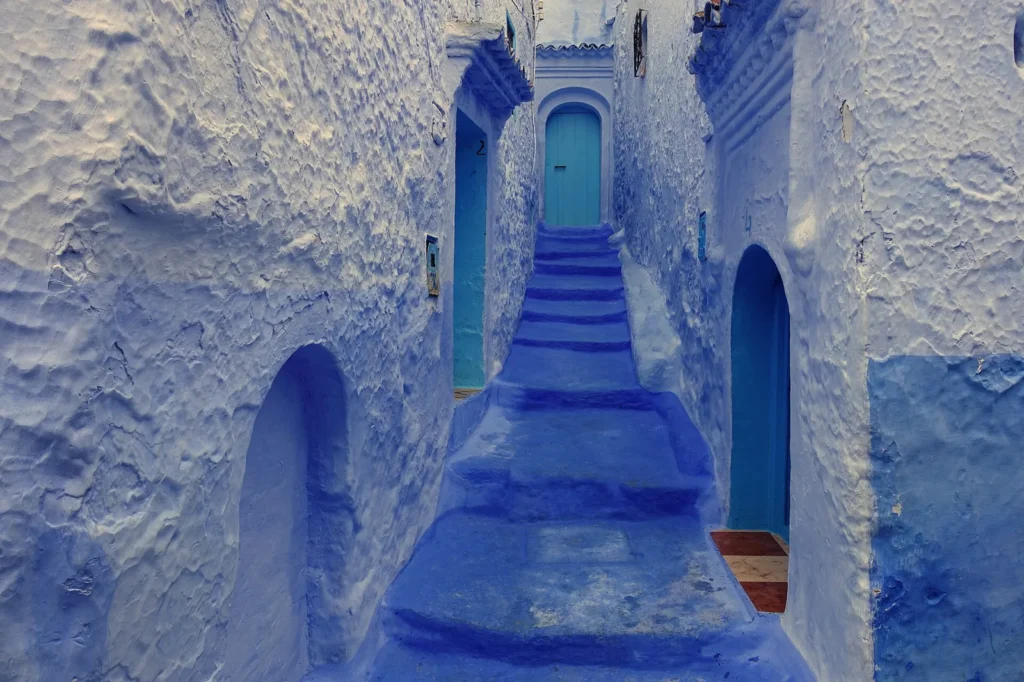
Tangier, Tetouan, Chefchaouen the blue city and the Mediterranean beaches offer superb light and mild temperatures in September, often around 28-30 °C. The Mediterranean Sea stays warm and visitor numbers drop after the big summer rush of Moroccans living abroad. It’s an ideal region for an itinerary combining culture, photogenic lanes and the seaside.
Swimming in Morocco in September: where and at what temperature?
Good news for swimmers: September marks the sea’s temperature peak along the Atlantic seaboard. In Agadir, the water reaches an average of 21 to 23 °C — the highest value of the year — for genuinely pleasant swimming. In Essaouira, further north and breezier, the water stays above 20 °C. The Mediterranean, in the north, is warmer still. In short, if the beach is your priority, head for the southern Atlantic coast (Agadir, Taghazout, Sidi Ifni) or the Mediterranean coast. Do watch out for currents on the Atlantic, though: always respect the supervised zones and the flags.
10 experiences to have in Morocco in September 2026
- Surf in Taghazout — the first autumn swells arrive, the water is still warm and the spots are less crowded than in high season.
- Spend a night in the Merzouga desert — camp under the stars, ride camels and watch the sunrise over the dunes of Erg Chebbi, on nights that are finally cooler.
- Hike in the High Atlas — from Imlil to the Berber valleys, September offers the best walking conditions of the year.
- Wander through Essaouira — wind-battered ramparts, a lively fishing harbour, grilled fish and a bohemian atmosphere.
- Explore Fès and its medina — the world’s largest car-free medina is far more enjoyable to visit than in the height of summer.
- Lose yourself in the blue of Chefchaouen — the blue city of the Rif is a photographer’s dream, made even more beautiful by September’s light.
- Discover Marrakech at the gentle pace of the shoulder season — gardens, palaces and rooftops, before the autumn crowds return.
- Follow the Route of a Thousand Kasbahs — from Ouarzazate to Aït Ben Haddou, a UNESCO-listed ksar, a legendary road trip through the south.
- Swim in Agadir — a huge beach, a seafront promenade and the sea at its ideal temperature for a beach holiday.
- Feel the buzz of a music festival — September is packed with events (see below).
Festivals and events in September 2026 in Morocco
September is traditionally a festive month, especially for music. Here are the most iconic gatherings. Important: the exact dates and line-ups for the 2026 edition are subject to change — always check each festival’s official website before booking.
- Oasis Festival (Marrakech region) — an international reference for electronic music, it usually takes place in September in the Agafay desert, at the gates of Marrakech, with the Atlas as a backdrop.
- Tanjazz (Tangier) — one of the country’s oldest jazz festivals, held every year in Tangier in September, blending traditional jazz, fusion and world music.
- Atlas Electronic (Marrakech region) — a gathering mixing electronic music, the arts and Moroccan creativity in a bucolic setting.
- MOGA Festival (Essaouira) — straddling late September and early October, it brings house, underground techno and gnaoua rhythms into conversation.
For the official cultural calendar and events across the country, the national tourism office (visitmorocco.com) remains the most reliable source.
September: fewer crowds, better prices
One of September’s great advantages is financial. After the July-August peak, demand falls: many riads and hotels adjust their rates downwards, and it’s easier to negotiate or find availability at sought-after establishments. Excursions and activities are also easier to book, without the summer crush. To keep your budget under control on the ground — money, transport, bargaining — our practical guides cover it all; see for example our Marrakech travel budget, which applies to most cities in the country.
What to pack for Morocco in September
- Light clothing in cotton or linen for the daytime, covering and respectful of local customs (shoulders and knees covered, especially in the medinas).
- A light jumper or a jacket for the evenings, essential in the mountains and the desert where the nights turn cool.
- Sun protection: a hat, sunglasses and high-factor cream — the sun stays strong.
- Comfortable walking shoes for the cobbled medinas and, if needed, for hiking.
- A swimsuit if you’re heading for the coast or a pool.
- A versatile scarf (sun, desert dust, visiting religious sites).
Arriving in Morocco: airports and transfers
Morocco is served by several international airports that bring you straight to your region: Marrakech-Menara for the centre and south, Agadir-Al Massira for the coast, Casablanca Mohammed V for the economic hub, Fès-Saïss for the imperial cities, and Tangier and Nador for the north. To prepare your arrival properly and avoid nasty surprises as you step off the plane, see our comparison of transfers from Morocco’s airports and, if you land in Marrakech, our guide to Marrakech-Menara airport. Remember, too, to stay connected the moment you land thanks to our feature on Wi-Fi and SIM cards at the airport.
How long to stay and which itineraries to favour in September
September’s mild climate allows for ambitious itineraries, without the exhaustion of the summer heatwave. For a first trip, allow at least a week; ten to fifteen days let you combine several regions. Here are three tried-and-tested frameworks, to adapt to your own tastes.
- South and desert loop (7-10 days): Marrakech, the Ourika or Dadès valley, Aït Ben Haddou, Ouarzazate, then the dunes of Merzouga for a night under the stars. A concentrated dose of kasbahs, oases and Sahara, with nights that turn cool again towards the end of the month.
- Coasts and imperial cities (7-9 days): Casablanca, Rabat, Meknès, Fès and its medina, before heading back down towards Essaouira and the Atlantic coast. Ideal for pairing culture, UNESCO heritage and a temperate seaside.
- Authentic north (6-8 days): Tangier, Tetouan, Chefchaouen the blue city and the Mediterranean beaches. A bright, less-visited region after the summer peak, perfect in September.
Whichever formula you choose, build in some flexibility: Moroccan distances are long and mountain roads are winding. It’s better to explore two or three regions in depth than to rush from stop to stop. If you’re starting in the south, our guide to Marrakech-Menara airport will help you get your trip off to a good start.
September flavours: Moroccan cuisine in early autumn
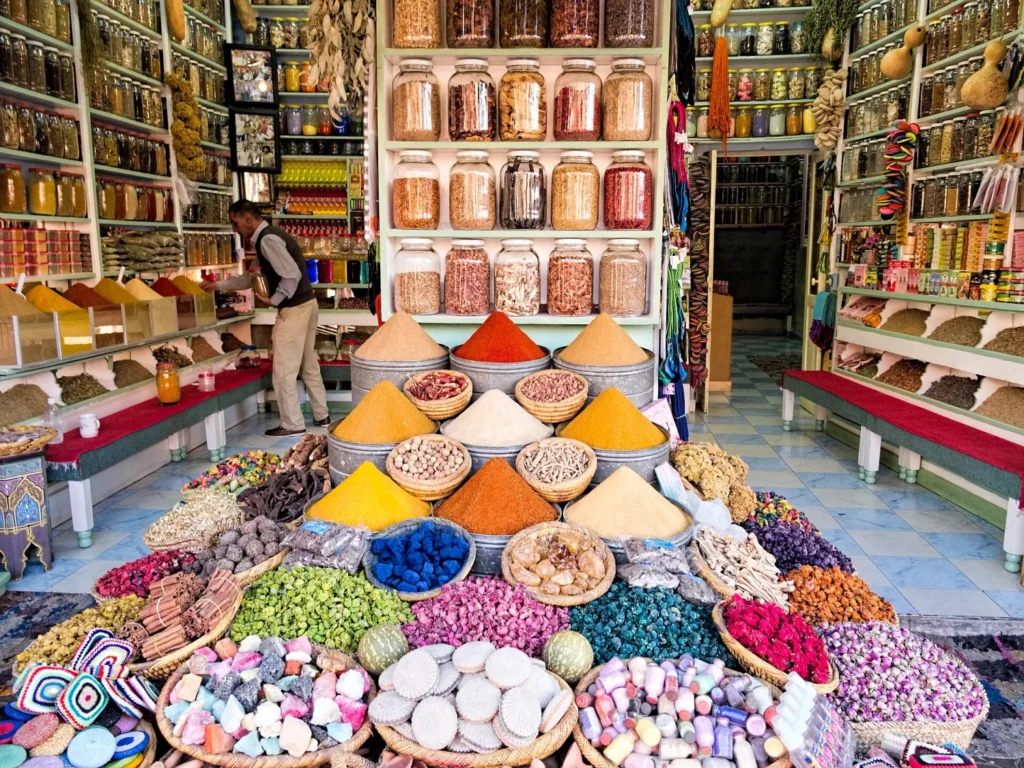
Travelling in September also means enjoying a season that’s generous to the taste buds. It’s harvest time: the markets overflow with fresh figs, grapes, pomegranates and the year’s first dates, of which Morocco is a major producer. On the stalls, the pyramids of olives, spices and dried fruit are a spectacle in their own right.
As for the dishes, the essential tajine comes in endless variations (chicken with preserved lemon, lamb with prunes, vegetables), while couscous is traditionally served on Fridays. Don’t miss the pastilla, the grilled skewers of the public squares, harira soups and, everywhere, the ritual of mint tea. On the coast, September is perfect for grilled fish freshly landed, notably in Essaouira and Agadir. One tip: favour the spots frequented by locals, a guarantee of freshness and authenticity.
Health, safety and practical tips for September
- Hydration above all: the dry, hot climate inland dehydrates you quickly. Drink bottled, capped water regularly and always keep a water bottle on you.
- Sun: the sunshine stays intense. A hat, sunglasses and high-factor sun cream are essential, especially in the desert and at altitude.
- Food: favour bottled water, wash or peel fruit, and choose restaurants where you can see the dishes being turned over regularly.
- Money: the dirham can only be exchanged within Morocco. Carry cash for the souks and small shops; bank cards are accepted in hotels, restaurants and large chains.
- Respecting customs: dress modestly in the medinas and at religious sites, be discreet and ask permission before photographing people.
- Safety: Morocco is a safe destination for travellers. Stay alert to fake guides and inflated prices, and always agree the price of a ride or a purchase in advance.
- Insurance and connectivity: take out travel insurance, and get a local SIM card or an eSIM as soon as you arrive to stay reachable and use online maps.
September’s light: a treat for photographers
There is one asset of September that images never fail to reveal: the quality of the light. As summer draws to a close, the sun sets a little earlier, the shadows lengthen and the atmosphere takes on warm, golden tones that are especially flattering. The famous “golden hours”, just after sunrise and before sunset, transform the ochre ramparts of Marrakech, the blue of Chefchaouen, the waves of Essaouira and the desert ridges. Add to that an almost always clear sky and dwindling visitor numbers, and you get ideal conditions for bringing home memorable shots, without the crowds that ruin your framing. Get up early: the reward is worth it, and you’ll enjoy the morning cool into the bargain.
Local festivities and late-summer traditions
Beyond the big music festivals, September is also a season of moussems, those traditional gatherings that blend religious fervour, markets, songs and sometimes fantasias (equestrian displays). Held in different regions according to local calendars, they offer an authentic glimpse of Moroccan culture, far from the tourist trails. In the countryside, it’s the end of the main harvests and the start of the olive season, set to the rhythm of a lively rural life. These events have no universal fixed dates: ask locally, at your accommodation or the tourist office, to find out whether a moussem is taking place near your stop during your stay. It’s often the chance for an unforgettable encounter with the real Morocco.
FAQ — Morocco in September 2026
Is it still hot in Morocco in September?
Yes, but the heat is more bearable than in the height of summer. The Atlantic coast stays mild (24-27 °C), while the interior and the desert remain hot in the afternoon (33 °C and above). The evenings become pleasant again almost everywhere.
Can you swim in Morocco in September?
Absolutely. It’s even the best time of year for swimming along the southern Atlantic: the water reaches 21-23 °C in Agadir. The Mediterranean, in the north, is warmer still.
Which is the best region to visit in September?
For the beach and mild weather, the Atlantic coast (Essaouira, Agadir). For hiking, the High Atlas. For culture, the imperial cities and Chefchaouen. The desert becomes gentler towards the end of the month.
Does it rain much in Morocco in September?
No. Rainfall is very low across almost the entire country in September, with generally clear skies.
Is September an expensive time to visit Morocco?
Rather the opposite: after the July-August peak, accommodation rates tend to fall and tourist numbers drop with the back-to-school season.
Do you need a visa to visit Morocco in September 2026?
Nationals of many countries (including France, Belgium, Switzerland, Canada, the UK and the United States) are exempt from a visa for a short tourist stay. Always check the up-to-date conditions with the consular authorities before you leave.
Is the desert accessible in September despite the heat?
Yes. The afternoons stay hot in Merzouga or Zagora, but September marks the return of comfortable nights under canvas, especially in the second half of the month. Reach the dunes at the end of the day to enjoy the sunset and sunrise.
How many days should you plan for a first trip to Morocco in September?
A week is a minimum to discover one region and an escapade; ten to fifteen days let you combine several worlds (city, desert, coast or mountain) without rushing, which September’s mild climate makes far easier.
In summary
Travelling to Morocco in September 2026 means enjoying a country at the top of its game: a warm sea, mountains perfect for walking, a desert that becomes welcoming again, calmer cities and gentler budgets. The key to a successful trip comes down to one thing: choosing your region according to the weather. The Atlantic coast for the beach, the Atlas for hiking, the imperial cities and the North for culture, the desert for adventure. Wherever you go, September will reward you with splendid light and a relaxed atmosphere. Have a great trip!
Photo credits
2018 01 (Blue) – Chaouen.jpg — Fbrandao.1963 (CC BY-SA 4.0) · Essaouira Harbour (62314943).jpeg — Fabien Fivaz (CC BY-SA 3.0) · Where? follow me- (Unsplash).jpg — Rubén Bagüés rubavi78 (CC0) · At the peak of Toubkal 4,167 m (2).jpg — Buckerfing (CC BY-SA 4.0) — via Wikimedia Commons.