It’s the very first question on the mind of anyone planning a trip to Morocco: do you need a visa to enter the country? Good news for most travellers: citizens of around sixty countries, including the UK, the United States, Canada, Switzerland and the entire European Union, can stay in Morocco visa-free for up to 90 days. But between passport validity, the arrival card, and the rules on customs and currency, there are a few formalities worth knowing before you pack your bags. Here’s the complete guide, updated for 2026 — with one essential reminder: entry requirements vary by nationality and can change, so always check your specific case with a Moroccan consulate before you book.
In brief: entering Morocco in 2026
- Visa: not required for around 70 nationalities (EU, United Kingdom, Switzerland, Canada, United States, etc.) for a tourist stay of up to 90 days.
- Passport: mandatory and valid for the entire length of your stay (allow a margin; many airlines require 6 months’ validity).
- Arrival card: an information form must be completed on arrival (handed out on the plane or at the border).
- Customs: personal effects admitted duty-free; certain goods are regulated.
- Currency: the dirham cannot be freely imported or exported; declare large sums.
- Key takeaway: always verify the requirements for your nationality with the Moroccan consulate.
Morocco, a booming destination in 2026
If you’re planning a trip to Morocco, you’re far from alone. In 2026 the kingdom is enjoying remarkable tourism momentum: bookings from Europe are climbing sharply year on year, and the country has established itself as one of the season’s standout destinations, driven by an expanding network of air routes and the sheer variety of what it offers — medinas, desert, the Atlas mountains and long Atlantic beaches. This surge has a concrete consequence for you: busier airports and sometimes long queues at passport control in peak season. That’s why it pays to arrive with your paperwork in order and your arrival card already filled in, so you can clear the formalities without losing time or your peace of mind.
Do you need a visa for Morocco?
For a tourist stay, the vast majority of Western travellers do not need a visa. Morocco grants visa-free entry, for stays not exceeding 90 days, to citizens of around sixty countries. All you need is a valid passport to cross the border. Here, for reference, are the main nationalities concerned.
| Region / Country | Tourist visa | Duration |
|---|---|---|
| France, Belgium, Switzerland, Luxembourg | Not required | 90 days |
| European Union / EEA | Not required | 90 days |
| United Kingdom | Not required | 90 days |
| Canada, United States | Not required | 90 days |
| Australia, New Zealand, Japan | Not required | 90 days |
| Gulf countries (UAE, Qatar, etc.) | Not required | 90 days |
This exemption covers tourism as well as short family or business visits. For any other purpose — study, work, long-term relocation — different procedures and residence permits are required. If in doubt, the safest approach is to consult the official travel advice for Morocco and the Moroccan consular services.
How long can you stay in Morocco?
For exempt nationalities, the permitted visa-free stay is 90 days per entry. This period runs from the date of arrival, stamped in your passport by the border police. If you wish to stay longer, there are two options: leave the country and then return, or apply for an extension of stay with the local authorities (the national security office for your place of residence) — a process that must be justified and is not automatic.
Beware of overstaying. Staying beyond the authorised period without regularising your status (a “visa overstay”) can lead to complications when you leave: questions at the airport, a possible fine or extra formalities. It’s far better to plan ahead and stick strictly to the 90-day limit.
Passport: what validity do you need?
The essential document for entering Morocco is your passport. A national identity card is not enough for most travellers: a passport is a must. As for validity, the official rule requires a passport valid for the entire length of your stay, but in practice many airlines apply the six-month validity rule and may refuse boarding if your passport expires too soon. To travel with total peace of mind:
- A passport valid for at least 6 months beyond your return date, to be safe.
- A document in good condition, undamaged, with all pages legible.
- At least one blank page for the entry stamp.
The arrival card (information form)
On arrival, you’ll need to complete an arrival card / police form. It’s usually handed out on board the plane during the flight, or available in the airport’s immigration area. You fill in your identity, passport number, the length and purpose of your stay, and your accommodation address in Morocco (the name of your hotel or riad). A practical tip: keep that address saved on your phone, and fill in the form on the plane to save time at the desk.
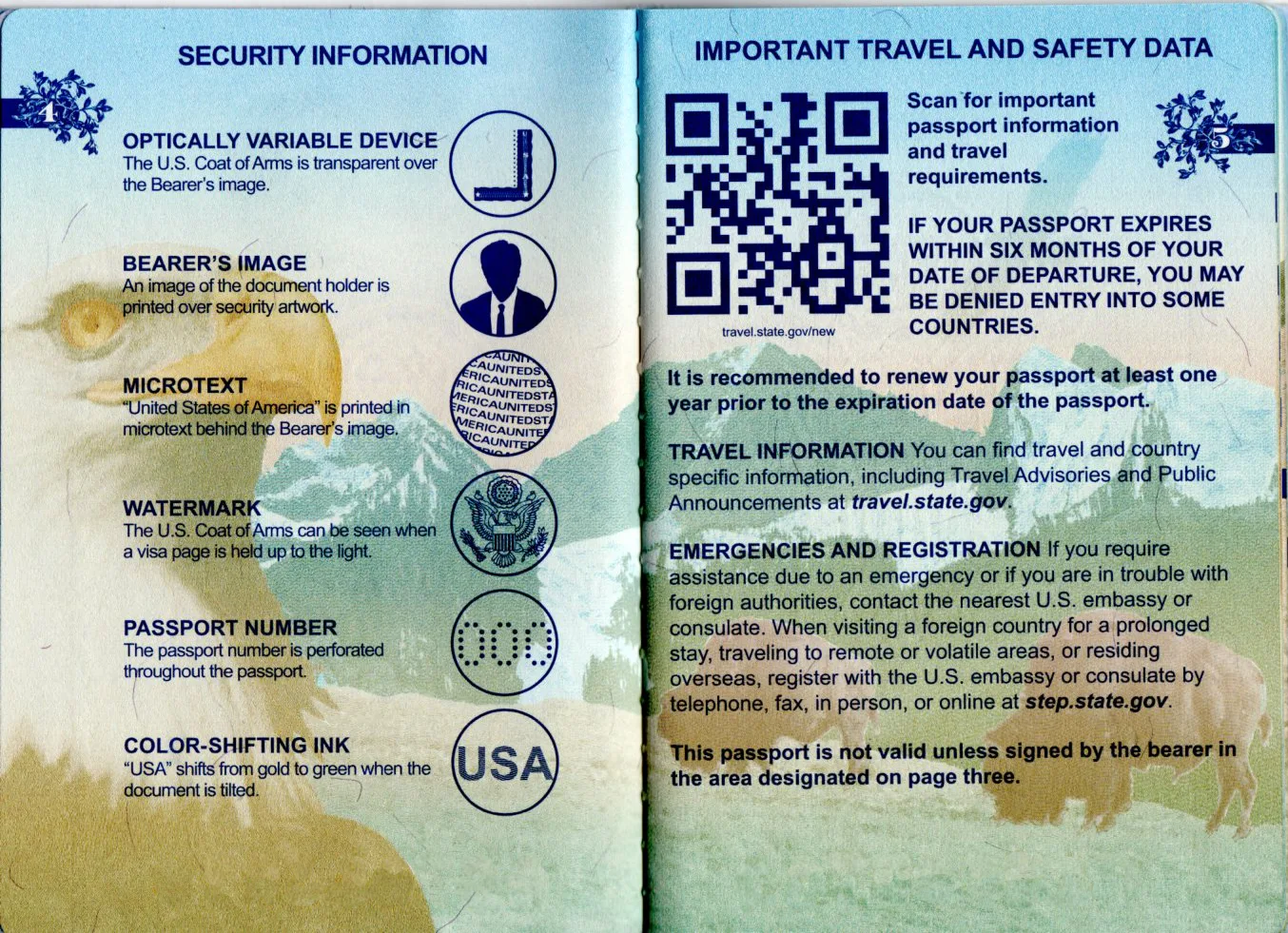
You need a visa: what to do?
If your nationality isn’t among the exempt countries, you’ll need to obtain a visa before departure. As a rule, Morocco does not issue visas on arrival for non-exempt nationalities: the application is therefore made in advance at a Moroccan consulate or embassy in your country of residence. Allow plenty of time to put your file together (passport, photos, proof of accommodation and funds, flight booking, etc.).
An electronic visa (e-visa) scheme also exists for certain nationalities and under certain conditions (for example, holding a valid visa from another country such as the Schengen area, the United States or the United Kingdom). Since the terms change regularly, check the official consular portal for the exact conditions that apply to your passport. The Moroccan consular services (consulat.ma) are the most reliable reference on the matter.
On arrival at the airport: border police
Once the plane has landed, head for the border police control. Present your passport and your completed arrival card. The officer may ask you a few simple, routine questions: the purpose of your stay, its length, where you’re staying. After checking, your passport is stamped: it’s this stamp that establishes the length of your stay. Stay calm and patient, especially at busy times — queues can be long in Marrakech or Casablanca in high season. To prepare for this step airport by airport, see our guide to Marrakech-Menara Airport.
Customs: what you can bring in
Your personal effects (clothing, cameras, laptop, phone, toiletries) enter duty-free, as long as they’re intended for your own use during the trip. A few points to watch, however:
- Valuable or bulk professional equipment may be subject to specific formalities.
- Bringing in drones is strictly regulated in Morocco and can result in them being held at customs: check before you leave.
- Narcotics and illicit products are, of course, prohibited, with severe penalties.
- Tobacco and alcohol are subject to limited allowances, as in most countries.
For the official details on allowances and regulated goods, the Moroccan customs administration (douane.gov.ma) publishes the rules applying to non-resident travellers.
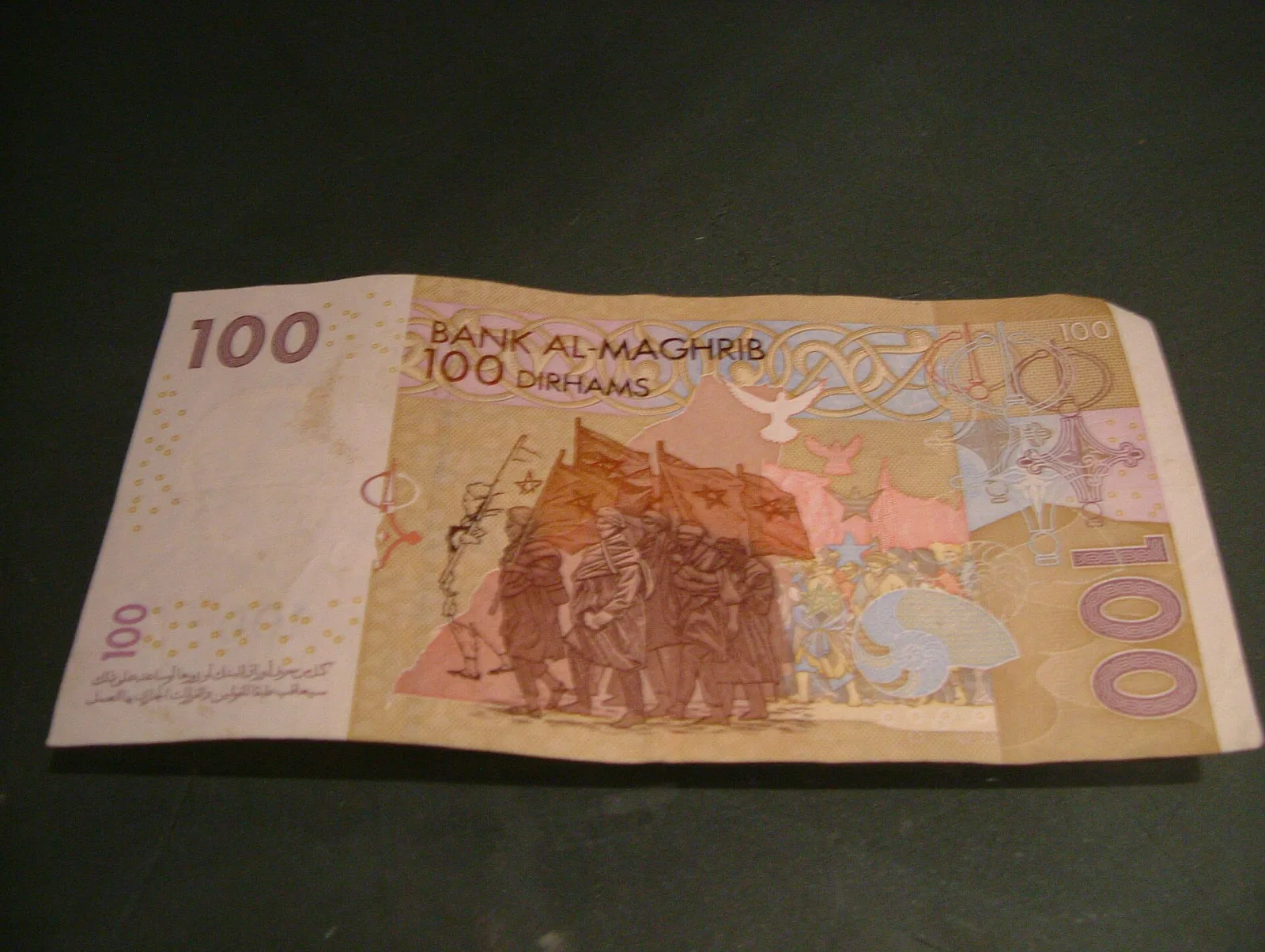
Money and currency: the dirham rules
The Moroccan dirham (MAD) is what’s known as a “non-convertible” currency: it can only be exchanged inside Morocco and its movement across borders is restricted. In practical terms, for travellers:
- Whether entering or leaving, it’s best not to carry dirhams: small sums (up to around 2,000 MAD) are tolerated, but exporting dirhams beyond that is prohibited.
- Foreign currency (euros, dollars, etc.) may be brought in freely, but any large amount (above the equivalent of roughly 100,000 MAD) must be declared on arrival.
- Change your money once you’re there (banks, licensed exchange offices, ATMs) and keep your exchange receipts: you may be asked for them if you want to convert any leftover dirhams back at the end of your stay.
Locally, bank cards are accepted in hotels, restaurants and major retailers, but always keep some cash for the souks, taxis and small shops. To plan it all out, see our travel budget guide.
Health: vaccines and precautions
No vaccine is mandatory to enter Morocco for most travellers. It’s simply recommended to be up to date with your routine immunisations (diphtheria, tetanus, polio, etc.). One exception: travellers coming from a country affected by yellow fever may be asked for a vaccination certificate. Beyond the formalities, a few common-sense precautions are worth taking: stick to sealed bottled water, protect yourself from the sun, and take out travel insurance covering medical costs and repatriation. Check the latest health recommendations before you leave.
Travelling with children or minors
Children must have their own passport, whatever their age. Depending on your country of origin, an exit permit may be required when a minor travels without both parents, or with only one of them. Carry documents proving the parent-child relationship (family record book, birth certificate) and, where applicable, the authorisation signed by the parent or parents. If the parent and child have different surnames, these supporting documents make border crossing far smoother. Check with your country’s authorities on the documents required.
After the formalities: arriving with ease
Once you’re through control and have collected your luggage, all that’s left is to reach your accommodation. To avoid nasty surprises on price at the airport exit, compare your options with our comparison of airport transfers in Morocco. Also think about staying connected the moment you land: our guide to airport Wi-Fi and SIM cards explains how to get online in just a few minutes. And if you’re planning your trip around the season, discover our guide to Morocco in September. For a truly worry-free trip, a final look at our advice on safety and scams to avoid can prove useful.
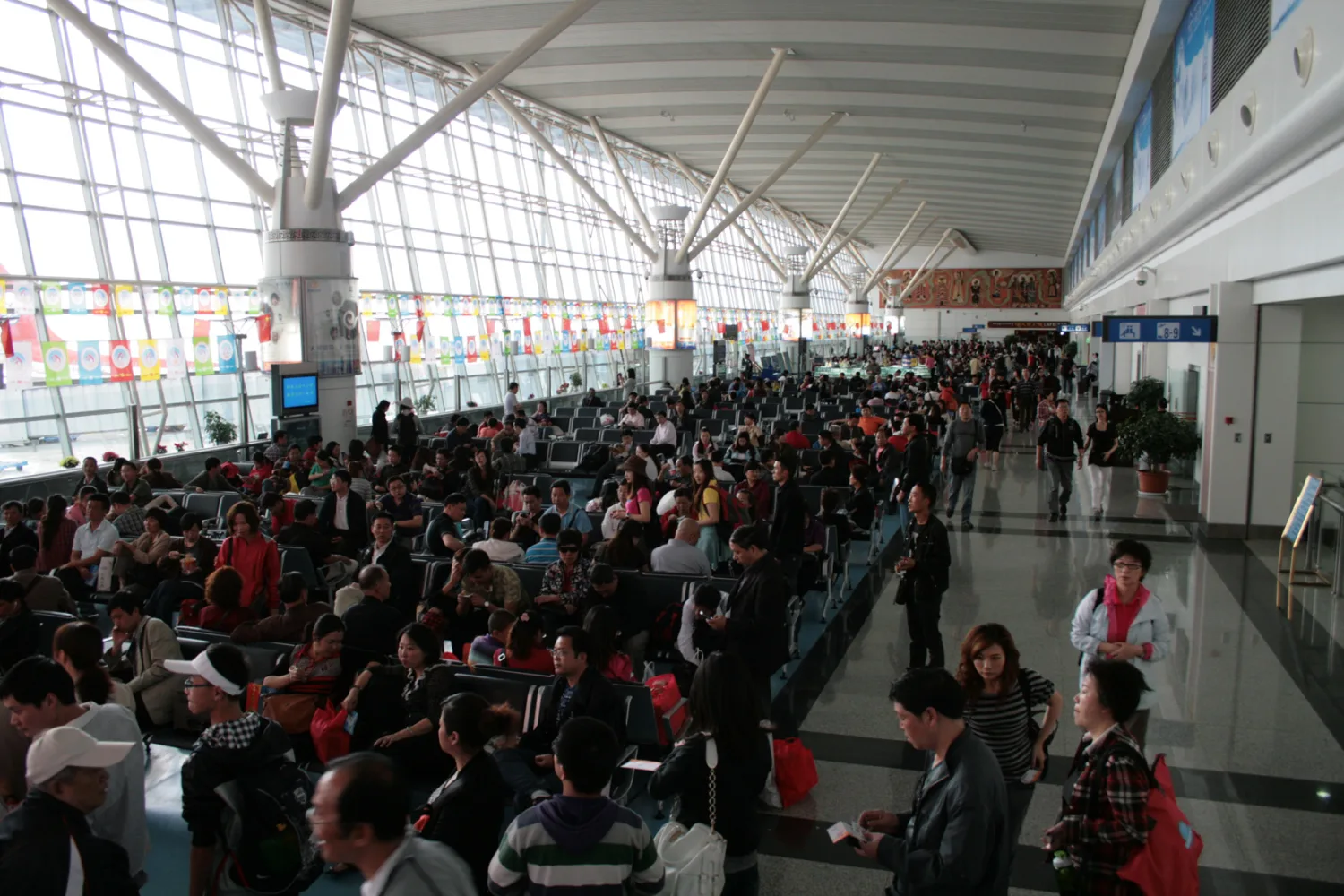
Points of entry: airports, ports and land borders
You can reach Morocco by air, sea or road — and the entry formalities are the same everywhere. Most visitors land at one of the major international airports: Marrakech-Menara, Casablanca Mohammed V, Agadir-Al Massira, Fès-Saïss, Tangier Ibn Battouta or Rabat-Salé. It’s also possible to arrive by ferry from Spain, notably via the very busy port of Tanger Med. Finally, entry by land is mainly from the Spanish enclaves of Ceuta and Melilla; the border with Algeria, meanwhile, is closed. Whatever your point of entry, the rule doesn’t change: a valid passport, a completed police form and the entry stamp. To organise the next leg of your journey, our airport transfer comparison covers the country’s main gateways.
How much does a Morocco visa cost, and what documents are needed?
For travellers who need one, the cost of a tourist visa varies by nationality and by the relevant consulate; the exact fees should be confirmed with the Moroccan mission in your country. The application file generally includes the following documents:
- A valid passport (often at least 6 months’ validity) with blank pages;
- A duly completed and signed application form;
- Recent passport-standard photos;
- Proof of accommodation (a hotel booking or invitation letter);
- Proof of sufficient financial means for the stay;
- A round-trip flight booking;
- Sometimes travel insurance covering the period.
Since processing times can range from a few days to several weeks, it’s strongly advised to submit your application well in advance, especially during the peak tourist season.
Common mistakes to avoid at the formalities
- A passport that expires too soon: the number-one cause of boarding refusal. Check the date well before you leave.
- Forgetting your accommodation address: it’s requested on the arrival card. Have it noted down in advance.
- Trying to leave with dirhams: exporting the local currency is prohibited beyond a small allowance.
- Bringing a drone: its import is regulated and can lead to it being held at customs.
- Not declaring large sums of foreign currency: above the threshold, declaration is mandatory.
- A damaged passport: a document in poor condition can cause problems at control.
Travel insurance: mandatory or not?
Travel insurance is not required for entry for most exempt nationalities, but it is strongly recommended. A good policy covers medical expenses, hospitalisation, medical repatriation and cancellation. Since care can be costly for a foreigner, it’s an inexpensive safeguard against the risk involved. Make sure your policy actually covers the activities you have planned (mountain hiking, desert excursions, water sports). To prepare your trip in the best conditions, the Moroccan national tourism office (visitmorocco.com) publishes plenty of official practical information.
The case of dual nationality (French-Moroccan, etc.)
One important point concerns people holding dual nationality, French-Moroccan in particular, who are very numerous among travellers. The Moroccan authorities regard these people first and foremost as Moroccan citizens. In practice, dual nationals are strongly advised to travel with their Moroccan documents — a Moroccan passport or electronic national identity card (CNIE) — to enter and leave the country, rather than with their foreign passport alone. Dual nationals are, moreover, subject to Moroccan law during their stay. If this applies to you, remember to keep your Moroccan papers up to date and to check with the consulate on which documents to present, particularly for children born abroad. This precaution avoids plenty of administrative complications, both entering and leaving the country.
Crossing the border stress-free: our tips
- Prepare your documents before landing: passport within reach, arrival card completed and accommodation address noted down.
- Keep copies: a photo of your passport and bookings on your phone (plus a paper copy) will help if anything is lost.
- Be ready to justify your stay: your hotel booking and possibly a return ticket may be requested.
- Stay patient and courteous: at peak times, control can be slow; a calm demeanour always smooths the way.
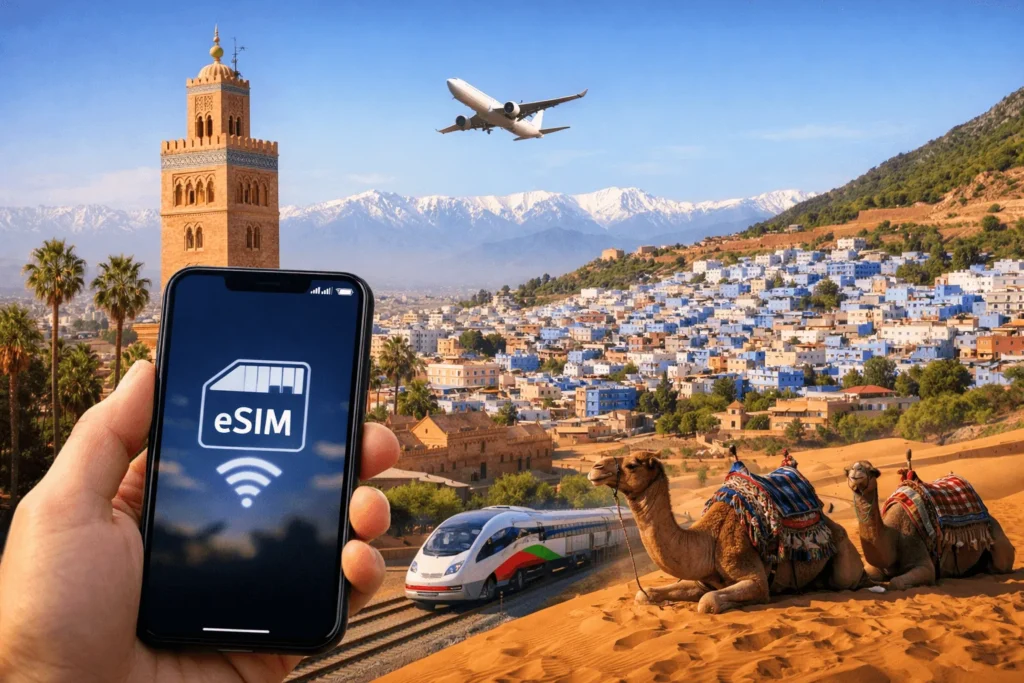
- Plan for connectivity: arrange a SIM or eSIM so you’re reachable and can use your online bookings as soon as you’re out.
FAQ — Morocco entry formalities 2026
Do you need a visa to visit Morocco from France, Belgium or Switzerland?
No. French, Belgian and Swiss citizens do not need a visa for a tourist stay of up to 90 days. A valid passport is enough.
Is an identity card enough to enter Morocco?
No, a passport is required for the vast majority of travellers. A national identity card is not enough; bring a valid passport, ideally with at least 6 months remaining after your return.
How long can you stay in Morocco without a visa?
Up to 90 days per entry for exempt nationalities. Beyond that, you must leave and return, or apply for an extension with the local authorities.
Does Morocco issue a visa on arrival?
As a rule no, for nationalities that need a visa: the application must be made before departure at a Moroccan consulate. An e-visa exists for certain nationalities, under conditions.
Can you take dirhams out of Morocco?
The dirham cannot be freely exported: only small sums are tolerated. Convert any leftover dirhams back before you leave, and keep your exchange receipts.
Do you need vaccines to travel to Morocco?
No vaccine is mandatory for most travellers. It’s advisable to be up to date with your routine immunisations and to take out travel insurance. A yellow fever certificate may be required if you’re coming from an at-risk area.
Do you have to give an accommodation address on arrival?
Yes. The arrival card asks for the address of where you’re staying (hotel, riad or a private home if you’re a guest). Have it noted down in advance so you can fill in the form quickly.
Can you enter Morocco from Ceuta or Melilla?
Yes, entry by land is possible from the Spanish enclaves of Ceuta and Melilla. The formalities are the same as by air: a valid passport and border police control.
Does the passport need to be biometric?
There’s no specific requirement for a biometric passport: an ordinary passport that is valid and in good condition is accepted. What matters is the validity and condition of the document.
Can you extend your stay beyond 90 days?
Yes, but it’s not automatic. You must apply at the national security office for your place of residence in Morocco, with supporting documents. Failing that, the simplest solution is to leave the country and then return.
What happens if my passport is almost expired?
You risk being denied boarding at your departure airport: many airlines require 6 months’ validity. Renew your passport before the trip if its expiry date is close.
In summary
Entering Morocco in 2026 is straightforward for most travellers: a valid passport, no visa required for up to 90 days for around sixty nationalities, an arrival card to fill in, and compliance with the customs and currency rules. The only real precautions are to check your passport’s validity, know the rules on the dirham, and above all to confirm the requirements specific to your nationality with a Moroccan consulate, since they can change. With these formalities sorted, all that’s left is to savour one of the most beautiful countries in the world. Have a great trip!
Photo credits
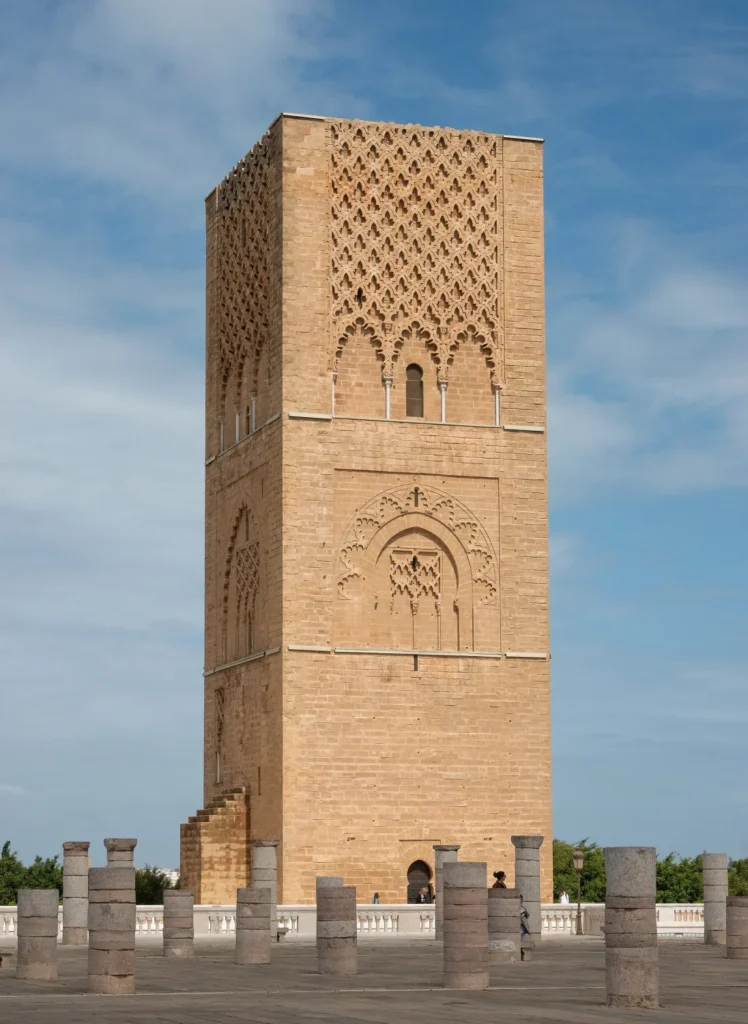
Hassan Tower, Rabat, Marocco (صومعة حسان ).jpg — Petar Milošević (CC BY-SA 4.0) · 2026 United States Passport page Security Information page 4 – Important Travel and Safety Data page 5.jpg — Ranch9613 (CC0) · Back 100 Dirham.jpg — Michelle Ward (CC BY 2.0) · Departure Hall of Gonggar Airport.jpg — AlexHe34 (CC BY-SA 3.0) — via Wikimedia Commons.