The Bahia Palace is one of the most visited monuments in Marrakech: a 19th-century palace built in the medina, famous for its shaded patios, orange-tree gardens, painted cedar ceilings and dazzling zellige tilework. Built in two stages by the grand vizier Si Moussa and then considerably enlarged by his son Ba Ahmed between 1894 and 1900, it covers about 8 hectares and has some 150 rooms. Allow 1 hour to 1 hour 30 for the visit, an adult ticket of around 100 dirhams (indicative price, to be confirmed on site) and daily opening from 9 a.m. to 5 p.m. Here is everything you need to know before discovering this masterpiece of Moroccan art.
The Bahia Palace at a glance
- Name: Bahia Palace (“la Bahia” means “the beautiful” or “the brilliant” in Arabic).
- City: Marrakech, in the medina (Mellah / Kasbah district), in the south of the old town.
- Period: second half of the 19th century; major enlargement from 1894 to 1900.
- Patrons: the grand vizier Si Moussa, then his son Ba Ahmed (Ahmed ben Moussa).
- Area: about 8 hectares, of which nearly 8,000 m² are built, and around 150 rooms.
- Style: Arab-Andalusian and Hispano-Moorish architecture (zellige, chiselled stucco, painted cedar ceilings, marble, mashrabiyas).
- Hours (indicative): every day, 9 a.m. – 5 p.m. (10 a.m. – 4 p.m. during Ramadan), last entry around 4:30 p.m.
- Price (indicative): about 100 MAD for an adult, reduced rates for children and residents — to be checked on site.
- Recommended visit duration: 1 hour to 1 hour 30.
- Status: listed monument, located in the heart of the medina of Marrakech, a UNESCO World Heritage Site.
History of the Bahia Palace: from Si Moussa to Ba Ahmed
The history of the Bahia Palace on its own illustrates the peak of power of the great Moroccan viziers at the end of the 19th century. The monument you visit today was not born of a single project, but of two great building campaigns led by a father and his son, both strongmen of the sultan’s court.
Si Moussa’s first residence
Around 1866-1867, Si Moussa, chamberlain and then grand vizier in the service of Sultan Hassan I, had the northern part of the ensemble built in the form of a vast riad, that traditional house arranged around an interior garden. This first residence, already opulent, comprised the large riad, the north courtyard and several annexes. It laid the foundations of what would become, a generation later, one of the most sumptuous palaces in Marrakech.
Ba Ahmed and the golden age of the palace (1894-1900)
It was Si Moussa’s son, Ahmed ben Moussa — better known as Ba Ahmed (1841-1900) — who gave the palace its legendary scale. Having become grand vizier in turn, then all-powerful regent of the young Sultan Abd al-Aziz, Ba Ahmed concentrated a considerable share of royal power in his hands. From 1894 he bought up the neighbouring houses, brought them together and transformed them, over six years of works until 1900, into a genuine palace. The project mobilised the finest craftsmen in the kingdom — masters of zellige, plaster sculptors, cedar-wood painters from Fez and Marrakech.
According to tradition, the name “Bahia”, which means “the beautiful” or “the brilliant”, is said to have been given in tribute to Ba Ahmed’s favourite wife. The palace then became a place of residence, reception and power, where the grand vizier in fact governed a large part of Morocco. In an irony of history, Ba Ahmed died in 1900, the very year his palace was completed, and his residence was immediately plundered by his rivals at court.
The palace under the French protectorate
At the beginning of the 20th century, the Bahia Palace changed function. From 1912, under the French protectorate, the Resident-General Hubert Lyautey settled there and used it as an official residence. Electricity, heating and fireplaces were then introduced, modern additions grafted onto a purely Moroccan decor. Today the property of the State and the royal family, the palace is open to the public as a museum, while keeping certain private sections.
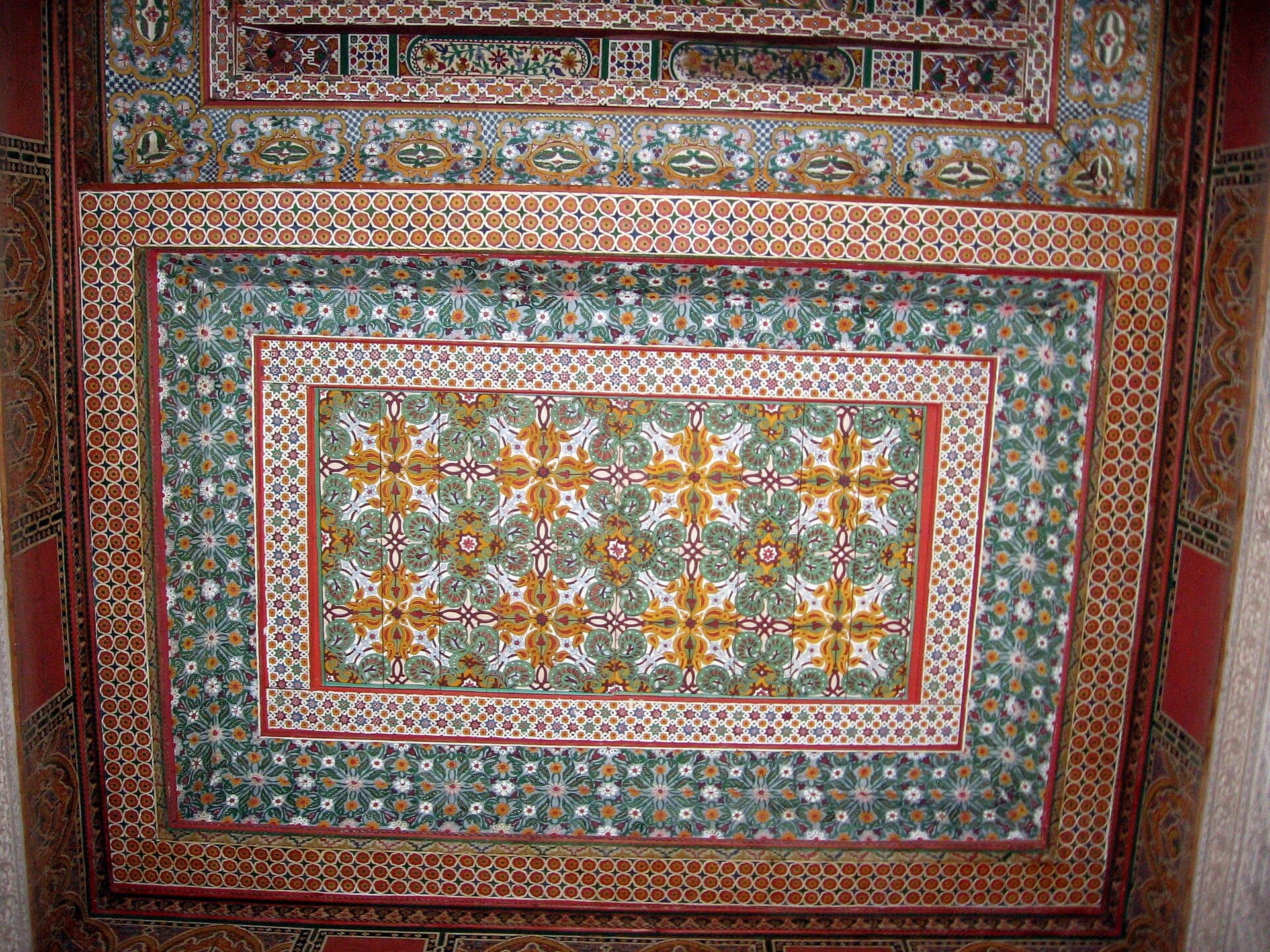
Architecture of the Bahia Palace in Marrakech: a masterpiece of Moroccan art
The Bahia Palace in Marrakech is regarded as one of the finest expressions of Arab-Andalusian architecture in Morocco. Its design is attributed to the architect Mohammed al-Makki (1857-1926). The complex covers about 8 hectares, of which nearly 8,000 m² are built, and brings together around 150 richly decorated rooms opening onto a succession of courtyards, patios and gardens. This labyrinthine layout, with no monumental facade on the outside, is characteristic of Moroccan palaces, turned inward to preserve privacy and coolness.
The courtyards and patios
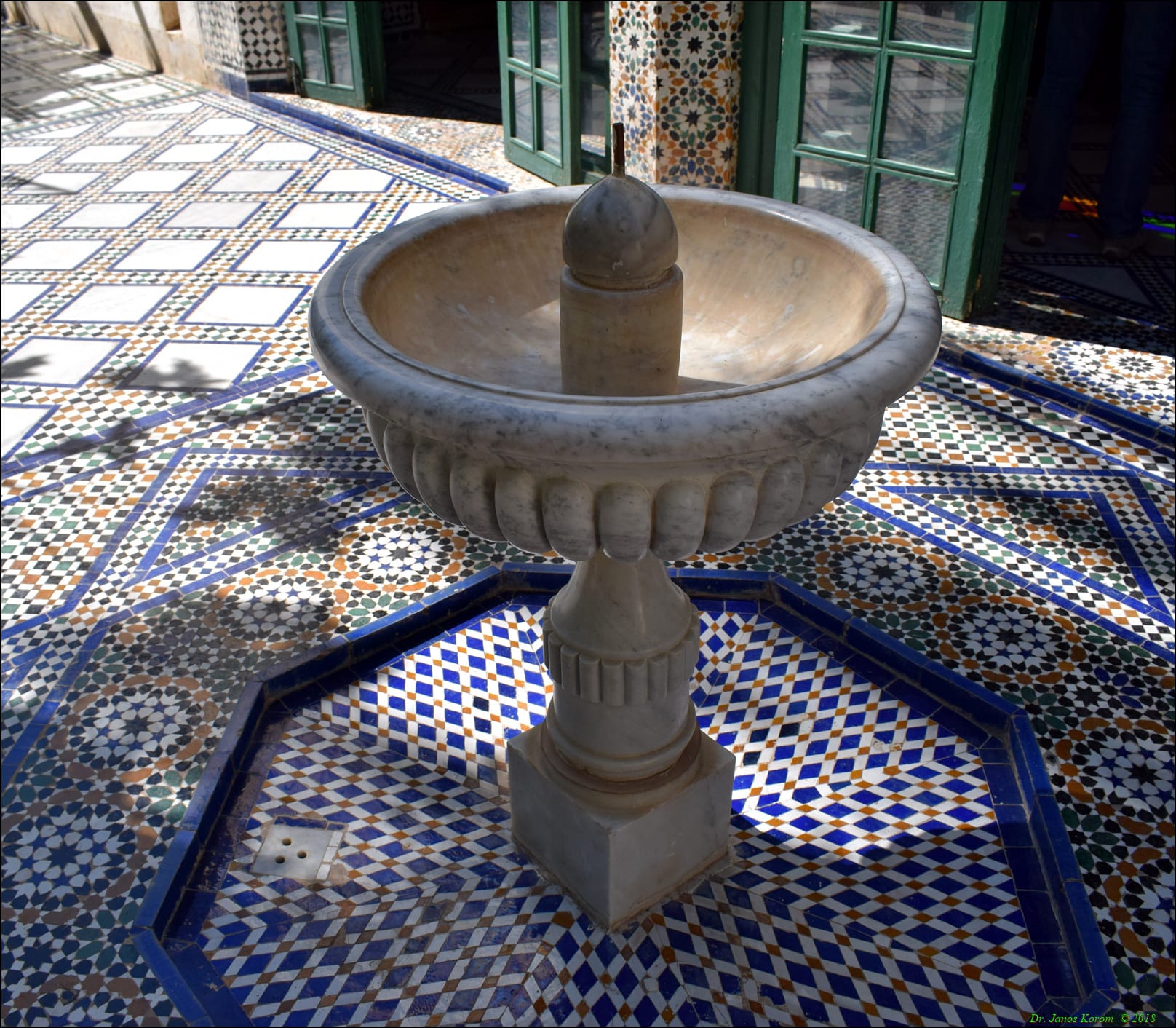
The courtyards are the beating heart of the palace. The most spectacular is the great courtyard of honour, a vast marble-paved space of about 50 metres by 30, bordered by arcades and galleries. Away from the bustle of the medina, the secondary patios offer a clever balance of shade and light, punctuated by fountains, orange trees and pools. Here you immediately feel that pursuit of harmony between architecture and nature that defines the Moroccan art of living.
The small riad, the gardens and the apartments
The small riad inherited from Si Moussa remains one of the most intimate spaces of the palace, with its garden planted with citrus and cypress laid out according to the traditional four-bed plan. Around it, the private apartments and reception rooms unfold decoration of rare finesse. The gardens, irrigated by a network of fountains, extend the experience in the open air and are a reminder that this palace was above all a place of life and splendour.
The harem and the private apartments
Among the most evocative spaces is the harem, reserved for Ba Ahmed’s four wives and twenty-four concubines. Arranged around a planted courtyard, it lines up rooms decorated with zellige and painted ceilings, each opening onto the central garden. This part of the palace, long closed, bears witness to the way of life of a 19th-century grand vizier and today fascinates visitors with its preserved atmosphere.
Zellige, stucco and cedar ceilings: the decoration
What is most striking at the Bahia Palace is the richness of the decoration, the fruit of the work of the greatest master craftsmen of their time. Here you find the three great skills of Moroccan craftsmanship:
- Zellige: these mosaics of glazed terracotta tiles, with colourful geometric patterns, cover floors, dados and fountains.
- Chiselled stucco (gebs): carved plaster forms friezes, arches and lacework on the walls of extreme finesse, often enhanced with calligraphy.
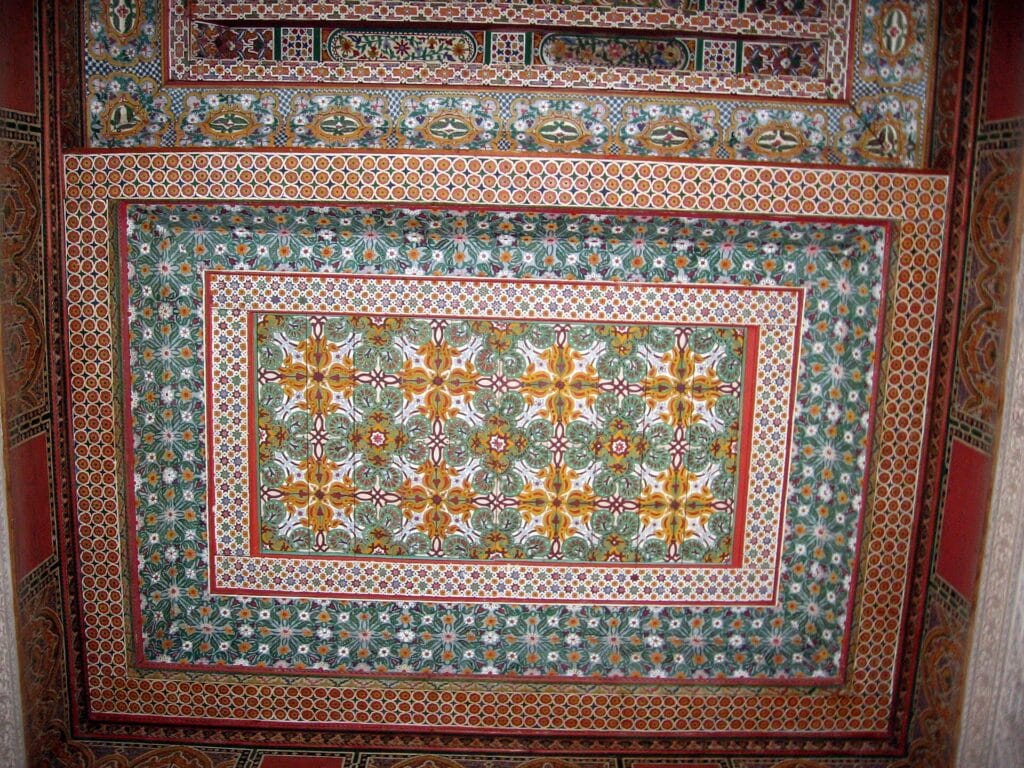
- Painted cedar wood: the ceilings and doors of Atlas cedar, carved and then hand-painted with floral and geometric motifs, are among the finest in Morocco.
- Marble and mashrabiyas: courtyards paved with marble, columns, and windows latticed with turned wood filtering the light and preserving privacy.
- Stained glass: among the first coloured glass in the Maghreb, it casts a warm light in certain rooms.
The palace also housed the outbuildings of a great lordly household: private mosque, Quranic school, hammam, stables and a network of fountains. Together they compose a striking picture of Moroccan court life on the eve of the 20th century.
Visiting the Bahia Palace: hours, prices and practical information
The palace is among the must-sees of a stay in the ochre city. Here is the practical information to prepare your visit. Note that the hours and prices are indicative and may change: it is best to confirm them on site or with the official venue before setting out.
Opening hours
The Bahia Palace is generally open every day from 9 a.m. to 5 p.m. During the month of Ramadan, the hours are often reduced (about 10 a.m. to 4 p.m.). Last entry is usually around 4:30 p.m. It may close exceptionally when hosting an official reception.
Entry prices
- Adult: about 100 MAD (indicative price).
- Child / youth: reduced rate (often around 30 to 50 MAD depending on age).
- Moroccan citizens and residents: reduced preferential rate.
- The visit is self-guided; an official guide can be hired at the entrance for an additional fee.
Where the palace is and how to get there
The palace is located in the south of the medina, in the Mellah district (the old Jewish quarter) near the Kasbah. It is easily reached on foot from Jemaa el-Fna square, in about fifteen minutes’ walk through the lively streets. In a petit taxi, simply say “Bahia Palace”. In the immediate vicinity, you can go on to other major sites such as the Saadian Tombs, the El Badi Palace or the Kasbah Mosque.
If you arrive by plane, the monument is about twenty minutes by car from Marrakech-Menara Airport, the region’s main gateway. Plan a transfer or a taxi to the medina, then a few minutes on foot.
How long and when to visit?
Allow 1 hour to 1 hour 30 to wander at leisure through the courtyards, gardens, harem and rooms open to the public. The palace receives hundreds of visitors a day and organised groups often arrive from 10 a.m.: to enjoy the place in peace and benefit from beautiful light for photos, arrive right at opening at 9 a.m. or in the late afternoon. Avoid full midday in summer, when the heat and the crowds are at their peak.
Practical tips for a great visit
- Arrive early: opening at 9 a.m. remains the best time to avoid the crowds and the heat.
- Bring cash: entry is often paid in dirhams at the ticket office; have change on you.
- Wear comfortable clothing: walking shoes and light, covering clothes, suited to visiting a heritage site.
- Look up: much of the palace’s beauty is hidden in the cedar ceilings and the stucco friezes.
- Combine your visits: pair the palace with Jemaa el-Fna, the souks and the monuments of the Kasbah for a lovely half-day in the medina.
- A guide enriches the experience: with no detailed explanatory signs, an official guide helps you understand the history of the place.
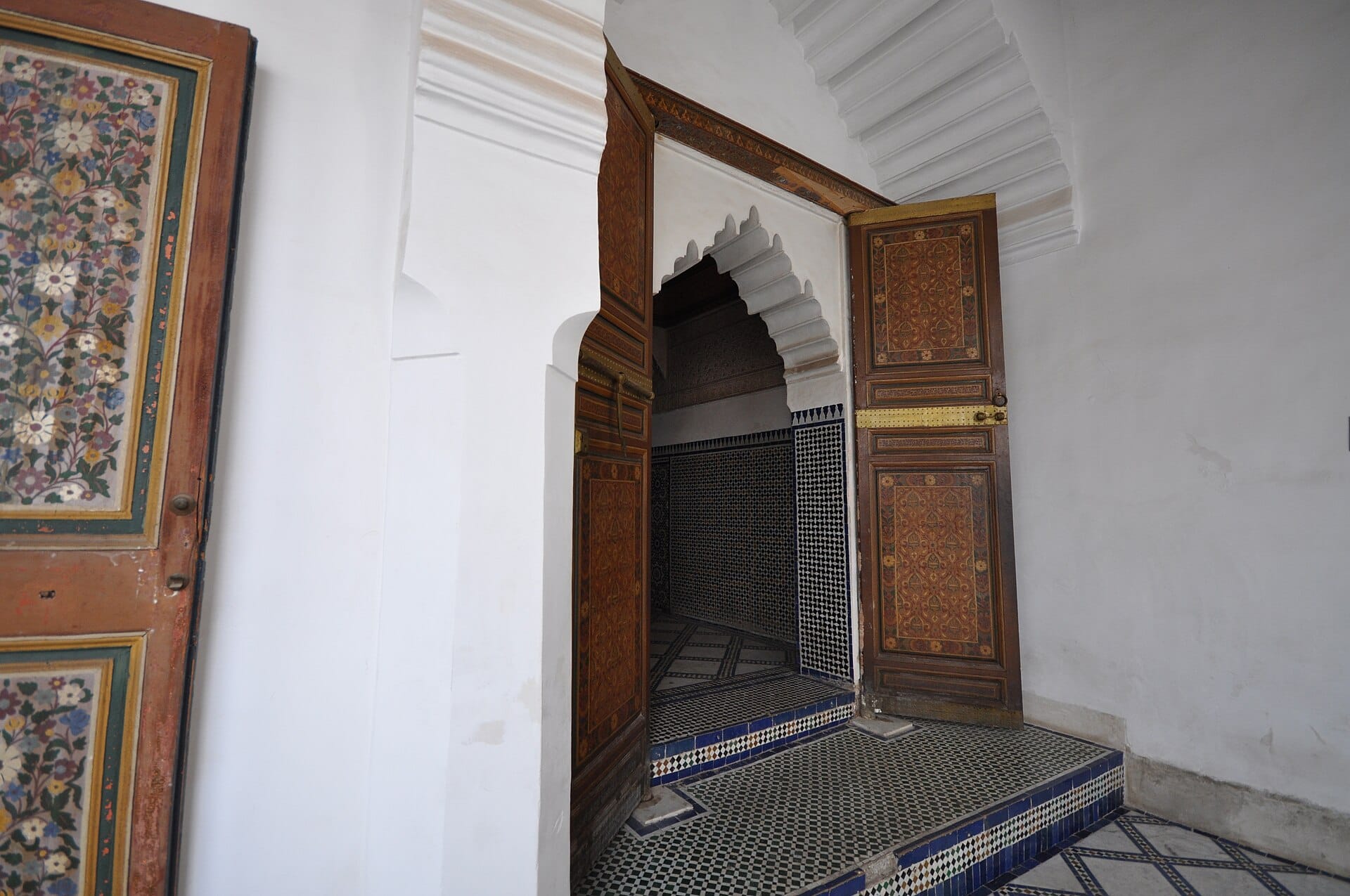
The Bahia Palace within a stay in Marrakech
The Bahia Palace fits naturally into an itinerary discovering the medina. A few steps away are the legendary Jemaa el-Fna square, the beating heart of the city, as well as the souks, the El Badi Palace and the Saadian Tombs. To organise your whole stay and miss none of the must-sees, see our complete guide to things to do in Marrakech.
The monument is part of the medina of Marrakech, a UNESCO World Heritage Site. To visit the Bahia Palace is therefore not only to admire a jewel of Moroccan architecture, but also to plunge into the political and artistic history of Morocco at the end of the 19th century. Few places tell so well the splendour of the great viziers and the refinement of the craftsmen who shaped the ochre city.
A source of inspiration for Marrakech
Beyond its historical value, the Bahia Palace has left a lasting mark on the imagination of Marrakech. Its proportions, its play of shade and light and its decoration have inspired many riads and boutique hotels of the medina, which take up the principle of the interior garden, the central fountains and the rooms lined with zellige. The palace also regularly serves as a setting for film shoots, photo sessions and official receptions, proof that its aesthetic continues to fascinate nearly a century and a half after its construction. To walk through its courtyards is to understand, in a single visit, what makes the soul of Moroccan architecture: the art of creating, in the heart of a dense and hot city, spaces of coolness, silence and beauty.
This influence partly explains why the palace remains, year after year, one of the most sought-after visits in the city. It appeals as much to history lovers as to photography enthusiasts, to families passing through as to travellers in search of a moment of calm. Whatever the season, it offers a concentrated and accessible glimpse of the heritage that the medina protects as a whole.
The Bahia Palace in film and culture
With its marble courtyards, its orange-tree gardens and its zellige decoration, the Bahia Palace offers a natural cinema setting. Since the 1960s, directors, photographers and advertising crews have come here in search of that oriental atmosphere at once sumptuous and intimate, hard to recreate in a studio. The monument thus takes its place in the long tradition of Marrakech as a filming location, a vocation the city cultivates today through its international film festival.
The shoot most often associated with the Bahia Palace is that of Greed in the Sun (Cent mille dollars au soleil), a film by Henri Verneuil released in 1964, several scenes of which, bringing together Jean-Paul Belmondo and Lino Ventura, were filmed in the palace courtyard. Marrakech and its surroundings have also served as a backdrop for many international productions, from great epic frescoes to Oscar-winning films such as Babel, which explains why the city is nicknamed the “African Hollywood” today. In the absence of detailed archives accessible to the public, it is nonetheless best to remain cautious about the exact list of works filmed within the palace walls themselves.
Beyond the big screen, the Bahia Palace continues to host fashion photo shoots, advertising shoots and official receptions. Its influence goes beyond cinema: its proportions and its play of shade and light inspire riads, hotels and interior designers who take up the principle of the central patio. For the visitor, knowing that these walls have seen stars of the seventh art pass through adds a special flavour to the stroll, somewhere between heritage and legend.
Combining the visit: the monuments near the palace
One of the great assets of the Bahia Palace is its location, in the heart of a historic district where several major Marrakech monuments are concentrated. On leaving the palace, you can easily continue on foot to four emblematic sites, all reachable in a few minutes’ walk. Enough to make up a lovely half-day, or even a full day, entirely devoted to the south of the medina and the Kasbah.
- Place des Ferblantiers: located right next to the palace, this lively square owes its name to the tin and brass craftsmen who still shape lanterns and decorative objects here. It is the ideal starting point for reaching the other monuments.
- The El Badi Palace: a stone’s throw away, these grandiose ruins built by the Saadian sultan Ahmad al-Mansour at the end of the 16th century offer a striking contrast with the Bahia. Where the Bahia impresses with its intact decoration, El Badi fascinates with its monumental remains and its views over the medina from the ramparts.
- The Saadian Tombs: this royal necropolis, long walled up and then rediscovered at the beginning of the 20th century, holds the burial places of the Saadian dynasty beneath cedar ceilings and marble columns of remarkable finesse, near the Kasbah Mosque.
- The Mellah: the old Jewish quarter of Marrakech, created in the 16th century, is discovered along its alleys, its spice market and its old synagogue, witnesses to a rich multicultural history.
To make the most of this exceptional concentration, start early with the Bahia Palace, still quiet at opening, then continue towards Place des Ferblantiers, El Badi, the Saadian Tombs and finally the Mellah. Keep cash in dirhams for the ticket offices and bring water, a cap and good shoes: the whole route is covered on foot and makes up one of the richest itineraries in the entire medina.
FAQ – Bahia Palace in Marrakech
Who built the Bahia Palace?
The palace was built in two stages: the grand vizier Si Moussa had the northern part built around 1866-1867, then his son Ba Ahmed (Ahmed ben Moussa) considerably enlarged it between 1894 and 1900. The architectural design is attributed to Mohammed al-Makki.
What does the name “Bahia” mean?
“Bahia” means “the beautiful” or “the brilliant” in Arabic. According to tradition, this name is said to have been given in tribute to Ba Ahmed’s favourite wife.
What are the hours and price of the Bahia Palace?
The palace is generally open every day from 9 a.m. to 5 p.m. (reduced hours during Ramadan). Adult entry costs about 100 dirhams, with reduced rates for children and residents. This information is indicative and should be confirmed on site.
How long does it take to visit the Bahia Palace?
Allow about 1 hour to 1 hour 30 to walk through the main courtyards, the gardens, the harem and the rooms open to the public.
Where is the Bahia Palace in Marrakech?
The palace is located in the south of the medina, in the Mellah district, near the Kasbah. It is reachable on foot from Jemaa el-Fna square in about fifteen minutes, and about twenty minutes by car from Marrakech-Menara Airport.
Is the Bahia Palace worth it?
Yes. It is one of the most visited monuments in Marrakech and one of the finest examples of Arab-Andalusian architecture in the country, with its patios, its gardens and its exceptional decoration of zellige, stucco and painted cedar ceilings. It is part of the medina listed as a UNESCO World Heritage Site.
Going further
To delve deeper into the history and architecture of the monument, you can consult the encyclopedic entry on the Bahia Palace on Wikipedia, as well as the official listing of the medina of Marrakech on the UNESCO website.
Photo credits
Images under free licence via Wikimedia Commons: courtyard © János Korom (CC BY-SA 2.0); ceiling © Chris Martin (CC BY-SA 2.0); door © Jorge Láscar (CC BY 2.0). Sources: UNESCO and Wikipedia.
Disclaimer: this guide is published independently and is affiliated neither with the management of the Bahia Palace nor with any official body. The hours, prices and visiting conditions mentioned are given purely for guidance and are subject to change; we invite you to check them with the official sources or on site before your visit.