Quick answer: the Marrakech Palm Grove (Palmeraie) is a vast historic oasis of nearly 15,000 hectares, planted from the 11th century onwards and long home to more than 100,000 date palms, located about ten kilometres north-east of the city centre. People come mainly for a camel ride in Marrakech, a quad-bike or buggy outing on the red-earth tracks, a horse-drawn carriage ride, a visit to the Palmeraie Museum and the golf courses that line the oasis. The best period runs from autumn to spring, early in the morning or late in the afternoon. As a guide, allow from around €20 for a one-hour camel ride, with hotel transfers usually included.
In brief: the Marrakech Palm Grove
- What? A historic oasis of date palms at the gates of Marrakech, born under the Almoravids.
- Where? About 10 km north-east of the centre, between the roads to Fez and Casablanca.
- Area: nearly 15,000 hectares; up to 100,000 palms at its peak.
- Flagship activities: camel, quad bike, buggy, carriage, art museum, golf.
- When to go? From October to April, at daybreak or at the end of the day.
- Indicative budget: from around €20 for the camel (1 hr) and €30 for the quad bike (2 hrs).
- Recommended duration: a half-day is enough, a full day with lunch and the museum.
What is the Marrakech Palm Grove?
The Marrakech Palm Grove is a vast oasis that encircles the north and north-east of the Red City. Born from a deliberate planting of date palms nearly a thousand years ago, it now spreads over about 15,000 hectares and forms one of the region’s green lungs. Long described as a forest of palms that could reach 100,000 specimens, it mixes date palms, olive trees, fruit trees and irrigated market gardens, all crossed by beaten-earth tracks where you still come across donkeys, camels and small pisé villages.
Contrary to what many imagine, the Palm Grove is not a fenced park you visit with an entry ticket: it is an immense semi-agricultural territory, today partly urbanised, where charming riads, luxury hotels, villas and golf courses have settled. You discover it on the move — on camelback, by quad bike, by carriage or by car — rather than by strolling from one monument to the next. It is this living-oasis atmosphere, just minutes from the buzz of the medina, that gives it all its charm.
The Palm Grove remains above all a lived-in, worked place. Between the large estates, you still come across small douars (hamlets), pisé houses, vegetable plots and herds, where Moroccan rural life carries on to the rhythm of the seasons. The inhabitants tend the palms, harvest the dates in autumn and grow olive, orange and vegetable crops in the shade of the great trees. This juxtaposition of international luxury and traditional agriculture gives the oasis a unique identity, a world away from the postcard cliché: the Palm Grove is alive, contrasted, sometimes worn, but always endearing.
An oasis at the gates of the Red City
The Marrakech Palm Grove lies about ten kilometres from the historic heart, in the northern-eastern outskirts of the conurbation, between the routes heading towards Fez and Casablanca. Its proximity to the city makes it an ideal half-day escape: you leave behind the bustle of Jemaa el-Fna square and, in about twenty minutes by road, you find yourself on tracks lined with palms, with the snow-capped Atlas as a backdrop for much of the year. To understand the geographical and historical context of the city, the encyclopaedic entry for Marrakesh on Wikipedia offers a good overview.
Key figures of the Palm Grove
- Founded: around 1070, under the Almoravid dynasty.
- Area: about 15,000 hectares.
- Palms: up to 100,000 date palms at its peak.
- Distance from the centre: around ten kilometres.
- Irrigation: an ancestral system of khettaras (underground galleries).
- Status: recognised natural heritage, but weakened by urbanisation.
These few figures are enough to gauge the scale of the place: the Palm Grove is not a one-off curiosity but a genuine landscape in its own right, shaped by centuries of hydraulic and agricultural ingenuity.
History and legend of the Marrakech Palm Grove
The history of the Palm Grove merges with that of the city itself. Around 1070, the Almoravid sultan Youssef ben Tachfine chose this arid plain to found Marrakech, the future capital of an empire that would stretch from the Sahara to Andalusia. Where there was only a military camp and dry land, an oasis gradually took shape, nourished by water captured in the foothills of the Atlas. The Palm Grove then became the green granary of the city, providing dates, wood, oil and welcome shade under the Moroccan sun.
The legend of the date stones
A charming legend, very popular in Marrakech, surrounds the birth of the Palm Grove. It is said that the soldiers of Youssef ben Tachfine, camped on the spot, ate dates brought back from the desert and threw the stones around their bivouac. Some of these stones are said to have fallen into the holes left by lances planted in the ground, found moisture and warmth there, and then germinated. From these scattered seeds, so the story goes, gradually grew the palm forest we know today. As so often, the historical reality is more prosaic — the planting was methodically organised and irrigated — but this legend speaks well of the intimate bond between the city, the desert and the date palm.
The khettaras, a genius of irrigation
The real miracle of the Palm Grove is water. To make a semi-desert plain green, the Almoravid builders developed an ingenious network of khettaras: underground galleries, akin to the Persian qanats, which tap the groundwater fed by the melting snows of the Atlas and channel the water by gravity, over kilometres, to the crops. This system allowed irrigation without a pump and while limiting evaporation. Long maintained from generation to generation, these khettaras ensured the survival of the oasis for centuries. Their decline, linked to the drilling of modern wells and the fall of the water table, is today one of the great threats hanging over the Palm Grove.
To extend the discovery of the city’s heritage, the historic medina of Marrakech is moreover listed by UNESCO as a World Heritage Site, a testament to the cultural richness that surrounds the Palm Grove.
What to do in the Marrakech Palm Grove? The best activities
The Palm Grove is above all experienced as a playground and a place to ride out. Here are the must-do activities, from the most peaceful to the most active, to shape your programme according to your mood and budget.
The camel ride, the must-do
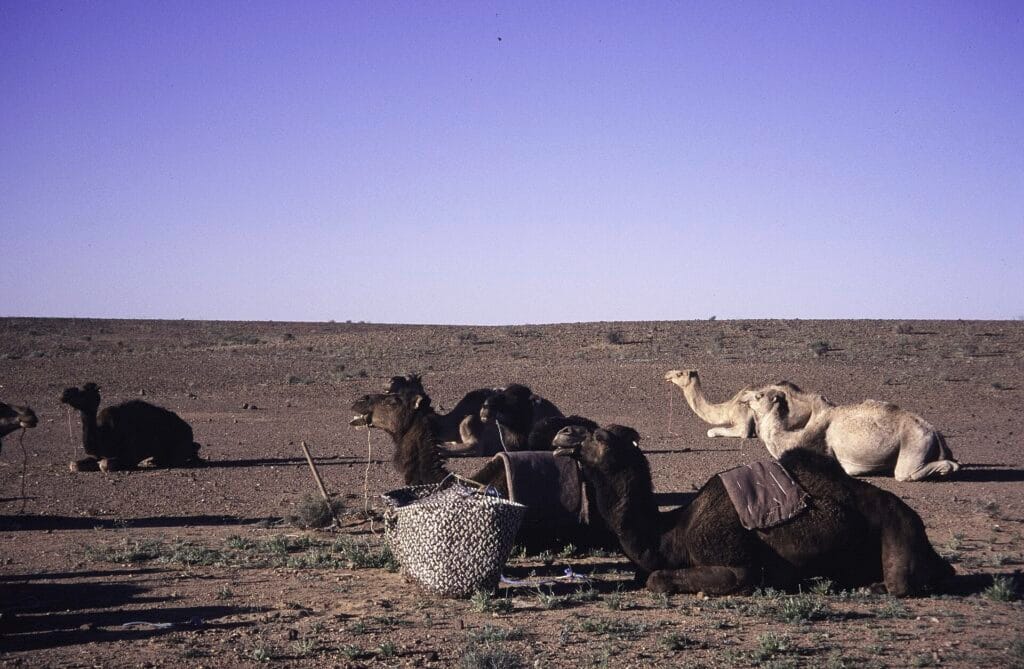
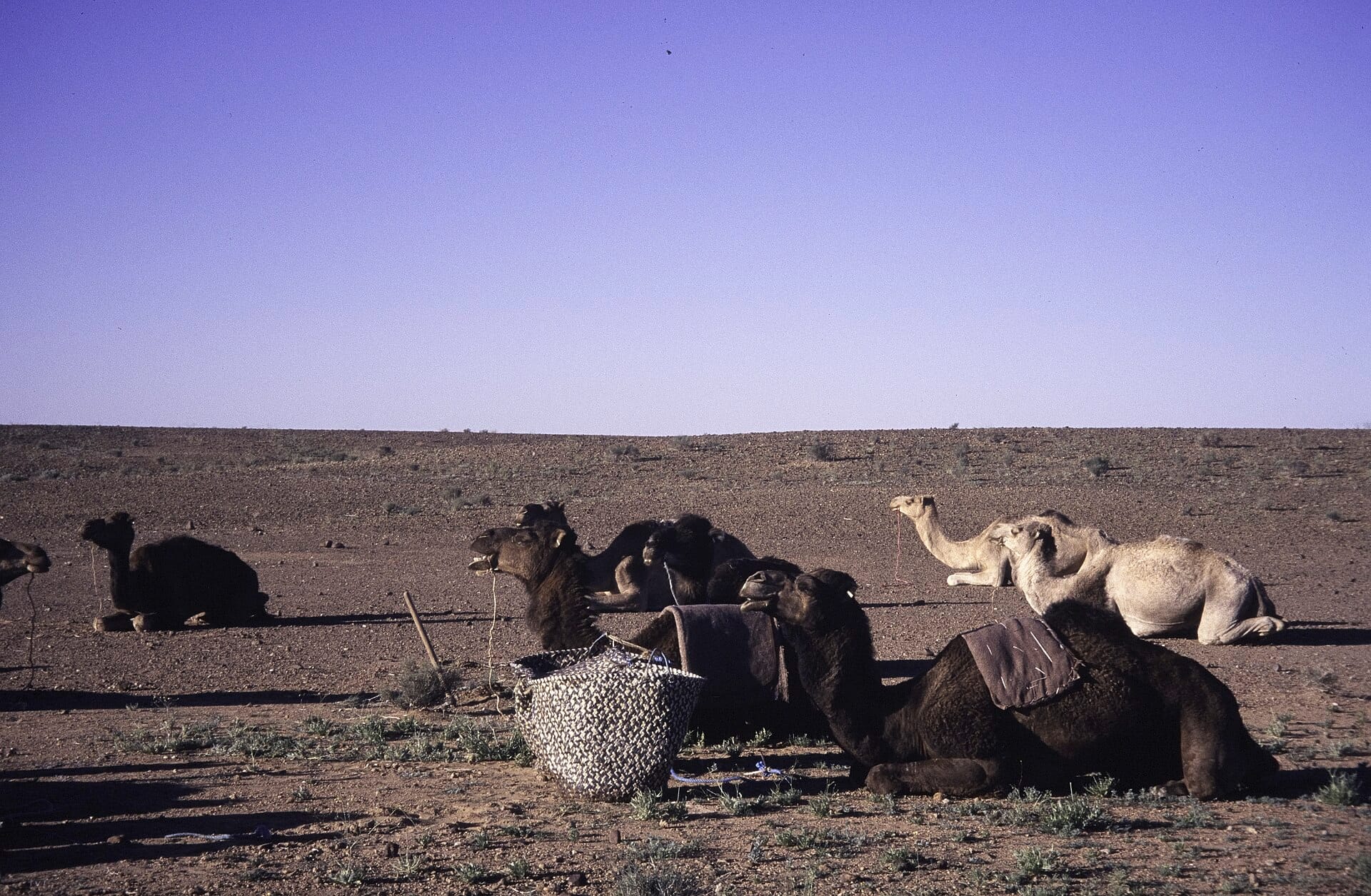
This is the signature experience of the place. The camel ride in Marrakech proceeds at walking pace, in caravan, along the red-earth tracks, often accompanied by a camel driver in traditional dress and sometimes a mint-tea break under a Berber tent. The slow pace invites you to enjoy the scenery, photograph the palms and soak up the atmosphere of the oasis. It is a family activity, accessible to children and beginners alike, particularly magical in the late afternoon when the light gilds the trunks. Bring covering clothes, a hat and sun cream, as there is little shade along the route.
Quad bike and buggy on the tracks
For thrill-seekers, the quad bike and the buggy are king in the Palm Grove. The circuits mix oasis tracks, crossings of villages, passages near the jbilet (rocky hills north of the city) and sometimes stretches of stony desert. The buggy, more powerful and two-seater, appeals to those who want to drive as a pair; the quad bike, more nimble, suits beginners well after a briefing. These outings, supervised by instructors, generally include a helmet, goggles and sometimes a scarf against the dust. A very popular combination is to string together a quad-bike session and then a camel ride in the same half-day.
The carriage, the romantic ride
A Marrakech institution, the horse-drawn carriage lets you reach and travel through the Palm Grove gently, to the sound of hooves. From the edges of the medina or Guéliz, a popular route links the city to the oasis by crossing certain residential districts and the great palm-lined avenues. It is a restful option, ideal as a couple or a family, for those who prefer calm sensations to engines. Agree on the price and the duration before setting off, as the fare is traditionally negotiated beforehand.
The Palmeraie Museum and its gardens
Opened in 2011 by the botanist and perfumer Abderrazzak Benchaâbane, the Palmeraie Museum is a welcome cultural stop at the heart of the oasis. Housed in restored former agricultural pisé buildings, it presents around fifty Moroccan artists through paintings, photographs, calligraphy, sculptures and contemporary art installations. But the museum is also worth it — and perhaps above all — for its two-hectare park: an Andalusian garden, a dry garden, a water garden, a vegetable garden, an orchard and a collection of fragrant rose bushes unfold there in a peaceful atmosphere. A perfect visit to catch your breath between two outdoor activities and understand the Moroccan relationship with nature and the garden.
Golf in an exceptional setting
The Palm Grove and its surroundings include some of the finest courses in Morocco. The Palm Golf Marrakech, with its vast fairways laid out in the oasis, and the Atlas Golf Resort are among the addresses appreciated by players, who enjoy a backdrop of palms and mountains. Playing golf here, often early in the morning, lets you combine sport, relative coolness and panoramas over the Atlas. Even without clubs, several resorts open their restaurants and terraces with a view over the greens.
Relaxation, spa and lunch at the oasis
Finally, the Palm Grove is also a place for lazing around. Many hotels and complexes offer “pool + lunch” days, hammams and spas where you can extend the relaxation after a sporty morning. It is an opportunity to sample Moroccan cuisine — tagine, pastilla, salads — in a green setting, away from the hustle. To organise your stay as well as possible and alternate activities and rest, see our guide on where to stay in Marrakech.
Indicative prices for activities in the Palm Grove
Prices vary according to the provider, the season, the duration and whether transfers from the hotel are included or not. The ranges below are given purely as a guide, to help you plan your budget; always check the exact price and what it includes at the time of booking.
| Activity | Average duration | Indicative price |
|---|---|---|
| Camel ride | 1 hour | from around €20 |
| Quad bike | 2 hours | from around €30 |
| Buggy | 2 hours | from around €90 |
| Quad + camel combo | 2 to 3 hours | from around €45 |
| Carriage | 1 to 2 hours | to be negotiated before departure |
| Palmeraie Museum | 1 to 2 hours | modest entry fee |
Good to know: most quad-bike, buggy and camel offers include the return transfer from your hotel or riad, which simplifies the logistics. Remember to book the day before in high season. For other ideas for outings in the surrounding area, our feature excursions from Marrakech 2026: complete guide and prices details the best escapes from the city.
How to get to the Marrakech Palm Grove?
As the Palm Grove is very extensive and about ten kilometres from the centre, it is better to plan your transport. Here are the main options:
- Included transfer: the simplest. Most activities (quad bike, buggy, camel) provide a shuttle from your accommodation.
- Taxi: the “petits taxis” and “grands taxis” reach the area easily; agree on the price or insist on the meter before getting in.
- Carriage: picturesque, ideal for the outward trip if you want to turn the journey into a ride in itself.
- Rental car: handy for exploring freely, but the signposting of the tracks is limited.
- Bike or scooter: for the more adventurous, with caution on the busy roads.
If you are just arriving in Morocco, most transfers to the Palm Grove can be arranged as soon as you land at Marrakech Menara Airport (RAK), located less than 20 minutes from the city. It is often the most convenient starting point to reach your hotel and then the oasis.
Best time to visit and practical tips
When to visit the Palm Grove?
The best period to enjoy the Marrakech Palm Grove runs from autumn to spring, that is from October to April, when temperatures stay pleasant. Spring is particularly enjoyable, with soft light and lush nature. In summer, the heat can be overwhelming in the middle of the day: favour the very start of the morning or the late afternoon. Sunset over the palms is a highlight, to reserve for your camel ride if you can.
Our tips for a successful visit
- Protect yourself from the sun: hat, sunglasses, sun cream and water, as shade is scarce.
- Dress appropriately: trousers and closed shoes for the quad bike and buggy.
- Book in advance: especially in high season and for the sunset slots.
- Negotiate and confirm: for carriages and services without a displayed price, set the fare beforehand.
- Respect the place: the Palm Grove is an inhabited agricultural area, stay on the authorised tracks.
- Tipping: a small gesture towards guides and camel drivers is customary and appreciated.
To fit the Palm Grove into a stay balanced between medina, gardens and surroundings, our Marrakech in 3 days itinerary offers an easy-to-follow day-by-day programme.
Where to stay in the Marrakech Palm Grove?
The Palm Grove has established itself as one of the most sought-after addresses for a quiet stay, far from the buzz of the medina. Here you will find sumptuous riads, private villas with pools, boutique hotels and large resorts with spas and golf courses. The atmosphere is hushed, green, ideal for a honeymoon, a wellness stay or a family holiday with a need for space. The trade-off to know: you are a few kilometres from the centre, so you have to plan journeys to reach the major sites. Many establishments do, however, offer regular shuttles to the medina.
To compare the districts and choose according to your travel style, refer to our complete guide on where to stay in Marrakech, which details the advantages of the Palm Grove compared with the medina, Guéliz or Hivernage.
The Palm Grove in the face of urbanisation
It is impossible to discuss the Palm Grove without mentioning its fragility. Long preserved, the oasis has for a few decades faced strong property pressure: hotels, villas, residences and golf courses have gradually settled on the historic lands, while the ageing of the palms, diseases, lack of upkeep and the falling water table reduce the number of living trees. The decline of the traditional khettaras, replaced by boreholes, worsens the water stress on the oasis.
Recognised as natural heritage but long without strict formal protection, the Palm Grove is the subject of safeguarding, replanting and awareness initiatives. As a visitor, you contribute to its preservation by staying on the tracks, choosing environmentally respectful providers and supporting local players. That too is part of travelling responsibly in Marrakech: enjoying the landscape while taking care not to accelerate its degradation.
The Palm Grove in your Marrakech stay
A half-day is enough to taste the essentials of the Palm Grove: a camel or quad-bike ride, a tea break, possibly the museum and its garden. But you can also devote a full day to it by adding lunch at the oasis, a round of golf or a spa moment. Many travellers fold it into their first or last day, as it offers a gentle transition between the bustle of the city and the serenity of the countryside. To build a complete programme and miss none of the must-sees, rely on our pillar guide things to do in Marrakech: the complete guide.
FAQ: the Marrakech Palm Grove
Is there a charge for the Marrakech Palm Grove?
No, the Palm Grove is not an enclosed site with an entry ticket: it is a vast territory you cross freely. It is the activities (camel, quad bike, buggy, carriage) and the Palmeraie Museum that are paid for. You therefore only pay for what you choose to do on site.
How much does a camel ride in Marrakech cost?
As a guide, allow from around €20 for a one-hour camel ride in the Palm Grove, with the transfer from the hotel often included. The exact price depends on the provider, the duration and the extras (tea, Berber tent). Always check what the offer includes when booking.
What is the best time to visit the Palm Grove?
The ideal period runs from October to April, with spring particularly pleasant. In any season, prefer the start of the morning or the end of the afternoon to avoid the heat, with sunset offering the finest light over the palms.
How do you get to the Palm Grove from the centre of Marrakech?
The Palm Grove is about ten kilometres from the centre. The simplest is to take advantage of the transfer included in your activity. Otherwise, a taxi (meter or price negotiated in advance), a carriage or a rental car let you get there easily in 15 to 25 minutes.
What family activities can you do in the Palm Grove?
The camel ride and the carriage are perfect with children, as is a visit to the Palmeraie Museum and its gardens. The quad bike and buggy suit teenagers and adults, with a minimum age depending on the provider. A pool day at a resort ideally rounds off the family programme.
How much time should you allow to visit the Palm Grove?
A half-day is enough for one or two activities and a break. If you want to string together a camel ride, museum, lunch and relaxation, plan for a full day. The Palm Grove fits very well at the start or end of a stay, as a breather between two days of sightseeing in the city.
Images under a free licence via Wikimedia Commons: © WM (CC BY-SA 4.0); © Ymblanter (CC BY-SA 4.0). Sources: UNESCO and Wikipedia.Photo credits
Images to be inserted from a royalty-free bank (Unsplash, Pexels, Wikimedia Commons). Replace the markers IMAGE_1 to IMAGE_3 with visuals of the Marrakech Palm Grove, with author attribution if the licence requires it. Credits: © their respective authors.
Disclaimer: the prices, opening hours and practical information mentioned in this article are given purely as a guide and may change. They do not constitute a commercial offer. Always check the up-to-date rates and conditions directly with the providers before any booking.