What to buy in Marrakech? The safe bets are Berber rugs, leather babouches (slippers), lanterns and chiselled-metal light fittings, Safi and Tamegroute pottery, argan oil and natural cosmetics (black soap, ghassoul), spices and ras el-hanout, mint tea and its teapot, leather goods and traditional clothing. The real question is not only what to buy, but where to buy it in the maze of the souks, how to tell the authentic from the factory-made, and at what price. This guide to Marrakech souvenirs answers everything, quarter by quarter, with realistic price ranges and the customs rules for getting home with peace of mind.
Marrakech, the “red city” listed by UNESCO as a World Heritage Site for its medina, is one of the greatest craft marketplaces in the Arab world. Its shopping is like no other: here you rummage among artisans who hammer brass, dye wool or sew leather before your eyes. This guide is specific to Marrakech; for a nationwide overview of Moroccan products, see our dedicated article authentic souvenirs: what to bring back from Morocco.
In short: the best souvenirs from Marrakech
- Decor & crafts: Berber rug, metal lantern, Tamegroute pottery (green) and Safi pottery (blue), engraved metal tray and teapot.
- Leather: babouches, bags, poufs and leather goods from Souk Cherratine.
- Fine food: ras el-hanout, saffron, cumin, mint tea, amlou, culinary argan oil.
- Natural cosmetics: cosmetic argan oil, beldi black soap, ghassoul (rhassoul), rose water.
- Textiles: djellaba, kaftan, foutas and wool blankets.
- Where to buy: the souks of the medina north of Jemaa el-Fna, the Spice Square (Rahba Kedima), and the Ensemble Artisanal for fixed prices.
- Realistic budget: from a few dozen dirhams (spices, small babouches) to several thousand (rugs, large metalwork).
Where to shop in Marrakech: souks and quarters
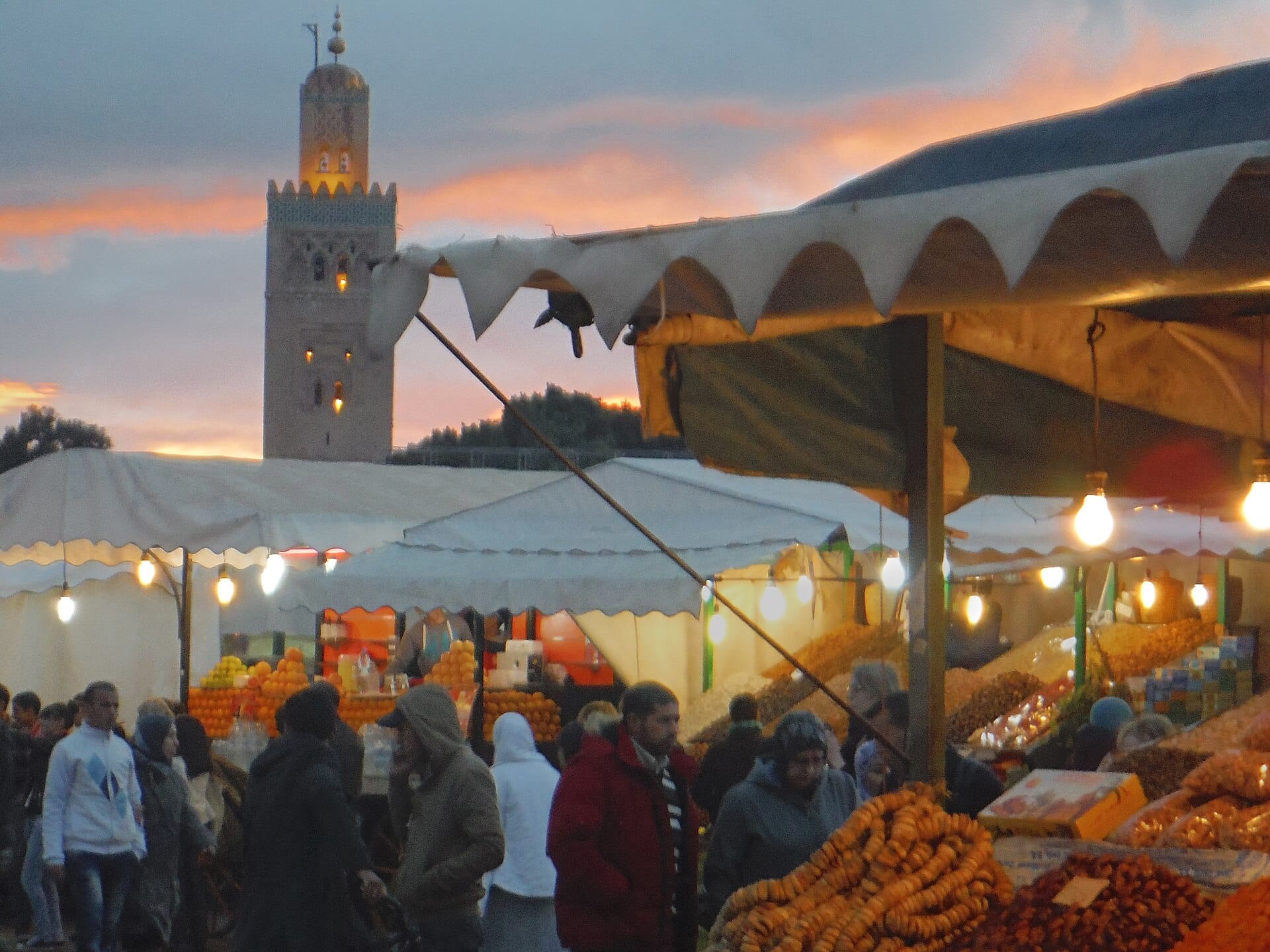
Before talking products, let’s talk geography. Knowing where to go saves you from going round in circles and paying too much. Most shopping is concentrated in the medina, north of Jemaa el-Fna square, where the alleys are historically organised by trade. For a detailed exploration of the labyrinth, our guide to the Marrakech souks takes you lane by lane.
The souks of the medina, by speciality
- Souk Semmarine: the main artery leading from Jemaa el-Fna. Textiles, rugs, souvenirs, babouches, jewellery. The busiest, so not the cheapest.
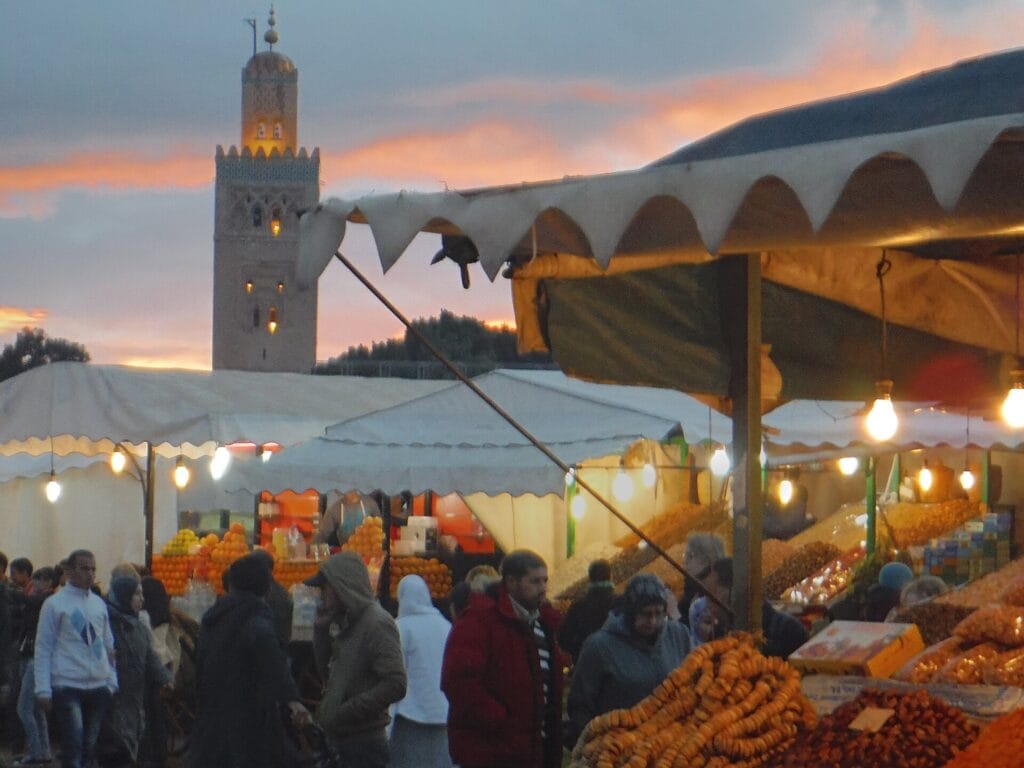
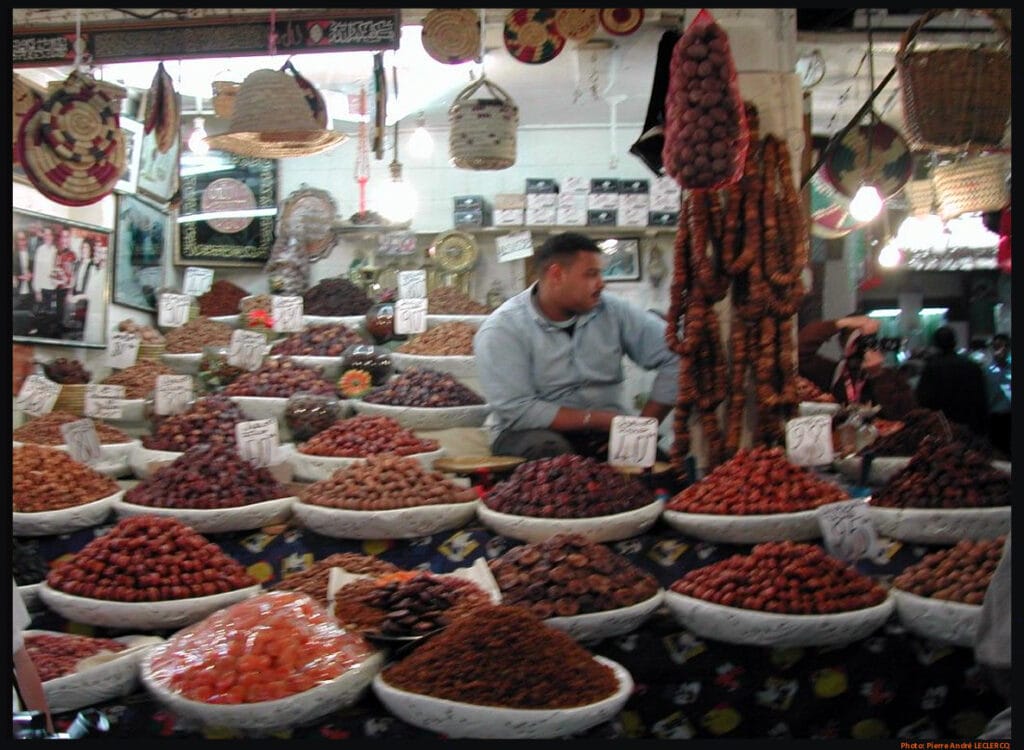
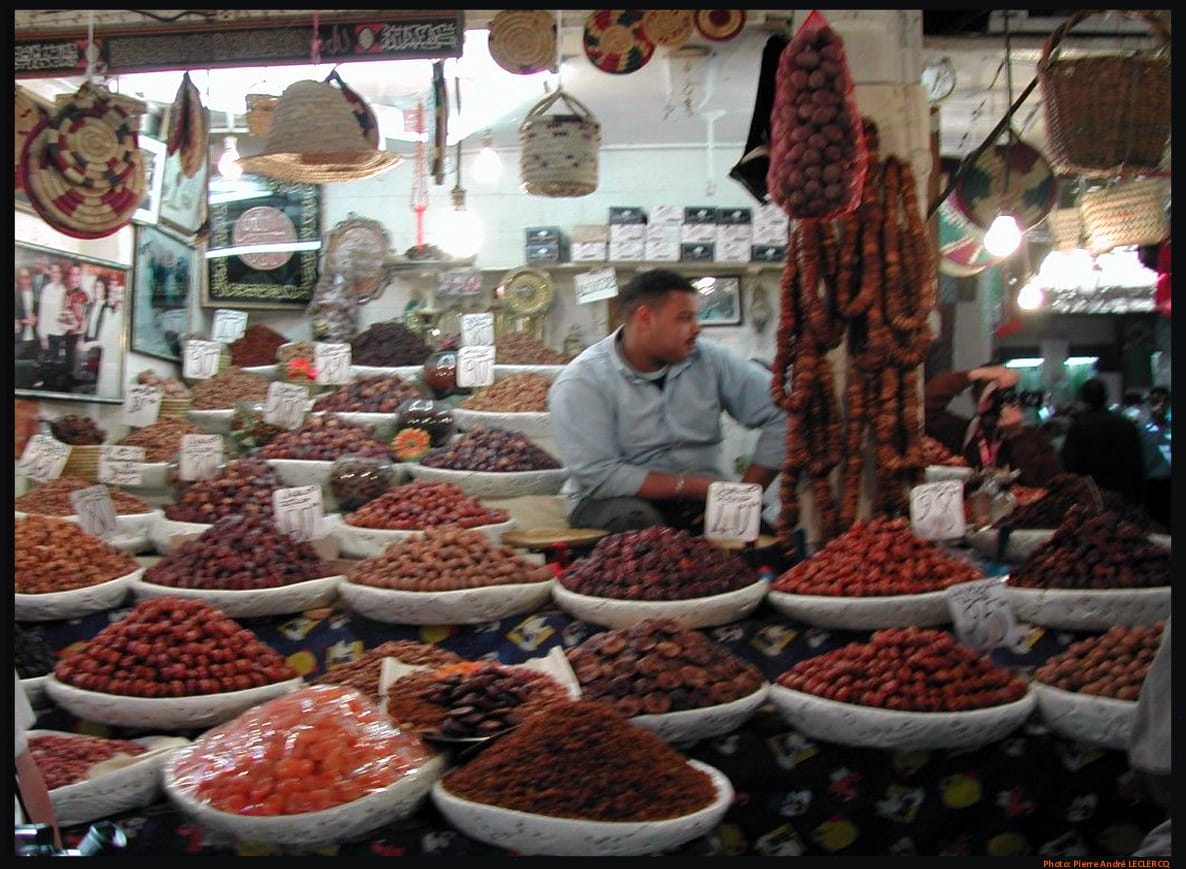
- Rahba Kedima (Spice Square): the heart of spices, herbs, natural cosmetics, hats and baskets. Authentic atmosphere and good deals on small items.
- Souk Cherratine: the leather quarter. Bags, poufs, belts, wallets, quality leather goods worked on the spot.
- Souk Haddadine: the ironworkers. This is where the lanterns, light fittings and metal objects are hammered.
- Souk Smata (Semmata): the babouche street, lined up by the hundred and by colour.
- Souk Sebbaghine (the dyers’): the skeins of dyed wool drying above the alleys, very photogenic.
The Ensemble Artisanal: fixed prices, no bargaining
If bargaining stresses you out, the Ensemble Artisanal (Avenue Mohammed V, between the medina and Guéliz) is a state-supported complex where artisans sell at displayed, fixed prices. Quality is monitored: rugs, metalwork, leather, cosmetics, pottery, musical instruments. The place also serves as a barometer: note the prices here, then go back to bargain in the souks knowing the “fair value”.
Guéliz: modern shopping and concept stores
The Guéliz quarter, the new town, offers another side: designer boutiques, design concept stores, packaged organic cosmetics, delicatessens and international brands. Prices there are fixed and higher, but the quality and presentation (ideal for gifts) are there. A good option for certified argan oil and “ready-to-give” presents.
Decorative crafts: rugs, lanterns and pottery
The Berber rug, the centrepiece
This is the king of Marrakech souvenirs, and often the biggest budget item. Berber rugs come in several families: the Beni Ouarain (ivory wool, black geometric patterns, thick and cosy), the Boucherouite (colourful, woven from recycled fabric scraps, more affordable), the kilim (flat weave, light), and the knotted rugs of Tazenakht or Taliouine, finer and more expensive.
How to recognise a genuine hand-knotted rug: turn it over. On the back, the pattern should be visible and the knots slightly irregular (proof of hand work). An industrial rug has a uniform back, often with a cotton weft and a rubberised backing. Look for real sheep’s wool (warm to the touch, slightly greasy) rather than acrylic (cold, shiny). As a guide, expect 1,500 to 3,500 MAD for a medium rug, more for large knotted and antique pieces. Allow time: buying a rug is a ritual with mint tea.
Lanterns and metal light fittings
Chiselled lanterns, which cast patterns of light onto the walls, are one of the most iconic and easiest-to-carry purchases (the small ones, at least). You find them in iron, aluminium or brass, sometimes set with coloured glass. Tin and aluminium models are the lightest and cheapest (expect from around a hundred dirhams for a small piece); solid hand-chiselled brass climbs much higher (several hundred to over a thousand dirhams). Check the welds and, if you intend to wire it up, access to the bulb holder.
Pottery: Safi the blue, Tamegroute the green
Two traditions dominate. Safi pottery, from the Atlantic coast, is recognisable by its cobalt blue and its hand-painted geometric patterns. Tamegroute pottery, from southern Morocco (the Drâa valley), has an incomparable deep green to ochre-brown glaze, obtained from clays rich in silica and copper oxide, fired in traditional kilns: each piece is unique, with its drips. These ceramics (plates, bowls, decorative tagine dishes) travel well provided they are very carefully packed. Note: a “decorative” tagine dish is not always designed for cooking — ask whether the piece is food-safe and flame-compatible.
Metalwork: trays, teapots and zellige
Metalwork (working copper, brass and silvered metal) produces superb engraved trays, teapots, boxes and mirrors. You also find small objects in zellige (glazed terracotta mosaic): trivets, trays, side tables. “Silvered metal” teapots are a classic, often bought as a set with the tray and colourful tea glasses. Check the sturdiness of the lid hinge and the absence of leaks for a teapot intended for real use.
Leather and babouches: the Marrakech must-have
Babouches
These pointed-toe slippers (the belgha) are the ultimate “small budget” souvenir, available in every colour at Souk Smata. A good pair in natural goat or calf leather is around 80 to 200 MAD; embroidered or velvet models climb higher. Recognising real leather: it gives off a characteristic smell, has slight irregularities and bends without “cracking” like synthetic. Be wary of soles that are too thin and wear out quickly; for real use, choose a reinforced sole.
Leather goods: bags, poufs and belts
Souk Cherratine concentrates the leather goods: tote bags, pouches, wallets, belts and the famous leather poufs (sold empty, to be stuffed at home). Moroccan leather, traditionally tanned, is renowned but can have a strong smell at first (it fades). For a pouf, check the quality of the stitching, as it will have to withstand a substantial stuffing. A genuine leather pouf, unstuffed, usually costs a few hundred dirhams.
Spices, tea and treats to bring back
Ras el-hanout and spices
Ras el-hanout (“the best of the shop”) is the emblematic blend: it can bring together 15 to 30 spices subtly measured out (cumin, cinnamon, ginger, pepper, sometimes rosebuds or galangal), and its composition varies from one merchant to the next. Also bring back cumin, turmeric, paprika and saffron (beware of counterfeits: real saffron is expensive and sold in threads, not as cheap powder). Good to know: powdered spices are considered solids, so allowed in the cabin as well as in the hold.
Mint tea and teapot
Gunpowder green tea, the base of the famous mint tea, is easy to bring back, as are the sugar loaves and coloured tea glasses. Put together a small “tea ritual” set: silvered-metal teapot, glasses and green tea. It is a much-appreciated gift and representative of Moroccan hospitality.
Sweets and fine foods
On the sweet side: amlou (a spread of almonds, argan and honey), honey, dates, olives and culinary argan oil (with a roasted-hazelnut taste, to be distinguished from the cosmetic version). Fresh pastries (gazelle horns, ghriba) are delicious but fragile: favour packaged versions for transport.
Natural cosmetics: argan, black soap and ghassoul
Argan oil: how to recognise the real thing
Argan oil is Morocco’s cosmetic treasure, but also the most adulterated product (cut with other oils). A few reliable markers:
- Colour: the cosmetic oil (cold-pressed) is pale yellow; a dark yellow colour indicates a roasted kernel, reserved for culinary use.
- Smell: the cosmetic version is almost neutral; the culinary one smells of roasted hazelnut. A “cosmetic” oil that smells strong is suspect.
- Texture: slightly viscous, it penetrates without leaving a thick greasy film.
- Price: a 100% pure oil cannot be sold off cheap. Producing 1 litre takes about 15 hours of manual work from around 30 kg of fruit: be wary of knock-down prices.
The best purchase is made at a women’s cooperative (often certified), where you can see the cracking of the nuts and the oil comes with a sealed cap. Pack it well: it is a liquid.
Black soap (beldi) and ghassoul
Beldi black soap, an olive paste used in the hammam, exfoliates and softens the skin (to be paired with the kessa glove). Ghassoul (or rhassoul) is a mineral clay extracted in the Atlas, used for centuries to gently wash hair and skin — its name comes from the Arabic ghassala, “to wash”. Light, dry, unbreakable: it is the ideal cosmetic souvenir to slip into your suitcase. Add some rose water or orange-blossom water for a mini spa set.
Berber jewellery and thuya wood objects
For a more personal souvenir, Berber silver jewellery (rings, necklaces, earrings, fibulae and the famous Hand of Fatima) is loaded with protective symbols. Check the hallmark when looking for real silver, as many cheap pieces are silvered metal: the price difference is clear and openly acknowledged. Amber and coral beads, as well as reconstituted synthetic amber necklaces, are a classic of southern Morocco — always ask whether it is natural or reconstituted amber.
Another craft speciality: the thuya wood of Essaouira, also found in Marrakech. This dense wood with a marbled grain, polished and varnished, is used to make boxes, trays, trivets, chess sets and small sculptures. Light, unbreakable and fragrant, it is an excellent, easy-to-carry gift. Check the finish (even sanding, sturdy hinges) and beware of imitations in glued reconstituted wood.
Traditional clothing and textiles
Marrakech also dresses its visitors. The djellaba (long hooded robe) and the kaftan (embroidered ceremonial outfit) are elegant and comfortable. For everyday use back home, the foutas (woven cotton towel-wraps), the wool blankets and throws, cushions and embroidered tablecloths are easier to fit into an interior. Check the composition (cotton or real wool vs synthetic) and the regularity of the seams and embroidery.
How to bargain in Marrakech (without stress)
In the souks, bargaining is part of the game and of the culture — but it follows rules. The asking price is often 2 to 3 times the real value. Here is the method:
- First scout the fair value at the Ensemble Artisanal (fixed prices) before diving into the souks.
- Counter-offer low but politely: start at around 40 to 50% of the announced price, then converge towards the middle.
- Stay smiling and relaxed. A smile, humour and the accepted tea bring prices down more surely than aggression.
- Be ready to walk away. Walking off is your best argument; you will often be called back.
- Buy in bulk. Several babouches or scarves together = better unit price.
- Pay in cash (dirhams) and have the exact amount; cards are rare in the stalls.
- For a rug, allow 30 to 60 minutes: it is a negotiation-ritual, not a quick transaction.
One last tip: avoid being led to a shop by a “fake guide” in the street — the price then includes their commission. Choose your stalls yourself.
Indicative price ranges
These orders of magnitude (in Moroccan dirhams, MAD) are given as a guide, after bargaining, and vary according to size, material and quality.
| Souvenir | Indicative range (MAD) |
|---|---|
| Spices / bag of ras el-hanout | 20 – 80 |
| Ghassoul, black soap (pot) | 20 – 100 |
| Small lantern (aluminium/iron) | 100 – 250 |
| Leather babouches | 80 – 200 |
| Silvered-metal teapot | 150 – 500 |
| Decorative pottery (plate/bowl) | 50 – 300 |
| Leather pouf (unstuffed) | 300 – 800 |
| Chiselled brass lantern | 500 – 1,500 |
| Berber rug (medium size) | 1,500 – 3,500 |
These prices are not official rates: they fluctuate with the season, the material and your talent as a negotiator.
Transport and customs: getting home without any nasty surprises
Liquids, spices and fragile items
- Argan oil, rose water, honey: these are liquids. In the cabin, the 100 ml per container rule applies, even if bought in Morocco. Put them in your checked luggage, well wedged and sealed in a watertight bag.
- Powdered spices: considered solids, so allowed in the cabin as well as in the hold.
- Pottery and glass: pack generously (clothes, bubble wrap); consider the cabin for the most precious pieces.
- Rugs: rolled and strapped, they go in the hold; some sellers offer shipping by carrier for large pieces.
Customs allowance on arrival
As a guide for a traveller returning to France/EU by air, the customs allowance is around €430 per person for purchases (goods), in addition to the usual limits on tobacco and alcohol. Beyond that, a declaration and duties may apply. Keep your purchase receipts. As these amounts change, always check the official customs rules of your country before departure. Finally, plan your shopping budget before reaching Marrakech-Menara airport, where shop prices are much higher than in the souks.
FAQ: what to buy in Marrakech
What is THE must-have souvenir from Marrakech?
If you could only bring one thing back, it would be a piece of local craftsmanship: a chiselled lantern or a pair of leather babouches for a small budget, a Berber rug for a statement piece. On the “consumable” side, argan oil and ras el-hanout are the safe bets, easy to give as gifts.
Where to buy cheap souvenirs in Marrakech?
Small items (spices, ghassoul, black soap, simple babouches) are the most affordable at Rahba Kedima (Spice Square) and in the souks of the medina, provided you bargain. To compare without stress, first note the fixed prices at the Ensemble Artisanal.
How do you recognise real argan oil?
The cosmetic version is pale yellow, almost odourless and slightly viscous; the culinary version is darker and smells of roasted hazelnut. A price that is too low is a warning sign. Buy at a cooperative, with a sealed cap.
Do you have to bargain in Marrakech?
Yes, in the souks it is the norm and it is expected. The asking price is often 2 to 3 times the real value; counter-offer politely, smile and be ready to walk away. At the Ensemble Artisanal and in the Guéliz boutiques, however, prices are fixed.
Can you bring back argan oil and spices on a plane?
Yes. Powdered spices travel in the cabin or in the hold. Argan oil and other liquids must go in the hold (or respect the 100 ml per container in the cabin). Pack them so they are watertight.
What is the difference between Safi and Tamegroute pottery?
Safi pottery is recognisable by its cobalt blue and painted patterns; Tamegroute pottery shows a deep green glaze (sometimes ochre) with unique drips, obtained thanks to copper-rich clays. Both are authentic but come from different traditions and regions.
To go further
Shopping is only one facet of the city. To organise your whole stay, see our complete guide: things to do in Marrakech, dive into the atmosphere of Jemaa el-Fna square, and lose yourself (methodically) in the souks of Marrakech. To broaden your shopping to the scale of the country, see what to bring back from Morocco. Finally, to discover the thousand-year history of the city, the Wikipedia article on Marrakesh offers a solid supplement.
Photo credits
Images under free licence via Wikimedia Commons: © Pierre André Leclercq (CC BY-SA 4.0); © Elgaard (CC BY-SA 4.0). Sources: UNESCO and Wikipedia. The images in this article come from royalty-free image banks (such as Unsplash / Pexels) and are used for illustration. Please credit each photographer in accordance with the source licence when publishing.
Disclaimer: the prices, ranges and customs rules mentioned are given as a guide at the date of publication and may change. Check the official information (customs, airline) before your trip. This article does not constitute commercial or legal advice.