Quick answer: the hammam in Marrakech is a traditional steam bath paired with a purification ritual: moist heat, application of black beldi soap, resting time, then a vigorous scrub with the kessa glove, a ghassoul (rhassoul) clay mask and hydration with argan oil. Two worlds coexist: the traditional neighbourhood hammam, popular and inexpensive (a few euros for entry, with separate men’s/women’s time slots), and the more intimate and comfortable tourist spa (treatments from around twenty euros, up to more than €100 in luxury establishments). Bring a towel, sandals and a swimsuit or underwear, book for spas, and keep some change for tipping.
In brief: the essentials of the hammam in Marrakech
- The ritual: steam → black soap → resting time → kessa scrub → rhassoul → argan.
- Two options: traditional neighbourhood hammam (authentic, very cheap) or tourist spa/hammam (comfort, calm, guided treatments).
- Indicative prices: around €1 to €3 for entry to a popular hammam; allow several tens of euros for a hammam + scrub + massage package in a spa, more in the high-end range.
- What to bring: towel, sandals, swimsuit or underwear, and possibly your own products (black soap, glove) for the public hammam.
- Etiquette: you never go fully naked, you keep the lower half covered; mixed bathing is not allowed, slots are separate.
- Tipping: customary for the tayeba (the attendant who massages and scrubs) and for the masseur in a spa.
What is a hammam, and why it matters so much in Marrakech
The hammam is a steam bath inherited from the Roman baths and passed on throughout the Arab-Muslim world. In Morocco, it is not only a place of relaxation: it is a social institution and a hygiene ritual practised for centuries. Historically, neighbourhood hammams were built near the mosques, with which they shared the water network, and they played a central role in the life of the community. People came — and still come — every week to wash thoroughly, exchange the neighbourhood news and mark the great milestones of life (weddings, births). To understand Moroccan culture, going through the hammam is almost as revealing as a visit to the medina.
In Marrakech, this tradition is particularly alive. In the medina, a UNESCO World Heritage Site listed by UNESCO, almost every district has its public hammam. Alongside this, the city has developed a whole range of tourist spas and hammams, often tucked away in riads or hotels, which offer the same ritual in a more hushed setting. The traveller therefore has the choice between authentic immersion and supervised comfort — two complementary experiences that this guide helps you compare. For the definition and full history of the steam bath, you can consult the reference article on Wikipedia’s article on the hammam.
The Moroccan hammam ritual, step by step
Whether you choose a popular hammam or a spa, the sequence of the Moroccan hammam ritual stays broadly the same. It rests on a simple logic: the heat softens the skin, the black soap prepares it, the kessa glove rids it of dead cells, the rhassoul purifies it and the argan nourishes it. Here is the detailed sequence.
1. The heat and the steam
It all begins in a hot room saturated with steam. You settle in there for a few minutes — sometimes around ten — long enough for the body to get used to the moist heat, for perspiration to begin and for the pores to open. This step is essential: it softens the surface layer of the epidermis and makes the coming scrub far more effective. In a traditional hammam, you douse yourself with hot water drawn from buckets; in a spa, you are often placed on a table or a warm marble bench.
2. The black beldi soap
Next comes the application of the black soap, called beldi. It is a soft, dark, unctuous paste made from olives and olive oil. It is spread generously over the whole body, then left on for about five minutes. During this time, the heat keeps working: the skin softens further, the impurities rise to the surface. The black soap is rich in vitamin E and has softening properties that ideally prepare the exfoliation.
3. The scrub with the kessa glove
This is the heart of the ritual, and the most spectacular moment. Using a kessa glove — a mitt of coarse but not skin-harsh fabric — the body is rubbed with circular movements. The dead cells then come off in little greyish rolls, often to the great surprise of first-timers. In a traditional hammam, you can scrub yourself or call on the tayeba, the experienced attendant who wields the glove with formidable vigour. The result is immediate: incredibly smooth skin, rid of its dead cells and ready to breathe better.
4. The ghassoul (rhassoul) mask
After a rinse with hot water, it is time for the ghassoul — also spelled rhassoul. It is a natural mineral clay extracted from the mountains of the Moroccan Middle Atlas. Applied as a mask on the body and sometimes on the face and hair, it absorbs excess sebum, tightens the pores and leaves the skin clean and soft. This step is not systematic in the most modest hammams, but it is almost always offered in a spa, where it can be enriched with rose water or essential oils.
5. The rinse and hydration with argan oil
A final rinse removes any trace of product. The session ends with the application of a few drops of argan oil, that treasure of southern Morocco, which nourishes the skin and restores its suppleness and radiance. Many establishments then follow up with a resting time, lying down, a herbal tea or a mint tea in hand. This is the moment when you fully feel the effects of the ritual: new skin, relaxed muscles and a calmed mind.
Good to know: in spas, this basic ritual is often extended by a relaxing massage, generally with argan oil, which turns the hygiene treatment into a genuine wellness interlude. It is this hammam + scrub + massage combination that most travellers remember from their stay.
One detail that appeals to visitors: nearly all of these products are natural and local. The black soap is born from the olive, the rhassoul is extracted from the Atlas, the argan oil comes exclusively from south-western Morocco, and the mint tea that often ends the session is a pillar of the country’s hospitality. The hammam is therefore not just a treatment: it is a sensory immersion in the raw materials and know-how of Morocco. Many travellers leave, moreover, with a little black soap, a kessa glove or a bottle of argan, bought in the souks, to extend the ritual once back home.
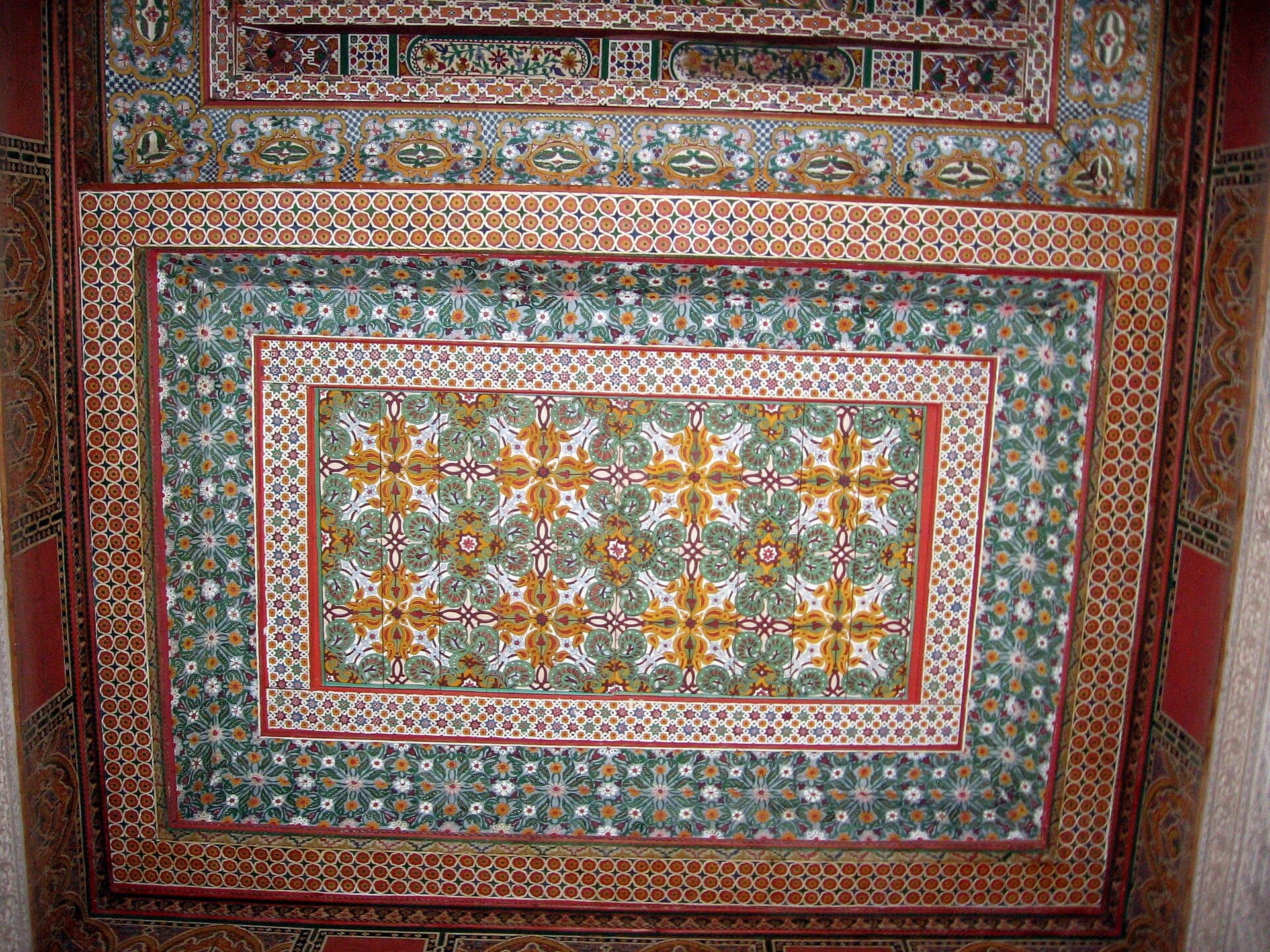
Traditional neighbourhood hammam or tourist spa: which to choose?
In Marrakech, two worlds coexist. Understanding their differences will spare you any disappointment and help you choose according to your mood of the moment — raw authenticity or a cocoon of wellness.
The traditional neighbourhood hammam
This is the traditional hammam of Marrakech in the most authentic sense: a public neighbourhood bath, frequented by locals, where people come to carry out their weekly purification ritual. The atmosphere is convivial, lively, sometimes noisy, and deeply local. You enter for a symbolic price, you bring your own things, and you can hire the services of the tayeba for the scrub. It is cultural immersion par excellence, provided you accept rudimentary comfort, limited privacy and no frills. Mixed bathing is forbidden here: public hammams operate with separate time slots for men and for women (for example, women during the day, men in the evening), or even distinct spaces.
The tourist hammam / spa
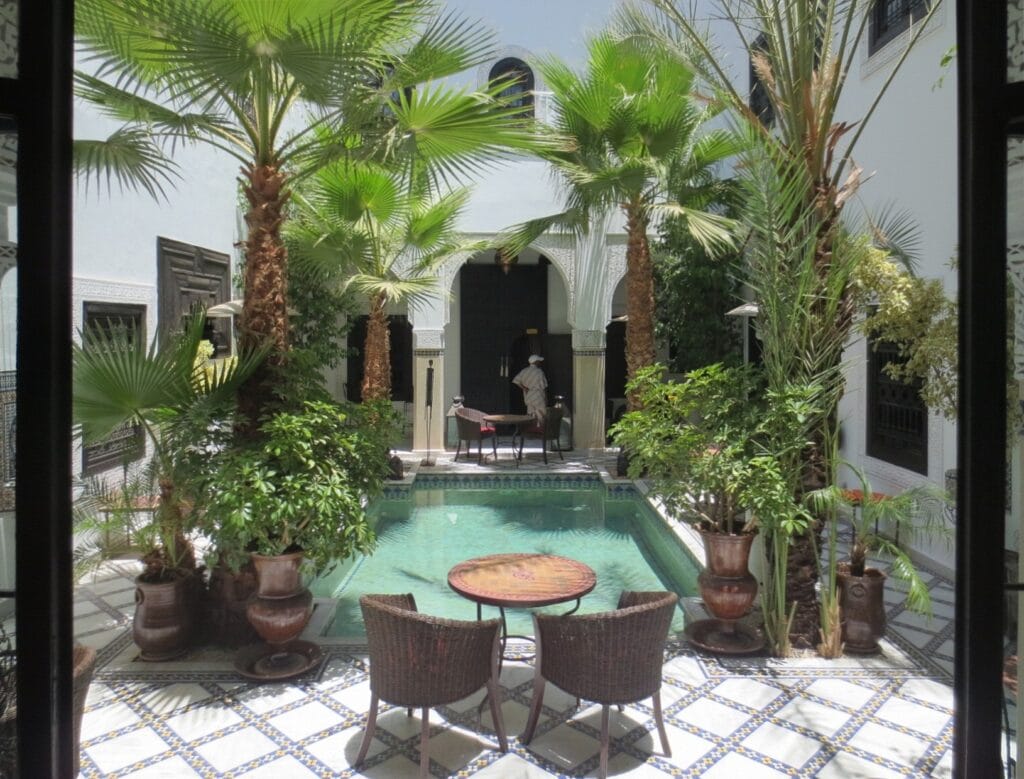
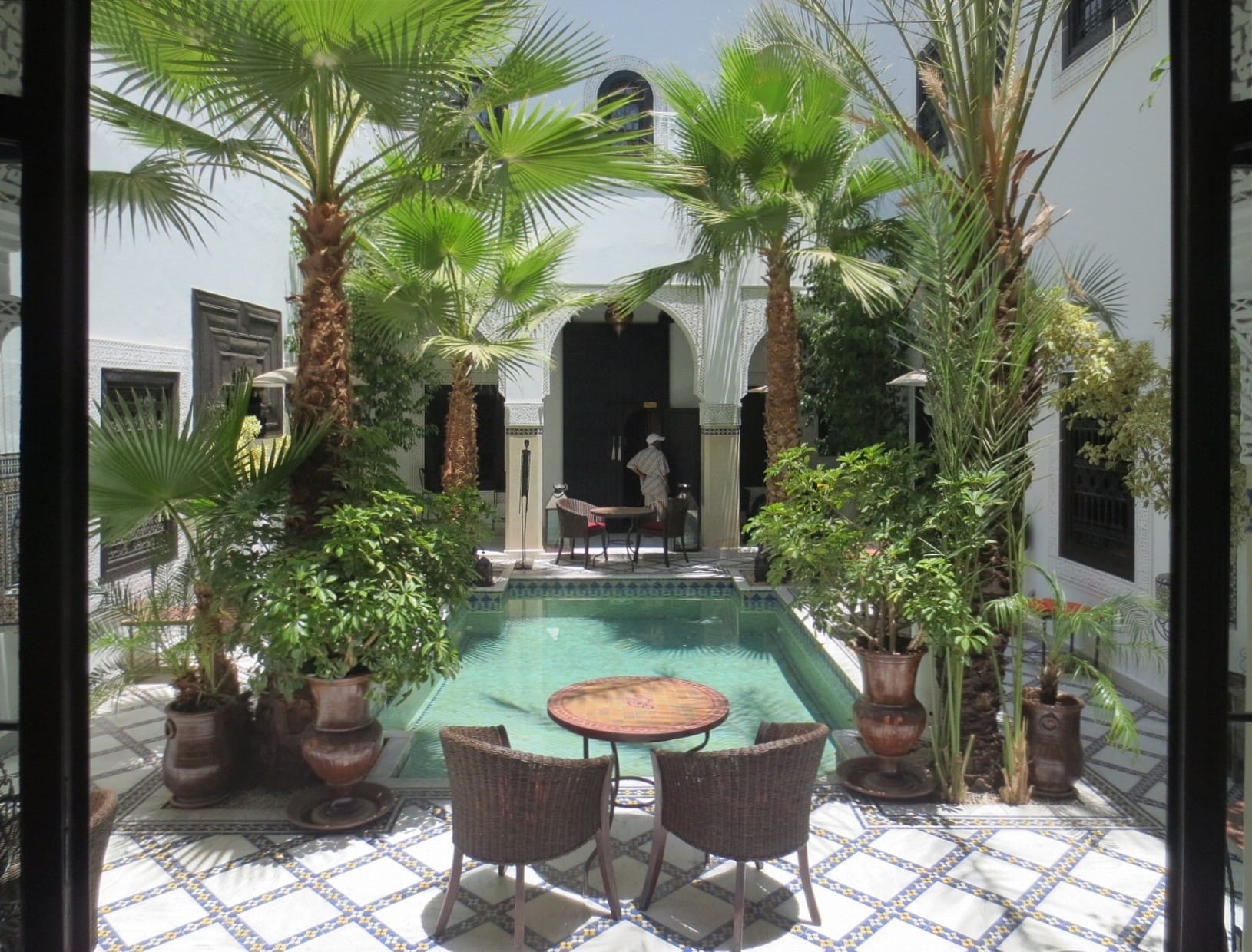
At the opposite end, the spas of Marrakech offer the same ritual in a polished setting: tadelakt and zellige décor, dimmed lighting, soft music, plush towels and dedicated staff. You are taken care of from start to finish, the treatment is guided, often carried out in a private cabin or in a small group, and it frequently ends with a massage. It is the ideal option to relax as a couple, treat yourself to a touch of luxury or experience the hammam without worrying about the logistics. The downside: you lose the social, popular dimension of the neighbourhood bath, and the price rises sharply.
- Looking for authenticity and a very small budget? The neighbourhood hammam is made for you.
- Want calm, comfort and a massage? Opt for a spa or a riad hammam.
- Can’t decide? Nothing stops you from trying both: the popular hammam for the cultural experience, the spa for pure relaxation.
Indicative prices: how much does a hammam in Marrakech cost?
Prices vary enormously depending on the option chosen. Here are some indicative ranges — the real prices depend on the establishment, the season and the content of the treatment, so consider these figures as orders of magnitude, not as guaranteed rates.
- Traditional neighbourhood hammam: entry costs only a few dirhams, often the equivalent of €1 to €3. The scrub carried out by the tayeba is paid as an extra, for a modest amount; plan to bring your products or buy them on site.
- Riad hammam or mid-range spa: a basic ritual package (black soap, scrub, rhassoul) is often around several tens of euros per person. Adding a massage pushes up the total.
- Luxury spa or 5-star hotel: full packages (hammam + scrub + body wrap + extended massage) can exceed €80 to €130 per person, or even more for signature or couples’ treatments.
Our advice: compare what is actually included (duration, number of steps, whether a massage is included, products used) before deciding. A slightly higher price may correspond to a much longer and more complete treatment. And beware of the touts who, in the medina, offer “spontaneous” hammams: the prices there are often inflated and the quality uncertain. It is better to book an identified establishment yourself.
Etiquette, dress and practical steps
What to wear in a hammam?
The question comes up constantly: you never go fully naked. The rule is to keep the lower half covered. In a traditional hammam, women generally keep their underwear (sometimes only the bottom), men a pair of briefs or swim shorts. In a spa, you are often provided with disposable underwear, or invited to come in a swimsuit. The top comes off, but modesty remains the norm: the hammam is nothing like a place of exhibition, it is a space of care and respect.
What should you bring?
- A large towel (or two) and possibly a bathrobe.
- Sandals or flip-flops, essential on the wet, hot floors.
- A swimsuit or spare underwear.
- For the public hammam: your black soap, your kessa glove and a small bucket or container (often on sale at the entrance or in the neighbouring shops).
- Some change for entry, the scrub and the tip.
- Something to rehydrate with afterwards: the heat makes you sweat a lot.
In a spa, everything you need (towels, products, sometimes sandals) is provided: you just have to show up. It is one of the great advantages of this option for travellers.
The right reflexes on site
- Stay hydrated before and after; avoid the hammam right after a heavy meal.
- Listen to your body: if the heat becomes too strong, step out for a few minutes into a more temperate room.
- Respect the modesty and the tranquillity of others, especially in public baths.
- Allow enough time: a full ritual easily lasts an hour to an hour and a half, more with a massage. Don’t schedule it right before a transfer or a flight.
- Plan to rest afterwards: you come out relaxed, sometimes a little limp. This is not the moment to set off on a long hike.
Tipping
In Morocco, tipping is part of the customs. In a traditional hammam, it is customary to leave a little something for the tayeba who scrubbed you. In a spa, a tip for the masseur or masseuse is appreciated if the service pleased you, without being obligatory. Always keep some change: it smooths the experience and rewards a skill that is often impressive.
The benefits of the hammam
Beyond the pleasure, the hammam provides real benefits, provided there is no contraindication (see below).
- Clean, smooth skin: the scrub removes dead cells, unclogs the pores and leaves the skin visibly softer and brighter.
- Stimulation of circulation: the heat causes a vasodilation that boosts blood circulation and helps eliminate toxins.
- Deep relaxation: the moist heat and the massage release muscular tension and provide a lasting sense of wellbeing.
- Cleared airways: the hot, steam-laden air helps to decongest and soothes irritation.
- A moment to disconnect: far from screens and the noise of the city, the hammam is a true mental break.
Precautions and contraindications
The intense heat of the hammam does not suit everyone. It is inadvisable, in particular, for pregnant women, people suffering from heart problems, high blood pressure or low blood pressure, venous insufficiency, certain skin diseases, severe asthma, epilepsy, kidney disorders or diabetes. In case of doubt or of a medical condition, seek advice from your doctor before going. Listen to your body and leave the hot room as soon as you feel unwell.
How to book your hammam in Marrakech
For a traditional neighbourhood hammam, no booking is necessary: you turn up during the hours of the relevant slot (men or women) and pay for entry on site. Simply find out, the day before, the exact hours, as they vary from one establishment to another.
For a spa or tourist hammam, booking is strongly recommended, especially at the weekend, in high season and for couples’ treatments. Booking guarantees you a slot, saves you the wait and lets you choose your package precisely. Many establishments offer booking by telephone, by messaging or online. Remember to confirm what is included (duration, steps, massage) and to state any time constraints you may have.
As for timing within your stay: the hammam is ideal at the end of the day, to unknot your legs after walking the souks, or on the last day, as a soothing conclusion before the journey home. Just avoid scheduling it in the hours before a flight: it is better to savour the relaxation without rushing.
Fitting the hammam into your Marrakech stay
The hammam fits naturally into a wider discovery of the Red City. To build your programme, start with our pillar guide Things to do in Marrakech, which lists the must-sees, from the gardens to the palaces by way of Jemaa el-Fna square. If your time is limited, our itinerary for visiting Marrakech in 3 days shows you how to slot in a wellness session without sacrificing the sightseeing.
On the logistics side, a successful stay is also prepared through accommodation and dining. See our selections on where to stay in Marrakech — many riads have their own hammam — and where to eat in Marrakech to extend the pleasure after the treatment. Finally, to organise your arrival and transfers, everything is detailed in our guide to Marrakech-Menara Airport (RAK).
One last insider tip: book your hammam after a big day of walking rather than before, and keep the evening free to savour the state of relaxation. It is often the strongest sensory memory travellers bring back from Marrakech.
FAQ: your questions about the hammam in Marrakech
Do you have to be naked in a hammam in Marrakech?
No. You always keep the lower half covered: underwear, briefs or a swimsuit. Full nudity is not the done thing. In a spa, disposable underwear is often provided. The top comes off, but modesty remains the rule in all establishments.
Do men and women go to the hammam together?
In traditional neighbourhood hammams, no: mixed bathing is forbidden. The establishments operate with separate time slots for men and for women, or distinct spaces. In some private spas, on the other hand, a couple can book a cabin to experience the treatment together.
How much does a hammam in Marrakech cost?
It depends on the option. A traditional neighbourhood hammam costs a few euros for entry, plus a small supplement for the scrub. A spa ritual runs to tens of euros, and a full package in a luxury establishment can exceed €100 per person. These amounts are indicative and vary according to the content of the treatment.
How long does a hammam session last?
A basic ritual (steam, black soap, scrub, rhassoul) generally lasts around an hour. With a massage, allow often an hour and a half to two hours. In a public hammam, you stay as long as you wish, depending on how comfortable you are with the heat.
How often do Moroccans go to the hammam?
Traditionally, the hammam is practised once a week. It is a purification ritual and a social moment as much as a hygiene routine. For a visitor, a single session is more than enough to discover the experience and feel its benefits.
Is the hammam suitable for everyone?
Almost, but the intense heat is inadvisable for pregnant women and people suffering from heart disorders, high blood pressure, venous insufficiency, certain skin diseases or other chronic conditions. In case of doubt, seek your doctor’s advice and listen to your body during the session.
Images under a free licence via Wikimedia Commons: © János Korom (CC BY-SA 2.0); © Chris Martin (CC BY-SA 2.0). Sources: UNESCO and Wikipedia.
Photo credits: royalty-free images (Unsplash / Pexels), to be credited according to the author on insertion. Replace the markers IMAGE_1 to IMAGE_3 with visuals under a free licence and add alternative text (ALT) containing the keyword “hammam Marrakech”.
Disclaimer: the prices, opening hours and arrangements mentioned in this article are given purely as a guide and may vary depending on the establishment, the season and price changes. This article is intended to be informative and does not replace medical advice: in case of a health problem, consult a professional before taking a hammam.