Quick answer: the Ourika Valley is the easiest and most popular day trip from Marrakech. It begins about 30 km south of the city, at the foot of the High Atlas, and the village of Setti Fatma, at the head of the valley, lies around 65 km away, roughly 1 to 1.5 hours by road depending on traffic. People come for the Ourika River, the famous 7 waterfalls of Setti Fatma, the Berber villages, the organic aromatic garden and, in winter, the snow at Oukaïmeden. An Ourika Valley trip from Marrakech works very well as a day trip: allow a full day (8 to 10 hours), good walking shoes, water and cash. Spring (March-May) and autumn (September-November) are the best seasons.
In brief: the essentials of the Ourika Valley trip
- Distance: entrance to the valley ~30 km from Marrakech; Setti Fatma ~65 km.
- Travel time: 1 to 1.5 hours one way (depending on traffic and starting point).
- Ideal duration: a full day (8 to 10 hours including the round trip).
- Must-sees: the 7 waterfalls of Setti Fatma, the Berber villages, the organic aromatic garden, the Monday market, Ourika saffron.
- How to get there: organized tour, grand taxi, rental car or local bus.
- Best season: spring and autumn; skiing at Oukaïmeden in winter.
- What to bring: walking shoes, water, a hat, sunscreen, a warm layer and cash.
Where is the Ourika Valley?
The Ourika Valley stretches south of Marrakech, in the first foothills of the High Atlas, along the river of the same name. The valley begins about thirty kilometres from the city and rises gradually toward the mountains: the further you go, the tighter the landscape becomes, the gorges deepen and the altitude climbs. The classic end point of the trip is the village of Setti Fatma, about 65 km from Marrakech, nestled at the bottom of the valley at close to 1,500 metres of altitude.
This contrast is precisely what makes the place so sought after: in an hour’s drive, you go from the arid plain and palm groves of Marrakech to a green mountain setting, where water flows in abundance, where terraced crops tumble down the slopes and where earthen villages cling to the hillsides. The Ourika River, fed by the melting snows of the High Atlas, irrigates the whole valley and gives it its coolness, particularly appreciated in summer. To put the region in context, the Wikipedia page on the Ourika details the river’s course and the geography of the valley.
The valley is one of the shortest day trips from the city, which explains its popularity. If you are planning your stay, our complete guide on things to do in Marrakech places Ourika within the full range of possible visits, and our page dedicated to Marrakech excursions in 2026 compares Ourika with the other getaways (Atlas, desert, Ouzoud Waterfalls, Essaouira).
Why is the Ourika Valley so popular?
If Ourika from Marrakech tops the list of day trips, it is no accident. It is first a matter of proximity: no other mountain escape is as quick to reach from the red city. You can leave after breakfast and be back for dinner, with no overnight stay or lengthy logistics. It is then a matter of variety: in a single day, the valley packs in a river, waterfalls, Berber villages, local cuisine, crafts and, as a backdrop, the peaks of the High Atlas. Few destinations offer such a concentrated mix of experiences so close to a major city.
Finally, it is a breath of fresh air, quite literally: the altitude and the flowing river water make the valley noticeably milder than Marrakech, which makes it a much-loved refuge when the heat bears down on the plain. Moroccan families know this well and come in numbers at the weekend to picnic by the water. For the traveller, it is a chance to see a more rural and authentic face of Morocco, a world away from the bustle of the souks. This accessibility and variety explain why the Ourika trip appears in almost every Marrakech itinerary.
How do you get to the Ourika Valley from Marrakech?
There are four main ways to reach the valley. The choice depends on your budget, your desire for independence and the level of comfort you are looking for. Here is a clear comparison for an Ourika Valley trip from Marrakech.
1. The organized tour (the simplest)
This is the most comfortable option and by far the most chosen. A day trip generally includes pickup from your hotel or riad in the morning (between 8 and 9 a.m.), transport in an air-conditioned minibus, often a local guide, several photo stops and a guided walk to the waterfalls. The return to Marrakech is in the late afternoon, around 5 or 6 p.m. The advantage is obvious: no logistics to manage, a guide who knows the valley, and often included visits (argan oil cooperative, Berber family, lunch by the river). It is ideal for a first visit. Prices vary depending on whether it is a shared or private tour, and on the services included (lunch, mountain guide). Always ask what is included before booking.
2. The grand taxi (good value for money)
The grand taxis (the shared beige Mercedes) leave from a station near the Bab er Rob gate, on the edge of the medina. In a shared taxi, you pay for a seat and leave when the car is full; it is the most economical option after the bus. You can also hire the taxi privately (booking all the seats) to leave immediately and make stops at your own pace. Always negotiate the price before getting in and agree on the exact route (as far as Setti Fatma, and whether the driver waits for the return or not). It is an excellent option for independent travellers who want to keep some flexibility without driving.
3. The rental car (total freedom)
The road up to Ourika is paved and generally in good condition as far as Setti Fatma, which makes the trip accessible in an ordinary car. Driving lets you stop wherever you like, wander through the villages and push on, if you feel like it, as far as Oukaïmeden. Stay cautious: the road is winding in its upper section, busy at weekends and on market days, and parking at Setti Fatma can be tight in high season. If you are arriving from the airport, our page on Marrakech-Menara Airport (RAK) helps you organize picking up the vehicle and the transfer into the city.
4. The local bus (the most economical)
Local buses serve the valley from Marrakech; it is by far the cheapest way, but also the slowest and least comfortable. It suits travellers on a tight budget who are patient and flexible with timing. Check the departure times and the last return so you don’t get stuck at the end of the day.
| Mode of transport | Comfort | Budget | Ideal for |
|---|---|---|---|
| Organized tour | High | Medium to high | First visit, families, peace of mind |
| Grand taxi | Medium | Economical | Independent travellers |
| Rental car | High | Medium | Freedom, multiple stops, Oukaïmeden |
| Local bus | Basic | Very economical | Small budget, flexible travellers |
Setti Fatma and the 7 waterfalls: the heart of the trip
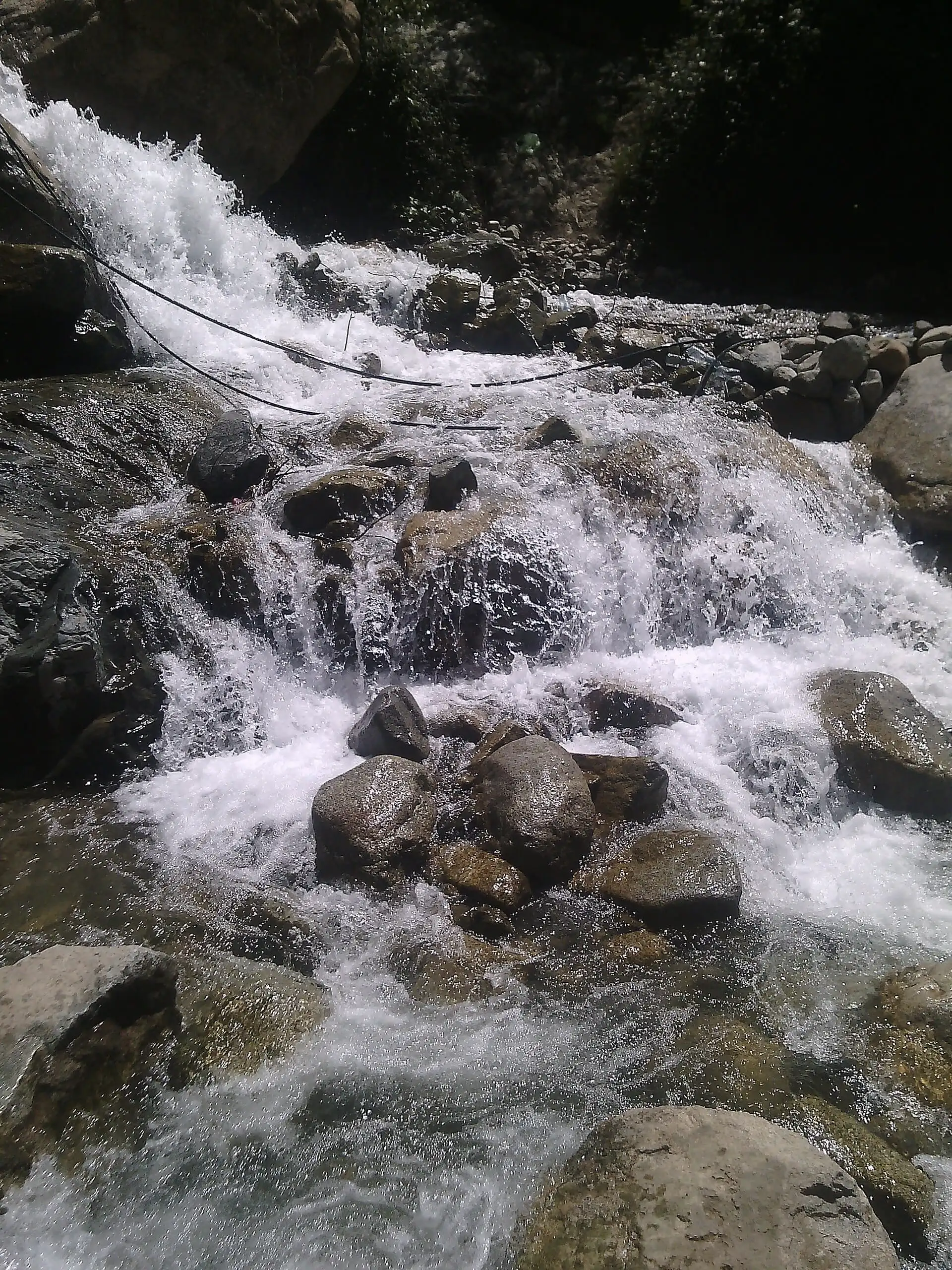
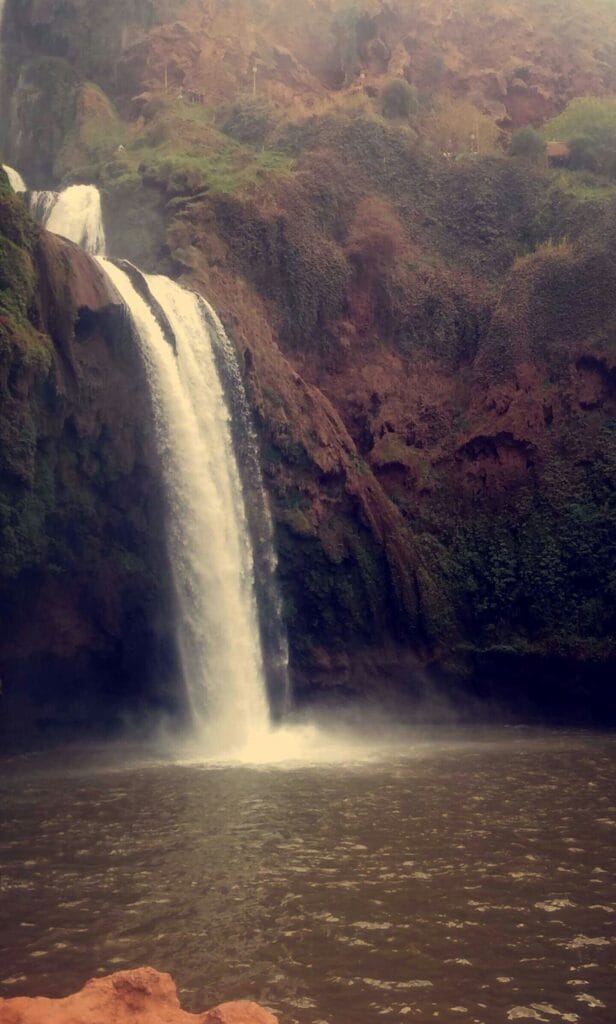
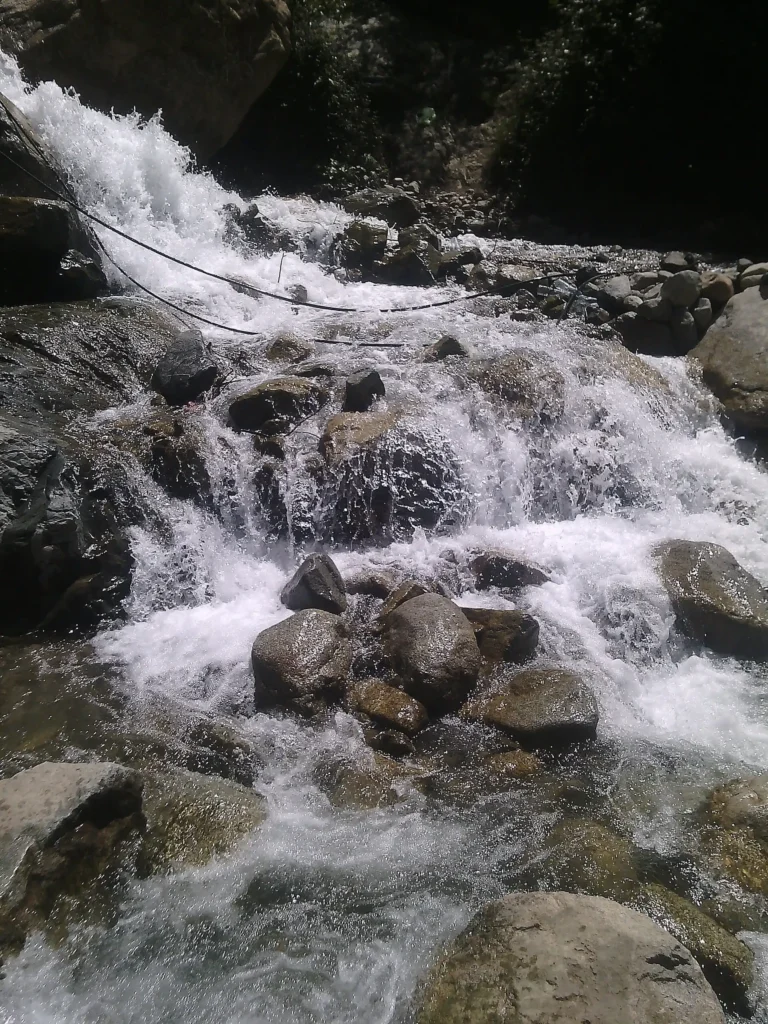
Setti Fatma is the highlight of the valley. This Berber village, set beside the river at the bottom of the gorges, is the starting point for the famous 7 waterfalls hike (the celebrated Ourika waterfalls). The trail climbs between the rocks, crosses makeshift footbridges and passes cafés perched above, from which you can hear the water roaring. The climb to the first waterfall is short and accessible to most visitors: allow about an hour round trip. It is already very photogenic, with its cascade tumbling down the rock face.
Reaching the following waterfalls takes more effort: the path becomes steeper, narrower and rockier, and it can be slippery after rain. Good walking shoes are essential to go further; flip-flops and sandals are to be avoided beyond the first fall. On site, many local guides offer their services to take you safely to the top: agree on the price in advance. Take your time; the full climb of the seven waterfalls can take up a good part of the morning.
By the river, the tradition is to have lunch on a terrace with your feet almost in the water, or at the tables set up directly on the rocks in the middle of the current. Tagine, brochettes and mint tea are served in a very local atmosphere. It is a convivial and refreshing moment, especially on sunny days.
What else can you do in the Ourika Valley?
The valley is not just Setti Fatma. Along the way, several stops are worth the detour and help make the day richer.
The organic aromatic garden and Ourika saffron
On the road to the valley, about 35 km from Marrakech, the organic aromatic garden is one of Morocco’s first organic aromatic plant gardens. You discover around fifty species of aromatic, medicinal and ornamental plants, largely native to the region: lavender, rosemary, mint, verbena, geranium… The visit, shaded and fragrant, often ends with a relaxing moment and a presentation of the essential oils and natural cosmetics produced on site. Saffron is also grown here, the red gold that the Ourika Valley helps make known. It is a soothing stop, ideal for understanding local agriculture and taking home a few authentic products.
The Berber villages and crafts
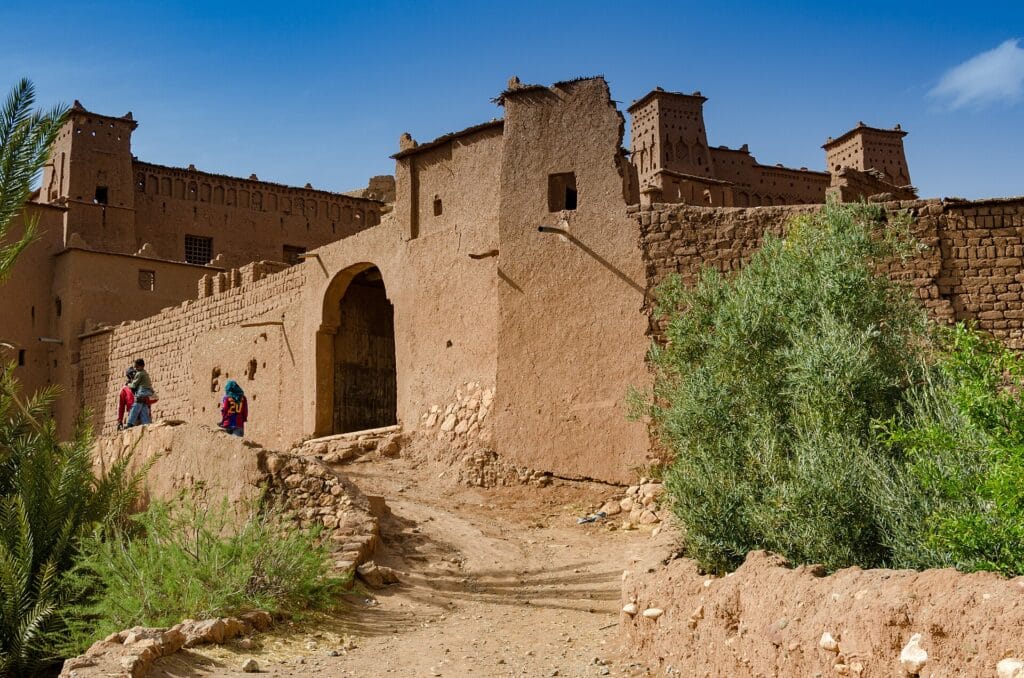
All along the valley, traditional Berber villages are dotted about, with their ochre-coloured earthen houses clinging to the mountain. Many tours include a visit to a Berber house, where you are welcomed over tea to discover local life, the making of bread in the communal oven or how a press works. You also come across argan oil and olive oil cooperatives, as well as craft stalls (pottery, rugs, jewellery). These encounters are often the best memory of the day: they reveal a rural and authentic Morocco, very different from the buzz of the medina.
The Monday market (Tnine Ourika souk)
If your trip falls on a Monday, don’t miss the large weekly souk of Tnine Ourika, at the entrance to the valley (“Tnine” actually means “Monday” in Arabic). People from the surrounding villages come down to sell and buy fruit, vegetables, spices, livestock, textiles and everyday goods. It is an authentic and lively market, very little visited by tourists, offering a striking immersion in the rural life of the High Atlas. Some organized tours adjust their itinerary to include it when the day coincides.
Skiing at Oukaïmeden in winter
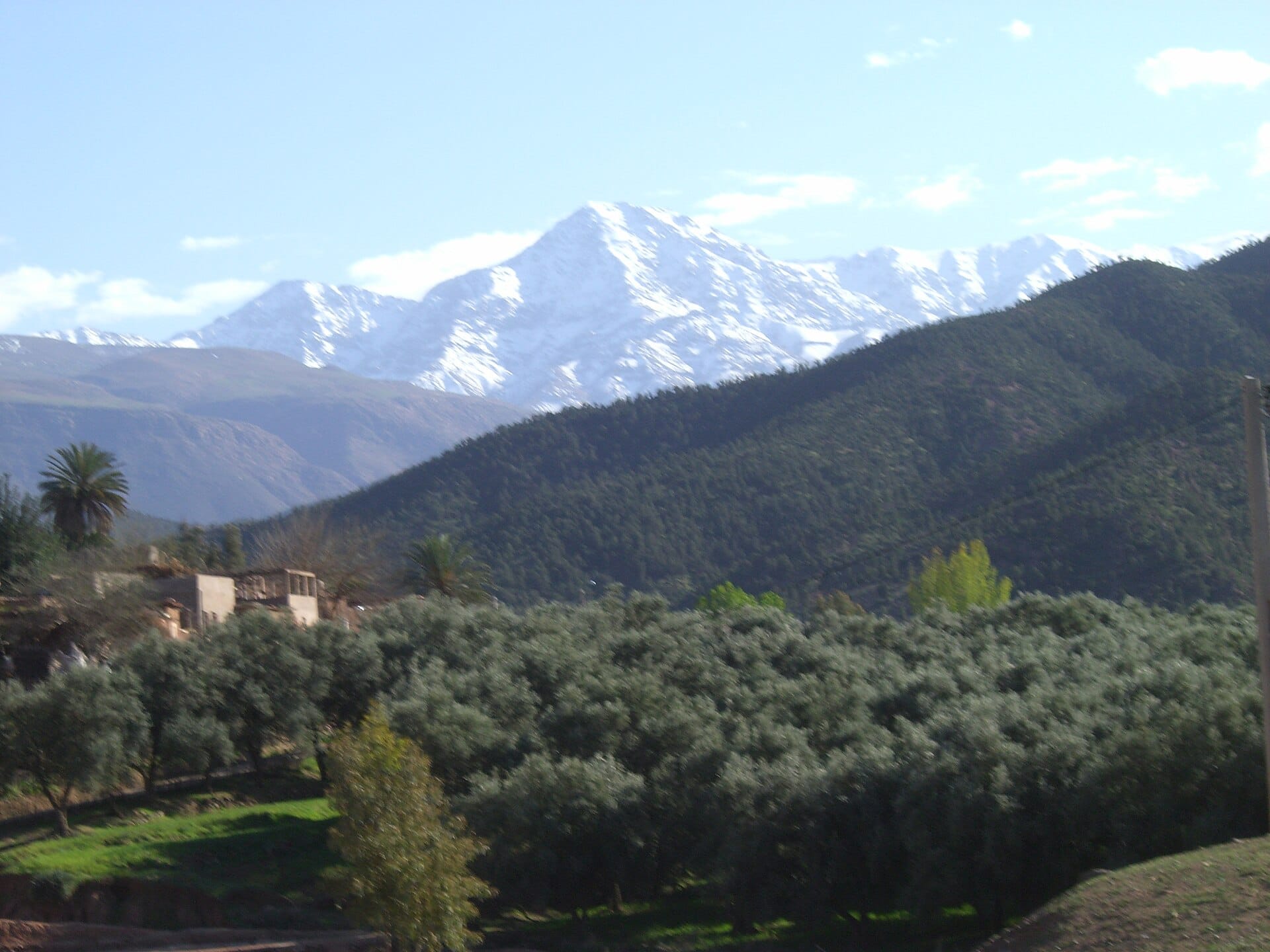
From the Ourika Valley, a road branches off toward Oukaïmeden, the highest ski resort in Africa, about 80 km from Marrakech. Its area ranges between 2,600 and more than 3,200 metres of altitude. In winter, when snow cover allows, you can ski, sledge or simply enjoy the snowy landscapes with the peaks of the High Atlas as a backdrop. Skiing in the morning and returning to the warmth of Marrakech in the afternoon remains one of the most unusual experiences in Morocco. Outside the ski season, Oukaïmeden is a magnificent starting point for hiking.
What is the best time to visit Ourika?
You can visit the Ourika Valley all year round, but each season has its own character.
- Spring (March to May): the best time. Nature is green, flowers colour the slopes and the waterfalls are swollen by the melting snow. Mild, pleasant temperatures for walking.
- Autumn (September to November): an excellent compromise. The climate is mild, the light superb and the trails quieter than in spring.
- Summer (June to August): the valley serves as a refuge from the heat of Marrakech thanks to its coolness and the shade of the trees. It is the local high season; beware, however, of storms and the risk of flash floods (see below).
- Winter (December to February): cooler, sometimes snowy at altitude. It is the ski season at Oukaïmeden. The valley remains beautiful but dress warmly.
To plan your stay according to the weather, our article on the best time to visit Marrakech gives you month-by-month temperatures and useful advice. And if you are short on time, our Marrakech in 3 days itinerary shows how to fit in Ourika without sacrificing the city.
What to bring and safety tips
A day trip to the Ourika Valley takes little preparation, but the right items make all the difference. Here is what to plan for.
- Good non-slip walking shoes: the waterfall trail is rocky and slippery.
- Plenty of water and a snack, especially if you walk up to the higher waterfalls.
- A hat and sunscreen: the mountain sun is strong.
- A warm layer (jumper or windbreaker): temperatures drop at altitude and in the morning.
- Cash (dirhams): card payments are rare in the valley (guides, cafés, artisans, tips).
- A swimsuit in summer if you want to bathe in the pools (with caution).
Beware of flash floods. The Ourika River can rise very quickly during storms, especially in summer (July-August). The risk is real and must be taken seriously. If you see dark clouds gathering over the peaks, the water turning cloudy or brown, or the level rising rapidly, leave the riverbed immediately and head for higher ground. Never settle for long at the tables in the middle of the watercourse in uncertain weather, and always follow the instructions of the locals and local guides, who know the terrain.
A typical one-day itinerary in Ourika
Here is what a lovely day in the valley can look like, whether you go on an organized tour or under your own steam:
- 8 – 9 a.m.: departure from Marrakech, leaving the city and heading toward the High Atlas.
- 9:30 a.m.: first photo stop on the heights and, if you feel like it, a visit to the organic aromatic garden or a cooperative.
- 10:30 a.m.: visit to a Berber house and welcome tea, discovering local life.
- 11:30 a.m.: arrival at Setti Fatma and hike toward the waterfalls with a local guide.
- 1:30 p.m.: lunch by the river (tagine, brochettes, mint tea).
- 3 p.m.: free time, a stroll through the village and last craft purchases.
- 4 – 6 p.m.: the road back and arrival in Marrakech in the late afternoon.
This pace leaves time to see everything without rushing. For nature lovers who want to go further, it is possible to combine Ourika with an overnight stay in the mountains, or to replace it with a more demanding hike toward the Toubkal massif, the highest peak in North Africa.
Frequently asked questions about the Ourika Valley
How far is the Ourika Valley from Marrakech?
The entrance to the valley is about 30 km south of Marrakech. The village of Setti Fatma, at the head of the valley, is around 65 km away, or 1 to 1.5 hours by road depending on traffic and your starting point.
How much time do you need to visit Ourika?
Allow a full day, about 8 to 10 hours including round-trip travel time. This leaves time to do the waterfall hike, have lunch on site and visit one or two spots along the way. A half day is possible but very tight.
Is the 7 waterfalls hike difficult?
The climb to the first waterfall is short and accessible to most visitors (about 1 hour round trip). The following waterfalls require more effort: the trail becomes steep, narrow and slippery. Good shoes are essential and a local guide is recommended to go all the way.
Can you ski near the Ourika Valley?
Yes. The Oukaïmeden resort, the highest in Africa, is accessible from the valley, about 80 km from Marrakech. In winter, when snow cover allows, you can ski or sledge before heading back down to enjoy the mild weather of Marrakech.
What is the best time to go?
Spring (March-May) and autumn (September-November) offer the best balance between mild climate, green landscapes and well-fed waterfalls. Summer brings coolness but also a risk of storms and floods; winter is the ski season at altitude.
Do you need a guide to visit Ourika?
It is not mandatory, but it is strongly advised for the waterfall hike, where a local guide makes the route safe and shows you less obvious passages. For a first visit with no logistical worries, the organized tour remains the most stress-free option.
Want to extend your discovery? The medina of Marrakech, a UNESCO World Heritage Site, deserves at least two days on its own. Combine city and mountains for a balanced stay: the Ourika Valley is the ideal nature break between two days in the medina.
Images under free license via Wikimedia Commons: © Tonkie (CC BY-SA 3.0); © Soufaine kabkab (CC BY-SA 3.0). Sources: UNESCO and Wikipedia.Photo credits: images to be inserted under royalty-free license (Unsplash, Pexels, Wikimedia Commons) with attribution of the author where required. Replace markers IMAGE_1 to IMAGE_3 with real visuals of the Ourika Valley.
Disclaimer: the practical information (distances, durations, times and prices) is given for guidance only and may change depending on the season, traffic and providers. Always check the current conditions before you leave, and follow local safety instructions, particularly regarding the risk of flash floods on the Ourika River.