The Morocco airport tax is one of the questions travelers ask most often before flying out of Casablanca, Marrakech or Agadir: how much is it, is it already included in the ticket price, and can you get it refunded if you don’t board? In practice there is no single “tax” but a set of charges and taxes (passenger service charge, security charge, possible parafiscal taxes) that airlines collect on behalf of the National Airports Office (ONDA) and the State. This guide clarifies what you actually pay, the difference between a domestic and an international flight, the refund principle when you fail to show up, and how duty free and VAT are treated. Because the exact amounts are set officially and may change, we deliberately use cautious ranges and point you back to the official sources at every step.
In brief: the essentials on the Morocco airport tax
- Taxes and charges are already included in the ticket price shown by the airline: there is nothing extra to pay at the airport.
- The main component is the passenger service charge (PSC), sometimes called the “boarding tax”, collected for ONDA.
- A security charge, any parafiscal taxes and airline-specific surcharges (fuel, emissions) are added to it.
- Amounts differ between a domestic flight and an international flight, and are set officially by decree and by the ONDA schedule of charges.
- In the event of a no-show, airport taxes strictly tied to boarding are generally refundable; some airline surcharges are not.
- Purchases at duty free on departure are exempt from VAT/duties; Morocco’s standard VAT remains 20% within the country.
- Figures change: always check ONDA’s official schedule and your airline’s fare conditions before deciding.
What is the airport tax in Morocco?
What the public calls the “airport tax” actually covers several distinct levies that appear separately on your ticket, under the “taxes and charges” heading. Understanding this distinction avoids many misunderstandings, especially when comparing two fares or requesting a refund. In Morocco, most of these charges are governed by the National Airports Office (ONDA), the public body that operates the Kingdom’s civil airports and sets the schedule of airport charges, while some taxes fall under the State.
The passenger service charge (PSC) or boarding tax
The passenger service charge, commonly abbreviated PSC, is the consideration for using the facilities made available to travelers: terminals, boarding lounges, baggage systems, reception areas. Any passenger boarding at an aerodrome open to public air traffic is in principle liable for it, and the regulations allow the carrier to pass this charge on to the passenger. This is the component usually equated with the “boarding tax”. Its amount is not the same everywhere: it depends notably on the nature of the flight (domestic or international) and appears in ONDA’s official schedule.
The security charge
The security charge funds airport screening and safety measures: passenger and baggage screening, detection equipment, dedicated staff. Like the passenger charge, it is billed by ONDA to the airlines, which build it into the ticket price. It applies to both domestic and international flights, with its own rates.
Other charges and surcharges
Alongside these two main charges, your ticket may include further lines: air navigation charges (billed between transport operators rather than directly to the passenger), any parafiscal taxes decided by the authorities, and surcharges specific to the airline. The best known of the latter is the fuel surcharge (often coded “YQ”), which is not a State tax but a supplement set by the carrier to cover the volatility of jet fuel prices. This nuance matters for understanding, further down, what is refundable and what is not.
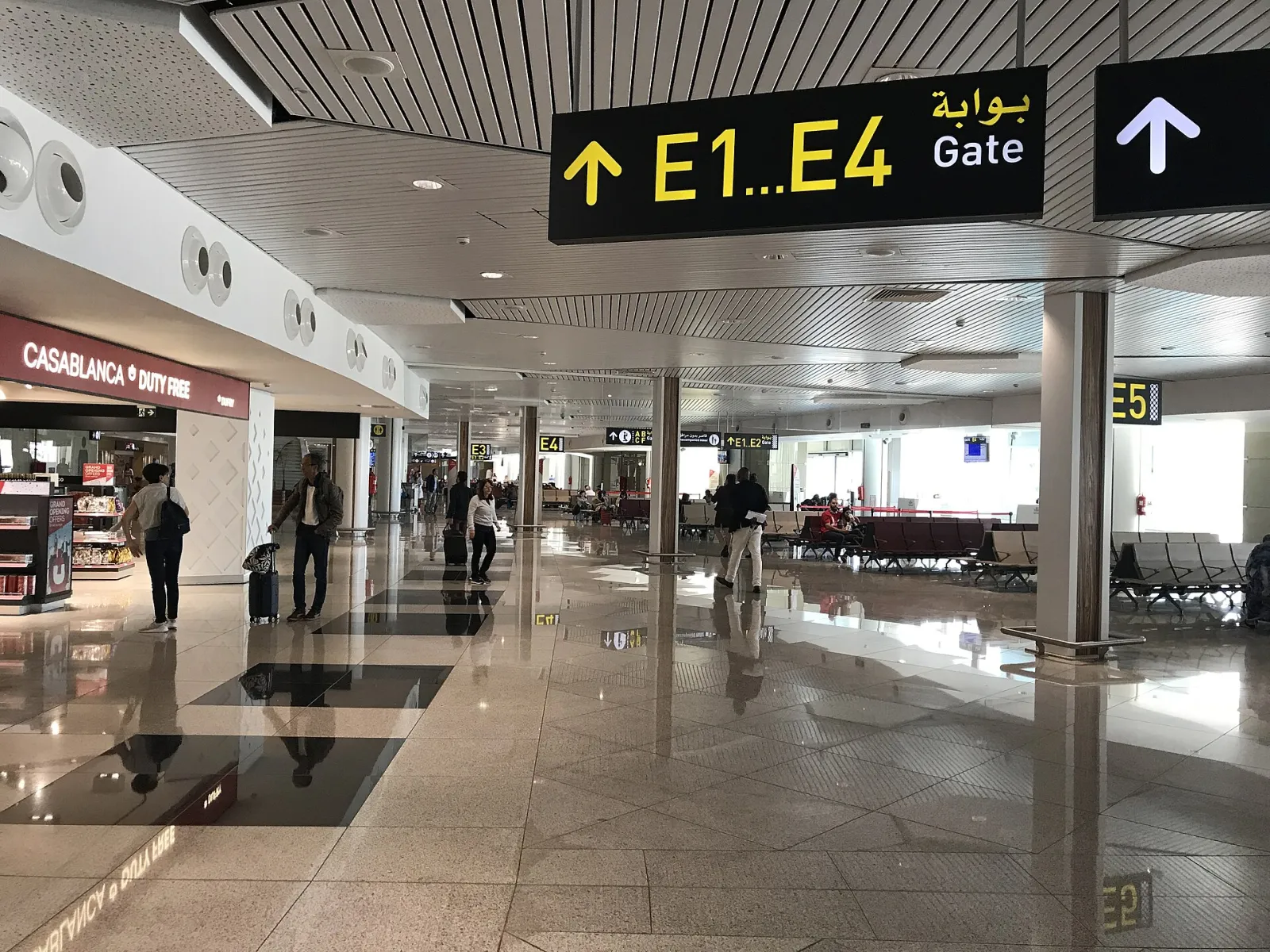
Is the Morocco airport tax included in the ticket?
Yes. When you buy a ticket from a scheduled airline or an agency, the “all taxes included” price you pay already incorporates the passenger service charge, the security charge and the other applicable taxes and surcharges. In other words, you do not pay a separate Morocco airport tax at the check-in desk or the boarding gate: everything is collected upstream by the airline, which then remits it to ONDA and the State. This all-inclusive pricing rule is, moreover, a fare-transparency requirement widely shared across air transport.
Concretely, if you break down your ticket you will generally see a “fare” portion (the price of transport itself, set by the airline and booking class) and a “taxes and charges” portion that groups the elements described above. On a flight departing from Morocco, this second portion reflects Moroccan rates; on a flight to Morocco from abroad, it mainly reflects the taxes of the departure country. To choose your flight and carrier, our overview of airlines that fly to Morocco will help you compare offers.
| Ticket component | Who sets / collects it | Included in the price? |
|---|---|---|
| Transport fare | Airline | Yes |
| Passenger service charge (PSC / boarding) | ONDA | Yes |
| Security charge | ONDA | Yes |
| Any parafiscal taxes | State / authorities | Yes, where applicable |
| Fuel surcharge (e.g. “YQ”) | Airline | Yes |
Domestic or international flight: what difference for the Morocco airport tax?
The most structuring distinction concerns the nature of the flight. ONDA’s schedules of charges provide different amounts depending on whether the passenger boards for a domestic destination (for example Casablanca–Dakhla) or an international one (for example Marrakech–Paris). As a general rule, the passenger charge for an international flight is higher than for a domestic flight, which is reflected in the “taxes” portion of the ticket. The security charge follows a comparable logic, with its own levels.
Domestic flights
On the Moroccan domestic network, the tax portion generally stays moderate relative to the transport fare, because domestic charges are set at lower levels. This is a useful point to keep in mind when comparing the price of a domestic flight with the train or the road. If your journey goes through a hub, our guide to the Casablanca layover details how a connection unfolds.
International flights
On international flights, the “taxes and charges” portion is more visible, both because the international passenger charge is higher and because larger airline surcharges often apply on long-haul routes. This portion also depends on the departure country: a Morocco–Europe round trip adds Moroccan taxes on the outbound leg to European taxes on the return. To organize your arrival, see our comparison of airport transfers in Morocco.
| Criterion | Domestic flight | International flight |
|---|---|---|
| Passenger service charge (PSC) | Generally lower level | Generally higher level |
| Security charge | Applicable | Applicable |
| Airline surcharges | Often limited | Potentially higher |
| Departure-country taxes (return) | Not applicable | Added on the return |
Parafiscal tax, eco-tax and solidarity tax
Beyond airport charges, some tickets may include taxes decided by public authorities for budgetary or environmental purposes. Several European countries, for instance, apply a “solidarity tax on air tickets” or an environmental contribution, which then appears on tickets departing from those countries. These taxes are not ONDA charges: they fall under the departure State.
In Morocco, the levy structure may evolve with regulation. The principle to remember is simple: any parafiscal tax or eco-tax that may apply is set by decree and built by the airline into the “taxes” portion of the ticket. We deliberately quote no precise amount for these taxes, because they are liable to change from one budget season to another. Always check the up-to-date information with official sources before relying on a figure.
Refund of taxes in the event of a no-show
This is one of the most useful points to know. The general principle, widely accepted in air transport, is that airport taxes and charges strictly tied to the passenger’s actual boarding may be refundable when the flight is not used: if you do not board, the airport does not collect the corresponding passenger charge, so that amount has no reason to be kept. On the other hand, some components set by the airline, such as the fuel surcharge, are generally not refunded.
What is refundable in principle
- The passenger service charge tied to boarding (identified on tickets by dedicated tax codes, distinct for domestic and international flights).
- Airport taxes that strictly depend on the passenger’s actual departure.
What is generally not refundable
- The fuel surcharge (often coded “YQ”), which is an airline supplement and not a State tax.
- Certain contributions or service fees, depending on the airline’s fare conditions.
- Tickets sold as strictly non-refundable may limit reimbursement to the recoverable taxes alone.
In practice, the refund request is made to the seller of the ticket, that is the airline or the travel agency, generally via an online form or customer service. Deadlines and any handling fees vary from one carrier to another. Keep your booking reference and the tax breakdown: they make processing the request easier. Finally, keep in mind that a “no-show” does not automatically mean a refund of the entire ticket: only the recoverable fraction of the taxes is concerned, unless more favorable fare conditions apply.
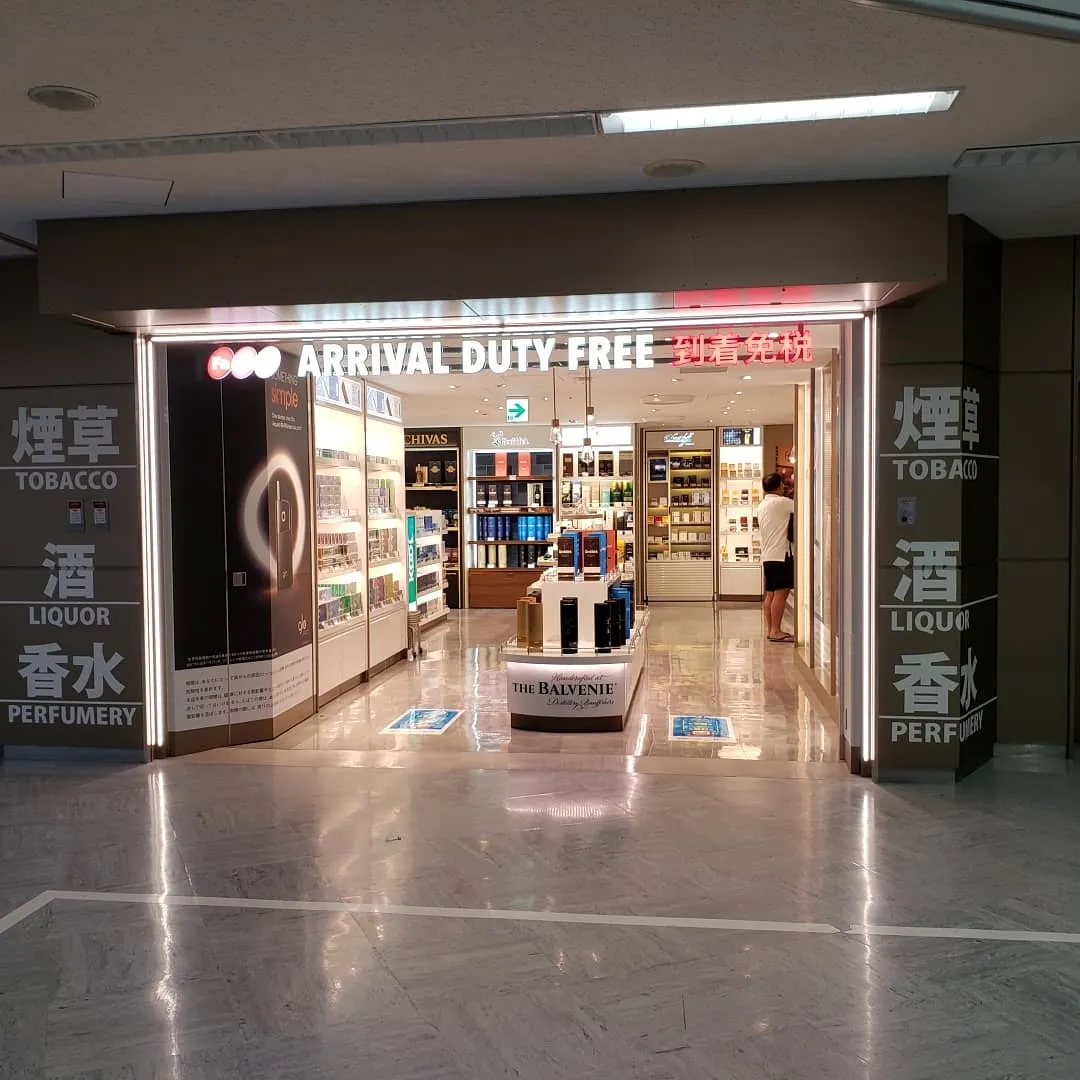
Duty free and VAT on departure from Moroccan airports
The duty free shops located in the international zone, after the controls, offer products exempt from duties and taxes for travelers leaving the territory. This is why some items (perfumes, spirits, tobacco, cosmetics) may be more advantageous there than in the city, where Morocco’s standard 20% VAT applies. Be careful, however: duty free benefits are framed by the customs allowances of the country of arrival, not by Morocco alone.
In other words, what you can bring back duty free depends on the customs rules of your final destination. Before buying duty free, check the applicable thresholds (tobacco and alcohol quantities, total value of goods) to avoid taxation on arrival. For the Morocco direction, our guide to Moroccan customs and what you can bring back summarizes allowances and declaration obligations. And if you need to present entry documents, also see our information on the Morocco visa and entry requirements.
Orders of magnitude and where to check the exact amounts
We do not publish precise amounts for the Morocco airport tax, and it is a deliberate reliability choice: the charges are set officially, may be revised, and a wrong figure would be more harmful than useful. What can be said without risk is that the “taxes and charges” portion of a ticket is generally moderate on a domestic flight and more visible on an international flight, where it adds to the departure country’s taxes on the return. For an exact amount, two reliable habits: read the tax breakdown shown at purchase, and consult ONDA’s official schedule.
| You are looking for… | Source to consult |
|---|---|
| The schedule of airport charges | Official ONDA website (professionals / airlines section) |
| The tax breakdown of your ticket | Purchase summary from the airline or agency |
| Refund conditions | Airline’s fare conditions |
| Duty free allowances on arrival | Customs administration of the destination country |
Caution: the rules, taxes and amounts mentioned in this article are liable to change. They are provided for information only and do not replace official sources. Always verify the up-to-date information with ONDA, your airline and the competent authorities before making any decision.
Understanding the “taxes” line on your ticket
When you open a ticket’s detailed summary, the tax portion does not appear under a single label but as a series of two-letter codes, standardized internationally. Knowing how to decode them helps distinguish a genuine airport tax from an airline surcharge, which changes everything when requesting a refund. Two main families coexist: taxes and charges of State or airport origin on one side, and supplements set by the carrier on the other.
Airport charges and taxes
These are the amounts collected for the airport or the State, such as the passenger service charge (in domestic and international versions) and the security charge. These components are, by nature, tied to the infrastructure and to the passenger’s actual departure. It is precisely this feature that makes them, in principle, recoverable when the trip does not take place: without boarding, the charge has no triggering event.
Airline surcharges and fees
The fuel surcharge (often identified by the code “YQ”) and certain service fees follow a commercial logic internal to the carrier. They appear in the ticket’s “taxes” column for display reasons, but they are not taxes. As a result, they follow the airline’s fare conditions, which frequently provide for their non-return in the event of a no-show. This distinction explains why a tax refund almost never matches the full “taxes” portion shown at purchase.
| Type of line | Nature | Refundable on no-show? |
|---|---|---|
| Domestic passenger charge | Airport charge | In principle yes |
| International passenger charge | Airport charge | In principle yes |
| Security charge | Airport charge | Often yes, case by case |
| Fuel surcharge (“YQ”) | Airline supplement | Generally no |
Practical tips to manage the tax portion of your ticket
Understanding the tax structure is not just about satisfying curiosity: it also helps you compare offers better and avoid unpleasant surprises. Here are a few useful habits, valid both for departure and for return to Morocco.
- Compare the total price, not just the fare. Two tickets with an identical base fare can show different tax portions depending on the departure airport and the country concerned.
- Always open the detailed breakdown before paying: it shows the split between fare, airport taxes and surcharges, and serves as proof in the event of a refund.
- Check the direction of travel. On an international round trip, the foreign country’s taxes are added on the return and can weigh as much as the Moroccan taxes on departure.
- Anticipate the refund. If you risk missing your flight, know that a request to recover recoverable taxes remains possible with the seller, often online.
- Think about ground logistics. The real cost of a trip also includes transfers and any connection; see our Royal Air Maroc baggage allowance guide to avoid unexpected extra fees.
One last point deserves attention: the tax portion evolves over time. A revision of ONDA’s schedules, the introduction or removal of a parafiscal tax, or an adjustment of airline surcharges can change the amount shown from one season to another. This is why a figure read a year ago is not necessarily valid today. Get into the habit of relying on the day’s breakdown and the official schedules, rather than on a fixed estimate.
Frequently asked questions about the Morocco airport tax
Do I have to pay an airport tax in cash before boarding?
No, as a general rule. Taxes and charges are already included in the ticket price bought from the airline or agency. So you have nothing to pay separately at the desk or gate for a scheduled commercial flight departing from Morocco.
What exactly is the passenger service charge (PSC)?
It is the charge that pays for using the airport facilities made available to travelers. The passenger who boards is liable for it and the airline is authorized to pass it on in the ticket price. It is commonly referred to as the “boarding tax”.
Is the tax the same for a domestic and an international flight?
No. The schedules distinguish domestic from international flights, with the international passenger charge generally higher. The “taxes” portion of an international ticket is therefore usually more visible than that of a domestic flight.
Can I get taxes refunded if I don’t take the flight?
In principle, airport taxes strictly tied to actual boarding can be refunded if you do not travel, because the airport does not collect the charge. The fuel surcharge and certain airline fees, however, are generally not refunded. The request is made to the seller of the ticket.
How much exactly is the airport tax in Morocco?
The exact amount is set officially and varies by flight type and airport; it can also be revised. To avoid any error, consult the tax breakdown shown at purchase and ONDA’s official schedule, rather than an approximate figure found elsewhere.
Is the fuel surcharge a State tax?
No. The fuel surcharge (often coded “YQ”) is a supplement set by the airline to cover the variability of fuel prices. It is not a public tax, and it is generally not refundable in the event of a no-show.
Is duty free really cheaper on departure?
Products sold at duty free in the international zone are exempt from duties and taxes, which can make them more advantageous than the same items bought in the city with VAT. Watch out, though, for the customs allowances of your arrival country, which limit the quantities and value importable tax-free.
Where can I find the official schedule of charges?
On the official ONDA website, which publishes the schedules of airport charges for airlines. For refund and condition questions, refer to your carrier’s fare conditions.
In summary
The Morocco airport tax is not a separate payment to make on the spot: it is a set of charges (passenger, security) and taxes already included in the ticket price, collected by the airline on behalf of ONDA and the State. The amount depends mainly on the nature of the flight, domestic or international, and the precise figures are set officially in ONDA’s schedule. In the event of a no-show, taxes strictly tied to boarding are in principle refundable, unlike the fuel surcharge. Finally, duty free on departure offers a tax exemption, within the limits of the arrival country’s customs allowances. The watchword remains verification: always check your ticket’s breakdown and the official sources, because rules and amounts evolve.
Official sources
- ONDA – Schedule of airport charges
- National Airports Office (ONDA) – official website
- Royal Air Maroc – Fare conditions
- Customs and Indirect Taxes Administration (ADII) – Morocco
- IATA – Air transport taxes, charges and codes
Photo credit
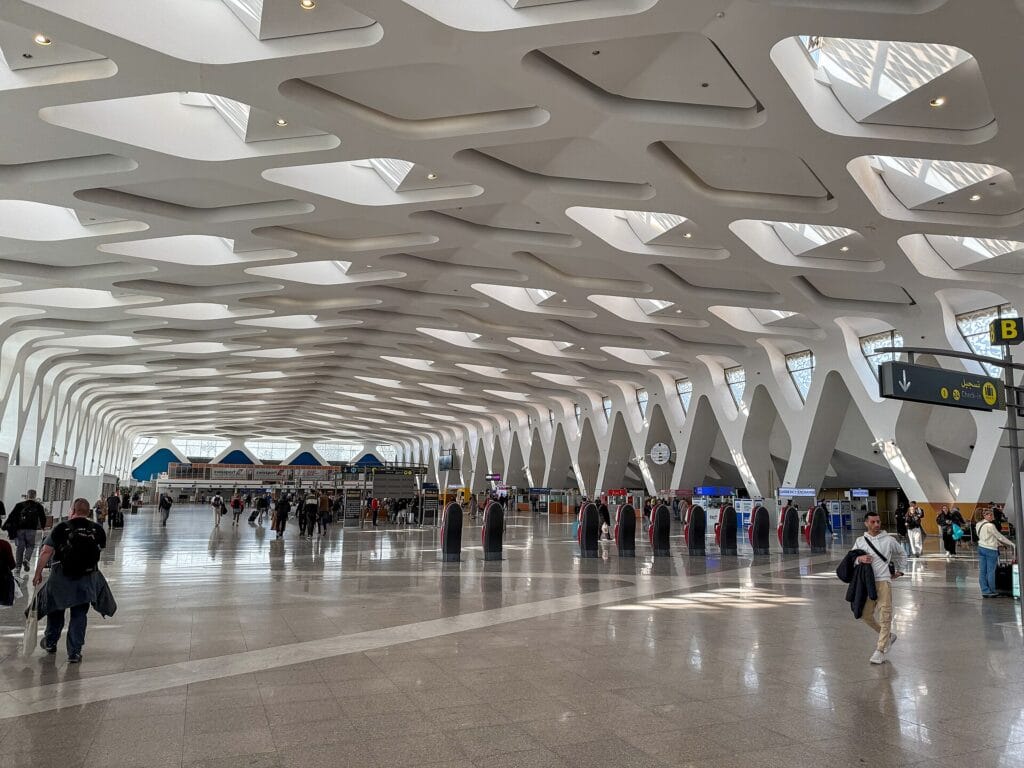
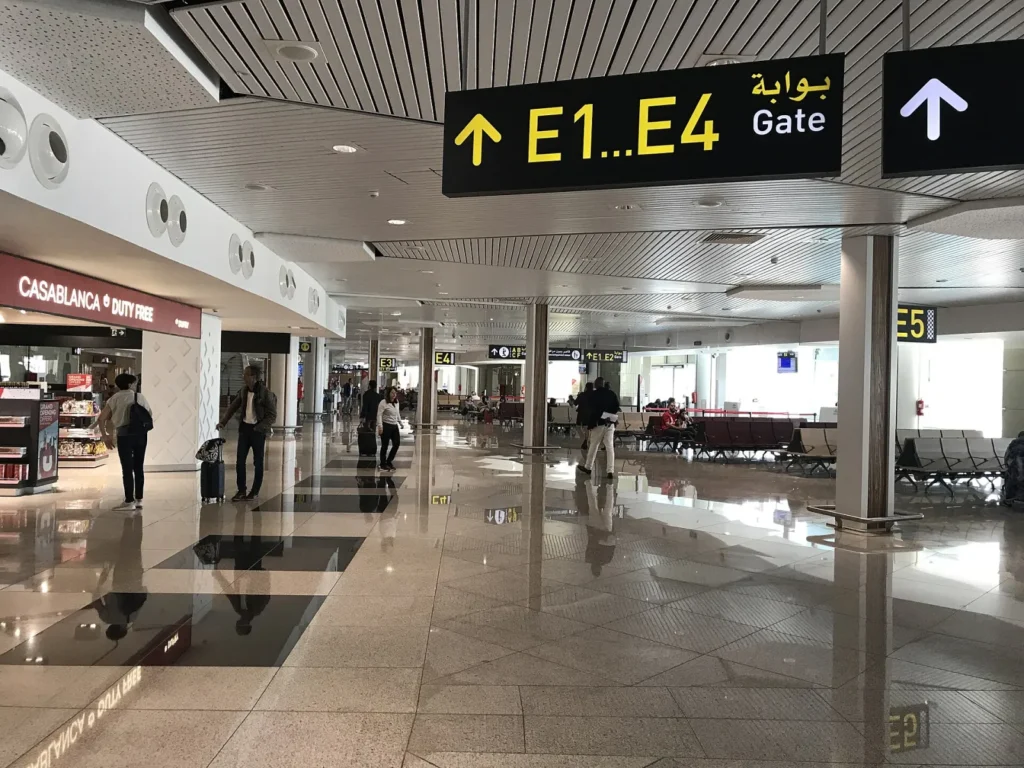
Illustrations : « Mohammed V International Airport – Terminal 1 » — Hamza Izourane (CC BY-SA 4.0) ; « Arrival duty free shop, Narita Airport » — 特急東海 (CC0), via Wikimedia Commons.