The airlines serving Morocco today form a rich and competitive landscape: between the national carrier Royal Air Maroc, Moroccan and European low-cost operators, and the major international airlines, the country is connected to hundreds of cities across Europe, Africa, the Middle East and North America. Whether you are planning a holiday to Marrakech, a trip home via Casablanca or an intercontinental connection, understanding who flies to Morocco, from which airports and with what kind of service helps you choose the best ticket. This 2026 guide offers a factual overview of the main carriers, their networks and practical tips for booking at the right price. The figures, routes and frequencies quoted below change regularly: always verify the information on the official website of the airline and of the National Airports Office (ONDA) before booking.
In brief: the key takeaways
- Royal Air Maroc is the national carrier, with its main hub at Casablanca Mohammed V Airport (code CMN) and membership of the oneworld alliance since 2020.
- Air Arabia Maroc is Morocco’s leading low-cost carrier, based in Casablanca, with a domestic network and many routes to Europe and West Africa.
- The European low-cost airlines (Ryanair, Transavia, easyJet, Vueling, Wizz Air, Jet2 and others) have massively expanded their flights to Morocco, with bases in Marrakech, Agadir, Fez, Tangier and now Rabat.
- The major full-service international airlines (Air France, Iberia, Lufthansa, Turkish Airlines, Emirates, Qatar Airways, Air Canada and others) connect Morocco to the world’s main hubs.
- The best price depends on the season, how early you book and the airport: compare several airlines and stay flexible on dates.
- Rules, routes and fares may change; always confirm with the official source.
Royal Air Maroc: the national carrier and its Casablanca hub
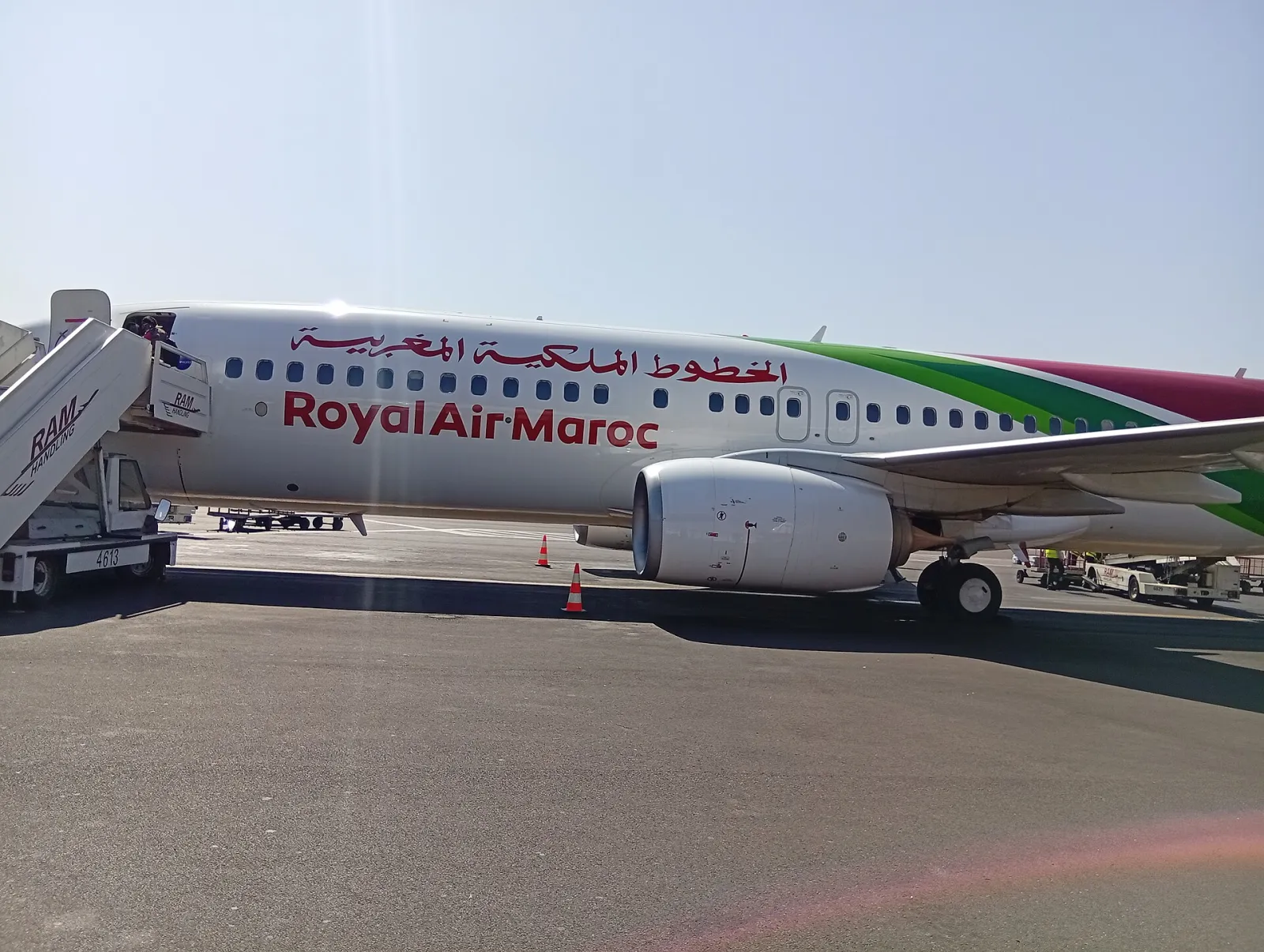
Among the airlines serving Morocco, Royal Air Maroc (IATA code AT) holds a central place. Founded in 1957, it is the Kingdom’s national carrier and the largest by number of long-haul destinations. Its main hub is at Casablanca Mohammed V Airport, which it is progressively turning into a genuine transfer platform linking Europe, sub-Saharan Africa and North America. The airline operates a modern fleet of around sixty aircraft, built around Boeing 737-800s and Embraer 190s on short and medium-haul routes, and Boeing 787 Dreamliners and Boeing 767s on long-haul services.
A oneworld alliance member
In 2020, Royal Air Maroc became the first African airline to join the global oneworld alliance, alongside carriers such as British Airways, Iberia, Qatar Airways and American Airlines. In practice, this membership lets travellers earn and redeem miles across partner airlines, benefit from better-coordinated connections in Casablanca and, depending on their status, access lounges and priority services. For a passenger arriving from North America or Europe and continuing to West Africa, this integration makes it easier to buy a single ticket and have baggage checked through to the destination.
Network and 2026 expansion
Royal Air Maroc serves most Moroccan airports as well as a broad international network: major European capitals, several cities in West and Central Africa, the Middle East and North America (including New York, Montreal and Washington). For 2026, the airline announced an ambitious expansion with the opening of new routes from Casablanca. Among the announced additions are a non-stop Casablanca–Los Angeles service (planned for 7 June 2026), as well as plans for European destinations such as Alicante and Bilbao and African ones such as Pointe-Noire. The regional subsidiary Royal Air Maroc Express also operates domestic and regional flights using smaller aircraft.
Before booking, it helps to know the carrier’s baggage terms. Our dedicated guide details the Royal Air Maroc baggage allowance by cabin and destination. And if your itinerary passes through the main hub, see our tips for a smooth layover in Casablanca.
Air Arabia Maroc: the national low-cost carrier
Air Arabia Maroc (IATA code 3O) is Morocco’s leading low-cost carrier. A subsidiary of the Emirati group Air Arabia, it was founded in 2009 and is based at Casablanca Mohammed V Airport. Its model relies on a uniform fleet of Airbus A320s, a single class and unbundled pricing: the base fare covers the journey, while options (checked baggage, seat selection, meals) are paid separately. This approach allows attractive entry-level prices, provided you anticipate your real needs.
A domestic and international network
Air Arabia Maroc stands out for a relatively developed domestic network by national standards, linking Casablanca, Tangier, Marrakech, Fez, Agadir, Nador, Rabat and Oujda. Internationally, the airline serves many secondary cities in France, Spain, Italy, Belgium and elsewhere in Europe, particularly suited to Moroccan diaspora routes. It also operates a few routes to West and Central Africa. For many travellers, it is an economical alternative to full-service flights, especially for direct point-to-point trips.
The European low-cost airlines flying to Morocco
The most spectacular growth in recent years has come from European low-cost operators. Morocco has become one of their fastest-growing markets, multiplying direct routes to airports such as Marrakech, Agadir, Fez, Tangier, Nador, Rabat and Essaouira, often at very competitive fares outside peak season.
Ryanair
Ryanair is now one of the largest low-cost airlines operating to Morocco. The Irish carrier has heavily expanded its Moroccan network and announced, for winter 2026, a record programme including new routes and the opening of a base in Rabat, in addition to its operations in Marrakech, Agadir, Fez and Tangier. Ryanair thus connects Morocco to a large number of European cities, including secondary destinations poorly served by traditional airlines.
Transavia and easyJet
Transavia, the low-cost subsidiary of the Air France-KLM group, is among the biggest capacity operators to Morocco, with many routes from France and the Netherlands. easyJet also offers an extensive network, notably from the United Kingdom, France and Switzerland, to Marrakech, Agadir and other Moroccan airports. Both airlines are benchmarks for European travellers seeking a good balance between price and frequency.
Vueling, Wizz Air, Jet2 and TUI fly
Vueling, the Spanish airline of the IAG group, mainly links Barcelona and other Spanish cities to Morocco. Wizz Air has added several routes from Central and Eastern Europe, while Jet2 serves the country from the United Kingdom. TUI fly (Belgium, Netherlands, France) combines flight-only tickets and holiday packages to the main tourist destinations. This diversity gives travellers a wider choice but makes it essential to compare baggage terms and ancillary fees, which vary considerably from one airline to another.
The major full-service international airlines
Beyond the low-cost carriers, many full-service airlines serving Morocco connect the Kingdom to the world’s major hubs, offering onward connections to Asia, the Americas and the rest of Africa. These carriers are often preferred for long trips, cabin comfort and loyalty programmes.
The established European carriers
Air France links Paris to Casablanca, Marrakech, Rabat and other cities, with many connections via its Paris-Charles de Gaulle hub. Iberia connects Morocco to Madrid, a gateway to Latin America. Lufthansa serves Casablanca and Marrakech via Frankfurt and Munich, giving access to the group’s vast network. These airlines are particularly suitable for travellers continuing beyond Europe.
The Gulf and Turkish carriers
Turkish Airlines links Morocco to Istanbul, one of the world’s largest connecting hubs, opening access to Asia and a multitude of destinations. Emirates and Qatar Airways offer flights to their respective hubs in Dubai and Doha, valued for their connections to the Indian Ocean, Southeast Asia and Oceania. Etihad Airways also serves Casablanca from Abu Dhabi. These airlines are often competitive on very long trips, with a high level of service.
North America
Besides Royal Air Maroc’s direct services to North America, Air Canada operates flights to Casablanca (seasonal or year-round depending on the period). For other transatlantic itineraries, travellers usually connect through a European hub (Paris, Madrid, Frankfurt, Lisbon, Istanbul) or the Gulf. Comparing connections can make a real difference to the price and total journey time.
Summary table: airlines, types and airports
| Airline | Type | Main airports served in Morocco |
|---|---|---|
| Royal Air Maroc | National (oneworld) | Casablanca (hub), Marrakech, Agadir, Rabat, Fez, Tangier, Oujda… |
| Royal Air Maroc Express | Regional (subsidiary) | Domestic and regional network |
| Air Arabia Maroc | National low-cost | Casablanca (base), Tangier, Marrakech, Fez, Agadir, Nador, Rabat, Oujda |
| Ryanair | European low-cost | Marrakech, Agadir, Fez, Tangier, Rabat, Nador… |
| Transavia | European low-cost | Marrakech, Agadir, Casablanca, Fez, Oujda, Nador… |
| easyJet | European low-cost | Marrakech, Agadir, Casablanca… |
| Vueling | European low-cost | Casablanca, Marrakech, Tangier… |
| Air France | Full-service | Casablanca, Marrakech, Rabat… |
| Iberia | Full-service (oneworld) | Casablanca, Marrakech, Tangier… |
| Lufthansa | Full-service | Casablanca, Marrakech |
| Turkish Airlines | Full-service | Casablanca, Marrakech, Tangier… |
| Emirates / Qatar Airways / Etihad | Full-service (Gulf) | Casablanca |
Morocco’s main airports and their services
Morocco has several international airports managed by ONDA. The choice of arrival airport affects both the number of available airlines and the ticket price. Here are the country’s main air gateways.
| Airport | IATA code | Main role |
|---|---|---|
| Casablanca Mohammed V | CMN | Main national and long-haul hub |
| Marrakech Menara | RAK | Tourism, strong low-cost presence |
| Agadir Al Massira | AGA | Beach resort, charters and low-cost |
| Fez-Saïss | FEZ | Cultural tourism, low-cost |
| Tangier Ibn Battouta | TNG | North, diaspora and business |
| Rabat-Salé | RBA | Capital, developing low-cost base |
| Nador Al Aroui | NDR | Diaspora, European routes |
| Oujda Angads | OUD | Eastern Morocco, diaspora |
Once you land, plan your journey into the city. Our comparison of airport transfers in Morocco details the options (train, taxi, shuttle, car rental) by airport and their indicative prices.
How to choose your airline and book at the best price
Defining your priorities
The right choice depends on your profile. For a direct flight at the lowest price and without checked baggage, a low-cost carrier is often unbeatable. For a long-haul trip with connections, full service and a generous baggage allowance, a full-service or national airline will suit better. If you travel with family, a lot of luggage or a pet, carefully compare the paid options: a low-cost ticket can end up more expensive than a full-service one once all the extras are added.
Where to book
You can book directly on the airline’s official website (recommended for better after-sales service and easier handling of changes) or via comparison sites and online agencies. Comparison tools help you quickly visualise the options; in the event of a disrupted flight, however, a ticket bought directly makes the process easier. Be wary of little-known intermediaries and always check the fare conditions before paying.
Tips for a cheaper ticket
- Book early: reserve several weeks ahead, especially for summer, holidays and school breaks.
- Be flexible: shifting by a day or two, or flying mid-week, can noticeably cut the price.
- Compare airports: arriving at a nearby airport (for example Marrakech instead of Agadir) can be cheaper.
- Travel light: on low-cost carriers, a well-optimised cabin bag avoids checked-baggage fees.
- Watch for new routes: route launches often come with promotional fares.
- Check the total cost: add baggage, seat and any card fees before comparing.
Finally, prepare your formalities in advance. See our guide to the Morocco visa and entry requirements, and check what you can bring back with our page on Morocco customs. If something goes wrong, our article on your rights in the event of a delayed or cancelled flight in Morocco explains the steps.
Domestic flights within Morocco
Morocco’s domestic network is more modest than its international one, but it makes travel between the country’s main cities easier. Royal Air Maroc and its subsidiary Royal Air Maroc Express handle most of these links, notably from the Casablanca hub to Marrakech, Agadir, Ouarzazate, Laâyoune, Dakhla, Tangier and Oujda. Air Arabia Maroc rounds out the offer on some routes. To reach the south of the country or the Saharan provinces, flying often saves considerable time compared with the road.
Plane or train for internal journeys?
On the Tangier–Rabat–Casablanca–Marrakech corridor, the rail network, including the Al Boraq high-speed line between Tangier and Casablanca, is a comfortable and often more practical alternative to flying, with no airport process. For long distances to the south (Dakhla, Laâyoune) or the east, however, the domestic flight remains unbeatable on time. Compare the total travel time, including the airport transfer, before deciding. Our guides to the relevant airports will help you estimate these access times.
Alliances, loyalty programmes and onboard comfort
The type of airline directly influences the travel experience. Understanding alliances and service levels helps you choose a ticket suited to your expectations, beyond the headline price alone.
The three major alliances
Royal Air Maroc and Iberia belong to oneworld; Air France, KLM and their partners are part of SkyTeam; Lufthansa, Turkish Airlines and United are members of Star Alliance. Travelling within the same alliance makes it easier to earn miles, connect and access lounges depending on your status. Emirates, Qatar Airways and the low-cost carriers remain outside these alliances but offer their own, sometimes very generous, loyalty programmes. If you travel to Morocco regularly, concentrating your flights on one alliance or programme can speed up reaching a status and its benefits.
Full service or low-cost: what to compare?
On a full-service or national airline, checked baggage, a meal and seat selection are frequently included, as is more comprehensive customer service in the event of a missed connection. On a low-cost carrier, everything is modular: you pay only for what you use. For a light one-way trip, the low-cost almost always wins; for a family return trip with baggage, the difference narrows or even reverses. Also check the change and cancellation conditions, which are often stricter on the cheapest fares. In the event of damaged baggage or an incident, the remedies also depend on the airline and the regulations applicable to the flight.
Planning connections in Casablanca
As Casablanca is the country’s main connecting point, it is worth allowing enough connection time, especially when you change airline or terminal, or if you have to reclaim and recheck your baggage. A single ticket issued by one airline or within an alliance offers better protection if the first leg is delayed. Ask the airline in advance about the procedures and minimum connection times.
Safety, punctuality and reliability
Aviation safety in Morocco and on the relevant international routes is overseen by national authorities and, for flights to the European Union, by European regulation. The airlines mentioned in this guide operate regularly to and from the European area. To check a carrier’s status, the European Union Aviation Safety Agency publishes official information, and the EU Air Safety List records airlines subject to restrictions. If in doubt about a little-known operator, consult these sources before booking.
- Documents: check the validity of your passport and, where applicable, your visa before purchase.
- Punctuality: favour comfortable connections over overly tight ones.
- Insurance: travel insurance can cover delays, cancellations and baggage depending on the cover.
- Keep your proof: boarding passes, receipts and confirmations make any claim easier.
Finally, remember that this guide is a snapshot of the market at a given moment. Airlines open and close routes over the seasons, adjust their frequencies and change their fares. Treat this information as a starting point for your research, and always confirm the details with the official sources listed below.
Frequently asked questions
What is Morocco’s national airline?
The national carrier is Royal Air Maroc (code AT), whose main hub is at Casablanca Mohammed V Airport. It has been a member of the oneworld alliance since 2020 and operates the country’s largest international network.
Which low-cost airlines fly to Morocco?
On the Moroccan side, Air Arabia Maroc is the main low-cost carrier. On the European side, they include Ryanair, Transavia, easyJet, Vueling, Wizz Air, Jet2 and TUI fly. Their services focus on Marrakech, Agadir, Fez, Tangier, Nador and Rabat.
Which Moroccan airport is best served?
Casablanca Mohammed V Airport (CMN) is the country’s main hub, with the largest number of airlines and long-haul destinations. Marrakech (RAK) is very well connected by low-cost carriers, which often makes it the best entry point for an affordable holiday.
Can you reach Morocco on a direct flight from North America?
Yes. Royal Air Maroc links Casablanca to several North American cities (including New York, Montreal and Washington) and announced new routes for 2026, such as Casablanca–Los Angeles. Air Canada also serves Casablanca. Otherwise, a connection via Europe remains common.
Which airline should I choose for a long-haul trip with a connection?
For an intercontinental journey, full-service airlines such as Royal Air Maroc, Air France, Iberia, Lufthansa, Turkish Airlines, Emirates or Qatar Airways offer coordinated connections via their hubs. The choice depends on your final destination and the best price/duration balance.
Are low-cost tickets always the cheapest?
Not necessarily. The headline price is often low, but the options (checked baggage, seat selection, meals, payment fees) can push up the bill. Always compare the total cost, options included, with that of a full-service airline before deciding.
Where should I book flights to Morocco?
The safest option is to book on the airline’s official website, which simplifies changes and claims. Comparison sites and online agencies are handy for spotting the best deals, but read the conditions carefully and favour recognised intermediaries.
Can the information in this article change?
Yes. Networks, frequencies, base openings and fares change regularly depending on the season and the airlines’ commercial decisions. Always check the up-to-date information on the official websites of the carriers and ONDA before booking.
In summary
Morocco is served by a wide variety of airlines: national carrier Royal Air Maroc and its Casablanca hub, the Moroccan low-cost Air Arabia Maroc, a strong contingent of European low-cost operators (Ryanair, Transavia, easyJet, Vueling, Wizz Air and others) and the major international airlines linking the country to global hubs. To choose well, define your priorities (price, baggage, connections), compare the total cost, stay flexible on dates and airport, and book ahead. Keep in mind that routes, frequencies and fares change: the official source remains your best reference.
Official sources
- Royal Air Maroc — official website
- Air Arabia Maroc — official website
- oneworld — Royal Air Maroc member page
- ONDA — National Airports Office of Morocco
- Ryanair — official website
Photo credit
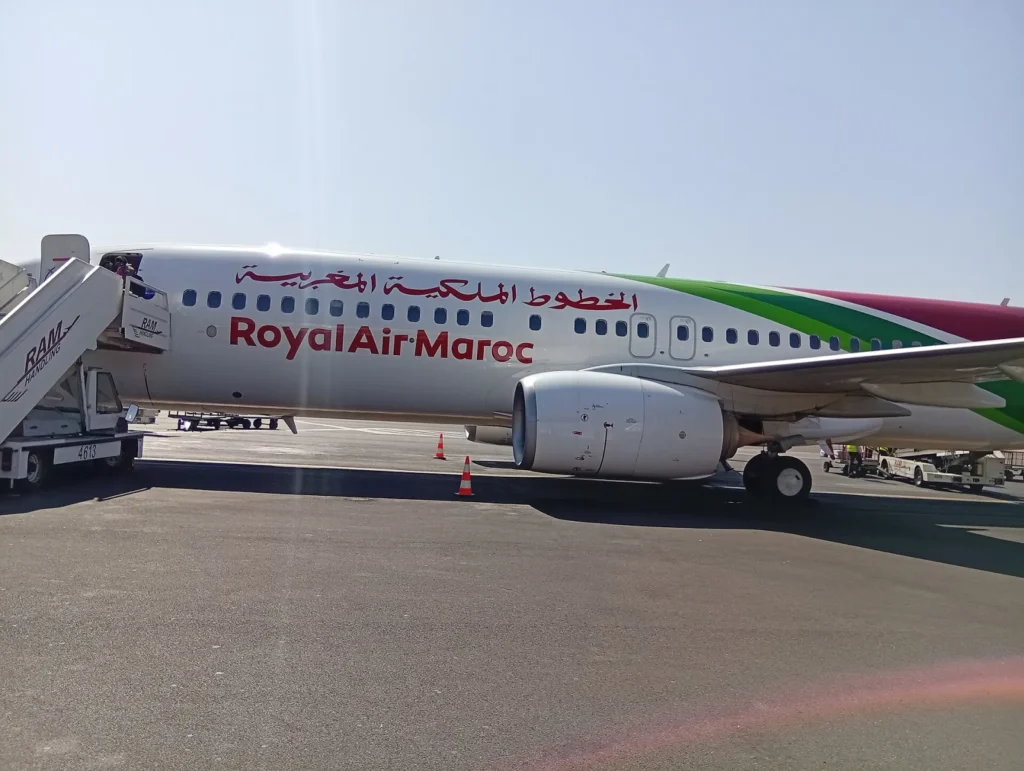
Illustrations : « Royal Air Maroc airplane » — Houss 2020 (CC0) ; « Flight departure board, Perth Airport » — Bahnfrend (CC BY-SA 4.0), via Wikimedia Commons.