Morocco has never seen so many new flight routes to Morocco launch in a single season. For winter 2026-2027, easyJet is opening its first-ever African base in Marrakesh, Ryanair is rolling out a record winter programme of 156 routes, and Marrakesh is now linked non-stop to both Atlanta and Dublin. In practice that means more direct flights, more airports served and downward pressure on fares outside school holidays. Here is what actually changes for your next trip, airline by airline and airport by airport.
In short: the key changes for winter 2026-2027
- easyJet opens its first African base at Marrakesh Menara, with three Airbus A320s stationed there year-round.
- Ryanair announces 156 routes to Morocco this winter, including 17 brand-new ones, for 5.3 million seats.
- Rabat-Salé is the big winner: seven new routes and two additional based aircraft.
- Delta links Atlanta to Marrakesh non-stop; Aer Lingus connects Dublin, Marrakesh remaining its only African destination.
- Long-secondary airports — Essaouira, Ouarzazate, Tétouan, Dakhla, Nador — now appear in regular European schedules.
- Announced frequencies and dates can change: always check the airline’s own website before booking.
This wave did not come out of nowhere. It follows a record summer 2026, when Casablanca Mohammed V handled up to 46,439 passengers in twenty-four hours, while Marrakesh Menara passed 30,000 passengers in a single day for the first time. Over the first seven months of 2026, the Moroccan airport network exceeded 22.28 million passengers, up 8.77 % year on year. Airlines are simply following that demand, and they are following it fast.
easyJet opens its first African base in Marrakesh
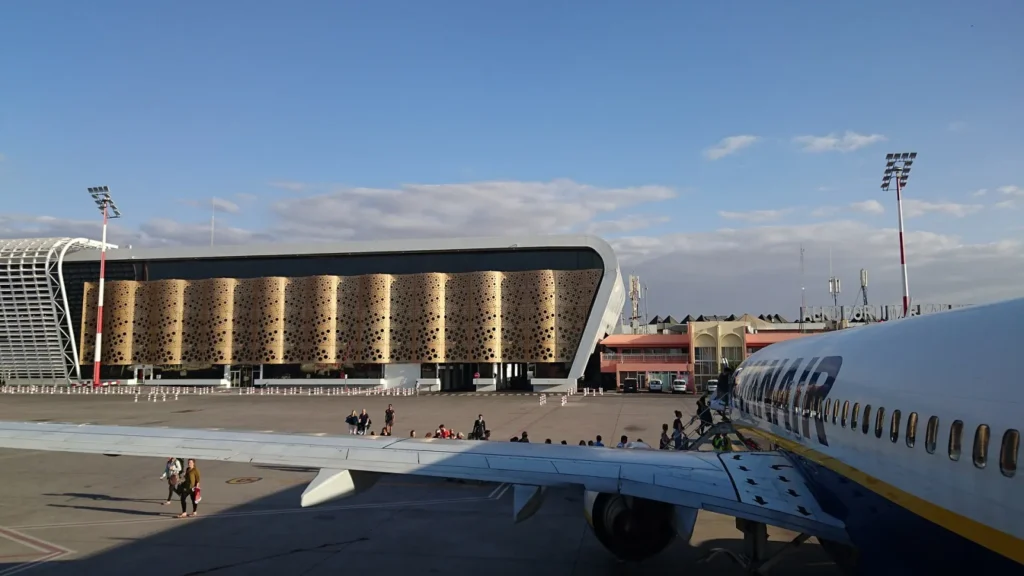
This is the most structural piece of news of the year for Moroccan aviation. easyJet has chosen Marrakesh Menara for the first base in its history on the African continent. Until now, the orange airline served Morocco only from its European bases; from now on, three Airbus A320s are permanently stationed on the Marrakesh apron.
Why a “based” aircraft changes everything
The distinction sounds technical, but it is decisive for travellers. A based aircraft sleeps on site. It can therefore take off very early in the morning for Europe and come back late in the evening, which an aircraft arriving from London or Geneva cannot do on the same day. That opens up three concrete possibilities: schedules that allow a genuine three-day weekend, more frequencies on existing routes, and above all the viability of routes to mid-sized European cities that would never have justified a flight from a foreign base.
A base also means crews living locally and maintenance close at hand. In practice, a delay or a cancellation is far easier to recover from when a spare aircraft and a standby crew are minutes away from the terminal.
In total, the airline announces around 58 routes to Morocco, some thirty of them to or from Marrakesh, for capacity in the region of 4 million seats a year. The base creates about a hundred direct jobs on site, not counting the indirect effects for hotels, restaurants and airport services. For chief executive Kenton Jarvis, the move is an important milestone in the group’s development and durably strengthens connectivity between Morocco and Europe.
The three new winter routes
For the winter season, easyJet adds three brand-new destinations from Marrakesh, each with two weekly frequencies. They target markets that were poorly served non-stop from the red city until now: Central Europe, northern England and German-speaking Switzerland.
| New easyJet route | Country | Announced frequency |
|---|---|---|
| Marrakesh – Prague | Czech Republic | 2 flights per week |
| Marrakesh – Newcastle | United Kingdom | 2 flights per week |
| Marrakesh – Zurich | Switzerland | 2 flights per week |
Three seasonal routes become year-round
A quieter change, but a very useful one: three routes that only existed in high season now operate year-round to Marrakesh, from Lille, Strasbourg and Hamburg. For travellers in northern and eastern France or northern Germany, that means being able to fly in February or November without going through Paris, Lyon or Frankfurt. It is also a strong signal to the market: the airline now treats Morocco as a full winter destination, not just a summer escape.
Betting on the Atlantic coast
Earlier in the year, easyJet had already opened Nantes – Essaouira, Bordeaux – Agadir and Birmingham – Agadir. The message is clear: the airline does not want to be limited to Marrakesh, it also wants to feed the Atlantic coast. Essaouira in particular was until now reachable almost exclusively by road from Marrakesh, close to three hours away. A direct flight from western France completely changes the equation for a short break.
Ryanair: a record winter programme to Morocco
Ryanair, meanwhile, is delivering the largest winter programme ever operated to Morocco by a foreign airline. The Irish low-cost carrier will run 156 routes to the Kingdom during winter 2026, including 17 entirely new ones, for a total of 5.3 million seats. That is roughly 580,000 seats more than the previous winter, growth of around 12 %.
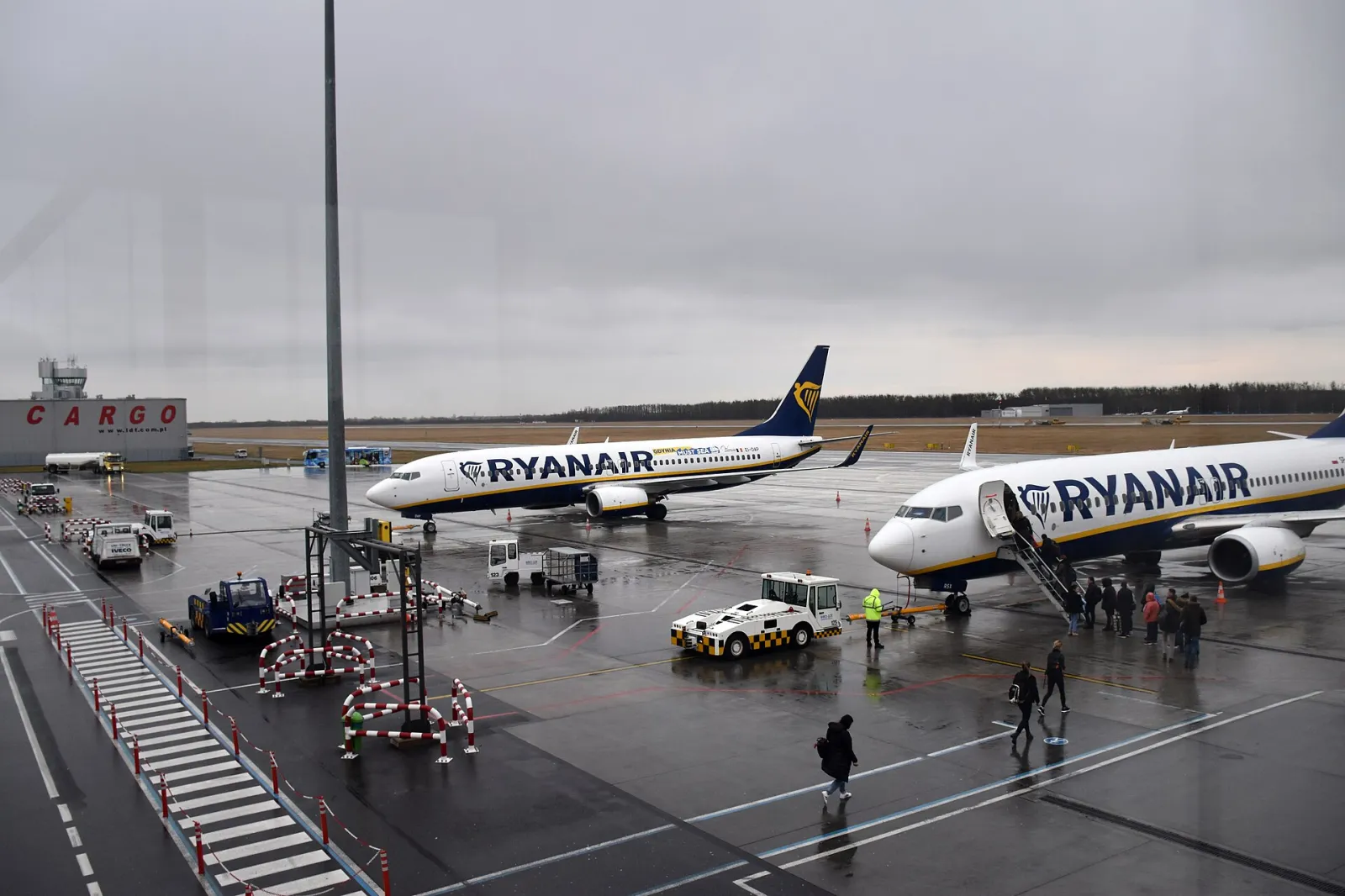
Behind those figures lies a heavy industrial commitment: sixteen aircraft based in Morocco — two of them newly assigned to Rabat — cumulative investment announced at 1.6 billion dollars, and more than 8,500 supported local jobs, including some 480 pilot and cabin crew positions. The network covers fourteen European countries, from Ireland to Poland by way of Italy, Germany and Scandinavia.
Where the seventeen new routes land
The split reveals the Moroccan strategy: relieve Marrakesh and Casablanca by pushing the regional platforms.
| Moroccan airport | New routes | Example destinations |
|---|---|---|
| Rabat-Salé (RBA) | 7 | Stockholm, Kraków |
| Marrakesh Menara (RAK) | 5 | Wrocław |
| Agadir Al Massira (AGA) | 5 | Milan, Nuremberg, Bratislava, Gdańsk |
One detail deserves attention: Central and Eastern Europe now occupies an unprecedented place. Kraków, Wrocław, Gdańsk, Bratislava and Prague appear simultaneously in both airlines’ schedules. That market, long ignored by traditional tour operators selling Morocco, is becoming a source of traffic in its own right for the cold season.
Eleven Moroccan airports served
Beyond the three main platforms, the winter programme serves an unusually wide range of airports: Rabat, Marrakesh, Agadir, Fez, Tangier, Oujda, Dakhla, Essaouira, Ouarzazate, Tétouan and Nador. Seeing Ouarzazate or Dakhla in a regular European schedule was still unthinkable a few years ago.
The Moroccan National Tourist Office, a partner in this rollout, sees it as a lever for regional development. Beyond raw air capacity, the stated goal is to redistribute tourist flows towards regions that currently sit outside the main circuits, and to smooth seasonality by filling hotels between November and March.
Rabat, the real revelation of the season
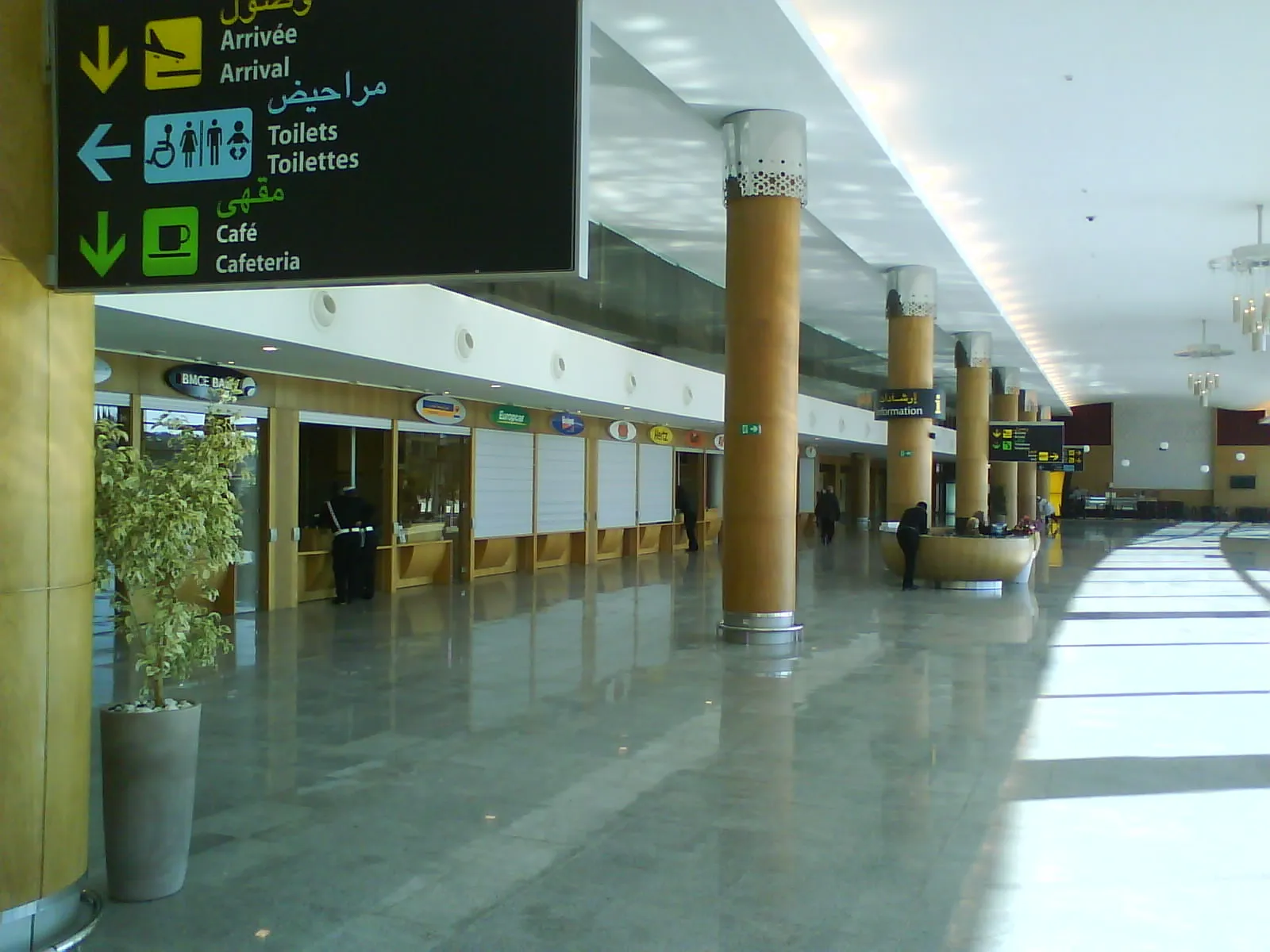
Long confined to the role of administrative airport, Rabat-Salé is the surprise of the winter. With seven new routes and two additional based aircraft, the capital gains a European network worthy of a leading tourist city.
For travellers, it is a serious alternative to Casablanca. The airport is much smaller and therefore far quicker to cross: where Mohammed V often requires an hour between landing and exit, Rabat can be cleared in about twenty minutes outside peak times. It also puts the medinas of Rabat and Salé, Meknes and even Fez within direct reach, and it sits roughly fifteen minutes by road from the city centre.
This rise is part of a national airport development strategy running to 2030, which provides for capacity expansion, infrastructure modernisation and digitalisation of passenger journeys, ahead of the major sporting events the Kingdom is preparing to host.
North America and Ireland: Marrakesh reaches further
Delta links Atlanta to Marrakesh non-stop
Long-haul is not being left behind. Delta Air Lines launched the first non-stop service between Atlanta and Marrakesh in late October 2025, becoming the first US carrier to link the two cities directly. The flight operates three times a week, departing Atlanta on Tuesdays, Thursdays and Saturdays, with returns from Marrakesh on Wednesdays, Fridays and Sundays. During the year-end peak, frequency was increased to daily.
The significance goes well beyond Georgia. Atlanta is one of the world’s largest connecting hubs: through it, Marrakesh is now linked to more than 125 US destinations, from Texas to the West Coast, with a single aircraft change. For a North American market historically obliged to transit through Paris, Madrid or Casablanca, that is a major shortcut.
Aer Lingus: Marrakesh, its only African stop
On the Irish side, Aer Lingus keeps Marrakesh as the only African destination in its entire network, with direct flights from Dublin. Combined with Ryanair’s offer on the same axis, the Dublin-Marrakesh link reaches near-daily frequency in high season. It is also an indirect gateway for North American travellers, since Dublin offers US preclearance on the way back.
Summary table: who flies to which airport this winter
| Airline | Main Moroccan airports | What is new in winter 2026-2027 |
|---|---|---|
| easyJet | Marrakesh (base), Agadir, Essaouira | Base of 3 A320s; Prague, Newcastle, Zurich |
| Ryanair | Rabat, Marrakesh, Agadir, Fez, Tangier, Oujda, Dakhla, Essaouira, Ouarzazate, Tétouan, Nador | 156 routes including 17 new; 16 based aircraft |
| Delta Air Lines | Marrakesh | Atlanta non-stop, 3 flights a week |
| Aer Lingus | Marrakesh | Dublin, only African stop in the network |
| Royal Air Maroc | Casablanca (hub), Marrakesh and the whole domestic network | Connecting hub towards Africa and North America |
Why it is all happening at once
Three factors overlap. The first is demand: two years of double-digit traffic growth have convinced network planners that Morocco is no longer a seasonal destination but a year-round market. The second is climate: between December and March, Marrakesh and Agadir offer daytime temperatures few European destinations can match three hours from home. The third is infrastructure: Moroccan airport capacity is expanding quickly, which makes it possible to absorb extra slots without saturating terminals.
On top of that comes an anticipation effect tied to the major sporting events of the coming years. Airlines are positioning their bases and traffic rights now, so as to be in place when demand surges.
What these new routes change for you in practice
Fares that should ease
When capacity rises by several hundred thousand seats in a single season, the mechanics are well known: competition intensifies and lead-in fares fall, particularly midweek and outside school holidays. Winter, traditionally quieter than summer in Morocco, should be the most attractive period. One caveat: the weeks around Christmas, New Year and February half-term will stay expensive whatever the supply, because demand there always outstrips capacity.
Fewer connections, more weekends
The arrival of direct routes from mid-sized cities — Newcastle, Nantes, Bordeaux, Gdańsk, Wrocław, Bratislava — removes connections that added hours to journeys and multiplied the risk of lost luggage. A long weekend in Marrakesh or Essaouira becomes realistic from cities that had no direct access at all last year.
Regions finally within reach
This may be the most interesting long-term effect. Landing directly at Ouarzazate for the Draa valley and the kasbahs, at Essaouira for the windy coast and surfing, at Dakhla for kitesurfing or at Tétouan for the Mediterranean north avoids road transfers of five to eight hours. It completely redraws how a Moroccan itinerary can be built: you can now enter through one region and leave through another.
Airport by airport: what to remember
- Marrakesh Menara (RAK) — easyJet base, heart of the system, transatlantic link via Atlanta. The terminal is large but immigration queues can be long at peak times: allow margin on the way back.
- Rabat-Salé (RBA) — the strongest relative growth. Small, fast, well placed for the north and centre of the country.
- Agadir Al Massira (AGA) — five new routes, including Italy and Central Europe. Gateway to the southern beaches and Taghazout.
- Casablanca Mohammed V (CMN) — still the national hub and the main connecting point towards Africa and North America, with direct rail access from the basement of the terminal.
- Fez-Saïss (FEZ) and Tangier Ibn Battouta (TNG) — served in the winter programme, useful for the north and for cultural circuits.
- Essaouira, Ouarzazate, Dakhla, Tétouan, Nador, Oujda — frequencies remain limited and often seasonal, but their mere presence in a European schedule is new.
Our tips for making the most of the new routes
- Book early on brand-new routes. New services often open with very low lead-in fares designed to fill the aircraft; those prices vanish as soon as the route finds its audience.
- Compare the arrival airport, not just the price. A ticket thirty euros cheaper to an airport four hours by road from your final destination is not a bargain.
- Plan your baggage. On Ryanair and easyJet, the headline fare includes only a very small under-seat bag. Read our Morocco carry-on baggage rules before confirming your booking.
- Sort the transfer at booking time. Our comparison of airport transfers in Morocco covers bus, train, grand taxi and private transfer for each platform.
- Check your paperwork. A direct flight exempts you from nothing: review the Morocco visa and entry requirements for your nationality.
- Think about the return. Souvenirs, spices, argan oil: the limits are specific. Our guide to Moroccan customs rules sets them out.
- Watch the extreme timings. With based aircraft, first departures are very early and last returns very late: make sure your accommodation and transfer work at those hours.
Three mistakes to avoid with new routes
- Confusing an announcement with going on sale. An announced schedule is not always immediately bookable. Launch dates can slip by a few weeks.
- Building a whole itinerary on a twice-weekly route. If Tuesday’s flight is cancelled, the next one is Saturday. On thin routes, keep a road or rail fallback.
- Forgetting the gap between airport and destination. Ouarzazate is not Marrakesh, and Nador is not Tangier. Always measure the remaining land journey before celebrating the fare.
FAQ — New flight routes to Morocco
Which airlines are opening new routes to Morocco this winter?
This is mainly a massive reinforcement by carriers already present. easyJet opens its first African base in Marrakesh, Ryanair moves to 156 routes including 17 new ones, Delta flies Atlanta non-stop and Aer Lingus keeps Dublin-Marrakesh as the only African link in its network.
What does an easyJet base in Marrakesh change for travellers?
Three Airbus A320s are stationed in Marrakesh all year. That allows very early morning departures and late evening returns, more frequencies, better recovery from delays, and routes to mid-sized European cities that would not have been viable without an aircraft based on site.
Which Moroccan airport benefits most?
Rabat-Salé, without hesitation. The capital receives seven of Ryanair’s seventeen new routes plus two additional based aircraft. Agadir and Marrakesh follow with five new routes each.
Can you fly directly from the United States to Marrakesh?
Yes. Delta Air Lines operates a non-stop service between Atlanta and Marrakesh, three times a week, with increased frequency during year-end peaks. The Atlanta hub provides connections to more than 125 US cities.
Will these new routes push ticket prices down?
An increase of several hundred thousand seats mechanically pushes fares down, especially midweek and outside school holidays. Christmas, New Year and February periods will nevertheless stay tight.
Are Ouarzazate, Essaouira and Dakhla really served from Europe?
Yes, these airports appear in the winter programme, which is a notable change. Frequencies remain limited and often seasonal, so check operating days before building a whole itinerary around those flights.
Where can I check that a route is actually on sale?
Always on the official website of the airline concerned. Schedule announcements sometimes precede the real opening of sales by several weeks, and launch dates can move without notice.
Low-cost or full-service airline: which should I choose?
It depends on your baggage and your timings. Once hold luggage, seat selection and priority boarding are added, the gap with a full-service carrier narrows sharply. Compare the final all-in price, never the lead-in fare.
In summary
Winter 2026-2027 marks a turning point for Moroccan aviation: a first easyJet base in Marrakesh, a record Ryanair programme of 156 routes, a direct American gateway via Atlanta, and whole regions — Rabat, Essaouira, Ouarzazate, Dakhla, Tétouan — finally stepping out of the shadows. For travellers, that means more direct flights, more airport choice and more competitive fares outside school holidays. One last reflex before booking: air schedules evolve, so always confirm times and frequencies on the airline’s official website. Have a good flight!
Official sources
- Office National Des Aéroports (ONDA) — traffic and airport infrastructure.
- Moroccan National Tourist Office — air connectivity partnerships.
- easyJet — schedule and Marrakesh base.
- Ryanair — winter programme and new routes.
- Delta Air Lines newsroom — Atlanta-Marrakesh service.
- Aer Lingus — Dublin-Marrakesh service.
Informational article. Schedules, frequencies and launch dates announced by airlines may change at any time; always check with the airline before booking.
Photo credit
Images: featured image « Marrakesh Menara Airport New Terminal » — Max221B (CC BY-SA 4.0); « MA Airport Rabat Sale New Terminal Hall » — Froik (CC BY-SA 3.0); « Two Ryanair Boeing 737-800 at WRO apron » — Vasyatka1 (CC BY-SA 4.0), via Wikimedia Commons.