Torn between two of Morocco’s most popular destinations and honestly wondering which one best matches what you’re after? The question Marrakech or Agadir comes up again and again when it’s time to book, and for good reason: these two cities offer radically different travel experiences. Marrakech is the imperial city par excellence, a deep dive into culture, history and the sensory overload of the medina’s alleyways. Agadir, by contrast, is the great seaside resort of the Atlantic coast, built for the beach, relaxation and lazing in the sun under mild weather almost all year round.
The quick answer? If you’re after a culture shock, monuments, souks and an ideal base for trips into the mountains and the desert, choose Marrakech. If you mostly dream of soft sand, swimming, rest and quiet family holidays by the ocean, lean towards Agadir. But as is often the case in travel, the real choice between Agadir or Marrakech depends on your profile, the season and the length of your stay. In this honest, independent comparison, we review every criterion — beach, culture, climate, excursions, budget, families and air access — to help you decide with full confidence. And here’s the good news: the two cities are only about 250 km apart, which makes a combined trip entirely feasible.
In short: Marrakech or Agadir at a glance
Before getting into the detail, here are the essentials to keep in mind to steer your decision between beach or culture in Morocco:
- Marrakech: imperial city, culture, UNESCO medina, souks, palaces, an excellent base for the Atlas Mountains, Essaouira and the desert. Very hot summers, an intense and lively atmosphere.
- Agadir: modern seaside resort, a vast beach, marina, mild climate year-round, a relaxed and family-friendly vibe. Few historic monuments (the city was rebuilt after 1960).
- The right choice: culture and a change of scenery → Marrakech; beach and rest → Agadir. The two are easily combined in a single trip.
| Criterion | Marrakech | Agadir |
|---|---|---|
| Atmosphere | Intense, oriental, lively, exotic | Relaxed, modern, seaside, airy |
| Beach | None (sea about 2h30-3h away) | Large fine-sand beach in the city centre |
| Culture / monuments | Exceptional: medina, palaces, mosques | Limited: rebuilt city, little historic heritage |
| Climate | Hot to very hot in summer (40°C+), mild in winter | Mild and sunny year-round, temperate ocean |
| Excursions | Atlas, desert, Essaouira, waterfalls | Taghazout, Paradise Valley, Souss-Massa, Taroudant |
| Nightlife | Rich and varied (rooftops, clubs, shows) | Present but quieter, geared towards relaxation |
| Families | Good but intense for young children | Ideal: beach, safety, gentle pace |
| Budget | Wide range, from very cheap to luxury | Often all-inclusive packages, great value for money |
| Air access | Marrakech-Ménara Airport (RAK), very well served | Agadir-Al Massira Airport (AGA), well connected to Europe |
Note: this guide is entirely independent and is not affiliated with ONDA (the National Airports Office), nor with any tourist board or provider. Our recommendations are neutral and fact-based.
Marrakech or Agadir: introducing the two cities
Marrakech, the pearl of the South and imperial city
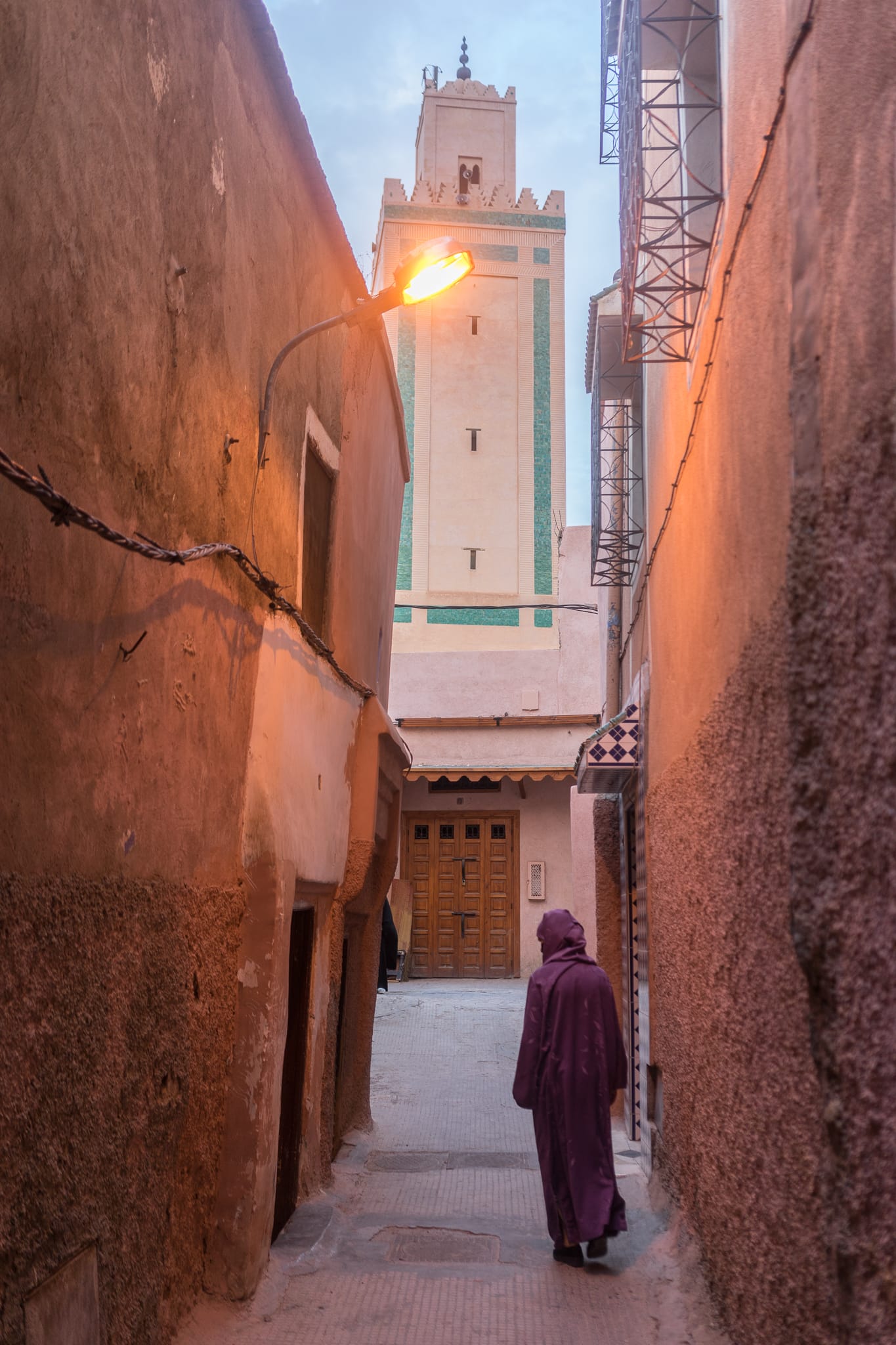
Marrakech is one of Morocco’s four imperial cities, and arguably the most iconic in the eyes of travellers the world over. Nicknamed the “red city” for the ochre tint of its ramparts and buildings, it concentrates a historical and cultural heritage of rare richness. Its beating heart is the medina, a UNESCO World Heritage Site and considered the largest medina in the Maghreb: a labyrinth of alleyways where artisans, spice merchants, dyers, coppersmiths and carpet sellers cross paths.
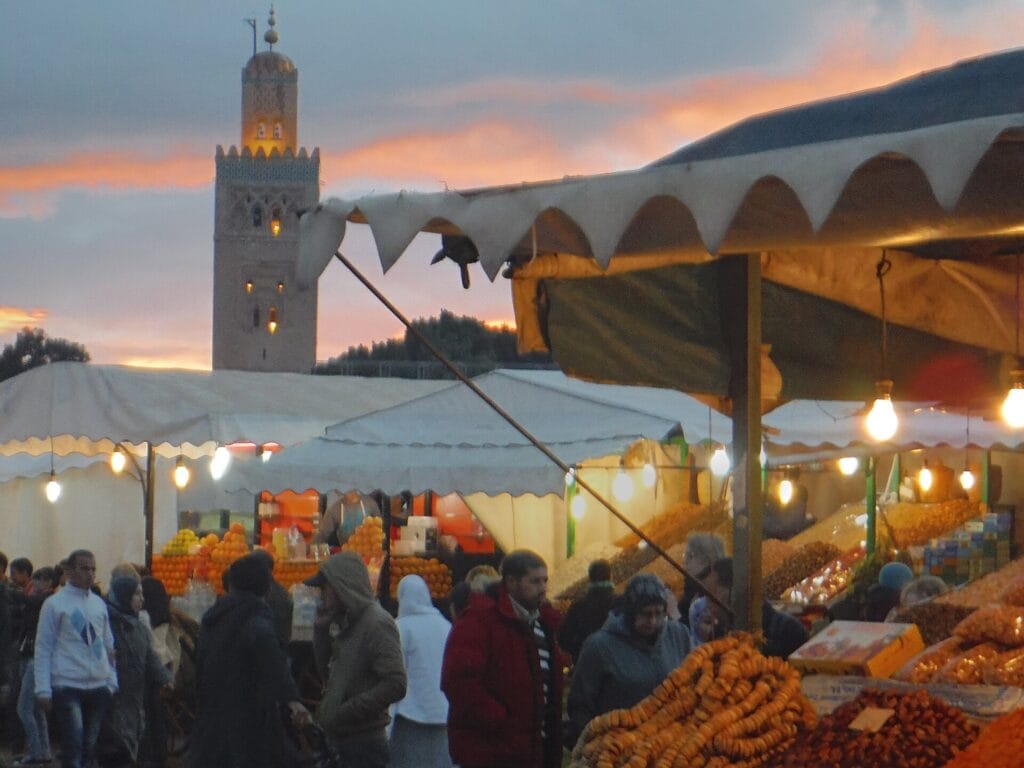
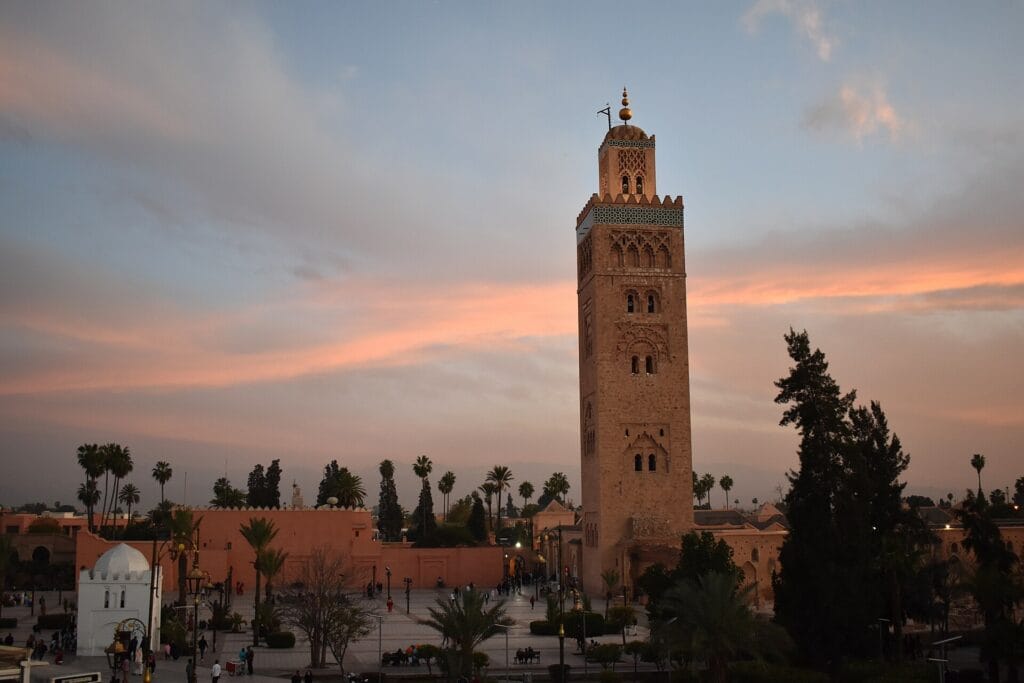
The unmissable meeting point is Jemaa el-Fna square, listed in 2001 by UNESCO as a Masterpiece of the Oral and Intangible Heritage of Humanity. By day it teems with orange-juice sellers and snake charmers; by night it turns into a huge open-air restaurant animated by storytellers, Gnaoua musicians and the swirls of smoke from the grills. All around radiate the flagship monuments: the Koutoubia minaret (12th century), one of the finest buildings in North Africa, the Bahia Palace, the Saadian Tombs, and the Majorelle Garden, that jewel box of intense blue created by the painter Jacques Majorelle and later rescued by Yves Saint Laurent. Marrakech is, above all, a destination of culture, history and total immersion in another world.
Agadir, the Atlantic’s modern seaside resort
Agadir tells a very different story. On 29 February 1960, a magnitude 5.7 earthquake destroyed the city in fifteen seconds, killing nearly 12,000 people. The town was almost entirely rebuilt a few hundred metres from its original location, on a site deemed less exposed to seismic risk and using earthquake-resistant building standards. As a result, Agadir has virtually no old town or historic heritage, but offers a modern, bright and airy image, turned towards the ocean.
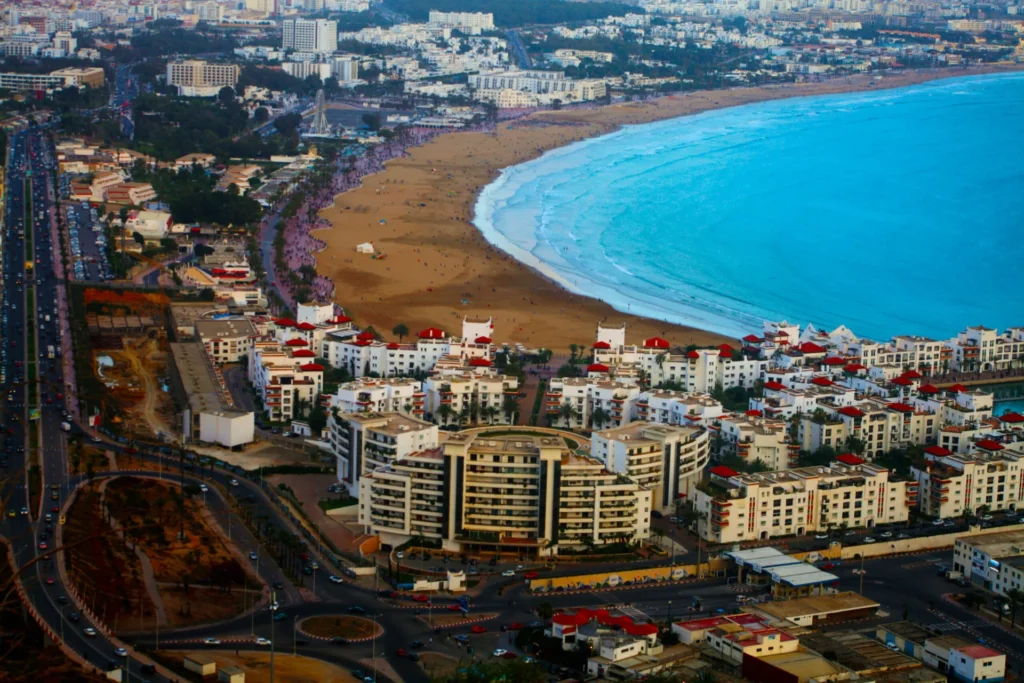
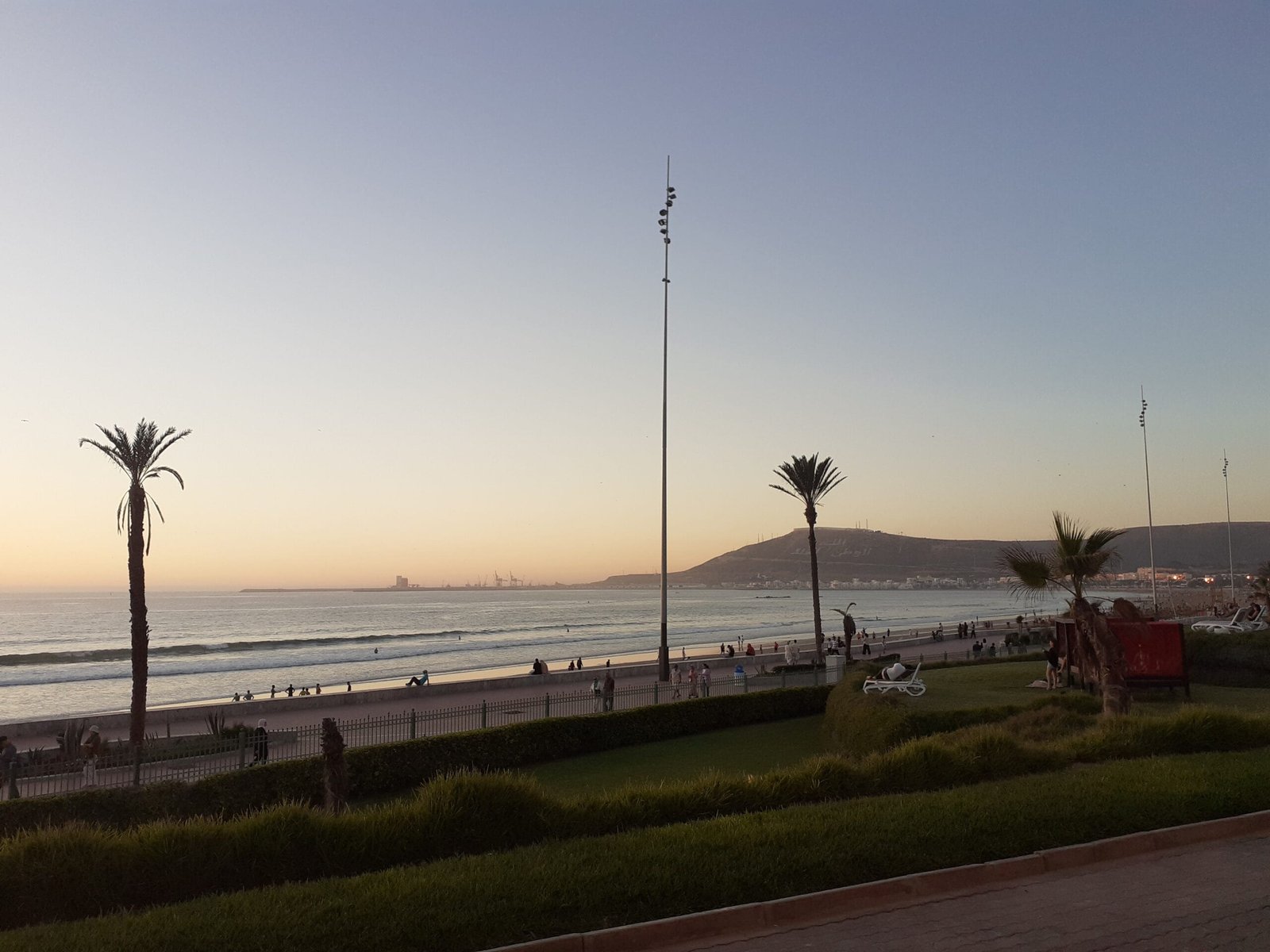
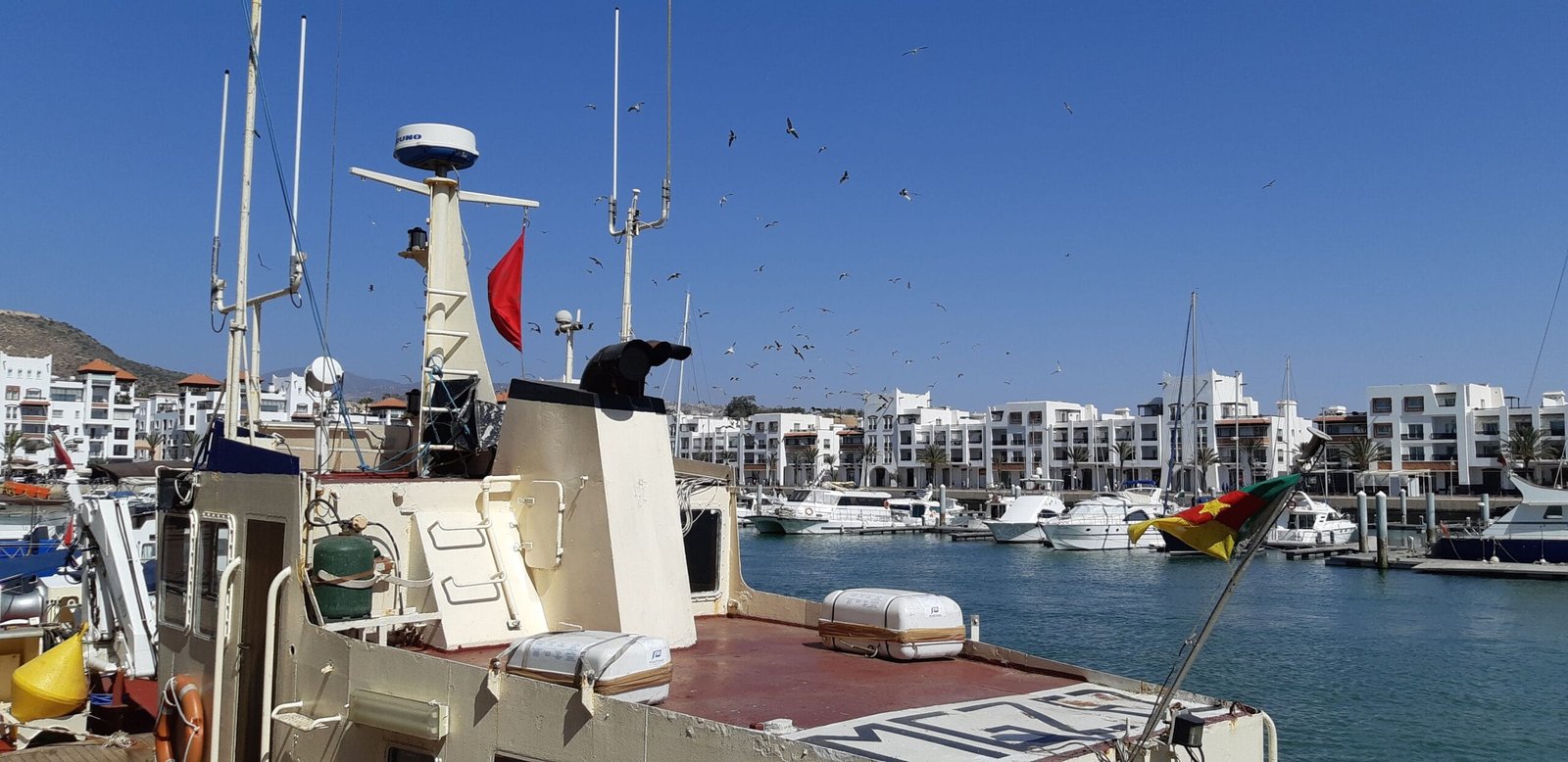
What makes Agadir famous is its great bay and its fine-sand beach that stretches for several kilometres along a seafront lined with palm trees, hotels and terraces. From its reconstruction, the city was conceived as a seaside tourism destination: a landscaped promenade, an elegant marina, hotel complexes, and a laid-back way of life. The only visible remnant of the past is the Agadir Oufella kasbah, perched on a hill overlooking the bay, itself ravaged by the 1960 earthquake and now restored. Agadir appeals to those who above all want to swim, rest and enjoy the sun, far from the buzz of the great medinas.
Beach and relaxation in Agadir vs culture and medina in Marrakech
This is the heart of the “beach or culture in Morocco” debate, and probably the criterion that will settle your choice.
Agadir: a paradise for doing nothing
Agadir is built for relaxation. Its main beach, sheltered by the curve of the bay, offers generally calm waters and a vast expanse of sand where you can walk, run, play beach volleyball or simply sunbathe. Along the corniche, cafés and restaurants line up one after another, and the marina, laid out at the northern end, adds a chic touch with its pontoons, its shops and its quality dining. There you can rent a sun lounger, try jet-skiing, paddleboarding or a boat trip around the bay.
For a shopping break and local colour, head to the Souk El Had, one of the largest markets in Morocco, surrounded by ramparts and home to thousands of stalls: spices, argan oil (the region’s speciality), leather goods, pottery, clothing and fruit. It is open every day except Friday morning. Finally, don’t miss the climb up to the Agadir Oufella kasbah: reachable on foot or by cable car, it rises to 236 metres and offers a spectacular panorama over the port, the bay and the city lit up at sunset.
Marrakech: cultural immersion
In Marrakech there is, of course, no beach: the nearest sea, at Essaouira, is about two and a half hours’ drive away. But the city more than makes up for it with the intensity of its cultural experience. Getting lost in the souks of the medina, haggling over a carpet or a copper tray, pushing open the door of a riad to discover a secret courtyard, visiting a palace or a museum, dining on a rooftop facing the Koutoubia: every day in Marrakech is a sensory adventure. To organise all this stress-free, our complete guide to things to do in Marrakech details the must-sees and the more hidden gems.
If it’s your first visit and you have little time, our Marrakech in 3 days itinerary lets you see the essentials smoothly. Marrakech is for those who seek a change of scenery, living history and craft richness — far more than pure rest.
Climate and the best time to go
Climate is a decisive factor, because the two cities do not offer anywhere near the same comfort depending on the season.
Marrakech has a semi-desert climate: mild, pleasant winters, but scorching summers where the thermometer frequently exceeds 40°C in July and August. Visiting the medina in the middle of a heatwave can quickly become gruelling, especially during the midday hours. The best periods to enjoy the city are therefore spring (March to May) and autumn (September to November), when temperatures are pleasant and the light is superb. To time your stay just right, see our dedicated article on the best time to visit Marrakech.
Agadir enjoys one of the mildest and most stable climates in Morocco thanks to the influence of the Atlantic Ocean. The city sees sunshine almost all year round and, even in December, records between 7 and 8 hours of sunshine per day: it is one of the rare destinations where you can enjoy the beach and mild weather around Christmas, without excessive heat. Spring and autumn are particularly pleasant there, with temperatures around 20 to 26°C. The ocean water does, however, stay cool (Atlantic current), more bracing than the Mediterranean — a detail worth knowing if you feel the cold. In short: for a warm winter break, Agadir wins hands down; for culture in spring or autumn, both cities are excellent.
Excursions around Marrakech and Agadir
Beyond the cities themselves, the “Marrakech or Agadir” question also plays out on what you can discover in the surrounding areas.
Excursions from Marrakech
Marrakech is an exceptional base for excursions. In less than two hours, you reach the High Atlas Mountains, their Berber villages, the Ourika Valley and its waterfalls, or even the Toubkal area for hikers. To the west, the fortified seaside town of Essaouira offers a charming day-trip escape to the ocean; we devote a dedicated guide to planning your excursion to Essaouira from Marrakech. Finally, Marrakech is the classic starting point for the great circuits into the desert: Agafay, the Dadès and Todgha gorges, and above all the dunes of Merzouga or Zagora for a night under the stars. No other major Moroccan city offers such a variety of excursions within easy reach.
Excursions from Agadir
Agadir is no slouch either, with natural gems less than an hour away. About forty minutes to the north, the fishing village of Taghazout has become Morocco’s surfing capital, renowned for its spots accessible to beginners and experts alike and its laid-back surf-town vibe. Nearby, Paradise Valley, a valley of palm trees dotted with turquoise natural pools, offers a refreshing escape ideal in summer. Nature lovers will appreciate the Souss-Massa National Park, a sanctuary of birds (including the bald ibis) and preserved coastal landscapes. Finally, the fortified town of Taroudant, nicknamed “little Marrakech” for its ramparts, can be visited on a day trip. It is, in fact, a good compromise for fans of Agadir who want a touch of historical authenticity.
For whom? Families, couples, young travellers and first trips
The best way to decide between Agadir or Marrakech is to ask yourself what kind of traveller you are.
- Families with children: Agadir has the edge. The beach, the club hotels with organised activities, the gentle pace and the safety make it a safe bet for a relaxed holiday. Marrakech remains possible and enriching, but its intensity (crowds, heat, bustling alleys) requires a little more planning with young children; our Marrakech with family guide gives all the tips for a successful stay.
- Couples: Marrakech is unbeatable for a romantic and refined stay — exceptional riads, spas, rooftop dinners, escapes into the Atlas. Agadir will appeal to couples seeking pure relaxation, a spa and a sunset over the ocean.
- Young and sporty travellers: Agadir and Taghazout for surfing, yoga and the beach vibe; Marrakech for nightlife, rooftops and lively clubs.
- First trip to Morocco: if you want the “real” Moroccan shock, Marrakech is the ideal gateway. If you prefer a gentler first approach, more seaside and reassuring, Agadir is perfect.
Budget: how much does a stay in Marrakech or Agadir cost?
On the budget side, both cities remain affordable and offer excellent value for money compared with other destinations. Here are a few indicative benchmarks (prices vary by season, category and time of booking):
- Meal in a local restaurant: 60 to 120 MAD (≈ £5 to £10 / $6 to $12) per person in both cities; a street tagine or a sandwich can be found from 25-40 MAD (≈ £2-3.50 / $2.50-4).
- Mid-range hotel night: 400 to 800 MAD (≈ £32 to £64 / $40 to $80) in both Marrakech and Agadir; charming riads and resorts go well beyond that.
- Coffee / mint tea: 12 to 25 MAD (≈ £1 to £2 / $1 to $2.50).
- Day excursion: 250 to 600 MAD (≈ £20 to £48 / $25 to $60) depending on the destination and format (group or private).
Marrakech offers the widest range, from very cheap backpacking to ultra-luxury palaces; our Marrakech travel budget guide details every spending category. Agadir, for its part, often shines with its all-inclusive resort packages, which make the budget very predictable and appealing for families. On the accommodation side, if you opt for the red city, our article on where to stay in Marrakech helps you choose the right district for your travel style.
Access and airports: Marrakech-Ménara and Agadir-Al Massira
Both cities have their own international airport, which makes arriving from Europe easy. Marrakech-Ménara (RAK) is one of the busiest airports in Morocco, with a very wide choice of direct flights and airlines, both scheduled and low-cost. It is located just a few minutes from the city centre, which keeps transfers quick. Agadir-Al Massira (AGA), located about 22 km southeast of the centre, is also well connected to the main European cities, with a journey to the bay of about 25 to 30 minutes outside rush hour.
On arrival, it’s best to arrange your transfer in advance rather than negotiate on the spot. To compare the options (taxi, ride-hailing, shuttle, car hire) and avoid unpleasant surprises, see our comparison of airport transfers in Morocco. Good to know: if you land in Marrakech but also want to see Agadir (or the other way round), the road link between the two cities is direct and well maintained.
Can you do Marrakech and Agadir in a single trip?
Absolutely, and it’s actually an excellent idea so you don’t have to choose. The two cities are only about 250 km apart, or a little under three hours’ drive on a good, fast road. Many travellers thus combine the culture of Marrakech and the relaxation of Agadir in a single stay, offering a perfect balance between discovery and rest.
The most logical approach is to start with Marrakech — more tiring and culturally dense — then finish with Agadir to rest by the ocean before heading home. Allow at least 3 to 4 days in Marrakech and 3 to 4 days in Agadir to enjoy both without rushing. You can link the two cities by bus (comfortable and inexpensive companies), by hire car (for independence and stops in Taroudant or Essaouira), or by private transfer. Some travellers even organise a loop by arriving at one airport and departing from the other, which optimises time on the ground. By combining beach and culture, you get, in short, the best of southern Morocco.
FAQ: Marrakech or Agadir, your frequently asked questions
Is it better to go to Marrakech or Agadir in winter?
For a warm winter break, Agadir comes out ahead: the city enjoys 7 to 8 hours of sunshine per day even in December and lets you use the beach without excessive heat. Marrakech remains pleasant in winter, with mild days, but the evenings can be cool and the atmosphere is geared more towards culture than swimming.
Does Agadir have as much to see as Marrakech?
No, not in terms of historic heritage. Rebuilt after the 1960 earthquake, Agadir has few historic monuments: its assets are the beach, the marina, the Souk El Had, the Oufella kasbah and above all its nature excursions (Taghazout, Paradise Valley, Souss-Massa). Marrakech, with its UNESCO medina, its palaces and its gardens, offers far more to visit on the cultural side.
How long is the drive between Marrakech and Agadir?
Count on about 250 km, or a little under three hours’ drive on the fast road. The link is direct and well served by bus, hire car or private transfer, which makes combining the two cities very easy to organise.
Which destination is best for a family holiday?
Agadir is generally better suited to families: a safe beach, club hotels with organised activities, a gentle pace and a mild climate. Marrakech remains a lovely family destination, rich in discoveries, but its intensity and summer heat require a little more planning with young children.
Marrakech or Agadir for a first trip to Morocco?
It depends on what you’re looking for. To experience the “real” Moroccan change of scenery — souks, medina, monuments — Marrakech is the ideal gateway. If you prefer a gentler, more seaside first approach centred on relaxation, Agadir will suit you better. The ideal thing, if time allows, is still to combine the two.
Can you swim in the ocean at Agadir?
Yes, Agadir’s large beach is sheltered by the bay and good for swimming for a good part of the year. The water does, however, stay cool because of the Atlantic current, more bracing than the Mediterranean. The most pleasant months for swimming run from spring to autumn.
Conclusion: Marrakech or Agadir, it depends on your profile
At the end of this comparison, the verdict is clear: there is no “best” city in absolute terms, only the one that best matches your desires. Choose Marrakech if you’re after culture, history, monuments, nightlife and excursions into the Atlas and the desert. Opt for Agadir if you dream above all of the beach, rest, a mild year-round climate and relaxed family holidays by the ocean.
And remember: between beach or culture in Morocco, you don’t have to decide once and for all. With only 250 km between the two, the Marrakech + Agadir combo remains the ideal formula for tasting the best of both worlds in a single trip. Whatever you decide, you’ll discover a southern Morocco that is generous, sunny and welcoming. To go further, you can also learn more about Marrakech and Agadir via their reference pages.
Images under free license via Wikimedia Commons: © Ideophagous (CC0); © Omalihy (CC BY-SA 4.0); © Abdeaitali (CC BY-SA 4.0). Sources: Wikimedia Commons.Photo credits: royalty-free illustration images (Agadir and Marrakech). Please indicate here the exact source of each visual used at publication.