A free cabin bag is becoming a guaranteed right on flights covered by European rules, and that changes the maths for anyone flying to Morocco with Ryanair, easyJet or Transavia. The European Parliament adopted the reform on 7 July 2026 by 646 votes to 12, and the Council gave final clearance six days later. But be careful: not every flight between Europe and Morocco is covered, and the detail matters enormously. Here is what changes, when, and above all on which routes.
In short: the key points
- One free personal item is guaranteed on board: a small bag or backpack, with no surcharge allowed.
- The displayed fare must include a piece of hand baggage from the very start of booking, so comparisons become honest.
- The larger cabin trolley can still be charged for: the reform imposes transparency, not blanket free baggage.
- Compensation stays at €250, €400 and €600 by distance, triggered from three hours of delay.
- Children under 14 must be seated next to an accompanying adult at no extra cost.
- Practical application in 2027: airlines get one year after publication to adapt.
- Crucial for Morocco: coverage depends on the departure airport and the airline’s flag.
The reform ends thirteen years of deadlock between member states. It revises the European air passenger rights regulation, the text everyone knows without remembering its number, which has governed delays, cancellations and denied boarding since 2004.
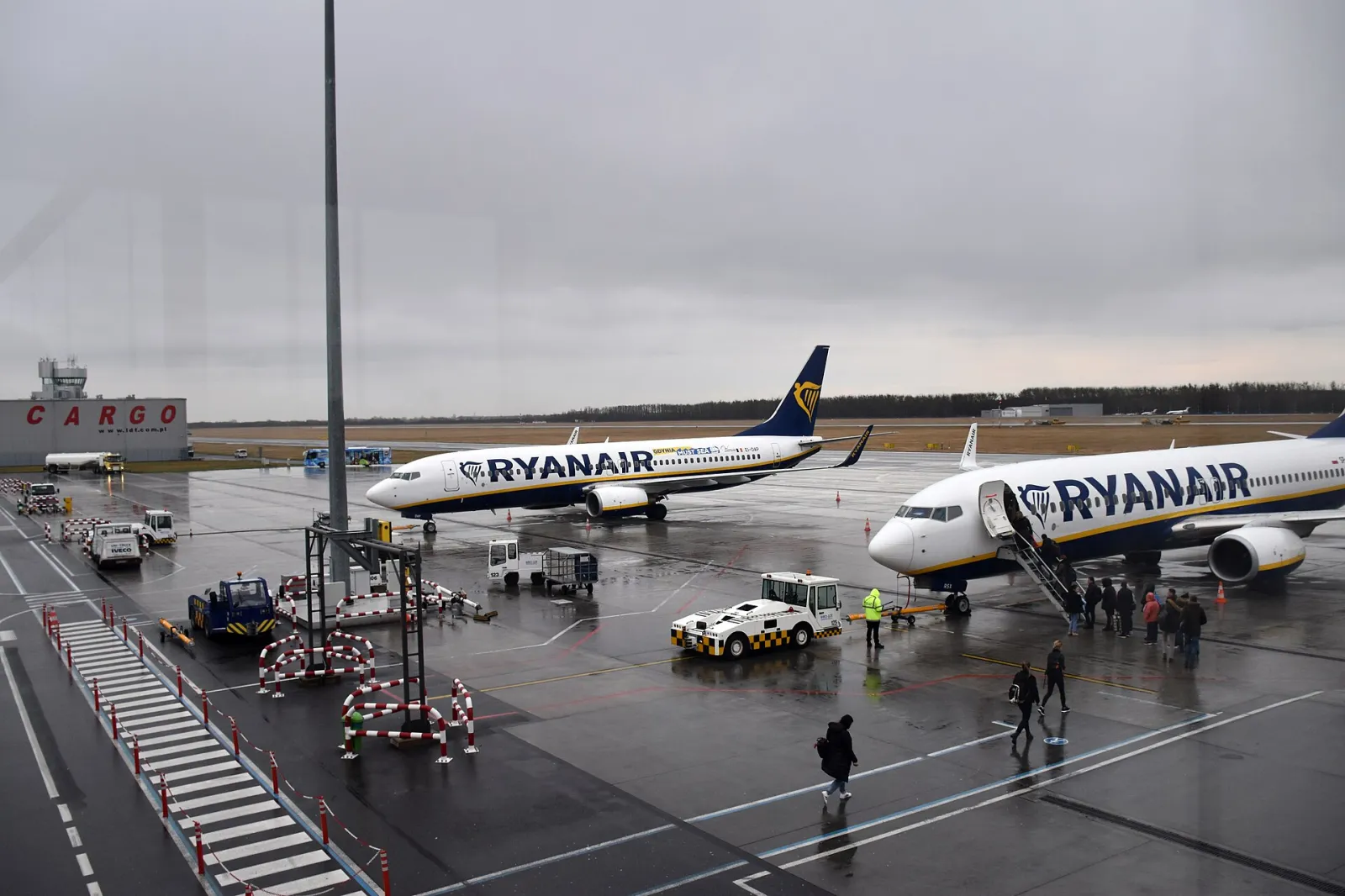
What the reform actually says about baggage
A guaranteed free personal item
This is the headline measure. Every passenger is now entitled to one free personal item in the cabin, described in the text as a small bag or backpack and meant to slide under the seat in front of you. No airline may charge for it. The reference dimension most widely quoted in coverage is 40 × 30 × 15 centimetres, but each airline publishes its own figure: check it on their website before you fly, because that is the one you will be held to at the gate.
In practice this ends a familiar abuse: the backpack refused at the boarding gate and charged at a punitive rate, even though it fitted easily under the seat. The principle now sits in legislation rather than in each carrier’s terms and conditions.
The displayed price must include hand baggage
This is the least spectacular part and probably the most useful. Airlines will have to display, by default and from the start of the booking process, a fare that includes a piece of hand baggage. They may still offer a cheaper fare alongside it, without hand baggage, for travellers who do not want any. But the headline price, the one shown first and used for comparison, must include the bag.
Why does this matter so much? Because comparison between airlines is currently distorted. A Paris-Marrakesh ticket advertised at €29 can cost €75 once baggage is added, while a ticket advertised at €60 already includes it. The comparison site still ranks the first one on top. Requiring a comparable price restores readable competition.
What is not guaranteed
Let us be clear, to avoid nasty surprises at the gate. The reform does not make the wheeled cabin trolley free, the one that goes in the overhead locker. It guarantees the personal item under the seat, and it imposes price transparency on hand baggage. A traveller arriving with a ten-kilo trolley without having paid the corresponding option will still be charged.
Nor does it touch hold baggage, the security rules on liquids or prohibited items. On those points nothing changes: our guide to Morocco carry-on baggage rules remains the practical reference on the Moroccan side.
The timetable: from when, exactly?
This is where most of the confusion arises. The text is adopted but not yet applied. Three steps follow one another.
| Step | Date | Effect |
|---|---|---|
| European Parliament vote | 7 July 2026 | 646 in favour, 12 against, 3 abstentions |
| Council final clearance | 13 July 2026 | Definitive adoption of the text |
| Entry into force | 20 days after official publication | The text exists in law |
| Practical application | One year later, so in 2027 | Airlines must comply |
In other words: if you book a flight today for this winter, current rules still apply. Do not count on the guaranteed free personal item before the adaptation period has run out. That said, several airlines will probably adjust their fare displays ahead of the deadline, simply to avoid changing their systems twice.
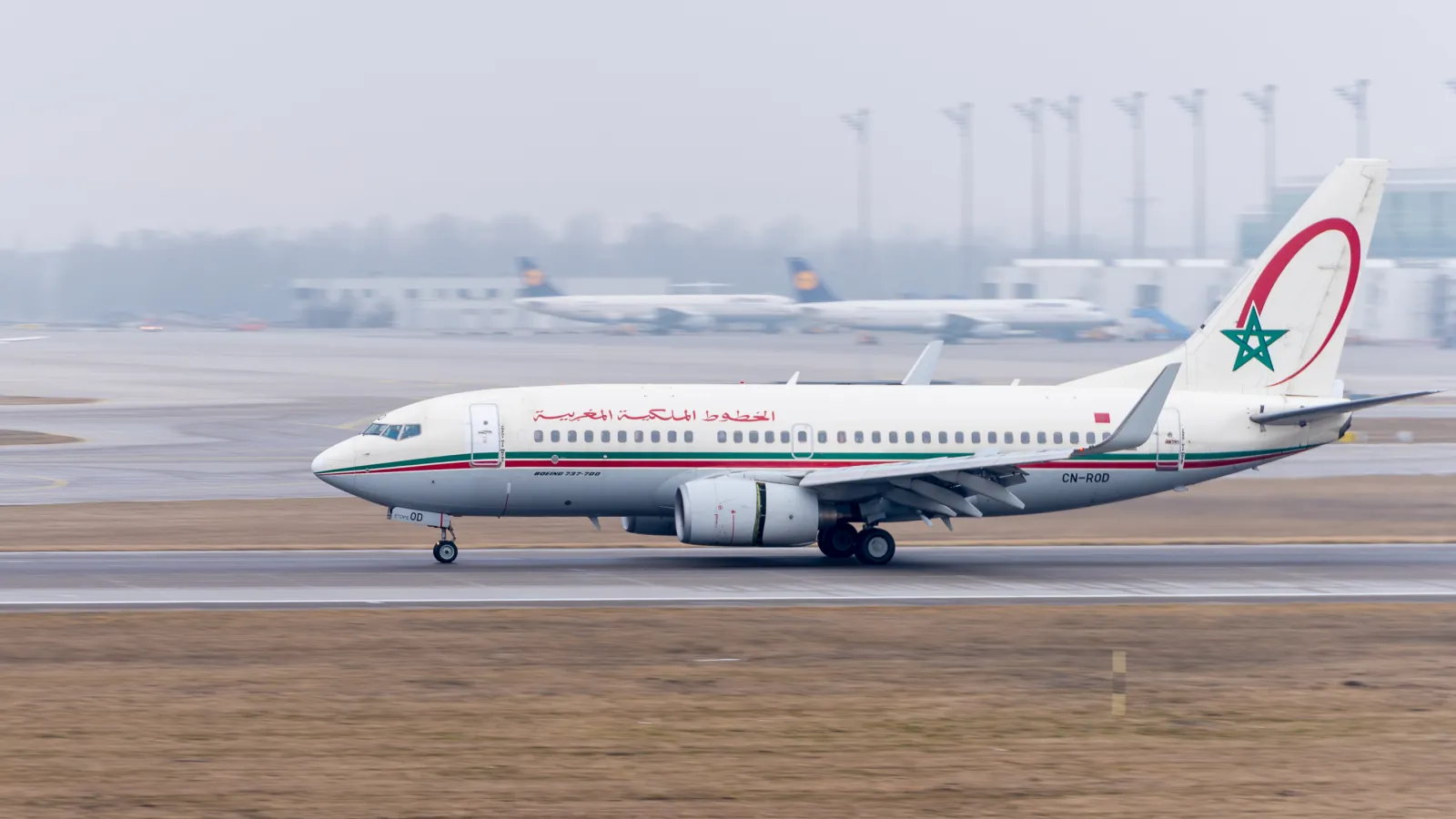
The real question: are your Morocco flights covered?
This is the point almost nobody explains, and it is the one that determines your rights. The European regulation does not apply everywhere in the world. Its reach rests on two simple criteria that must be combined.
- Any flight departing from an airport in the European Union is covered, whatever the airline, European or not.
- A flight departing from a third country towards the Union is covered only if the airline is European.
Since Morocco is not a member of the European Union, that second rule creates an asymmetry many travellers discover at the worst possible moment: on the way out you are protected; on the way back it depends on the logo on the tail.
| Route | Airline | EU regulation applies? |
|---|---|---|
| Paris → Marrakesh | Ryanair, easyJet, Transavia, Air France | Yes, departs the EU |
| Paris → Marrakesh | Royal Air Maroc, Air Arabia Maroc | Yes, departs the EU |
| Marrakesh → Paris | Ryanair, easyJet, Transavia, Air France, Vueling | Yes, EU carrier |
| Marrakesh → Paris | Royal Air Maroc, Air Arabia Maroc | No |
| Casablanca → Montreal or New York | Royal Air Maroc | No |
| Marrakesh → Atlanta | Delta Air Lines | No |
Remember the rule in one sentence: leaving Europe always protects you, returning to Europe only protects you if you fly European. On busy corridors such as Marrakesh-Paris or Agadir-Brussels, where several airlines coexist, that single criterion can justify paying a few euros more.
Airline by airline, on Morocco routes
The main carriers serving Morocco are not in the same position, nor affected to the same degree.
- Ryanair and easyJet are the most directly affected, because their model rests on a very low headline fare topped up with paid options. They will have to rework how prices are presented. easyJet now has a base in Marrakesh, making it a central player in Moroccan traffic.
- Transavia and Vueling, low-cost subsidiaries of large European groups, are in the same position.
- Air France, Iberia, Lufthansa and the European full-service carriers already include a cabin bag in most fares, except their most basic offers. The impact there will be smaller.
- Royal Air Maroc and Air Arabia Maroc are bound by the regulation only on flights departing from an EU airport. Leaving Morocco, their own conditions of carriage apply.
- Delta Air Lines, on Marrakesh-Atlanta, falls outside the scope in the Morocco to United States direction.
The other gains in the reform
Baggage made the headlines, but the text goes further. Here are the measures that genuinely matter to a traveller.
| Situation | What the text provides |
|---|---|
| Delay over 3 hours, cancellation less than 14 days ahead, denied boarding | Compensation of €250 up to 1,500 km, €400 for intra-EU flights over 1,500 km and other journeys of 1,500 to 3,500 km, €600 beyond |
| Very long distances | The airline may halve compensation if it offers re-routing or if the delay stays under four hours |
| Waiting at the airport | Refreshments every 2 hours, a meal after 3 hours, accommodation for up to 3 nights for long delays outside the airline’s control |
| Travelling with a child under 14 | A seat next to an accompanying adult, at no extra charge |
| Disabled passengers and pregnant women | The same right to adjacent seating free of charge |
| Misspelt name | Free correction |
| Digital boarding pass | Available without having to create an account |
| Deadlines | 9 months to file a claim, 30 days for the airline to pay or justify a refusal |
Two measures deserve emphasis because they settle everyday irritations. Free seating for children ends the practice of splitting a family up and then selling them the right to sit together. And the thirty-day deadline imposed on airlines turns an open-ended wait into a dated obligation.
What it changes for your next Morocco ticket
Comparing will become possible again
Today, comparing a Ryanair flight with an Air France flight to Marrakesh means manually rebuilding the real price: ticket, bag, seat, priority boarding. Tomorrow the headline price will include hand baggage, mechanically bringing the two offers closer. The real gap between low cost and full service will appear for what it is, often smaller than advertised.
Lead-in fares may rise
Let us be honest about this: when an option becomes compulsory inside the advertised price, that price goes up. The airlines concerned have warned they will adjust their fare structures. Travellers who never took hand baggage will be able to pick the stripped-down offer, which remains permitted. Those who did take a bag will pay roughly the same, but will know it from the first page.
An indirect effect on Morocco
Airlines rarely run two different baggage policies depending on the direction of travel: it is unmanageable at the desk and baffling for the customer. It is therefore likely that European rules will be applied in practice across a whole network, including departures from Morocco. Likely, but not legally guaranteed. In a dispute leaving Casablanca on a Royal Air Maroc flight, the airline’s conditions of carriage apply, not the European regulation.
Why it took thirteen years
Understanding the deadlock helps to understand the final compromise. The original regulation dates from 2004, when low-cost air travel was only beginning to take hold in Europe. A first attempt at revision was tabled in 2013. It stayed stuck between two irreconcilable camps.
On one side, member states and airlines argued for raising the compensation threshold from three to five or even nine hours of delay, on the grounds that the European regime is the costliest in the world and pushes carriers to cancel rather than delay. On the other, consumer groups and much of the Parliament defended the three-hour threshold, set by case law, as a non-negotiable gain.
The compromise reached in June 2026 and confirmed in July preserves the three-hour threshold and the existing compensation grid. In exchange, it gives airlines clarity on extraordinary circumstances and a framed response deadline. That symmetry explains such a wide vote in Parliament: 646 in favour, 12 against.
How the industry reacted
The reception was, unsurprisingly, not unanimous. easyJet’s chief executive, Kenton Jarvis, publicly criticised the baggage measure during the parliamentary phase, calling it contrary to consumers’ interests on the grounds that it would raise the base fare for everyone, including passengers travelling without a bag.
The argument is not absurd and deserves weighing rather than dismissing. It runs, however, into a simple answer written into the text: airlines may keep selling a fare without hand baggage. What disappears is not the low price, but the advertising of a low price that does not actually exist for most travellers. For the passenger heading to Marrakesh for a week with a ten-kilo bag, the full fare was already the reality; it will simply be visible on the first screen.
Five mistakes to avoid
- Thinking it already applies. The text is adopted, application is due in 2027. Until then your airline’s current conditions govern.
- Confusing personal item and cabin trolley. The first is guaranteed free, the second stays a paid option on low-cost carriers.
- Assuming the return leg is covered. Leaving Morocco, only a European airline triggers the regulation.
- Claiming too late. The deadline is nine months. Keep boarding passes and evidence from the moment of the incident.
- Paying an intermediary needlessly. A claim is filed free of charge with the airline; specialist firms take a commission on the payout.
What if I fly from the United Kingdom?
The question is far from marginal, since links between the United Kingdom and Morocco keep multiplying, particularly towards Marrakesh and Agadir. Since leaving the European Union, the United Kingdom applies its own version of the passenger rights regulation, inherited from the European text but now independent. The reform adopted in Brussels does not automatically apply to flights departing from the United Kingdom.
In practice a London-Marrakesh flight falls under the British regime, and a Marrakesh-London flight is covered only if the airline is British. Travellers concerned should therefore follow decisions made in London, which may diverge from those made in Brussels.
How to enforce your rights in practice
- Document it on the spot. Photograph the departures board, keep the boarding pass, note the actual arrival time at the gate.
- Ask for written confirmation of the reason for the delay or cancellation from airline staff.
- Insist on care at the airport: drinks, meals, accommodation if needed. That is a right separate from compensation, and does not replace it.
- Write to the airline first, through its official form, quoting flight number, date and booking reference.
- Then escalate to the national enforcement body of the departure country if no answer comes or the answer does not satisfy you.
One final piece of common sense: before thinking about rights, secure the rest of the journey. A flight delayed into the night at Marrakesh or Agadir is far easier to handle when the transfer is already booked. Our comparison of airport transfers in Morocco sets out what runs late in the evening.
To sort out alongside your ticket
- Your formalities. They depend on your nationality, not your airline: see the Morocco visa and entry requirements.
- The way home. What you bring back is subject to precise limits, set out in our guide to Moroccan customs rules.
- Border control. It is being automated: see our article on biometric e-gates at Morocco’s airports.
- The flight offer. It is shifting sharply this winter: we have mapped the new flight routes to Morocco.
FAQ — Free cabin bag and Morocco flights
Is cabin baggage really becoming free?
One free personal item is guaranteed: a small bag or backpack stowed under the seat. The larger cabin trolley placed in the locker may still be charged for. The major change is that the displayed price must now include a piece of hand baggage from the start of booking.
From when does the rule apply?
The text was adopted in July 2026. It enters into force twenty days after official publication, then airlines have one year to comply. Practical application is therefore expected in 2027.
Is my Marrakesh-Paris flight covered?
It depends on the airline. With Ryanair, easyJet, Transavia, Air France or another European carrier, yes. With Royal Air Maroc or Air Arabia Maroc, no, because the flight departs from a non-EU country and is operated by a non-European carrier.
And my Paris-Marrakesh flight on Royal Air Maroc?
It is covered. Any flight departing from an airport inside the European Union falls under the regulation, whatever the nationality of the airline.
What compensation applies for a delay?
€250 up to 1,500 kilometres, €400 for intra-EU flights over 1,500 kilometres and other journeys of 1,500 to 3,500 kilometres, €600 beyond. The trigger stays at three hours of delay.
Can I sit next to my child without paying?
Yes. The text requires airlines to seat any child under 14 next to an accompanying adult at no extra charge. The same rule covers disabled passengers and pregnant women.
How long do I have to claim?
Nine months from the incident to file a claim. The airline then has thirty days to pay compensation or justify a refusal on grounds of extraordinary circumstances.
Do flights from the United Kingdom count?
Not automatically. Since leaving the European Union the United Kingdom applies its own passenger rights regime. A London-Marrakesh flight therefore falls under British rules, which may diverge from the text adopted in Brussels.
In summary
The European reform guarantees a free personal item in the cabin, requires a displayed price that includes hand baggage, confirms compensation of €250 to €600 from three hours of delay, and obliges airlines to seat young children beside an adult. It applies from 2027. For travel to Morocco, one rule is worth memorising: leaving Europe you are covered whatever the airline, leaving Morocco you are covered only on a European carrier. Before booking, compare the final all-in price and check the airline’s flag on the return leg. Have a good flight!
Official sources
- European Parliament — press release on the adoption of the air passenger rights reform.
- Council of the European Union — official file on air passenger rights.
- Your Europe — official portal explaining air passenger rights.
- European Union Aviation Safety Agency — regulatory framework for European air transport.
- Airports of Morocco (ONDA) — information on Moroccan airports.
Informational article, accurate at the date of publication. It does not constitute legal advice. The binding provisions are those of the text published in the Official Journal of the European Union; also check your airline’s conditions of carriage before booking.
Photo credit
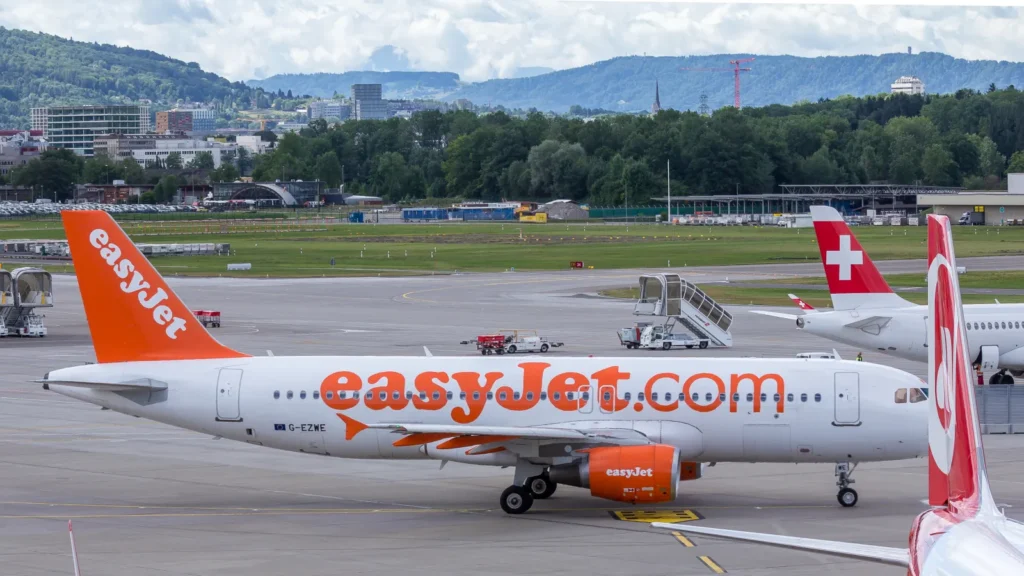
Images: featured image « EasyJet Airbus A320 G-EZWE » — Raimond Spekking (CC BY-SA 4.0); « Two Ryanair Boeing 737-800 at WRO apron » — Vasyatka1 (CC BY-SA 4.0); « Royal Air Maroc Boeing 737-7B6 CN-ROD » — Julian Herzog (CC BY 4.0), via Wikimedia Commons.