Marrakech in 3 days: the complete itinerary to see everything without rushing
Marrakech in 3 days is more than enough to grasp the soul of the red city: walk the UNESCO-listed medina, get lost in the souks, take in the Saadian and Alaouite palaces, sip a tea facing the Koutoubia minaret and soak up the energy of Jemaa el-Fna square at nightfall. In short, three days let you see the essential historic monuments, taste the local cuisine and keep half a day to relax in a garden or escape towards the Atlas. This guide offers you a day-by-day Marrakech itinerary, optimised to limit travel, with real opening hours, indicative prices and tips tested on the ground.
What to do in Marrakech in 3 days when you come for the first time? We designed this itinerary around the geography of the city: the medina is visited on foot, district by district, to avoid unnecessary back-and-forth. The first day is devoted to the historic heart and the legendary square, the second to the great palaces and history, the third to the gardens or an excursion into the Ourika Valley. To go further on each site, you can consult our complete guide “Things to do in Marrakech”.
In brief: your Marrakech in 3 days itinerary summarised
- Day 1 – The medina and Jemaa el-Fna: the Koutoubia minaret in the morning, immersion in the souks around midday, Jemaa el-Fna square in the late afternoon and evening for the grills and the shows.
- Day 2 – Palaces and history: the Bahia Palace in the morning, the Saadian Tombs and El Badi Palace in the early afternoon, the Ben Youssef Madrasa to finish on a high.
- Day 3 – Gardens or escape: the Majorelle Garden and the Yves Saint Laurent museum, the Menara Gardens, or a full-day excursion into the Ourika Valley and the High Atlas.
- Where to stay: a riad in the heart of the medina, within walking distance of the main sites.
- Best time: spring (March to May) and autumn (September to November), when temperatures range between 20 and 25 °C.
- Indicative budget (excluding flight and accommodation): allow around €40 to €70 per day per person for visits, meals and petits taxis.
Day 1: the medina, the souks and Jemaa el-Fna square
This first day plunges you straight into the city’s most iconic setting. The medina of Marrakech has been a UNESCO World Heritage Site since 1985, and this is where the heart of the city beats. You get around almost exclusively on foot: bring good shoes and an offline map, because the alleys quickly start to look alike.
Morning: the Koutoubia minaret
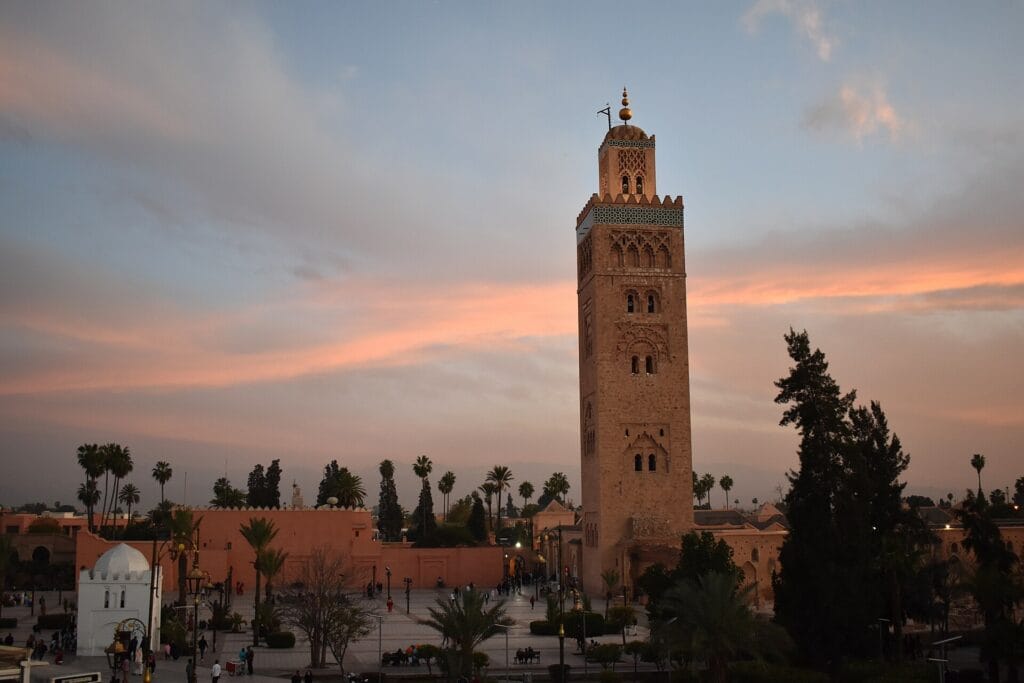
Start early, around 8 a.m., when the light is soft and the crowds still absent. The Koutoubia Mosque is the tallest monument in the city: its minaret rises to about 77 metres and serves as a landmark from almost anywhere in the medina. The interior of the mosque is not open to non-Muslims, but the Koutoubia gardens, which are free, offer a superb view of the building and a first moment of calm. Allow 30 to 45 minutes to walk around it and take your first photos.
Afternoon: the souks and crafts
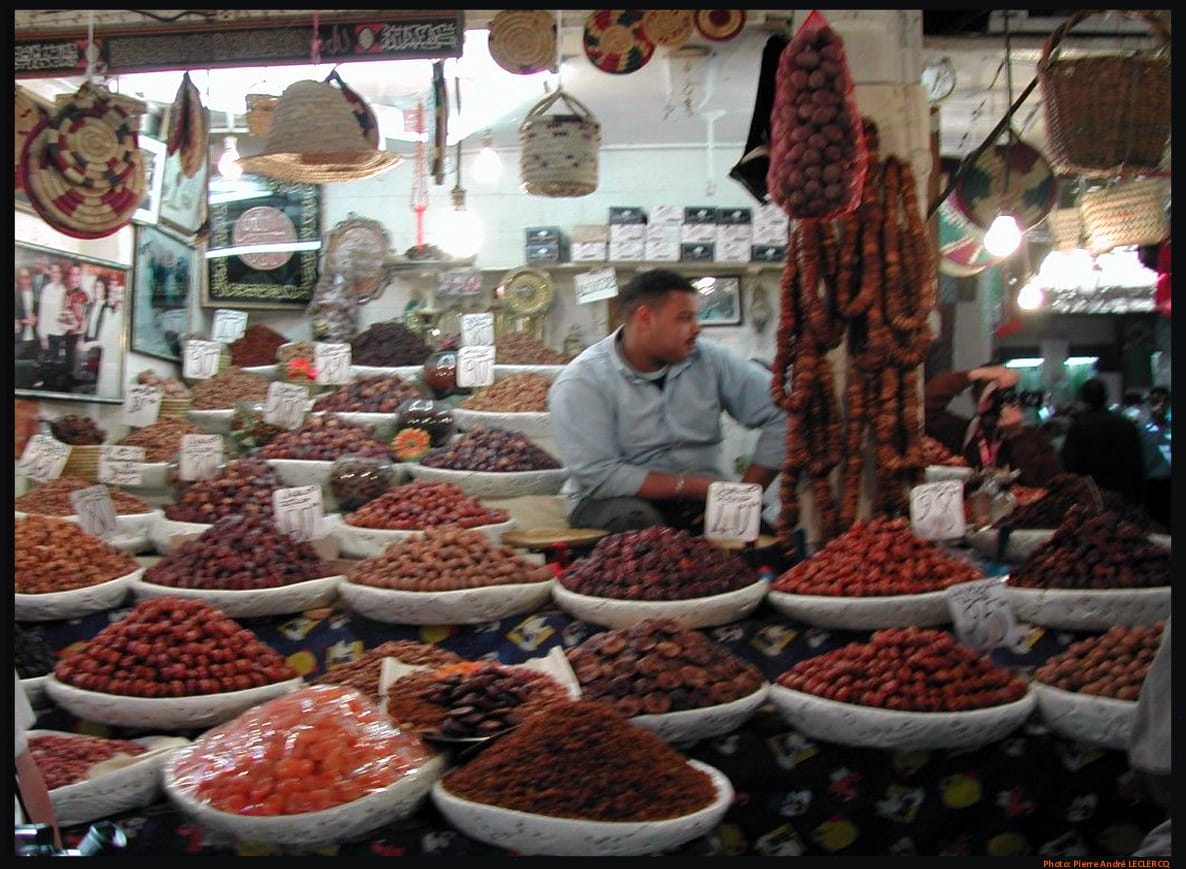
From the Koutoubia, head north of the square to reach the souks, that labyrinth of covered alleys stretching between Jemaa el-Fna and the Ben Youssef Madrasa. The souks are organised by trade: the dyers, the ironworkers, the leatherworkers, the spice merchants and the babouche makers. Take your time, let yourself drift and accept getting a little lost, that is part of the experience. A few useful tips:
- Haggling is the norm: name a price well below the one offered, smile and stay courteous.
- Keep change in dirhams: many small traders do not accept cards.
- Spices, argan oil, leather and ceramics are among the most sought-after purchases.
- If you agree to let a spontaneous “guide” accompany you, agree on a price in advance to avoid misunderstandings.
Allow at least two hours to wander without stress. Take a lunch break in one of the many terrace cafés of the district, overlooking the bustle all around.
Evening: Jemaa el-Fna, the great spectacle
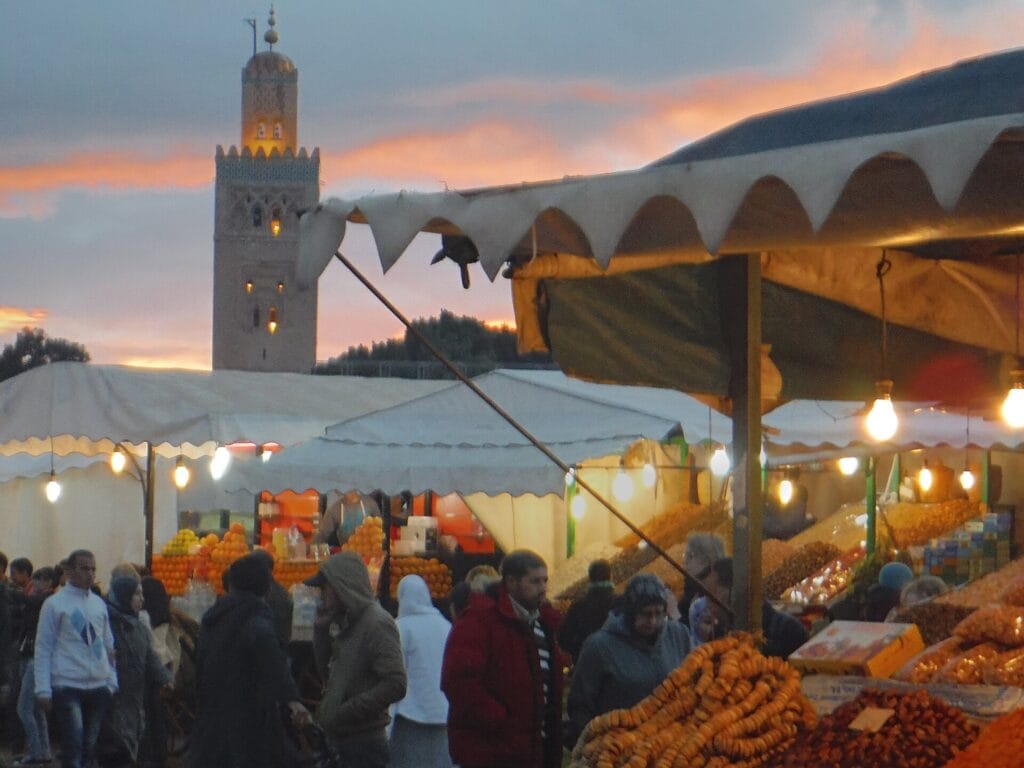
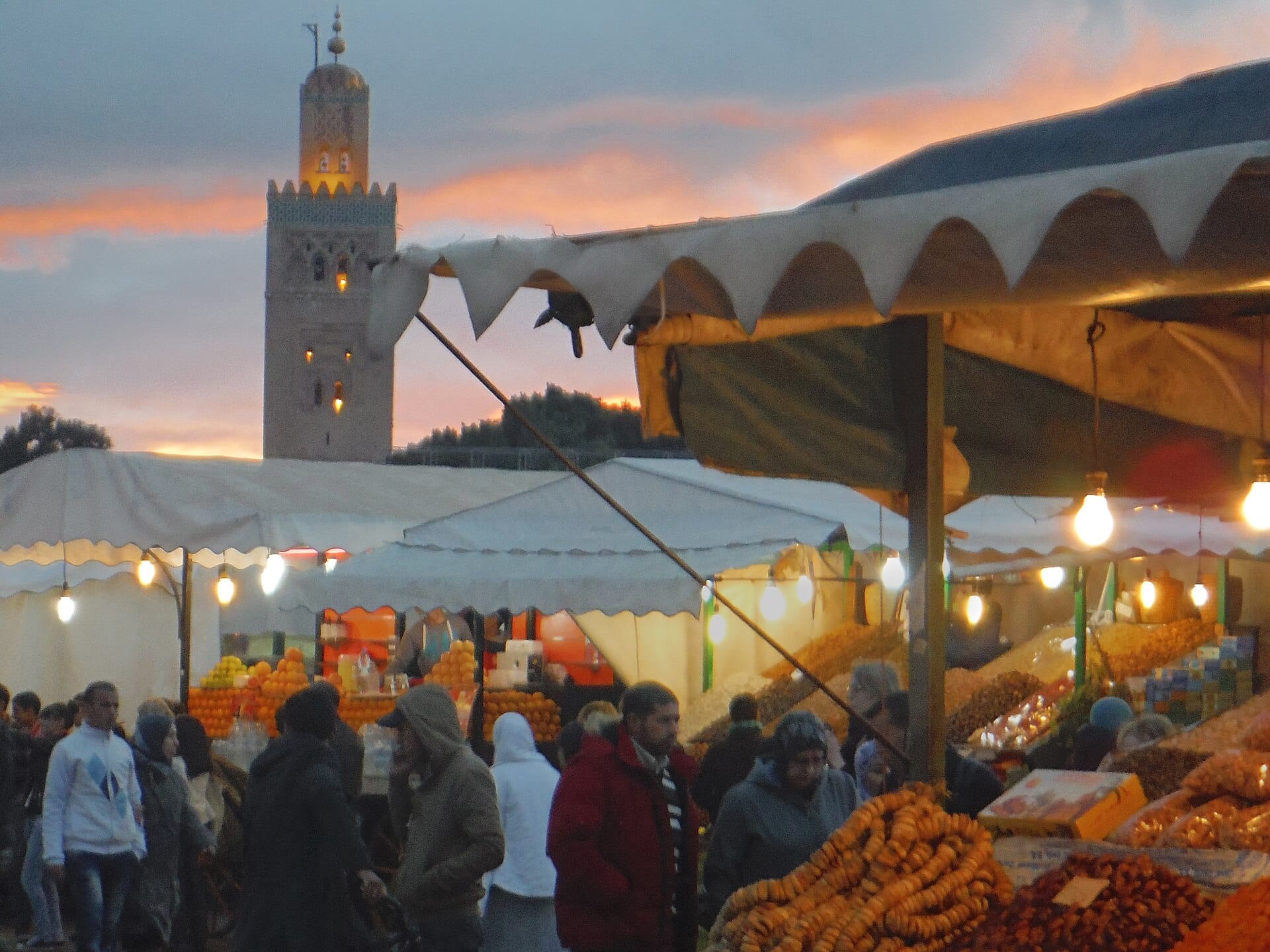
Jemaa el-Fna square, also recognised by UNESCO as a masterpiece of the oral and intangible heritage of humanity, transforms at nightfall. Calm and almost empty during the day, it gradually comes alive in the late afternoon: storytellers, Gnaoua musicians, snake charmers, fresh orange-juice sellers and, above all, the famous open-air grills that set up at sunset. To enjoy the panorama, settle on the terrace of an upstairs café: the view over the illuminated square, with the Koutoubia minaret as a backdrop, is unforgettable. To learn all about this legendary place, see our ultimate guide to Jemaa el-Fna.
Day 2: palaces, tombs and madrasa, the history of Marrakech
The second day of your Marrakech in 3 days stay is dedicated to the architecture and history of the dynasties that shaped the city. Good news: the day’s sites are relatively close to one another, all located in the southern and central part of the medina, which lets you do everything on foot.
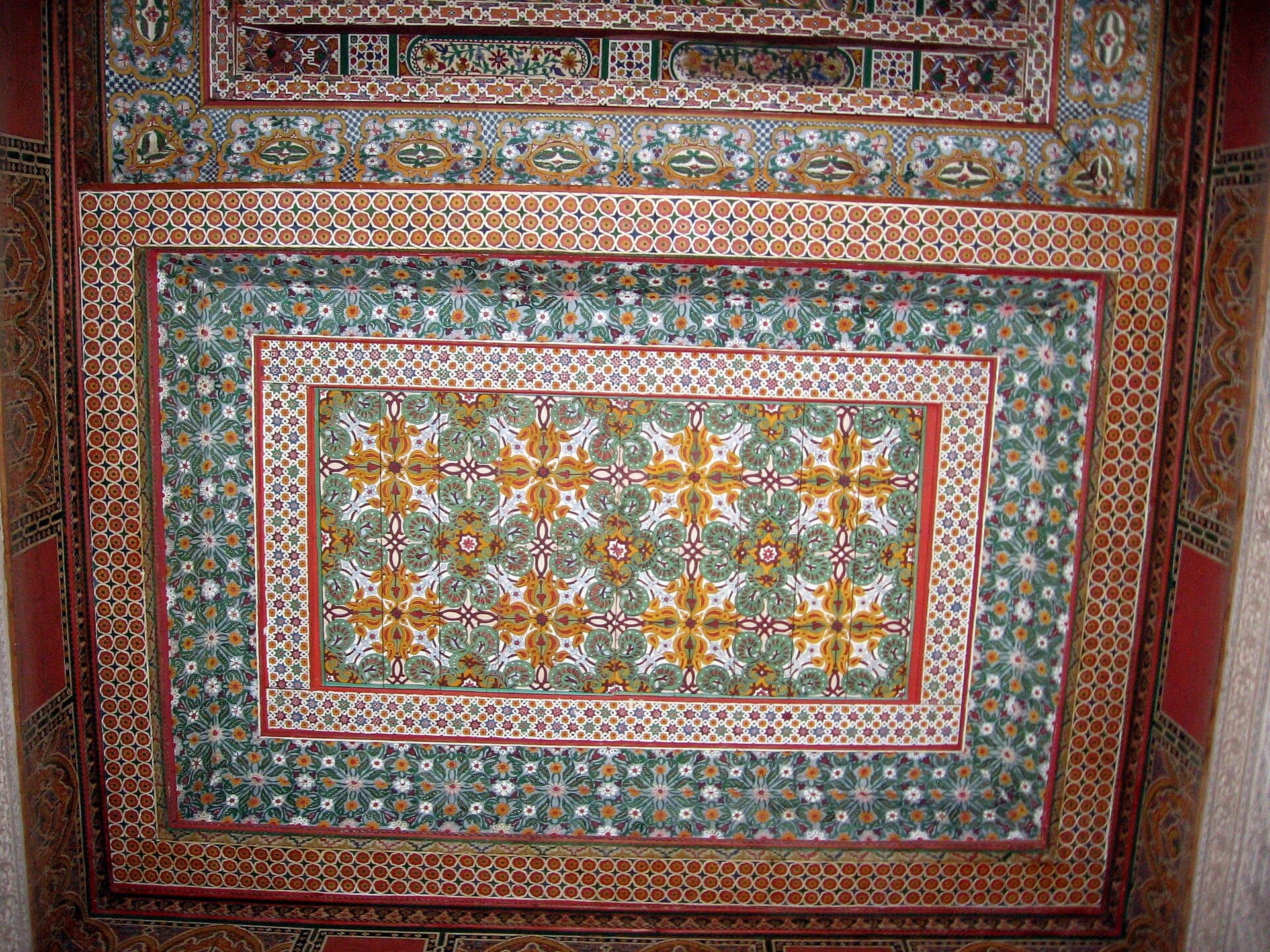
Morning: the Bahia Palace
Open the day with the Bahia Palace, considered the finest example of 19th-century Moroccan architecture in Marrakech. Its shaded patios, its painted cedar-wood ceilings, its shimmering zellige and its interior gardens offer a timeless interlude. The palace is open every day, generally from 9 a.m. to 5 p.m. (until 4:30 p.m. in winter). The entry ticket costs about 100 dirhams for an adult and 30 dirhams for a child (indicative prices). Arrive right at opening to enjoy the place before the groups arrive. Allow about an hour for the visit.
Afternoon: Saadian Tombs and El Badi Palace
A few minutes’ walk away, in the Kasbah district, discover the Saadian Tombs. Long walled up and then rediscovered in 1917, they hold the richly decorated burial places of the Saadian dynasty, including the famous mausoleum with its Carrara marble columns. The site is generally open from 8:30 a.m. to 12 p.m. and from 2:30 p.m. to 6 p.m., for a price of around 70 dirhams (indicative). As the space is limited, a queue can form: favour the early afternoon.
Continue with the El Badi Palace, close by. Of this once-sumptuous palace, built in the 16th century by Sultan Ahmad al-Mansur, only immense rammed-earth walls, vast courtyards and pools remain, now the realm of the storks that nest atop the ramparts. Entry costs about 100 dirhams (indicative). Climb up onto the terraces for an open view over the medina and the Atlas in clear weather.
End of the day: the Ben Youssef Madrasa
Finish with the Ben Youssef Madrasa, a former Quranic school and one of the jewels of Islamic art in Morocco. Recently renovated, it dazzles with its central patio in white marble, its pools, its finely carved mashrabiyas and its walls covered with calligraphy and zellige. It once had up to 134 student rooms arranged around galleries. The madrasa is open every day, generally from 9 a.m. to 7 p.m., for a price of about 50 dirhams for an adult and 10 dirhams for under-12s (indicative). It is one of the most photogenic places in the city: keep some battery for your camera.
Day 3: the gardens of Marrakech or an excursion into the Ourika Valley
For your last day, two options are open to you depending on your appetite for pace: stay in the city to explore the gardens and museums, or head out towards the mountains of the Atlas. Both formulas perfectly round off a three-day Marrakech itinerary.
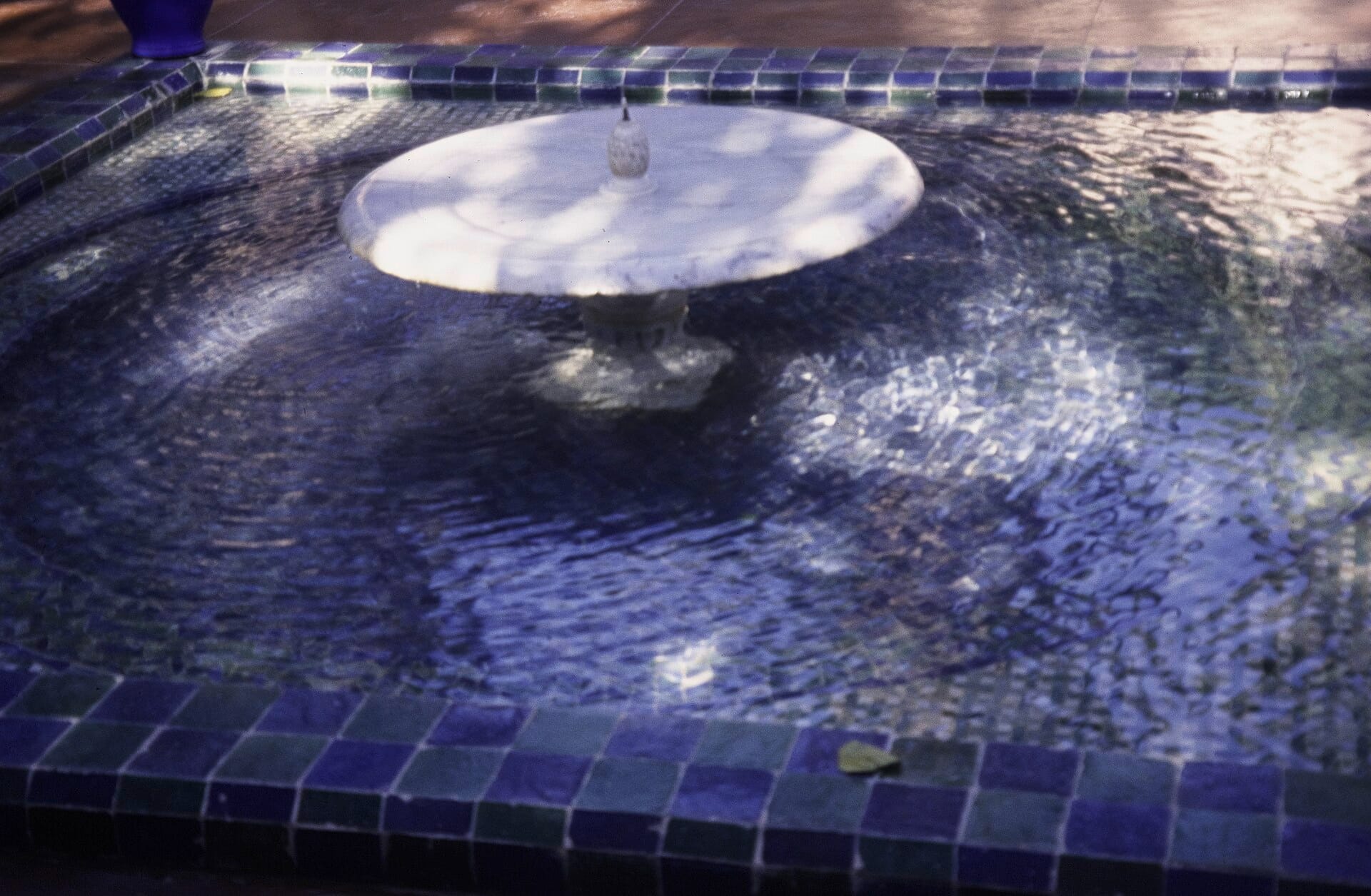
Option A – Morning: the Majorelle Garden and the YSL museum
The Majorelle Garden is one of the must-see visits in Marrakech. Created by the painter Jacques Majorelle and then saved and enhanced by Yves Saint Laurent and Pierre Bergé, it captivates with its famous “Majorelle blue”, its cacti, its bamboo and its pools. The garden is open every day from 8:30 a.m. to 6 p.m. (last entry at 5:30 p.m.), and entry costs about 150 dirhams (indicative). Attendance is high: book online in advance and aim without fail for the 8:30 or 9 a.m. slots to avoid the queues. Allow 1 hour 30 to 2 hours with the Berber museum, and up to 3 hours if you add the neighbouring Yves Saint Laurent museum. Find all the practical details in our complete guide to the Majorelle Garden.
Option A – Afternoon: the Menara Gardens
Round off the day with the Menara Gardens, to the west of the city. This immense olive grove arranged around a large basin and a Saadian pavilion offers, in clear weather, a striking postcard image with the snow-capped peaks of the Atlas in the background. Access to the gardens is free (generally open from 8 a.m. to 6 p.m.); only the visit of the pavilion is paid, around 50 dirhams (indicative). It is a place favoured by Marrakech families at the end of the day, ideal for a quiet stroll.
Option B – All day: the Ourika Valley
If you prefer nature and wide-open spaces, treat yourself to an excursion into the Ourika Valley, in the High Atlas. Located about 65 km from Marrakech, or roughly an hour’s drive, it is the most accessible day trip from the city. On the programme: Berber villages clinging to the mountainside, argan-oil cooperatives, lunch by the river and a hike towards the Setti Fatma waterfalls (seven successive falls, the first of which is reached in 30 to 45 minutes’ walk on a steep path). The excursion usually lasts 8 to 10 hours and prices start at around €34 per person (indicative), often excluding lunch and a local guide. Wear good shoes for the waterfalls. To compare formulas and prices, see our guide to excursions from Marrakech.
Practical tips for a successful stay in Marrakech
Where to stay: a riad in the heart of the medina
To fully live the experience, sleep in a traditional riad in the medina. These old houses arranged around an interior patio offer calm, coolness and authentic charm, while being within walking distance of the main sites. Most offer a rooftop terrace for breakfast facing the minarets. The districts around the Kasbah, the Mellah or Riad Laarous are well located. If you prefer the comfort of a large hotel with a pool, head for the modern Hivernage district or the Palmeraie, outside the medina.
Getting around: on foot and by petit taxi
The medina is visited exclusively on foot: the alleys are too narrow for cars. For longer journeys (Majorelle Garden, Menara, station, airport), use the beige petits taxis, the most practical and economical option. Always insist that the meter be switched on, or negotiate the price before getting in. To reach the centre on arrival, see our practical guide to Marrakech-Menara Airport, located just a few kilometres from the medina.
Best time and budget
The best time to visit Marrakech is spring (March to May) and autumn (September to November): the climate is dry and pleasant, with days between 20 and 25 °C. Summer is very hot (often over 38 °C), and winter stays mild during the day but cool in the evening. As for budget, excluding flight and accommodation, allow around €40 to €70 per day per person to cover monument entries, meals and taxi trips. Always keep cash in dirhams on you, especially in the souks and for the petits taxis. To prepare your whole visit, our complete guide to Marrakech lists all the must-do activities.
Extending the stay: what to do with a 4th or 5th day in Marrakech
If you have one or two extra days beyond your Marrakech in 3 days itinerary, the red city becomes a wonderful base camp for exploring southern Morocco. Each excursion is done as a day trip, with a return to your riad in the evening, which saves you from repacking your bags. Here are the most renowned getaways, ranked from the shortest to the most distant:
- The Agafay Desert: just 40 minutes’ drive away, this “stone desert” (a reg, not sand dunes) offers lunar landscapes facing the Atlas. Ideal for a half-day or a sunset dinner, with a camel or quad-bike ride.
- The Ourika Valley: about 65 km (1 hour) away, the most accessible mountain outing, with its Berber villages and the Setti Fatma waterfalls, perfect if you did not choose it on the third day.
- The Ouzoud Falls: about 150 km (2 h 30 to 3 h drive) away, the highest falls in Morocco tumble nearly 110 metres over three tiers, amid lush nature where Barbary macaques live. Allow an excursion of about 10 hours.
- Essaouira: 2 h 30 to the west, this fortified port city on the Atlantic charms with its ramparts, its fishing port and its refreshingly bohemian atmosphere.
- Aït Benhaddou: about 190 km (3 h) away, this earthen ksar listed as a UNESCO World Heritage Site, the setting for many films, is reached via the spectacular Tizi n’Tichka pass road. A long day, but a memorable one.
- The Agafay Desert at sunset or an evening in a bivouac remain the easiest options for tasting the Saharan atmosphere without the long hours of driving to Merzouga.
To compare the formulas, durations and prices of each outing, refer to our guide to excursions from Marrakech.
Adapting the itinerary to your profile and the season
The same programme is not experienced in the same way whether you travel as a family, as a couple, on a tight budget or in the height of summer heat. Here is how to adjust your Marrakech in 3 days stay so that it truly reflects you.
With children
Ease the pace and visit only one or two monuments per day. The gardens (Majorelle, Menara), the orange juices and the shows of Jemaa el-Fna captivate the youngest. Plan frequent breaks, plenty of water and sun protection, and keep the souks for short forays to avoid the crush. A day at the Ourika, by the river, will delight the whole family.
As a couple
Favour a charming riad with a terrace and focus on moments for two: a dinner facing the illuminated square, a traditional hammam followed by a massage, or a sunset in the Agafay Desert. The Bahia Palace and the flower-filled patios lend themselves particularly well to romantic getaways.
Summer and intense heat
From June to September, the thermometer often exceeds 38 °C. Adapt your timings: visit the monuments right at opening in the morning, reserve the middle of the day for a lunch in the shade, the pool or a nap, then head out again in the late afternoon. A hat, sunglasses, sunscreen and a bottle of water are essential. The shaded gardens and cool riads then become your best allies.
On a small budget
Marrakech can be discovered largely for free: wandering the souks, admiring the Koutoubia, soaking up Jemaa el-Fna or strolling in the Menara Gardens costs nothing. Eat at the food stalls on the square in the evening, get around on foot or by metered petit taxi, and select two or three priority paid monuments rather than doing them all. A rich stay thus remains within everyone’s reach.
Frequently asked questions: Marrakech in 3 days
Are three days enough to visit Marrakech?
Yes, three days are enough to discover the essentials of Marrakech: the medina and its souks, Jemaa el-Fna square, the great palaces (Bahia, El Badi), the Saadian Tombs, the Ben Youssef Madrasa and at least one garden. There is even room for a day-trip excursion into the Atlas if you wish.
What is the best order of visits to avoid wasting time?
Group the visits by district. On day 1, stay in the heart of the medina (Koutoubia, souks, Jemaa el-Fna). On day 2, string together the palaces and the madrasa, all close in the southern part of the medina. On day 3, head out to the gardens or the Ourika. This geographical logic limits the back-and-forth and the fatigue.
Do you need to book the monument tickets in advance?
For most monuments (Bahia, El Badi, Saadian Tombs, Ben Youssef Madrasa), buying on site is enough. However, for the Majorelle Garden, which works by time slots and sees heavy attendance, booking online in advance is strongly recommended, ideally for the first slot of the morning.
How much do entries to the main sites cost?
As a guide: Bahia Palace about 100 dirhams, Saadian Tombs about 70 dirhams, El Badi Palace about 100 dirhams, Ben Youssef Madrasa about 50 dirhams and Majorelle Garden about 150 dirhams. The Koutoubia and Menara gardens are free. These prices change: check them before your visit.
Marrakech in 3 days, is it doable as a family with children?
Yes, provided you adapt the pace. The palaces and gardens appeal to children, and Jemaa el-Fna square amazes them with its musicians and orange juices. Plan breaks, water and sun protection, and avoid the hottest hours. An excursion to the Ourika, with its river, is also a lovely family option.
What is the best time for this 3-day stay?
Spring (March to May) and autumn (September to November) offer the best conditions, with pleasant temperatures and ideal light. Avoid high summer, when the heat makes walking visits gruelling, especially in the souks.
To delve deeper into the history of the city and its listed medina, consult the reference resources: the UNESCO entry for the medina of Marrakech and the Wikipedia page devoted to Marrakesh.
Photo credits
Images under free licence via Wikimedia Commons: Jemaa el-Fna © Elgaard; souk © Pierre André Leclercq; Bahia © Chris Martin; Majorelle © A. van Achterberg (all CC BY-SA). Sources: UNESCO and Wikipedia.
Disclaimer: this guide is published entirely independently. We are not affiliated with any establishment, tourist site or agency mentioned in this article, and receive no compensation for mentioning them. Prices, hours and visit durations are given purely for guidance and may change without notice: always check the official information before you leave.