Taking a cooking class in Marrakech is one of the most authentic ways to understand Morocco: you often begin with a visit to the market or the souk to pick out ingredients, then prepare iconic dishes such as tagine, couscous or pastilla under the guidance of a dada (a traditional home cook) or a chef, usually in a medina riad or a countryside farm. The format most often lasts half a day, ends with tasting what you have made, and sends you home with the recipes. It is a friendly activity, well suited to families as much as couples or solo travelers, and a far more lasting souvenir than any object tucked into a suitcase.
In brief
- The idea: a visit to the market or souk for the ingredients, then hands-on cooking.
- What you learn: tagine, couscous, pastilla, Moroccan salads, mint tea, msemen and pastries.
- Who leads it: a dada (a traditional home cook) or a chef, often with a translator.
- Where: in a medina riad, a cooking school, or a farm/garden in the countryside.
- Duration: around half a day (3 to 5 hours), tasting included.
- Indicative price: varies with the format (group, private, vegetarian) and the venue; check when you book.
Why take a cooking class in Marrakech
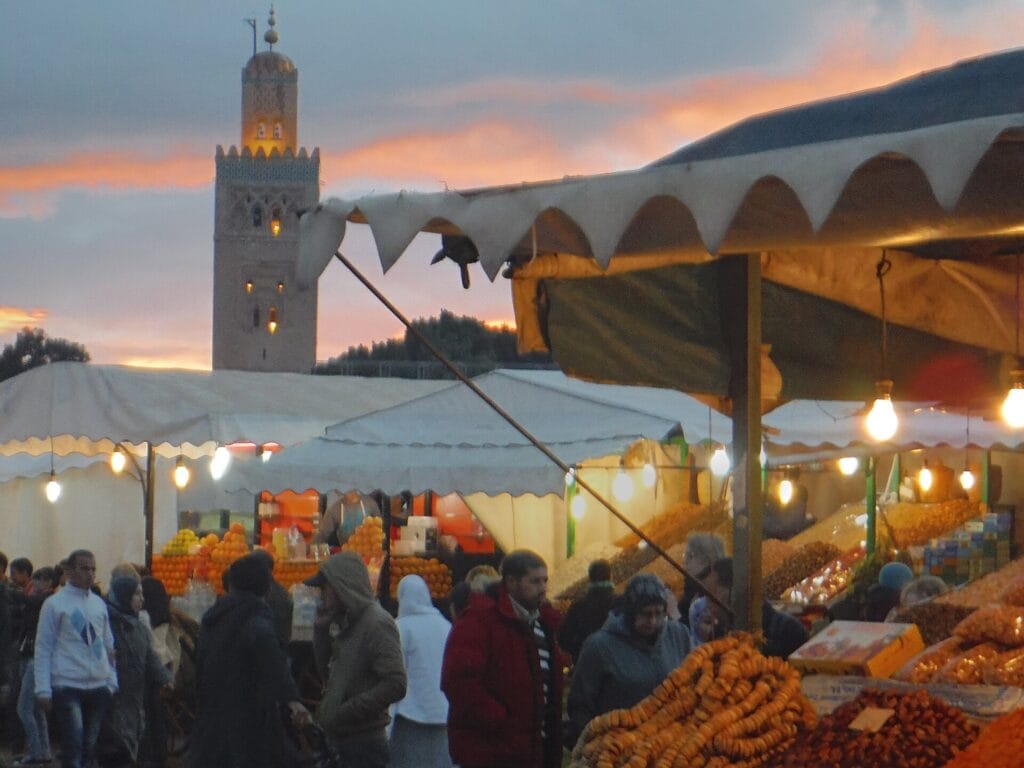
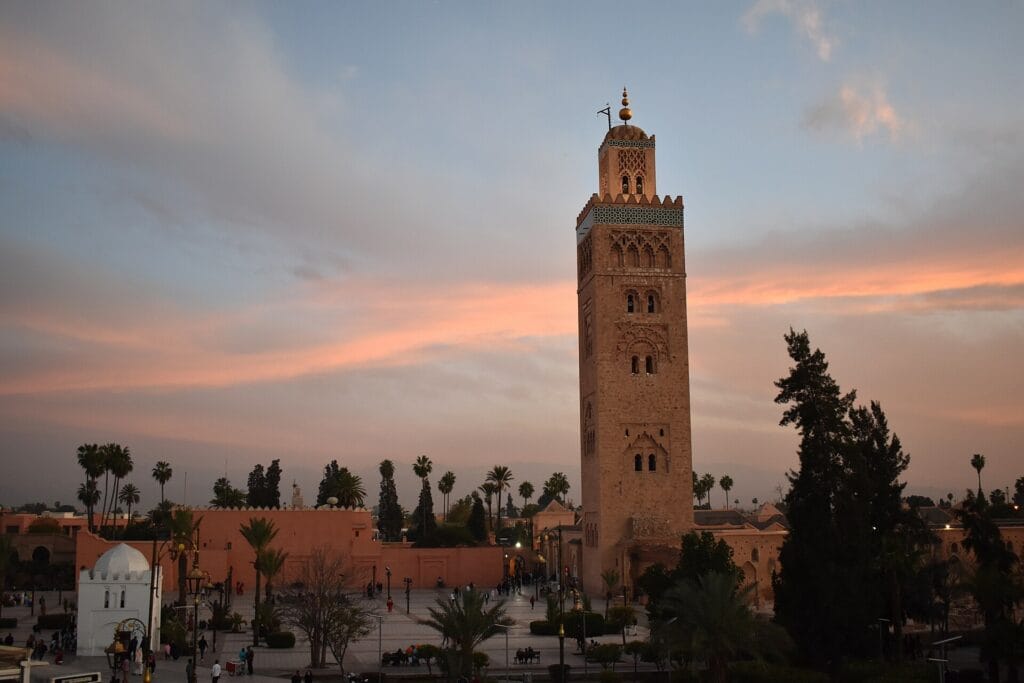
Marrakech is a city of flavors. Between the food stalls of Jemaa el-Fna square, the spice displays of the souks and the refined tables of the riads, food holds a central place in local life. A Moroccan cooking class in Marrakech lets you go beyond being a mere onlooker and get your hands into the material: smelling the spices, kneading the dough, watching the slow cooking of a tagine and grasping the logic of the sweet-and-savory balance that gives Moroccan cuisine its reputation.
It is also a human encounter. Moroccan cooking is traditionally passed from mother to daughter, and many workshops are led by dadas, cooks who learned the gestures from childhood. Spending a few hours at their side means gaining access to a rarely written know-how, made of deft handwork and measurements done “by eye.” Finally, the activity fits perfectly into a stay: it fills a morning or an afternoon, pairs well with exploring the Marrakech medina, and gives your trip a delicious thread to follow.
There is also a teaching dimension that few tourist activities offer. You do not just taste: you understand why a dish tastes the way it does, where the ingredients come from, and what place they hold in the local culture. Food becomes a gateway into the history of Marrakech and its Berber, Arab, Andalusian and Saharan influences. Many travelers say that a single workshop changed the way they saw the whole city: after spending a morning choosing tomatoes, grinding spices and watching over a tagine, you no longer eat the same way in the medina’s restaurants. You recognize the flavors, you sense the techniques, you appreciate the work behind each dish.
How a typical cooking class unfolds
Most cooking workshops in Marrakech follow a common three-part structure: the market, the cooking, then the tasting. This progression gives the whole experience meaning and lets you follow the dish from basket to plate.
1. The market or souk visit
Many classes begin with a guided walk through the market or the souks of Marrakech. It is a chance to learn to recognize seasonal vegetables, to choose the meat, to spot fresh herbs (coriander, parsley, mint) and above all to discover the spice stalls. The guide or the cook often explains the use of each ingredient, how to select it and at what price. Some workshops, especially those set out in the countryside, replace the market with a harvest from the farm’s vegetable garden.
2. The hands-on cooking
Back in the kitchen, apron tied, for the heart of the experience. Each participant usually has their own workstation. You learn to prepare a tagine base (onions, spices, olive oil), to build a couscous, to roll out the thin dough of a pastilla or to make Moroccan salads. The cook shows the gesture, then everyone repeats it. The mood is relaxed, punctuated by explanations of the techniques: the slow, covered cooking of the tagine, the steaming and rolling of the semolina, the folding of the msemen.
3. The tasting
The class ends with the best moment: sitting down to savor what you have just prepared, often with mint tea and Moroccan bread. It is a friendly time for exchange, where you discuss regional variations and tips for recreating the dishes once you are back home. Most workshops hand out a recipe booklet, paper or digital, to keep the experience going at home. This moment of sharing around the table, often on a terrace or in a flower-filled patio, is also where the finest conversations arise between participants from the four corners of the world, brought together by the same food-loving curiosity.
The dishes you learn to cook
A cooking class in Marrakech revolves around the great classics of Moroccan gastronomy. Depending on the length and the format, you prepare two to four dishes, spanning starters, a main course, a drink and a pastry.
| Dish | Description |
|---|---|
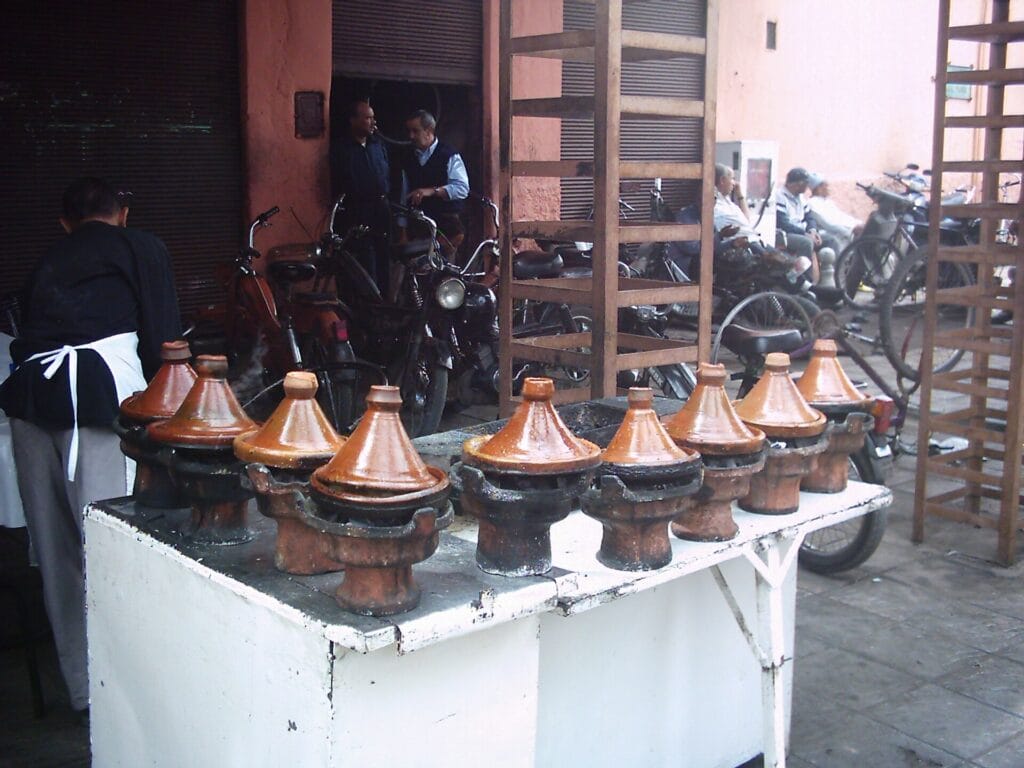
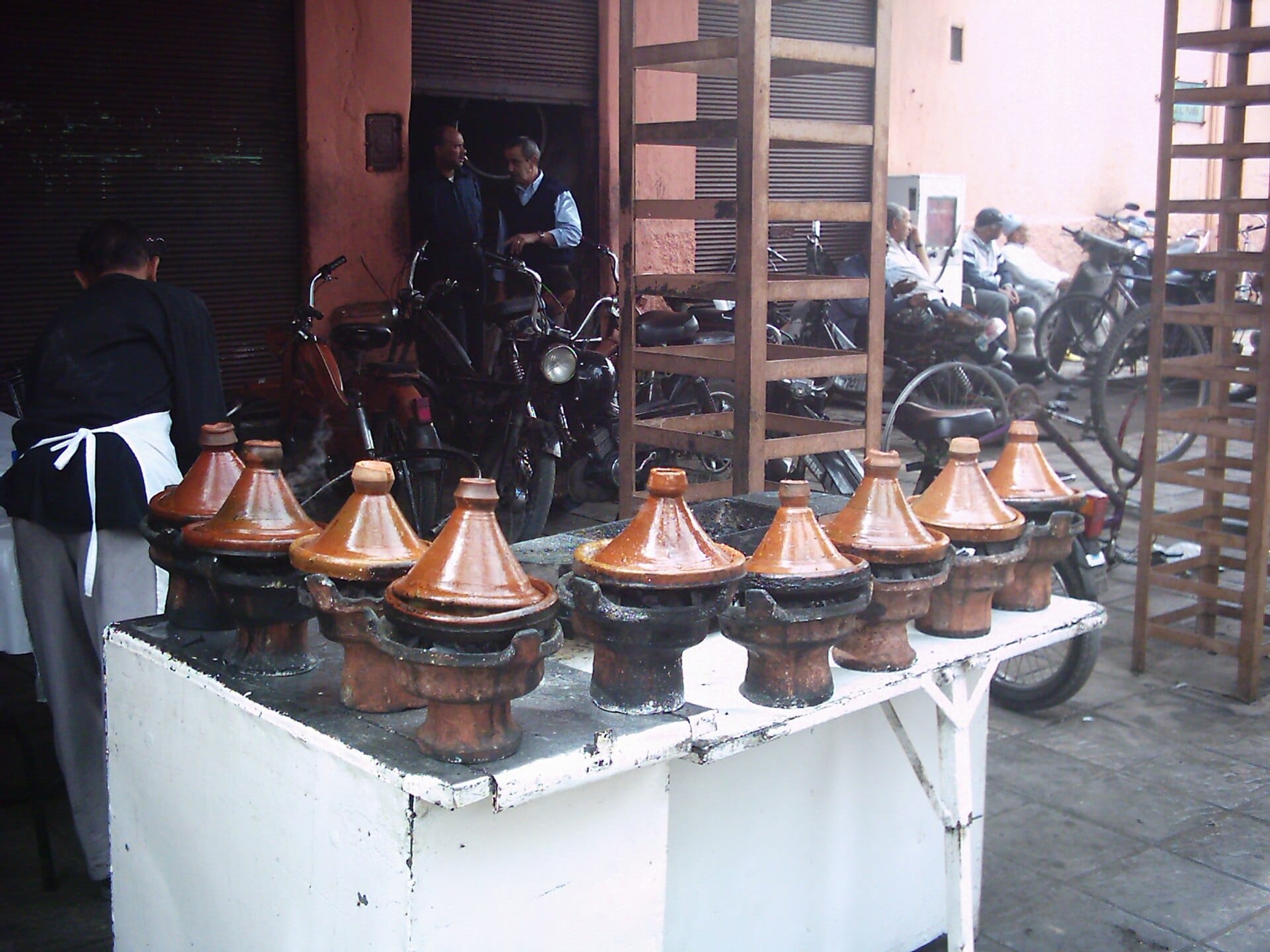
| Tagine | A dish slow-cooked and covered in a conical earthenware pot, made in versions such as chicken with preserved lemon and olives, lamb with prunes, or vegetables. |
| Couscous | Steamed semolina, served with a broth of vegetables and meat. The quintessential Friday dish in Morocco. |
| Pastilla | A layered pie made with thin sheets of warqa, traditionally with pigeon or chicken, almonds, cinnamon and icing sugar; a fish version also exists. |
| Moroccan salads | An assortment of small cooked or raw salads (grilled tomatoes and peppers, eggplant, spiced carrots) served as a starter. |
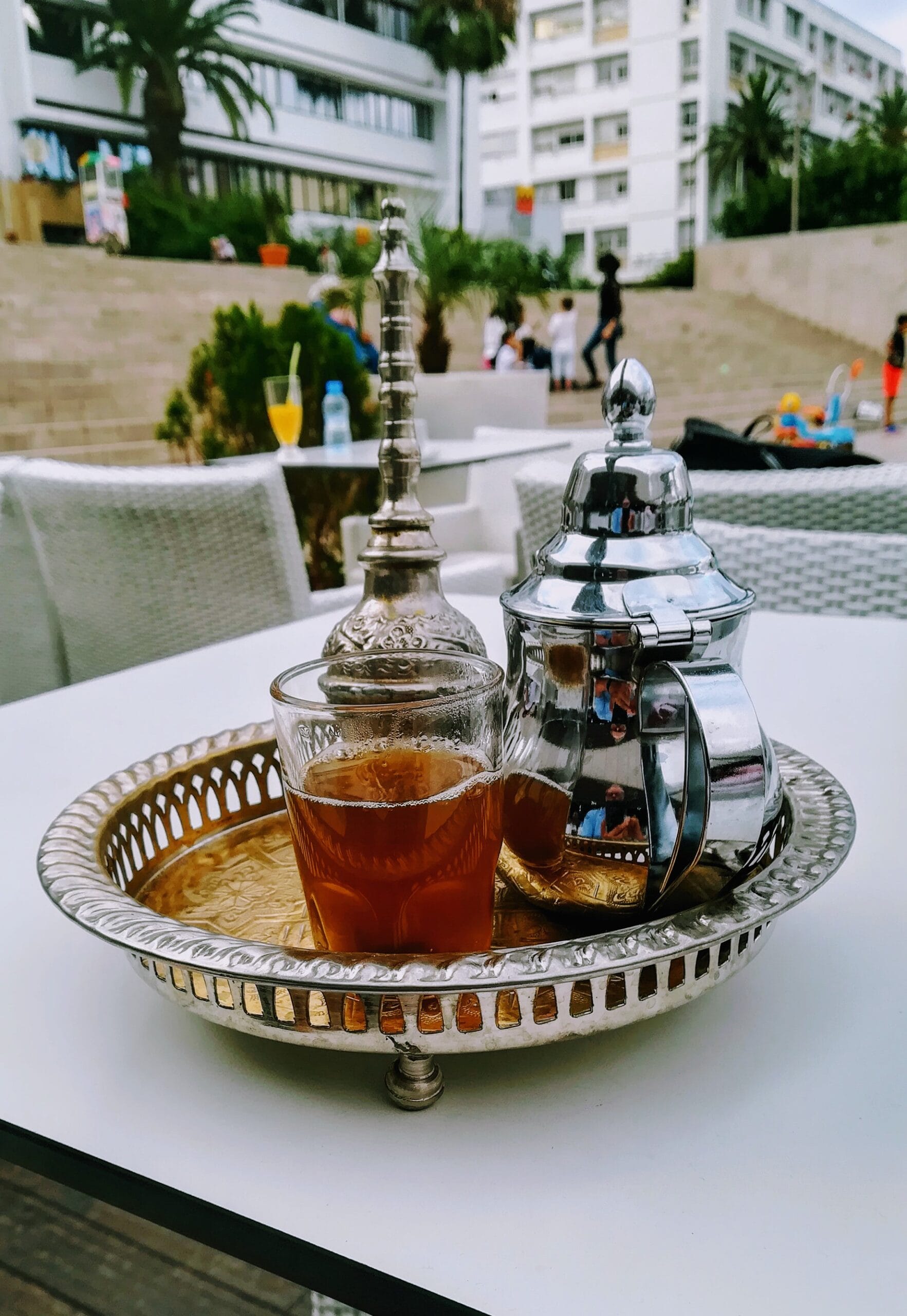
| Mint tea | Green tea infused with fresh mint and sugar, poured from a height to form a froth. An emblem of Moroccan hospitality. |
| Msemen & pastries | Folded, layered pancakes (msemen), gazelle horns, ghriba and other sweets made with almond, honey and orange blossom. |
The tagine remains the star of most workshops: its slow cooking is a chance to explain the essential techniques, while couscous illustrates the patient work of steaming and rolling the semolina. To go further in your culinary discovery, our guide to where to eat in Marrakech pairs perfectly with the experience.
The Moroccan spices and ingredients to know
What sets Moroccan cooking apart is the subtle use of spices and a handful of signature ingredients. A good class takes the time to introduce them, because they are what gives the dishes their aromatic depth. Contrary to a common belief, Moroccan cooking is not spicy-hot: it is fragrant. The art lies in marrying mild and warm spices to create complex balances, without ever overpowering the taste of the base ingredients.
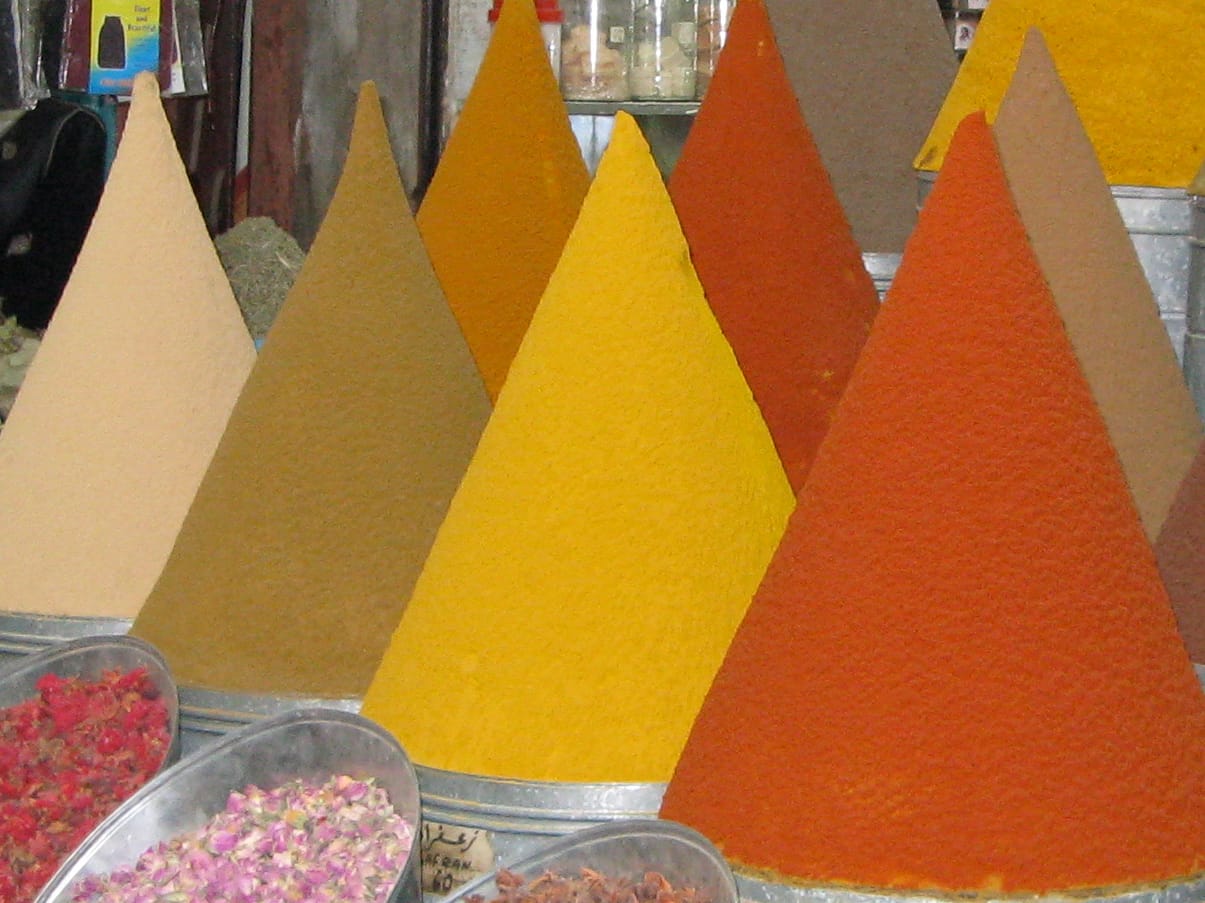
- Ras el-hanout: a complex blend of many spices (sometimes more than twenty), used in tagines and slow-cooked dishes.
- Saffron: a precious spice grown notably in the Taliouine region, which flavors and gently colors.
- Cumin: a must-have, found on every table, perfect with grilled meats and eggs.
- Ginger & turmeric: the warm base of many tagines.
- Cinnamon: straddling sweet and savory, essential in pastilla.
- Argan oil: the iconic oil of southern Morocco, with a hazelnut flavor, used as a seasoning and in amlou.
- Smen: clarified, fermented butter with a powerful taste that lifts certain traditional dishes.
- Orange blossom water: the floral touch of pastries and some salads.
These products also make wonderful souvenirs. If you would like to bring some home, see our guide to what to buy in Marrakech, which details the spices, argan oil and the best places to buy at a fair price.
The different cooking class formats
There are as many formats as there are travelers. Understanding the main options helps you choose the workshop that suits you.
Group class or private class
The group class brings together several participants from different backgrounds. The atmosphere is friendly and the price is generally gentler. The private class, on the other hand, offers personalized attention: a pace adapted to you, an à la carte choice of dishes, questions asked as you go. It is ideal for couples, families or enthusiasts who want to dig deeper into specific techniques.
Vegetarian or tailored class
Many workshops offer vegetarian versions or accommodate special diets if you let them know in advance. Moroccan cooking lends itself very well to meat-free dishes: vegetable tagine, vegetarian couscous, salads, and harira soup in certain versions. Always mention your allergies or restrictions when you book.
Medina riad or countryside farm
The setting changes everything. A class in a medina riad immerses you in the intimate atmosphere of a traditional house, a few steps from the souks. A workshop on a farm or in a garden in the countryside, often toward the valley or the palm grove, offers calm, greenery and sometimes a harvest straight from the vegetable garden. Both have their charm; the choice depends on the atmosphere you are after and the travel time you will accept.
Combining the class with the city’s food scene
A cooking workshop is best set within a wider culinary exploration of Marrakech. After learning to prepare a tagine, you will all the more enjoy an evening on Jemaa el-Fna square, where the open-air food stalls serve skewers, harira soup, snails and pastries in an electric atmosphere. The contrast is striking between the intimate cooking of the riad and the popular street food of the great square, but both tell the same Moroccan passion for the table.
In the same way, a stroll through the souks takes on a new flavor once you know how to recognize the spices and tell a good ras el-hanout from a mediocre blend. Many travelers plan their class at the start of their stay, precisely to sharpen their curiosity and make the most of everything the city has to offer afterward: markets, traditional restaurants, tea houses and pastry shops. Food thus becomes the guiding thread of a trip to Marrakech, linking each taste experience to the next.
Who a cooking class in Marrakech is for
The beauty of this activity is that it suits almost everyone. Families find a hands-on activity where children love to knead the dough or roll the msemen. Couples enjoy the shared closeness of a private workshop followed by a meal for two. Solo travelers make the most of group classes to meet other visitors in a relaxed setting. No prior cooking experience is required: the cooks adapt the gestures to each person’s level. Only travelers with severely reduced mobility should check the accessibility of the venue, as some riads have stairs and terraces.
Groups of friends also find it a great bonding activity, ideal for a bachelor or bachelorette party or a birthday celebrated in Morocco. Food lovers, finally, see it as a chance to refine specific techniques they will then recreate at home. Whatever your profile, the key is to come with the desire to take part: a cooking class is not a demonstration where you watch, but an experience where you get your hands into the dough, literally.
How long a class lasts and when to take it
The most common format lasts half a day, roughly three to five hours including the market visit. There are shorter workshops focused on a single dish, and longer full-day formats with several preparations. As for timing, morning classes flow naturally from the market to lunch; end-of-day classes finish with dinner.
A cooking workshop in Marrakech can be done year-round, since it takes place indoors or in the shade. It is even an excellent idea for hot summer days or a rainy winter afternoon. Spring and autumn, milder, still remain the most pleasant seasons to combine an outdoor market visit with the cooking. Remember to book a few days ahead, especially in high tourist season and for private formats, as the best slots go fast. To organize the rest of your stay around this activity, our complete guide to things to do in Marrakech will help you balance sightseeing, relaxation and food.
What to wear and what to bring
A few practical tips make the experience more enjoyable:
- Comfortable clothing: clothes you feel at ease cooking in, with no worry about stains. An apron is usually provided.
- Closed, flat shoes: more practical, especially if the market is on the program.
- A moderate appetite on arrival: you taste a generous amount of food at the end.
- A notebook or a phone: to jot down the tips and photograph the steps, even though a recipe booklet is often provided.
- Some water and a little cash: handy for the market and a possible tip.
- A good mood: a cooking class is above all a moment of sharing and discovery.
Booking a cooking class: our advice
To choose your Moroccan cooking class in Marrakech with confidence, keep a few markers in mind, without favoring any particular brand:
- Check what is included: the market visit, the number of dishes prepared, drinks, the final meal and the recipe booklet.
- Confirm the language: make sure the class is offered in English or with a translator if needed.
- Look at the group size: a small number ensures real attention and participation.
- Specify your requirements: vegetarian diet, allergies, desired dishes, to be stated when you book.
- Plan for the location and transport: medina, outskirts or countryside; some workshops include a shuttle.
- Read recent and varied reviews: they tell you about the welcome, the cleanliness and the quality of the teaching.
If your stay is based in the medina, staying in a riad makes it easier to reach the workshops of the historic center; our guide to where to stay in Marrakech presents the neighborhoods and types of accommodation to help you position yourself well.
Bringing the flavors home
The real gift of a cooking class is being able to recreate the dishes once you are home. For that, buy the basic spices on the spot (ras el-hanout, cumin, saffron, cinnamon), a little culinary argan oil and, if you can, an earthenware tagine dish. The recipe booklet handed out at the end of the workshop becomes your reference. A few tips memorized from the dada — the right moment to add the preserved lemon, the patience of slow cooking, the airy pour of the tea — will make all the difference. Recreating a tagine for your loved ones means extending the trip and sharing a piece of Marrakech.
Think too of the small accessories that make life easier once you are home: a couscoussier for steaming the semolina, a few lemons you preserve yourself in salt, or some orange blossom water to flavor your pastries. Many Moroccan recipes do not call for complicated utensils: a cast-iron pot with a lid can replace the earthenware tagine, and a good casserole does the job for couscous. What matters lies in the gestures and the patience learned during the workshop, far more than in the equipment. By making these dishes regularly, you will keep the memory of your stay alive and impress your guests with authentic flavors.
Etiquette and tipping
Moroccan cooking is inseparable from hospitality. During the workshop, a few simple gestures are appreciated: showing curiosity, asking questions, thanking the cook and respecting local traditions. At the market, it is customary to greet the vendors and, if you take a photo, to ask politely.
As for tipping, it is not mandatory but remains a very common sign of appreciation in Morocco, especially if you enjoyed the experience and the dada or the chef gave you their time. A small cash gesture, handed over directly, is always well received. There is no strict rule: give according to how you feel and your budget.
Frequently asked questions
Do you need to know how to cook to take a class in Marrakech?
No. Cooking classes in Marrakech welcome all levels, including complete beginners. The cook or chef shows every gesture and adapts the pace, the goal being to discover and to have fun.
How long does a Moroccan cooking class last?
The classic format lasts about half a day, roughly three to five hours, including the market visit and the tasting. Shorter versions or full-day options also exist.
Which dishes do you learn to prepare?
Most often tagine and couscous, but also pastilla, Moroccan salads, mint tea and pastries such as msemen. The choice depends on the format and the length of the workshop.
Are the classes suitable for vegetarians?
Yes. Many workshops offer vegetarian menus or adapt the recipes if you mention it when booking. Moroccan cooking offers plenty of meat-free options, such as vegetable tagine or vegetarian couscous.
Is a cooking class suitable for children?
Yes, it is a much-loved family activity. Children happily take part in the playful steps like kneading the dough or rolling the msemen. Do check with the workshop, though, for the minimum age and the accessibility of the venue.
Do you leave with the recipes?
In the vast majority of cases, yes. A recipe booklet, paper or digital, is handed out at the end of the class so you can make the dishes again at home.
Conclusion
A cooking class in Marrakech is far more than a simple tourist activity: it is an immersion in Moroccan culture, an encounter with passionate cooks and a skill you take home for good. From the colorful market to the set table, by way of the scent of ras el-hanout and the patience of a slow-simmered tagine, the experience leaves a lasting mark. Whether you travel with family, as a couple or solo, book your workshop, let a dada guide you, and come away with the recipes, the gestures and the taste of Morocco. It is surely the most vivid souvenir you can bring back from the ochre city.
Editorial independence: this article is informative and independent. The prices mentioned are purely indicative and subject to change; no brand, school or workshop is recommended. Always check the details, inclusions and rates directly with the provider when you book.
Images under free license via Wikimedia Commons: © Borinot bcr (Public domain); © Michael Day (CC BY 2.0); © Munfarid1 (CC BY-SA 4.0). Sources: UNESCO and Wikipedia.