Marrakech in four days is the ideal length to stop rushing: four days give you time to savour the medina and its monuments, to treat yourself to a genuine slow-down (gardens and hammam), then to head off for a full day on an excursion into the Atlas, the Agafay desert or to the ocean at Essaouira, before winding down gently in the modern Marrakech of Guéliz. It’s precisely what three days can’t really offer: time.
Quick answer: dedicate Day 1 to the historic medina (Jemaa el-Fna square, Koutoubia, Bahia Palace, Ben Youssef Madrasa), Day 2 to the gardens (Majorelle, Menara) and to relaxing in a hammam, Day 3 to a full-day excursion (Ourika Valley, Agafay desert or Essaouira), and Day 4 to the souks and the Guéliz district, or to a second short getaway. Below you’ll find the hour-by-hour itinerary, a realistic budget, where to stay, how to adapt by season and the mistakes to avoid.
In brief: your 4-day itinerary in Marrakech
- Day 1 — Heart of the medina: Jemaa el-Fna, Koutoubia, Bahia Palace, Ben Youssef Madrasa, dinner on the square.
- Day 2 — Gardens & relaxation: Majorelle Garden (YSL), Menara Gardens, an afternoon at the hammam and spa.
- Day 3 — Full-day excursion: Ourika Valley (mountains and waterfalls), Agafay desert (stone dunes) or Essaouira (the ocean).
- Day 4 — Souks & Guéliz: shopping in the souks, the tanneries, then modern Guéliz (cafés, galleries, designer boutiques).
- Ideal length: 3 nights on site are enough for this format.
- Indicative budget: 2,500 to 5,000 MAD (≈ 230–460 €) per person excluding flights, depending on comfort.
- Best seasons: March–May and September–November.
This guide is independent and not affiliated with ONDA (the National Airports Office) or with any provider; prices are given for guidance only and change with the season and with negotiation. For an overview of things to do, keep our complete guide to what to do in Marrakech to hand.
Day 1: the historic heart of the medina
The first day lays the foundations for any stay in Marrakech: the medina, a UNESCO World Heritage site. The goal of the day isn’t to see everything, but to understand the red city by concentrating the great monuments within a walkable perimeter. If you only had a single day, our Marrakech in 1 day itinerary covers the essentials of this Day 1; here, you have the luxury of slowing down.
Morning: Koutoubia and Jemaa el-Fna
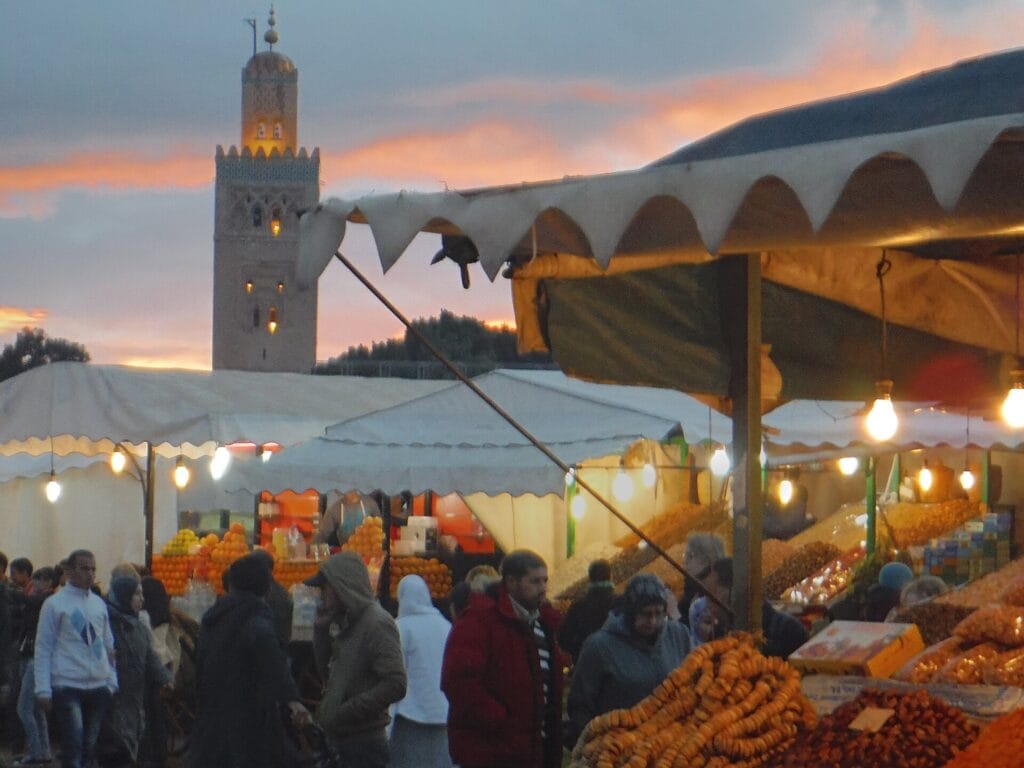
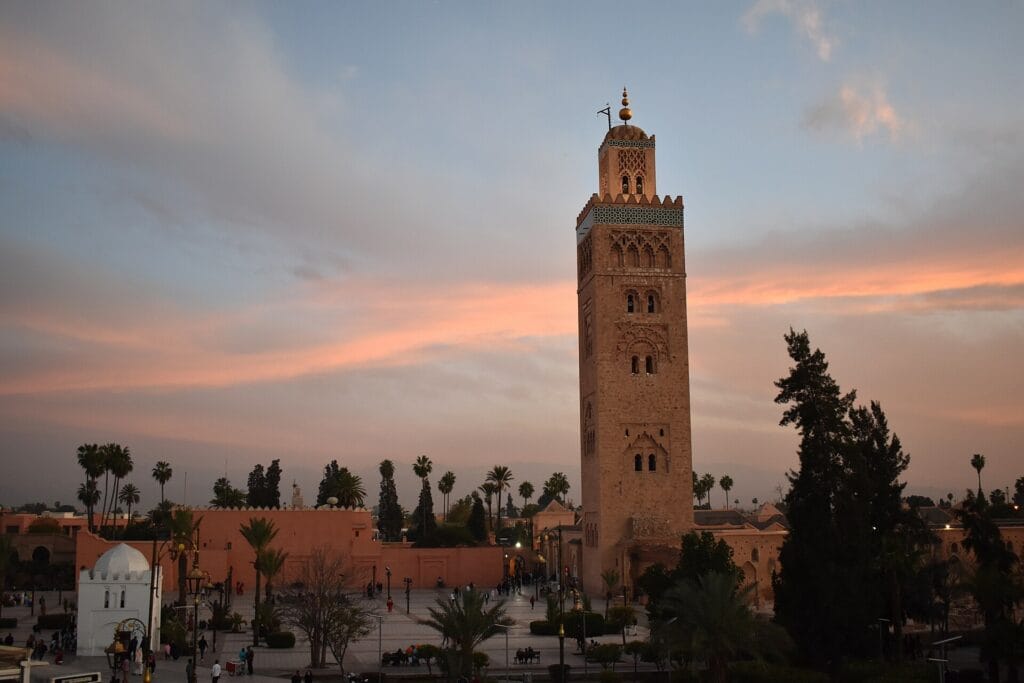
Start early, around 8:30–9am, when the light is soft and the heat bearable. The Koutoubia Mosque and its 77-metre minaret, built in the 12th century under the Almohads, are the city’s landmark: the interior is not open to non-Muslims, but the surrounding gardens make for a lovely warm-up. From there, walk to Jemaa el-Fna square, the beating epicentre of Marrakech and itself listed as part of humanity’s oral and intangible heritage. In the morning the square is calm: orange-juice sellers (around 5–10 MAD a glass), the first stalls, water-carriers in costume. Take time for a tea on a terrace to watch the city wake up.
Afternoon: Bahia Palace and Ben Youssef Madrasa
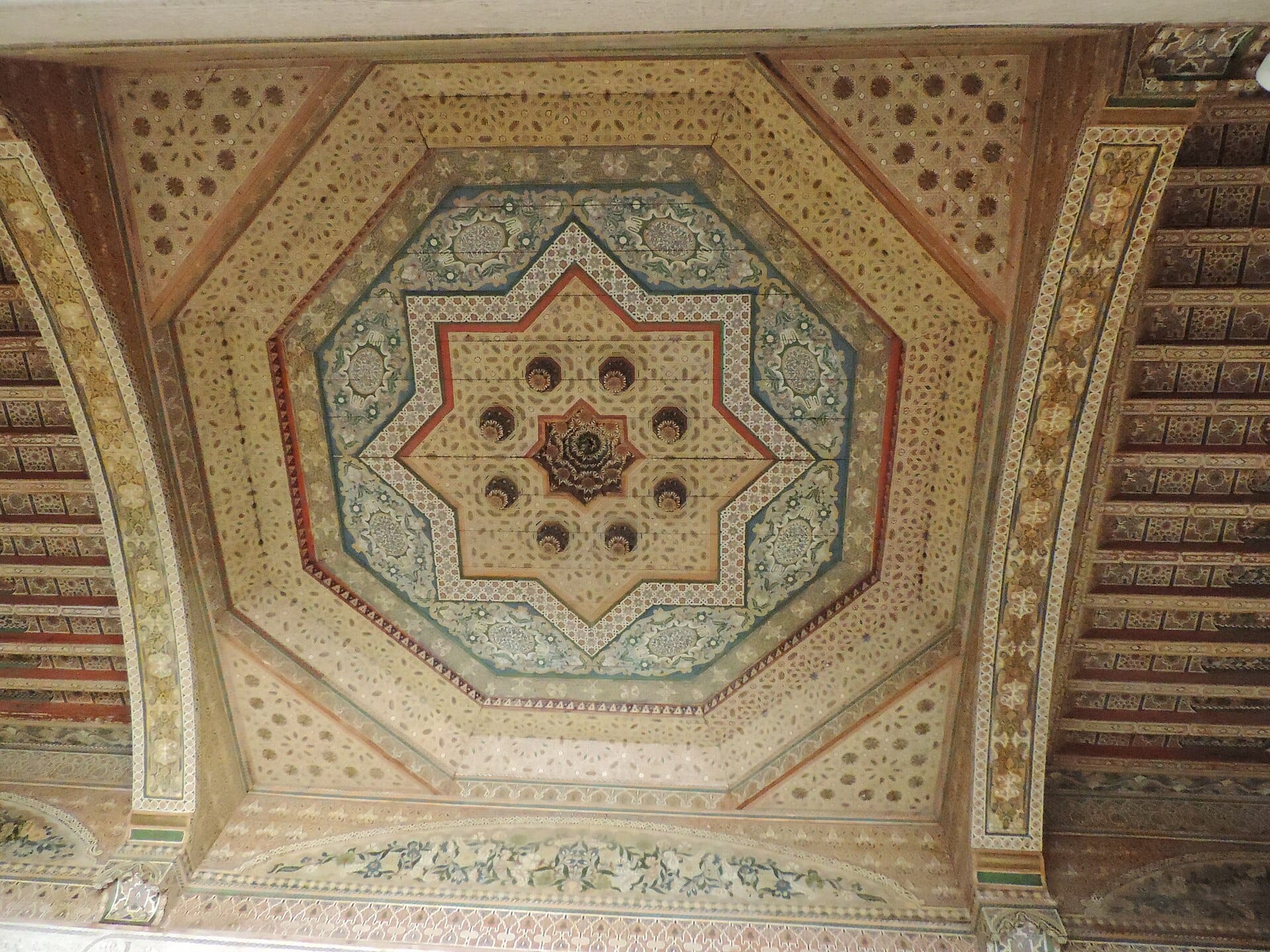
After a light lunch in the medina, head for the Bahia Palace (admission around 70–100 MAD), a masterpiece of 19th-century Moroccan architecture: marble patios, painted cedar ceilings, zellige tilework and chiselled stucco. Allow a good hour. Carry on to the Ben Youssef Madrasa, a beautifully restored former Quranic school (admission around 50–70 MAD), one of the finest examples of Hispano-Moorish art in Morocco. If time allows, slip over to the Saadian Tombs, a royal necropolis rediscovered in 1917, whose finely decorated mausoleums are well worth the detour.
Evening: dinner on Jemaa el-Fna
At nightfall, Jemaa el-Fna square transforms: storytellers, Gnaoua musicians, snake charmers and above all the famous food stalls that set up amid fragrant smoke. Skewers, tagines, harira (traditional soup), and for the curious, snails in broth. Reckon on 60 to 120 MAD for a hearty dinner. Then climb up to an overlooking café terrace to admire the illuminated square: it’s one of the most memorable sights in Marrakech, and it costs no more than the price of a mint tea.
Day 2: gardens and unwinding at the hammam
The second day deliberately eases the pace. After the intensity of the medina, it’s time for greenery and well-being: this is one of the great advantages of a 4-day stay, being able to slot in a genuinely “gentle” day without sacrificing a major sight.
Morning: Majorelle Garden and the YSL museum
The Majorelle Garden is one of the most visited sites in Morocco: created by the painter Jacques Majorelle in the 1920s–1930s, then rescued and elevated by Yves Saint Laurent and Pierre Bergé, it dazzles with its famous “Majorelle blue”, its bamboo, cactus and pools. Admission around 150–170 MAD (a combined ticket with the Berber Museum or the adjacent Yves Saint Laurent Museum costs more). Book online and arrive at opening time (8am) to avoid the crowds and queues. Allow 1h30 to 2h with the museums.
Midday: Menara Gardens or lunch in Guéliz
The Menara Gardens, with their large basin and their pavilion set against the Atlas Mountains, offer a classic postcard view (free access to the gardens, a modest charge for the pavilion). A more indulgent alternative: lunch in the Guéliz district, where modern restaurants and cafés serve varied cuisine in a restful setting, before the afternoon of relaxation.
Afternoon and evening: hammam and spa
No stay in Marrakech is complete without a hammam. It’s the ritual that gives Day 2 its full meaning. Two options: the local neighbourhood hammam (10–50 MAD, very authentic, bring your own black soap and kessa glove), or the tourist hammam-spa with a scrub, massage and body wrap (from 250–400 MAD, up to 600 MAD and more in high-end riads). To choose according to your budget and your mood, see our selection of hammam and spa in Marrakech. End the evening quietly on your riad’s terrace: you’ll be fresh and rested for the next day’s excursion.
Day 3: a full-day excursion (the real bonus of four days)
This is where Marrakech in four days truly comes into its own. A full-day excursion is what three days can’t comfortably allow: you need a whole day, round trip included, to discover the spectacular landscapes surrounding the red city. You have three strong contenders, each with its own personality. Choose just one for this Day 3.
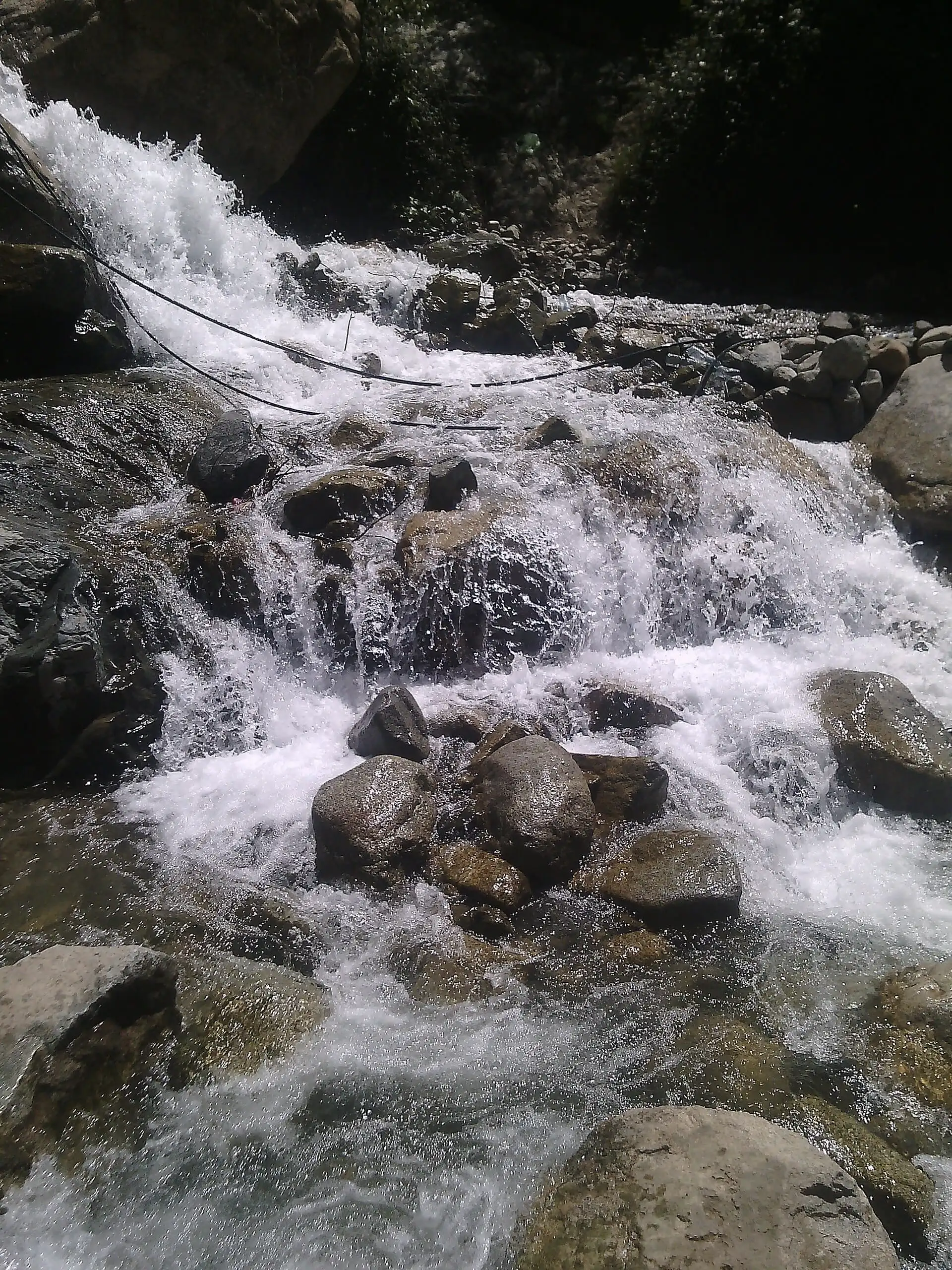
Option A — The Ourika Valley (mountains and cool air)
About an hour’s drive to the south, the Ourika Valley winds through the High Atlas along a river. Berber villages, the Monday market at Tnine Ourika, riverside terraces and above all the Setti Fatma waterfalls, reached by a short hike. It’s the most refreshing option in summer, the air being noticeably cooler than in the city. Ideal for lovers of nature and walking. Practical details and route in our guide to the Ourika Valley from Marrakech.
Option B — The Agafay desert (stone dunes, closest to the city)
Just 30–45 minutes from Marrakech, the Agafay desert is not a sand desert but a stone desert of lunar hills, with the snow-capped Atlas as a backdrop. It’s the “instant change of scenery” option: a camel ride, quad biking, lunch or dinner in a caidal tent, a sumptuous sunset. Many camps offer a half-day or evening formula, which leaves the morning free. Everything is explained in our article on the Agafay desert from Marrakech.
Option C — Essaouira (the ocean and the wind)
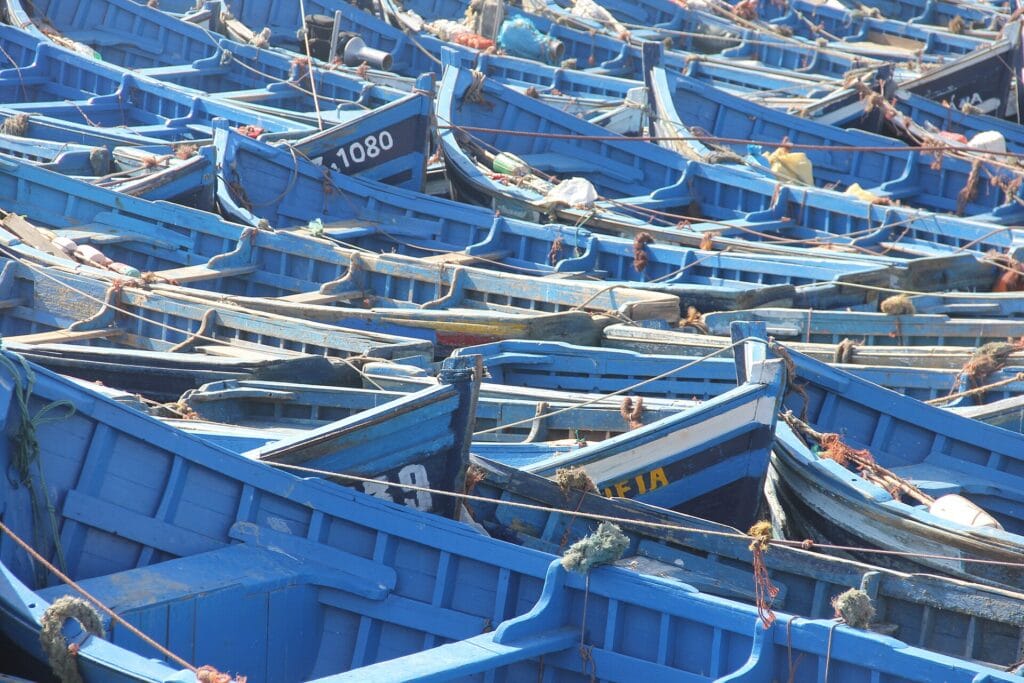
About 2h30–3h by road to the west, Essaouira is the Atlantic pearl: a fortified medina listed by UNESCO, ramparts battered by the wind, a lively fishing port, an immense beach popular with kitesurfers and a bohemian atmosphere inherited from the hippies of the 1970s. It’s the longest excursion in terms of travel, so best kept for travellers who love the open road and the seaside. Our guide to Essaouira from Marrakech details the transport options and the programme once you’re there.
Indicative budget for a full-day excursion: from 150–250 MAD per person on a group excursion (Ourika, Agafay) up to 400–700 MAD for Essaouira or a private package with driver. Book the day before through your riad or a reputable agency, and confirm what’s included (transport, guide, meals).
A few practical tips for this Day 3, whatever your choice: leave early (departure around 8–9am) to make the most of the day and avoid the traffic on the way out of the city; take water, a hat and sunscreen, plus a light jumper if you climb to altitude towards Ourika; bring good shoes for the hike to the waterfalls; and keep some cash for tips, teas along the way and small purchases in the cooperatives (argan oil, pottery). Finally, beware of self-appointed “guides” who impose themselves on the spot: opt for a clear package booked in advance.
Day 4: souks, tanneries and the modern Marrakech of Guéliz
The last day balances the authentic and the contemporary: the morning in the souks to bring home some crafts, the afternoon in Guéliz to taste today’s Marrakech. Adapt it to your flight time; if you leave late, you could even fit in a second short getaway (see below).
Morning: souks and crafts
The souks of the medina form a labyrinth organised by trade: the dyers’ souk (Souk Sebbaghine), the ironworkers’, the babouche slipper-makers’ (Souk Smata), the carpets (the Berber Criée auction). This is the moment for shopping: babouches (from 80–150 MAD), chiselled metal lanterns, pottery, spices, argan oil, carpets. Haggling is part of the game: offer half, even a third, of the first price, stay smiling and know when to walk away. The tanneries, in the north-east of the medina, offer a raw and pungent spectacle of leather worked in the traditional way (someone will hand you a sprig of mint).
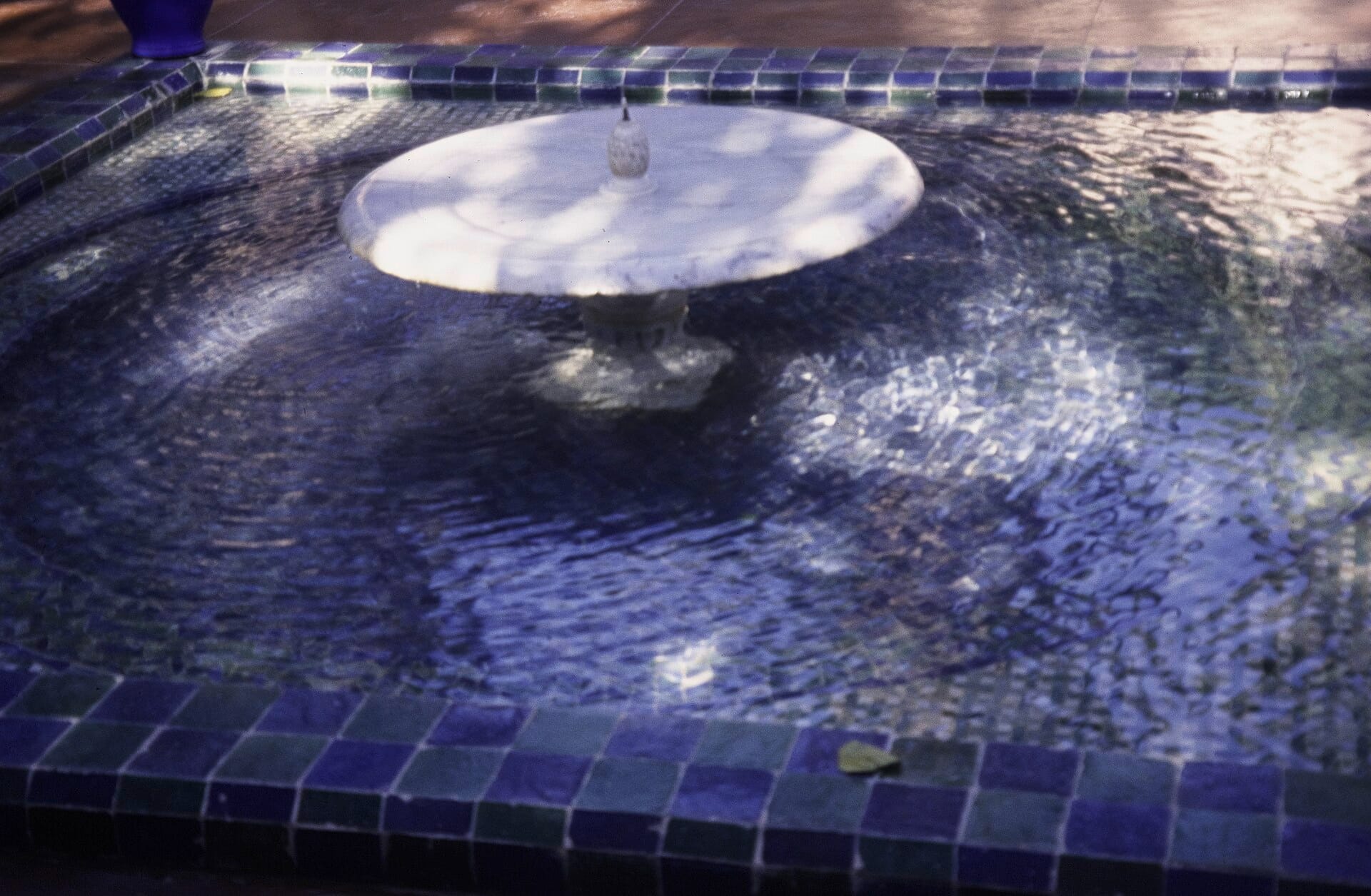
Afternoon: Guéliz, the new town
A total change of atmosphere in Guéliz, the modern district laid out during the era of the French protectorate. Tree-lined avenues, café terraces, Moroccan designer boutiques, contemporary art galleries and concept stores: it’s the Marrakech of stylish Marrakchis. Stroll along Avenue Mohammed V, pause in a design café, and if you missed out on the gardens the day before, the Secret Garden (in the medina) or a last visit to the Menara rounds off the day. Guéliz is also the ideal place for one last good meal before departure. Everything about this district in our guide to Guéliz in Marrakech.
Evening: one last sunset
To close your 4-day Marrakech itinerary, treat yourself to one last sunset: a rooftop in the medina, a terrace in Guéliz, or a return to Jemaa el-Fna to come full circle where it all began. Plan your transfer to the airport with a comfortable margin (a 30–40 min journey depending on traffic).
Which excursion to choose during four days in Marrakech?
With just one day for an excursion, the choice matters. Here’s how to decide according to your profile:
- You love nature, walking and cool air: the Ourika Valley. Perfect in summer, lush in spring.
- You want a change of scenery without a long drive: the Agafay desert, less than an hour away, magical at sunset.
- You dream of the ocean and heritage: Essaouira, but accept ~5–6h of round-trip driving.
- You’re travelling as a family with young children: Agafay (camels, tents) or Ourika (river bathing in summer).
- It’s very hot (July–August): Ourika for the altitude, or Essaouira for the Atlantic breeze. Avoid Agafay in the middle of a summer afternoon.
Our advice: if you can’t decide, keep Agafay for a shortened Day 4 (evening formula) and do Ourika or Essaouira as a full day on Day 3. For travellers who want to compare everything, our complete guide to things to do in Marrakech lists every possible excursion.
Where to stay for these 3 nights in Marrakech?
Four days means three nights on site. Two broad philosophies compete, and the right choice depends on your priority:
- A riad in the medina: the authentic experience par excellence. A patio, silence after the alleyways, breakfast on the terrace, a stone’s throw from the Day 1 monuments and the Day 4 souks. Ideal for immersion, less practical by car (pedestrian alleys, carrying luggage).
- A hotel in Guéliz or the Hivernage: modern comfort, a pool, easy access by taxi and car, close to contemporary restaurants. Perfect if you value rest and convenience, especially with children.
Indicative range: from 200–400 MAD a night in a simple guesthouse to 1,500 MAD and well beyond in high-end riads and hotels. For a 4-day stay with a day’s excursion, a central riad often remains the best trade-off between charm and convenience. Compare neighbourhoods and price ranges in our guide to where to stay in Marrakech.
Budget for four days in Marrakech
Here’s a realistic estimate per person, excluding international flights, for a 4-day stay (3 nights). The amounts are indicative and vary with the season and your travel style.
- Accommodation (3 nights): 600–4,500 MAD (≈ 55–415 €) depending on a simple riad or a luxury hotel.
- Meals and drinks: 300–800 MAD (≈ 28–74 €) over 4 days, from street food to good restaurants.
- Monument and garden entries: 350–500 MAD (≈ 32–46 €) in total (Bahia, Ben Youssef, Majorelle, etc.).
- Day 3 excursion: 150–700 MAD (≈ 14–65 €) depending on the destination and the package.
- Hammam / spa: 50–600 MAD (≈ 5–55 €) depending on local or high-end.
- Transfers and taxis: 200–400 MAD (≈ 18–37 €), airport included.
Indicative total: reckon on around 2,500 MAD (≈ 230 €) in budget mode and up to 5,000–7,000 MAD (≈ 460–645 €) in higher comfort, per person. To fine-tune item by item, see our Marrakech travel budget guide. As for arriving, compare the ways to reach the city in our comparison of airport transfers in Morocco.
Adapting your itinerary by season
Marrakech can be visited all year round, but the way you organise your 4 days changes with the climate:
- Spring (March–May): the ideal season. Mild temperatures, gardens in bloom, a lush Ourika Valley. The itinerary works exactly as it is.
- Summer (June–August): intense heat (often 38–42°C). Visit the monuments early in the morning, save the afternoon for the hammam or the pool, and favour Ourika (altitude) or Essaouira (ocean) for Day 3. Avoid Agafay in the middle of the afternoon.
- Autumn (September–November): the second-best period. The heat has dropped, the light is magnificent, the crowds are thinner.
- Winter (December–February): mild, sunny days but cool evenings (bring a jacket). The Atlas is snow-capped: sublime as a backdrop from Agafay. Some Ourika waterfalls may be in spate.
Mistakes to avoid for a successful four days
- Trying to fit in two long excursions: a single excursion day is enough over 4 days; adding a second turns the trip into a road marathon.
- Underestimating distances in the medina: the alleys are a labyrinth. Download an offline map and accept getting a little lost.
- Not booking the Majorelle Garden: queues can reach an hour. Online ticket + arrival at opening time.
- Refusing all haggling… or haggling aggressively: find the happy medium, with a smile.
- Drinking tap water: stick to bottled water.
- Forgetting the margin before your flight: factor in the airport journey and check-in, especially on a souk day.
- Neglecting currency exchange and cash: many small shops and taxis operate in cash (MAD).
Want to extend: stepping up to 5 days
If you have an extra day, a fifth day opens up some fine possibilities without upsetting the balance of this itinerary. Three ideas:
- A second excursion: combine two of the three Day 3 options (for example Ourika during the day, then Agafay in the evening on another day).
- The High Atlas and its valleys: Imlil and the foot of Toubkal, or the spectacular Ourika Valley extended towards the high-altitude villages.
- A pure relaxation day: the riad pool, a second hammam, a Moroccan cooking class, aimless wandering with no set plan.
Conversely, if you’re short on time, our shorter versions exist: Marrakech in 3 days (the city + a half-excursion), Marrakech in 2 days (the essentials of the medina and the gardens) or Marrakech in 1 day (the must-sees at speed). The 4-day format nonetheless remains the best compromise: long enough to breathe and head off on an excursion, short enough for an extended long weekend.
FAQ: Marrakech in four days
Four days: is it enough to visit Marrakech?
Yes, four days make up the ideal length for a first stay: two days for the city (medina, monuments, gardens), a day of relaxation and above all a whole day’s excursion towards the Atlas, Agafay or Essaouira. That’s what the 2- or 3-day formats can’t comfortably allow.
Which excursion should I favour if I only have one day?
For nature and cool air, the Ourika Valley; for a quick change of scenery at sunset, the Agafay desert; for the ocean and a UNESCO-listed medina, Essaouira (a longer drive). Choose according to the season and your appetite for the road.
How much does a 4-day stay in Marrakech cost?
Reckon, excluding flights, on around 2,500 MAD (≈ 230 €) per person in a budget version and up to 5,000–7,000 MAD (≈ 460–645 €) in higher comfort, including accommodation, meals, entries, one excursion, a hammam and transfers. Prices are indicative and vary with the season.
Is it better to stay in a riad or a modern hotel?
A riad in the medina offers immersion and proximity to the monuments and the souks; a hotel in Guéliz or the Hivernage prioritises comfort, the pool and easy access by car. For four days with an excursion, a central riad is often the best compromise.
What is the best time for this programme?
Spring (March–May) and autumn (September–November) are ideal: moderate heat, superb light, gardens and valleys at their best. In summer, adapt by visiting early in the morning and choosing an excursion at altitude or towards the ocean.
Do you need a guide to visit Marrakech in four days?
It’s not essential: the medina is very easy to explore independently with an offline map. A local guide can nonetheless enrich a visit to the monuments and spare you the touts. For the excursions, an organised package with transport remains the simplest option.
To go further into the city’s history, see the Marrakech article on Wikipedia. And to build your own tailor-made programme, keep our complete guide to what to do in Marrakech to hand.
Images under free licence via Wikimedia Commons: © Vassia Atanassova – Spiritia (CC BY-SA 4.0); © Soufaine Kabkab (CC BY-SA 3.0); © Angeline A. van Achterberg (CC BY-SA 4.0). Sources: Wikimedia Commons.Photo credits: to be completed (royalty-free image bank / respective authors).