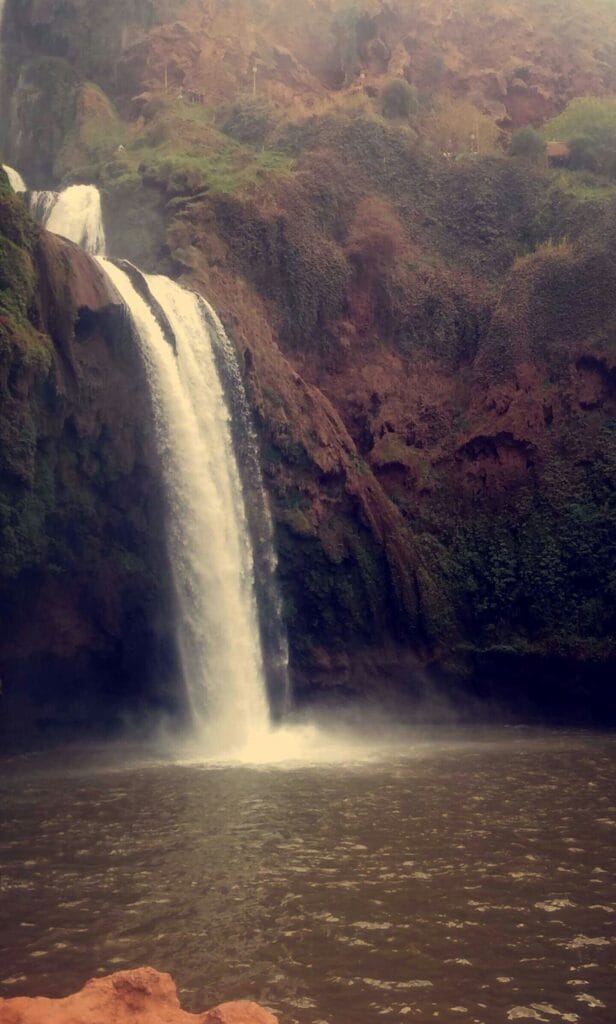
Quick answer: the Ouzoud Waterfalls lie about 150 km northeast of Marrakech, roughly 2.5 to 3 hours by road. With their falls of around 110 metres spread over three tiers, they are the highest waterfalls in Morocco and one of the finest day trips from the red city. Here you can admire Barbary macaques living free, centuries-old olive groves, rainbows in the mist, and you can walk down to the pools for a swim. The easiest way to get there remains the organized tour with transport included; a rental car is a good alternative for the more independent.
In brief: the trip to the Ouzoud Waterfalls
- Distance from Marrakech: about 150 km (northeast).
- Travel time: 2.5 to 3 hours by road, depending on traffic and stops.
- Height of the falls: about 110 m in total, over three tiers; the highest in Morocco.
- Recommended duration: a full day (early morning departure, evening return).
- What to see: the three waterfalls, the Barbary macaques, the olive groves, the boats on the pool, the rainbows.
- Best time: from March to June (maximum flow thanks to the melting snow) and from September to October.
- What to plan for: good shoes, water, a hat, a swimsuit, some small change and sunscreen.
The Ouzoud Waterfalls, a natural jewel of the Middle Atlas
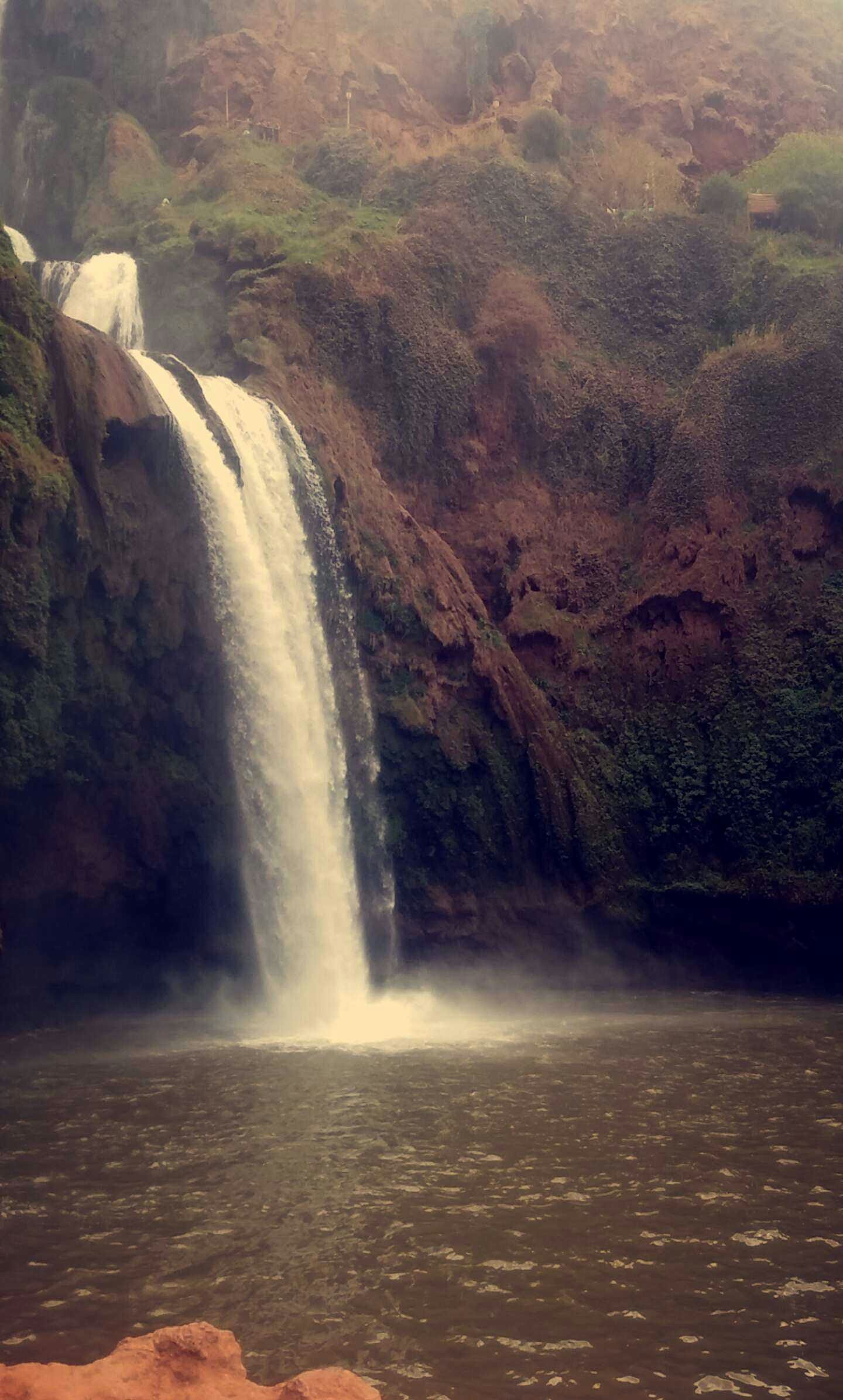
In the heart of Morocco’s Middle Atlas mountains, the Ouzoud Waterfalls form one of the most impressive natural spectacles in the country. The water plunges down a red sandstone cliff over almost 110 metres, in three successive tiers, in a constant roar and a refreshing mist that, in the sunlight, almost always draws one or more rainbows. The site is classified as a “Site of Biological and Ecological Interest” (SIBE) and attracts thousands of visitors every year from Marrakech, Fez or Beni Mellal.
The name “Ouzoud” comes from Tamazight (Berber) and means “olive”. No surprise there: the whole site is wrapped in centuries-old olive groves, and the village of Ouzoud still houses old traditional mills where olives are pressed with a stone wheel. This combination of spectacular nature, living Berber culture and wildlife makes the Ouzoud Waterfalls an essential trip for anyone staying in the Marrakech region. If you are planning your itinerary, our guide Things to do in Marrakech places this outing among the great classics not to be missed.
The Ouzoud Waterfalls in figures
- Total height: about 110 metres, the largest fall alone reaching close to 75 metres.
- Number of tiers: three main tiered falls, complemented by several secondary cascades.
- Altitude of the site: about 1,060 metres.
- Location: commune of Tanaghmeilt, province of Azilal, about 15 km from Azilal and 120 km from Beni Mellal.
- Status: among the highest waterfalls in North Africa and the highest in Morocco.
To explore the geography and history of the place in more depth, the reference encyclopedic entry is available on Wikipedia.
Where are the Ouzoud Waterfalls?
The waterfalls are located in the village of Tanaghmeilt, within the province of Azilal, on the southern slope of the Middle Atlas. From Marrakech, allow about 150 km to the northeast. The water that feeds the falls descends from the Atlas ranges then rushes into the gorge before joining, further on, the impressive gorges of the El-Abid river. This geographical setting explains the generous flow in spring, when the melting snow swells the mountain rivers.
Most visitors arrive by road from Marrakech, but Ouzoud can also be combined with a wider tour of the Middle Atlas or a stopover toward Beni Mellal and Fez. If you land just before your trip, be aware that the journey from Marrakech-Menara Airport to the city centre takes only a few minutes, which leaves you time to get organized as early as the next day.
How do you get to the Ouzoud Waterfalls from Marrakech?
There are several ways to reach the Ouzoud Waterfalls from Marrakech, depending on your budget, your independence and the comfort you are looking for. Here are the main options, from the simplest to the most adventurous.
1. The organized tour (the simplest option)
This is by far the most popular option. Many agencies offer an Ouzoud trip from Marrakech as a day tour, with pickup at your hotel or riad, round-trip transport in an air-conditioned minibus and, often, the services of a guide on site. You have to worry about neither the driving, nor the parking, nor the route. Departures are generally early in the morning (around 7-8 a.m.) and the return to Marrakech takes place in the early evening.
Prices vary a great deal depending on whether it is a shared group outing or a private tour, and on the services included. As a rough guide, allow a few hundred dirhams per person for a group option, more for a private one; the exact price is to be confirmed at the time of booking. To compare the options and up-to-date prices, see our dedicated guide to Marrakech excursions.
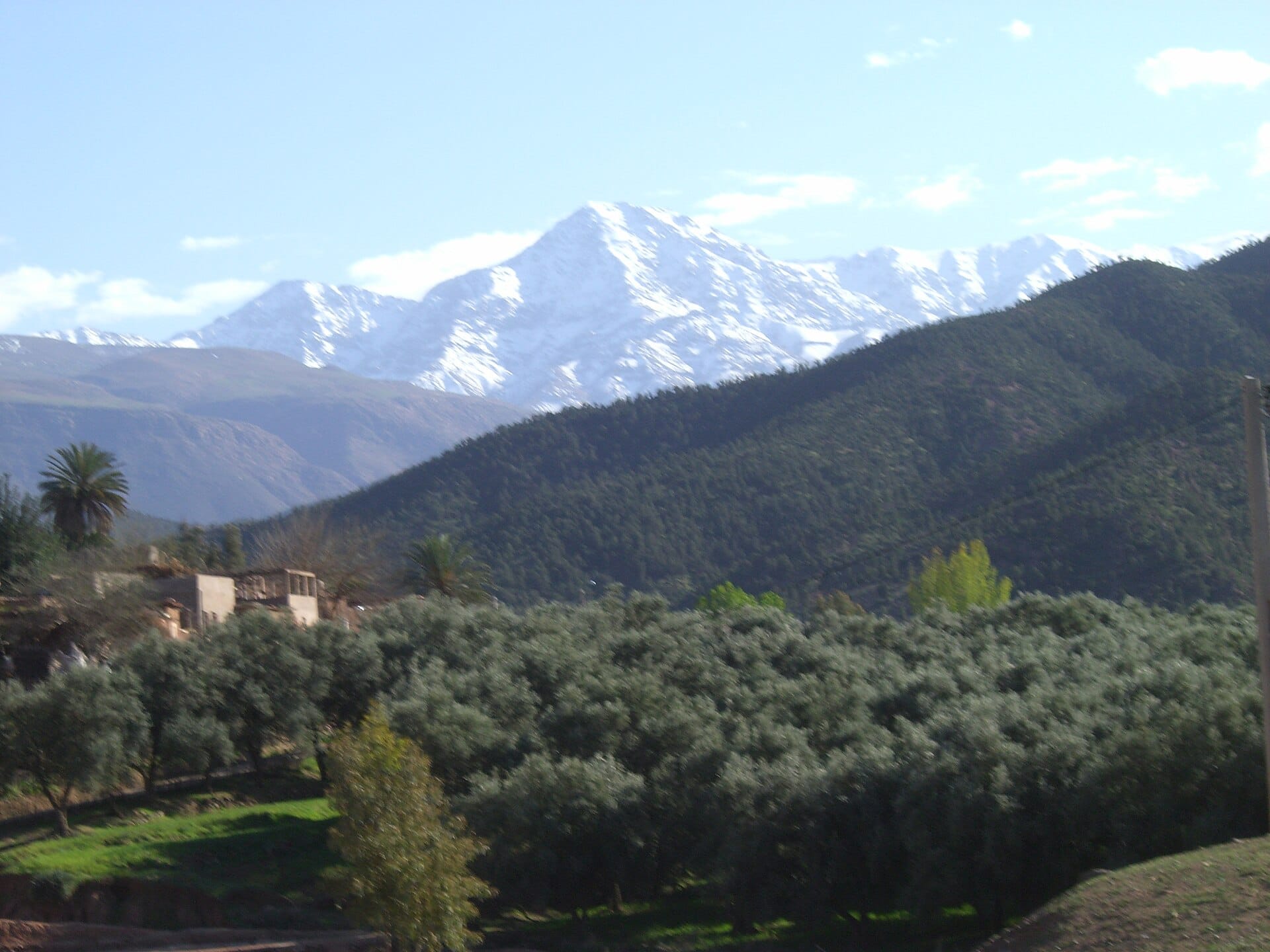
2. By rental car (for the more independent)
Renting a car in Marrakech gives you total freedom: you leave at the time of your choice, you stop wherever you like and you stay on site as long as you want. The road is paved and generally in good condition, but it crosses mountainous terrain with many bends; so allow time and drive carefully. A large paid car park is at the entrance to the site, a few minutes’ walk from the top of the falls.
This option is ideal if you combine Ouzoud with other discoveries or if you are travelling as a family. It also fits very well into a slightly longer stay: see, for example, how to fit a nature day into our Marrakech in 3 days itinerary.
3. Shared taxi, grand taxi or bus
Travellers on a small budget can reach Ouzoud by local transport, generally via Azilal, by combining buses or shared grand taxis. It is the most economical option, but also the longest and least comfortable, with connections and inflexible timetables. It requires a good dose of patience and mainly suits travellers used to getting around independently in Morocco. For a simple round-trip day, the organized tour often remains the best value in terms of time and price.
What to see and do at the Ouzoud Waterfalls
Ouzoud is not just a viewpoint: it is a whole little world to explore, between nature, wildlife and Berber traditions. Here are the must-sees of the site.
Admire the falls from the various viewpoints
From the top of the site, several terraces and perched cafés offer a plunging view over all the falls. Going down the laid-out trail through the olive groves (allow 15 to 20 minutes’ walk), you discover the waterfalls from different angles, right down to the pool at their foot. It is from there that you best feel the power of the water and enjoy the famous rainbows, particularly visible in the late morning and late afternoon when the sun strikes the mist.
Watch the Barbary macaques
Ouzoud is home to a troop of Barbary macaques (also called magots), the only wild primates living north of the Sahara. You come across them along the descent trail, near the cafés and in the olive groves, where they leap from tree to tree. It is a unique spectacle, especially for children. Two rules of common sense: don’t feed them (it harms their health and changes their behaviour) and keep your distance, as they remain wild animals.
Take a boat ride
At the foot of the falls, local boatmen offer small boat crossings on the green pool. It is a chance to get as close as possible to the curtain of water and feel the spray of the falls on your face. The price is modest, in the order of a few dozen dirhams, to be paid directly on site — remember to keep some small change on you.
Swim in the natural pools
In hot weather, swimming is possible in some natural pools located downstream of the main falls. The water is cool and invigorating, a real delight in summer. Bring your swimsuit and a towel. Stay cautious, however: the current can be strong near the falls, the rocks are slippery and there is no lifeguard. Swim only in the calm areas within your reach.
Hike through the gorges and olive groves
For those who want to extend the experience, hiking trails head beyond the waterfalls, along the river, toward authentic Berber villages and old olive oil mills. A walk of a few hours lets you discover a more peaceful Ouzoud, far from the crowds at the viewpoints. A local guide can accompany you and tell you about life in the valley, its olive, almond and citrus crops.
How much time should you allow? A typical day at Ouzoud
Given the road (2.5 to 3 hours each way), the Ouzoud Waterfalls are visited over a full day. Here is what the schedule of a classic trip from Marrakech can look like:
- 7-8 a.m.: departure from Marrakech, pickup at the hotel or riad.
- On the way: a break of about twenty minutes at a roadside café to stretch your legs.
- 10:30-11 a.m.: arrival at Ouzoud, start of the walk down through the olive groves.
- Morning / midday: discovering the viewpoints, the macaques, a boat ride and, for the braver, a swim.
- Lunch: a meal in one of the terrace restaurants overlooking the falls (Berber cuisine, tagines, grills).
- Afternoon: free time, a leisurely walk back up and the rainbows at the end of the day.
- 4-5 p.m.: departure toward Marrakech, return in the early evening.
What is the best time to visit the Ouzoud Waterfalls?
The best time to discover Ouzoud runs from March to June. In spring, the melting snow of the Atlas swells the rivers: the flow of the falls is then at its maximum, the vegetation is lush and the temperatures remain pleasant. Autumn, from September to October, is another very fine window: the summer heat has dropped and the site is a little less crowded.
In midsummer (July-August), the waterfalls remain magnificent but the heat can be strong and the crowds heavy, especially at weekends; swimming, on the other hand, is particularly pleasant. In winter, the site is quieter and can be chilly, especially in the morning. In general, set off early to avoid the crowds and enjoy the morning light. To fine-tune the calendar of your stay, see our guide on the best time to visit Marrakech.
What to plan for: our practical tips
A trip to Ouzoud takes a minimum of preparation to enjoy it fully. Here is our checklist:
- Good shoes: the descent trail is steep, rocky and sometimes slippery. Avoid flip-flops.
- Water and a hat: essential, especially from late spring to autumn.
- Sunscreen: the sunshine is strong at altitude.
- A swimsuit and a towel: if you plan to swim in the pools.
- Small change (dirhams): for the boat, the parking, a tip for the guide or a tea on a terrace.
- A camera or a charged smartphone: the viewpoints and rainbows are photogenic.
- Caution with the monkeys: don’t feed them and keep an eye on your belongings (glasses, food, bags).
- A light change of clothes: the spray can get you wet near the falls.
History and culture: the mills and the Berber village
Beyond its natural interest, Ouzoud is a place deeply rooted in the Berber culture of the Middle Atlas. The very name of the site, which means “olive” in Tamazight, recalls the importance of the olive groves that have surrounded it for centuries. On the heights, the village of Tanaghmeilt still lives to the rhythm of the agricultural seasons: harvesting olives, almonds and citrus fruits, maintaining the terraced crops clinging to the slopes. It is this traditional agriculture that supplies the cafés and restaurants perched on the edge of the cliff.
Along the way, don’t miss the old olive oil mills, where olives are still sometimes pressed with a stone wheel using ancestral methods. These mills, once driven by the power of the water, bear witness to know-how passed down from generation to generation. Chatting with the locals, tasting a local olive oil or watching the artisans at work is an integral part of the Ouzoud experience. The site is, moreover, classified as a Site of Biological and Ecological Interest, which requires respectful behaviour from everyone: leave no litter, don’t feed the animals and preserve this fragile heritage for future generations.
Eating and dining on site
The lunch break is one of the great pleasures of a day at Ouzoud. Many terrace restaurants cling to the top of the cliff, offering a stunning view of the falls while you enjoy a meal. The cuisine is simple and generous: slow-cooked tagines, grilled brochettes, Moroccan salads, homemade bread and, to finish, the essential mint tea. Some establishments also offer more modest dishes or sandwiches for small budgets.
Prices remain reasonable but can be a little higher than in the city, because of the tourist location of the site: ask about prices before ordering. If you go on an organized tour, lunch is sometimes included or offered as an option. Also remember to bring water and a few snacks for the way down and back up, especially if you are travelling with children. Be careful not to leave food within reach of the monkeys, always on the lookout near the tables.
Ouzoud or the Ourika Valley: which trip to choose?
Many travellers hesitate between Ouzoud and another very popular nature outing from Marrakech: the Ourika Valley. Both offer mountains, rivers and waterfalls, but the experience differs. The Ourika Valley is closer to Marrakech (about 1 hour by road), ideal for a half day or a less packed day, with its small waterfalls of Setti Fatma and its Berber villages. Ouzoud, further away, requires a full day but rewards the effort with far more spectacular falls and the presence of the macaques.
In short: choose the Ourika Valley if you are short on time or want a quiet getaway near the city, and the Ouzoud Waterfalls if you want the grand spectacle and can devote a full day to it. Nothing stops you, on a week-long stay, from doing both. Note that the medina of Marrakech, the starting point for all these trips, is itself a UNESCO World Heritage Site.
Frequently asked questions (FAQ)
How far are the Ouzoud Waterfalls from Marrakech?
The Ouzoud Waterfalls are located about 150 km northeast of Marrakech, in the province of Azilal. Allow between 2.5 and 3 hours by road depending on traffic, the state of mountain driving conditions and the stops made along the way.
How high are the Ouzoud Waterfalls?
The falls reach about 110 metres high in total, spread over three tiers, with the largest fall alone measuring close to 75 metres. They are the highest waterfalls in Morocco and among the highest in North Africa.
Can you swim at the Ouzoud Waterfalls?
Yes, swimming is possible in some natural pools located downstream of the main falls, especially in hot weather. The water is cool. Stay cautious, however: there is no lifeguard, the current can be strong near the falls and the rocks are slippery. Favour the calm areas.
Are there really monkeys at Ouzoud?
Yes. A troop of Barbary macaques (magots) lives free around the waterfalls, in the olive groves and along the descent trail. They are the only wild primates present north of the Sahara. Don’t feed them and keep your distance: they are wild animals.
How much does a trip to the Ouzoud Waterfalls from Marrakech cost?
The price depends on the option: a shared group tour generally comes to a few hundred dirhams per person, transport included, while a private tour costs more. Add to that a few costs on site (parking, boat, tips, meal). As prices change regularly, always check them at the time of booking.
What is the best time to visit Ouzoud?
Spring (from March to June) is ideal: the flow of the falls is at its maximum thanks to the melting snow and the vegetation is green. Autumn (September-October) is also very pleasant, with fewer people. In summer, the heat and crowds are stronger, but swimming is particularly enjoyable.
Conclusion: an essential nature getaway
The Ouzoud Waterfalls are unquestionably one of the finest day trips you can make from Marrakech. Between the power of the 110-metre falls, the gentleness of the olive groves, the endearing presence of the macaques and the coolness of the pools, this Middle Atlas site offers a total change of scenery just a few hours from the red city. Whether you choose the organized tour or the rental car, set off early, plan good shoes and let yourself be carried away by the magic of the place. One thing is certain: the rainbows of Ouzoud will leave you a memorable souvenir of your trip to Morocco.
Images under free license via Wikimedia Commons: © Karima El Youbi (CC BY-SA 4.0); © Tonkie (CC BY-SA 3.0). Sources: UNESCO and Wikipedia.Disclaimer: the practical information (distances, durations, prices, times, waterfall flow and swimming conditions) is provided for guidance only and may change. Always check up-to-date data with your agency, your accommodation or the local authorities before your trip. Swim and hike at your own risk, respecting the nature and wildlife of the site.