Imlil and Toubkal from Marrakech are the flagship pairing of any mountain trip in Morocco: Imlil is a Berber village perched at around 1,740 metres in the High Atlas, just 60 to 70 km south of Marrakech, or roughly 1.5 hours by road. It is the main gateway to Toubkal National Park and the historic base camp for climbing Mount Toubkal (4,167 m), the highest peak in North Africa. Whether you are after a simple day trip in the fresh air or a two-day trek to the roof of the Maghreb, Imlil is the essential starting point, reachable by taxi, by car or on an organised excursion from the Red City.
In brief: the essentials on Imlil and Toubkal
- Imlil: mountain village at ~1,740 m in the Aït Mizane valley, about 1.5 hours from Marrakech (60-70 km).
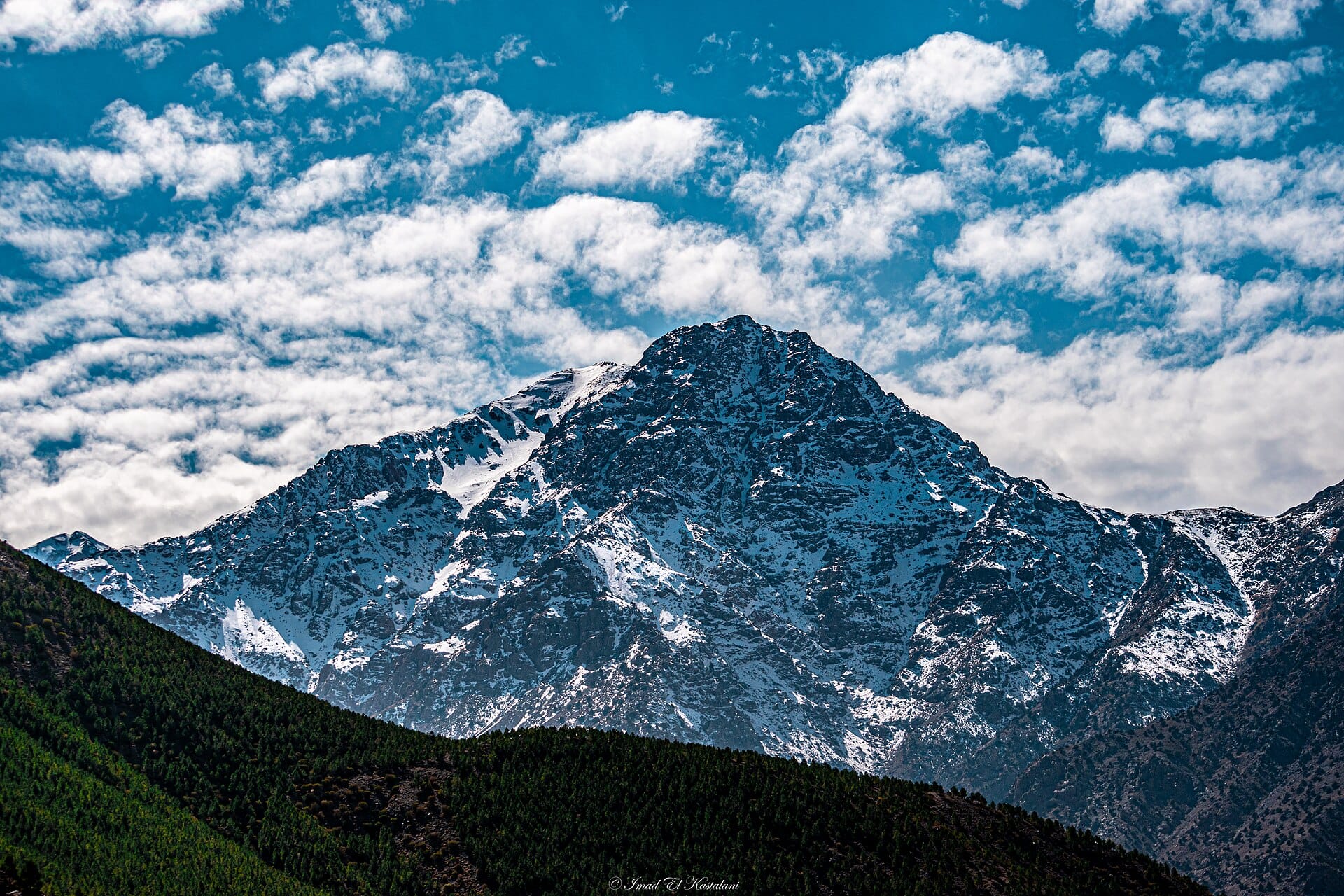
- Mount Toubkal (Jbel Toubkal): 4,167 m, the highest peak in North Africa, at the heart of Toubkal National Park.
- Toubkal National Park: a protected natural area of valleys, Berber villages, walnut groves and cultivated terraces.
- Two options: a day hike from Imlil, or a 2-day trek to the summit of Toubkal via the refuge (~3,200 m).
- A guide is recommended (and often required for the summit); a mule can be arranged to carry your bags.
- Living Berber culture: hospitality, mint tea, crafts and spectacular scenery in every season.
What are Imlil and the High Atlas?
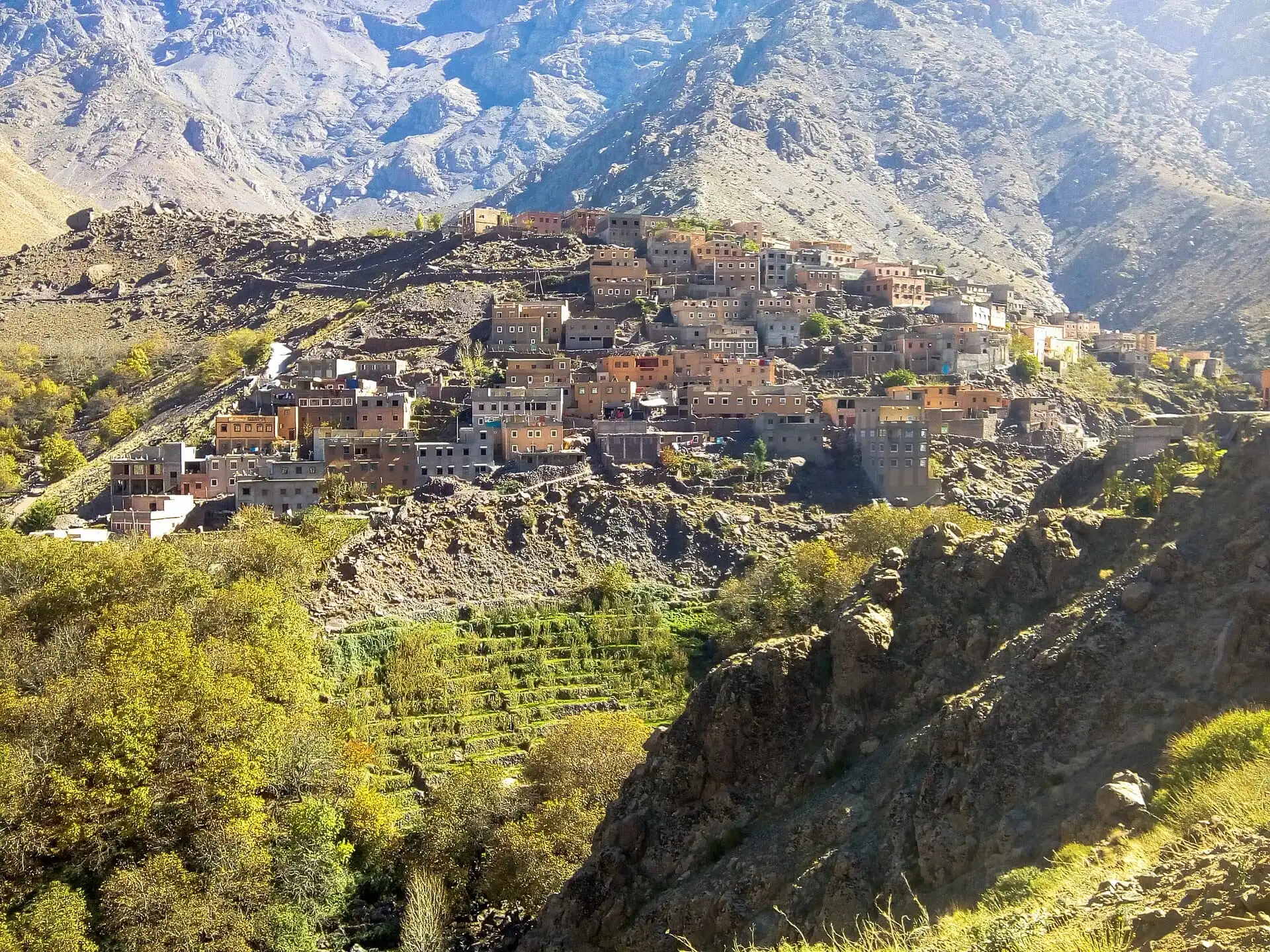
Imlil is a small village in the Aït Mizane valley, within the Moroccan High Atlas range. Sitting at around 1,740 metres, it rises from the bottom of a green valley where cultivated terraces, walnut trees, stepped fields and houses of stone and pisé (rammed earth) alternate. Its position makes it the last village easily reached by car before the mountain trails: beyond it, you continue on foot or by mule. Over the decades, this prime location has turned Imlil into the unofficial capital of hiking in the High Atlas.
The High Atlas is the highest mountain range in North Africa. It crosses Morocco from west to east and reaches its highest point precisely at Mount Toubkal. Around Imlil, the landscape is defined by peaks that often exceed 3,500 to 4,000 metres, deep valleys and Berber villages inhabited year-round. This is a region where Amazigh (Berber) culture remains very much alive: the language, the farming way of life, hospitality and mountain know-how are passed down from generation to generation. To learn more about the village, the Wikipedia page dedicated to Imlil offers a useful geographical reference.
What strikes you on arriving in Imlil is the striking contrast with Marrakech. In under two hours, you go from the ochre ramparts and the buzz of the souks to a world of stone, running water and mineral silence. The Aït Mizane valley, facing south, channels the snowmelt that flows down from the heights and irrigates the terraced fields. This abundance of water explains the century-old walnut trees the region is known for and the surprisingly green valley floors, even in summer. Imlil, then, is not just a logistical base: it is a complete mountain ecosystem, where geography has shaped a way of life unlike anywhere else in Morocco.
How to get to Imlil from Marrakech
The Imlil-Marrakech journey begins with a road trip of about 60 to 70 km heading south, which takes on average 1.5 hours depending on traffic and conditions. The road is paved all the way to Imlil, but becomes winding and narrow as you approach the mountains: it is best to have a driver used to mountain roads. Several options are available to you:
- Organised day excursion: the simplest option, with round-trip transport, sometimes a guide and lunch. Ideal for a first taste without any logistics to handle.
- Grand taxi or private car with driver: flexible; you agree the price in advance and can ask for photo stops along the way.
- Rental car: possible for independent travellers, but mountain driving calls for caution and parking in Imlil is limited.
- Shared transport: shared taxis link Marrakech to Asni, then Asni to Imlil, an economical option but slower and less comfortable.
Along the way, you will cross the agricultural Haouz plain before beginning the climb towards Asni, a sizeable town known for its Saturday market, then follow the valley up to Imlil. The scenery changes gradually: olive groves give way to rocky slopes, the temperature cools and the first peaks appear. This drive is part of the pleasure and is well worth planning a few photo stops for, especially at the viewpoints overlooking the valley.
Many travellers combine Imlil with other nature outings around the Red City. If you are putting your itinerary together, our guide to excursions from Marrakech covers the main options, while the Ourika Valley makes for a very accessible mountain alternative, with the famous Setti Fatma waterfalls.
Day hikes from Imlil
You don’t have to aim for the summit to enjoy Imlil and the High Atlas. The village is surrounded by accessible trails that let you discover the mountains in a few hours, with no technical gear. These walks suit families, casual hikers and anyone who only has a single day out from Marrakech.
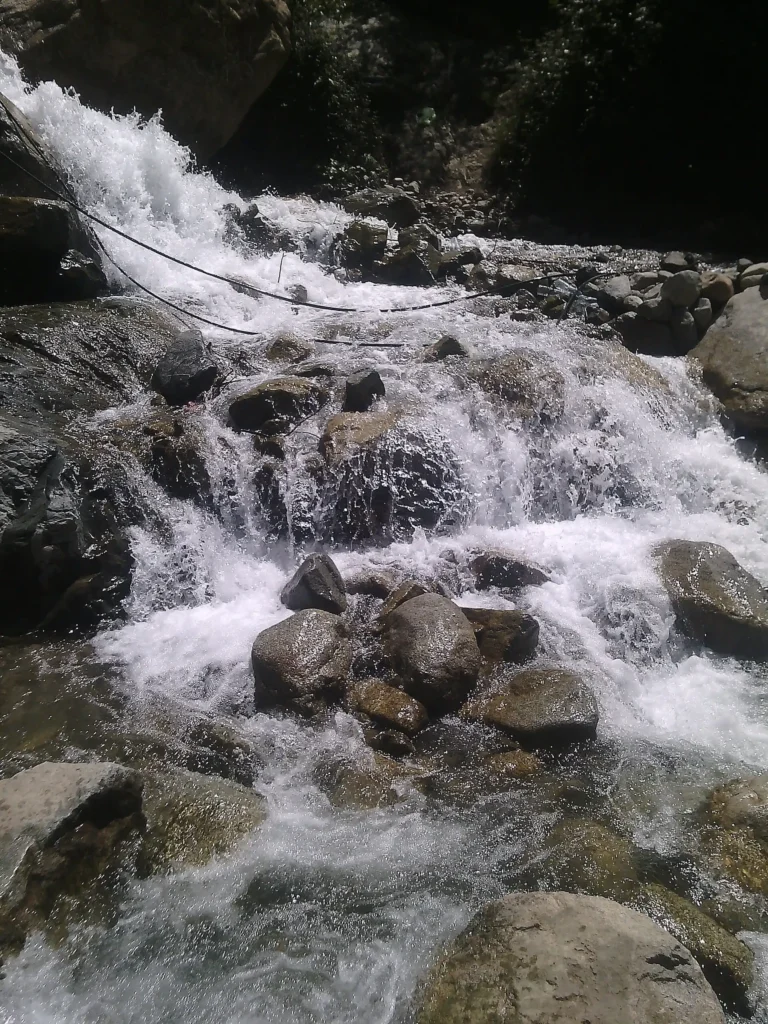
- The Imlil waterfall and the Aït Mizane valley: a gentle walk along the river, through orchards and villages, with lovely viewpoints.
- The village of Aroumd (Around): perched just above Imlil, this Berber hamlet of stone houses offers a superb panorama over the valley and the peaks.
- The Sidi Chamharouch shrine: a pilgrimage site on the path to Toubkal, reachable in a few hours’ walk for those who want a taste of the high-altitude atmosphere without climbing to the summit.
- Panoramic passes and viewpoints: several trails climb to ridges offering 360° views over the range, with the help of a local guide.
For a successful day out, set off early from Marrakech, bring water, a hat and good shoes, and plan for lunch in one of the village guesthouses. Even on a simple hike, the altitude and the elevation gain make themselves felt: pace yourself accordingly.
Climbing Toubkal: route, refuge and the 2-day trek
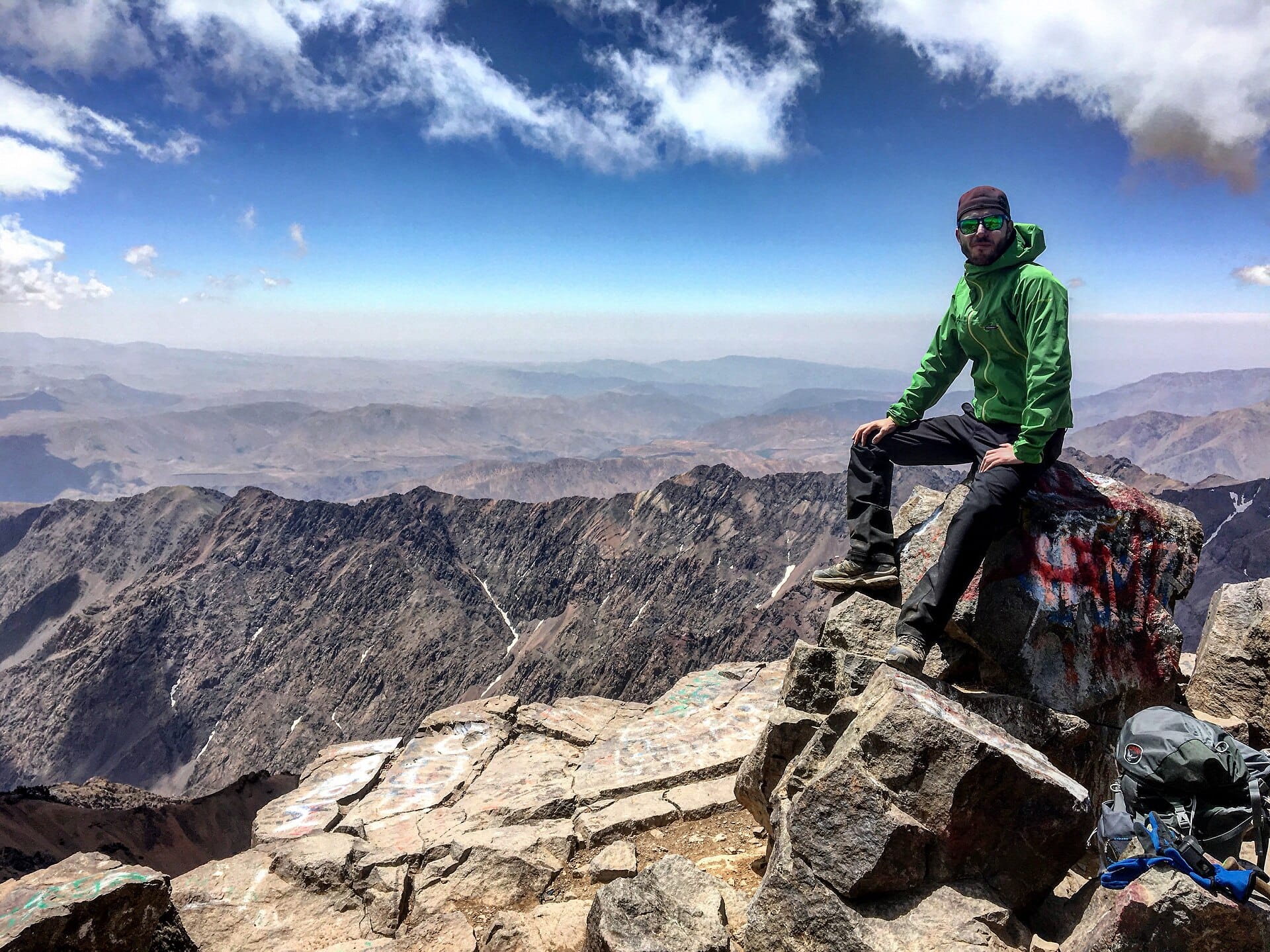
Climbing Toubkal is the goal of many travellers who make their way up to Imlil. Rising to 4,167 metres, Jbel Toubkal is the highest point in North Africa and a legendary summit, described in detail on the Wikipedia page for Toubkal. Although it presents no technical mountaineering difficulty in summer, it does demand good physical fitness, acclimatisation to altitude and serious planning.
The classic route unfolds over two days:
- Day 1: the climb from Imlil (~1,740 m) to the Toubkal refuge (~3,200 m), passing through Sidi Chamharouch. Allow roughly 5 to 6 hours of walking with significant elevation gain. Overnight at the refuge.
- Day 2: a very early start (often before dawn) to reach the 4,167 m summit, then the descent back to the refuge and finally the return to Imlil. The summit is usually reached in 3 to 4 hours from the refuge.
The Toubkal refuge, at around 3,200 metres, serves as a high-altitude camp: you sleep, eat and rest there before the final push. Places are limited in high season, so it is advisable to book ahead through an agency or your guide. The park you cross is Toubkal National Park, a protected area that must be treated with the utmost respect.
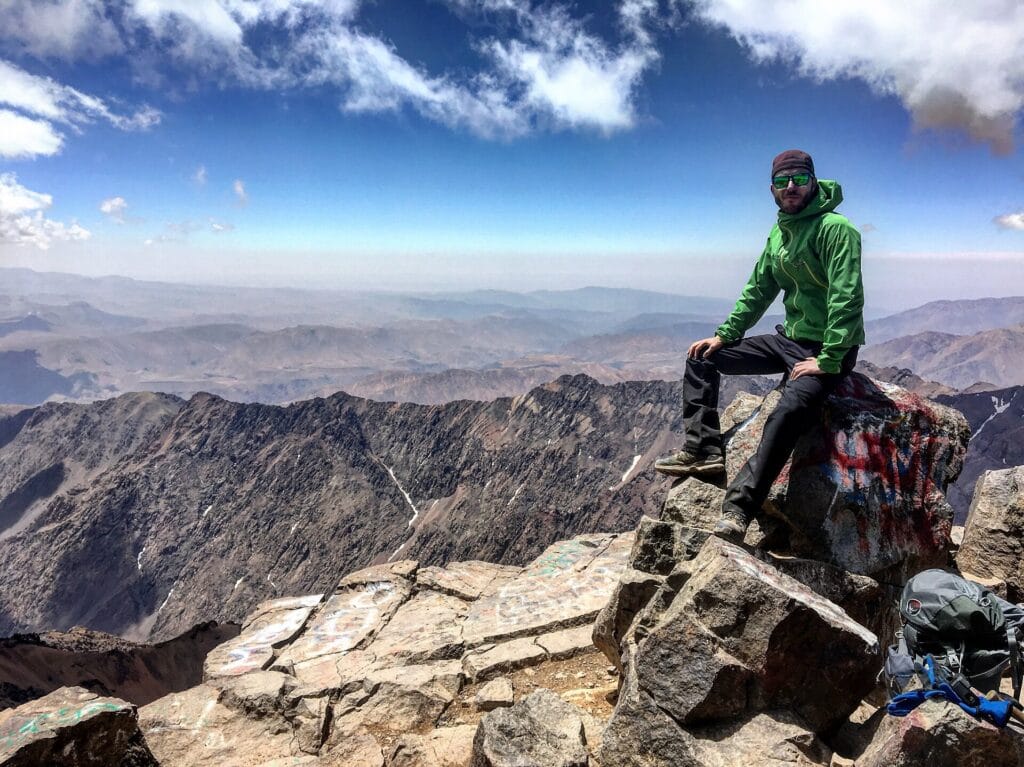
The pre-dawn start on the second day is a special moment. You leave the refuge by headlamp, in the cold and the dark, to make your way slowly up the scree slopes that lead to the summit. The aim is to reach the highest point early in the morning, before the clouds or the wind pick up, and to enjoy a panorama that stretches, on a clear day, all the way to the southern plains and the edges of the Sahara. The reward at the top of Jbel Toubkal, marked by a metal pyramid, matches the effort: a 360° view over the whole of the High Atlas. Be aware, though, that reaching the summit is never guaranteed: the weather, your form on the day or the altitude can force you to turn back, and a good guide will know how to make that call at the right moment.
Some hikers choose to spread the adventure over three days rather than two, adding an extra night to acclimatise better to the altitude or to explore other valleys and passes in the range. This gentler option reduces fatigue and appreciably increases the chances of reaching the summit in good conditions, while leaving time to savour the wild beauty of the national park.
Guide, mule and mountain safety
Safety is the absolute priority in the High Atlas. For the Toubkal climb in particular, hiring a qualified mountain guide is strongly recommended, and often required. A local guide knows the route, the weather, the signs of acute mountain sickness and how to act if a problem arises. They also enrich your experience by sharing their knowledge of the villages, the wildlife and Berber culture.
- Qualified guide: choose an official guide, experienced on Toubkal, able to handle the changeable weather and the altitude.
- Mule and muleteer: mules can carry the bags up to the refuge, which lightens the walk considerably and supports the local economy.
- Pace and hydration: climb slowly, drink regularly and listen to your body; headaches, nausea or unusual fatigue are signals not to ignore.
- Weather: in the mountains, conditions change fast. A clear sky can turn to storm or fog within hours; giving up on the summit is part of mountain wisdom.
Never attempt Toubkal alone and unprepared, especially in winter. The mountain is earned, but it does not forgive carelessness.
When to go to Imlil? Seasons and snow
Imlil can be visited year-round, but each season has its own character. The choice depends on your goal: simply exploring the valley or climbing the summit.
- Spring (April-June): the ideal period, with green valleys, blossoming orchards and pleasant temperatures. The high ground may still be snow-covered.
- Summer (July-August): high season for climbing Toubkal, when the snow has melted from the trails. It is hot in the valley but cool at altitude; it is also a welcome escape from the heat of Marrakech.
- Autumn (September-October): splendid light, thinner crowds and still-favourable conditions for walking and for the summit.
- Winter (December-March): the mountains are blanketed in snow. Toubkal becomes a winter climb requiring crampons, an ice axe and experience on snow; reserved for seasoned, well-supervised hikers.
To plan your trip around the regional climate, see our guide on the best time to visit Marrakech, which will help you combine city and mountains in the best possible conditions.
Gear and preparation: altitude matters
Good preparation makes all the difference, especially for the Toubkal climb where you go above 4,000 metres. At that altitude, the air is thinner and the effort more intense than on the plains. Here is the basic gear to plan for a two-day trek:
- High-cut hiking boots, already broken in, with good soles.
- Layered clothing: a technical t-shirt, a fleece, a windproof jacket and a waterproof; it is cold at the summit even in summer.
- A hat, gloves, sunglasses and high-protection sunscreen.
- A light backpack, a water bottle or hydration bladder, and energy snacks.
- A headlamp for the pre-dawn start towards the summit.
- In winter: crampons and an ice axe are essential, under the supervision of a guide.
As for altitude, climb gradually and stay well hydrated. If you are coming up quickly from sea level, allow time to acclimatise. If symptoms of altitude sickness persist, the only reliable response is to descend.
Berber villages and High Atlas culture
Beyond the peaks, the Imlil High Atlas is first and foremost a human encounter. The villages of the valley are home to Amazigh (Berber) communities who live to the rhythm of mountain farming: terraced crops, walnuts, apples, livestock. Their hospitality is legendary, symbolised by the famous mint tea shared without measure.
As you wander through Imlil or Aroumd, you will come across houses of stone and pisé, craft workshops, weekly markets (souks) in nearby villages such as Asni, and landscapes shaped by centuries of farming. Staying here also means supporting a local economy that lives on responsible tourism: guides, muleteers, family-run guesthouses and cooperatives. Adopt a respectful attitude, ask before photographing residents, and give preference to local accommodation and services.
Food is an integral part of the experience. In the guesthouses, you will often be served a tagine slow-cooked with vegetables from the valley, a comforting harira after the walk, bread baked in a traditional oven and, of course, the essential mint tea poured from a height. These simple meals, prepared with seasonal produce, take on a special flavour after a day of effort at altitude. Taking the time to share a meal with a Berber family is often the most memorable part of a stay in Imlil, far beyond the scenery.
Where to stay in Imlil?
Imlil offers a good range of accommodation to suit every budget, from a simple guesthouse to a more comfortable guest lodge. Spending at least one night here lets you enjoy the calm of the mountains, the cool night air and an early start for your hikes.
- Trekkers’ lodges and village refuges: simple and welcoming, often run by Berber families, with home-cooked meals.
- Guesthouses and small lodges: more comfort, panoramic terraces and carefully prepared local cuisine.
- Toubkal refuge: for those making the climb, the high-altitude stop at ~3,200 m before the summit.
If you prefer to base yourself in the city, our guide on where to stay in Marrakech will help you choose a comfortable base for your mountain excursions.
Imlil as a day trip or a trek: which to choose?
It all depends on how much time you have and your physical condition. The table below compares the two main options to help you decide.
| Criterion | Day hike | Toubkal trek (2 days) |
|---|---|---|
| Duration | 1 day from Marrakech | 2 days / 1 night minimum |
| Altitude reached | ~1,740 to 2,300 m (valleys, villages) | Up to 4,167 m (summit) |
| Difficulty | Easy to moderate | Demanding, endurance required |
| Guide | Recommended | Strongly recommended / required |
| Who is it for? | Families, casual walkers, a free day | Fit hikers, summit enthusiasts |
| Gear | Walking shoes, water | Full mountain kit (+ crampons/ice axe in winter) |
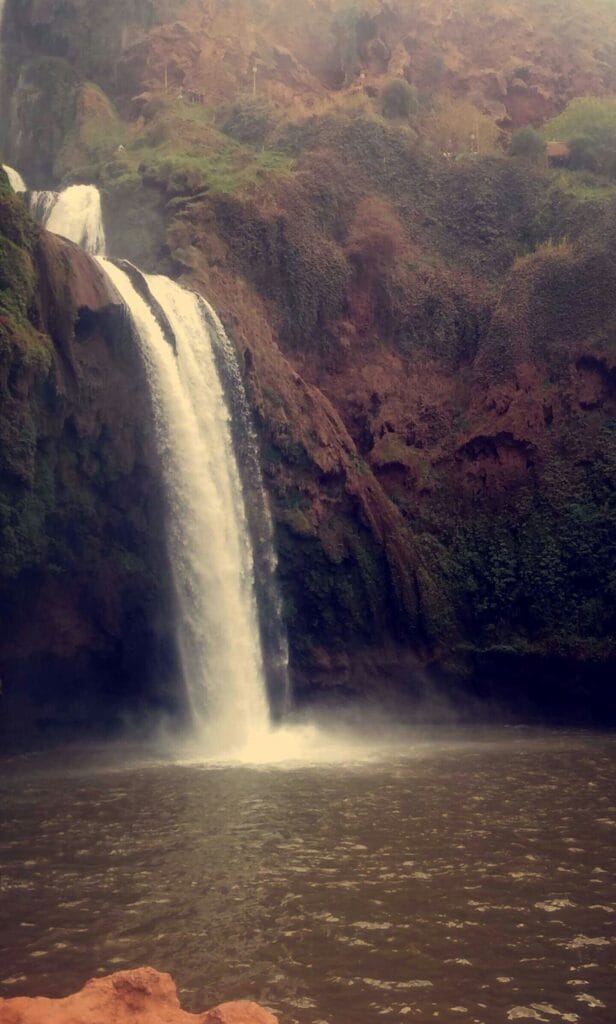
If you are short on time or training, a day in Imlil already gives you a magnificent glimpse of the High Atlas. If the summit calls, book two days and good supervision. You can also compare it with other nature escapes around the city, such as the Ouzoud waterfalls or the Agafay desert, to put together a varied trip.
Practical tips and respect for the mountains
- Set off early: the morning light is the loveliest and you avoid the afternoon heat or storms.
- Carry cash: ATMs are rare in the mountains; keep some cash on hand for guesthouses, guides and muleteers.
- Leave no trace: carry out everything you carry in and respect the national park regulations.
- Dress modestly: in the villages, respectful attire is appreciated.
- Check the weather before you leave and adjust, or even cancel, if conditions are unfavourable.
- Support local: guides, accommodation and artisans of the valley depend on responsible tourism.
To place Imlil within a wider itinerary, our complete guide to things to do in Marrakech and our dedicated page on Aït Benhaddou from Marrakech will help you balance culture, city and wide-open spaces.
Frequently asked questions
How far is Imlil from Marrakech?
Imlil is about 60 to 70 km south of Marrakech, roughly 1.5 hours by mountain road. It is the closest village to Toubkal reachable by car.
Can you visit Imlil on a single day from Marrakech?
Yes. A day trip lets you discover the village, the valleys and the surrounding Berber hamlets on easy to moderate hikes, with no technical gear.
Do you need a guide to climb Toubkal?
A qualified mountain guide is strongly recommended, and often required, for the Toubkal climb. They manage the route, the weather, the altitude and safety, especially in winter.
How long does it take to climb Toubkal?
The classic route takes two days: the climb from Imlil to the refuge (~3,200 m) on the first day, then the ascent to the 4,167 m summit and the descent on the second day.
What is the best time for the climb?
From late spring to autumn (roughly May to October), when the snow has melted from the trails. In winter, Toubkal becomes a snow climb that demands crampons, an ice axe and experience.
Is Toubkal difficult to climb?
In summer, it presents no technical mountaineering difficulty, but the altitude, the elevation gain and the duration demand good physical fitness and acclimatisation. In winter, the difficulty increases markedly.
Disclaimer: the prices, durations and difficulty levels mentioned are given for indicative purposes and may vary depending on the season, the providers and mountain conditions; always check up-to-date information before setting off. Mountain safety depends on suitable supervision (a guide), favourable weather and good altitude management. This article is informational and written independently; it does not constitute personalised advice.
Conclusion
Imlil and Toubkal from Marrakech promise a great breath of fresh air just 1.5 hours from the Red City. Whether you dream of a simple day among the Berber villages and valleys of the High Atlas, or of climbing the highest peak in North Africa, this corner of the mountains offers an adventure to match your ambitions. The key to a successful experience comes down to three words: preparation, respect and safety. Choose the right season, surround yourself with a competent guide for the heights, and let yourself be carried by Berber hospitality. Toubkal awaits, but it is often the journey, more than the summit, that leaves the strongest memories.
Images under free licence via Wikimedia Commons: © Mounir Neddi (CC BY-SA 4.0); © Buckerfing (CC BY-SA 4.0); © Imad.kastalani (CC BY-SA 4.0). Sources: UNESCO and Wikipedia.