Marrakech with kids is a great idea for a first trip to Morocco with children: the city is welcoming, sunny for much of the year, bursting with colour and discovery, and it offers plenty of accommodation with pools, lush gardens and activities that delight young and old alike. The main challenge isn’t safety but logistics: the medina is noisy, dense and ill-suited to strollers, the summer heat is intense, and you’ll need to adapt the pace to the children. With a little organisation, a baby carrier, a good riad and a few simple precautions (sun, water, heat), Marrakech makes for a memorable family stay, between horse-drawn carriage rides, gardens, camels and escapes into the Atlas. Here is our complete and realistic guide to visiting Marrakech with children.
In brief
- Family-friendly: yes, Marrakech is safe and warm with children; the difficulty is mainly logistical (crowds, heat, stroller in the medina).
- Activities kids love: horse-drawn carriage, Majorelle Garden, Menara gardens, camel ride in the Palmeraie, tree-top adventure at Terres d’Amanar, a day by the pool.
- Easy day trips: the Ourika Valley (waterfalls, ~1 hour’s drive) and the Agafay desert (camel ride, sunset, ~45 minutes).
- Where to stay: a quiet family riad in the medina, or a hotel with a pool in Hivernage / the Palmeraie for more space.
- Best time to go: spring (March–May) and autumn (September–October); avoid July–August (heat) with young children.
- Key precautions: bottled water, sunscreen, hats, hydration, a baby carrier rather than a stroller in the medina.
Marrakech with children: is it a good idea?
The answer is clearly yes. Morocco, and Marrakech in particular, is a destination that is very welcoming to families: children are doted on, often spoken to, offered a smile or a glass of tea, and travelling with young children often makes it easier to connect with locals. The city is generally safe: the main nuisances reported by travellers are commercial hassling and a few classic scams (fake guides, inflated prices), nothing that genuinely endangers an attentive family.
The real challenge of Marrakech with kids lies elsewhere: it’s a sensory, intense city. The medina is a lively maze where pedestrians, motorbikes, carts and carriages all move about; the souks are dense and noisy; Jemaa el-Fna square teems with people and performances. For very young children, this buzz can tire or overwhelm them. The heat, in summer, also complicates the days. The good news: all of this is very manageable by adapting the pace, choosing quiet accommodation with a pool and alternating city sightseeing with moments of relaxation. To plan your itinerary, take a look at our complete guide to things to do in Marrakech.
In short: Marrakech suits all ages, from babies to teenagers, as long as you don’t try to do everything, plan for breaks and keep the children well hydrated and protected from the sun.
What to do in Marrakech with children?
Marrakech is full of activities that appeal to children without wearing them out. The idea is to mix cultural discoveries, nature and play.
The horse-drawn carriage is almost a must for families. These horse-drawn carriages let you tour the ramparts, reach the Menara gardens or the Majorelle Garden without walking, and children love riding in them. The carriages wait notably on Jemaa el-Fna square, on the west side. Always negotiate the price before getting in (typically around 150 to 200 dirhams per hour, indicative price, to be agreed) and check that the horses appear well cared for.
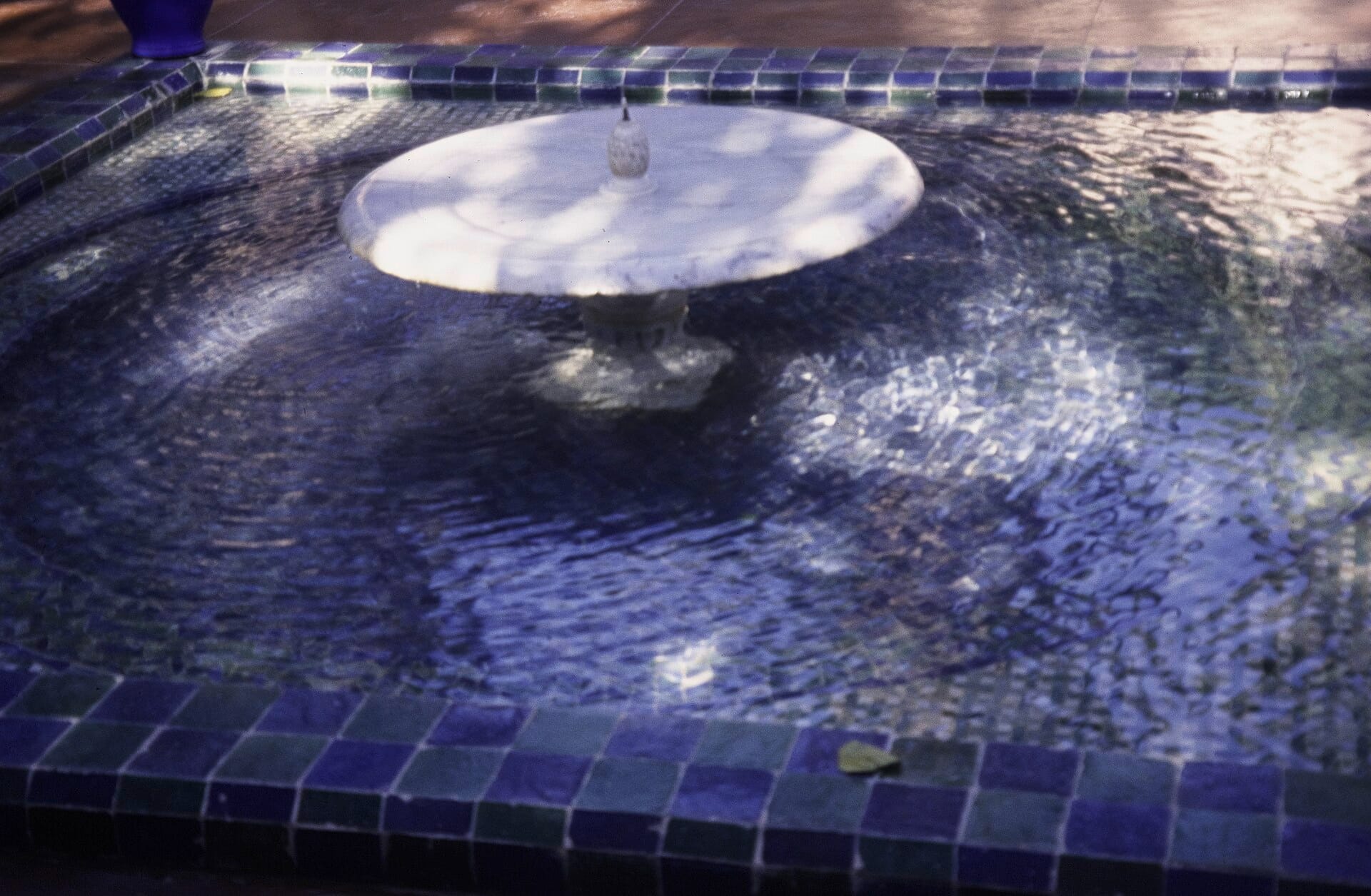
The Majorelle Garden is a delight for little ones: electric blue, giant cacti, bamboo, koi carp ponds and shady paths. It’s a bubble of coolness in the heart of the city. Try to arrive right at opening (around 8–9 am) to avoid the crowds and the heat. As a guide, admission is around 170 dirhams for an adult and 95 dirhams for a child over 10 (younger children are often free; indicative prices, to be checked on site). Details and tips in our complete guide to the Majorelle Garden and its Wikipedia entry.
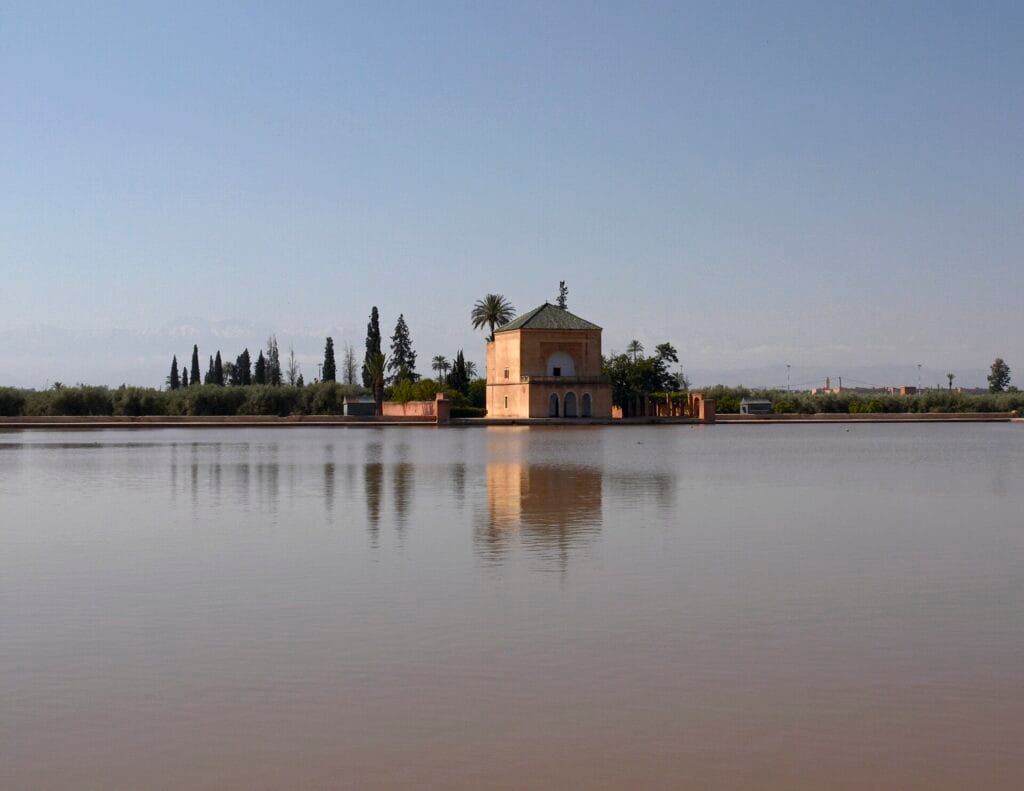
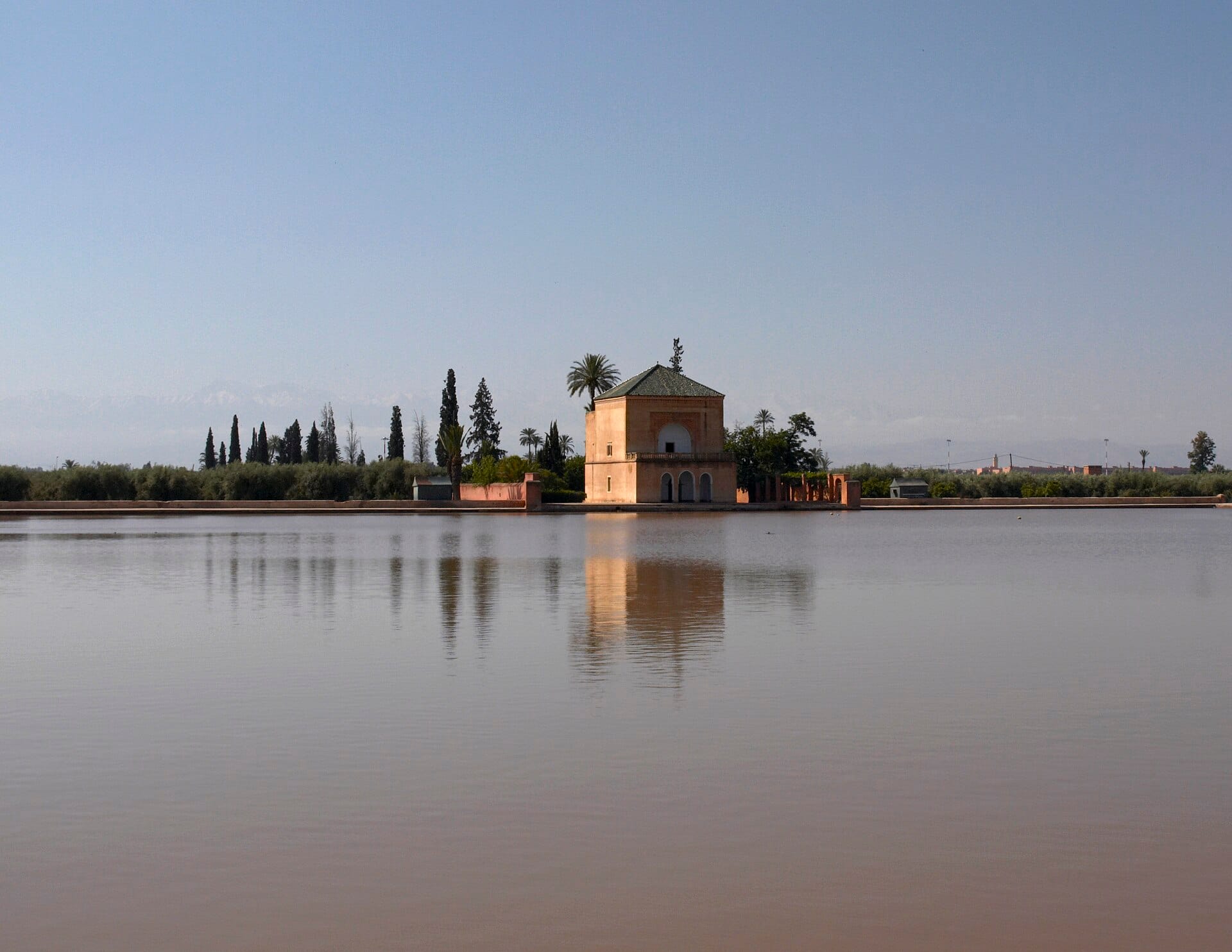
The Menara gardens, with their large basin and pavilion facing the Atlas, offer a vast space where children can run around freely, away from the crush. It’s a popular spot for Marrakech families in the late afternoon. See our dedicated page on the Menara gardens.
A camel ride in the Palmeraie is a great classic that children adore. Just a few minutes from the centre, you wander the palm-tree lanes at the camel’s gentle pace, often with a tea break. The rides are short (30 minutes to 1 hour), ideal for young children. More information on our Palmeraie of Marrakech page.
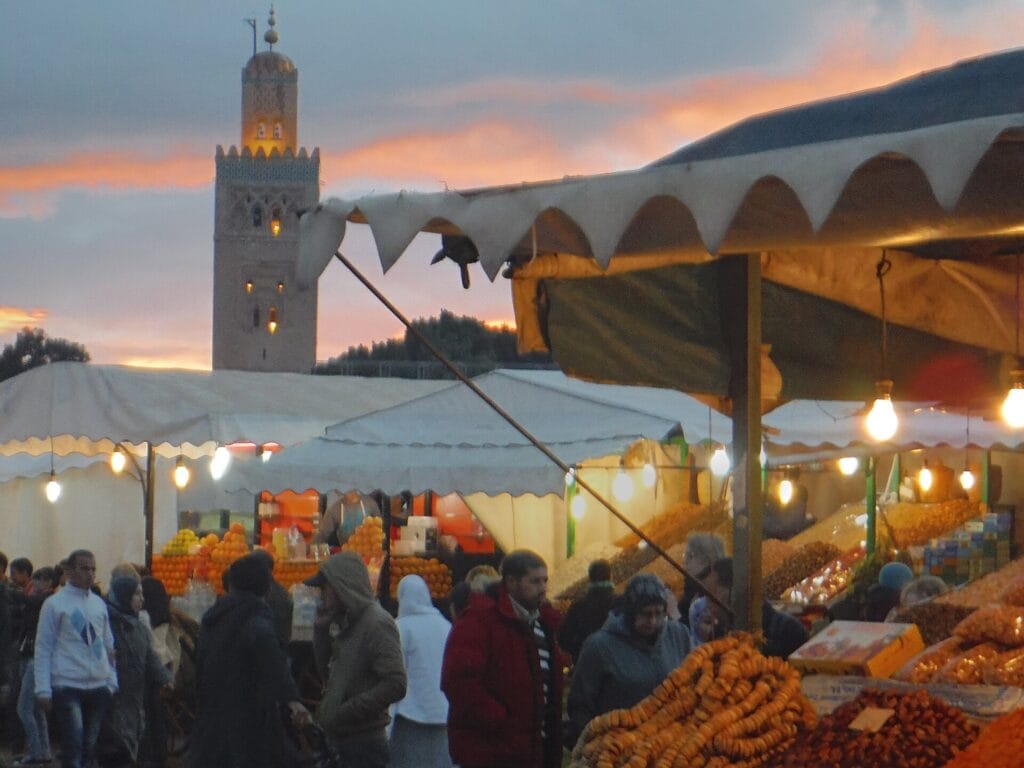
Jemaa el-Fna square during the day is discovered more calmly than in the evening: colourful water sellers, snake charmers, monkeys (which you may choose not to encourage for ethical reasons), stalls of fresh orange juice. In the evening, the square transforms into a huge street stage with storytellers, musicians and open-air cooking: a fascinating spectacle, but noisy and packed — to be dosed according to the children’s age and watched closely.
Tree-top adventure and nature activities at Terres d’Amanar, about 35–40 minutes from Marrakech at the foot of the Atlas, make for a superb family day: ropes courses through the trees, ziplines, archery, an educational farm and hikes. The courses are accessible from age 3–4 (with an area specially designed for the youngest), while older children enjoy more impressive ziplines. Budget, as a guide, from 150 to 400 dirhams per person depending on the activities chosen (indicative price).
A pool day or “day pass” is an excellent way to escape the heat. Many hotels and beach clubs in the Palmeraie offer day access with a pool and lunch. For families staying in a riad without a large pool, it’s a welcome break, especially between midday and 4 pm when the sun is beating down.
Easy family day trips around Marrakech
Marrakech is an ideal base for short escapes that offer a change of scene and delight children.
The Ourika Valley, about 1 hour’s drive to the south-east, offers a refreshing contrast to the city: a river, Berber villages, greenery and above all the famous Setti Fatma waterfalls. You can picnic with your feet in the water, discover rural life and, for older children, start the climb up to the waterfalls (the trail rises and becomes rocky — bring good shoes and be ready to turn back if it’s too difficult with young children). It’s a perfect nature outing when it’s hot in the city. See our guide to the Ourika Valley.
The Agafay desert, just 40–45 minutes away, offers spectacular stony-desert landscapes without hours of driving toward the great dunes. There you can go on camel rides, watch the sunset, and many camps offer family lunch or dinner in a magical setting. It’s the easy “wow” excursion to organise with children. Details on our Agafay desert page.
For both these trips, favour an early morning departure, bring water, hats and sunscreen, and keep the day flexible: a successful half-day beats a long expedition that exhausts everyone. Long distances (Merzouga, Ouarzazate), on the other hand, are not recommended with very young children because of the long hours on winding roads.
Where to stay in Marrakech with the family?
The choice of accommodation makes all the difference for a successful family stay. Two main options are available to you.
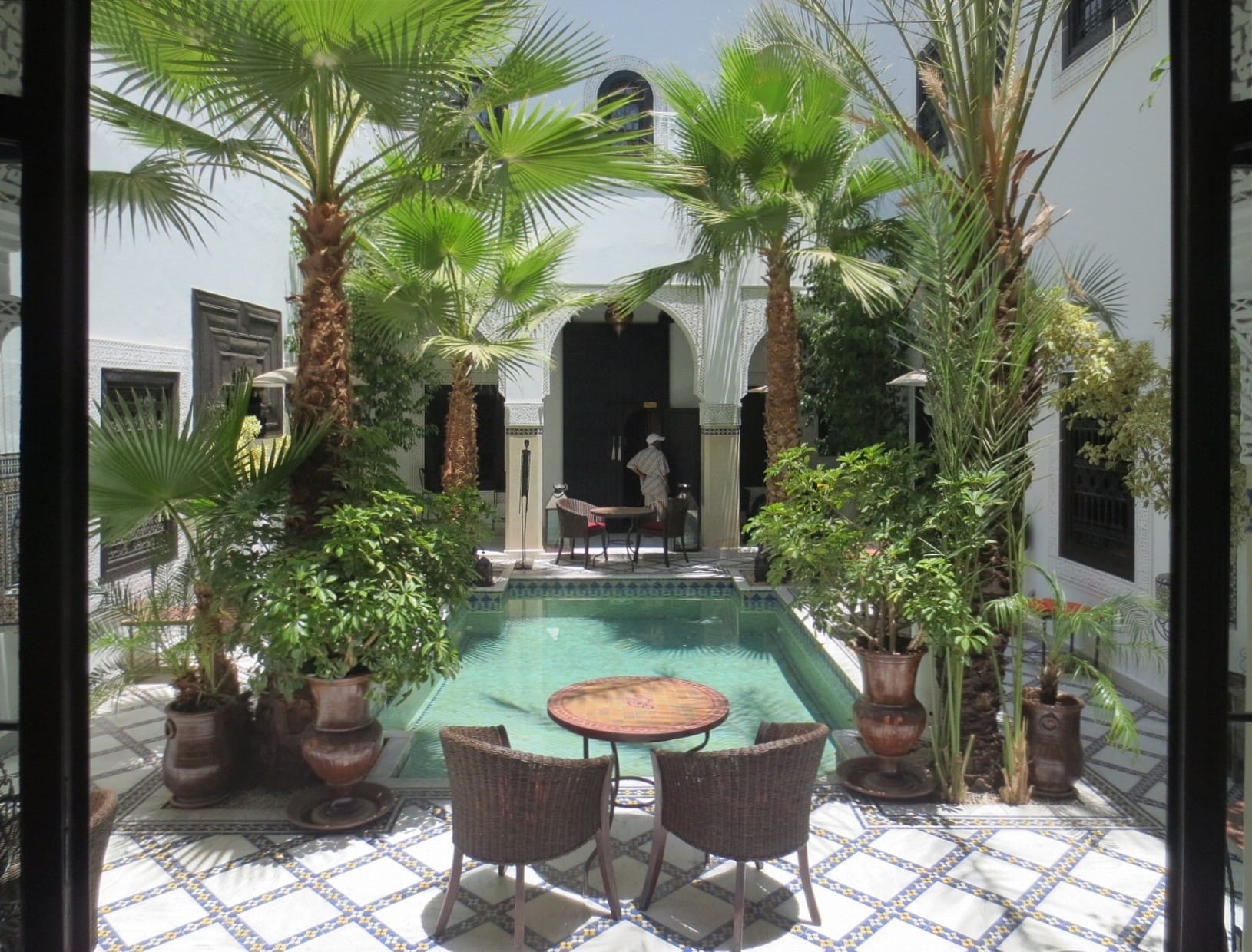
The family riad in the medina. A riad is a traditional house arranged around a central patio, often with a small pool or basin and a rooftop terrace. The atmosphere is intimate, the welcome personal, and many riads offer family or connecting rooms as well as home-cooked meals. Children love the “fairy-tale” atmosphere. The downside: access is on foot through sometimes narrow alleys (difficult with a big stroller and a lot of luggage), and space remains limited. Choose a riad in a quiet part of the medina and ask how close it is to a square accessible by taxi.
The hotel or residence with a pool. In the Hivernage, Guéliz or Palmeraie neighbourhoods, you’ll find large hotels with pools, green spaces, kids’ clubs and sometimes spacious family rooms. It’s the comfort option par excellence: more room to run around, a large pool to cool off in, easy access by car and often family-friendly service. In return, you lose a little of the charm and authenticity of the medina, and you’re further from the historic sites.
Many families combine the two: a few nights in a riad for the experience, then a hotel with a pool to rest. To compare neighbourhoods and refine your choice, see our guide on where to stay in Marrakech.
Where to eat in Marrakech with children?
Moroccan cuisine is fairly easy to get children to love. Chicken tagine with potatoes and carrots, couscous, grilled skewers, pasta and fresh bread are generally big hits. The fresh orange juices of Jemaa el-Fna square, Moroccan pancakes (msemen, baghrir) and fruit make excellent snacks. Flavours are mild by default: the spicy heat (harissa) is served on the side.
For a relaxed family meal, favour restaurants with a terrace or patio, quieter than a street stall. Rooftops overlooking the square or the medina delight children while keeping parents at ease. In Guéliz (the new town), you’ll also find more “international” cafés and restaurants with high chairs and familiar menus, useful when you need a safe bet. On the hygiene front, prefer busy places where food is cooked to order, wash fruit or peel it, and be wary of raw salads washed with tap water. Find our recommendations and tips in the guide on where to eat in Marrakech.
Getting around safely and managing the medina with a stroller
Getting around Marrakech as a family takes a bit of method. In the medina, you move on foot: the alleys are cobbled, uneven, often packed and shared with motorbikes and carts. This is where the famous stroller question comes up. Our clear advice: forget the big stroller in the medina and go for a baby carrier (or a light, foldable umbrella stroller). A classic stroller quickly gets stuck on thresholds, steps, crowds and uneven surfaces, and you end up spending your time lifting it. A baby carrier keeps your hands free, secures the child in the crush and lets you keep pace with the alleys.
For longer trips (to Guéliz, the Palmeraie, the gardens or the airport), use the beige petit taxis. Insist on the meter or negotiate the price before setting off. Note: taxis generally don’t have a car seat — if you’re travelling with a toddler, consider booking a private transfer with a child seat, or holding the child firmly on an adult’s lap for short trips. Horse-drawn carriages can also serve as a fun mode of transport. Avoid driving yourself in the medina (it’s forbidden and impractical) and beware of the dense traffic around the square. Always hold children by the hand near busy thoroughfares. To recognise and avoid the classic pitfalls, read our article on safety and scams in Marrakech.
Health, heat and safety: the essential precautions
A few simple precautions are enough for a worry-free stay with children.
- Water: drink only bottled water (sealed), including for brushing younger children’s teeth. Avoid ice cubes of unknown origin and raw vegetables washed with tap water.
- Heat: in summer, temperatures easily exceed 38–40 °C. Schedule sightseeing early in the morning and in the late afternoon, reserve the middle of the day for the pool or a nap, and don’t overload the programme.
- Sun: high-protection sunscreen reapplied regularly, wide-brimmed hats, sunglasses and light covering clothes. The Marrakech sun is deceptive, even in spring.
- Hydration: offer children drinks very regularly, before they ask; always carry a water bottle or bottles.
- Stomach: pack a small kit (oral rehydration solution, weight-appropriate paracetamol, plasters, antiseptic, a gentle repellent). Traveller’s diarrhoea is best prevented mainly through hand hygiene and careful eating.
- Animals: avoid contact with stray cats and dogs as well as with the monkeys on the square, to prevent scratches and bites.
Marrakech has well-stocked pharmacies and good-quality private clinics. Check that your travel insurance covers children and bring a copy of their vaccination record. No specific vaccine is required for a standard tourist stay, but ask your doctor for advice before departure, especially with infants.
What is the best time to visit Marrakech with the family?
The climate strongly shapes the comfort of a family stay. The best periods are spring (March to May) and autumn (September to October): temperatures are pleasant during the day, evenings mild, and you can string together sightseeing, gardens and day trips without suffering from the heat. These are the ideal windows with young children.
Summer (July–August) is very hot, often above 40 °C: it’s doable if your accommodation has a good pool and you slot activities into early and late in the day, but it’s tough on toddlers. Winter (December to February) is mild and sunny during the day but cool in the evening (sometimes close to 5–8 °C): pack warm clothes for the evenings, the upside being less crowded sites. For a detailed month-by-month calendar, see our guide to the best time to visit Marrakech.
A 3-day family itinerary in Marrakech
Here is a realistic programme, designed to go easy on the children while making the most of the essentials. Adapt it to their age and always keep some free time. For a more detailed version, see also our 3-day itinerary in Marrakech.
| Day | Morning | Afternoon | Evening |
|---|---|---|---|
| Day 1: the heart of the city, gently | Majorelle Garden right at opening, then a carriage ride around the ramparts | Back to the riad or hotel, pool and nap (hot hours) | Stroll on Jemaa el-Fna square, orange juice and dinner on a rooftop |
| Day 2: nature and adventure | Early departure for the Ourika Valley (river, villages, waterfalls) OR tree-top adventure at Terres d’Amanar | Picnic or lunch on site, games by the water | Return, relaxing at the riad, a quiet dinner |
| Day 3: gardens, camels and desert | Menara gardens or a camel ride in the Palmeraie | Pool or day pass, rest | Sunset and dinner in the Agafay desert |
This rhythm alternates culture, nature and relaxation, with active mornings and calm afternoons to respect the children’s needs and the heat. If you have a fourth day, add a morning in the souks (with a baby carrier) or a second pool day.
Activities by age: the quick reference
| Activity | Recommended age | Good to know |
|---|---|---|
| Horse-drawn carriage | All ages | Negotiate the price, check the horses’ welfare |
| Majorelle Garden | All ages | Arrive at opening, shady paths, ponds |
| Menara gardens | All ages | Large space to run around, end of the day |
| Camel ride (Palmeraie) | From age 3–4 | Short ride, child held by an adult |
| Tree-top adventure (Terres d’Amanar) | From age 3–4 | Area for the little ones, ziplines for older kids |
| Ourika waterfalls | From age 6–7 for the climb | Rocky trail, good shoes |
| Agafay desert | All ages | Sunset, heat during the day |
| Souks / Jemaa el-Fna in the evening | Rather from age 6 | Crowds and noise, hold children firmly |
Practical tips for a successful family stay
- Travel light and smart: a baby carrier rather than a big stroller, a backpack rather than a wheeled suitcase in the medina.
- Slow the pace: one or two activities a day are enough; children enjoy the pool as much as the monuments.
- Anticipate the hot hours: sightseeing early in the morning, a pool break or nap in the middle of the day, an outing in the late afternoon.
- Cash: keep change for carriages, taxis, juices and small purchases; many medina shops don’t accept cards.
- Landmarks for the children: note the name and location of the riad, keep a photo of the entrance; in the crowd, agree on a meeting point.
- Respect and ethics: ask before photographing people, avoid encouraging the “photo” monkeys and snakes, and dress yourself and the children comfortably and modestly.
- Essential kit: water, sunscreen, hats, wipes, hand sanitiser, snacks and a small first-aid kit always in the bag.
Frequently asked questions
Is Marrakech safe for travelling with children?
Yes. Marrakech is a safe family destination where children are very warmly welcomed. The most common annoyances are commercial hassling and a few scams (fake guides, inflated prices), with no real danger for an attentive family. Hold children by the hand in the crowd and near traffic, and keep an eye on them on Jemaa el-Fna square in the evening.
Can you walk around the medina with a stroller?
It’s difficult. The alleys are cobbled, uneven, packed and shared with motorbikes. A big stroller quickly gets stuck. We strongly recommend a baby carrier, or failing that a light, foldable umbrella stroller, to move around comfortably in the medina and the souks.
What is the best time of year to come as a family?
Spring (March to May) and autumn (September to October) are ideal: pleasant temperatures and mild evenings. Avoid July–August if possible with young children because of the intense heat, unless your accommodation has a good pool and you adapt the programme to the cooler hours.
Which day trips can you do with young children?
The Ourika Valley (about 1 hour’s drive, river and waterfalls) and the Agafay desert (40–45 minutes, camel ride and sunset) are the two easiest and most popular day trips. Terres d’Amanar (tree-top adventure, farm, ziplines) also makes for a superb nature day. Avoid the long roads to the great desert (Merzouga) with very young children.
Do children like Moroccan cuisine?
Generally yes. Chicken tagine, couscous, skewers, fresh bread and orange juices are big hits, and the dishes are not spicy by default (the heat is served on the side). Moroccan pancakes and fruit make excellent snacks. Stay vigilant about hygiene: bottled water, well-cooked food, peeled fruit.
Do children need a car seat in taxis?
Marrakech’s petit taxis generally don’t have a car seat. For toddlers, the safest thing is to book a private transfer equipped with a child seat in advance, particularly for the trip to and from the airport. For short city trips, keep the child firmly settled on an adult’s lap, and favour walking or the horse-drawn carriage when possible.
Conclusion
Visiting Marrakech with the family is a rich and accessible adventure, provided you travel at the right pace. The city rewards curious families with a profusion of colours, flavours and encounters, between horse-drawn carriage rides, lush gardens, the camels of the Palmeraie and refreshing escapes to the Ourika or magical ones to Agafay. The only real constraints — heat, medina crowds, stroller logistics — are easily mastered with a baby carrier, good accommodation with a pool, constant hydration and a lightened programme. Choose spring or autumn, keep time for the pool and for breaks, and you’ll give your children a first trip to Morocco they’ll remember for a long time.
Images under free licence via Wikimedia Commons: © Ymblanter (CC BY-SA 4.0); © A. van Achterberg / ASC Leiden (CC BY-SA 4.0); © János Korom (CC BY-SA 2.0). Sources: UNESCO and Wikipedia.moroccoairport.com is an independent travel guide, not affiliated with ONDA or any airport or official authority. Prices, timetables and practical information are given for indicative purposes and may change: check them with the providers and official sources before you travel.