Back from Morocco and hunting for the perfect gift for a woman — your wife, your mother, a friend, your partner? Good news: the kingdom is a real Aladdin’s cave for anyone who loves to spoil someone. Between argan oil and natural cosmetics, Berber silver jewellery, embroidered babouches, woven straw bags and a thousand other treasures of local craftsmanship, the choice is enormous. The trick is knowing what to pick, where to buy it at the right price and how to spot a genuine product. Here is our complete guide to the best Moroccan souvenirs for a woman, sorted by theme and by budget, with our tips for getting it right.
In a nutshell: the best Moroccan souvenirs for a woman
- Beauty: argan oil, ghassoul, black soap, rose water — the stars, light to carry and loved by everyone.
- Jewellery: Berber silver, Amazigh fibula, engraved bracelets and earrings.
- Fashion & accessories: kaftan, babouches, scarf, on-trend woven raffia bag.
- Home: leather pouf, ceramics, tea glasses, cushions, engraved mirror.
- Treats: amlou, dates, spices, tea and gazelle horns.
- The ethical extra: buy from a women’s cooperative — a gift that means something.
Natural beauty and cosmetics: the must-haves
If you only remember one category, make it this one. Morocco’s natural cosmetics are famous the world over, easy to pack and always a pleasure to receive. They are the ultimate gift “for a woman”.
Argan oil, Morocco’s liquid gold
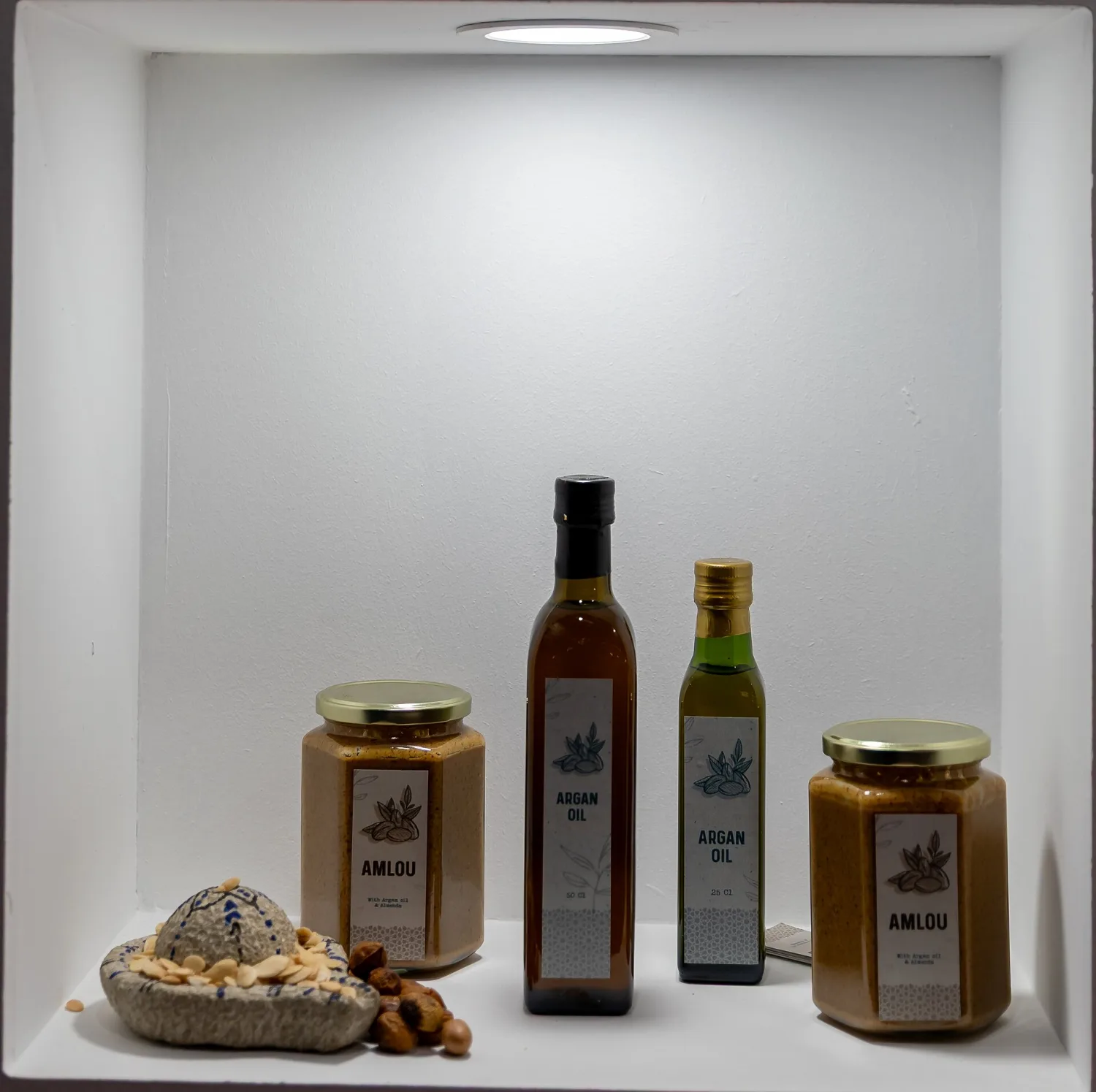
Produced only in the south-west of the country, argan oil is pressed from the fruit of the argan tree, an endemic species whose know-how is inscribed on UNESCO’s Representative List of the Intangible Cultural Heritage of Humanity. There are two kinds: cosmetic oil (for skin, hair and nails) and culinary oil, lightly roasted, with a nutty flavour. For a beauty gift, go for the cosmetic version, ideally cold-pressed and 100% pure. Bought from a cooperative, it is of better quality and supports the work of the region’s women.
Ghassoul, the cleansing clay
Ghassoul (or rhassoul) is a mineral clay mined in the Middle Atlas and used for centuries to cleanse skin and hair gently. Sold in slabs or as a powder, it is mixed with water to make a purifying mask. Light, natural and a little offbeat, it makes an authentic souvenir that fans of natural skincare adore.
Black soap and the kessa glove
Inseparable from the hammam ritual, black soap (made from olive oil) is applied to the skin and then rinsed off after an exfoliation with the kessa glove. Give the duo of black soap and glove, perhaps together with a little ghassoul and rose water: you recreate the whole Moroccan hammam ritual at home. A complete, wonderfully exotic gift. To experience the ritual on location, see our guide to hammams and spas in Marrakech.
Rose water and fragrances
Distilled mainly in the famous Valley of the Roses, around Kelaât M’Gouna, rose water is a delicate facial toner with an intoxicating scent. You will also find little bottles of musk and scented oils in the souks. Watch out with liquids in your carry-on, though: it is better to pack them in the hold.
Henna and kohl
Henna, to dye hair or create temporary patterns on the skin, and kohl, the traditional eye make-up, round out the oriental beauty kit. They are inexpensive, typical souvenirs that slip easily into a suitcase.
Berber jewellery: the sparkle of silver
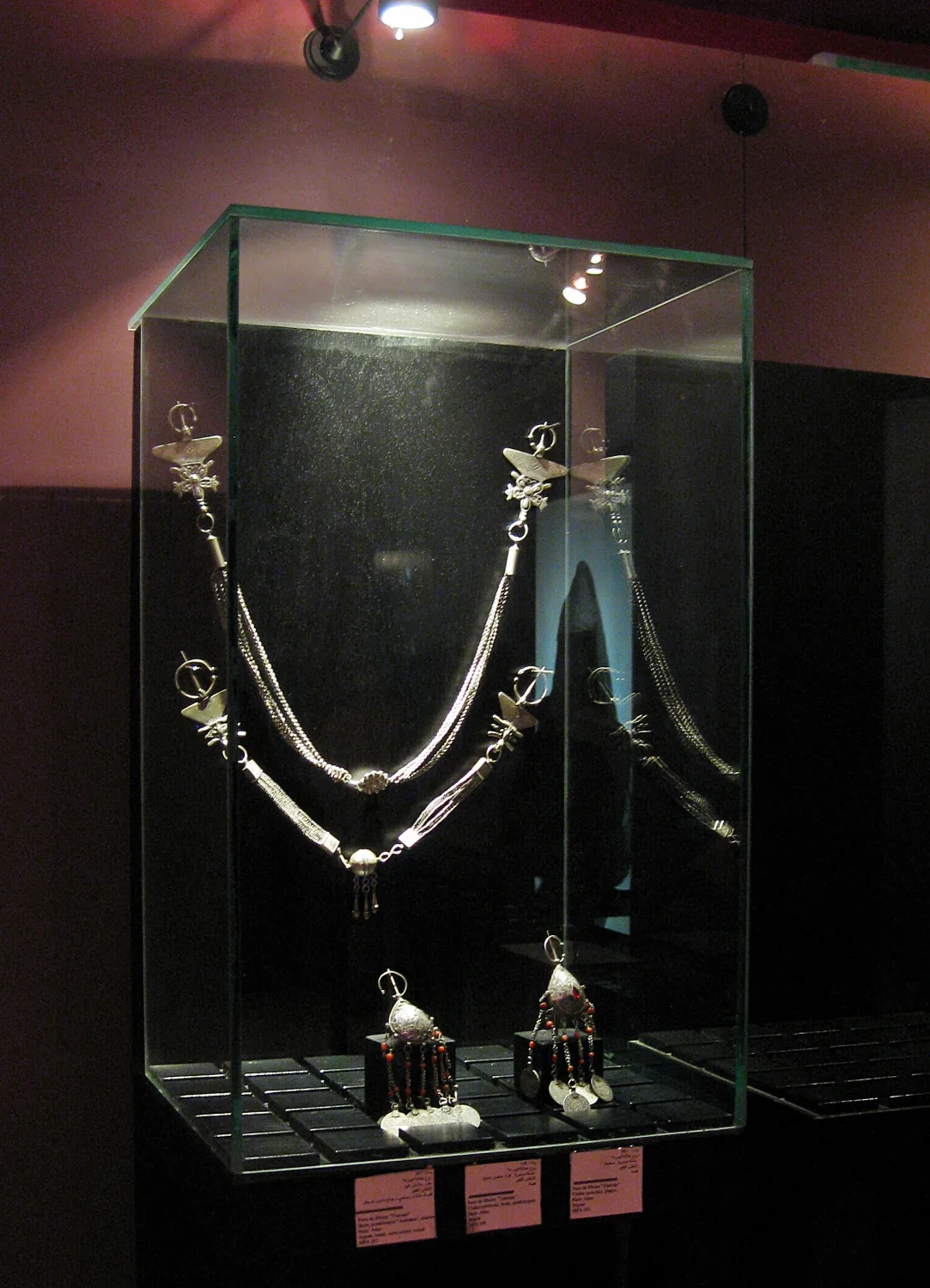
Morocco has a long tradition of jewellery-making, especially in the south, where the town of Tiznit is renowned for its silverwork. Amazigh (Berber) jewellery charms with its geometric patterns, protective symbols and one-of-a-kind character.
- The fibula, that traditional triangular brooch once used to fasten garments and now worn as a pendant or as decoration.
- Bracelets and cuffs in engraved or enamelled silver.
- Necklaces set with coral, amber or antique beads.
- Earrings and rings with Berber motifs.
For a quality piece, check for the hallmark attesting to the silver content and favour well-regarded jewellers. It is an elegant, lasting gift, full of meaning.
Fashion and accessories: Moroccan elegance
The kaftan and the djellaba
An emblem of Moroccan elegance, the kaftan is a long ceremonial gown, embroidered and sometimes trimmed with gold thread. There are modern versions that are easier to wear day to day, as well as the djellaba, loose and comfortable. A finely made kaftan is a prestigious gift; expect a very wide price range depending on the embroidery and the fabric.
Embroidered babouches
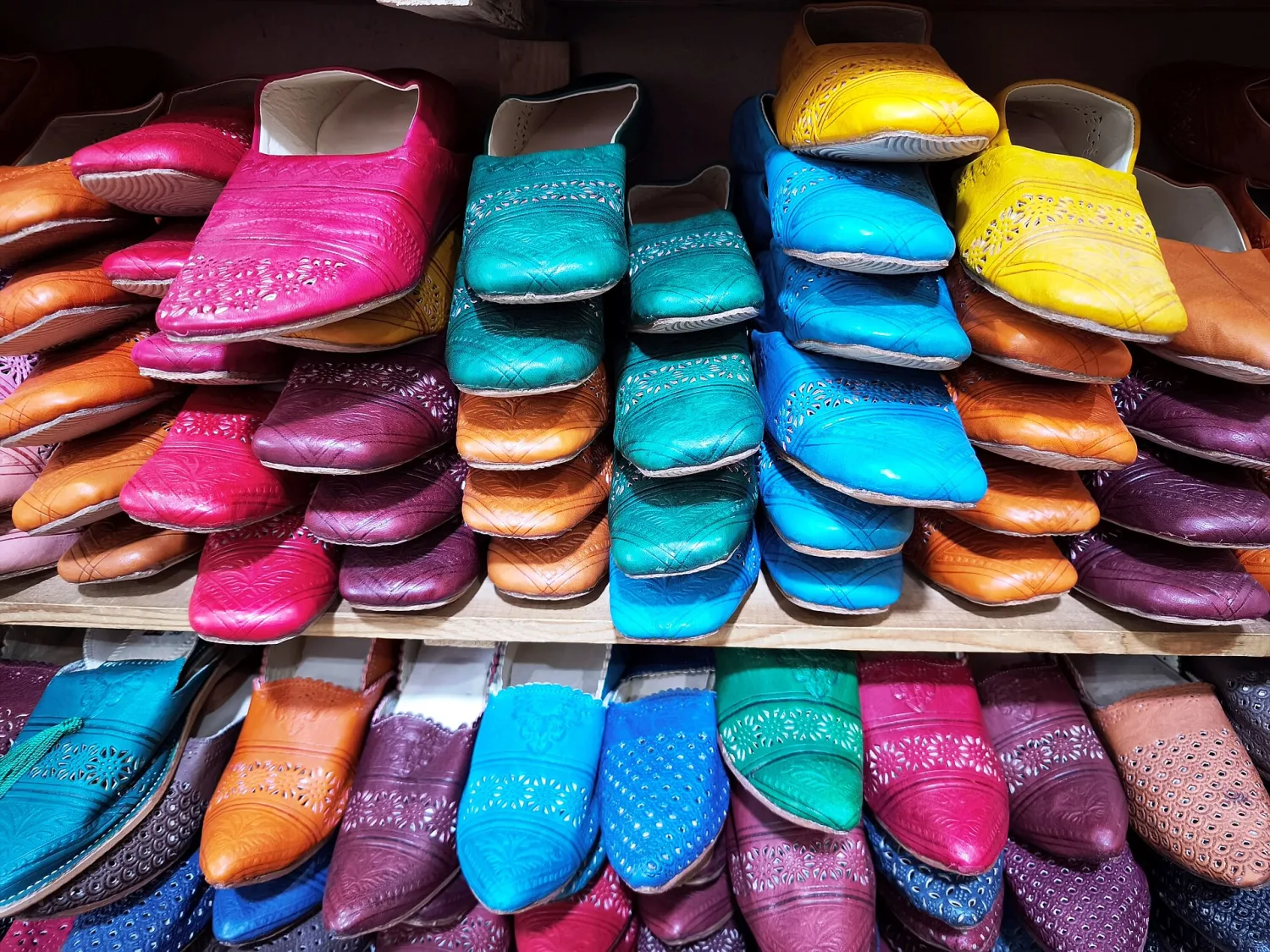
Soft leather slippers in vivid colours, babouches are a great classic. For a woman, you will find gorgeous models embroidered with beads or sequins. Light and barely taking up space, they tuck easily into a suitcase and come in a thousand shades.
The raffia bag and scarves
Now a genuine fashion trend, hand-woven straw and raffia bags, often decorated with colourful pompoms, are perfect for summer. Add a scarf or a wrap in silk or light cotton and you are giving an accessory that is both practical and stylish, and much sought-after.
Moroccan leather: bags and leather goods
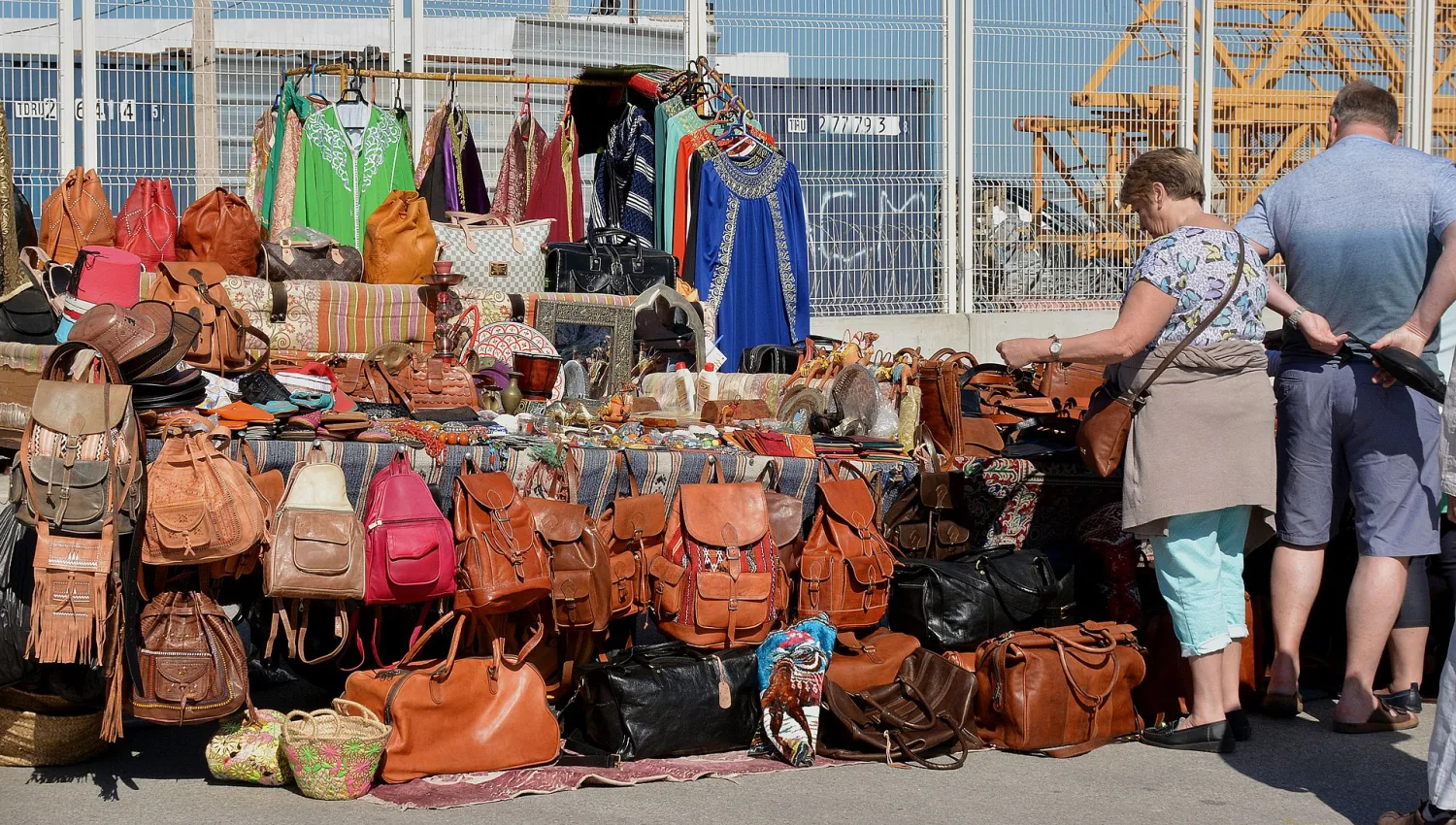
Morocco, and Fez in particular with its famous tanneries, is renowned for its leatherwork. For a woman, leather goods make wonderful gifts: a handbag, a clutch, a wallet, a belt or a lovely tote in soft leather. Natural tones and hand-stitched finishes make each piece unique, often at far gentler prices than in Europe. Check the suppleness and the smell of the leather — real tanned leather gives off a distinctive natural scent — and examine the stitching. A Fez leather bag is a gift that is practical, elegant and durable all at once, one that will stay with its lucky owner for years.
Décor and home: a piece of Morocco at home
For a woman who loves decorating her home, Moroccan craftsmanship offers magnificent pieces that bring warmth to any room.
- The embroidered leather pouf, brought back deflated to save space in your suitcase.
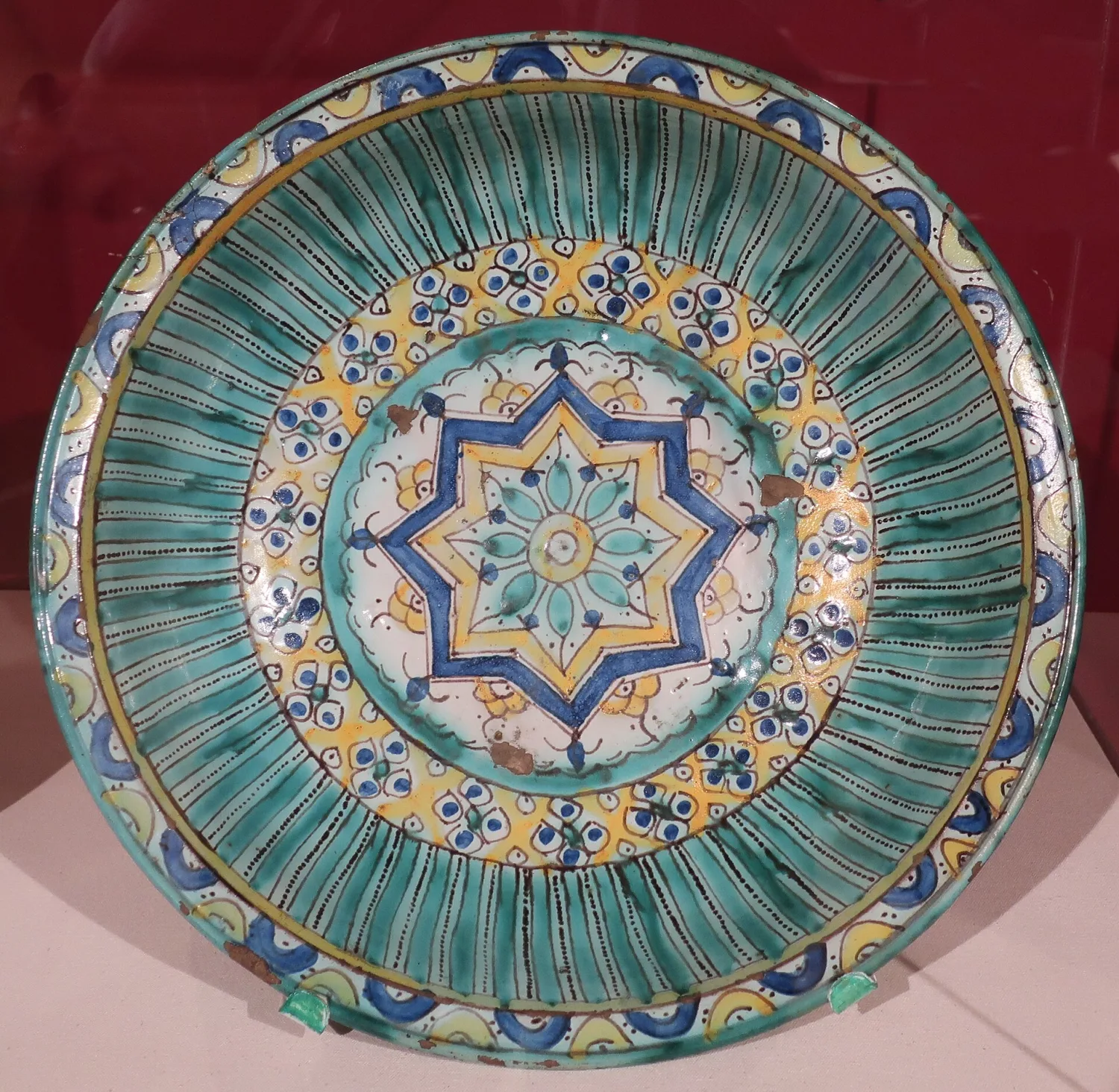
- Ceramics and hand-painted tableware (decorative tagines, dishes, bowls) from Fez or Safi.
- Gilded tea glasses and the engraved metal teapot, to recreate the mint tea ceremony.
- Cushions and throws, including the famous handira, the sequin-adorned Berber wedding blanket.
- The engraved metal mirror and the openwork lanterns that cast lovely shadows.
- A small Berber rug or kilim, if space allows.
Treats and sweets to share
A gift you can eat is always a hit. Morocco brims with flavours to bring home:
- Amlou, that delicious spread made from almonds, honey and argan oil, nicknamed “Moroccan Nutella”.
- Soft dates, notably the Medjool variety, best picked at the end of the year.
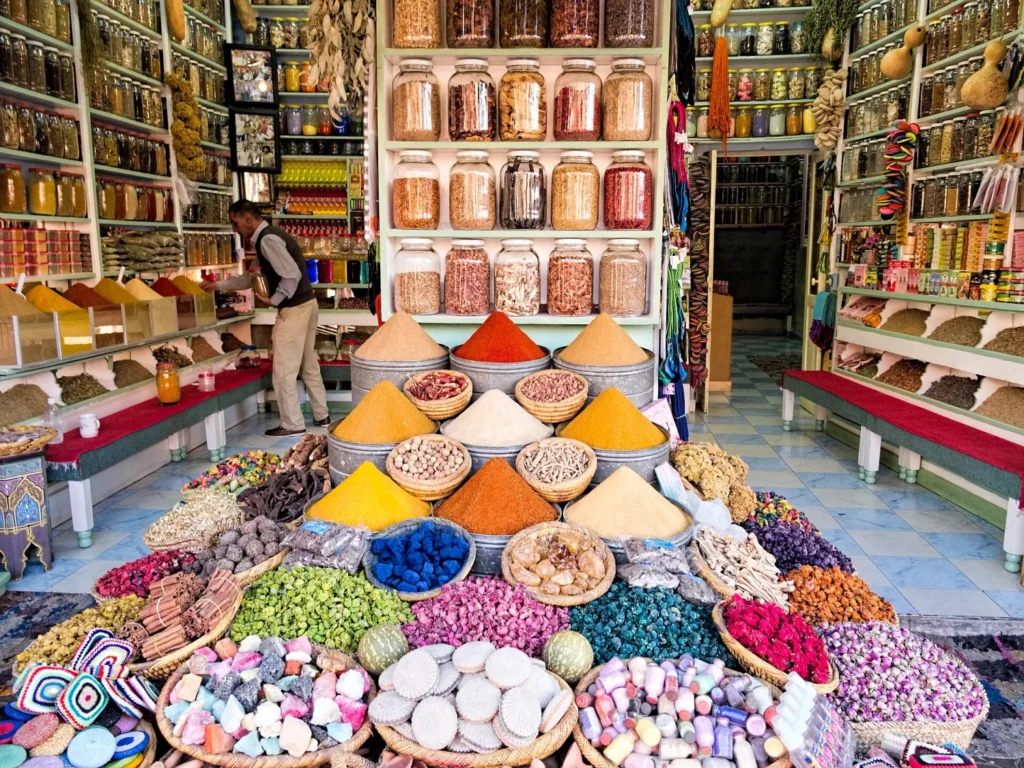
- Spices (ras el-hanout, saffron, cumin) and tea blends.
- Mint green tea and gazelle horns, the almond pastries.
Check your country’s rules on importing food and go for packaged, sealed products so you can clear customs without a hitch.
Gift ideas by budget
- Small budget: black soap, ghassoul, henna, spices, a small scarf, tea glasses, simple babouches.
- Mid-range budget: a bottle of cooperative argan oil, a raffia bag, a silver piece of jewellery, a leather pouf, ceramics.
- Prestige gift: an embroidered kaftan, a set of antique Berber jewellery, a beautiful rug or handira, a complete tea service.
Spotlight on Berber rugs and weavings
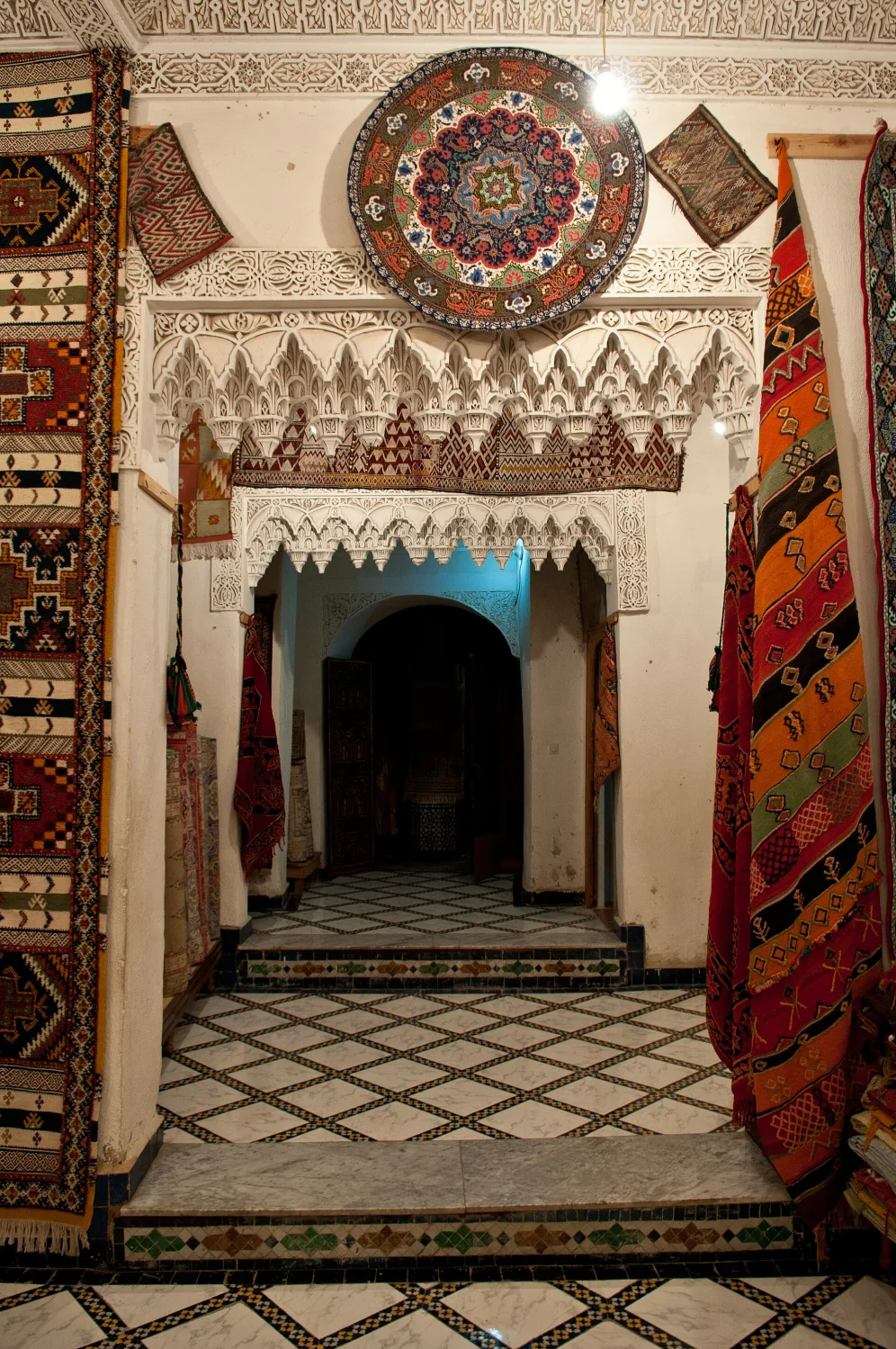
If your budget and your suitcase allow, a Berber rug is arguably the finest decorative souvenir to bring back from Morocco. Hand-woven by tribal women, each of these rugs tells a story through its patterns. There are several great families: the Beni Ouarain, thick and cream-coloured with black diamonds, hugely popular in contemporary interiors; the kilim, flat and colourful; the Azilal, with free, vivid motifs; or the boucherouite, made from recycled fabric scraps, cheap and bursting with cheer. To choose well, feel the material (real wool is soft and warm), ask about the origin and do not hesitate to visit a weaving cooperative, where they will explain the meaning of the patterns. It is an exceptional, one-of-a-kind gift that will last for years.
How much do souvenirs cost? (guide prices)
Prices vary enormously depending on quality, location and your bargaining skills. As a purely indicative guide, to give you some bearings before you haggle:
- Black soap, ghassoul, henna, spices: just a few dozen dirhams, very affordable gifts.
- Babouches, a simple scarf, tea glasses: from small to moderate sums, perfect for multiple gifts.
- Cosmetic argan oil from a cooperative, a raffia bag, ceramics: a mid-range budget, for a gift with real style.
- Silver jewellery, a leather pouf, saffron: depending on the piece, a reasonable investment for a lovely present.
- An embroidered kaftan, a rug, a full tea service: the prestige gifts, whose price climbs with the finesse of the work.
Always keep some cash on hand for the souks, where cards are not accepted everywhere, and leave some spare room in your suitcase.
Which souvenir suits her personality?
The best gift is the one that looks like the person receiving it. Here is a little guide to hit the mark, depending on what she loves:
- The beauty lover: a “hammam ritual” set (argan oil, ghassoul, black soap, kessa glove, rose water). A concentrate of natural skincare.
- The foodie who loves to cook: saffron from Taliouine, a jar of amlou, an assortment of spices and a lovely tea service.
- The fashion lover: a raffia bag with pompoms, a silk scarf, beautiful embroidered babouches or a modern kaftan.
- The interior decorator: painted ceramics, a leather pouf, an openwork lantern or a handira cushion.
- The minimalist: a single piece of Berber silver jewellery, clean-lined and unique, beats ten trinkets.
- The ethically minded traveller: cosmetics bought from a women’s cooperative, raw and fair.
And don’t forget the thuya wood box, an inlaid speciality of Essaouira: it makes a magnificent case… and a gift in its own right.
Where to buy and how to choose well
Where you buy makes all the difference, both on price and on quality. Here are our pointers:
- The souks for the atmosphere, the choice and the fun of haggling — see our guide to the souks of Marrakech.
- The women’s argan cooperatives (the Souss region, between Agadir and Essaouira) for authentic oil and a fair-trade purchase.
- The artisan complexes and state-run shops, with fixed prices, to compare reference rates without bargaining.
- The rug and ceramic cooperatives for quality pieces with a certificate.
As for bargaining, the golden rule: stay friendly, open with a price well below, compare several stalls and never feel obliged to buy. To go further, our guides on what to bring back from Morocco and what to bring back from Marrakech spell out even more ideas and good addresses.
Spotting a genuine product
- Argan oil: real cosmetic oil is cold-pressed, 100% pure, with a faint smell; be wary of diluted blends and prices that are too low.
- Silver: look for the hallmark; a piece that is too light and too shiny may be an alloy.
- Leather: a natural smell and careful finishes give away genuine tanned leather.
- Rugs: ask about the origin, the material (real wool) and, if possible, a certificate.
Transport and customs: bringing your souvenirs home worry-free
A few precautions will spare you nasty surprises on the way back. Pack liquids (oils, rose water, perfumes) and fragile items (ceramics, tea glasses) in the hold, well protected. Poufs travel deflated. Remember to leave a weight margin in your suitcase and check your country’s import rules (food products, leather, quantities). To prepare your departure with peace of mind, see our guides on entry formalities and customs in Morocco and on Marrakech-Menara airport. One last budget tip: plan your purchases so you don’t blow your travel budget.
The gift with meaning: women’s cooperatives
Giving a Moroccan souvenir “for a woman” means even more when it comes from a women’s cooperative. In the argan-tree region, thousands of women have banded together to produce and sell argan oil under better conditions, gain independence and pass on their know-how. Buying your bottle of oil, your amlou or your cosmetics directly from these cooperatives means giving a doubly precious gift: lovely to receive, and useful to the women who make it. A simple gesture that turns a mere souvenir into a story worth telling. To find the cooperatives and official craftsmanship, the Moroccan national tourism office (visitmorocco.com) lists many addresses.
The art of giving: presenting your gift beautifully
In Morocco, the way you give matters almost as much as the gift itself. To elevate your souvenir, play the presentation card: wrap it in a beautiful scarf — which then becomes a second gift — or slip it into a delicately inlaid thuya wood box from Essaouira. A ribbon, a dried sprig, a small card explaining the object’s origin and meaning (argan oil from a cooperative, the symbol of the hand of Fatima…), and your gift takes on an extra dimension. This little touch turns a simple souvenir into a personal, memorable present, especially when it is meant for a woman who is dear to you.
The hand of Fatima and the symbolism of souvenirs
Many Moroccan souvenirs carry a symbolic charge that makes them even more moving to give. The most famous is the hand of Fatima (or khamsa), that stylised hand said to bring luck and ward off the evil eye. You find it as a pendant, a bracelet, on doors, mirrors and decorative objects. The Berber motifs engraved on jewellery and rugs also tell a story: fertility, protection, belonging to a tribe. Giving an object adorned with these symbols means passing on a wish for happiness as much as a beautiful object — an especially appreciated touch when choosing a gift for a woman who matters.
Taliouine saffron, the precious spice
Among the treats, saffron deserves a special mention. Grown notably around Taliouine, in the Anti-Atlas, Moroccan saffron is prized for its quality. Sold as threads (not powder, which is easier to adulterate), it is the most expensive spice in the world: a tiny sachet is enough to make a refined gift, light and precious, that will delight women who love to cook. Buy it preferably from a cooperative or a specialist house, and be wary of prices that are too low, often a sign of blending.
Mistakes to avoid when buying souvenirs
- Diluted argan oil: a ridiculously low price often hides a blend with an ordinary oil. Buy from a cooperative and smell the product.
- Fake saffron: go for whole threads; cheap powder is frequently cut.
- Buying too heavy: rugs, ceramics and poufs quickly weigh down a suitcase. Think about weight and fragility before you fall for something.
- Bargaining without looking at quality: getting a good price on a mediocre object is no bargain. Check the material and the finishes first.
- Buying everything in one place: compare several stalls, the price gaps are sometimes enormous.
FAQ — Moroccan souvenirs for a woman
What is the best Moroccan souvenir to give a woman?
Cosmetic argan oil comes out on top: universal, light, high-quality and full of meaning when it comes from a cooperative. Berber silver jewellery and a lovely raffia bag are safe bets too.
How much does a good bottle of argan oil cost?
Prices vary with the volume and the point of sale. At a cooperative, pure cosmetic oil is a little dearer than a diluted souk product, but the quality and authenticity are there. Be wary of abnormally low prices.
Can you bring cosmetics and liquids on the plane?
Yes, but pack liquids over 100 ml in your checked baggage. In the cabin, only containers of up to 100 ml, in a transparent bag, are allowed. Protect the bottles well.
Where can you buy authentic souvenirs cheaply?
In the souks for the atmosphere and the haggling, at cooperatives for authenticity, and in the fixed-price artisan complexes for comparison. Buy away from the most touristy areas where you can.
Which light, easy-to-carry souvenir should you choose?
Babouches, a silk scarf, black soap, ghassoul, henna, spices or a piece of jewellery: all light, compact and typical gifts, perfect if your suitcase is already full.
What souvenir suits a woman who loves beauty and self-care?
Put together a “hammam ritual” set: cosmetic argan oil, ghassoul, black soap and a kessa glove, with a bottle of rose water. It is original, natural and always much appreciated.
Is a kaftan a good gift?
Yes, it is a prestigious and very feminine gift, provided you know the person’s size and taste. For everyday wear, go for a modern kaftan or an embroidered tunic, which are easier to wear.
In summary
Choosing a Moroccan souvenir for a woman means being spoilt for choice: natural cosmetics with argan oil, Berber silver jewellery, a kaftan and babouches, raffia bags, warm home décor and delicious treats. The secret to a successful gift comes down to three words: authenticity, quality and meaning. Favour genuine products, bought in the right place — ideally from women’s cooperatives — and you will bring back far more than an object: a piece of Morocco and a beautiful story to give. Happy shopping!
Photo credits
Spice shop in the souks.jpeg — Dan Lundberg (CC BY-SA 2.0) · Argan Oil, Morocco, ITB 2025, Berlin (ITB56681, cropped).jpg — Matti Blume (CC BY-SA 4.0) · 2010-12-14 Morocco Agadir municipal museum exhibition jewelry berber.JPG — Sir James (CC BY 3.0) · Arcobaleno di babouche.jpg — Simo.Albo80 (CC BY-SA 4.0) · Bowl with eight-pointed star, Morocco, Newark Museum.JPG — Wmpearl (CC0) · Carpet shop in Fes (5364459517).jpg — Michal Osmenda from Brussels, Belgium (CC BY-SA 2.0) · Leather goods, Morocco (50600240002).jpg — Mike McBey (CC BY 2.0) — via Wikimedia Commons.