Wondering when to book a flight to Morocco? The short answer: for the lowest fares, aim for the low season (mid-June to late August for inland cities, and the heart of winter outside school holidays), book roughly 6 to 10 weeks ahead for a short-haul flight from Europe, and avoid the spring (March-May) and autumn (September-November) peaks, which offer the best weather but the highest prices. This guide breaks down month-by-month crowds and indicative fares, the impact of European school holidays and Ramadan, how far ahead to book, useful days and times, and alternative-airport tricks to trim the bill.
In brief: when to book a flight to Morocco
- Cheapest: booking a flight to Morocco is often cheapest for departures in low season (July-August inland, January and early February outside holidays).
- Best weather-to-price ratio: late September to early November and late March to early May, avoiding European school-holiday weeks.
- Lead time: around 6 to 10 weeks ahead for a short-haul flight from Europe; 2 to 4 months for summer, holidays and long-haul from North America.
- Watch out for: February half-term, Easter, autumn half-term, Christmas and New Year, and flights around Eid, when prices climb.
- Tip: comparing several departure and arrival airports (Marrakech, Agadir, Fez, Rabat, Tangier) can shift the fare significantly.
Understanding the seasonality of flights to Morocco
Fare prices depend above all on demand, and tourist demand for Morocco follows fairly marked seasons. According to visitor trends reported by the Moroccan National Tourism Office (ONMT), the country sees two main peaks: spring (March to May) and autumn (September to November), when temperatures are mild across almost every region. These are the best times to visit, but also when airlines fill their planes easily and keep fares high.
Conversely, summer (July-August) is very hot inland — Marrakech, Fez, the Draa Valley and the desert can top 40°C — which softens demand for those destinations and often the fares serving them. The coast (Agadir, Essaouira, Tangier) stays tempered by the Atlantic and draws holidaymakers, so flights to Agadir can remain pricey in high summer. Winter is mild in the south (Marrakech, Agadir, desert) but cooler and wetter in the north and at altitude; outside school holidays, it is one of the cheapest windows.
High season, low season and the “shoulders”
- High season (high prices): April-May, September-October, plus holiday periods (Christmas, New Year, Easter) and long weekends.
- Shoulder seasons (good compromise): late March, early June, early November: still pleasant weather, prices easing slightly.
- Low season (low prices): July-August for inland cities, and January to mid-February outside holidays: weaker demand, more frequent deals.
Month-by-month calendar: crowds and indicative fares
The table below summarises the average trend for crowds and flight prices to Morocco by month of travel (not of purchase). These are general indications: real fares vary by airport, airline, lead time and events. Always check in real time on a comparison site.
| Month | Tourist crowds | Flight prices (indicative) | Note |
|---|---|---|---|
| January | Low to medium | Low | Mild in the south; avoid the first week (holidays). |
| February | Medium | Low to medium | Rises during February half-term holidays. |
| March | High | Medium to high | Start of the spring peak; ideal weather. |
| April | Very high | High | Easter + spring: among the priciest. |
| May | Very high | High | Excellent weather, strong demand. |
| June | High | Medium to high | Rising heat inland; coast in demand. |
| July | Medium (inland), high (coast) | Low to medium (inland) | Very hot in Marrakech/Fez; diaspora on holiday. |
| August | Medium (inland), high (coast) | Low to medium (inland) | Peak diaspora returns; coast expensive. |
| September | High | Medium to high | Autumn peak resumes; beautiful light. |
| October | Very high | High | Often the connoisseurs’ favourite month. |
| November | Medium | Medium | End of season; good value in the second half. |
| December | Medium, then very high | Low then very high | Surge for Christmas and New Year. |
How far ahead should you book?
There is no universal magic date, but a sensible window exists for each type of trip. For a short-haul flight from Europe (Paris, London, Brussels, Geneva, Frankfurt…), the most commonly cited range is 6 to 10 weeks before departure: this is when availability is still broad and airlines adjust prices to fill the plane. Booking too early (more than 5-6 months out) gives choice but rarely the best prices; booking last minute is risky, especially in high season when flights fill up.
| Type of trip | Indicative lead time | Why |
|---|---|---|
| Short-haul Europe, low/mid season | 6 to 10 weeks | Good balance of choice and price. |
| Short-haul Europe, high season / holidays | 2 to 4 months | Flights fill fast, prices rise early. |
| Summer (diaspora), high-demand routes | 3 to 5 months | Strong demand from the Moroccan diaspora. |
| Long-haul from North America | 2 to 5 months | Fewer frequencies, connections to optimise. |
| Flexible-date trip | Monitor continuously | Price alerts + “whole month” calendar. |
A practical tip: set up price alerts as soon as your dates firm up, then buy when the fare drops into the range you have spotted, rather than waiting for a hypothetical floor. At a highly competitive airport like Marrakech-Menara, deals appear and vanish quickly.
European school holidays and Ramadan: their impact on prices
Two calendars weigh especially on the price of flights to Morocco: European school holidays and Ramadan.
School holidays push fares up
Morocco is a short, sunny destination, ideal for European families during breaks. Periods to watch: February half-term (France, UK, Germany — spread across several weeks by region/zone), Easter break (March-April), autumn half-term (late October-early November) and above all Christmas-New Year. On these windows, flights to Marrakech and Agadir can double compared with an ordinary week. If your dates are flexible, shifting by a few days to fall outside the holiday week can noticeably cut the cost.
Ramadan: demand, atmosphere and diaspora returns
Ramadan is the month of fasting in the Islamic calendar; its dates move about 11 days earlier each year because it follows the lunar calendar. As a guide, Ramadan 2026 ran roughly from 18 February to 19 March 2026, and Ramadan 2027 is expected to begin around 8 February 2027 — dates confirmed by moon sighting and announced by Morocco’s Ministry of Endowments and Islamic Affairs. Always check the official dates before planning.
For travellers, two effects combine. During the month itself, classic tourist activity tends to dip slightly (a shifted daily rhythm, some restaurants closed during the day), which can coincide with somewhat more affordable flights. However, the days before and after Eid al-Fitr (the end of Ramadan) and Eid al-Adha see a sharp rise in demand, driven by the Moroccan diaspora returning home: flights can become expensive and fill up several weeks ahead. If your trip falls near Eid, book early.
Which days and times for a better price?
The day of the week you travel often affects the price more than the day you buy. As a rule, departing midweek (Tuesday, Wednesday, sometimes Thursday) costs less than Friday or Sunday, which are high-demand days. Likewise, flights very early in the morning or late at night, as well as those with a stopover, are frequently cheaper than direct flights at convenient times.
- Compare several days around your ideal dates using the “calendar” or “whole month” view of comparison sites.
- An outbound on a Tuesday and a return on a Tuesday or Wednesday is often cheaper than a full weekend.
- Direct flights remain the most convenient; only sacrifice one for a stopover if the saving is real and the connection time reasonable.
- Be wary of myths about “the best day to buy”: the gap exists but stays secondary to season and lead time.
Comparison tools: how to use them wisely
No comparison site always shows the best price: their value is a quick overview. To stay neutral and effective, cross-check several sources rather than relying on a single one.
- Flexible search: use the “flexible dates”, “whole month” and “nearby airports” options to spot price dips.
- Alerts: create an alert on your route to be notified of drops.
- Direct check: once a flight is spotted, verify the price on the airline’s official site; it is sometimes the same or better, with simpler after-sales service.
- Baggage and options: compare the “all-in” price (checked bag, seat selection), not just the headline fare, especially on low-cost carriers.
- Private browsing: useful for a neutral fresh search, though its effect on prices is often overstated.
To choose your carrier, our overview of the airlines flying to Morocco details networks, airports served and baggage policies. If you fly from Britain, also see our guide to direct flights to Morocco from the UK.
Alternative-airport trick: play with departure and arrival
Morocco has several international airports, managed by the National Airports Office (ONDA): Casablanca-Mohammed V (the main hub), Marrakech-Menara, Agadir-Al Massira, Fez-Saïss, Rabat-Salé, Tangier-Ibn Battouta, Nador, Oujda and Ouarzazate. Varying the arrival airport often changes the price and the choice.
- On arrival: to visit Marrakech, also compare arriving at Agadir or Casablanca then a land transfer; the flight saving can exceed the transfer cost.
- On departure: in the UK, compare London, Manchester, Birmingham; in France, Paris, Lyon, Marseille; in Germany, Frankfurt, Munich, Düsseldorf. A secondary airport offering low-cost service can make the difference.
- Casablanca as a gateway: the country’s leading hub, often well served, with a direct rail link to the city centre and Rabat.
- Transfers: factor the cost and duration of the transfer into your overall calculation — see our comparison of airport transfers in Morocco.
Finally, match your airport choice to the season. To know which region to favour by month, our guide to the best time to visit Morocco usefully complements this article on booking.
Adapting your strategy to your departure market
The seasonal logic is the same everywhere, but the supply, currencies and holiday habits vary by departure country. Here is how to refine your search by market, while keeping in mind that every fare must be checked in real time.
From France and Belgium
This is one of the best-served markets, with many direct links to Marrakech, Casablanca, Agadir, Fez, Rabat, Tangier, Oujda and Nador, carried by both legacy and low-cost airlines. Strong competition favours deals but also great price volatility: alerts are especially useful here. Because French school holidays are split into three zones, price peaks spread across several weeks in February and spring; check the official calendar to target the dips.
From the United Kingdom
British travellers enjoy numerous links to Marrakech and Agadir, notably from London, Manchester and Birmingham. As fares are in pounds sterling, also watch the £/dirham and £/euro exchange rates for your spending on the ground, though this does not affect the ticket price itself. Half-term periods (February and October) and the Christmas break push fares up; outside these, the British winter drives many travellers towards Moroccan sunshine, sustaining demand.
From the United States and Canada
From North America, supply relies mainly on direct flights to Casablanca and connections via Europe. As frequencies are more limited, plan further ahead (2 to 5 months) and compare connecting itineraries, which can be notably cheaper. Factor in the time difference and fatigue: an overnight flight with a well-timed connection can offer a good price/comfort balance. As fares are in dollars, the $/euro exchange rate can weigh on European segments.
From Germany, Switzerland and Austria
Links depart mainly from Frankfurt, Munich, Düsseldorf and Berlin, with a mix of direct flights and connections. In Germany, school holidays are staggered by federal state, which, as in France, spreads the peaks and leaves cheaper windows for those able to travel outside their own holiday region. The German-speaking market is very keen on Morocco in winter and shoulder season: book early for those periods.
Common mistakes to avoid when booking
Even with good tools, a few habits cost money. Knowing them helps you book your flight to Morocco at the right time and the right price.
- Comparing only one date: without checking neighbouring days, you often miss an easy saving. Always use the “whole month” view.
- Forgetting baggage fees: a very low headline fare can turn expensive once a checked bag is added. Think in final price.
- Waiting for “the” floor: chasing a further drop, you let a good price slip away. Set your target range in advance and buy when it is reached.
- Overlooking the destination airport: aiming at a single airport denies you useful comparisons. Test the alternative arrival + transfer.
- Booking last minute in high season: flights to Marrakech and Agadir fill up; waiting is paid for in high fares and reduced choice.
- Ignoring local public holidays and Eid: they pull demand upwards, especially on routes used by the diaspora.
By combining a good reading of the season, a suitable lead time and these few precautions, you give yourself the best chance of paying a fair price for your ticket.
Frequently asked questions
Which is the cheapest month to fly to Morocco?
On average, January (outside the first week) and the first half of February, plus July-August for inland cities like Marrakech and Fez, are among the cheapest periods, because tourist demand is weaker. Real prices vary by airport and lead time: check on a comparison site.
How far in advance should you book a flight to Morocco?
For a short-haul flight from Europe, a window of 6 to 10 weeks before departure is often cited as a good balance. For summer, holidays or a departure from North America, plan on 2 to 5 months instead. These are ballpark figures, not guarantees.
Should you avoid travelling during Ramadan?
No, Morocco remains welcoming during Ramadan, with a special atmosphere in the evening. The daytime rhythm shifts and some restaurants close during the day. As for flights, the month can be quieter, but the days around Eid are in high demand. Check the official dates announced by the Moroccan authorities.
Which day of the week is cheapest to fly?
Departing midweek (Tuesday or Wednesday) is generally cheaper than Friday or Sunday. The day of travel matters more than the day of purchase. Use the “whole month” view of comparison sites to spot the cheapest days around your dates.
Is it better to book the flight and hotel together?
It depends. A flight + hotel package can lower the total cost, especially in high season, but booking separately offers more flexibility and lets you compare each item precisely. Compare both approaches before deciding.
Do prices really drop at the last minute?
Rarely in a reliable way to Morocco, especially in high season when flights fill up. Late deals sometimes appear in low season, but betting on them is risky. Better to set a price alert and buy within your target range.
Is it cheaper to arrive in Casablanca and continue from there?
Sometimes. Casablanca-Mohammed V is the main hub and may offer more flights, with a convenient rail link. Compare the price of “flight to Casablanca + train/road” with a direct flight to your final destination; the saving is not automatic but worth testing.
Is August a good deal for Marrakech?
On price, often yes, because the intense heat softens classic tourist demand. On comfort, you must cope with temperatures that can exceed 40°C. If the heat does not put you off and you adjust your sightseeing hours, August can offer good fares to inland cities.
In summary
To decide when to book a flight to Morocco, think in seasons first: spring and autumn offer the finest weather but the highest prices, while inland summer and the heart of winter outside holidays are the most economical. Book 6 to 10 weeks ahead for a European short-haul, more for summer, holidays and long-haul. Watch school holidays and the days around Eid, favour midweek departures, set price alerts and compare several departure and arrival airports. This information is subject to change: always confirm fares and dates with official sources and airlines before booking.
Official sources
- Moroccan National Tourism Office (ONMT) — Visit Morocco
- National Airports Office (ONDA) — airports of Morocco
- Royal Air Maroc — the national carrier
- UK FCDO — foreign travel advice, Morocco
Photo credit
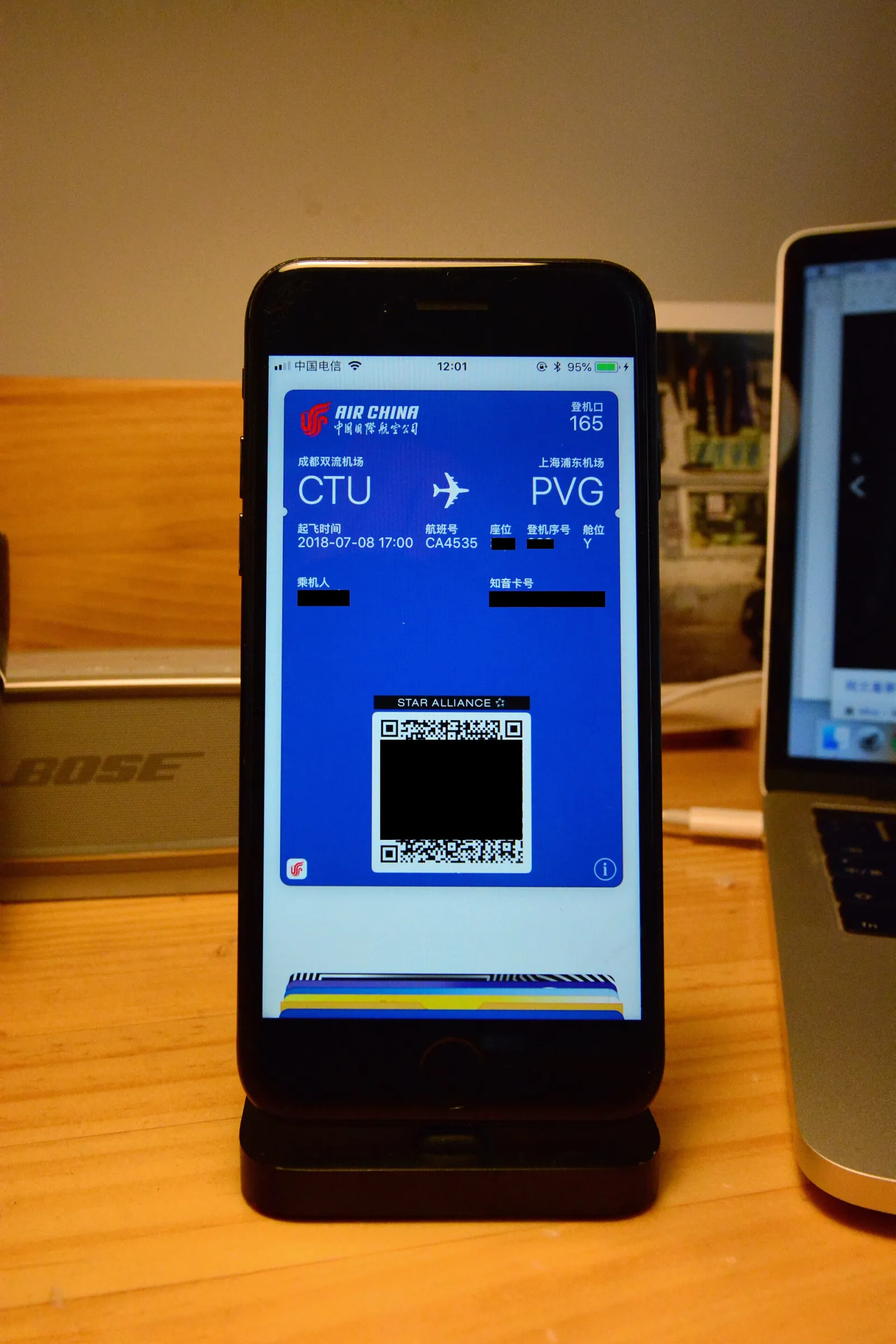
Illustrations : « View from the airplane window » — Armen Barseghyan (CC BY-SA 4.0) ; « Electronic boarding pass on a smartphone » — Diao Zihao (CC BY-SA 4.0), via Wikimedia Commons.