The best time to visit Morocco is spring (March to May) and autumn (September to November): temperatures are mild almost everywhere, the desert is comfortable, and the light is perfect for both the imperial cities and mountain trails. But the “right” season really depends on what you want to do. Morocco doesn’t have one climate, it has several: the Atlantic coast stays temperate year-round, Marrakech and the interior roast in summer, the Atlas Mountains turn snowy in winter, and the Sahara swings from a summer furnace to freezing nights. This guide breaks down the climate region by region, a month-by-month table (temperature, rain, crowds), the best season for your goal, and how Ramadan and major events fit in.
In brief: when to go to Morocco
- Best overall: April-May and September-October-early November (mild climate, accessible desert).
- Imperial cities (Marrakech, Fez, Meknes, Rabat): March to May and October-November.
- Desert / Sahara (Merzouga, Zagora): October to April; avoid July-August (extreme heat, many camps closed).
- Hiking the Atlas (Toubkal): May to October; winter means snow and mountaineering.
- Beach (Atlantic coast, Agadir, Essaouira): June to September, when the interior is too hot.
- Plan around: Ramadan (daytime life slows down) and European school holidays (crowds and higher prices).
- The temperatures given are ballpark figures that vary from year to year: always check the forecast before you go.
Morocco’s climate: one country, several worlds
Understanding the best time to visit Morocco means letting go of the idea of a single “Moroccan climate”. Between the Atlantic Ocean, the Mediterranean, the Atlas ranges and the vast Sahara, the country stacks several climate zones side by side. In one and the same month you can have 20°C on the coast, 30°C in Marrakech, snow on the summit of Toubkal and 35°C in the desert. Here are the five main regions and what sets them apart.
The Atlantic coast (Casablanca, Rabat, Essaouira, Agadir)
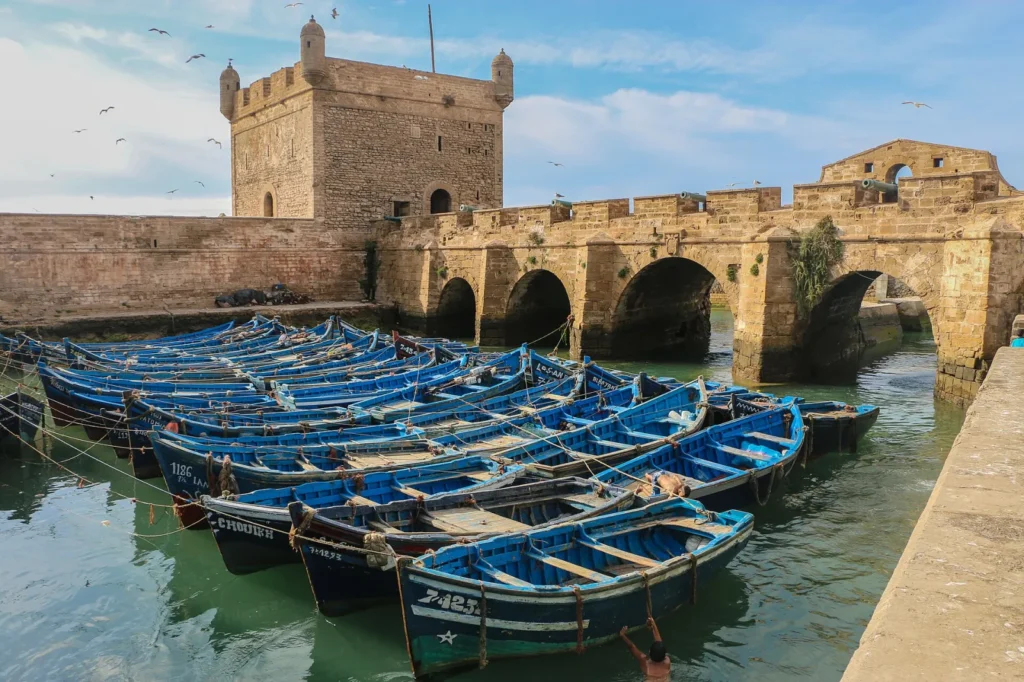
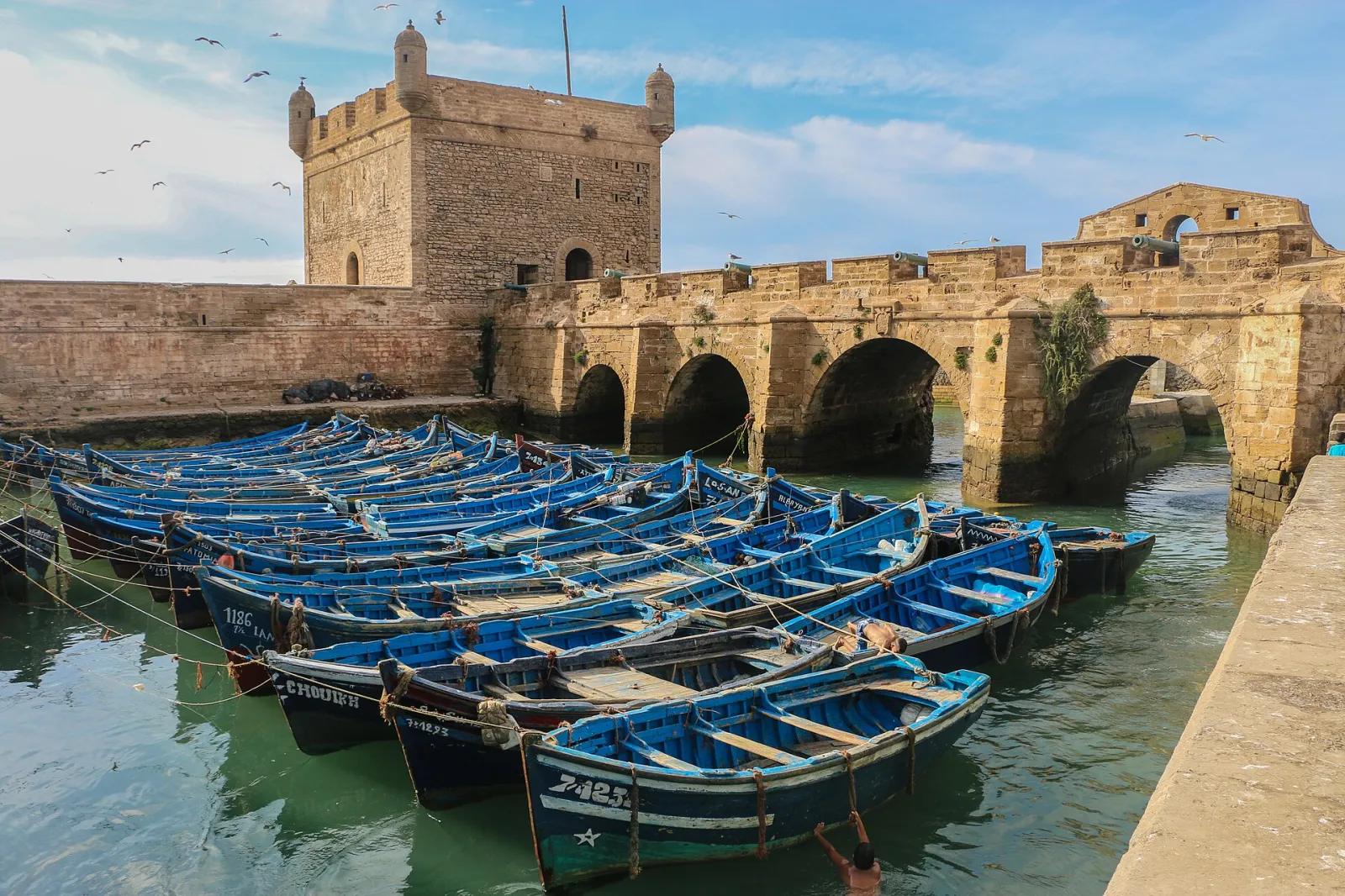
This is the mildest and most stable zone. The climate is Mediterranean with an oceanic influence: gentle winters (often 15-18°C by day) and warm but rarely oppressive summers (around 25-30°C), with the ocean tempering extremes. Essaouira, nicknamed “the windy city”, stays cool and breezy even at the height of summer, making it a favourite escape when Marrakech is stifling. Agadir, further south, enjoys near-constant sunshine and a long beach season. Casablanca and Rabat, more urban, stay pleasant in every season, with a particularly mild spring and autumn. Note, however, that the coast sees morning mists and sometimes strong wind, and the sea stays cool even in summer because of the Atlantic currents. The coast is therefore a solid choice all year, and especially in summer, when it offers a saving contrast with the furnace of the interior.
Marrakech and the interior plains (Fez, Meknes)
The interior sees far sharper swings. In Marrakech, summers are scorching: July-August peaks regularly approach or exceed 38-40°C, making days in the souks and gardens tough going. Winter, by contrast, is pleasant by day (18-20°C) but nights can drop to around 5°C. Spring and autumn therefore hold most of the appeal of the imperial cities: bearable heat, clear skies, comfortable terraces. Fez and Meknes, further north, follow a similar pattern with slightly cooler, wetter winters.
The High Atlas and the mountains
The mountains follow their own calendar. The High Atlas, crowned by Jebel Toubkal (4,167 m), is covered in snow from late autumn to spring; passes may be closed or difficult. Winter here is a season for mountaineering and skiing (Oukaïmeden resort). For “classic” trekking and a non-technical Toubkal ascent, the window runs roughly from late May to October. The valleys (Ourika, Aït Bouguemez) offer welcome coolness in summer, but nights stay chilly at altitude all year: pack warm layers.
The desert and the Sahara (Merzouga, Zagora, Draa Valley)
The desert is the region of the most extreme swings. In summer, days can top 45°C, making overnight bivouacs difficult and pushing many camps to close in July-August. In winter, days often stay mild and sunny, but nights fall close to 0°C under the tents. The best time to sleep under the stars beside the Erg Chebbi dunes therefore runs from October to April, peaking in comfort in autumn and spring. Always bring something warm for the night, even when it’s hot during the day.
The North and the Rif (Tangier, Chefchaouen, Tetouan)
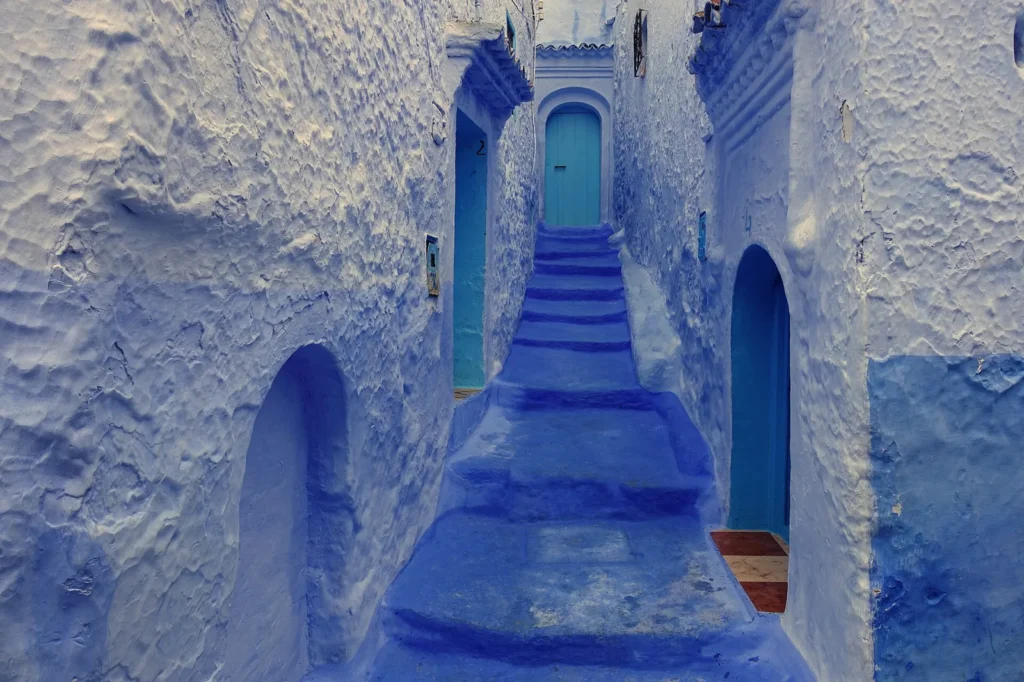
The north, under Mediterranean influence, is the greenest and wettest region. Winters are mild but rainy, and summers hot and dry. Chefchaouen, perched in the Rif, benefits from an altitude that softens summer heat. Spring, when the hills turn green, is especially photogenic. For Tangier and the Mediterranean coast, summer brings fine beaches, while spring and autumn suit walking and exploring the medinas better.
Morocco weather month by month
The table below summarises, month by month, typical conditions in Marrakech (a reference for the interior), the general trend and the tourist crowds. Temperatures are ballpark daytime figures that vary from year to year. Treat them as guides, not guarantees.
| Month | Marrakech (day) | General trend | Crowds |
|---|---|---|---|
| January | ~18°C | Cool, sometimes rainy; snow in the Atlas; desert mild by day, cold at night | Low |
| February | ~19°C | Still cool; almond blossom; good desert window | Low to medium |
| March | ~22°C | Mild spring, ideal for imperial cities | Medium to high |
| April | ~25°C | Excellent everywhere; pleasant desert | High |
| May | ~29°C | Warm and dry; last good desert window before summer | High |
| June | ~33°C | Hot inland; coast ideal | Medium |
| July | ~38°C | Very hot; desert scorching; head for the coast | Medium (Europe on holiday) |
| August | ~38°C | Very hot; many desert camps closed; coast popular | High on the coast |
| September | ~33°C | Heat eases; excellence returns | Medium to high |
| October | ~28°C | Often the best month: mild, perfect desert | High |
| November | ~23°C | Mild, bright; end of high season | Medium |
| December | ~19°C | Cool; year-end holidays; snow in the mountains | Medium (peak around Christmas/New Year) |
The best time to visit Morocco for your type of trip
There is no single best time to visit Morocco, but a best time for you. Here is how to choose based on what you’re after.
Imperial cities and culture: March-May, October-November
To wander the medinas of Marrakech and Fez, visit the palaces, gardens and museums, spring and autumn are unbeatable: heat stays bearable for walking all day and the evenings on a terrace are gentle. Avoid July-August, when strolling becomes gruelling, and be wary of January downpours. These periods are also the best moment to combine several cities into a tour.
Desert and nights under the stars: October-April
For a night bivouacking in the Erg Chebbi or a camel ride, aim for the cool season: from October to April, days are sunny and nights, though cold, stay bearable with good kit. Autumn and spring offer the best balance. In high summer, by contrast, daytime heat goes beyond reasonable and many camps close.
Hiking and mountains: May-October (and winter for snow)
For trekking in the High Atlas and a non-technical Toubkal ascent, the ideal window runs from late spring to autumn, once the snow has melted off the trails. Fans of snow, snowshoeing or skiing (Oukaïmeden) should instead aim for December to March. Remember that mountain weather changes fast: check locally and set out well equipped.
Beach and downtime: June-September
Paradoxically, the best time for the beach is when the interior is hottest. In summer the Atlantic coast (Agadir, Taghazout, Essaouira, Oualidia) stays cooler thanks to the ocean breeze, with a chilly sea but sunny days. It’s also the surf and watersports season. Windy Essaouira delights kitesurfers; more sheltered Agadir suits swimmers.
Ramadan: what to know before you book
Ramadan, the holy month of fasting, changes the rhythm of daily life and is worth planning around. Its dates move back about eleven days each year with the lunar calendar; in 2027 it is expected around February-March (dates confirmed by moon sighting, announced by the Ministry of Endowments and Islamic Affairs). During Ramadan, many shops and restaurants operate at a slower pace by day, some close until sunset, and the mood shifts: streets come alive mainly in the evening, around the breaking of the fast (iftar).
Travelling during Ramadan is far from impossible: tourist sites and hotels stay open, and the night-time atmosphere is unique. You simply need to adjust expectations (reduced daytime services, altered hours) and be respectful: avoid eating, drinking or smoking conspicuously in public during the day. Check the exact dates before booking if you’d rather avoid this period.
Events and highlights through the year
Some events may shape your choice of dates, either to attend them or to anticipate the crowds. Exact dates vary each year: check with organisers and the Moroccan National Tourist Office.
- Spring: Rose Festival (Dades Valley, May), blossom and lush landscapes.
- Summer: Essaouira Gnaoua Festival (world music), city festivals, busy beach season.
- Autumn: ideal conditions, marathons and sporting events making the most of the mild climate.
- Winter: year-end holidays (peak around Christmas and New Year in the big cities), Marrakech International Film Festival.
- Variable: Ramadan and Eid al-Fitr, plus Eid al-Adha, which alter hours and crowds.
Crowds, budget and periods to avoid
Weather isn’t the only factor: crowds and prices matter just as much. The table below cross-references season, experience and budget to help you find the right compromise.
| Season | Climate | Crowds & prices | Ideal for |
|---|---|---|---|
| Spring (Mar-May) | Mild, sunny | High (peak season) | Cities, desert, all-in-one |
| Summer (Jun-Aug) | Very hot inland, pleasant on the coast | High on the coast, lower inland | Beach, surf, mountains |
| Autumn (Sep-Nov) | Mild, stable | High in Oct, calmer in Nov | Desert, cities, hiking |
| Winter (Dec-Feb) | Cool, rainy in the north, snow in the Atlas | Low (except Christmas/New Year) | Desert by day, skiing, budget city breaks |
To save money, winter (outside the holidays) and November often offer the best value: still-pleasant weather and gentler rates. April, October and Christmas week, by contrast, concentrate demand. Bear in mind too that your airfare weighs heavily: our advice on the cheapest time to fly to Morocco will help you line up your dates. Once there, compare your options in our airport transfers comparison, and plan your budget with our guide to money in Morocco.
Itinerary ideas by season
Once you’ve pinned down the best time to visit Morocco, you still need to build an itinerary that matches the season. The country is vast and driving times are long: better to focus each trip on one climate logic than to try to cram everything in. Here are a few tried-and-tested combinations, to adjust to your tastes and the weather of the moment.
- Spring (March-May) — the grand tour of the south: Marrakech, the Ounila or Draa valley, a night in the desert at Merzouga or Zagora, then back via the Dades and Todgha gorges. The mild climate lets you string together cities, mountains and dunes.
- Summer (June-September) — head for the Atlantic: Essaouira for the wind and ramparts, Agadir or Taghazout for the beach and surf, with a detour into the Atlas valleys to breathe away from the inland heat.
- Autumn (September-November) — imperial cities and desert: Fez, Meknes and Volubilis in the north, then Marrakech and a Saharan trip: the ideal season to combine heritage and bivouac in gentle conditions.
- Winter (December-February) — soft sun and snowy peaks: Marrakech as a base camp, a snow day at Oukaïmeden, sunny days in the desert and, for lovers of cool air, the blue charm of Chefchaouen.
Whatever the route, build in some slack: a sandstorm, a snowbound mountain road or intense heat can change your plans. Keep a buffer day and ask locally about road conditions, especially in winter in the Atlas and in spring when the snowmelt swells the rivers.
What to pack by season
Because Morocco stacks several climates, the best time to visit Morocco always comes with one rule: pack in layers. Even in spring or autumn, a swing of 15 to 20°C between midday and a desert or mountain night is common. Here are the essentials to adapt by season and by the regions you’ll cross.
- Spring and autumn: light clothing for the day, a jacket or jumper for the evening, and good walking shoes for the medinas and sites.
- Summer: strong sun protection (hat, sunglasses, high-factor cream), loose light-coloured clothing, a water bottle; favour the coast and avoid exertion at midday inland.
- Winter: warm layers, a windbreaker or raincoat for the north and showers, warmer outfits in the evening even in town.
- Desert (any season): a down jacket or thick jumper for the night, a scarf against sand and sun, a headlamp.
- Mountains: proper hiking gear, ankle boots, and technical equipment in winter (crampons, guides) depending on the route.
- Everywhere: an outfit covering shoulders and knees makes it easier to respect local customs, especially outside tourist areas and during Ramadan.
Timing your dates to your departure airport
Your point of departure shapes your ideal dates as much as the Moroccan weather does. From the UK, direct links to Marrakech and Agadir are plentiful, and British school holidays (February, Easter, summer) tend to push up prices and crowds. From the US, expect a connection in Europe, so aim for longer trips and favour autumn, when the climate is stable across the whole circuit. From Germany, the offer often centres on Marrakech and Agadir, popular in winter as a sun destination. From France, many direct flights serve Marrakech, Casablanca, Fez and Agadir year-round with little or no time difference, making spring and autumn long weekends easy.
Whatever your market, the logic is the same: Morocco’s climate argues for spring and autumn, but fares mostly follow demand in your home country (school holidays, public holidays, long weekends). Lining the two up — good weather on the ground and a quiet period at departure — is the key to a trip that is both enjoyable and affordable. Schedules can also vary by season; always check flights and connections when you book, as the offer changes.
Frequently asked questions about the best time to visit Morocco
What is the best month to visit Morocco?
October is often cited as the best month: the summer heat has eased, the desert is perfect and the imperial cities are pleasant. April and May offer a comparable spring climate. These remain ballpark choices: conditions vary from year to year.
Can you visit Morocco in summer?
Yes, as long as you adapt your itinerary. In summer, favour the cooler Atlantic coast (Agadir, Essaouira) and the mountains, and avoid the desert and long midday sightseeing in Marrakech or Fez, where the heat can top 38°C.
When should you go to the Moroccan desert?
From October to April, during the cool season. Days are sunny and bearable, whereas summer makes bivouacs very hard and pushes many camps to close. Always pack warm clothing for the nights, which can dip near 0°C.
Is Morocco cold in winter?
It depends on the region. Days stay mild on the coast and in Marrakech (often 15-20°C), but nights are cool, the Atlas turns snowy and the north can be rainy. Pack warm layers, especially for the evening and for altitude.
Should you avoid Morocco during Ramadan?
No, but be prepared. Sites and hotels stay open and the night-time atmosphere is rich, but daytime services are reduced and respecting local customs is expected. If you prefer a standard rhythm, check the dates (around February-March 2027) and shift your trip.
When is the cheapest time to go?
Winter outside the year-end holidays, and November, generally offer the best rates, with weather still pleasant by day. Avoid European school holidays, Christmas week and the October peak if budget is your priority.
Is Morocco nice in spring?
Yes, it’s one of the best seasons: mild climate, green landscapes, accessible desert and pleasant cities. It’s also a busy period, so book accommodation and transport early.
How many days should you plan for a first trip?
For a first visit combining one or two imperial cities and a night in the desert, plan at least 7 to 10 days to absorb the driving times. Whatever the season, keep some flexibility: mountain and desert weather can change quickly.
In summary
The best time to visit Morocco depends on your goal, but spring (March-May) and autumn (September-November) remain the safe bets: temperate climate, workable desert and pleasant cities. Save the coast for summer, the mountains for the warm season, the desert for the cool season, and plan around Ramadan and school holidays. Bearing in mind that temperatures are variable guides, you’ll pick your dates with confidence. Before you go, read up on safety too with our guide Is Morocco safe?
Official sources
- Moroccan National Tourist Office (ONMT) – Visit Morocco
- UK FCDO – Morocco travel advice
- ONDA – National Airports Office
Photo credit
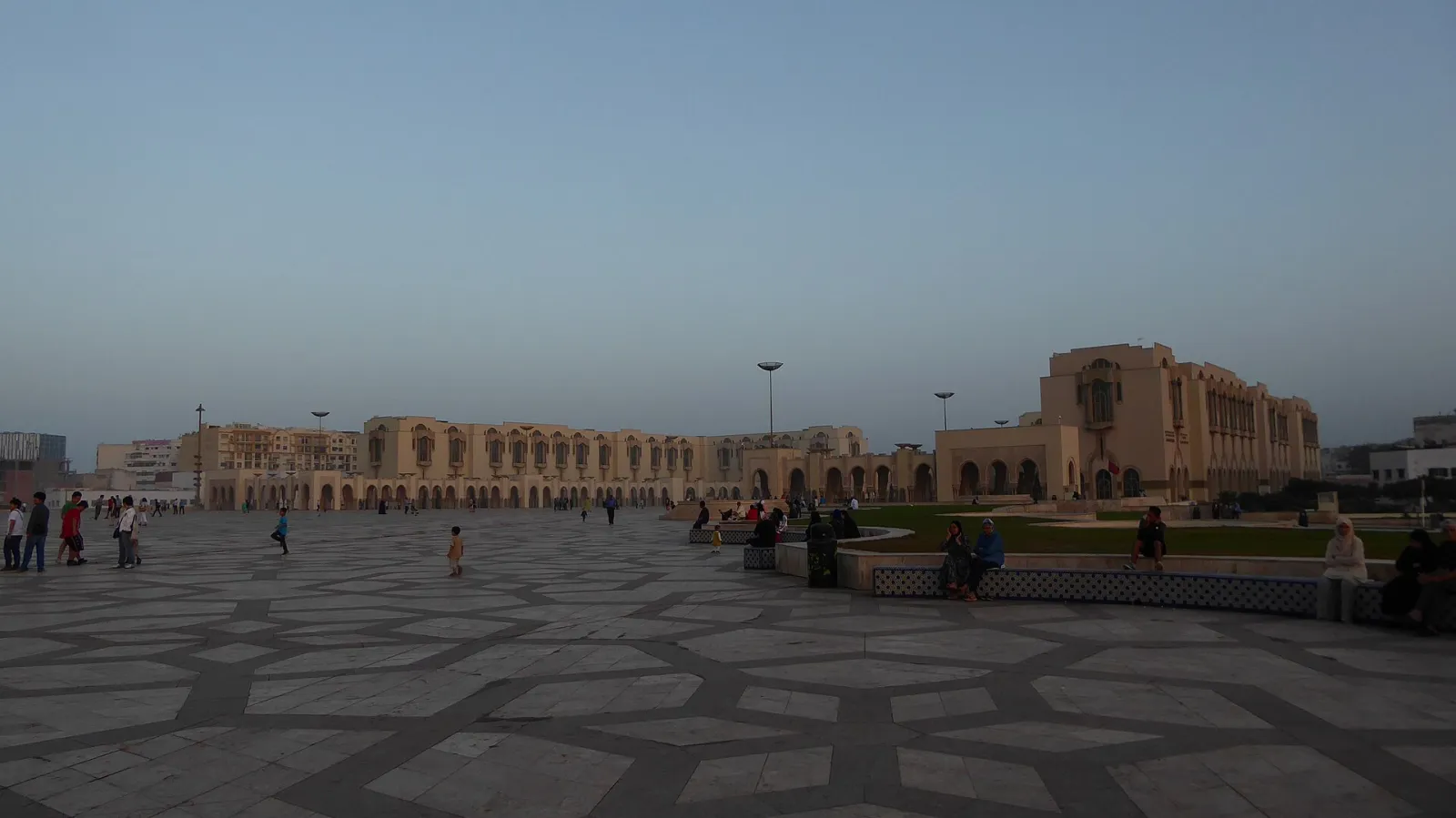
Illustrations : « Essaouira Citadel » — Ahmed.magdy (CC BY-SA 4.0) ; « Hassan II Mosque, Casablanca » — Ayman.mesa25 (CC BY-SA 4.0), via Wikimedia Commons.