Where to stay in Casablanca? For a first trip, the best areas are the city centre around Casa-Port (central, well connected by train), Gauthier and Maârif (smart, café-lined, safe, great for shopping), and the Aïn Diab Corniche (seafront, restaurants, relaxed vibe); for a very early flight or a layover, pick a hotel near Mohammed V Airport (CMN). The right choice depends mostly on your profile: business, city sightseeing, beach, or simply a night before a flight. This guide compares every district by atmosphere, transport access, safety and price range so you can decide quickly.
In brief: where to sleep in Casablanca by trip type
- First visit / sightseeing: city centre (Casa-Port), Gauthier or Maârif — central, lively, walkable to many sights.
- Business travel: Maârif, Gauthier or the business district (Casa Finance City / Sidi Maârouf) depending on your meetings.
- Seaside and relaxation: Aïn Diab Corniche, facing the Atlantic, with beaches, restaurants and nightlife.
- Layover or early flight: a hotel near Mohammed V Airport (CMN), about 30 km from the centre.
- Authentic feel: the edges of the old medina and the Habous quarter (markets, crafts).
- Tight budget: the centre and medina offer the most affordable options; the Corniche and Anfa are pricier.
Casablanca’s best areas at a glance
Casablanca is Morocco’s economic capital and its largest city, with a very spread-out layout. Unlike Marrakech or Fez, its appeal isn’t concentrated in a medina: it is split between the Art Deco centre, the seafront and the smart residential districts. Deciding where to stay in Casablanca therefore means choosing an atmosphere and a way of getting around. The table below sums up the essentials before the detailed descriptions.
| District | Atmosphere | Ideal for | Indicative price |
|---|---|---|---|
| City centre / Casa-Port | Urban, Art Deco, lively | Sightseeing, transport, budget | £ to ££ |
| Gauthier | Smart, cafés, relatively calm | Couples, business, comfort | ££ to £££ |
| Maârif | Modern, shopping, buzzing | Shopping, business, families | ££ to £££ |
| Corniche / Aïn Diab | Seafront, leisure, nightlife | Beach, relaxation, going out | ££ to ££££ |
| Anfa | Upscale residential | Quiet stay, luxury | £££ to ££££ |
| Habous / old medina | Traditional, markets | Authenticity, crafts | £ to ££ |
| Near CMN Airport | Functional, out of town | Layover, early flight | £ to £££ |
City centre and Casa-Port: central and practical
The city centre (the Art Deco quarter) is the historic heart of Casablanca, between Place Mohammed V, the central market and Boulevard Mohammed V. It is the most practical base for a first stay: you are minutes on foot from Casa-Port station, the terminus of the ONCF train that links directly to the airport, and on the tramway route. It offers the widest range of accommodation, from budget guesthouses to historic business hotels.
Which traveller is it for?
This district suits visitors who want to do everything on foot or by public transport: Art Deco architecture, the Sacré-Cœur cathedral, the central market, and quick access to the Hassan II Mosque (about 20-30 minutes on foot or a few minutes by taxi). It is also the best base for a Casablanca layover, since the airport train drops you here without changing mode of transport.
Things to watch
The centre is busy and sometimes noisy during the day; some streets feel less inviting after dark. As in any large city, keep your belongings close in crowds and stick to busy streets at night. Value for money is generally good here.
Corniche and Aïn Diab: seaside Casablanca
The Aïn Diab Corniche stretches along the Atlantic Ocean, to the west of the city. This is Casablanca’s beach district: beaches, beach clubs, pools, fish restaurants, cafés with a view and nightlife. It starts near the Hassan II Mosque and runs to the Morocco Mall, one of the largest shopping centres on the continent. Tram line T2 now serves Aïn Diab, making it easy to reach without a car.
Which traveller is it for?
The Corniche appeals to travellers seeking relaxation, swimming (in season) and a leisure atmosphere, as well as those who want ocean-view hotels. It is a good choice for a longer stay or to combine city and seaside. Evening outings are concentrated here, which suits couples and travellers who want to dine facing the Atlantic.
Things to watch
The area is out of the way: allow travel time to the historic centre (tram or taxi). Prices rise for sea-facing rooms and in high season. Finally, swimming depends on the season and the Atlantic weather; check conditions locally.
For families, the Corniche has the advantage of concentrating restaurants, cafés, pools and the Morocco Mall in one area, which simplifies days out with children. Couples and travellers seeking quiet will find hotels set back from the nightlife if they choose the more residential western end. Conversely, if your priority is exploring the Art Deco centre and the stations on foot, the distance works against you: in that case, staying in the city centre remains more sensible. So weigh the appeal of the seafront against the daily travel time before deciding.
Gauthier and Maârif: smart, cafés and shopping
Gauthier and Maârif are Casablanca’s stylish, café-culture districts, very popular with international visitors. Where to stay in Casablanca for a comfortable, central stay without the bustle of the centre? These two neighbouring districts strike an excellent balance: tree-lined streets, specialty cafés, restaurants, shops and a safe, pleasant walkable atmosphere.
Gauthier: elegant and calm
Gauthier is more residential and refined: elegant buildings, terraces, galleries. It appeals to couples, business travellers and anyone who wants an “easy”, clean and well-kept district while staying close to the centre and the tram lines.
Maârif: modern and lively
Maârif, built around the Twin Center towers, is the shopping and going-out district: international brands, restaurants, cafés buzzing into the evening. It still feels more “local” than touristy, which appeals to those who want to experience the city. It is also a convenient base for business travel depending on where your meetings are.
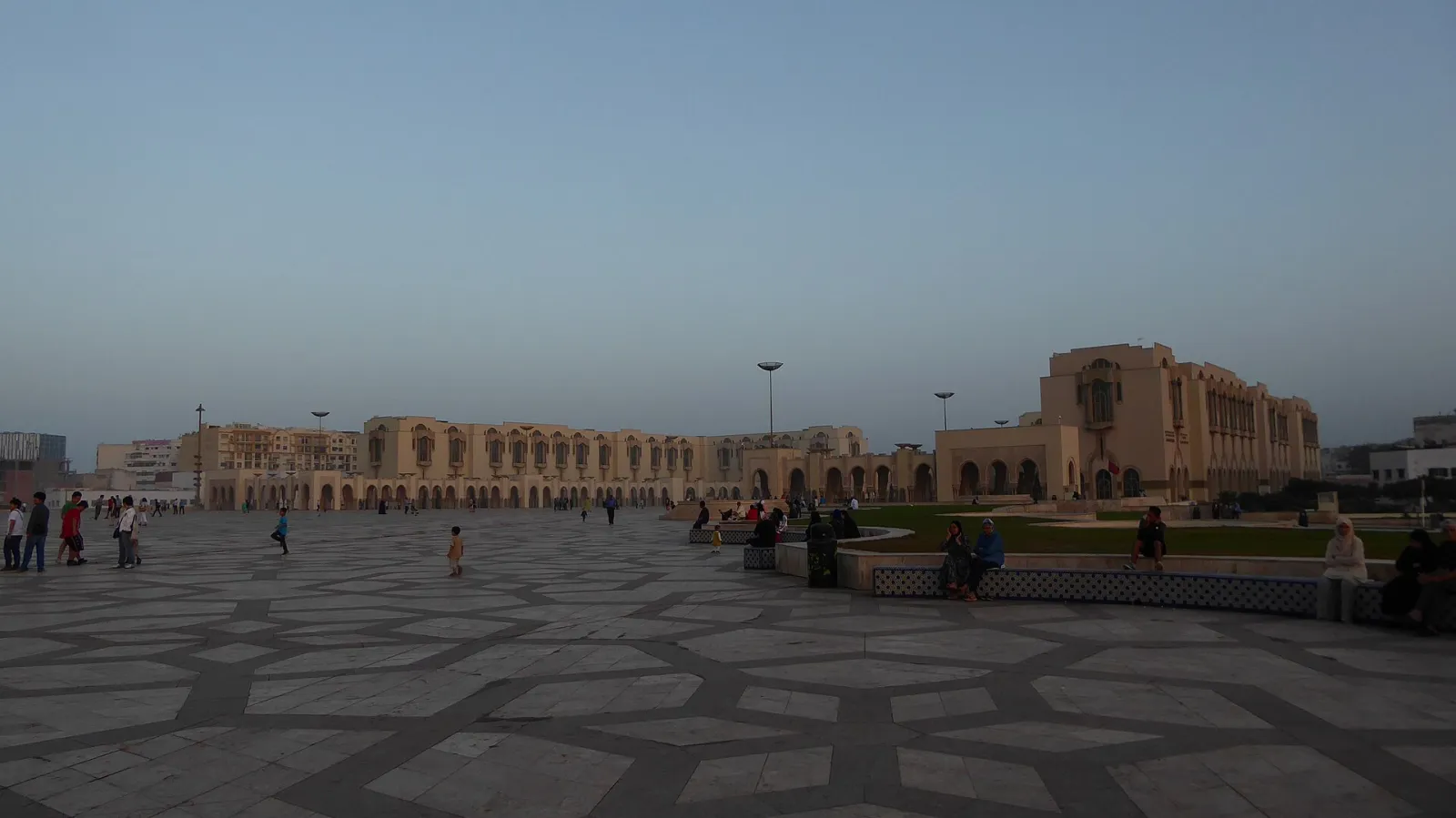
Anfa, Habous and medina: residential luxury or tradition
Anfa is the upscale residential district on the western hills: villas, quiet avenues, a few luxury addresses. It suits those seeking peace and who have a means of transport, as it is farther from the sights. At the opposite end, the Habous quarter (the “new medina”, built in the 1920s) and the edges of the old medina offer a traditional atmosphere with craft, spice and pastry markets. Accommodation there is simpler but more typical, ideal for a low-budget cultural immersion.
Staying near Mohammed V Airport (CMN): layover and early flight
Mohammed V International Airport (code CMN) is in Nouaceur, about 30 kilometres south-east of central Casablanca. For a very early flight, a long connection or a late arrival, sleeping near the airport avoids transfer stress. Several airport hotels offer shuttles; always confirm the shuttle timetable and booking when you reserve.
Airport or city centre: how to choose?
If your flight leaves before around 8am or after a night arrival, an airport hotel is safest. If you have a layover of 6 hours or more in the daytime, the ONCF train takes you to the centre in about 40 minutes, leaving time for a glimpse of the city. To compare shuttle, taxi and train, see our Morocco airport transfers comparison.
Which district for which traveller?
| Traveller profile | Recommended district(s) | Why |
|---|---|---|
| First visit / sightseeing | City centre, Gauthier | Central, sights on foot, direct transport |
| Business travel | Maârif, Gauthier, Casa Finance City | Near offices, business hotels, cafés |
| Couple / weekend | Gauthier, Corniche | Pleasant vibe, restaurants, sea view |
| Family | Maârif, Corniche | Shopping, dining, leisure, beach |
| Beach and relaxation | Aïn Diab / Corniche | Seafront, clubs, restaurants |
| Low budget | City centre, medina | Affordable options, central |
| Layover / early flight | Near CMN Airport | Short transfer, shuttles |
Safety: is Casablanca safe to stay in?
Casablanca is generally safe for travellers, with the usual precautions of a large metropolis. The main risk flagged by authorities is petty crime (pickpocketing, scams) in very busy areas, rather than serious insecurity. The UK (FCDO) does not advise against Morocco’s tourist destinations, and the United States rates the country “Level 2: Exercise Increased Caution”, a level common to many large European cities.
- Choose a well-lit, busy district for the evening (Gauthier, Maârif, the lively Corniche).
- Keep bags and phones close in crowds and on transport.
- Use official taxis (small red petit taxis with a meter) or booked ride-hailing.
- Avoid any gatherings and demonstrations.
For a fuller picture, see our dedicated analysis: is Morocco safe? Advisory levels can change: always check your government’s official advice before you travel. Information subject to change.
Getting around from your hotel: transport and access
Your choice of district also depends on how easily you can get around. Casablanca has a tram network (Casa Tramway), the ONCF train for the airport and other cities, and taxis. The table below sums up the practical markers; fares are indicative and may change.
| Mode | Use | Price marker | Good to know |
|---|---|---|---|
| ONCF train (airport ↔ city) | CMN → Casa-Voyageurs / Casa-Port | ≈ 50 MAD per trip | ≈ 35-45 min; regular daytime departures |
| Tramway (Casa Tramway) | Urban trips, Aïn Diab (T2) | ≈ 8 MAD per ticket | Free transfer ~2 h after validation |
| Petit taxi (red) | Short city distances | By meter | Insist on the meter; sharing is common |
| Grand taxi | Longer trips / airport | Negotiated / flat fare | Agree the price before getting in |
Price ranges: what budget to expect
Accommodation rates in Casablanca vary by district, season, trade fairs and events. The ranges below are indicative orders of magnitude for a double room per night; they are not a price guarantee. Also plan how you’ll handle money on the ground: see our guide to money in Morocco for exchange, cards and cash.
| Category | Accommodation type | Indicative range / night |
|---|---|---|
| Budget (£) | Guesthouse, simple hotel (centre, medina) | ≈ 250-500 MAD |
| Mid-range (££) | 3-4★ hotel (Gauthier, Maârif, centre) | ≈ 600-1,100 MAD |
| Upper (£££) | 4-5★ hotel, address with a view | ≈ 1,200-2,500 MAD |
| Luxury (££££) | International 5★, Corniche / Anfa | ≈ 2,500 MAD and up |
What to do nearby, depending on your district
The district you sleep in shapes your day-to-day sightseeing. Here, area by area, is what lies within walking or tram distance, to fine-tune your choice of where to stay in Casablanca according to your interests.
- City centre / Casa-Port: Place Mohammed V, the central market, Art Deco architecture, the Sacré-Cœur cathedral, the port and easy access to the Hassan II Mosque.
- Corniche / Aïn Diab: beaches, the oceanfront promenade, fish restaurants, the Morocco Mall and the Sidi Abderrahmane shrine.
- Gauthier: specialty cafés, galleries, shops, restaurants; a pleasant, calm base close to the centre.
- Maârif: the Twin Center, shopping brands, Rue du Prince Moulay Abdellah and lively café life in the evening.
- Habous: craft souks, pastry shops, Arabic and French bookshops, and the 1920s “new medina” atmosphere.
The tram links these areas efficiently: line T2 runs to Aïn Diab, while the network’s lines serve the centre and Casa-Port. In addition, the small red petit taxis handle short trips by meter. To reach other Moroccan cities from your hotel, the ONCF train remains the simplest option, with frequent departures to Rabat and Marrakech. Timetables and frequencies change: check them with the official operators before you set off.
How many nights in Casablanca, and when to book?
Most travellers spend one or two nights in Casablanca, often at the start or end of a Moroccan trip, since the city is a major air and rail hub. A single night is enough for the essentials: the Hassan II Mosque, the Art Deco centre and dinner on the Corniche. Two nights let you add Aïn Diab beach, the Habous quarter and a more relaxed evening. If Casablanca is your base for exploring the Atlantic coast (Rabat, El Jadida) on day trips, plan three nights or more, ideally near a station to make the most of the ONCF network.
On timing, Casablanca is a business city: rates climb on weekdays during trade fairs and conventions, and sometimes ease at the weekend, the opposite of a purely tourist destination. Spring (March-May) and autumn (September-November) offer pleasant weather and good availability. Summer draws crowds to the Corniche and pushes up seafront prices. Book early if your stay coincides with a major event or a holiday period, and always check the cancellation policy, as it varies widely from one property to another.
Casablanca as a base or a stopover?
Many travellers see Casablanca as a logistical stop rather than a long destination: international arrival, one night, then a train to Marrakech, Rabat, Fez or Tangier. In that case, staying in the city centre near Casa-Voyageurs or Casa-Port simplifies everything, since long-distance trains and the airport train depart from these stations. If instead you want to savour the city, staying in Gauthier, Maârif or on the Corniche will make the trip more enjoyable than a simple transit hotel.
Checklist: choosing your Casablanca accommodation well
Beyond the district, a few concrete criteria make the difference between a good and a bad choice. Run through this list before confirming a booking, bearing in mind that advertised features should be confirmed directly with the property.
- Walking distance to transport: proximity to a tram stop or a station (Casa-Port, Casa-Voyageurs) to limit taxi use.
- Airport transfer: whether a shuttle is included, its times, and advance booking for night flights.
- District safety at night: a busy, well-lit street, a monitored entrance, recent reviews from other travellers.
- Noise: rooms on a boulevard or near the Corniche bars can be noisy; ask for a courtyard-facing room if you are sensitive.
- Breakfast and dining: included or not, options nearby, especially useful for an early departure.
- Payment and deposit: cards accepted, deposit, and carry cash (dirhams) for petit taxis and tips.
- Accessibility: lift, floor, suitability for families or reduced mobility, to be checked directly.
Finally, always compare the displayed price with any taxes and fees, and read the cancellation terms. To prepare your on-the-ground budget and cash payments, our guide to money in Morocco details exchange, ATMs and card use. Practical information (times, fares, shuttles) is subject to change: confirm it when you book.
Frequently asked questions: where to stay in Casablanca
What is the best area for a first visit?
The city centre (around Casa-Port) or Gauthier. You are central, close to direct transport to the airport and within walking distance of many sights, with easy access to the Hassan II Mosque.
Where to stay for a very early morning flight?
Choose a hotel near Mohammed V Airport (CMN), about 30 km from the centre. Check whether a shuttle is included and book it in advance to avoid any late-night transfer problems.
Is the Aïn Diab Corniche well located?
It is ideal for the seafront, restaurants and nightlife, but out of the way from the historic centre. Plan on the tram (line T2) or a taxi to reach the city core.
Is Casablanca safe at night?
Generally yes, with big-city precautions. Stay on busy, well-lit streets, watch your belongings and use official taxis. Always check your government’s official travel advice before departure.
Should I stay in the centre or on the Corniche?
The centre for convenience, transport and budget; the Corniche for the sea view and leisure atmosphere. For a short first trip, the centre is more efficient.
How do I get to the centre from the airport?
The ONCF train links the airport to Casa-Voyageurs and Casa-Port in about 35 to 45 minutes, for around 50 MAD. Taxis and hotel shuttles also exist; compare based on the time and your luggage.
Which district for a business trip?
Maârif and Gauthier for business hotels and dining, or the business district (Casa Finance City / Sidi Maârouf) if your meetings are there. Check proximity to your offices.
Can you stay in the Casablanca medina?
Yes, around the old medina and the Habous quarter, with a more traditional atmosphere and often budget-friendly rates. Accommodation is simpler there than in the modern districts.
In summary
To choose well where to stay in Casablanca, start from your profile and priority. The city centre and Casa-Port offer the best convenience and the direct link to the airport; Gauthier and Maârif combine comfort, safety and shopping; the Aïn Diab Corniche is a draw for the seafront and going out; the edges of the medina and Habous appeal to lovers of authenticity; and a hotel near CMN Airport simplifies a layover or early flight. Always check rates, timetables and conditions when you book, along with your government’s official travel advice.
Official sources
- ONCF — National Railways (trains, airport)
- Casa Tramway (tram network)
- ONDA — National Airports Office (Mohammed V Airport)
- Moroccan National Tourist Office (ONMT)
- UK FCDO — Foreign travel advice (Morocco)
Photo credit
Illustrations : « Woodmark Hotel Exterior » — Joerega (CC BY-SA 4.0) ; « Hassan II Mosque, Casablanca » — Ayman.mesa25 (CC BY-SA 4.0), via Wikimedia Commons.