Car rental at Morocco’s airports is the easiest way to pick up a vehicle the moment you land: the counters of the major brands (Avis, Hertz, Europcar, Sixt, Budget) and many local companies sit in the arrivals area of the main airports (Casablanca Mohammed V, Marrakech Menara, Agadir Al Massira, Fes Saiss, Tangier Ibn Battouta, Rabat Sale). In practical terms, expect from 200 to 350 dirhams per day (about 20 to 35 €) for a small city car outside peak season, a deposit held on a credit card of 5,000 to 20,000 MAD depending on the category, a licence valid for at least one year, and a credit card in the driver’s name. This guide details agencies, prices, deposits, insurance (excess waiver), licence requirements and the pitfalls to avoid, airport by airport.
Disclaimer: the rates, deposit conditions and hours quoted are indicative and change with the season, the company and availability. Always confirm the exact amounts with the rental company at the time of booking.
In brief
- Where: counters in the arrivals area of every major Moroccan airport, often open according to flight schedules.
- Brands: international (Avis, Hertz, Europcar, Sixt, Budget, Thrifty, Dollar) and local companies (First Car, Medloc, Wanalou, Locatmane, etc.).
- Indicative price: from 200-350 MAD/day (20-35 €) for a city car off-season; noticeably higher in summer and during holidays.
- Deposit: a hold placed on a credit card, generally 5,000 to 20,000 MAD (≈ 1,000 to 2,000 €) depending on the vehicle.
- Insurance: CDW and theft almost always included, but with a high excess; the excess waiver (Super CDW) often costs 150-300 MAD/day more.
- Licence: national licence valid for at least 1 year; an international permit is recommended if your licence is not in the Latin alphabet.
- Watch out for: fuel policy, condition report (photos), insurance exclusions (underbody, tyres, windscreen).
Which rental agencies are at Morocco’s airports?
Car rental at Morocco’s airports splits into two families: the big international brands, present through local franchises, and independent Moroccan companies, often cheaper but with variable service quality. At the main airports (Casablanca CMN, Marrakech RAK, Agadir AGA) you will easily find a dozen counters grouped in the arrivals hall.
The major international brands
Global brands guarantee a standardised framework: online booking, clear written conditions, a network that allows one-way rentals between cities, and roadside assistance. The main ones at Moroccan airports are:
- Avis and Budget (same group): wide network, counters in Casablanca, Marrakech, Agadir, Fes, Tangier, Rabat.
- Hertz: airport counters plus city and station branches (e.g. Casa-Voyageurs); free cancellation often offered.
- Europcar: strong presence at tourist airports (Marrakech, Agadir).
- Sixt: present notably at Marrakech Terminal 2 and Casablanca.
- Thrifty and Dollar: budget brands of the Hertz group, often at the same counters.
The local rental companies
Moroccan agencies (First Car, Medloc, Wanalou, Locatmane, AirCar, Green Motion, NU Car and many others) offer sometimes very low starting rates, flexibility for hotel or city-centre delivery, and French-speaking staff. The downside: less standardised terms, uneven fleet upkeep, and sometimes sales pressure on arrival to add extras. With a local company, read the contract carefully, insist on a written and photographed condition report, and favour those showing numerous, recent customer reviews.
| Airport | Code | Type of companies present |
|---|---|---|
| Casablanca Mohammed V | CMN | International + local (wide choice, counters open 24/7 by flight) |
| Marrakech Menara | RAK | International + local (Terminals 1 and 2) |
| Agadir Al Massira | AGA | International + local (strong beach-holiday demand) |
| Fes Saiss | FEZ | More limited choice, advance booking advised |
| Tangier Ibn Battouta | TNG | International + local |
| Rabat Sale | RBA | Limited choice, mostly by reservation |
How it works on arrival at the airport
The process is similar at all airports managed by ONDA (the National Airports Authority). After passport control and baggage claim, head to the arrivals area where the rental counters are grouped.
- Present your documents: driving licence, ID/passport, credit card in the driver’s name, and the booking voucher if you reserved online.
- Sign the contract: check the vehicle category, mileage (unlimited or not), the fuel policy and the insurance level.
- Deposit hold: the company places a pre-authorisation on your credit card; the amount is held, not charged.
- Condition report: walk around the vehicle with the agent, note every scratch on the contract and take dated photos/videos.
- Handover of keys: check the fuel level shown on the dashboard and the presence of the spare wheel, vest and warning triangle.
Some counters are open 24/7 depending on flight arrivals; for a night landing, confirm in advance that your company covers pick-up at your flight time.
Indicative prices for car rental in Morocco
Prices vary greatly with the season (summer and school holidays push rates up), duration (weekly packages are better value), category and company. As a guide, here are ranges observed off-season for a multi-day rental, all-inclusive (basic insurance included):
| Category | Example models | Indicative price / day | Indicative price / week |
|---|---|---|---|
| Economy (city car) | Dacia Sandero, Fiat Panda, Hyundai i10 | 200-350 MAD (≈ 20-35 €) | 1,200-2,100 MAD (≈ 120-210 €) |
| Compact | Dacia Logan, Renault Clio, Peugeot 208 | 280-450 MAD (≈ 28-45 €) | 1,700-2,800 MAD (≈ 170-280 €) |
| Saloon / family | Dacia Duster, Peugeot 301, VW Golf | 400-650 MAD (≈ 40-65 €) | 2,500-4,000 MAD (≈ 250-400 €) |
| SUV / 4×4 | Dacia Duster 4×4, Toyota RAV4 | 600-1,100 MAD (≈ 60-110 €) | 3,800-7,000 MAD (≈ 380-700 €) |
Booking online in advance almost always secures a better price than at the counter and lets you compare conditions. Be wary of headline rates like “from 6-9 €/day”: they usually apply to long, off-season rentals with the maximum excess, and the real “all-in” price (excess waiver, second driver, child seat) is noticeably higher.
Deposit, credit card and payment method
The deposit is what surprises travellers most. The company holds an amount on your credit card (not a debit card) in the main driver’s name, as a guarantee. This pre-authorisation is not charged if you return the vehicle in good condition, but it ties up your limit for the whole rental period.
- Amount: generally 5,000 to 20,000 MAD (≈ 1,000 to 2,000 €), sometimes up to 3,000 € for an SUV or premium model. The amount often matches the insurance excess.
- Card type: a genuine credit card is almost always required. Debit and prepaid cards are frequently refused for the deposit.
- Release: typically 5 to 7 business days (sometimes more) after return before the amount is freed. Keep your contract until it is released.
- No deposit: some companies offer a “zero deposit” option or a bought-out excess that reduces or removes the hold, for a daily surcharge.
Insurance and excess waiver (CDW)
In Morocco, every rental contract includes at least third-party liability (compulsory) and, in almost all cases, collision damage (CDW) and theft cover. Beware: “included” does not mean “risk-free”. These basic covers come with a high excess: in the event of damage or theft, you remain liable up to the excess amount (often 10,000 MAD or more).
| Cover | What it covers | Your remaining liability |
|---|---|---|
| Third-party liability | Damage caused to third parties (compulsory) | None towards third parties |
| Basic CDW + theft | Damage to the vehicle and theft | High excess (often ≥ 10,000 MAD) |
| Excess waiver (Super CDW) | Reduces or removes the excess | Low or none, +150-300 MAD/day approx. |
| External excess insurance | Reimburses the excess afterwards | You pay upfront, then get refunded |
Two strategies exist to reduce your exposure: take the excess waiver (Super CDW) directly with the company (more expensive but you pay nothing upfront), or buy a third-party excess insurance online before the trip (cheaper, but you must pay upfront in the event of a claim and then be reimbursed). Make sure your cover applies to Morocco: many bank cards explicitly exclude the country from their rental cover.
Crucial point: even with an excess waiver, certain parts of the vehicle are often excluded: underbody, undercarriage, interior, tyres and wheels, windscreen and windows, mirrors, headlights, lost keys, wrong fuel. Read the list of exclusions before signing.
Driving licence and minimum age required
To rent a car in Morocco you need a valid driving licence. Conditions vary slightly between companies, but the general rules are as follows:
- Minimum age: generally 21; a “young driver” surcharge often applies before 25. Some categories (SUV, 4×4, premium) require 23 or 25.
- Licence held for: valid for at least 1 year (sometimes 2 years for SUVs and 4×4s).
- International permit: a national licence in the Latin alphabet (French, for example) is generally accepted on its own. If your licence is written in non-Latin characters, an International Driving Permit (IDP) accompanying the original is required.
- Documents: licence, passport or national ID, and a credit card in the main driver’s name.
An International Driving Permit is never a standalone document: it does not replace your national licence, it translates it. Always carry both.
Pitfalls to avoid
The fuel policy
The fairest option is “full to full”: you collect the vehicle with a full tank and return it full. Where possible, avoid the “full to empty” formula (you pay for a full tank at the start, often overpriced, and return it empty with no refund of remaining fuel). Photograph the gauge at pick-up and fill up just before returning the car, keeping the station receipt.
The condition report
The most common dispute is over scratches or dents charged at return. Protect yourself: have every existing defect noted on the contract, take time-stamped photos and videos of the bodywork (including the roof, underbody, wheels and windscreen), and repeat the same inspection at return, ideally with an agent present. Never return a vehicle without a signed return condition report.
Other points to watch
- Mileage: check it is unlimited, otherwise long trips (Marrakech-desert, for example) become costly.
- Second driver: often chargeable; declare them to be covered.
- One-way fees: returning in a different city from pick-up incurs a surcharge.
- Extras pushed at the counter: GPS, child seat, Wi-Fi; compare with the cost of your own equipment.
- Contract check: make sure no unrequested option has been added before you sign.
International brand or local company: how to choose?
The choice depends on your priority: legal certainty and consistent service on one side, a tight price and flexibility on the other. The table below sums up the typical differences to help you decide before booking your airport car rental in Morocco.
| Criterion | International brand | Local company |
|---|---|---|
| Starting price | Higher, but transparent | Often cheaper, extras on top |
| Conditions | Standardised, written, multilingual | Variable, read carefully |
| Fleet | Recent, well maintained | Uneven quality by agency |
| One-way between cities | Generally possible | Rare, or high fees |
| Hotel / off-airport delivery | Limited | Frequent and flexible |
| 24/7 assistance | Structured network | Depends on the agency |
For a first trip, a multi-city itinerary or a one-way rental (for example arriving in Casablanca, returning in Marrakech), an international brand simplifies the logistics. For a stay in a single region on a tight budget, a good, well-rated local company can save you significantly, provided you are rigorous about the condition report and the insurance.
Driving tips for Morocco
Renting is one thing, driving another. Morocco’s road network is generally good, with a modern motorway system linking the big cities, but a few habits are essential:
- Speed: generally 120 km/h on motorways, 100 km/h on open roads, 40 to 60 km/h in built-up areas. Radar and gendarmerie checks are frequent.
- Toll motorways: the main routes (Casablanca-Marrakech, Casablanca-Tangier, Rabat-Fes) are tolled; carry cash for the toll booths.
- Documents on board: always keep the rental contract, insurance certificate and vehicle registration (supplied by the company) in the car.
- Parking: in town, “car guardians” watch over parking for a small tip (a few dirhams).
- Night and rural driving: extra caution (unlit two-wheelers, animals, damaged surfaces). Avoid long night journeys.
- Fuel: plenty of stations on the main routes, scarcer in the desert and the south; fill up before long stretches.
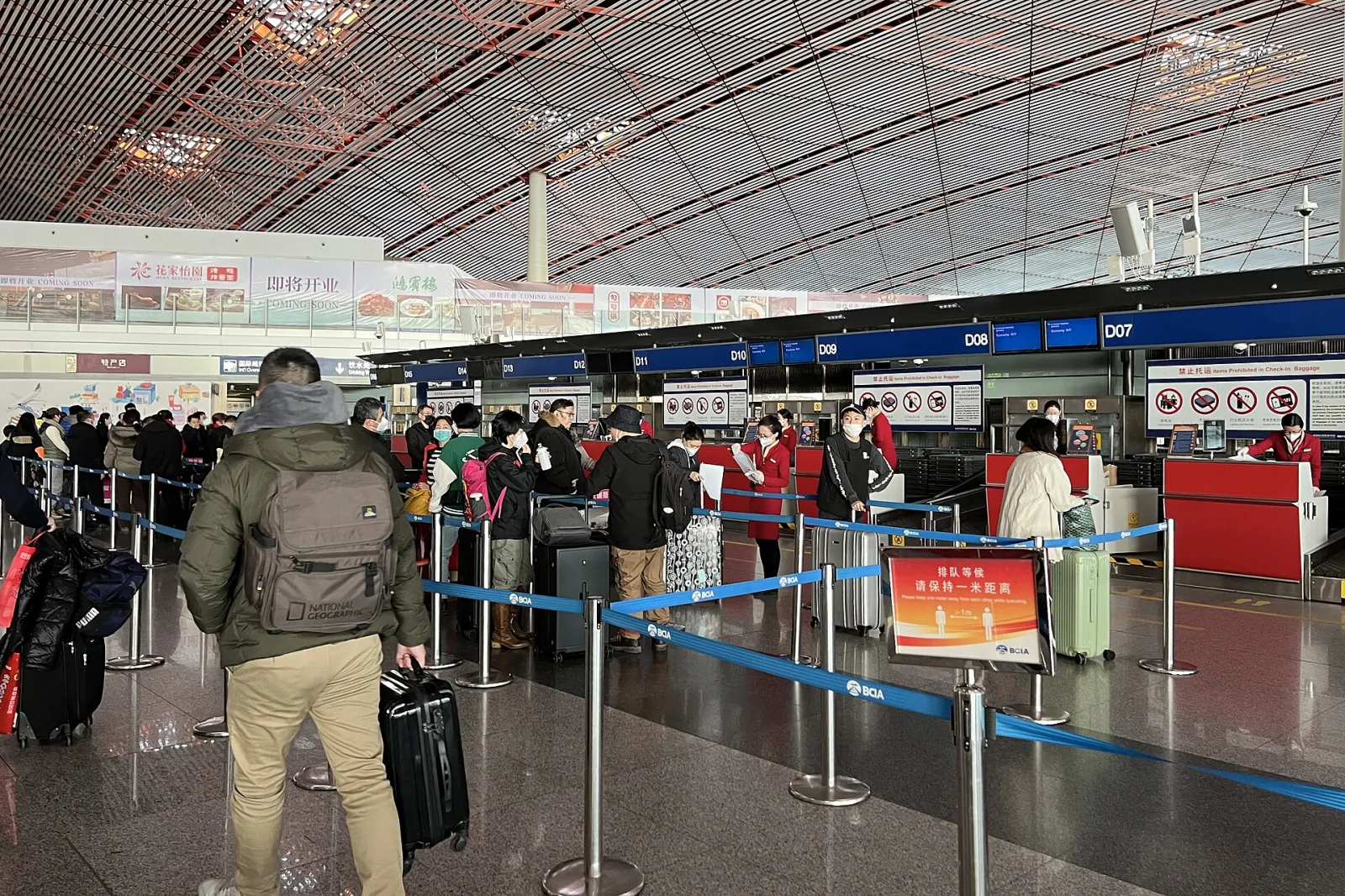
Car rental by main airport
Casablanca Mohammed V Airport (CMN)
The country’s leading airport concentrates the largest number of companies: Hertz, Sixt, Budget, Thrifty, Dollar, AirCar, AddCar, Green Motion, plus many local ones. The counters are in the Terminal 1 arrivals hall. It is an ideal starting point for a route to Rabat, Marrakech or the Atlantic coast. Allow for Casablanca’s dense traffic when leaving the airport.
Marrakech Menara Airport (RAK)
Highly touristic, Marrakech offers a wide choice of international and local agencies across Terminals 1 and 2. Demand is strong: book ahead in high season (spring, year-end holidays). Marrakech is the most popular base for exploring the Atlas, Essaouira, Ouarzazate and the Ourika Valley.
Agadir Al Massira Airport (AGA)
A beach destination, Agadir has many companies at the arrivals counter. It is a good starting point for Taghazout, Paradise Valley or the south (Tiznit, Sidi Ifni). Summer demand pushes prices up: compare and book early.
Fes Saiss (FEZ), Tangier Ibn Battouta (TNG) and Rabat Sale (RBA)
These airports offer a more limited range. In Fes, an ideal base for the Middle Atlas and the imperial cities, book ahead as the number of available vehicles is limited. Tangier, gateway to the north and the Rif, combines international and local companies. Rabat Sale, more modest, operates mostly by advance reservation. In all cases, booking online a few days ahead guarantees availability and a better rate.
If you prefer not to drive straight from arrival, compare the alternatives via our Morocco airport transfers comparison, or look into parking at Morocco’s airports if you are leaving your own vehicle.
Frequently asked questions
Do I need an international permit to rent a car in Morocco?
No, if your national licence is written in the Latin alphabet (such as a French licence). An International Driving Permit is required, however, if your licence is in non-Latin characters; it then accompanies the original, which it never replaces.
How much is the deposit?
It is generally 5,000 to 20,000 MAD (about 1,000 to 2,000 €), held as a pre-authorisation on a credit card in the driver’s name, and sometimes up to 3,000 € for an SUV. It often matches the excess amount and is released within 5 to 7 business days after return.
Can I pay the deposit with a debit card?
Rarely. Almost all companies require a genuine credit card to hold the deposit. Debit and prepaid cards are often refused. Check this point before booking.
Is basic insurance enough?
It covers the essentials but leaves a high excess for you to bear in case of damage. For peace of mind, consider an excess waiver (at the counter) or excess insurance bought online. Beware of exclusions (tyres, underbody, windscreen), which are rarely covered.
What age do I need to rent?
Generally 21 minimum, with a licence held for at least a year. A young-driver surcharge often applies before 25, and some categories (4×4, premium) require a higher age.
Is it better to book online or at the counter?
Booking online in advance is almost always better value: a better price, comparison of conditions, and guaranteed availability in high season. At the counter, last-minute rates are higher and the choice more limited.
What should I check before leaving the counter?
The fuel policy, the mileage (unlimited preferably), the insurance level, the photographed condition report, the presence of the spare wheel and safety equipment, and the absence of unrequested options added to the contract.
In summary
Car rental at Morocco’s airports is convenient and affordable if you prepare your file. Book online in advance, bring a credit card in the driver’s name for the deposit (5,000 to 20,000 MAD depending on the vehicle), choose suitable insurance cover (excess waiver or excess insurance), and be rigorous about the condition report and fuel policy. The big brands (Avis, Hertz, Europcar, Sixt, Budget) offer a standardised framework, while local companies appeal on price: in both cases, read the contract and keep all your evidence until the deposit is released. To round out your arrival plans, see our guide to VIP lounges at Morocco’s airports and the list of airlines flying to Morocco.
Official sources
- National Airports Authority (ONDA) — Morocco’s airports
- Avis Morocco — conditions and driving rules
- Hertz Morocco — airport branches
- Sixt Morocco — airport rentals
- Europcar — rental conditions
Photo credit
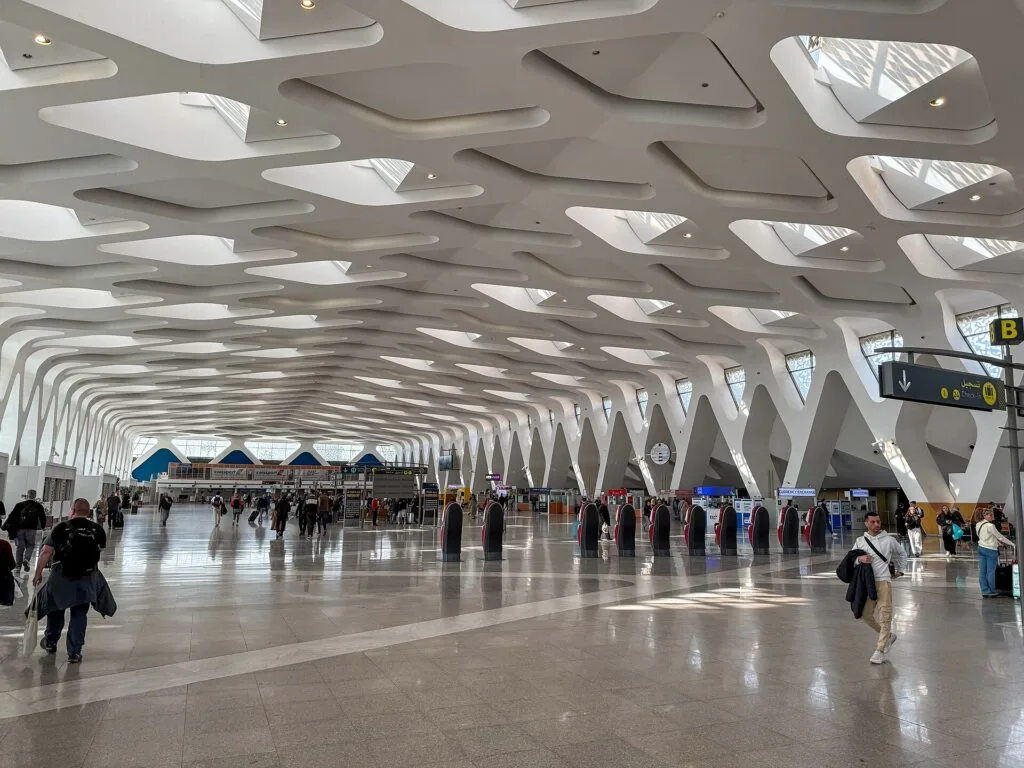
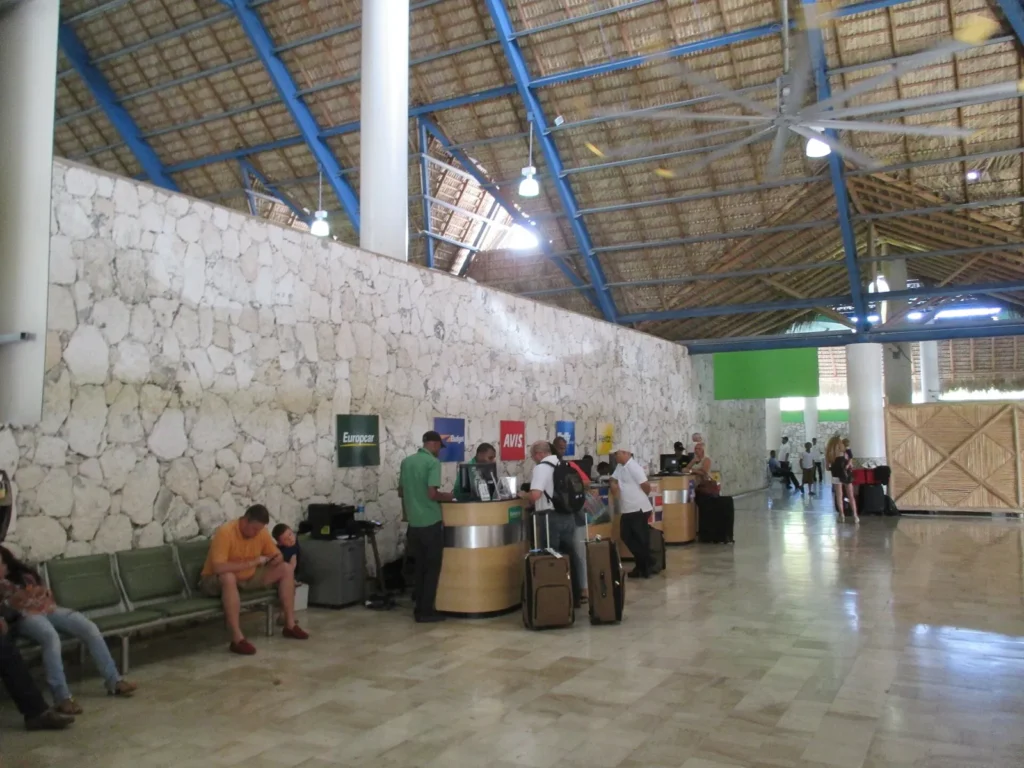
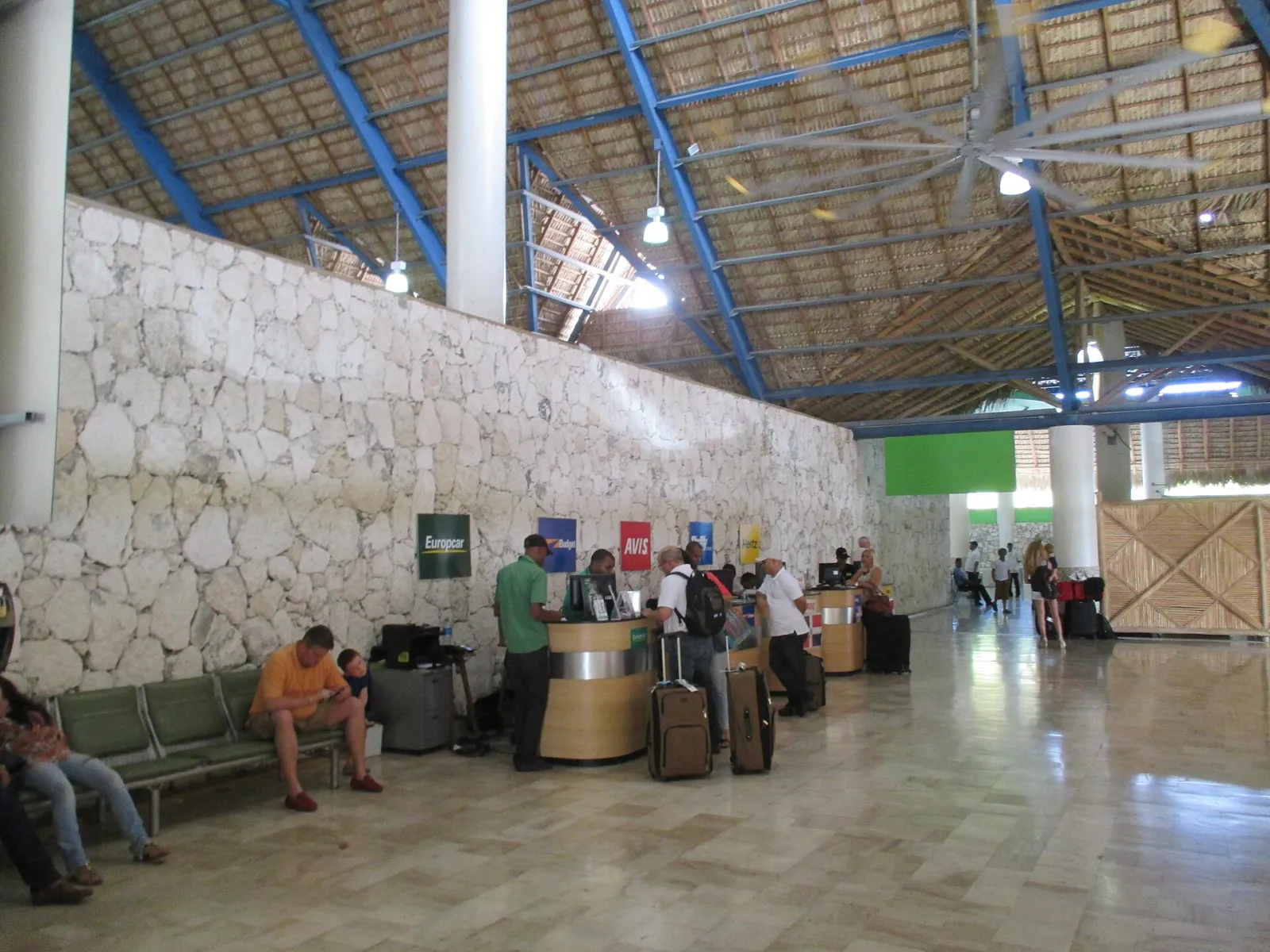
Illustrations : « Punta Cana airport rental car agencies » — Mattes (CC BY 2.0) ; « Cathay Pacific check-in counters » — N509FZ (CC BY-SA 4.0), via Wikimedia Commons.