Experiencing the desert from Marrakech is absolutely doable on an organized excursion, but everything depends on how much time you have. In short: for the great golden movie-set dunes, head to Merzouga and Erg Chebbi (roughly 560 km, 8 to 10 hours’ drive), a 3-day / 2-night tour that crosses the Tizi n’Tichka pass, Aït Benhaddou and the gorges. If you’re short on time, Zagora and the Draa Valley (roughly 360 km, 7 hours) offer a 2-day / 1-night getaway with more modest dunes. Finally, Erg Chigaga (M’Hamid) appeals to adventurers craving a wild Sahara reachable by 4×4. This independent guide helps you choose the right destination, understand the route, estimate the budget and properly prepare for your night under the stars, with no nasty surprises.
In brief: the desert from Marrakech
- Merzouga (Erg Chebbi): the truly big dunes (up to ~150 m), the benchmark experience, but far away (~560 km, 8-10 h).
- Zagora (Draa Valley): the short 2-day option, smaller dunes, oasis and ksour scenery.
- Erg Chigaga (M’Hamid): tall, wild dunes, 4×4 access, for travelers who want a remote desert.
- Recommended format: 3 days / 2 nights to Merzouga to truly enjoy the Sahara.
- When to go: October to April; avoid July-August (extreme daytime heat).
- What to experience: a camel ride, a Berber camp, sunset and sunrise over the dunes, a starry sky.
Merzouga, Zagora or Chigaga: which desert from Marrakech?
The first decision to make isn’t “which agency,” but “which desert.” The three classic destinations from Marrakech offer very different experiences, and your choice determines the duration, the budget and the type of scenery you’ll bring home in your photos.
Merzouga and Erg Chebbi: the great dunes
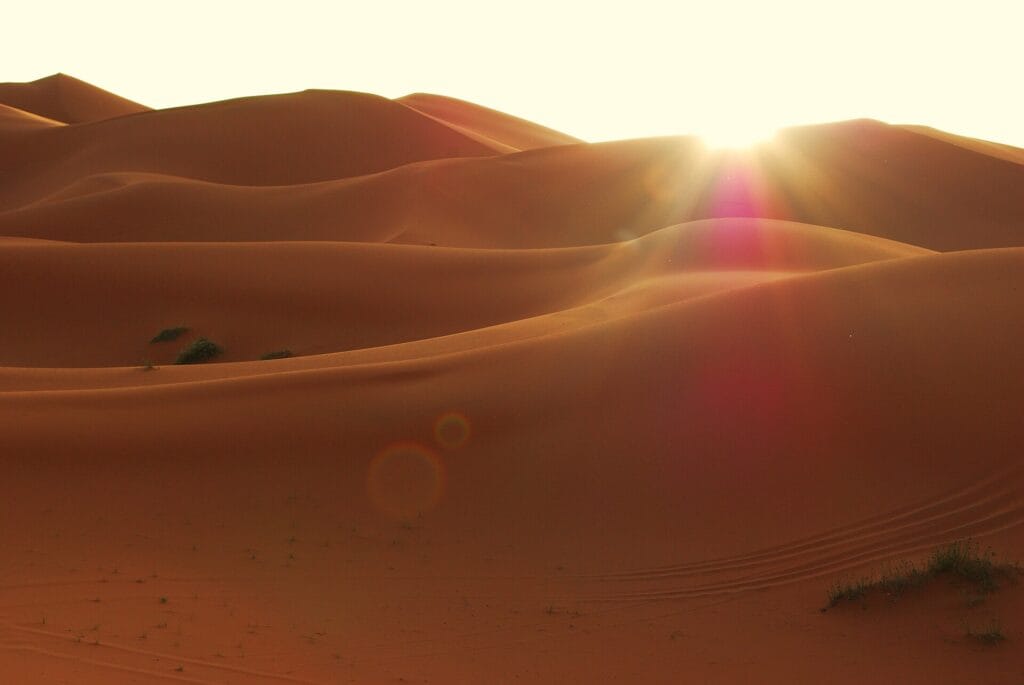
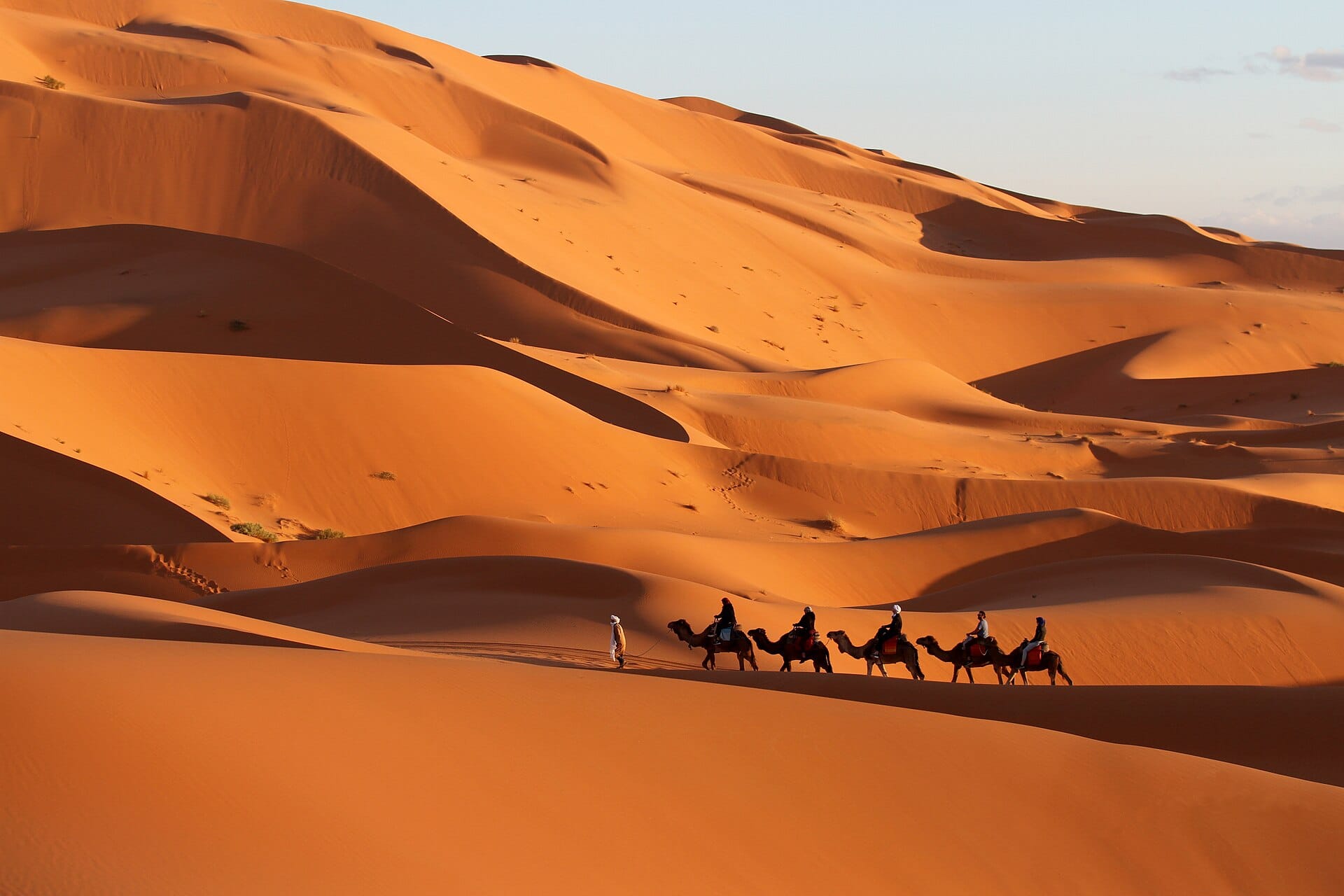
This is the image most travelers have in mind: an ocean of orange dunes rippling to the horizon. Erg Chebbi, near the village of Merzouga, features dunes that can reach around 150 meters high. It’s the quintessential postcard setting, perfect for sunset, an overnight camp and daybreak. The only real drawback is the distance: about 560 km from Marrakech, or 8 to 10 hours of driving, which calls for a 3-day tour at minimum.
From Merzouga, the heart of the dunes is reached in about thirty minutes to an hour by camel, or in a few minutes by 4×4. It’s this immediate proximity to fine, tall sand, shifting in color from pink to gold and then red depending on the light, that gives Erg Chebbi its reputation. The most intense colors appear at the very start and the very end of the day, so it’s best to arrive in the late afternoon and leave after sunrise so you don’t miss any of the show.
Zagora and the Draa Valley: the short option
Zagora lies about 360 km from Marrakech (nearly 7 hours’ drive), which allows for a 2-day / 1-night getaway. Be mindful of your expectations, though: the dunes of Erg Lehoudi here are much smaller (often 30 to 40 m) and the landscape is defined more by rocky desert (hammada) and by the magnificent Draa Valley, with its long palm grove and its earthen ksour. Zagora is the right compromise if your stay in Marrakech is short and you still want a taste of the desert’s silence and a night in camp.
Erg Chigaga: the wild Sahara by 4×4
More off the beaten path, Erg Chigaga stretches beyond M’Hamid el Ghizlane, some fifty kilometers west of the village and roughly 98 km south of Zagora. Its tall, sprawling dunes rival those of Merzouga, but access is only by 4×4, along tracks. It’s the option for travelers seeking a remote desert, far from the busiest circuits, even if it means adding a day and a higher transport budget.
M’Hamid el Ghizlane, the last oasis before the great Sahara, marks in a sense the end of the paved road: beyond it, it’s all tracks and silence. The Chigaga massif runs for several dozen kilometers and rises to impressive heights. This destination requires more organization and a suitable vehicle, but it rewards travelers with a sense of isolation and vastness that the more touristy sites rarely offer.
How many days for the desert from Marrakech: 2 or 3?
The question of how many days is decisive, because it determines which destination is realistic. Simply put: 2 days = Zagora, 3 days = Merzouga. Trying to do Merzouga in 2 days means spending nearly the entire time in the car, with no real payoff. Conversely, if you have 4 days or more, you can consider a more relaxed tour to Merzouga with an extra night along the way, or push on to Erg Chigaga for a deeper immersion.
| Criterion | Zagora — 2 days / 1 night | Merzouga — 3 days / 2 nights |
|---|---|---|
| Distance from Marrakech | ~360 km | ~560 km |
| Driving time (one way) | ~7 h | ~8 to 10 h |
| Dunes | Modest (~30-40 m), oasis scenery | Great dunes (~150 m), Erg Chebbi |
| Pace | Intense, lots of driving | More balanced, spread-out stops |
| Who it’s for | Short stay, a first glimpse of the desert | Real immersion, iconic dune photos |
Our recommendation: if your schedule allows, go for the 3 days to Merzouga. The difference in scenery is well worth the extra day. Book Zagora only if you genuinely have just two days to devote to the Sahara.
The route and stops on the way to Merzouga
The journey to the desert isn’t just a long transfer: it’s one of Morocco’s most beautiful road trips, punctuated by remarkable stops. Here are the highlights of a classic 3-day tour.
- The Tizi n’Tichka pass: at 2,260 m of altitude, it’s the highest road pass in North Africa. The winding, spectacular mountain road crosses the High Atlas and offers superb panoramas.
- Aït Benhaddou: this red-earth ksar, a UNESCO World Heritage Site since 1987, is one of the most photogenic sites in the country, often used as a film set.
- Ouarzazate: nicknamed the “gateway to the desert,” the capital of Moroccan cinema, with its studios and the Taourirt kasbah.
- Dades Valley and Todgha Gorges: dizzying cliffs, a winding road and villages clinging to the rock, often on the second day’s agenda toward Merzouga.
- Arrival in Merzouga: in the late afternoon, time for a camel ride to the camp in the heart of the Erg Chebbi dunes.
In practical terms, a 3-day excursion is often organized like this: the first day links Marrakech to the Dades Valley by crossing the Tizi n’Tichka, with a visit to Aït Benhaddou and a stop in Ouarzazate; the second day passes through the Todgha Gorges and the Road of a Thousand Kasbahs all the way to Merzouga, where you reach the camp by camel for sunset; the third day begins with sunrise over the dunes, then heads back toward Marrakech by a different route. The driving days are long, but every stop brings its share of scenery: oases, palm groves, earthen kasbahs and steep-sided valleys.
The Todgha Gorges deserve a lingering look: these limestone cliffs, which can rise several hundred meters, frame a narrow watercourse in an impressive mineral landscape prized by hikers and climbers. The Dades Valley, with its tight switchback road and rock formations nicknamed “the monkey fingers,” offers one of the most photogenic routes in Morocco. To dig deeper into the first stage, see our dedicated guide Aït Benhaddou and Ouarzazate from Marrakech.
The night at camp: from standard to luxury
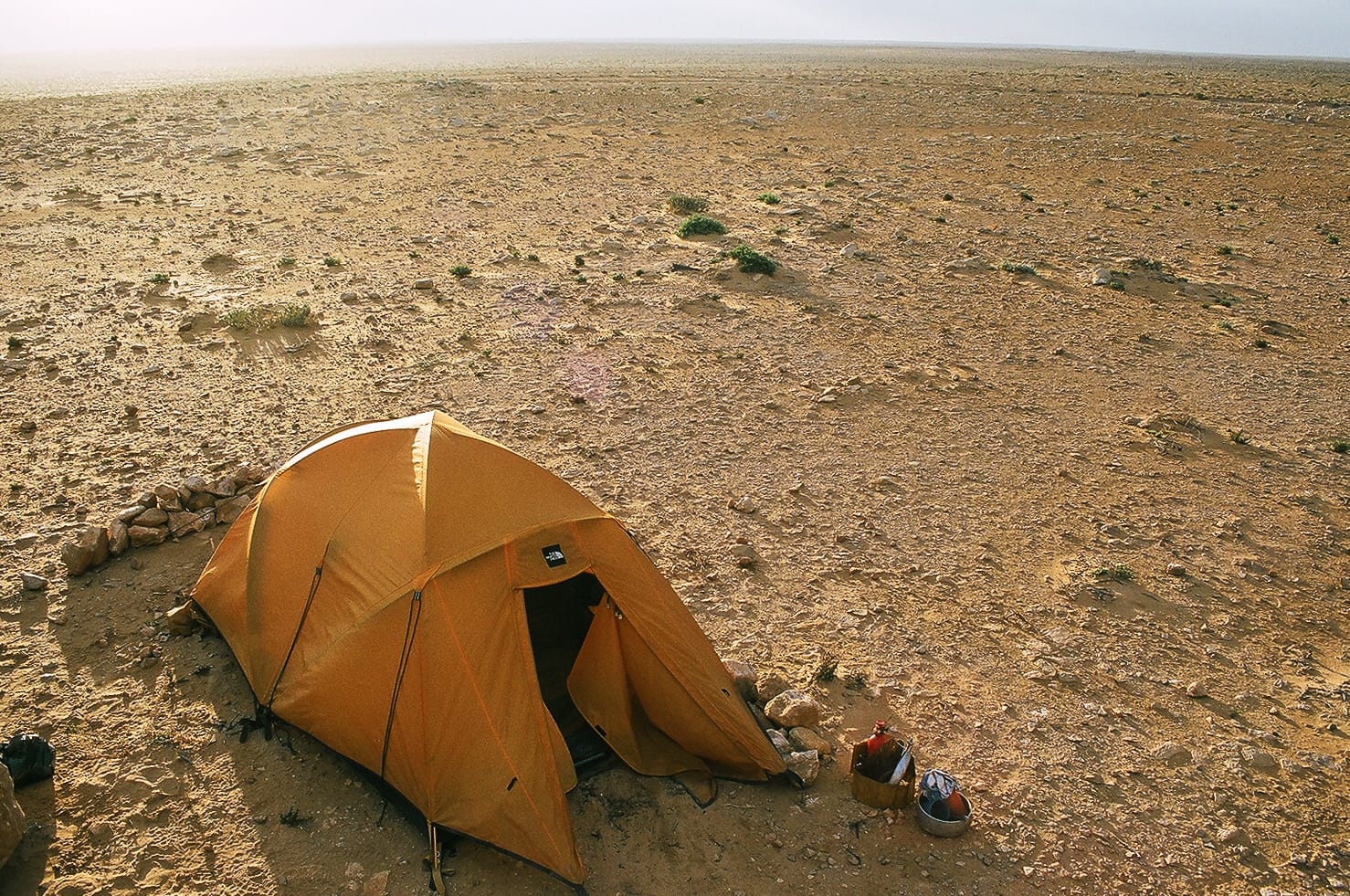
The night in a tent amid the dunes is the highlight of the excursion. Camps come in several levels of comfort. Standard camps offer simple Berber tents, shared facilities and a traditional dinner (tagine, soup, tea). Boutique or “luxury” camps offer spacious tents with real beds, a private bathroom and sometimes electricity, for comfort close to a hotel.
Whatever level you choose, the experience stays focused on the essentials: dinner around the fire, often livened up with Berber or Gnawa music to the sound of drums and singing, then a starry sky of rare purity, far from any light pollution. Remember to step out of your tent in the middle of the night: on a clear night, the Milky Way is spectacular.
A few practical points to know before booking your night in the dunes: electricity is often limited to the common areas or supplied by solar panels, the mobile network can be temperamental, and the nights are cool even after a hot day. Bring a headlamp, a charged power bank and warm clothing. If you travel in winter, ask the camp whether it provides extra blankets: the temperature swing between day and night often surprises visitors. Finally, respect the place: take your trash with you and limit water use, a precious resource in the desert.
The camel and the desert activities
The camel ride (often wrongly called a “camel” in the two-humped sense, since these are actually one-humped dromedaries) is the signature activity: at sunset, the caravan pushes into the dunes over about thirty minutes to an hour of walking to reach the camp. The next morning, the sunrise over the sand crests is an unforgettable moment. Wear comfortable trousers and hold on tight when the animal stands up and sits down: the movement is abrupt and throws beginners off balance. If you’d rather spare your back or knees, know that most camps can also be reached by 4×4.
Beyond the camel, several activities are offered, often at extra cost:
- Quad and buggy: thrills in the dunes, at the end of the day.
- Sandboarding: riding down the sand slopes on a board.
- 4×4 excursion: reaching viewpoints or, at Chigaga, the erg itself.
- Music and evening gatherings: Berber and Gnawa nights around the fire.
- Walking and stargazing: free, and often the most memorable.
If you’re looking for a closer alternative for a simple evening in the dunes without the long hours of driving, the Agafay Desert near Marrakech can complement or replace the great Sahara.
When to go to the Moroccan desert?
The best time runs from October to April, when daytime temperatures are bearable. Spring (March-April) and autumn (October-November) are ideal: mild days and cool but comfortable nights.
- July-August: to be avoided. The heat can exceed 45 °C during the day, making the rides grueling.
- December-February: pleasant during the day, but the nights are cold in the desert (sometimes close to 0 °C). Bring warm clothes for the camp.
- March-April and October-November: the best balance between daytime comfort and mild nights.
To plan your overall stay, also see our guide to the best time to visit Marrakech.
How to book your excursion: group, private or small-group
Before comparing prices, keep in mind that a successful excursion rests on the quality of the organization: a reliable driver, the condition of the vehicle, a clear program and transparency about what’s included. Three formats dominate the market for desert excursions from Marrakech:
- Shared group tour: the most economical. You travel by minibus with other travelers. Ideal for tight budgets, less flexibility on stops.
- Private excursion: a vehicle and driver-guide just for you. More expensive, but flexible timing, photo stops on request and a personalized pace, perfect for families.
- Upscale camp: the logistics are the same, but the night is spent in a luxury camp, which pushes up the budget.
As an indicative figure, a 3-day tour to Merzouga in a shared group often starts around 90 to 150 € per person (transport, accommodation, some meals and a night in camp included), while a private excursion or a luxury camp can easily exceed 300 to 500 € per person depending on comfort and season. A 2-day getaway to Zagora is naturally cheaper. These rates vary widely; always check what’s included (meals, entrance fees, activities) before booking.
To compare the formats and prices of trips departing from the city, see our guide to Marrakech excursions 2026, and take the time to read our advice on safety and scams in Marrakech so you can book with peace of mind.
What to pack for the desert?
The desert brings big temperature swings and a long drive. Good preparation changes everything:
- Layered clothing: warm by day, cold at night, especially in winter. Bring a jacket and a sweater.
- Sun protection: a hat or a chèche (headscarf), sunglasses, sunscreen is essential.
- Closed shoes and a lightweight pair for walking in the sand.
- Water and snacks for the long stretches of road.
- A small bag for the night at camp (the big luggage often stays in the vehicle).
- Cash for tips, activities and purchases along the way.
- A headlamp and a power bank: electricity is limited at the camps.
Remember that the road is long: set off early, bring something to keep you occupied and, if you’re prone to motion sickness, take a precaution before the mountain stretches of the Tizi n’Tichka. Also think about a minimal first-aid kit, your personal medication and protection for your camera or phone, because the fine sand gets in everywhere. A chèche-style scarf is useful against the sun, wind and sand alike, and makes an excellent souvenir bought on the spot.
On the health side, drink regularly to avoid dehydration, especially in the shoulder seasons when the dry heat makes you sweat less than you’d think. Avoid the sun during the strongest hours and always keep a bottle of water within reach during walks in the dunes.
Combining the desert with Aït Benhaddou and Ouarzazate
Good news: the route to Merzouga naturally includes Aït Benhaddou and Ouarzazate, so you don’t have to choose. The first day of a 3-day tour generally combines the Tizi n’Tichka pass, a visit to Aït Benhaddou and a stop in Ouarzazate before the evening stage in the Dades Valley. The desert and these sites form a coherent whole.
If you’re short on time for the great Sahara, a dedicated day trip to Aït Benhaddou and Ouarzazate, or an outing to the Ourika Valley, is already enough to discover the Atlas landscapes. To organize your whole stay, lean on our guides what to do in Marrakech and Marrakech in 3 days, as well as our advice on choosing where to stay in Marrakech before and after your desert trip.
Frequently asked questions
Can you see the great desert dunes in a single day from Marrakech?
No. Merzouga and Erg Chebbi are about 560 km away (8 to 10 hours’ drive): you need at least 2 days, and ideally 3 days / 2 nights. For a simple evening in the dunes in a single day, turn instead to the Agafay Desert, right next to Marrakech.
Merzouga or Zagora: what’s the main difference?
Merzouga offers the great dunes (up to ~150 m) but takes 3 days; Zagora is closer (2 days) but its dunes are much smaller and the landscape rockier. Choose Merzouga for the iconic dunes, Zagora if your time is limited.
When is the best time to go to the desert?
From October to April. The months of March-April and October-November are the most pleasant. Avoid July-August (extreme heat) and pack warm clothes in December-February, as the nights there are cold.
Is the camp comfortable?
It depends on the camp. Standard camps offer simple tents with shared facilities; luxury camps offer real beds, a private bathroom and sometimes electricity. In every case, a traditional dinner, a campfire and a starry sky are part of the deal.
How much does a desert excursion from Marrakech cost?
As an indicative figure, a 3-day tour to Merzouga in a shared group often starts around 90 to 150 € per person, while a private option or a luxury camp can exceed 300 to 500 €. Always check what’s included (meals, activities, entrance fees) before booking.
Is the desert suitable for families with children?
Yes, but the road is long. A private excursion is better suited to families (frequent stops, flexible pace, breaks according to the children’s needs). For young children, the Zagora option (2 days) or an outing to Agafay, much closer to Marrakech, can be significantly less tiring than the 3 days to Merzouga while still offering a first taste of the desert and a night under canvas.
Conclusion
The desert from Marrakech takes a bit of effort, but the experience is unforgettable. If you have three days, head for Merzouga and Erg Chebbi to experience the great dunes, the camp and the dreamlike sunrise. If your stay is short, Zagora offers a lovely taste of the Sahara in two days, and adventurers will set their sights on Erg Chigaga by 4×4. Pick the right season, prepare your layered clothing, carefully compare what’s included in your tour, and savor one of Morocco’s most beautiful escapes. Between the earthen kasbahs, the spectacular gorges and the silence of the dunes at daybreak, the great Moroccan south remains one of those experiences you never forget.
Independent guide, not affiliated with ONDA. Distances, durations and prices are given for indication only and change with the season, the route and the provider. Always check the information (schedules, prices, services included) with your agency before setting off.
Images under free license via Wikimedia Commons: © Nomadz (CC BY-SA 3.0); © Merzougaloisirs (CC BY-SA 4.0); © Alexander Leisser (CC BY-SA 4.0). Sources: UNESCO and Wikipedia.