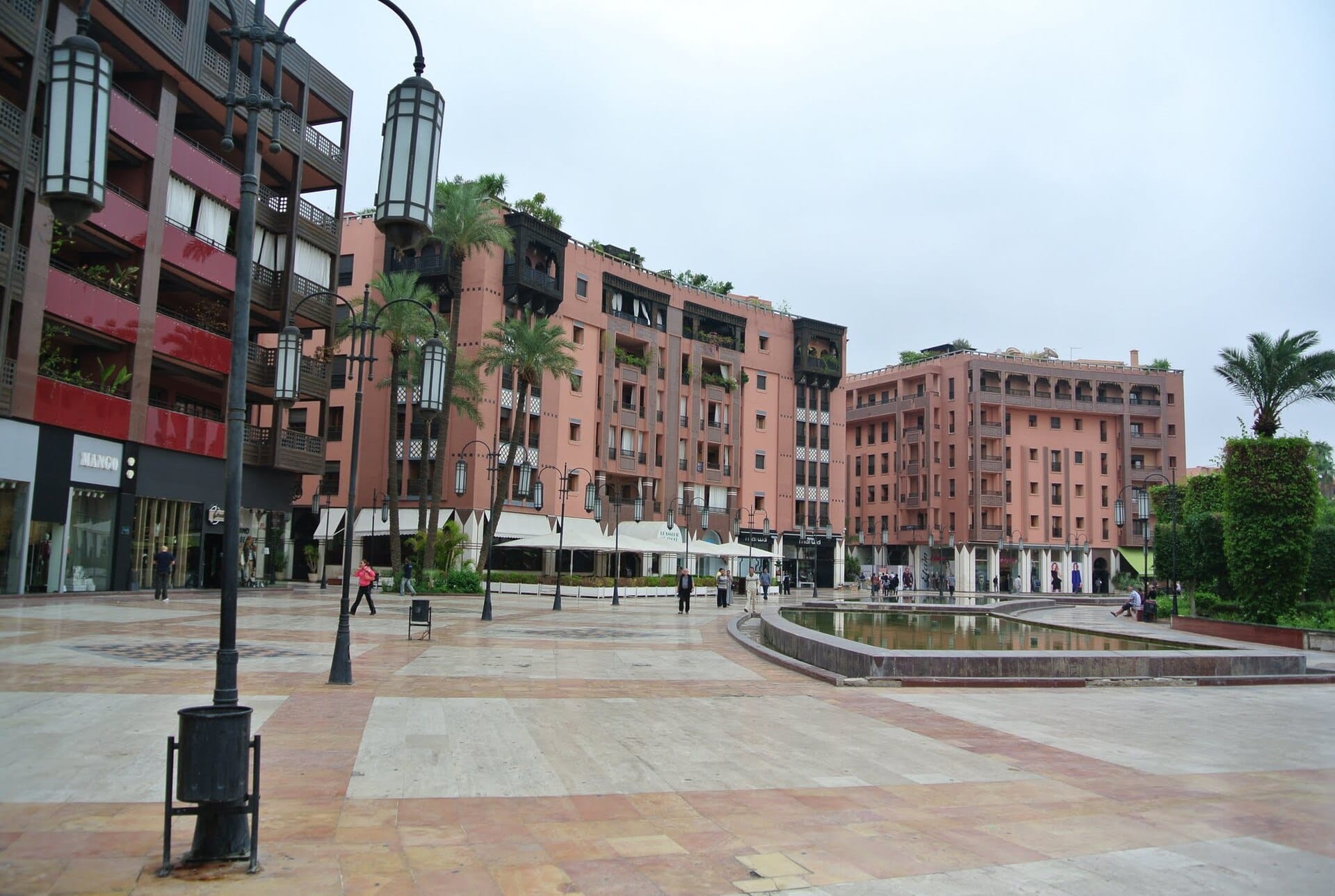
The Gueliz Marrakech district is the new town of the ochre city: a modern, airy and cosmopolitan area, born under the French protectorate from 1913 onward, that stands in complete contrast to the maze of the medina. Here there are no narrow alleys or labyrinthine souks, but wide avenues lined with cafés, restaurants, designer boutiques, contemporary art galleries and shopping centres. If you are looking for everyday Marrakech, the one lived in by locals, expatriates and current brands, while remaining just minutes from the Majorelle Garden and the Yves Saint Laurent Museum, Gueliz is the ideal starting point. This guide explains what this district is, its history, what you can do there and how to make the most of it.
In brief: the essentials on Gueliz
- New town created from 1913 onward, during the French protectorate, following the urban planning designs of Henri Prost.
- The modern district of Marrakech: straight avenues, recent buildings, an urban and international atmosphere.
- Avenue Mohammed V, the central artery, connects Gueliz to the medina and the Koutoubia Mosque.
- The hub for shopping, cafés, dining and nightlife in the city.
- The Majorelle Garden and the Yves Saint Laurent Museum are located right nearby.
- A striking contrast with the historic medina, a UNESCO World Heritage Site.
What is Gueliz, the new town of Marrakech?
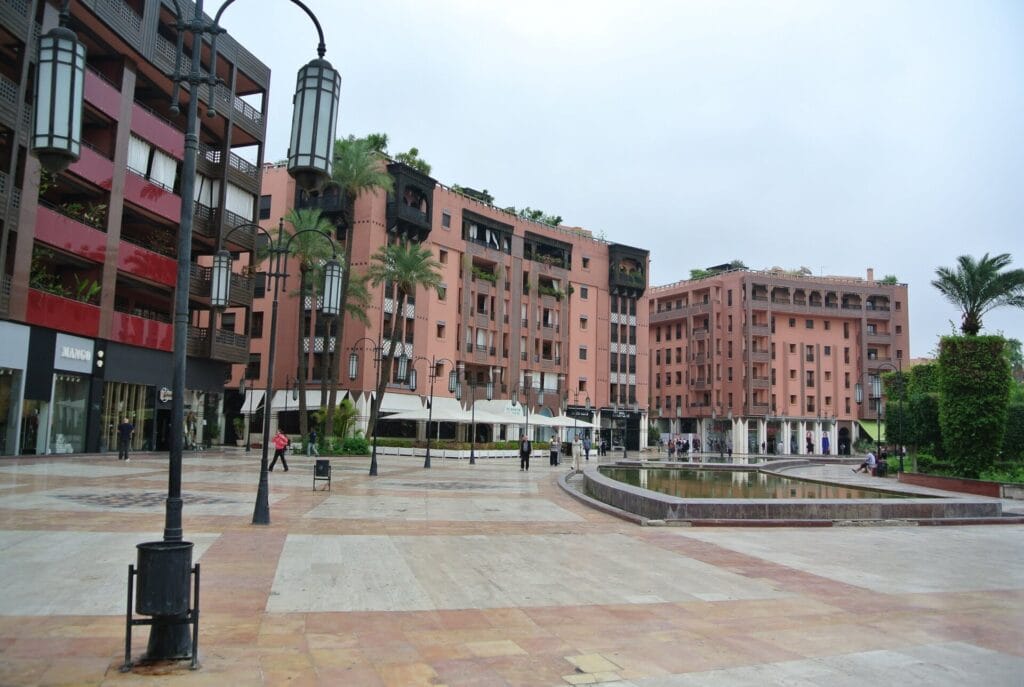
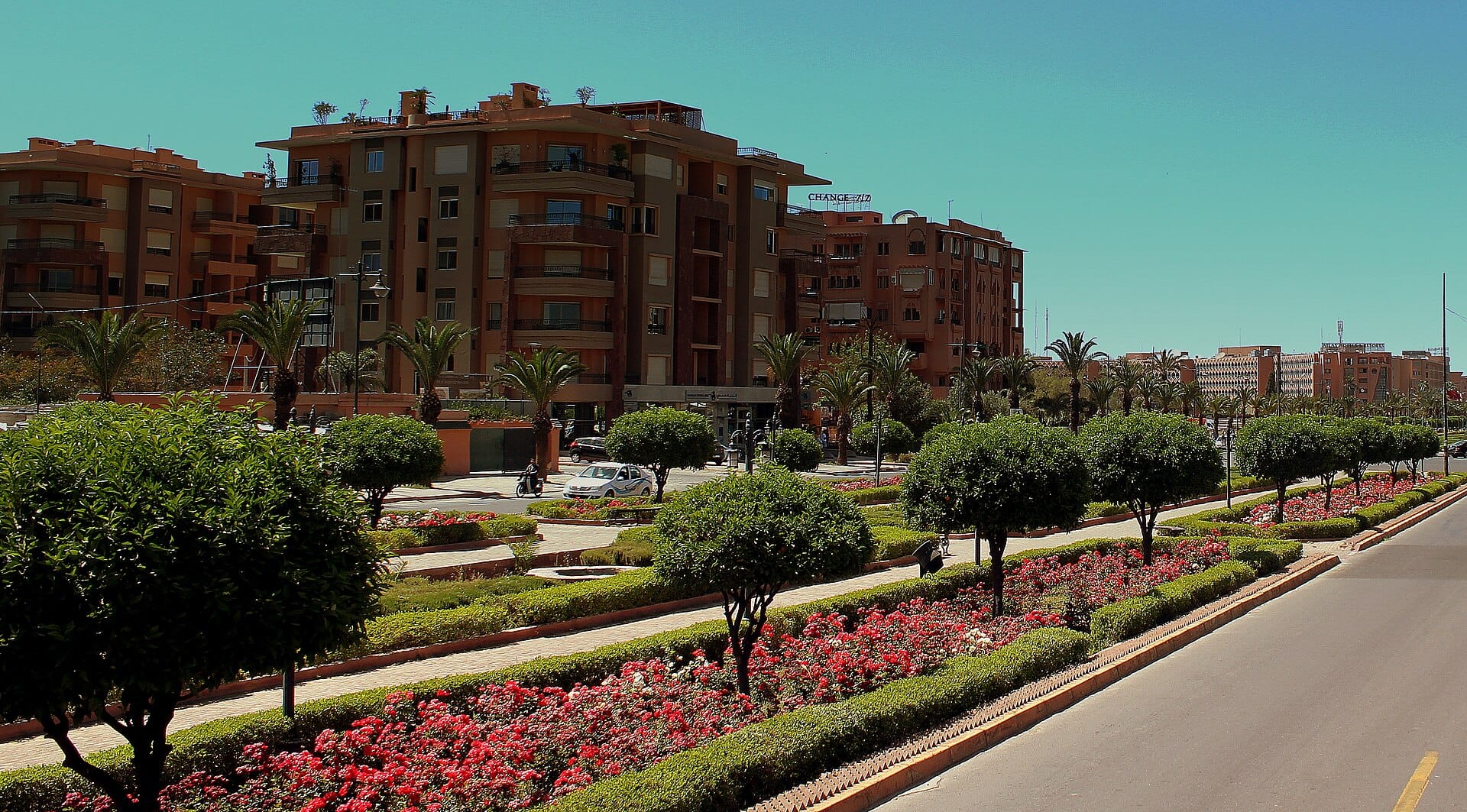
Gueliz refers to the main modern district of Marrakech, located to the west of the historic medina. It is commonly called the “new town” (as opposed to the “old town” enclosed within its ramparts). It is the contemporary administrative, commercial and residential heart of the city: banks, corporate headquarters, clinics, agencies, restaurants and shops are concentrated here. The district is organised around a grid plan, with long avenues crossing at right angles, a rarity in Marrakech, where the medina grew organically over the centuries.
The name “Gueliz” is generally linked to the hill and the former Church of the Holy Martyrs that overlooked the area in the early 20th century. Today this place name has spread to the entire surrounding district. For a visitor, Gueliz represents the most westernised and relaxed face of Marrakech: you can stroll from terrace to terrace, shop in air-conditioned galleries, dine late into the evening and discover the local art scene, all in a calmer atmosphere than the bustle of the souks. For an overview of things to do in the city, see our complete guide to things to do in Marrakech.
History: the creation of Gueliz under the protectorate and Henri Prost
The history of Gueliz begins with the establishment of the French protectorate in Morocco in 1912. The authorities decided not to build inside the medina in order to preserve the historic fabric, but rather to erect a new town set apart from the ramparts. Marrakech thus followed the same urban planning logic as other Moroccan cities of the period, where the old and the modern developed side by side rather than one on top of the other.
It was the French urban planner Henri Prost who is associated with designing the development plans for the major Moroccan cities under the protectorate. In Marrakech, the new town took shape from 1913 onward, with its wide avenues, tree-lined pavements and grid layout. This approach aimed to create a functional, modern district equipped with services, while keeping a respectful distance from the imperial medina. Over the decades, Gueliz became denser, transformed and modernised, absorbing the rapid growth of Marrakech to become the dynamic district we know today. To better grasp the contrast, explore our dedicated article on the Marrakech medina.
This logic of the dual city, old and new, profoundly shaped 20th-century Moroccan urban planning. Rather than demolishing or distorting the heritage, the choice was made to build alongside it, leaving the medina its integrity. This largely explains why the old town of Marrakech has been able to preserve its exceptional character, now recognised internationally. From the very start, Gueliz thus became the laboratory of Marrakech modernity: shops, cinemas, apartment buildings and institutions emerged here, gradually shaping an urban way of life distinct from that of the historic quarters. Understanding this history helps explain why the district today possesses such a particular identity, at the crossroads of influences.
Avenue Mohammed V, the backbone of Gueliz
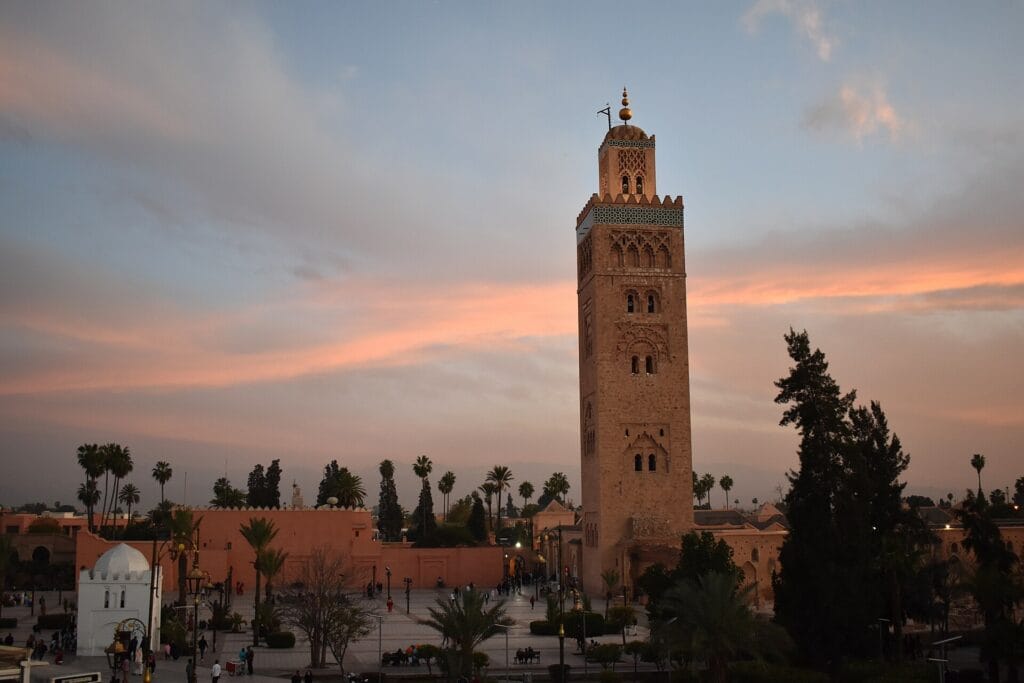
It is impossible to talk about the Gueliz district without mentioning Avenue Mohammed V. This major artery links the new town to the medina: it starts from the Gueliz area, crosses the city and emerges near the Koutoubia Mosque and Marrakech’s emblematic square. It is a defining axis, at once a thoroughfare, a promenade and a commercial showcase.
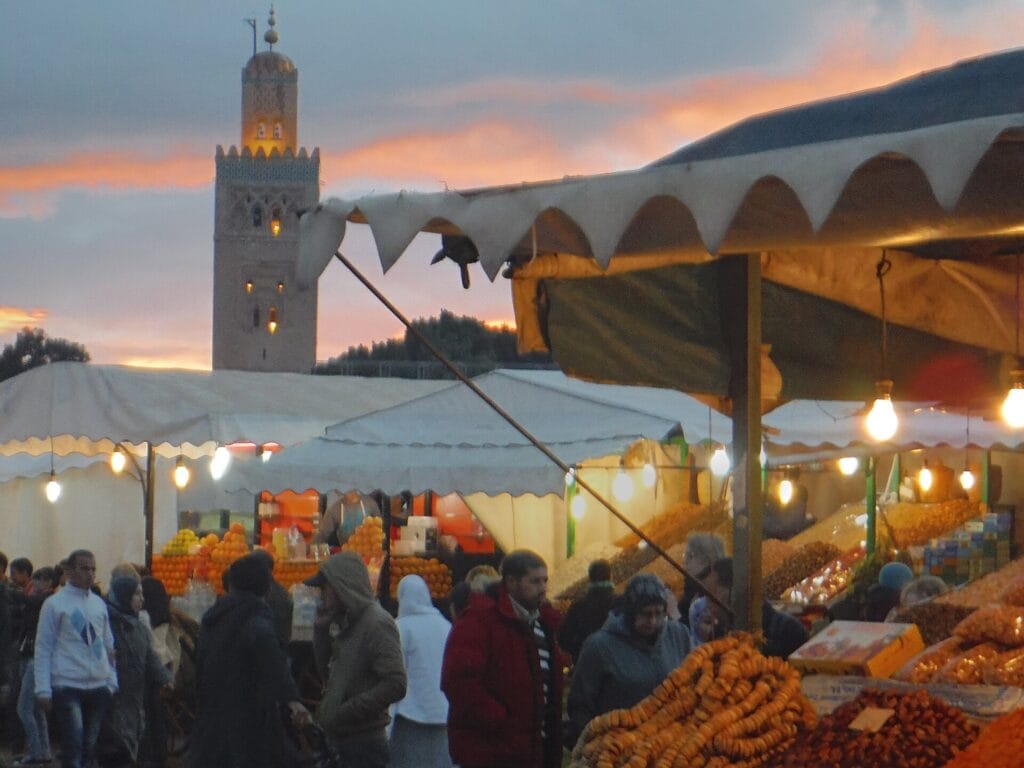
Along Avenue Mohammed V and its adjacent streets you will find cafés, restaurants, shops, cinemas and institutions. Walking down this avenue means making the transition between two worlds: on one side the modernity of Gueliz, on the other the age-old heritage of the old town and its emblematic minaret. At the medina end stands the Koutoubia Mosque, whose minaret serves as a visual landmark throughout the city. It is an excellent route to take on foot or by taxi to feel the duality of Marrakech.
Shopping and boutiques: Carré Eden and reimagined craftsmanship
Gueliz is the district of modern shopping in Marrakech. Unlike the souks of the medina, where you haggle in traditional stalls, here you find fixed-price brands, concept stores and air-conditioned shopping centres. Carré Eden is one of the best-known shopping centres in the district: fashion boutiques, dining and relaxation spaces are brought together under one roof, a real comfort during the hot hours of the day.
Beyond the big brands, Gueliz has established itself as the haven of reimagined, high-end Moroccan craftsmanship. Many designers and design boutiques offer decorative objects, textiles, leather goods and jewellery that reinterpret traditional know-how with a contemporary aesthetic. It is the ideal place if you are looking for original pieces without having to negotiate. For gift ideas and specialities to bring home, take a look at our guide on what to buy in Marrakech.
Cafés and restaurants: everyday Marrakech
Café culture reigns in Gueliz. The district is full of terraces where locals, professionals and expatriates gather for a coffee, a mint tea or a fresh orange juice. This terrace life, deeply rooted in local habits, gives the district a relaxed and convivial atmosphere, often more peaceful than the tourist bustle of the medina.
When it comes to dining, Gueliz offers a particularly varied selection. You will find modern Moroccan restaurants as well as international tables: French, Italian, Asian and Mediterranean cuisine, but also vegetarian options and trendy spots. The price ranges are wide, from the affordable little bistro to the more refined table. To eat well in the district and elsewhere in the city, see our selection on where to eat in Marrakech. Gueliz is especially appreciated by those who want a change from traditional dishes and to rediscover familiar flavours.
The district is also excellent ground for morning food lovers: pastry shops, bakeries and tea rooms offer viennoiseries, msemen, freshly pressed juices and carefully made coffees. At lunchtime, quick set menus sit alongside more relaxed brasseries, while the evening sees the more festive tables open up. This density of venues, spread along the avenues and through the side streets, makes Gueliz a district where you eat well at any hour, without having to plunge back into the bustle of the souks. It is also a good point of comparison with the traditional street food best enjoyed over on the medina side.
Contemporary art galleries in Gueliz
Over the years, Gueliz has become the epicentre of Marrakech’s contemporary art scene. The district brings together several art galleries that exhibit Moroccan and international artists in bright, modern spaces. Painting, photography, sculpture, graphic arts: the programming is rich and regularly renewed, reflecting the creative vitality of the city.
For art lovers, strolling from gallery to gallery is a pleasant and free way to discover another side of Marrakech, far from the clichés. This artistic dynamism is part of a broader momentum that has made the city a recognised cultural destination, driven in particular by major institutions and museums. The presence of these galleries contributes to the cosmopolitan and cultivated identity of Gueliz, very different from the traditional craftsmanship of the souks.
Many galleries are concentrated within a small area, which allows you to visit several on foot during a single outing, ideally combined with a break on a terrace. Openings and temporary exhibitions punctuate the cultural season and draw an audience mixing Marrakchis, artists and curious travellers. Whether you are a collector or simply an enthusiast, this informal circuit of Gueliz galleries offers a vivid glimpse of current Moroccan and Mediterranean creation, and perfectly complements a visit to the nearby Yves Saint Laurent Museum.
Nightlife and rooftops
When evening comes, Gueliz comes alive. It is one of the main hubs of Marrakech nightlife, with its bars, lounges, restaurants that serve late and a few festive venues. The district also offers rooftops and elevated terraces where you can have a drink or dine with a view, in a more laid-back atmosphere than that of the large hotel complexes.
This nightlife makes Gueliz a favoured choice for travellers who want to go out in the evening without straying far. It is worth keeping in mind, however, that Marrakech remains a Moroccan city where it is good form to stay discreet and respectful of local customs, particularly regarding dress and behaviour outside dedicated venues. Nightlife here is very real, but it coexists with a traditional daily life.
Majorelle Garden and Yves Saint Laurent Museum, right next to Gueliz
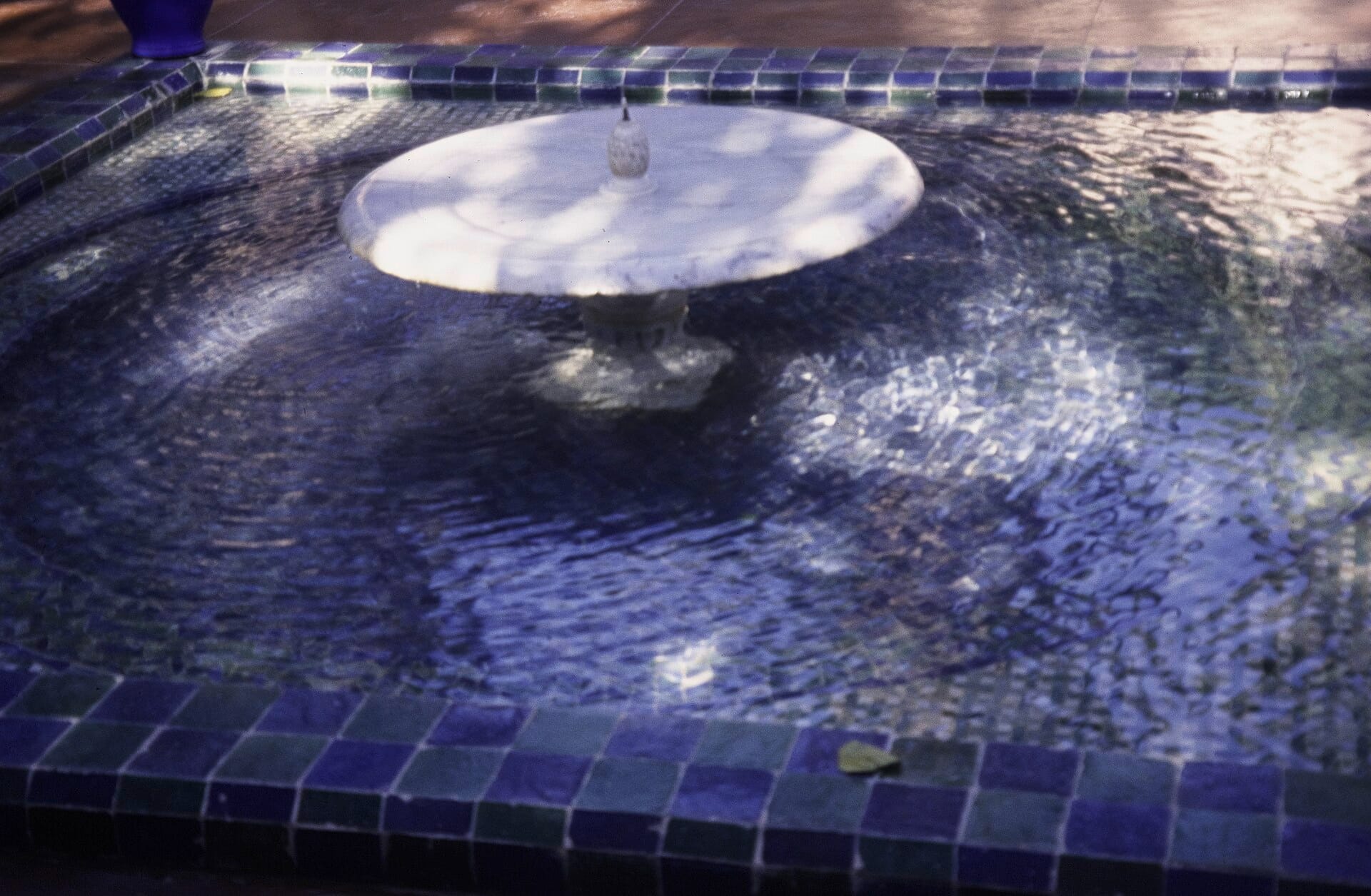
One of the great assets of the Gueliz district is its proximity to two of the most visited sites in Marrakech: the Majorelle Garden and the Yves Saint Laurent Museum. The Majorelle Garden, with its famous intense blue, its bamboo, its cacti and its pools, is a haven of peace created by the painter Jacques Majorelle, later safeguarded by Yves Saint Laurent and Pierre Bergé. It is a must-see visit, just minutes from the centre of Gueliz. Find all our tips in our complete guide to the Majorelle Garden.
Right next door, the Yves Saint Laurent Museum pays tribute to the couturier and his deep connection with Marrakech. The building’s architecture, the collections and the temporary exhibitions make it a major cultural stop. To plan your visit, see our dedicated page on the Yves Saint Laurent Museum in Marrakech. Staying in Gueliz therefore makes it easy to reach these two emblematic sites, on foot or by petit taxi.
Other spaces: El Harti Garden, the Royal Theatre and the station
Gueliz is not just about shopping and terraces. The district is also home to green spaces and urban facilities that shape local life. El Harti Garden is a public park appreciated by families and sports enthusiasts, a welcome green lung in a very built-up area, ideal for a break in the shade.
Nearby stands the Royal Theatre, an imposing cultural building whose architecture marks the urban landscape of the new town. Finally, the Marrakech railway station (Marrakech-Ville station, served by the ONCF) is located in the area: it is the arrival point for trains from Casablanca, Rabat and other cities across the country, making Gueliz a well-connected district for those travelling by train through Morocco. This concentration of services and infrastructure reinforces the central and practical character of the district.
Gueliz or medina: which district to choose?
Many travellers hesitate between staying in Gueliz or in the medina. The two districts offer very different experiences, and the right choice depends on your priorities. The medina, a UNESCO World Heritage Site, immerses the visitor in authenticity, with its riads, its souks and its legendary square. Gueliz, for its part, focuses on modern comfort, relative calm and everyday convenience. The table below sums up the main differences.
| Criterion | Gueliz (new town) | Medina (old town) |
|---|---|---|
| Atmosphere | Modern, cosmopolitan, airy, relatively calm | Traditional, intense, lively, labyrinthine |
| Shopping | Boutiques, shopping centres, designers, fixed prices | Souks, craftsmanship, haggling |
| Accommodation | Modern hotels and apartments | Traditional, charming riads |
| Dining | International and modern Moroccan cuisine | Traditional Moroccan cuisine, street food |
| Getting around | Wide avenues, taxis, easy by car | Pedestrian alleys, limited vehicle access |
| Ideal for | Comfort, nightlife, relaxed stays | Cultural immersion, first visit |
Where to stay in Gueliz
Gueliz offers a varied range of accommodation: hotels of different categories, residences and apartments for rent. It is a choice often favoured by business travellers, families and those returning to Marrakech who want a quieter and more functional setting. Staying in Gueliz means being close to shops, restaurants, the Majorelle Garden and the station, while remaining a short distance from the medina.
While the experience of a traditional riad in the medina has an incomparable charm, the comfort of a modern hotel in Gueliz appeals to those seeking tranquillity, easy access by car and contemporary amenities. To compare the options and choose the district that suits you, see our guide on where to stay in Marrakech. The best choice depends on your travel style, your budget and the length of your stay.
Getting around in and from Gueliz
Getting around Gueliz is easy thanks to its grid plan and its wide avenues. Walking is pleasant for exploring the heart of the district, while the petits taxis (usually beige in Marrakech) allow you to quickly reach the medina, the Majorelle Garden or other points in the city. Remember to agree on the price or to ask for the meter to be used before getting in.
The district is also well connected to the rest of Marrakech and to the airport. From Marrakech-Menara Airport, Gueliz is reached by car or taxi in a generally short time, which makes it a practical base right on arrival. The railway station, located in the area, also offers connections to the country’s major cities. In short, Gueliz is a central district, well served and easy to live in for a stay in Marrakech.
Practical tips for making the most of Gueliz
- Combine old and modern: stay or spend time in Gueliz, but set aside at least one day to explore the medina and its souks.
- Enjoy the terraces during the cooler hours, in the late afternoon, to watch the life of the district.
- Walk along Avenue Mohammed V to feel the transition between the new town and the old town.
- Book in advance your tickets for the Majorelle Garden and the Yves Saint Laurent Museum, which are very busy.
- Bring cash for the petits taxis and some shops, even though cards are accepted in the larger brands.
- Stay respectful of local customs regarding dress and behaviour, even in a modern district.
Gueliz is an excellent base camp from which to explore Marrakech: you will find modern comfort while being just minutes from the city’s historic and cultural treasures. Whether you come for the shopping, the food, the art or simply to feel the contemporary pulse of the ochre city, the district has plenty to offer.
Frequently asked questions
What is the Gueliz district in Marrakech?
Gueliz is the new town of Marrakech, the city’s main modern district. Created from 1913 onward under the French protectorate, it is characterised by its wide avenues, its cafés, its restaurants, its boutiques, its art galleries and its shopping centres, in contrast to the historic medina.
Why is Gueliz called that?
The name Gueliz is generally linked to the hill and the former Church of the Holy Martyrs present in the area in the early 20th century. The place name then spread to the whole of the new town district.
Is it better to stay in Gueliz or in the medina?
It depends on your expectations. Gueliz offers modern comfort, relative calm, international restaurants and easy traffic. The medina offers a traditional immersion in a riad, in the heart of the souks. Many travellers combine the two to enjoy the best of both atmospheres.
Is the Majorelle Garden in Gueliz?
The Majorelle Garden and the Yves Saint Laurent Museum are located right next to Gueliz, just minutes from the centre of the district. This is one of the great advantages of a stay in the new town: these major sites are easily accessible on foot or by taxi.
What is there to do in Gueliz Marrakech?
In Gueliz, you can shop in the boutiques and shopping centres such as Carré Eden, settle in on a terrace, visit contemporary art galleries, dine in a variety of restaurants, enjoy the nightlife, relax in El Harti Garden and easily reach the Majorelle Garden.
How do you get from Gueliz to the medina?
Avenue Mohammed V connects Gueliz directly to the medina and the Koutoubia Mosque. You can make the journey on foot to enjoy the walk, or take a petit taxi to quickly reach the central square and the souks of the old town.
Conclusion
The Gueliz Marrakech district embodies the modern and cosmopolitan face of the ochre city. Born of the early 20th-century urban planning vision, it now offers a striking contrast with the medina: wide avenues, lively cafés, designer boutiques, art galleries and the immediate proximity of the Majorelle Garden and the Yves Saint Laurent Museum. Whether you choose to stay there or simply pass through, Gueliz perfectly complements a discovery of Marrakech by revealing its contemporary energy, without ever disowning the heritage of the nearby old town. To go further, continue with our complete guide to Marrakech and find the general presentation of the city on Wikipedia as well as the page devoted to Gueliz.
Informative and independent article. moroccoairport.com is not affiliated with any establishment or site mentioned. Prices, opening hours and practical information are given for purely indicative purposes and may change: always check the official data before your visit.
Images under free license via Wikimedia Commons: © calflier001 (CC BY-SA 2.0); © Ben Bender (CC BY-SA 3.0); © A. van Achterberg / ASC Leiden (CC BY-SA 4.0). Sources: UNESCO and Wikipedia.