Marrakech or Fez? It is probably the most common question when planning a first trip to Morocco and you cannot visit both imperial cities. Short answer: choose Marrakech if you want a lively, very touristy city with boundless energy and an unrivalled range of day trips (the Atlas, the Agafay desert, Essaouira, waterfalls). Choose Fez if you are after a more authentic medina, living craftsmanship, a spiritual atmosphere and a journey back in time far from the crowds. Neither is “better” in absolute terms: it all depends on what kind of traveller you are.
The two cities do share a great deal: both are former imperial capitals, both have medinas listed as UNESCO World Heritage Sites, both are labyrinths of alleys, souks and mosques. Yet their character is profoundly different. In this honest, balanced comparison we review every criterion that matters — atmosphere, medina, monuments, craftsmanship, excursions, air access, climate, budget — to help you decide with full knowledge of the facts. And if you are still torn: good news, you can very easily do both in a single trip.
Marrakech or Fez in brief: the quick answer
In brief
- Choose Marrakech if: this is your first trip to Morocco, you enjoy a bustling atmosphere, you want a variety of excursions (mountains, desert, ocean) and you are looking for a wide choice of hotels, riads and good places to eat.
- Choose Fez if: you want authenticity above all, a preserved medieval medina, top-quality traditional craftsmanship and a calmer, more spiritual, less commercial atmosphere.
- Recommended length of stay: 3 to 4 days for Marrakech, 2 to 3 days for Fez.
- The smart move: combining both cities is entirely possible thanks to the train (around 7 hours) or a domestic flight (around 1 hour).
Independent guide: this comparison is edited by an independent travel guide, not affiliated with ONDA or any official tourist board. Prices are given purely as an indication and may vary.
Comparison table: Marrakech vs Fez
To get a clear picture at a glance, here is a table summing up the main criteria for comparing the two imperial cities.
| Criterion | Marrakech | Fez |
|---|---|---|
| Atmosphere | Lively, festive, cosmopolitan, very touristy | Authentic, calm, spiritual, more intimate |
| Medina (UNESCO) | Listed in 1985, around Jemaa el-Fna | Listed in 1981, Fez el-Bali, the largest |
| Monuments | Koutoubia, Bahia Palace, Saadian Tombs, gardens | Madrasas, Al Quaraouiyine, Bab Bou Jeloud, mausoleums |
| Craftsmanship | Varied souks, leather, rugs, lanterns, decor | Chouara tanneries, brass work, zellige, embroidery |
| Excursions | Atlas, Agafay desert, Essaouira, Ourika, Ouzoud | Meknes, Volubilis, Chefchaouen, Middle Atlas, Ifrane |
| Air access | Menara Airport (RAK), very well served | Fez-Saiss Airport (FEZ), more modest |
| Climate | Hot and dry, mild winters, very hot summers | Continental, cool damp winters, hot summers |
| Budget | Wide range, from budget to luxury | Overall a little cheaper, less luxury |
| Recommended length | 3 to 4 days | 2 to 3 days |
This table gives the general trend, but each criterion deserves a closer look. Let us now see what really sets these two cities apart, one after the other.
Marrakech, the “red city” that never sleeps
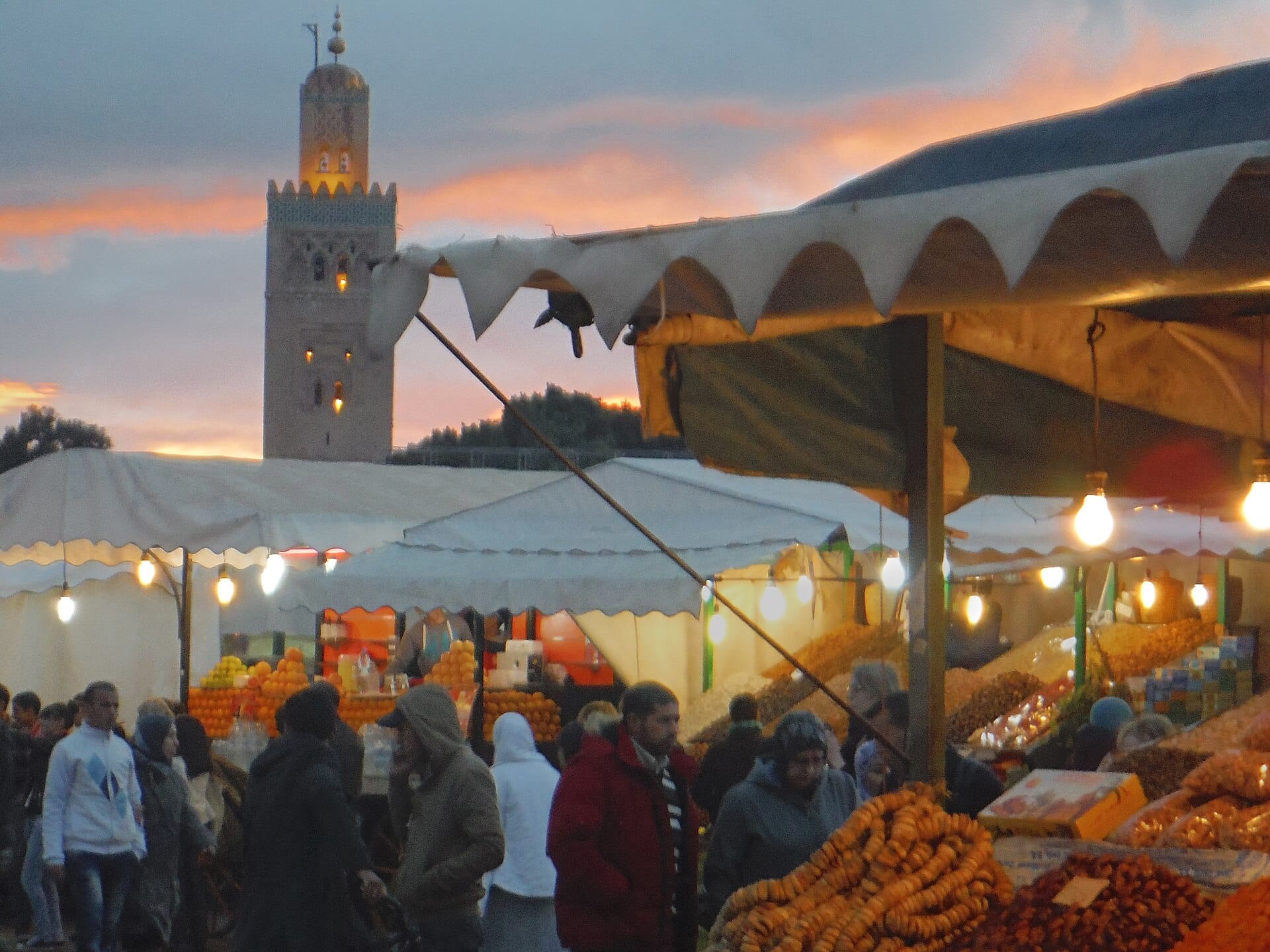
Founded around 1070 by the Almoravid dynasty, Marrakech is nicknamed the “red city” because of the ochre hue of its walls and buildings. Today it is Morocco’s tourism capital and one of the most visited destinations in Africa. Its beating heart, Jemaa el-Fna square, is a non-stop spectacle: storytellers, Gnaoua musicians, snake charmers, orange-juice sellers and, after dark, dozens of street-food stalls that turn the square into a vast open-air restaurant. The square is in fact inscribed by UNESCO as part of the intangible cultural heritage of humanity.
Marrakech wins you over with its energy and ease. It offers a huge choice of accommodation, from charming riads to international palace hotels, a booming food scene, rooftops, spas and sumptuous gardens such as the Majorelle Garden or the Menara gardens. It is a city that knows how to welcome travellers, including those discovering Morocco for the first time. The flip side: this popularity comes with crowds, insistent sales pressure in the souks and an atmosphere that can feel very “polished” for tourism. To plan your visit, our complete guide to things to do in Marrakech details the must-sees neighbourhood by neighbourhood.
Fez, the spiritual capital and soul of Morocco
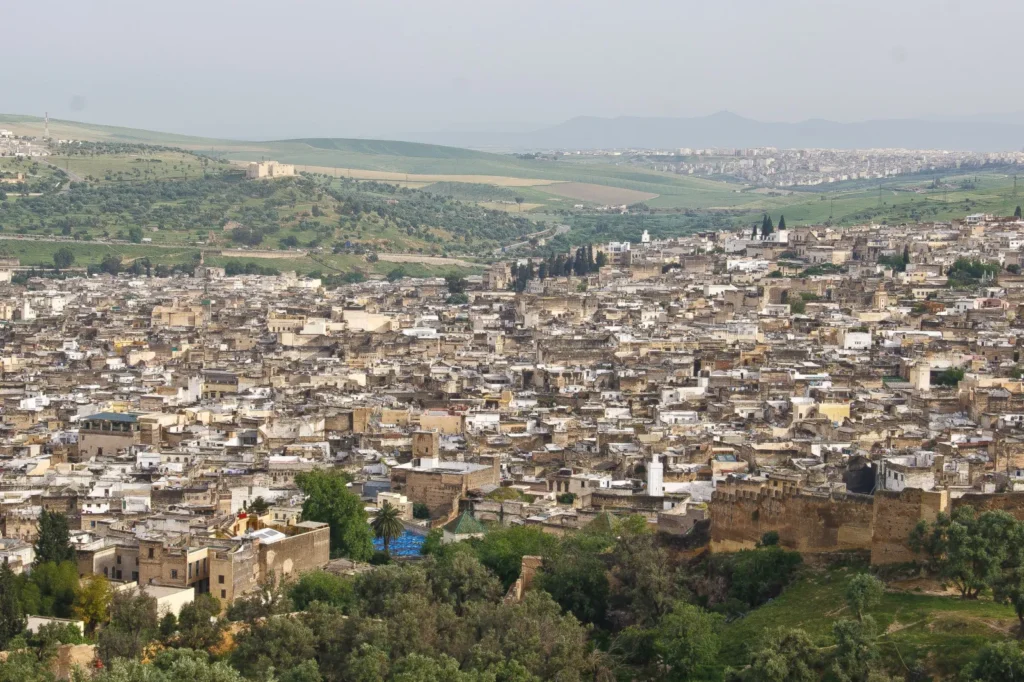
Fez is older than Marrakech: the city was founded in the late 8th and early 9th century by the Idrisid dynasty. Regarded as Morocco’s spiritual and intellectual capital, it is home to Al Quaraouiyine, founded in 859 by Fatima Al-Fihri and recognised by UNESCO as the oldest higher-education institution in the world still in operation. This historical depth is felt everywhere: Fez has not been “smoothed over” for tourism the way Marrakech has, and many travellers describe it as the most authentic city in Morocco.
The atmosphere here is more hushed, more solemn, almost medieval. You come across more craftsmen at work than souvenir shops, more locals going about their daily lives than tour groups. Fez asks for a little effort to adjust — its medina is disorienting and it is easy to get lost — but it rewards the curious with a rare kind of immersion. If your priority is to “feel” traditional Morocco rather than tick off a list of attractions, the scales tip clearly towards Fez. It is the city of authenticity par excellence.
The medina: Fez el-Bali versus the Marrakech medina
This is where the comparison is most interesting, because both medinas are listed as UNESCO World Heritage Sites — Fez in 1981 and Marrakech in 1985 — yet they offer a very different experience.
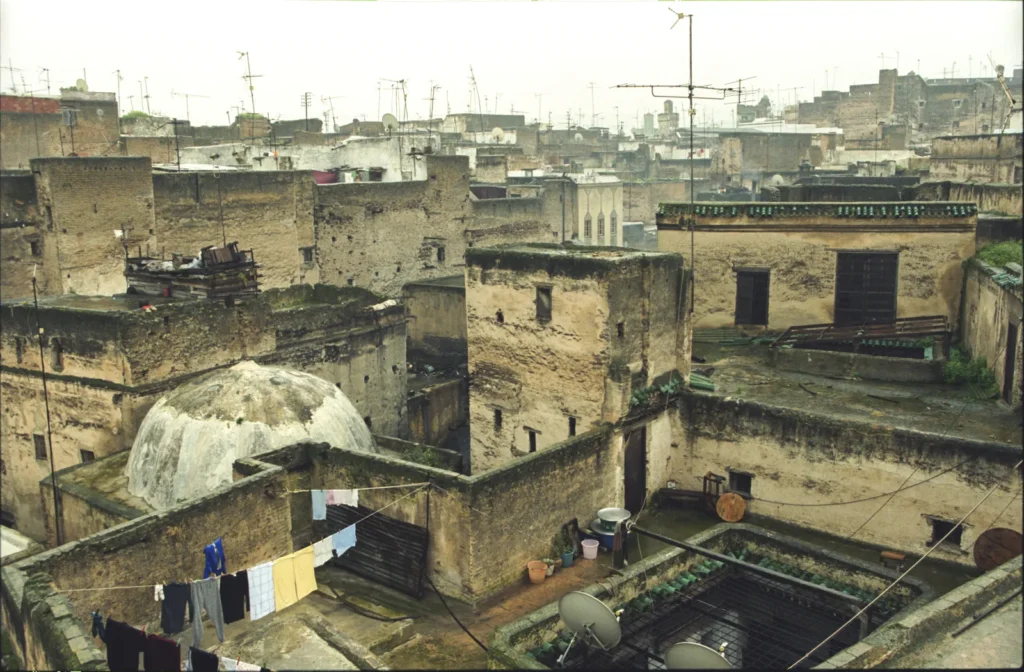
Fez el-Bali, the old city of Fez, is considered one of the largest car-free urban areas in the world. It is a dizzying labyrinth of several thousand alleys inhabited without interruption since the 9th century, where cars cannot enter and goods are still moved on the backs of mules. You get lost there, literally, and that is precisely what makes its magic: every turn reveals a zellige fountain, a carved door, a communal bread oven, a workshop. The Fez medina is a genuine journey back in time, arguably the best preserved in the Arab world.
The Marrakech medina is more compact, easier to grasp and better signposted. It is organised around Jemaa el-Fna and lends itself more to a “leisure” stroll than to a true exploration experience. You will find more tourist-oriented shops, more riads converted into guesthouses, more restaurants. In short: the Marrakech medina is more accessible, the Fez medina is more authentic and impressive. If you had to keep just one criterion to decide between Fez or Marrakech, this might well be it.
Monuments and culture: two complementary heritages
In Marrakech, the flagship monuments are easy to visit and cut a fine figure. The Koutoubia and its 12th-century minaret dominate the city; the Bahia Palace unfolds its courtyards, painted ceilings and gardens; the Saadian Tombs dazzle with the delicacy of their decoration; the ruined El Badi Palace retains a definite majesty. Add the Majorelle Garden and the Yves Saint Laurent Museum and you have a varied, aesthetic and highly photogenic ensemble.
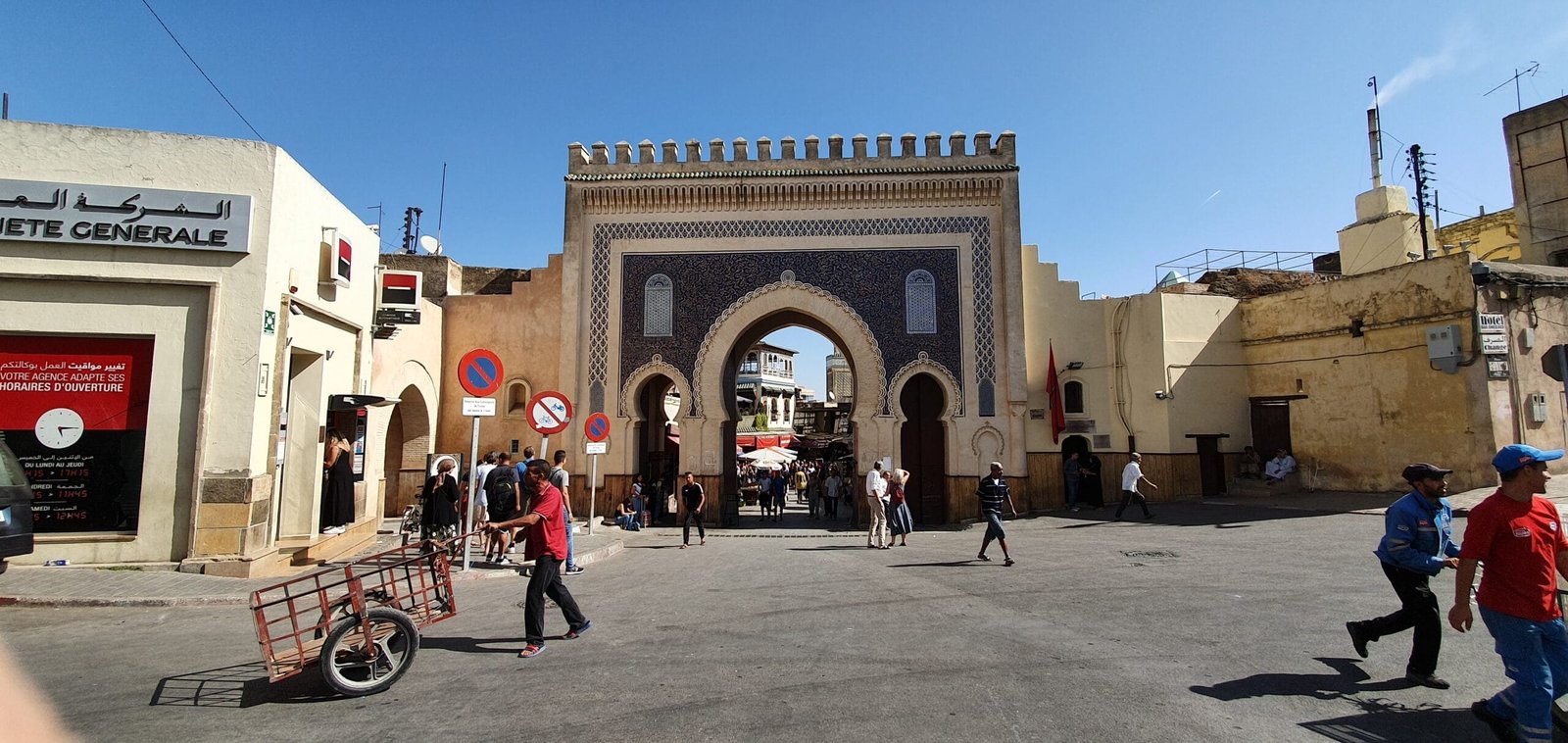
In Fez, the culture is denser and more scholarly. The city is famous for its lavishly decorated madrasas (Quranic schools), notably the Bou Inania Madrasa and the Attarine Madrasa, masterpieces of zellige, carved plaster and cedar wood. The Al Quaraouiyine mosque and university, the monumental Bab Bou Jeloud gate (the “blue gate”), the mausoleum of Moulay Idriss II and the Nejjarine fondouk round out a heritage of great spiritual depth. Where Marrakech impresses through spectacle, Fez moves you through the sacred and intellectual refinement.
Craftsmanship and souks: the Fez tanneries against the Marrakech souks
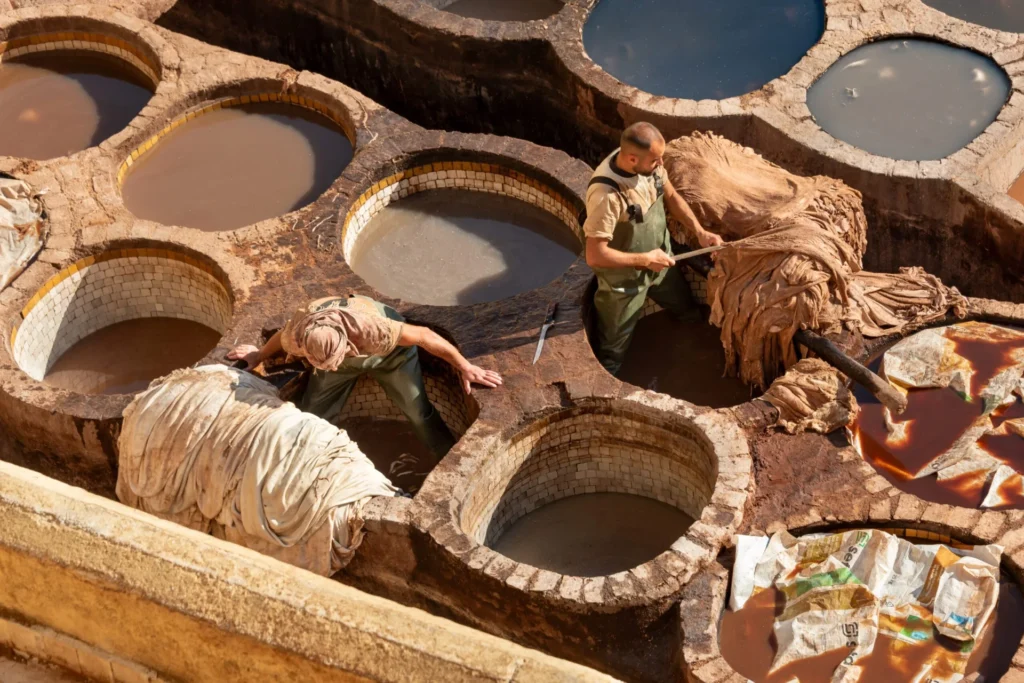
You cannot compare these two cities without talking about craftsmanship, because it is a field where each excels in its own way. In Fez, the most iconic image is that of the Chouara tanneries, a sight unique in the world: from the terraces of the surrounding leather shops, you look down on a checkerboard of stone vats filled with colourful natural dyes, where hides are treated using a process virtually unchanged since the 11th century — soaking in lime, scraping, dyeing. The smell is powerful (you will be handed a sprig of mint), but the sight is unforgettable. Fez also shines in brass and copper work (metalworking on Place Seffarine), zellige, embroidery and the blue pottery of Fez.
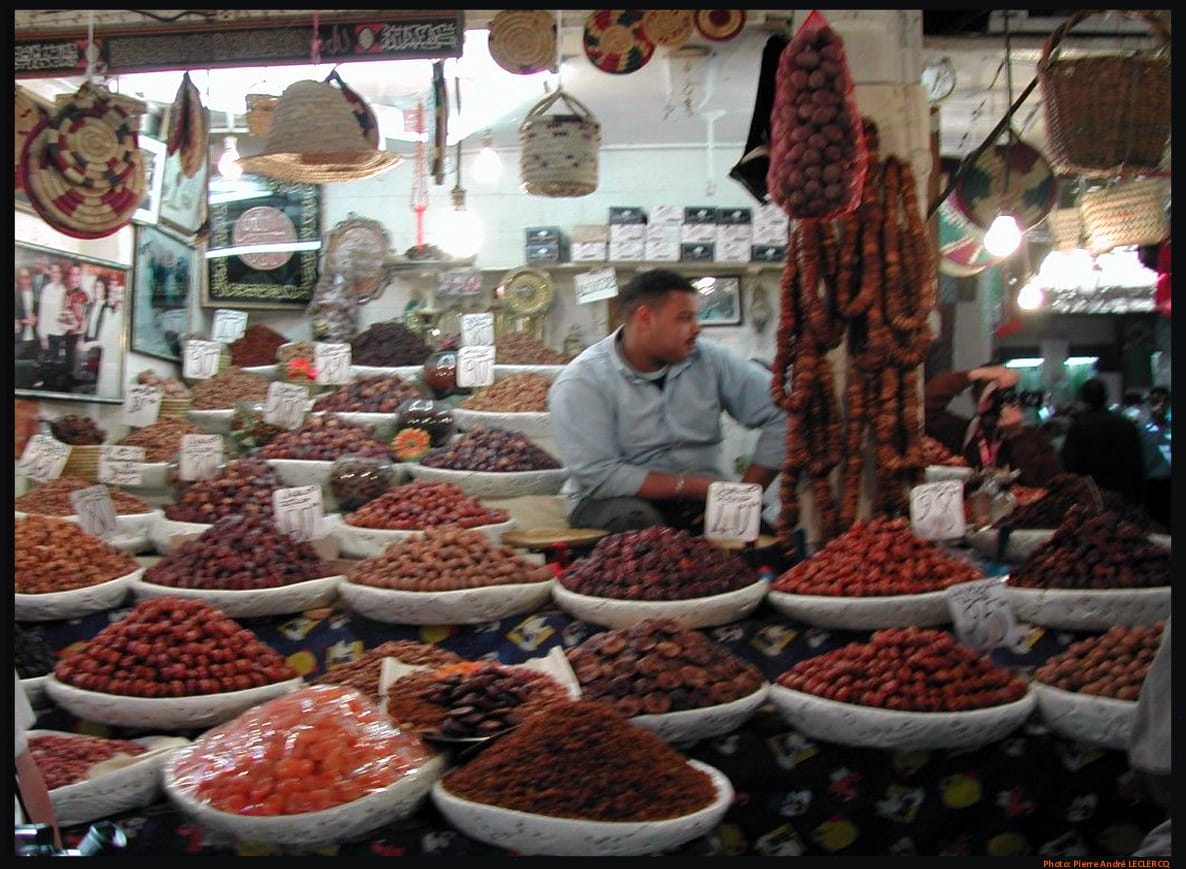
Marrakech, for its part, offers huge, labyrinthine souks organised by trade guilds: babouches, openwork metal lanterns, Berber rugs, leather goods, spices, argan-oil cosmetics, decorative objects. The offering is broader and more geared towards “leisure” shopping, which makes it a paradise for bringing home souvenirs — provided you enjoy haggling, as bargaining is a national sport here. To sum up: Fez to watch the craftsmen at work and buy fine traditional pieces, Marrakech for variety, atmosphere and shopping. In both cases, keep a cool head when faced with the “fake guides” who offer to take you to the workshops.
Excursions around each city: where Marrakech takes the lead
If you like to venture out from your base city, this is a decisive criterion. Marrakech has one of the best ranges of excursions in Morocco. In a day or two, you can reach:
- the High Atlas and the Ourika Valley, with its Berber villages and waterfalls;
- the Agafay desert, a stony desert less than an hour away, perfect for a bivouac or a sunset dinner;
- the Ouzoud waterfalls, among the highest in North Africa;
- the Oukaimeden ski resort in winter;
- and above all Essaouira, the windswept UNESCO-listed seaside town, about a 2.5-hour drive away.
Marrakech is also a classic gateway to the deep south and the tours towards the Merzouga or Zagora desert (over several days). Fez, for its part, offers excursions that are more cultural but just as fascinating: the imperial city of Meknes (30 minutes by train), the Roman site of Volubilis and its UNESCO-listed mosaics, the holy town of Moulay Idriss Zerhoun, the Middle Atlas and its cedar forest around Ifrane (Morocco’s “little Switzerland”). Finally, Fez is the most logical starting point for Chefchaouen, the famous blue city of the Rif (about a 4-hour drive). Verdict: Marrakech offers a greater variety of landscapes (mountains, desert, ocean), Fez more historical and intimate excursions.
Access and airports: Marrakech clearly better served
This is a concrete point that weighs on the decision, especially from Europe. Marrakech-Menara Airport (RAK) is one of the busiest in Morocco and offers a very large number of direct connections with major European cities, on both scheduled and low-cost airlines. Numerous flights, flexible timetables, often competitive fares: getting to Marrakech is simple and fast, and the airport is only a few kilometres from the centre.
Fez-Saiss Airport (FEZ) is more modest. It provides good connections with France and a few other European countries, notably via low-cost airlines, but the choice remains more limited and you sometimes have to go via Casablanca. In practical terms, if you prioritise ease of access and choice of flights, Marrakech has the advantage. In both cities, remember to arrange your airport transfer in advance to avoid nasty surprises on price; our comparison of airport transfers in Morocco helps you choose the right option.
Climate and the best time to visit
The two cities do not have quite the same climate. Marrakech, on the edge of the desert, has a hot, dry climate: mild, sunny winters (ideal for visiting), perfect springs and autumns, but scorching summers where the thermometer regularly tops 40 °C in July and August. Fez, further north and at higher altitude, has a more continental climate: cool and sometimes rainy winters (it can be cold in the evening), hot summers but a little more bearable than in Marrakech.
For both destinations, the best times are spring (March to May) and autumn (September to November): pleasant temperatures, magnificent light, reasonable crowds. Winter remains perfectly fine in Marrakech but can be chilly in Fez. Summer should be reserved for travellers who cope well with heat. To fine-tune your calendar for the red city, see our guide to the best time to visit Marrakech.
Budget: which city is more affordable?
Overall, Morocco remains an affordable destination, and the two cities are on a par for the basics (meals, tea, monument entry fees of a few dozen dirhams). The big difference lies in accommodation and high-end tourism. Marrakech covers absolutely every budget, from a youth hostel at 100–150 MAD (about €10–14) a night to a palace hotel costing several thousand dirhams, with a huge range of charming riads in between. This abundance creates competition and lets you find good deals if you book ahead.
Fez is on average a little cheaper, particularly for dining and riads, but the luxury offering is more limited. As an indication, budget around 40–80 MAD (about €4–7) for a simple meal, around 150–250 MAD (about €14–23) for a good riad dinner, and between 400 and 900 MAD (about €37–83) a night in a comfortable riad depending on the season. To plan your spending in the red city, our Marrakech travel budget guide breaks down every category. Budget verdict: a slight edge to Fez for tight budgets, an edge to Marrakech for variety and the high end.
So, Marrakech or Fez based on your profile?
Rather than crowning a winner, let us look at which city to visit in Morocco depending on who you are and what you are looking for.
For a first trip to Morocco
Advantage Marrakech. Easier to reach, better equipped, livelier and more varied in excursions, it makes an ideal gateway for discovering Morocco. It has everything you need for a successful first stay, and our 3-day Marrakech itinerary is perfect for that.
For authenticity and culture
Advantage Fez, without hesitation. Its medieval medina, its craftsmen, its spiritual dimension and its intellectual heritage make it the most authentic city in the country. It is the choice of travellers who want to feel the real Morocco, the one from before mass tourism.
For a family trip
A slight advantage to Marrakech, thanks to its infrastructure, its hotels with swimming pools, its varied activities (excursions, shows, parks) and its medina, which is less disorienting for children. Fez is still possible with a family, but its very dense medina can be tiring with young children.
For a couples’ getaway
A draw, but with different moods. Marrakech offers romantic riads, rooftops and spas in a festive setting; Fez offers a more intimate, more hushed atmosphere, ideal for a stay for two focused on culture and serenity. It is up to you to choose your style of romance.
Can you visit Fez and Marrakech on the same trip?
Yes, and it is even an excellent idea if you have at least a week. The two cities are linked by the ONCF train, with several departures a day and a journey of around 6.5 to 7 hours for an indicative fare of 220 to 420 MAD (about €20 to €39) depending on the class. The train is comfortable, punctual and takes you through varied landscapes. For those who want to save time, there are also domestic flights linking Fez-Saiss (FEZ) and Marrakech-Menara (RAK) in a little over an hour.
A classic, well-balanced itinerary is to spend 3 nights in Marrakech, take one or two excursions nearby (Atlas or Essaouira), then head to Fez for 2 nights with a side trip to Meknes and Volubilis, and possibly Chefchaouen. Many tours in fact combine the two cities with a desert crossing in between, via the Dades Valley and Merzouga. So you do not necessarily have to choose: Fez and Marrakech form a complementary duo that on its own sums up all the richness of Morocco. Then it is a matter of carefully choosing where to stay in Marrakech for your red-city stopover.
FAQ: Marrakech or Fez, your frequent questions
Marrakech or Fez, which is the more beautiful city?
Both are splendid but in different registers. Marrakech impresses with its photogenic monuments, its gardens and its buzz; Fez wins you over with the authenticity and exceptional preservation of its medieval medina. For “spectacle” beauty, we lean towards Marrakech; for “timeless” beauty, Fez comes out ahead.
Which city should you visit in Morocco for a first stay?
For a first trip, Marrakech is generally recommended: easy air access, well-developed tourist infrastructure, varied excursions and a relatively accessible medina. Fez will suit a second stay better, or travellers already comfortable with the atmosphere of medinas.
How many days do you need for each city?
Allow 3 to 4 days for Marrakech (including one or two excursions), and 2 to 3 days for Fez. If you combine the two, a week to ten days lets you visit both cities without rushing, including the surrounding areas.
Is Fez less touristy than Marrakech?
Yes, clearly. Fez receives fewer visitors and retains a more authentic and more local atmosphere. You feel less commercial pressure than in Marrakech, even if the areas around the tanneries and the major monuments remain busy.
How do you get from Marrakech to Fez?
The simplest option is the ONCF train, with a journey of around 6.5 to 7 hours for an indicative fare of 220 to 420 MAD. There are also long-distance buses and domestic flights (around 1 hour) linking the airports of Marrakech-Menara and Fez-Saiss.
Which city is safer, Fez or Marrakech?
Both cities are generally safe for tourists. The main annoyances are fake guides and sales pressure in the souks, present in both medinas. A little vigilance, comfortable shoes and a calm attitude are enough to fully enjoy either one.
Conclusion: it depends on your traveller profile
At the end of this comparison, the honest answer to the question “Marrakech or Fez?” comes down to one sentence: it depends on you. Choose Marrakech for the buzz, the ease, the variety of excursions and a successful first contact with Morocco. Choose Fez for authenticity, living craftsmanship, historical depth and an immersion far from the crowds. Neither is objectively superior; they are complementary, like two facets of the same country.
And if your heart really cannot decide, remember that the train and the plane put both cities within reach of a single trip. The real luxury, in the end, is not choosing between Fez or Marrakech, but taking the time to discover what makes each one irreplaceable. To learn more about each city, see the reference pages on Wikipedia for Marrakech and Fez.
Images under free licence via Wikimedia Commons: © Elgaard (CC BY-SA 4.0); © Yair Haklai (CC BY-SA 4.0); © Pierre André Leclercq (CC BY-SA 4.0). Sources: Wikimedia Commons.Photo credits: royalty-free illustrative images (Unsplash / Pexels). Thanks to their authors.