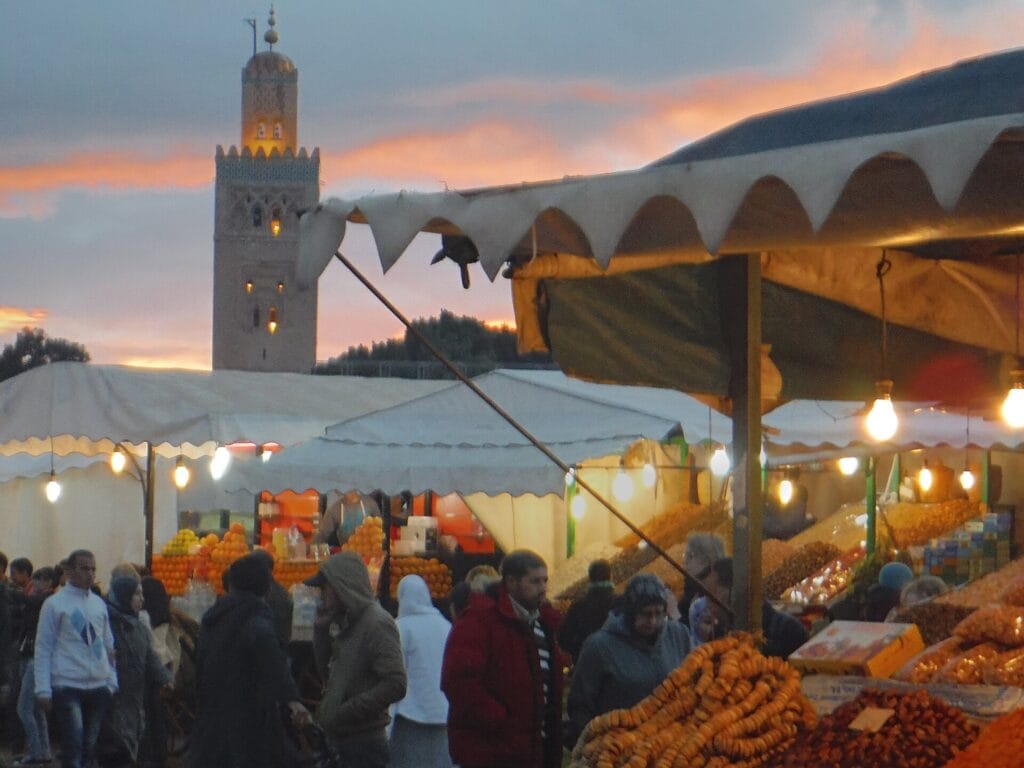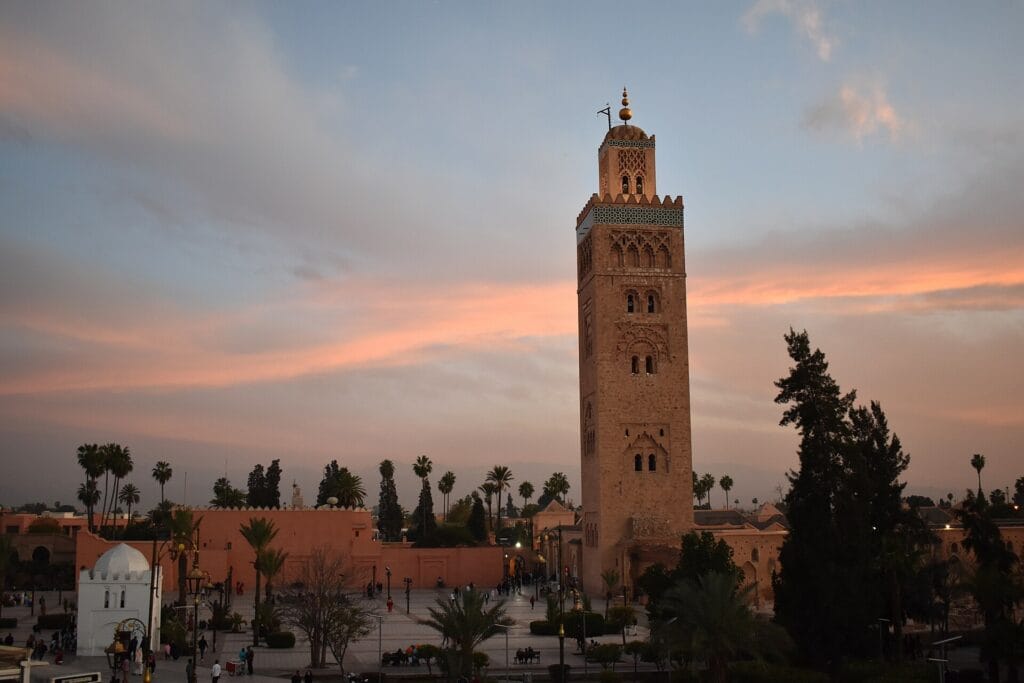
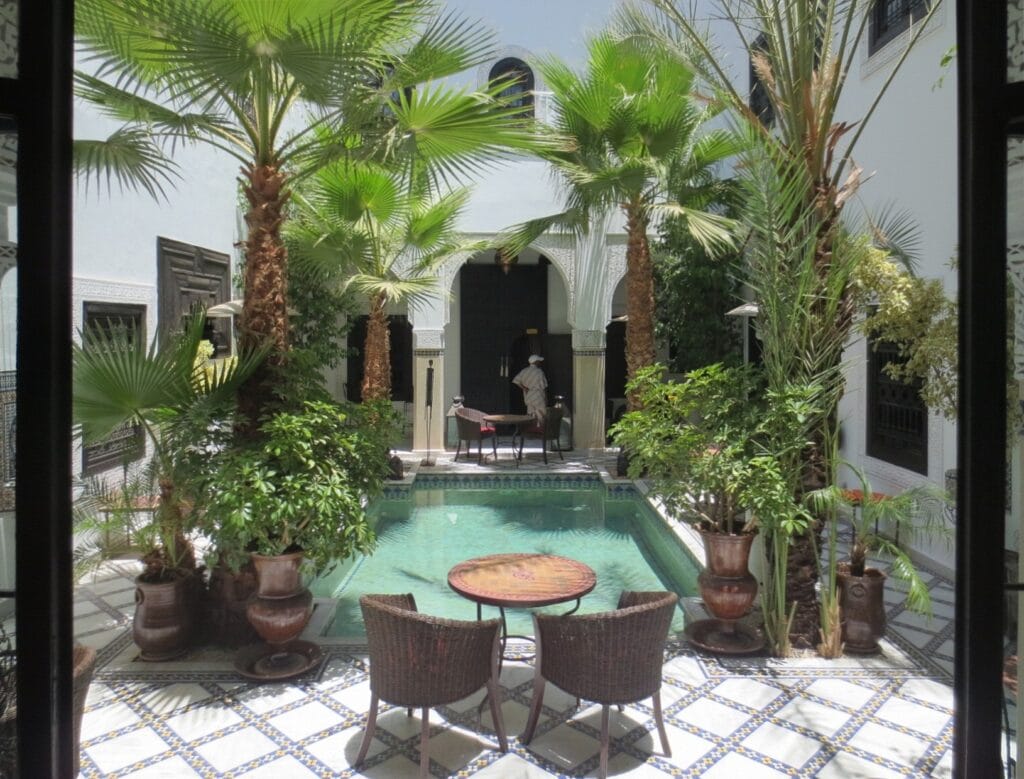
A shower rolling in during your stay? No need to worry. Contrary to what you might imagine, Marrakech when it rains is still a city with an enormous amount to offer: sumptuous museums, enveloping hammams, sheltered souks, cooking classes, warm riads and tea rooms where you can linger for hours. The good news is that it rains very little in the ochre city. The climate is semi-arid: there are only about thirty rainy days a year, mostly concentrated between November and March, and these are usually short showers that quickly give way to sunshine.
So what should you do in Marrakech when it rains? The answer comes down to one thing: make the most of indoor activities. A gloomy morning is the perfect chance to treat yourself to a traditional hammam, wander through palaces and museums, take a Moroccan cooking class or enjoy a long lunch under a glass roof. This independent guide reviews the best indoor activities to turn a grey day into one of the finest memories of your trip.
In short: Marrakech in bad weather
- It rarely rains: about 250 to 340 mm a year spread over roughly thirty days, mostly from November to March.
- Short showers: rain often falls in brief spells, and the sun usually returns quickly.
- The number one refuge: a hammam or a spa, the perfect experience when it is grey and damp outside.
- Culture in the dry: museums (Museum of Marrakech, Maison de la Photographie, YSL Museum, MACAAL) and partly covered palaces.
- Indulgence: cooking classes, a long lunch in a riad, a tea room with Moroccan pastries.
- What to bring: non-slip shoes, a small umbrella or a waterproof jacket; the alleys of the medina can become slippery.
Want a complete overview of the must-sees before fine-tuning your plans to the weather? Take a look at our complete guide to things to do in Marrakech.
Museums: culture, safely in the dry
When the sky clouds over, museums become the safe bet for a successful day. Marrakech has a fine collection of them, from traditional heritage to contemporary art, and every one can be visited entirely under cover. It is one of the best ways to fill a rainy morning without ever pulling out your umbrella for more than a few minutes.
The Museum of Marrakech (Dar Menebhi)
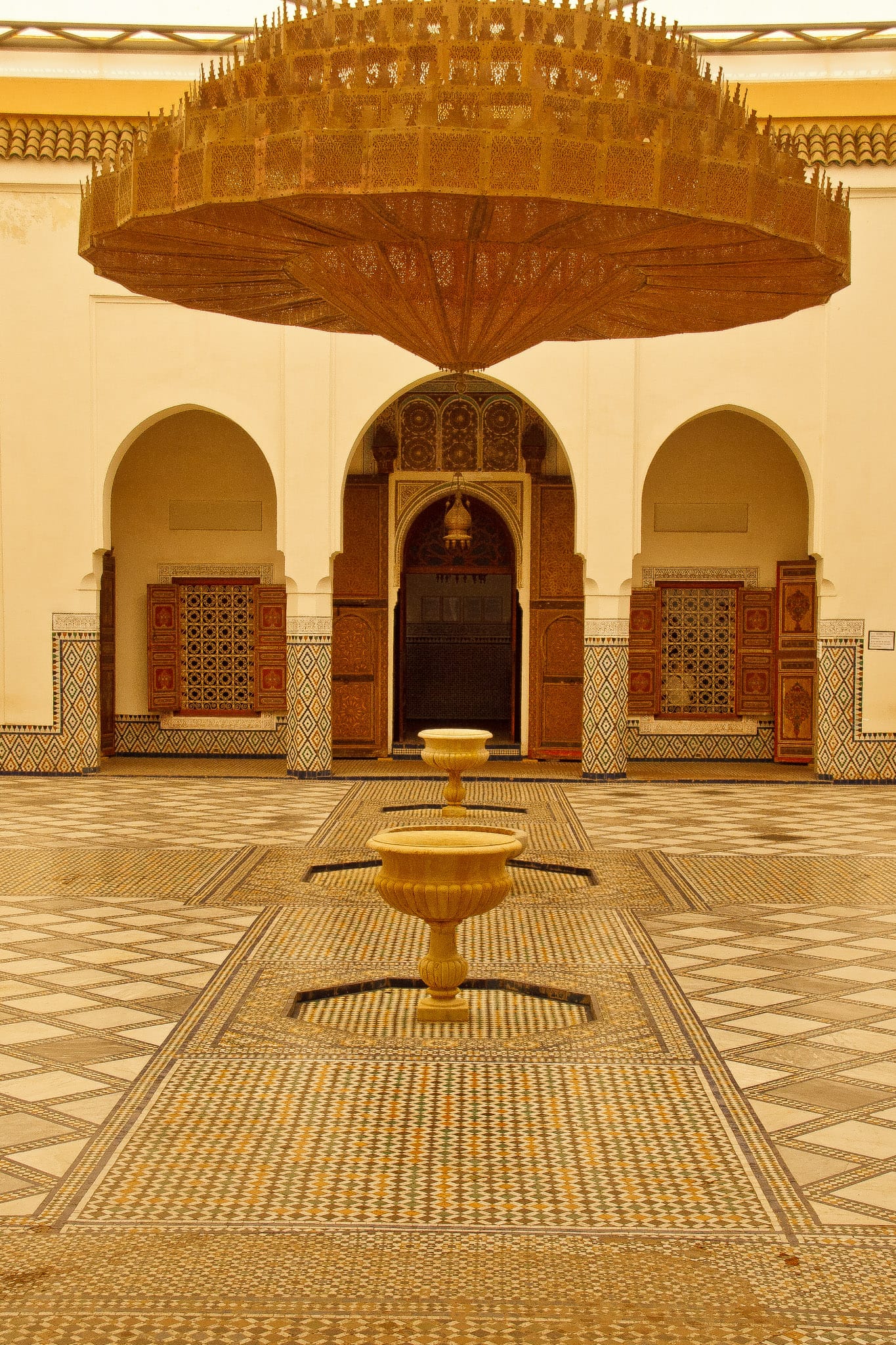
Housed in the sumptuous Dar Menebhi palace, right in the heart of the medina near Ben Youssef square, the Museum of Marrakech is a must on rainy days. Inside you can admire an open-air courtyard crowned by a huge, spectacular chandelier, dazzling zellige tilework, carved ceilings and displays of objects, ceramics and Moroccan art. Admission costs, as an indicative figure, around 70 MAD (roughly 7 €). The architecture alone justifies the visit, and the central patio, partly protected, lets you soak up the atmosphere even in a light drizzle.
The Maison de la Photographie
Just steps away, the Maison de la Photographie is a favourite for grey days. This restored riad holds a collection of vintage photographs of Morocco, from the early 20th century to the 1960s: portraits, scenes of daily life, desert landscapes and views of the Atlas Mountains. The tour unfolds over several fully covered floors, and you finish on the rooftop with its little café — perfect for waiting out a spell of rain with a mint tea. Expect around 50 MAD (nearly 5 €) for admission, as an indicative figure.
The Yves Saint Laurent Museum
In the modern Guéliz district, not far from the Majorelle Garden, the Yves Saint Laurent Museum is an architectural marvel that is entirely enclosed. It traces the couturier’s deep bond with Marrakech and presents a rotating selection of his most iconic creations in a carefully designed setting. The building also houses a bookshop, a café and an auditorium. It is an excellent choice in bad weather: you can easily spend one to two hours there. Admission is around 100 MAD (roughly 10 €) as an indicative figure.
MACAAL, African contemporary art
A little way out of the centre, on the road to Ourika, MACAAL (the Al Maaden Museum of African Contemporary Art) is an ideal destination for a rainy half-day. This private museum shines a light on the African art scene through paintings, sculptures, photographs and installations. The exhibition spaces are vast, bright and covered. Plan for a taxi or car to get there — all the more welcome when it is raining. The ticket costs around 60 MAD (about 6 €) as an indicative figure.
Good to know: most of these museums have a café or a shop, which lets you take a break without stepping back out into the rain. You can easily combine two nearby museums in the same morning — the Museum of Marrakech and the Maison de la Photographie, for instance, are just a few minutes’ walk from each other in the heart of the medina. Remember to check opening hours and any closing days before setting off, as they vary from one venue to another.
Hammam and spa: the perfect experience on a rainy day in Marrakech
If there is one activity made for Marrakech when it rains, it is the hammam. What could be more comforting than a hot steam bath, a black-soap scrub and an argan-oil massage while it is pouring outside? The contrast between the cool damp of the street and the enveloping warmth of the hammam makes the experience all the more delightful.
The city offers every price range. Neighbourhood hammams, used by locals, provide the most authentic experience for a few dozen dirhams (from 15 to 50 MAD for access, with the scrub extra). At the other end, riad and hotel spas offer complete rituals — steam, scrub, body wrap, massage — in a refined setting, at an indicative price ranging from 300 to 800 MAD (roughly 30 to 80 €) depending on the package. In between, many tourist hammams offer a good compromise at around 200 to 400 MAD. To choose well and understand how a session unfolds, read our dedicated guide to the hammam and spa in Marrakech.
Tip: book your slot in the morning when rain is forecast. You will come out relaxed by late morning, often just as the sky is clearing, ready to resume sightseeing. A session usually lasts between 45 minutes and two hours depending on the ritual you choose.
Covered souks and shopping under shelter
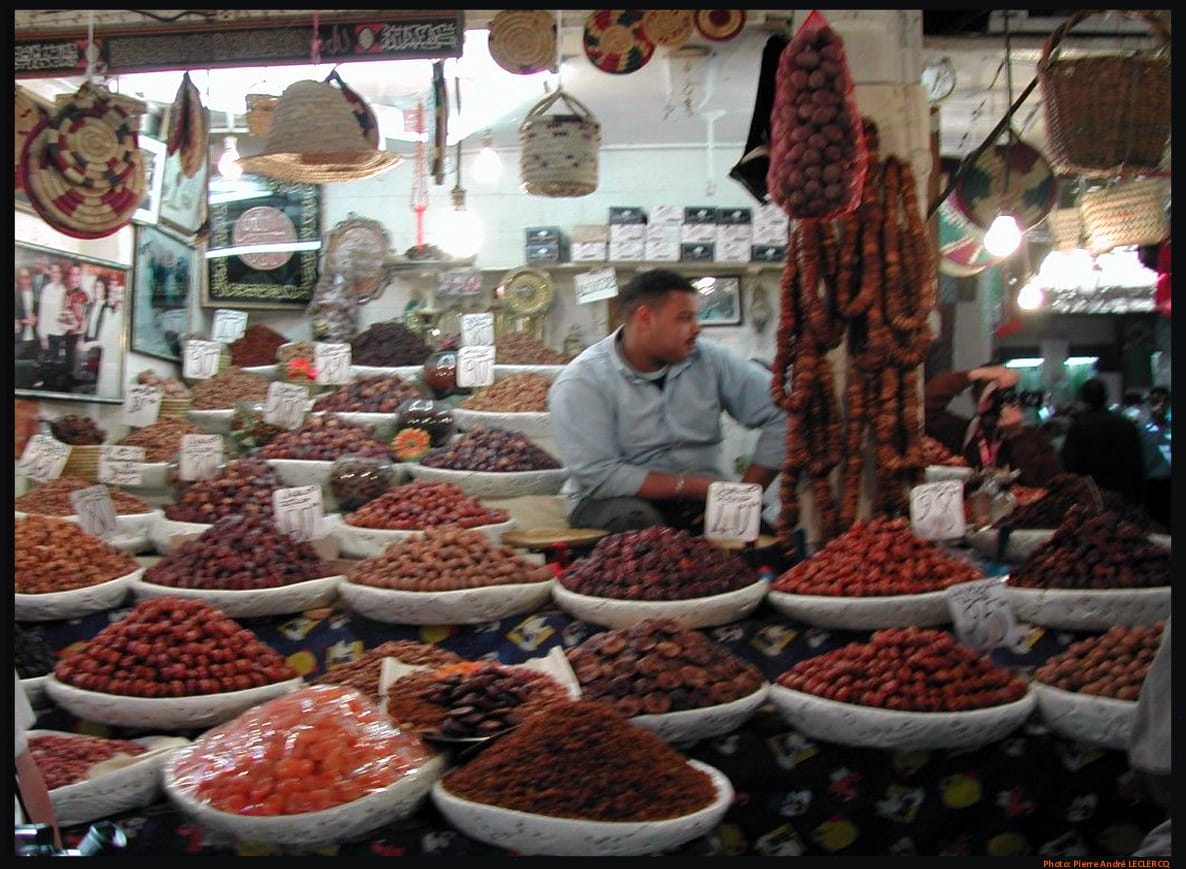
Another major asset of Marrakech when it rains: a large part of the souks of the medina is covered. The market alleys that stretch north of Jemaa el-Fna square are indeed topped with reed matting, sheet metal and wooden lattices that shield the stalls — and visitors — from the showers. You can wander for hours among the shops selling spices, leather, chiselled metal lamps, rugs, babouche slippers and pottery, almost entirely in the dry.
Bad weather even has an upside: the souks are often less crowded on rainy days, which makes strolling more pleasant and leaves more room to bargain. Take the time to watch the artisans at work — coppersmiths, tanners, weavers — in their sheltered workshops. Just remember to keep your belongings dry and watch your step: some cobbled alleys become slippery.
For shopping that is entirely sheltered and air-conditioned, the Guéliz district with its concept stores, along with the modern shopping arcades, offers a comfortable alternative to the traditional souks when the rain settles in for good.
A Moroccan cooking class
Raining all day? Here is the perfect chance to get hands-on. A cooking class in Marrakech is one of the most rewarding indoor activities you can imagine in bad weather. Most workshops take place in beautiful riads or cooking schools, completely under cover, and last half a day.
On the menu: preparing a tagine, couscous, Moroccan salads or pastries such as gazelle horns. Some classes begin with a guided tour of the souk to pick out fresh produce — best postponed if it is really pouring, but the cooking part is always done in the warm. You leave with recipes, techniques and, above all, a good meal shared together. Indicative prices range from 300 to 600 MAD per person (about 30 to 60 €) depending on the package and the standing of the venue. A grey day thus becomes one of the culinary highlights of the trip.
A long lunch or tea in a beautiful riad
In Marrakech, taking your time at the table is an art of living — and rain is the best excuse for it. The riads of the medina, with their inner patios, fountains and cushion-lined lounges, are designed as warm hideaways. Many open their restaurant to non-guests for lunch: you settle in around a slow-cooked tagine, a pastilla or a Friday couscous, and let the hours slip by while the shower burns itself out outside.
Covered or glassed-in rooftops offer another appealing option: enjoying the view over the ochre roofs and minarets while staying dry. A steaming mint tea with honey pastries, and bad weather suddenly becomes very pleasant. To pick a good spot for your neighbourhood and budget, browse our selection of places where to eat in Marrakech. Expect, as an indicative figure, 120 to 300 MAD for a full lunch in a charming riad (about 12 to 30 €).
Visiting the historic palaces
Marrakech’s great monuments lend themselves well to a visit in overcast weather, because their rooms, galleries and alcoves are largely sheltered. Even though their courtyards are open to the sky, you can move around freely under the arcades and wait out a lull without any trouble.
The Bahia Palace
A masterpiece of 19th-century Moroccan architecture, the Bahia Palace delights with its painted ceilings, zellige tilework, chiselled stucco and inner gardens. You move from one room to the next, often under covered galleries, which makes it a perfectly feasible visit even in light rain. Plan for around 70 to 100 MAD admission as an indicative figure, and ideally shoes that can handle wet floors.
The El Badi Palace
The majestic ruins of the El Badi Palace, with their immense rammed-earth walls and pools, are more exposed, but there are also underground rooms and covered galleries to explore. It is a spectacular place, less crowded in the rain. If the shower is heavy, save this palace for a clear spell and favour the Bahia, which is more sheltered. The ticket costs around 70 MAD as an indicative figure.
Settling into a café or tea room
Sometimes the best thing to do in Marrakech when it rains is simply to do nothing — in a good café. The city is full of glassed-in terraces, tea rooms and characterful cafés where you can sit for hours. On Jemaa el-Fna square, several upstairs cafés offer a sweeping view of the bustle below through large windows, sheltered from the rain and wind.
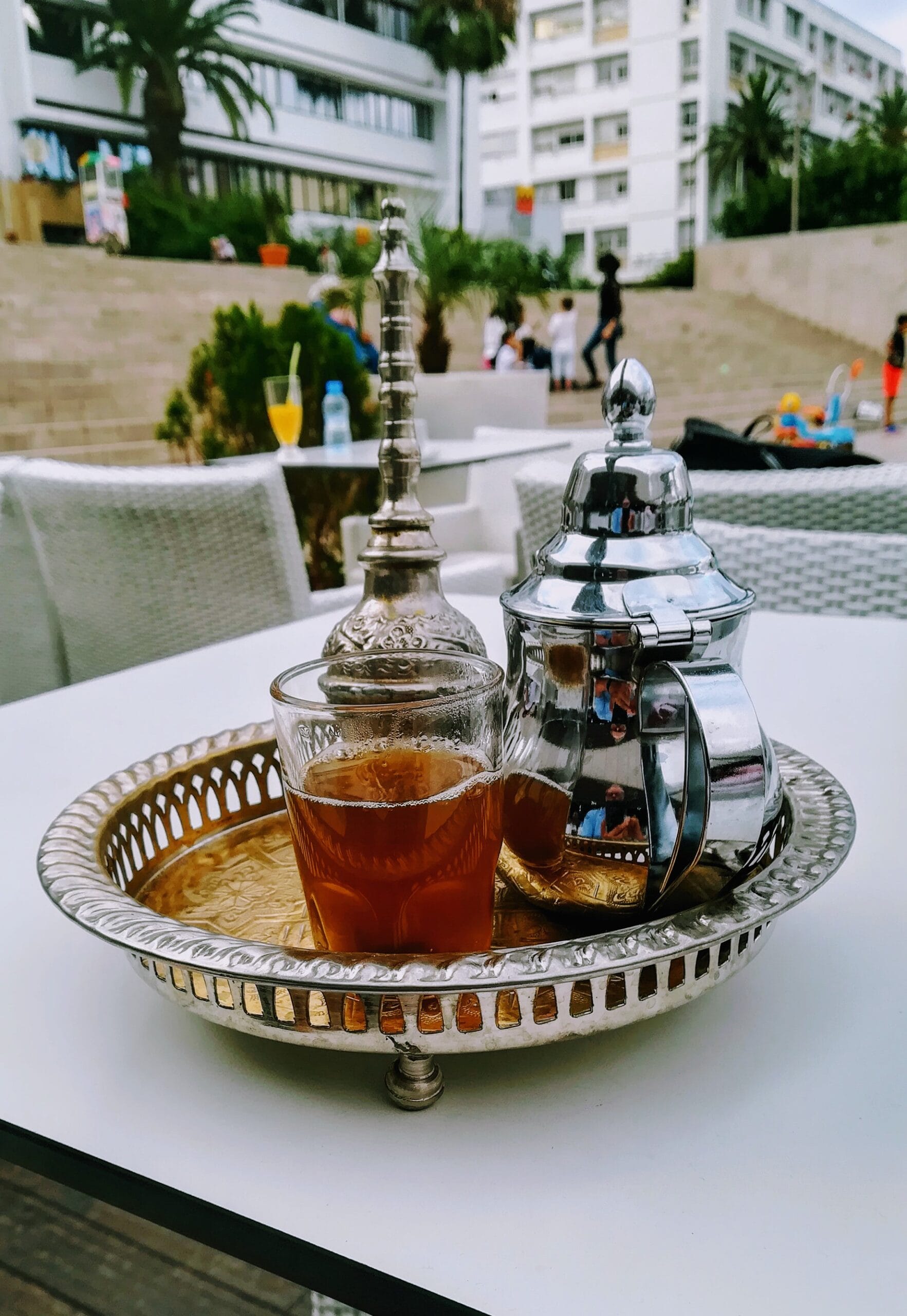
In Guéliz, modern cafés and coffee shops are well suited to working or reading, with a cappuccino or a freshly squeezed orange juice. In the medina, tea rooms tucked away in riads serve the essential mint tea with pastries. A coffee costs, as an indicative figure, 15 to 40 MAD, a mint tea 15 to 30 MAD. It is also the ideal moment to plan the rest of your stay and keep an eye out for the sun’s return.
What is precious about Marrakech’s cafés is that you are never rushed: no one will signal you to free up the table. You can write postcards, leaf through a travel journal or simply watch life carry on despite the rain. For book lovers, some café-bookshops in the city centre combine well-stocked shelves with light bites — an ideal bubble in which to wait out a long winter shower.
The art galleries
Marrakech has become a dynamic art scene, and its galleries make an ideal cultural escape in the rain — all the more so as they are free most of the time. The Guéliz district concentrates several contemporary spaces where you can discover Moroccan painters, photographers and emerging artists from across the African continent. In the medina, some artists’ riads and foundations also display collections in an intimate, covered setting.
A tour of the galleries can easily fill a gloomy afternoon: you move from one to the next by taxi, chat with the gallery owners, and sometimes leave with a work or a print. It is a refined and peaceful way to discover the creative Marrakech of today, far from the buzz of the souks.
What to do with children in the rain
Travelling with the family in bad weather takes a little organisation, but Marrakech is not short of ideas to keep the youngest ones busy under cover. Here are a few indoor options that children enjoy:
- A family cooking or baking workshop: making gazelle horns or shaping a tagine amuses young and old alike, warm and dry.
- A hotel’s indoor pool or spa: many establishments have wellness areas and heated indoor pools.
- Interactive museums and the photography museum: the vintage images and courtyards to explore catch the attention of curious children.
- An afternoon at the cinema or bowling: the modern leisure centres of Guéliz and Hivernage offer darkened screening rooms and games under cover.
- A snack in a tea room: orange juice, Moroccan pancakes (msemen) and honey pastries are always a hit.
The key is to alternate activity with a tasty break, and to keep a waterproof jacket within reach for the short hops between two covered spots.
Practical tips for Marrakech in bad weather
A few simple precautions are enough to make the most of the city when the sky clouds over:
- Non-slip shoes: the cobblestones and beaten-earth ground of some medina alleys become slippery at the first drops. Avoid smooth soles.
- A small umbrella or a waterproof jacket: since the showers are short, light gear is more than enough. You can find cheap umbrellas in the souks if needed.
- Watch out for drainage: the medina drains poorly during heavy rain; puddles and streams can form in the narrow alleys. Hug the walls and walk carefully.
- Favour taxis: for trips to Guéliz, MACAAL or Hivernage, a petit taxi keeps you from arriving soaked. Fares remain modest.
- Check the weather the day before: this lets you schedule outdoor activities (gardens, excursions) for the sunny slots and keep museums, hammam and souks for the rainy hours.
- Keep smiling: in Marrakech, the rain almost never lasts all day. Often all it takes is a well-placed café to wait for the sun to return.
To choose the best time for your trip and avoid rainy spells as much as possible, take a look at our guide on the best time to visit Marrakech. You will see that even in winter, sunny days remain by far the majority.
FAQ: Marrakech when it rains
Does it rain a lot in Marrakech?
No, very little. Marrakech enjoys a semi-arid climate with only 250 to 340 mm of rainfall a year, spread over roughly thirty days. The rain is concentrated mostly between November and March, and it usually falls as short showers. For the rest of the year, particularly from June to September, it almost never rains.
What are the rainiest months in Marrakech?
The wettest months are November, December, February and March, with an average of six to eight rainy days each. Even during these months, the totals remain low and alternate with many sunny days. Summer (June to August) is virtually without rain.
What to do in Marrakech when it rains all day?
String together indoor activities: start with a museum (Museum of Marrakech, Maison de la Photographie, YSL or MACAAL), continue with a long lunch in a riad, treat yourself to a hammam in the early afternoon, then finish with a tea room or a cooking class. An entirely rainy day can thus become one of the most memorable of the trip.
Are the souks manageable in the rain?
Yes. A large part of the medina’s souks is covered by reed matting and roofing that protect against showers. You can wander and shop almost entirely under shelter. Do watch out, however, for slippery surfaces and puddles in the open-air alleys: suitable shoes are recommended.
Is the hammam a good idea in bad weather?
It is actually the ideal activity. The humid heat of the hammam, the black-soap scrub and the argan-oil massage provide a feeling of comfort that is especially welcome in cold, rainy weather. Preferably book a session in the morning of a day forecast to be gloomy.
Should you cancel gardens and excursions if it rains?
Not necessarily. Since the showers are brief, it is often enough to shift outdoor activities (Majorelle Garden, Menara, an excursion in the Atlas) by a few hours to find the sun again. Keep the indoor activities — museums, palaces, hammam, souks — as a plan B during rainy spells, and make the most of the clear spells for the outdoors.
All in all, Marrakech when it rains is nothing like a wasted day. Between heritage, wellness and indulgence, the ochre city unfolds a whole world of indoor activities that reveal another side of its charm. A little bad weather can even turn into the perfect excuse to slow down, warm up and savour the Moroccan art of living. To learn more about the city’s climate, you can consult the Marrakech page on Wikipedia.
Independent guide, not affiliated with ONDA or any official body. Prices are given for indicative purposes only and may change; always check the information before your visit.
Images under free licence via Wikimedia Commons: © Pierre André Leclercq (CC BY-SA 4.0); © Mike Prince (CC BY 2.0); © Munfarid1 (CC BY-SA 4.0). Sources: Wikimedia Commons.Photo credits: illustrative images for editorial purposes. Please credit the authors of the visuals when publishing.