MACAAL Marrakech (the Al Maaden Museum of African Contemporary Art) is one of the few museums on the continent devoted entirely to Africa’s art of today. Opened in 2016 and championed by the Lazraq family through the Fondation Alliances, this private, non-profit museum sits in the Al Maaden resort district, southeast of the city, about ten kilometres from the centre. Inside you’ll find a collection of more than two thousand works, a rotating programme of temporary exhibitions, and a vast open-air sculpture park, all set against the backdrop of the Atlas Mountains. If you’re looking for a cultural outing that breaks away from the classic gardens and palaces, the Al Maaden Museum of African Contemporary Art is a first-rate stop for getting to grips with the continent’s leading artistic voices.
At a glance: the essentials on MACAAL Marrakech
- Type: a private, independent, non-profit museum, opened in 2016.
- Focus: modern and contemporary Moroccan and African art (painting, photography, sculpture, installation, video, textiles).
- Location: the Al Maaden district, southeast of Marrakech, roughly 10–15 km from the historic centre.
- What to see: rotating temporary exhibitions plus displays drawn from the permanent collection.
- Outdoor bonus: a park of monumental sculptures set along the Al Maaden golf course.
- Suggested duration: around 1 to 1.5 hours; admission price indicative, so check before you visit.
What is MACAAL and what is its mission?
The acronym MACAAL stands for “Al Maaden Museum of African Contemporary Art.” Behind that slightly unwieldy name lies a simple, powerful idea: to give African contemporary art a permanent, ambitious and accessible home, on African soil itself. All too often, the continent’s great art collections have been assembled and shown elsewhere, in Europe or North America. MACAAL turns that logic on its head by making Marrakech an anchor point for the African art scene.
Its mission goes well beyond simply displaying works. The museum sees itself as a space for discovery, dialogue and transmission. It shines a light on established artists and emerging talent alike, from Morocco and from many countries across the continent. It speaks to Moroccan audiences and international travellers in equal measure, with a clear ambition to make contemporary art less intimidating and more alive. This educational dimension is central: MACAAL sets out to hand visitors the keys to understanding, to tell stories, and to build bridges between generations and cultures.
The museum operates as a private, non-profit institution. In other words, it has no commercial purpose: revenue and support go towards enriching the programme, conserving the works and funding educational initiatives. This independence gives it great freedom in choosing the themes it explores, which often touch on the most contemporary questions: identity, memory, the environment, migration and the transformation of African societies.
African contemporary art, the heart of the project
To fully appreciate a visit to the Al Maaden Museum of African Contemporary Art, it helps to understand what the phrase “African contemporary art” actually covers. Far from the clichés of so-called “traditional” or “ethnographic” art, what you’ll find here is a living, current practice, directly engaged with the issues of our world. The artists on show work in the same media as their peers everywhere: painting, photography, sculpture, installation, video, digital art and textiles.
What sets this scene apart is the wealth of its references and the diversity of its perspectives. A single display can bring together works from North, West, East and Southern Africa, each carrying its own history, visual language and concerns. The recurring themes speak to everyone: colonial memory and the decolonising of the gaze, the coexistence of peoples, our relationship to land and environment, and the place of the individual in societies undergoing profound change.
Visiting MACAAL, then, means opening yourself to a panorama that few places in the world offer with such coherence. For the traveller, it’s also a way to step beyond the usual Moroccan postcard and grasp a more intellectual, creative side of Marrakech, a city that in recent years has established itself as a major artistic crossroads.
The Fondation Alliances and the founders
MACAAL was born of the passion of a family of patrons and collectors, Farida and Alami Lazraq, and of the backing of the Alliances group (Alliances Développement Immobilier) through the Fondation Alliances. This foundation plays a driving role: it is what made it possible, over the decades, to assemble a collection of remarkable scale, and then to share it with the public by creating a museum.
The museum is chaired by Othman Lazraq, deeply committed to promoting African contemporary art and to raising the profile of the Moroccan scene. This family commitment explains the coherence of the project: MACAAL is not a one-off venture but the culmination of a collector’s patient work, transformed into an institution open to all.
The Fondation Alliances does not limit itself to conserving works. It supports living creativity, encourages the continent’s artists and develops outreach initiatives. This approach, at the meeting point of private patronage and a wider public-interest mission, is still rare in Africa and makes the museum a model watched well beyond Morocco’s borders.
Education, outreach and support for artists
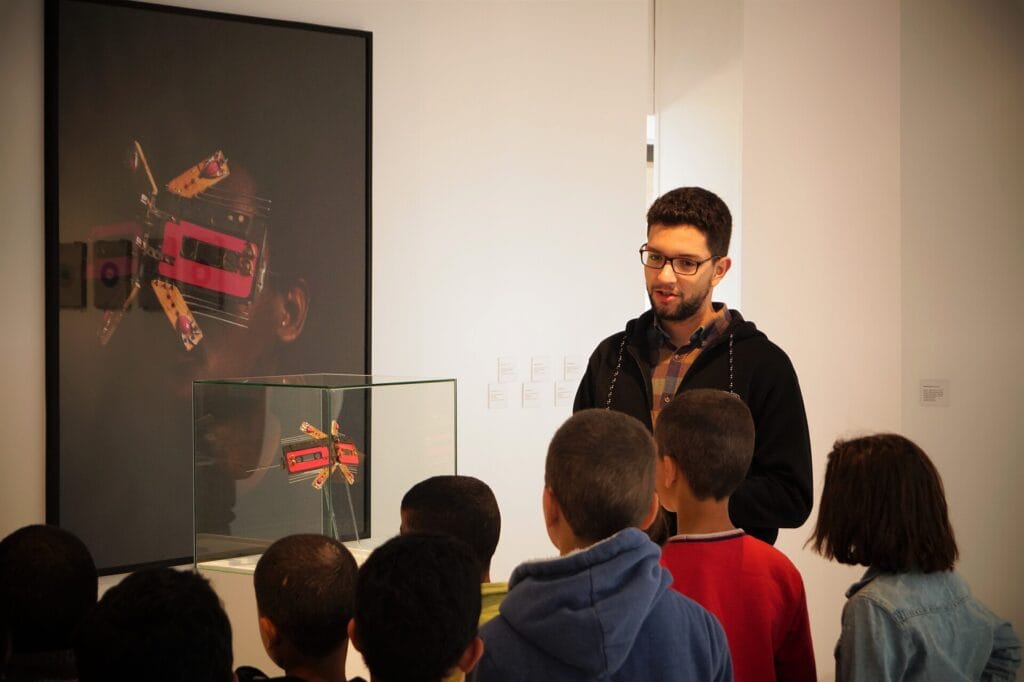
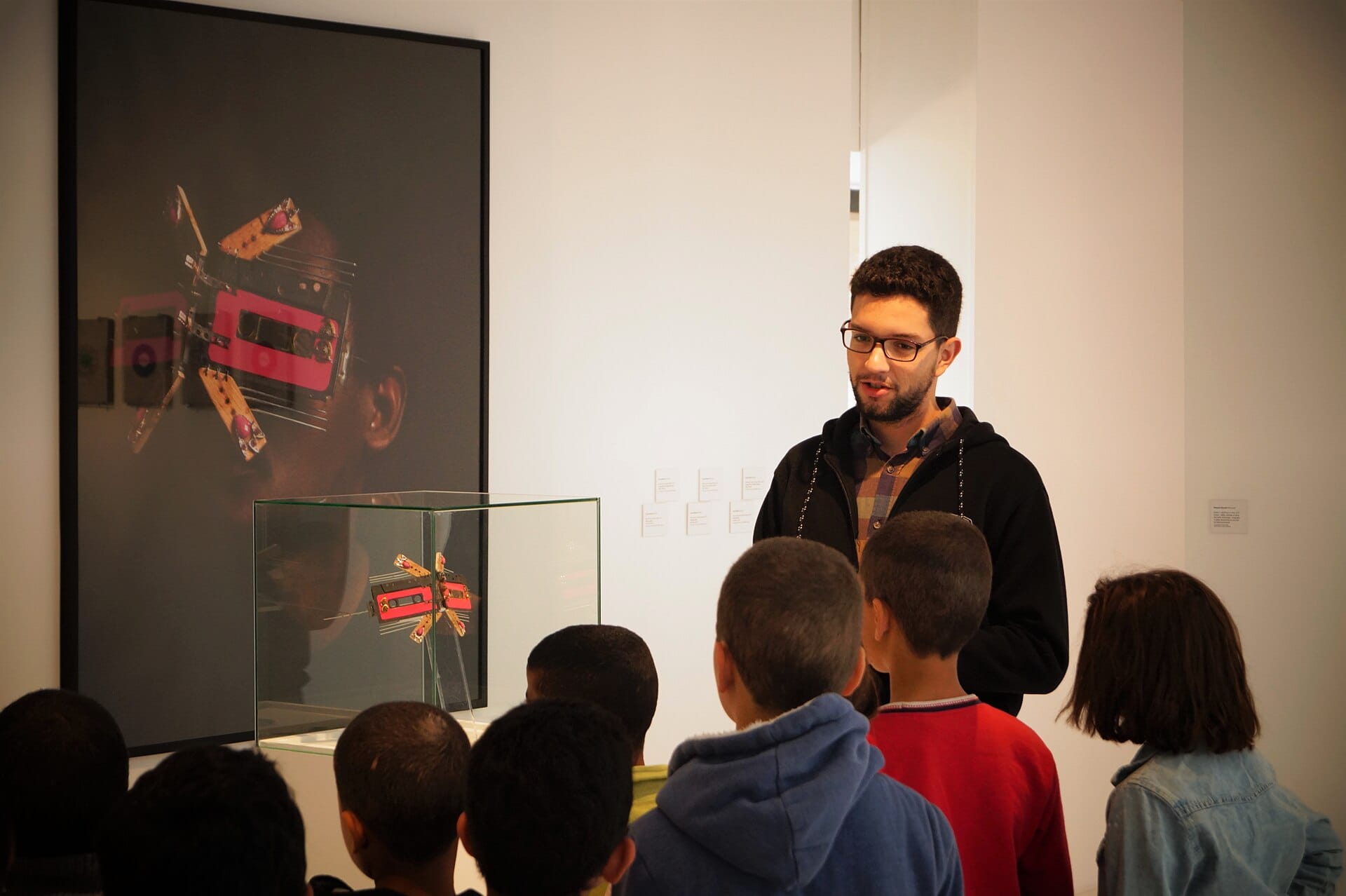
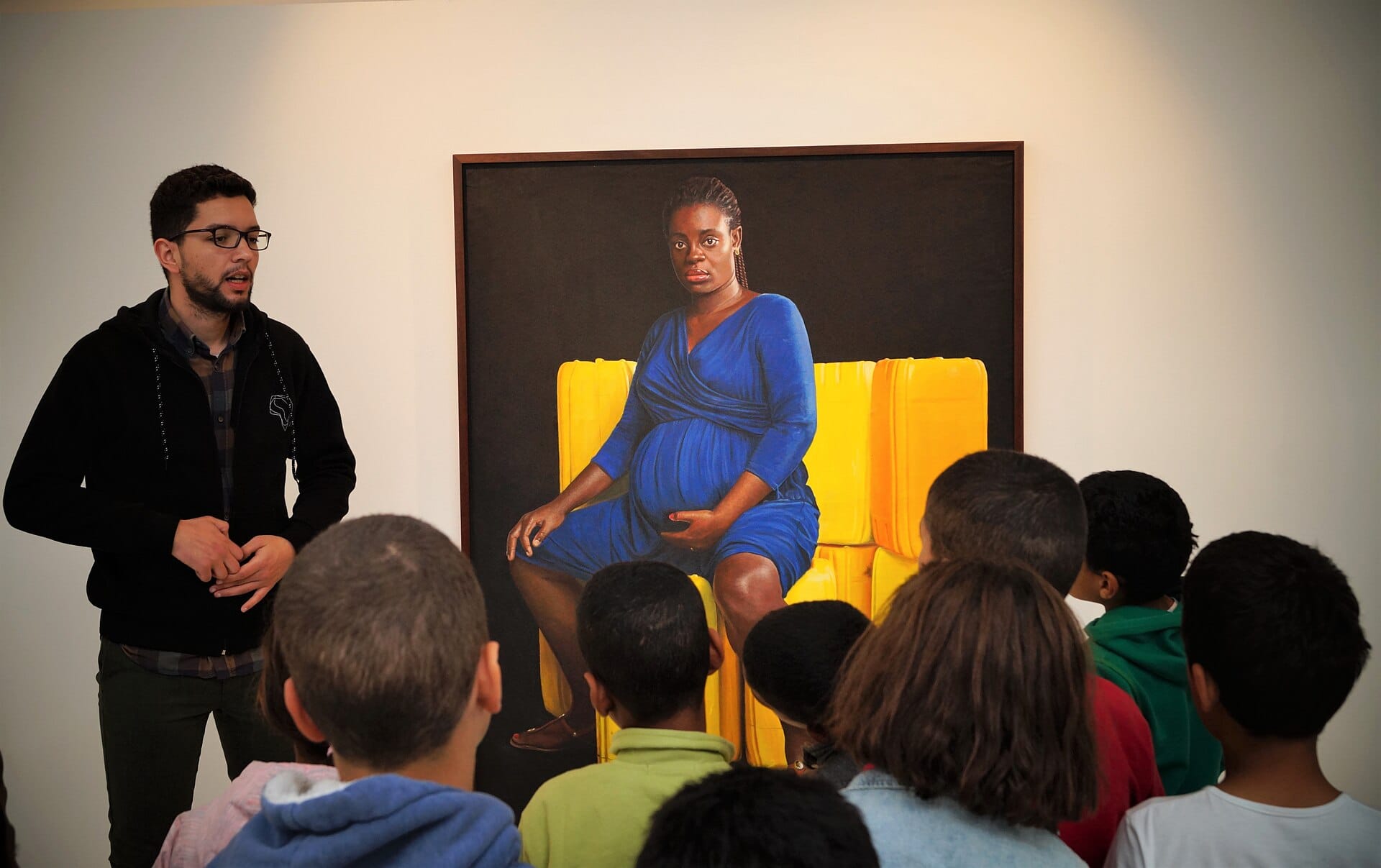
Beyond its exhibitions, MACAAL lays claim to a genuine public-service mission. The museum develops outreach programmes designed to bring contemporary art closer to every audience, including those usually kept at a distance from it. Guided tours, workshops, and activities aimed at schoolchildren and young people: these initiatives aim to make the museum a place of learning as much as of contemplation. The idea is to train the eye, to spark vocations, and to show that art can be a wonderful tool for opening minds.
Support for artists is the other pillar of this approach. By giving visibility to established and emerging creators alike, the museum helps to structure and elevate the African art scene. This support is part of a long-term vision: it’s not simply about exhibiting, but about taking part in the ecosystem of creation, offering artists a respected platform and a curious audience. It is this combination — conservation, exhibition, education and support — that sets MACAAL apart from mere galleries and makes it a fully fledged institution.
The collection and exhibitions of MACAAL Marrakech
The collection assembled by the Lazraq family and the Fondation Alliances comprises more than two thousand works of modern and contemporary Moroccan and African art. Painting occupies an important place, but you’ll also find numerous works on paper, photographs, sculptures, textiles, installations and digital pieces. It is one of the most significant private collections of African art, and it forms the reservoir the museum draws on to build its displays.
MACAAL’s programming is built on a principle of rotating temporary exhibitions, complemented by presentations drawn from the permanent collection. In practice, this means the museum is never quite the same from one season to the next: the displays change, new artists are invited, and different themes are explored. That’s excellent news for regulars and passing travellers alike, who can return without ever feeling they’re repeating the same visit.
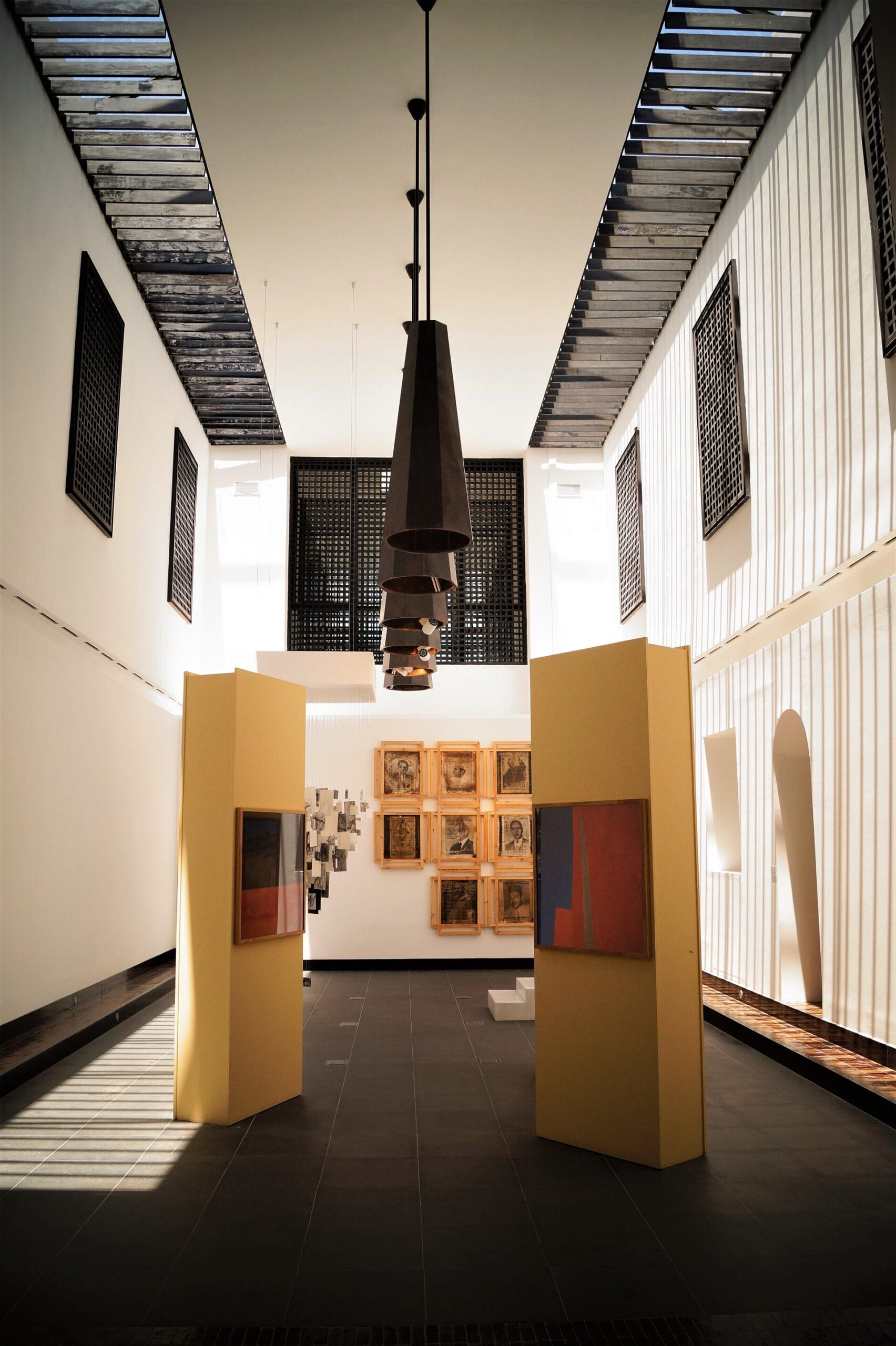
The exhibitions are conceived as themed journeys, with real care given to staging and interpretation. Texts often accompany the works to illuminate their context, which makes the visit accessible even to those with little familiarity with contemporary art. Because the programme changes, it’s always worth checking the museum’s official website before setting off, so you know which exhibitions are on during your stay.
The garden and the sculpture park
One of the most striking assets of MACAAL Marrakech isn’t inside the building at all, but outside it. The museum is paired with a vast sculpture park laid out within the grounds of the Al Maaden resort, on the golf course, at the foot of the Atlas Mountains. The park was inaugurated back in 2013, a few years before the museum itself opened, and today it forms a natural extension of the visit.
Here you’ll discover monumental works designed to converse with the landscape. Some pieces reach impressive dimensions, several metres tall or long, and play with the light, the wind and the surrounding terrain. Among the artists represented are recognised names from the Moroccan and international scene, including Mahi Binebine, alongside creators from further afield. The contrast between contemporary art and the natural setting of palm grove and mountains makes for a memorable experience, highly photogenic and perfect for a stroll.
This sculpture park neatly captures the philosophy of the place: to bring art out of enclosed galleries and set it in an open environment, where anyone can encounter it freely. Bring good shoes and sun protection, as the walk is outdoors, across fairly extensive grounds.
Where is MACAAL and how do you get there?
The museum sits in the Al Maaden district, southeast of Marrakech, in an area home to several golf courses (Al Maaden, Amelkis and the royal course). Reckon on around 10 to 15 kilometres from Jemaa el-Fna square and the medina, meaning roughly twenty to thirty minutes’ drive depending on traffic. This isn’t a visit you make on foot from the centre: it’s best to plan the journey ahead.
You have several options for reaching the Al Maaden Museum of African Contemporary Art:
- Taxi: the simplest option. Agree the fare before getting into a “petit taxi,” or book a ride through an app. Remember to arrange the return trip too, as cruising taxis are scarcer in this area.
- Rental car or private driver: handy if you’re combining MACAAL with other visits on the city’s outskirts. Parking is usually available on site.
- Organised excursion: some cultural tours of Marrakech include the museum in their programme, with transport and a guide.
Because the museum lies away from the historic heart of the city, it pays to slot it into your itinerary in advance. That’s also part of its charm: you leave the bustle of the medina behind for a calmer, more open setting, turned towards the mountains.
Opening hours, prices and access: practical information
Here’s a rundown of the practical details worth knowing as you plan your visit to MACAAL Marrakech. These figures are given for guidance only: hours, closing days and prices can change with the seasons and the programme. Always check the official information before you set off.
| Information | Indicative detail |
|---|---|
| Opening days | Generally Wednesday to Sunday (closed on certain days early in the week) |
| Hours | During the day, generally around 10 am to 6 pm |
| Admission | Paid for adults, reduced rate for residents; children and students often free (to be confirmed) |
| Visit duration | Around 1 to 1.5 hours (more if you explore the sculpture park) |
| Location | Al Maaden district, southeast of Marrakech, ~10–15 km from the centre |
| Getting there | Taxi, private car, rental or organised excursion |
Since the museum is closed on certain days early in the week, it’s wise to schedule your visit midweek or towards the weekend. Also allow enough travel time, especially if you need to move on to other activities the same day.
Who it’s for: families, art lovers and the curious
MACAAL appeals to a broader audience than you might imagine. Lovers of contemporary art will of course find plenty to enjoy, with a demanding programme and leading artists. But the museum was designed to stay accessible: the careful staging, the explanatory texts and the manageable size of the spaces make for a comfortable visit, without the fatigue of the very largest museums.
Families are most welcome. The sculpture park in particular is a big hit with children, who can run around in the open air while discovering works that surprise with their scale and shapes. The museum’s educational dimension lends itself well to a learning outing, provided you adapt the pace to the youngest visitors.
Finally, travellers who are simply curious, with no particular expertise, often leave won over. MACAAL offers a welcome breather in a Marrakech trip that’s often packed with heritage sights. It’s the ideal place to take the pulse of Africa’s art of today and come away with a fresh perspective on the continent.
Combining MACAAL with other visits
The museum fits perfectly into a wider cultural itinerary. If Marrakech’s art scene fascinates you, you can put together a genuine “museum day” by pairing MACAAL with other landmark venues around the city. For a full overview of what’s on offer, our complete guide to things to do in Marrakech will help you structure your stay.
Here are a few worthwhile pairings, bearing in mind that MACAAL is on the outskirts while the other venues are more central:
- To stay in the world of modern art and fashion, visit the Yves Saint Laurent Museum and its remarkable architectural setting.
- For history and heritage, the Marrakech Museum, housed in the Dar Menebhi palace, offers a magnificent traditional backdrop.
- Photography enthusiasts won’t want to miss the Photography Museum, in the heart of the medina.
- For nature and colour, the Majorelle Garden remains a must-see, ideal as a complement to a day of art.
- To wander a more modern district full of cafés and galleries, explore the Guéliz district.
A good strategy is to set aside the morning or the afternoon for MACAAL and its sculpture park, then head back towards the centre for one or two other venues that are closer together. That way you avoid unnecessary back-and-forth.
Practical tips for a great visit
A few simple recommendations will help you get the most out of the Al Maaden Museum of African Contemporary Art:
- Check the programme before you go: since exhibitions change, it’s best to know what’s on during your stay.
- Plan your transport: book your taxi or driver, and arrange the return trip when you set out.
- Pick the right time slot: avoid the closing days early in the week, and favour the cooler hours for the sculpture park.
- Bring water and sun protection: the outdoor section is visited in the open air.
- Take your time: read the labels and interpretation texts, as they greatly enrich your understanding of the works.
- Ask about the facilities: shop, café or dining area may vary depending on the period.
Follow these few principles and your time at MACAAL will be smooth and enjoyable, with no unpleasant surprises when you arrive.
Accessibility and visitor comfort
The museum occupies a modern building designed to welcome the public, which generally makes moving around the exhibition rooms easy. The interior spaces are bright and, for the most part, on a single level — an advantage for people with reduced mobility, for pushchairs, or for visitors who prefer to avoid exertion. The sculpture park, on the other hand, is explored outdoors over more varied surfaces: it may call for a little more care depending on conditions.
For any specific question about accessibility (wheelchair access, adapted toilets, loan of equipment), it’s best to contact the museum directly before your visit. The staff can tell you the current conditions, which may depend on the layout of the exhibitions on show. On the whole, MACAAL remains a comfortable, human-scale visit, appreciated for its calm and luminous atmosphere.
MACAAL, a symbol of Marrakech’s cultural vitality
The creation of MACAAL is part of a wider movement: in recent years, Marrakech has established itself as a regional cultural capital, drawing galleries, art fairs, residencies and institutions. The city, whose medina is a UNESCO World Heritage Site, is no longer defined solely by its historic heritage: it has become a place where contemporary art finds an audience and leading exhibition spaces.
Within this landscape, the Al Maaden Museum of African Contemporary Art plays a distinctive role. By focusing on the art of the entire continent, and not just the Moroccan scene, it gives Marrakech a pan-African and international reach. It contributes to the idea that Africa can and should tell its own artistic story, with its institutions, its curators, its collectors and its artists. To learn more about its history and its collection, you can consult the Wikipedia entry for the Al Maaden Museum of African Contemporary Art, which gathers the main verified information about it.
For the traveller, this translates into an experience rich in meaning: beyond the aesthetics, you leave with questions, discoveries and sometimes a favourite or two. That’s exactly what a good contemporary art museum should provoke.
Frequently asked questions
Is MACAAL worth the trip from the centre of Marrakech?
Yes, if you have an interest in contemporary art or want to venture beyond the classic sights. The museum is around 10–15 km from the centre, but its setting at the foot of the Atlas, its collection and its sculpture park make it a distinctive and rewarding stop.
When did MACAAL open and who founded it?
The museum opened in 2016. It is championed by the Lazraq family (Farida and Alami Lazraq) and the Alliances group, through the Fondation Alliances, and it is chaired by Othman Lazraq. It is a private, non-profit institution.
How much time should you set aside for the visit?
Reckon on around 1 to 1.5 hours for the exhibition rooms. Add more time if you’d like to explore the outdoor sculpture park, which deserves a leisurely walk.
Is the museum suitable for families and children?
Yes. The manageable size of the spaces and the open-air sculpture park suit families well. Children especially enjoy the large outdoor works. Just adapt the pace to the youngest visitors.
What are MACAAL’s opening hours and prices?
The museum generally opens Wednesday to Sunday during the day, and admission is paid, with reduced rates for certain visitors. As this information is indicative and subject to change, check it on the official website before you go.
What can you see at MACAAL?
You’ll discover rotating temporary exhibitions and presentations drawn from a collection of more than 2,000 works of modern and contemporary African art: paintings, photographs, sculptures, installations, videos and textiles, rounded off by a park of monumental sculptures.
Conclusion
MACAAL Marrakech is far more than just a museum: it’s a gateway to African contemporary creativity, offered to the public in an exceptional setting at the foot of the Atlas Mountains. Founded by the Lazraq family and the Fondation Alliances and opened in 2016, it brings together a substantial collection, a rotating programme of exhibitions and a sculpture park that extends the experience into the open air. A little way from the centre, it amply rewards those who make the trip. If you want to discover another face of Marrakech, more creative and turned towards the future, the Al Maaden Museum of African Contemporary Art deserves a place in your itinerary.
Editorial independence: this article is informative and written independently. Opening hours, opening days, prices and access conditions are given for guidance only and may change; always check the official information with the museum before your visit.
Images under a free licence via Wikimedia Commons: © Fraguando (CC BY-SA 4.0); © Fraguando (CC BY-SA 4.0); © Fraguando (CC BY-SA 4.0). Sources: UNESCO and Wikipedia.