The Maison de la Photographie de Marrakech (Marrakech Photography Museum) is a private museum tucked into the heart of the medina, opened in 2009 inside a restored former fondouk, just steps from the Ben Youssef Madrasa and the Marrakech Museum. It holds several thousand vintage photographs of Morocco taken between 1870 and 1960, a rare heritage collection rounded out by a panoramic rooftop café-terrace overlooking the medina rooftops and, on a clear day, the peaks of the High Atlas. Allow about an hour for a visit to this intimate, calm and poetic spot, which appeals as much to photography enthusiasts as to travellers curious about history. This guide explains why the Marrakech Photography Museum deserves a place in your itinerary, what you will see there, and how to plan your visit.
At a glance: the essentials on the Maison de la Photographie
- A private museum opened in 2009 by Patrick Manac’h and Hamid Mergani.
- Several thousand vintage photographs of Morocco (around 8,000, with some sources citing up to 10,000), dated from 1870 to 1960.
- A one-of-a-kind setting: a restored early-20th-century fondouk (caravanserai) right in the heart of the medina.
- A panoramic café-terrace among the highest in the district, with views over the rooftops and the Atlas.
- A visit of around 1 hour, ideal to combine with the neighbouring monuments.
- A moderate entrance fee (indicative, to be checked before your visit) and daily opening.
History and founders of the Maison de la Photographie de Marrakech
The Maison de la Photographie de Marrakech grew out of the passion of two men: Patrick Manac’h, a French collector and traveller deeply attached to Morocco, and Hamid Mergani, his Moroccan partner. Over the years they assembled a considerable photographic collection, patiently built from prints, plates and documents scattered across Europe and Morocco. Their guiding idea was simple but powerful: to make sure that Morocco’s photographic memory stayed in Morocco, open to the public, rather than remaining locked away in private collections or leaving the country.
The museum opened its doors in April 2009. It is not a public institution but a private foundation, largely self-funded through admissions and the small café-terrace. This independence explains the venue’s distinctive atmosphere: neither cold nor institutional, it feels more like a living home where you take the time to look. Since opening, the Maison has regularly staged temporary exhibitions and also functions as a resource centre open to students, researchers and teachers interested in Morocco’s visual history.
The founders’ heritage ambition goes well beyond simply putting images on display. By repatriating and preserving pictures that, for many of them, had left Morocco, the Maison plays a role in collective memory. Every photograph is a trace: a vanished street, a forgotten trade, a traditional costume, a face. Bringing these fragments together means patiently reconstructing the portrait of a country at a precise moment in its history. It also gives Moroccans themselves, and younger generations in particular, the chance to reclaim these images and forge a link with the past of their city and their culture.
This project is part of a broader movement to celebrate the heritage of the Red City. If you are planning your stay, our complete guide to things to do in Marrakech sets this museum within the full range of cultural sites not to be missed, from the gardens to the palaces and the museums of the medina.
The building: a restored former fondouk in the heart of the medina
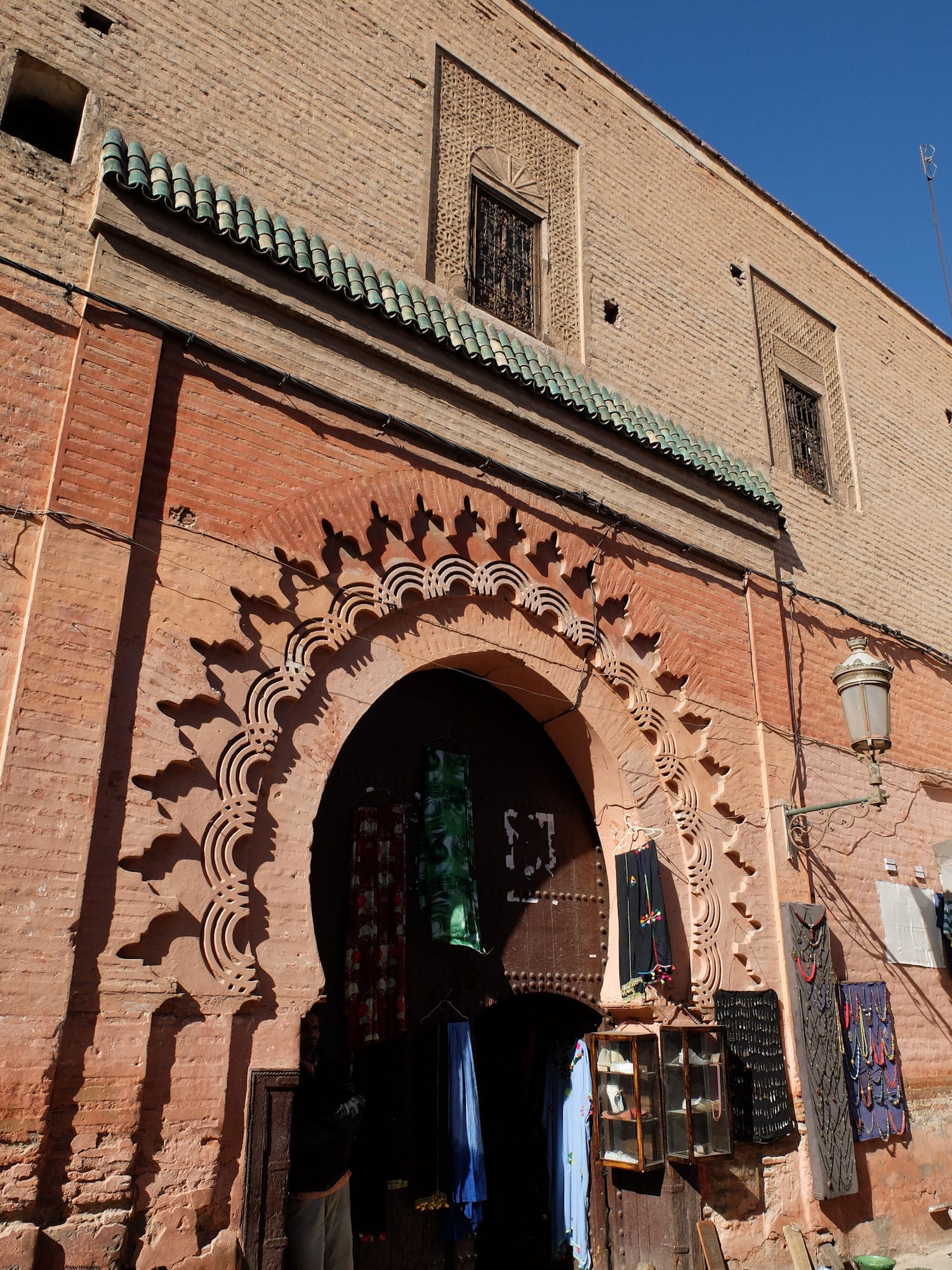
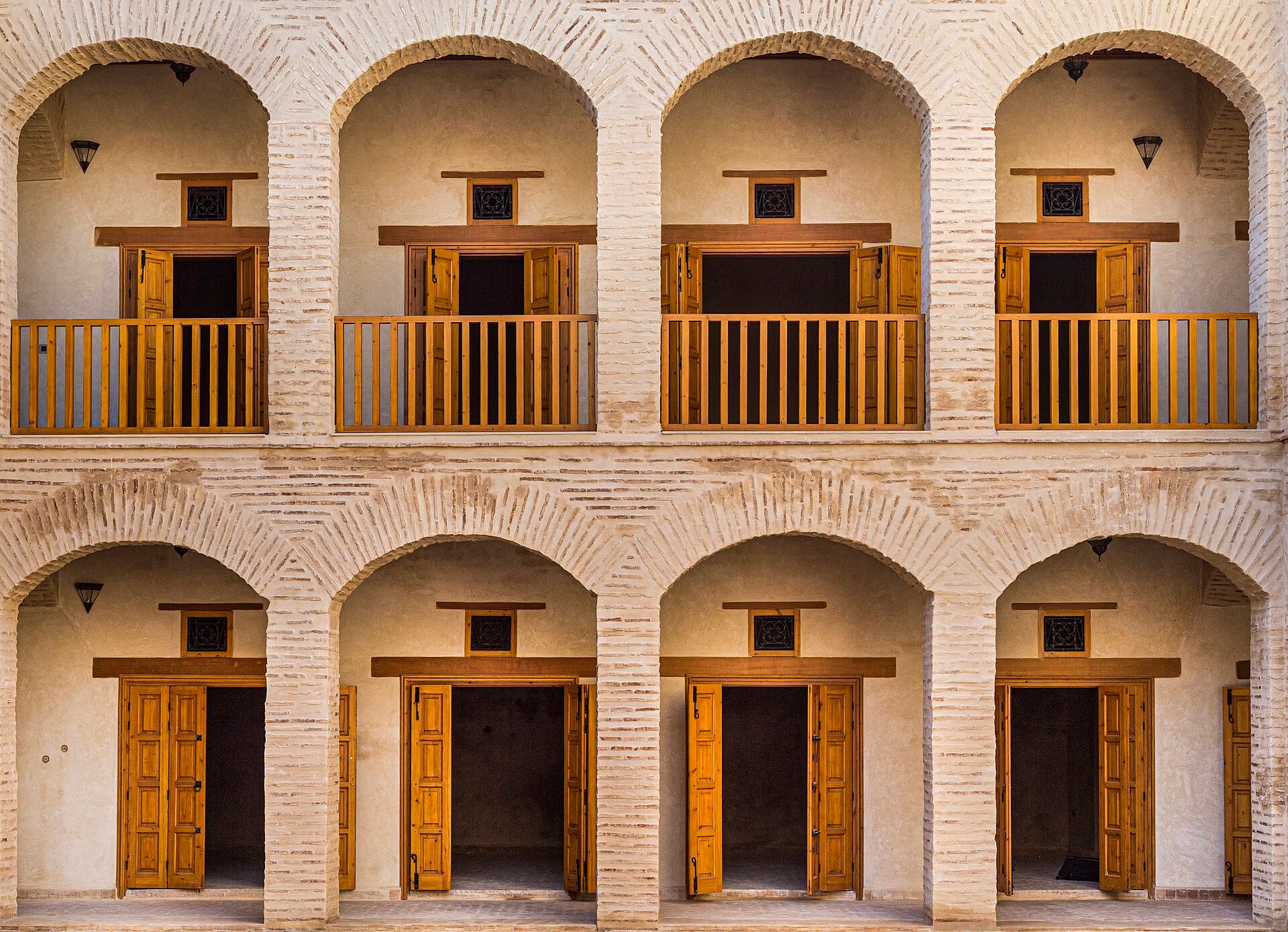
Much of the charm of the Marrakech Photography Museum comes from its setting. The collection is housed in an early-20th-century fondouk, painstakingly rehabilitated into a cultural space. The fondouk, also known as a caravanserai, was traditionally a place that received merchants and their goods: an open central courtyard surrounded by galleries over several levels, with rooms upstairs and storerooms on the ground floor. This kind of building, emblematic of the medina’s commercial architecture, lends itself wonderfully to an exhibition laid out around the patio.
The visit unfolds across several levels linked by the narrow staircases typical of the medina’s old houses. You move from one room to the next in step with the themes, gradually climbing towards the terrace. The spaces are modest, natural light plays across the zellige tiles, the carved woodwork and the lime-washed walls; together they create a subtle dialogue between the container, a piece of traditional Moroccan architecture, and the content, images that tell the story of precisely this Morocco of the past. The restoration has preserved the spirit of the place without freezing it, giving the walk an almost intimate feel.
This fondouk sits within the dense, labyrinthine fabric of the Marrakech medina, a World Heritage Site. The contrast is striking: after the bustle of the alleys and stalls, you push open a discreet door and step into a bubble of silence and contemplation.
The collection: photographs of Morocco from 1870 to 1960
The heart of the Maison de la Photographie de Marrakech is, of course, its collection. It brings together several thousand vintage photographs of Morocco, a body of work often estimated at around 8,000 pieces, with some sources putting it as high as 10,000 documents. All of them cover a pivotal period, roughly from 1870 to 1960, nearly a century during which photography captured the country’s transformation, its cities, its countryside and its people.
Beyond the framed prints, the collection includes a variety of media that give it real documentary value:
- Glass plates, those fragile negatives that bear witness to early photographic techniques.
- Period postcards, precious for understanding how images of Morocco circulated in Europe.
- Signed prints by named photographers, including some pioneers of photography who worked in Morocco.
- Documents, newspapers and maps that place the images back in their historical context.
The images cover the whole country: life in the medinas, portraits of men and women, souk scenes, desert and mountain landscapes, the Berber tribes of the High Atlas, the ports and the imperial cities. You encounter the eye of anonymous travellers as well as that of photographers who shaped the country’s visual history. The layout favours reading: the prints are presented by broad theme, with captions that help you understand where and when each shot was taken. For a history lover it is a fascinating immersion; for a photographer, a lesson in how to look.
This collection keeps growing thanks to donations from collectors and from photographers’ families, which makes the Maison a living place rather than a frozen archive. Part of the collection is also available as fine-art prints, a way of keeping the heritage alive beyond the museum’s walls.
What strikes you as you walk through the rooms is the diversity of viewpoints. Some images belong to ethnographic reportage, others to the commercial postcard, others still to art photography or the studio portrait. This plurality also tells the story of photography itself, of its techniques and its uses, as the medium became more widespread between the late 19th century and the mid-20th. For the visitor, it is a chance to understand how Morocco was seen, represented and sometimes idealised by those who photographed it, whether they were passing through or settled in the country for good. You leave the museum with fresh eyes, more attentive to the details and contrasts of the city around you.
The High Atlas film: a treasure screened on site
Among the most precious pieces held at the Marrakech Photography Museum is an exceptional document: the first colour documentary film shot in Morocco, made by the French photographer Daniel Chicault in 1957. The film is devoted to the Berber tribes of the High Atlas and their way of life, captured at a time when colour cinema was still rare, all the more so for a shoot in remote, hard-to-reach mountain regions.
The film is screened on site, in a small room set along the route leading up to the terrace. Taking a few minutes to sit down offers a moving counterpoint to the still photographs: the movement, the colours and the everyday gestures add a further depth to what you have just seen on the walls. It is one of those moments that set the Maison de la Photographie apart from more conventional museums, turning the visit into a genuine journey through time.
The panoramic café-terrace and its view over the medina
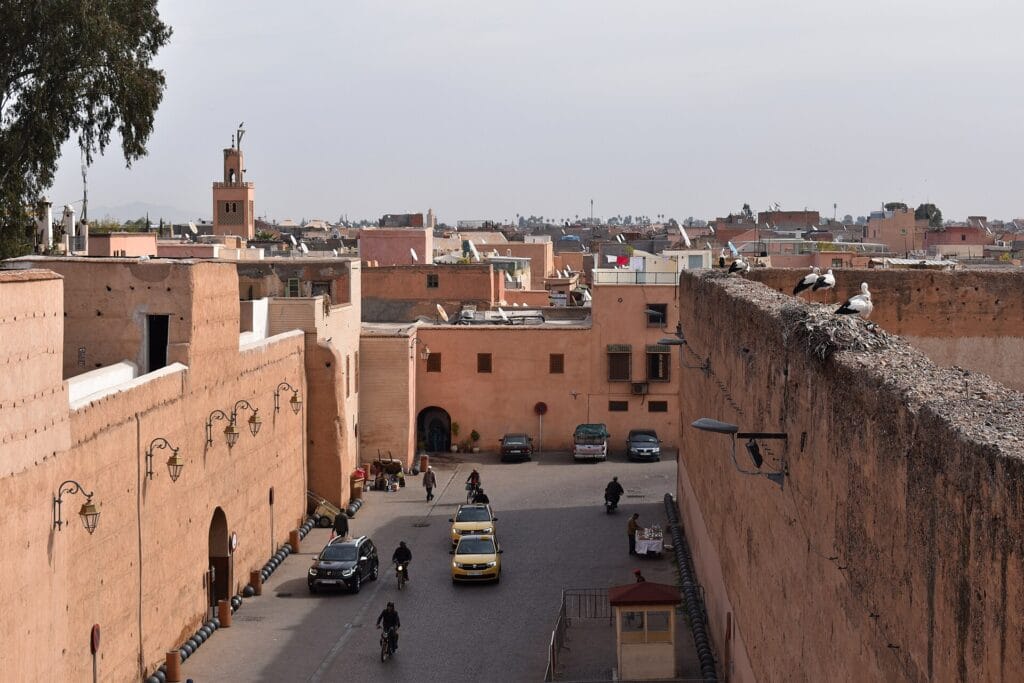
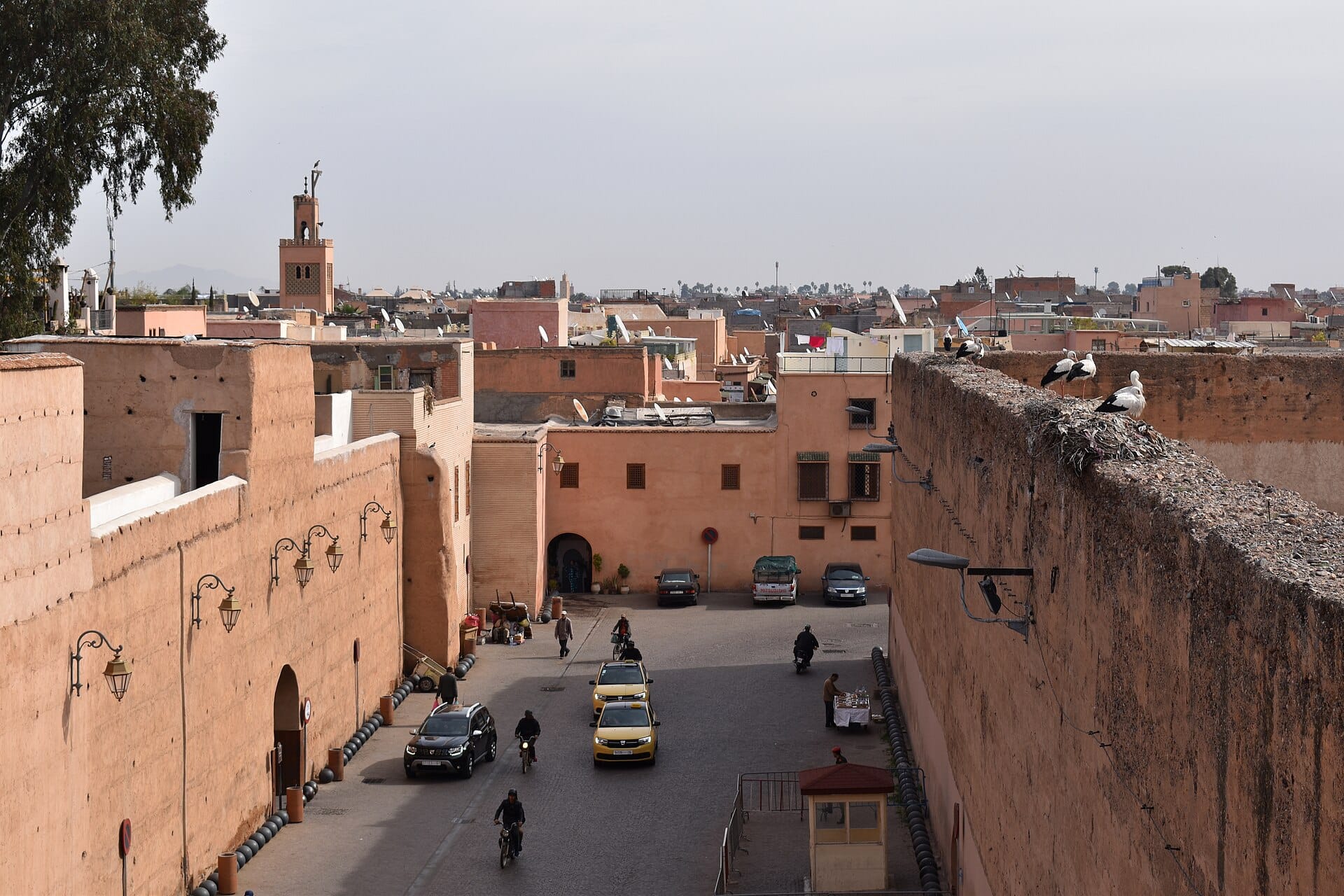
At the very top of the building, the café-terrace is almost as famous as the collection itself. Perched among the highest points in this part of the medina, it offers an open panorama over a sea of terracotta rooftops bristling with antennas, minarets and private terraces. On a clear day the view stretches to the snow-capped peaks of the High Atlas that close the horizon to the south, a particularly magical sight in winter and spring.
Mint tea, cold drinks and light snacks are served here at reasonable prices. It is the perfect place to end the visit: you settle in, catch your breath away from the buzz of the alleys, and extend the museum’s aesthetic pleasure by contemplating the city from above. The terrace is also an excellent vantage point for photographers, especially in the late afternoon when golden light bathes the medina rooftops.
What to see nearby: Ben Youssef, the Marrakech Museum and the Koubba
One of the great strengths of the Maison de la Photographie de Marrakech is its location, within a district that concentrates several jewels of the city’s heritage. In just a few minutes on foot, you can string together the most iconic sights of the historic medina.
- The Ben Youssef Madrasa, a former Quranic school and masterpiece of Hispano-Moorish art, close by: discover it in our guide to the Ben Youssef Madrasa.
- The Marrakech Museum, housed in the sumptuous Dar Menebhi palace: see our article on the Marrakech Museum (Dar Menebhi).
- The Almoravid Koubba, one of the few remaining vestiges of the Almoravid era, on the same square as the museum and the madrasa.
This cultural triangle — madrasa, museum, photography house — is ideally covered over half a day, with a break on the terrace. Extending the walk, you will easily reach the Marrakech souks and, a little further on, the legendary Jemaa el-Fna square, the beating heart of the city.
The appeal of grouping these sites together is also thematic: after admiring the refined architecture of the madrasa and the collections of the Dar Menebhi palace, the Maison’s vintage photographs take on a particular resonance. You picture concretely what these same places looked like a century ago, how their inhabitants lived and how the city has been transformed. Visiting these three sites in a row makes for a small, coherent circuit around the history and arts of Marrakech, without ever having to take a taxi or leave the charm of the alleys.
Opening hours, prices and access within the medina
The Marrakech Photography Museum is open every day, which makes it easy to fit into your plans whatever your schedule. The table below sums up the essential practical information. Please note: the hours and, above all, the prices are indicative and may change; check them before your visit.
| Information | Detail (indicative) |
|---|---|
| Type of venue | Private museum of vintage photography |
| Opening | Every day, generally from 9:30 am to 7:00 pm |
| Length of visit | About 1 hour (terrace included) |
| Entrance fee | Moderate, a few tens of dirhams (to be checked on site) |
| District | Medina, Ben Youssef area (Rue Ahl Fès) |
| Nearby | Ben Youssef Madrasa, Marrakech Museum, Almoravid Koubba |
The museum lies within the maze of the medina, in the area around Ben Youssef square. Access is on foot only: the alleys are too narrow for cars. From Jemaa el-Fna square, allow about fifteen minutes’ walk heading north, through the souks. The signposts towards the major monuments (Ben Youssef, Marrakech Museum) will lead you to the right area; from there, simply follow the signs or ask for the Maison de la Photographie, well known to the local shopkeepers. Do not worry if you get a little lost: that is the charm of the medina, and the museum is easy to find again once you are in the zone.
Visiting tips and photography advice
To make the most of the Maison de la Photographie de Marrakech, a few simple recommendations make all the difference.
- Choose the right time: late morning or late afternoon are ideal, with softer light on the terrace and slightly fewer people.
- Allow time for the terrace: beyond the visit itself, treat yourself to a tea break to savour the view.
- Don’t miss the film: a few minutes seated in the screening room add value to the whole visit.
- Read the captions: they place the photographs in context and greatly enrich the experience.
- Wear comfortable shoes: the old fondouk’s staircases are narrow and the medina’s ground uneven.
On the photography side, the terrace is the highlight: favour the low, raking light of late day to capture the rooftops and, if the sky is clear, the line of the Atlas in the background. Inside, respect the rules on photographing the works on display, which can vary from room to room and between temporary exhibitions. Finally, the old fondouk itself, with its patio and its galleries, offers very fine architectural framings.
Who is it for? Visiting with children or as a family
The Maison de la Photographie de Marrakech speaks to a wide audience. Photography and history enthusiasts will obviously find it of the first order, but the place also appeals to travellers simply curious to understand Morocco of the past. As the visit is short and human in scale, it is perfectly suited to those who want a cultural experience without devoting a whole day to it.
With children, the visit stays enjoyable as long as you don’t drag it out: the vintage images, the portraits and the scenes of daily life can spark their curiosity, and the promise of the terrace with its view and its orange juice is good motivation. The calm of the place also offers a welcome pause after the intensity of the souks. It is likewise a lovely chance to tell younger ones what Morocco looked like a century ago.
Accessibility: what you need to know
We should be honest on this point: like most of the medina’s historic buildings, the old fondouk that houses the Marrakech Photography Museum was not designed for modern accessibility. The visit takes place over several levels linked by narrow and sometimes steep staircases, with no lift. Visitors with reduced mobility or families with a pushchair will therefore encounter difficulties, particularly in reaching the terrace at the top.
Getting to the museum is itself a challenge: the medina’s alleys are cobbled, uneven and often crowded. If you are travelling with someone with reduced mobility, it is best to plan ahead and gather information in advance. To organise a comfortable and well-located stay, see our guide on where to stay in Marrakech, which will help you choose suitable accommodation near the medina’s sites.
Why the Maison de la Photographie de Marrakech is worth the detour
In a city so rich in attractions, the Maison de la Photographie de Marrakech holds a special place. It seeks not to impress with splendour but to move you with its rightness: that of a heritage saved from oblivion, presented with care in an authentic setting. In an hour, you travel through nearly a century of Moroccan history, gaze at faces and landscapes from another age, discover a pioneering film, and finish facing one of the finest panoramas of the medina. It is this rare combination — heritage, atmosphere and viewpoint — that makes it such an endearing stop.
Whether you are a seasoned photographer, a history lover or simply a traveller in search of authenticity, this small private museum will leave you with a lasting memory. It embodies the idea that Morocco’s heritage deserves to be kept at home and shared with everyone. A beautiful symbol, well worth including in your discovery of the medina. To go further into the city’s world heritage, the Marrakech medina is listed by UNESCO; and for a general overview of the city, see the Marrakesh page on Wikipedia as well as the Maison de la Photographie de Marrakech.
Frequently asked questions
What is the Maison de la Photographie de Marrakech?
It is a private museum opened in 2009 by Patrick Manac’h and Hamid Mergani, set in a restored former fondouk in the medina. It preserves several thousand vintage photographs of Morocco (around 8,000), dated from 1870 to 1960, and features a panoramic café-terrace.
Where is the museum and how do you get there?
It is located in the medina, in the area of Ben Youssef square (Rue Ahl Fès), very close to the Ben Youssef Madrasa and the Marrakech Museum. Access is on foot: allow about 15 minutes’ walk from Jemaa el-Fna square, crossing the souks.
What are the opening hours and the entrance fee?
The museum is open every day, generally from 9:30 am to 7:00 pm. The entrance fee is moderate (a few tens of dirhams). This information is indicative and may change: check it before your visit.
How long does the visit take?
Allow about an hour, terrace included. The museum is human in scale, so you can enjoy it without rushing while keeping time for the neighbouring monuments of the medina.
What must you see at the Maison de la Photographie?
Don’t miss the vintage prints and glass plates, the colour film on the High Atlas made by Daniel Chicault in 1957, and above all the café-terrace, which offers one of the finest views over the medina rooftops and the Atlas.
Is the visit suitable for families and children?
Yes, provided you keep it short. Vintage images often interest children, and the terrace makes a lovely reward. On the other hand, the venue is not suited to pushchairs or to people with reduced mobility because of the narrow staircases.
Disclaimer: the opening hours, prices and practical information mentioned in this article are given as an indication only and are subject to change; we encourage you to check them with the museum before your visit. This article is independent, informational content, with no commercial link to the establishment presented.
Images under free licence via Wikimedia Commons: © R Prazeres (CC BY-SA 4.0); © Misa.stefanovic.07 (CC BY-SA 4.0); © Elfathi amine (CC BY-SA 4.0). Sources: UNESCO and Wikipedia.