Discreet, almost hidden below a small square in the heart of the medina, the Almoravid Koubba often goes unnoticed by hurried travellers. Yet it is one of the most precious monuments in Marrakech: the only surviving remnant of the Almoravid dynasty still standing in the city, and probably the oldest preserved building in the ochre city. Small in size but immense in the history it carries, this modest 12th-century ablutions pavilion is an essential stop for anyone who wants to understand the origins of Marrakech.
Quick answer: the Almoravid Koubba (also known as the Koubba Ba’adiyn) is a small domed structure built around 1117 and rediscovered by chance in 1948 after being buried for centuries. You can visit it in about twenty minutes, ideally combined with the nearby Ben Youssef Madrasa and the Marrakech Museum, since it sits in the same historic quarter. Don’t be fooled by its modest dimensions: it is a true handbook of Almoravid architecture carved in stone and plaster, unique in the world.
In brief: the essentials on the Almoravid Koubba
- Name: Almoravid Koubba, or Koubba Ba’adiyn (Qoubba el-Baadiyn).
- Type: small domed ablutions pavilion, supplied with running water.
- Period: Almoravid dynasty, around 1117, during the reign of Ali ben Youssef.
- Distinction: the only surviving Almoravid monument in Marrakech, one of the oldest buildings in the city.
- Rediscovery: brought to light in 1948, fully excavated in the early 1950s.
- Where: the Ben Youssef Madrasa quarter, in the medina, near the Marrakech Museum.
- Visit length: 15 to 25 minutes, best combined with the neighbouring sites.
- Fee: inexpensive entry (indicative, see below), sometimes included in a combined ticket.
To plan your entire stay and slot this monument into a coherent itinerary, our complete guide to visiting Marrakech reviews the must-sees quarter by quarter.
What is the Almoravid Koubba?
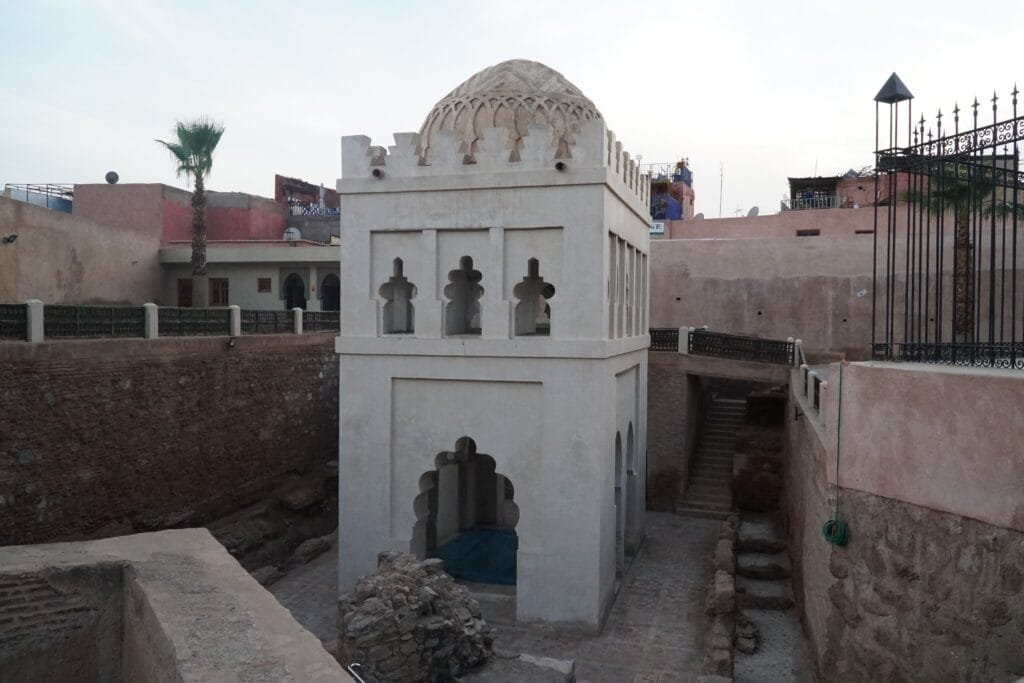
The Almoravid Koubba is a small rectangular building topped by a dome, today isolated at the bottom of an archaeological enclosure slightly below the current level of the medina. The word “koubba” refers in Arabic to a structure covered by a dome; “Ba’adiyn” refers to a confederation of Berber tribes associated with the quarter. Originally, this pavilion was not an isolated monument: it was part of a vast religious complex attached to the city’s first great Almoravid mosque, the Ben Youssef Mosque.
Its function was at once eminently practical and sacred: it was a place for ritual ablutions. Before prayer, Muslim worshippers perform a purification (the ablutions), and this pavilion housed basins, fountains and water points intended for that purpose. In other words, the Almoravid Koubba was the medieval equivalent of a monumental washroom, grafted onto the neighbouring mosque. It also served as a water distribution point for the quarter, making it one of the earliest known public hydraulic installations in Marrakech.
What makes the Koubba Ba’adiyn exceptional, then, is not its size — it really is small — but its status as a unique witness. The mosque to which it was attached has vanished, rebuilt and then replaced over the centuries; the rest of the city’s Almoravid architecture was erased by the dynasties that followed. Only this little pavilion survived, making it a time capsule of an art that has disappeared everywhere else in the city.
History: the Almoravids, the 12th century and the 1948 rediscovery
To understand the Koubba, we must go back to the Almoravids, a Berber dynasty from the Sahara that founded Marrakech in the 11th century (around 1070). It was they who made the city their capital, endowing it with ramparts, mosques, gardens and an ingenious irrigation network. Under their rule, Marrakech became the metropolis of a vast empire stretching from southern Morocco to Andalusia, in Spain. The city was a leading intellectual and commercial crossroads.
The Almoravid Koubba was built around 1117, during the reign of Ali ben Youssef, one of the dynasty’s great sovereigns. It was during this same period that Almoravid art reached its maturity: elaborate arches, refined carved decoration, techniques brought from Andalusia and fused with local craftsmanship. The pavilion complemented the Ben Youssef Mosque, which bore the sovereign’s name and formed the religious heart of the emerging city.
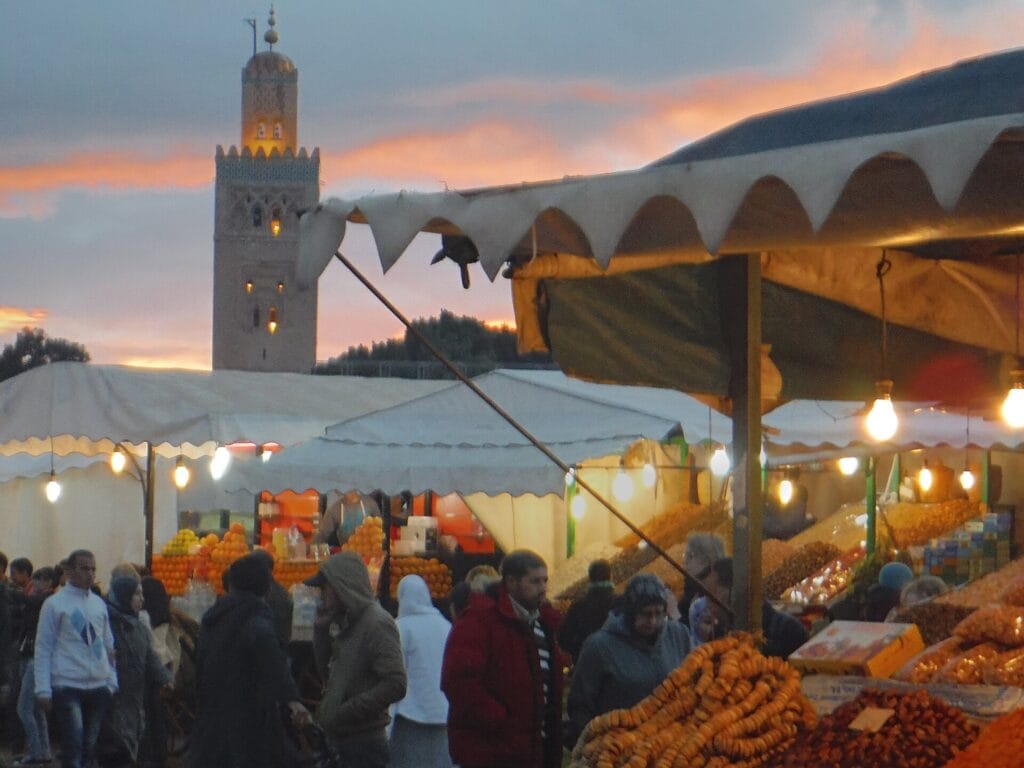
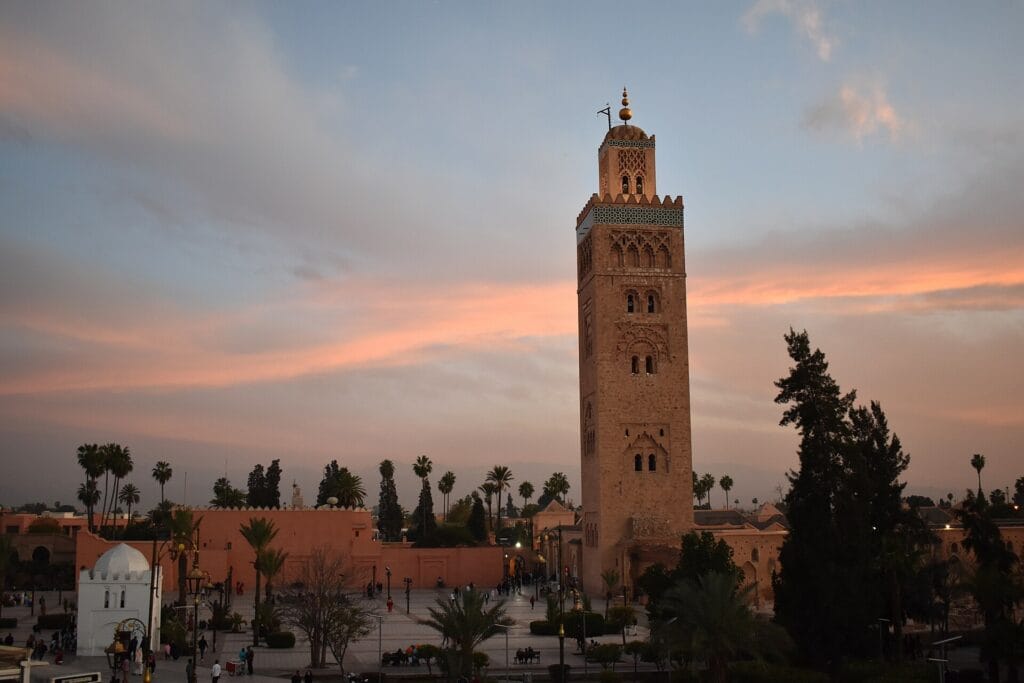
But the history of the Almoravids was brief. From the mid-12th century, a new dynasty, the Almohads, seized Marrakech (around 1147). As often happens when one power replaces another, the Almohads set about erasing the traces of their predecessors. They demolished much of the Almoravid construction, seen as tied to a regime they were fighting, and built their own monuments — including the famous Koutoubia Mosque and its minaret, which became the emblem of the city. That is why almost nothing remains today of Almoravid architecture in Marrakech.
How did this small pavilion escape destruction? The answer can be summed up in one word: oblivion. Over the centuries, the medina’s ground level rose, buildings piled up one on top of another, and the Koubba ended up being literally buried under later constructions and rubble. Interred and invisible, it passed through time sheltered from prying eyes — and from pickaxes.
It was not until 1948 that the monument was rediscovered, almost by accident, during works and research conducted around the Ben Youssef Mosque. As they cleared the ground, researchers uncovered an intact domed structure buried under several metres of earth and masonry. The surprise was complete: an Almoravid masterpiece whose very existence no one had suspected had been found. Excavations carried out in the following years, in the early 1950s, fully uncovered the structure and made it possible to study its architecture and its hydraulic system. Since then, the Koubba has been the subject of successive restoration campaigns to preserve it and present it to the public.
This late rediscovery explains why the Koubba today sits below street level: it occupies the level of the medieval 12th-century ground, while the modern city has risen all around it. To descend towards it is to descend back in time.
The architecture of the Almoravid Koubba: a masterpiece in miniature
Don’t expect a grand palace: the Almoravid Koubba reads like a precious, dense object where every square centimetre counts. It is precisely this concentration of craftsmanship that gives it its value. Here is what to look for as you raise your eyes and walk around the pavilion.
The dome and its decoration
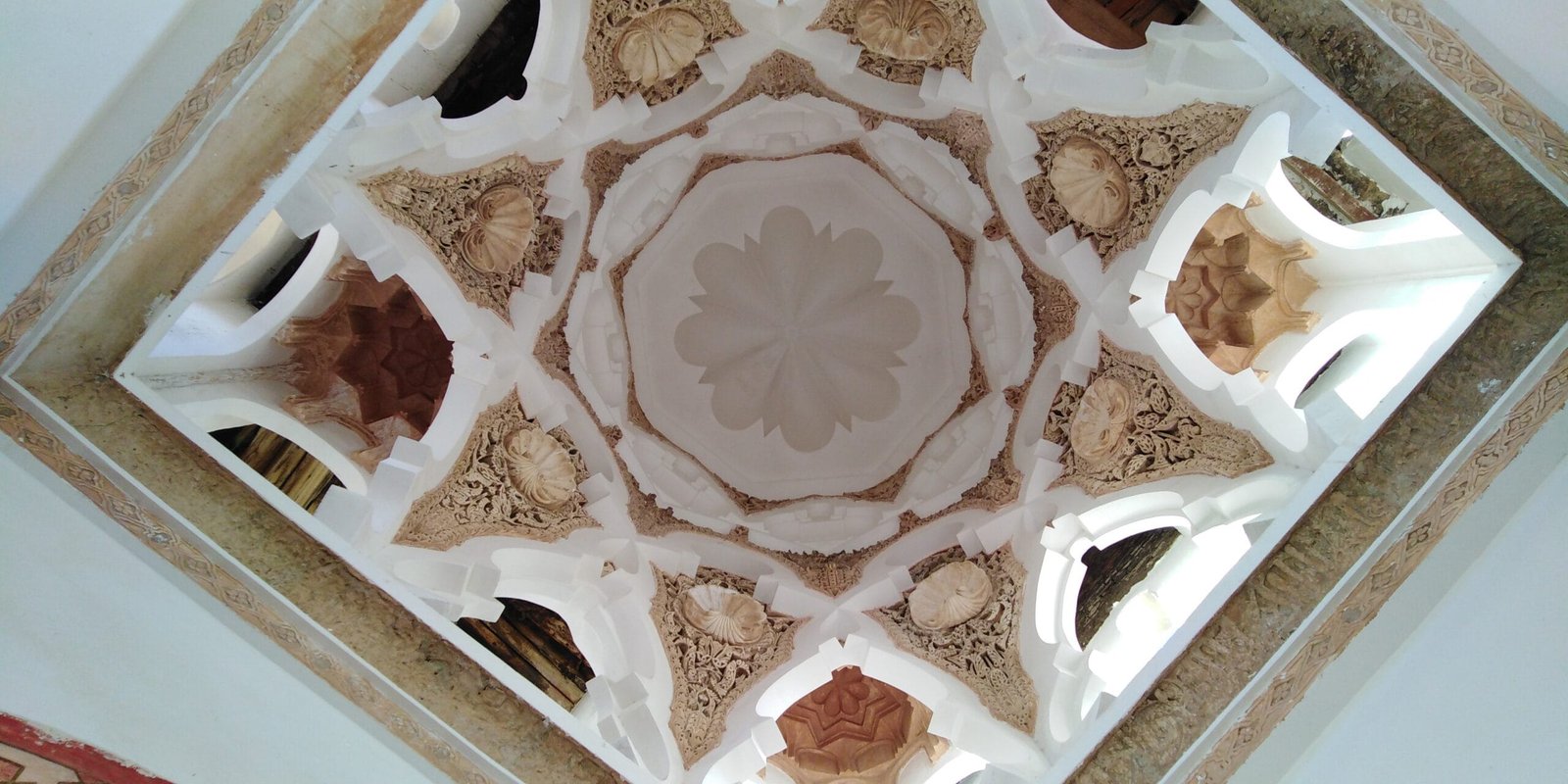
The highlight is the cupola, or dome, that crowns the building. Seen from outside, it presents an elegant profile topped by stepped merlons. But it is from inside that it reveals all its richness: the inner face of the dome is carved with a complex decoration interweaving stylised floral motifs, palms, shells, arches and geometric compositions. At the centre is a kind of seven-pointed star or rosette, surrounded by a network of ribs that structure the whole. This interplay of interlacing ribs, inherited partly from Andalusian art, foreshadows the great ribbed domes of Hispano-Moorish architecture.
The dome rests on an ingenious transition system that allows the shift from a rectangular plan to a circular crowning. One can make out the earliest uses of muqarnas, those stalactite-shaped honeycomb cells that would become a signature of Western Islamic art. The Koubba is thus regarded as a founding milestone: here we see the birth of forms that would later unfold, on a larger scale, in the madrasas and palaces of Morocco.
The arches and openings
Each façade of the pavilion is pierced with large openings framed by varied arches. You can recognise polylobed arches (with multiple lobes, like scallops), horseshoe arches characteristic of the Muslim West, and more slender pointed arches. This diversity is no accident: the Almoravid architect seems to have wanted to gather, on a single small building, a genuine repertoire of the forms available in his time. The arches interlock, overlap and converse from one level to the next, creating a visual rhythm that is astonishingly sophisticated for a building of this size.
The carved decoration and inscriptions
Around the bays and along the cornices runs a carved decoration made of plant motifs, interlacing patterns and bands of inscriptions. The calligraphy, often in Kufic and cursive characters, blends religious formulas with ornamental elements. This decoration, still relatively sober and “primitive” compared with the later splendours, has a raw charm and a remarkable graphic strength. It bears witness to an art in the making, halfway between the austerity of its beginnings and the exuberance of the following centuries.
The hydraulic system and the ablutions function
It is easy to forget that the Koubba was first and foremost a water machine. The pavilion housed basins and a cistern, fed by an underground network of drainage galleries — the famous khettaras, those channels that captured groundwater and carried it by gravity to the heart of the city. Pipes, sometimes made of bronze, distributed the water to the ablution points, latrines and fountains intended for the inhabitants and their animals. This arrangement makes the Koubba one of the oldest testimonies to the hydraulic genius that allowed Marrakech, a city on the edge of the Sahara, to prosper despite the scarcity of water. Looking at the ground of the enclosure, you can still make out the remains of the basins and channels that recall this original purpose.
Why is the Almoravid Koubba so important?
The answer can be summed up in one sentence: it is the only surviving Almoravid monument in Marrakech, and one of the rare witnesses to this art in all of Morocco. This rarity alone justifies the detour. Where other cities preserve entire ensembles from several eras, Marrakech can now show, from its founding age, only this small, miraculously preserved pavilion.
Its importance is also scientific. Because it was buried and then unearthed almost intact, the Koubba offers art historians an exceptionally reliable document on the techniques, proportions and decorative vocabulary of the Almoravids. It serves as a touchstone: other buildings are dated and understood by comparing them to it. In this sense, the Koubba Ba’adiyn is far more than a tourist curiosity — it is a major reference for the study of Western Islamic architecture.
Finally, the monument belongs to an ensemble recognised on a global scale. The medina of Marrakech, of which the Koubba is part, is listed as a UNESCO World Heritage Site. To visit the Koubba is therefore to step directly into the long history of a city that has managed to preserve, beneath its successive layers, the memory of its origins.
Where the Almoravid Koubba is and how to visit it
The Almoravid Koubba is located in the medina of Marrakech, in the historic and religious quarter organised around the Ben Youssef Mosque and Madrasa. It occupies a small enclosure just opposite the former mosque, only a few dozen metres from the main cultural sites of the area. This is one of the great advantages of this monument: it is never visited on its own but fits naturally into a walking discovery loop.
In practical terms, the pavilion adjoins the Marrakech Museum, housed in the Dar Menebhi Palace, and neighbours the Ben Youssef Madrasa, the largest historic Quranic school in Morocco. These three sites form a cultural triangle that is easily covered in half a day. From Jemaa el-Fna square, allow about fifteen to twenty minutes’ walk north through the alleyways; the route crosses the souks and is part of the pleasure.
To reach the quarter, several options are available. On foot from Jemaa el-Fna, following the signs towards the Ben Youssef Madrasa. By petit taxi, asking to be dropped off as close as possible to the pedestrian entrance of the quarter (vehicles do not enter the heart of the medina). Or as part of a guided tour of the medina, which often includes this area. Once there, access to the Koubba is via a staircase that descends towards the enclosure below.
Opening hours and fee (indicative)
The monument is generally open every day, with afternoon hours that vary with the season. As a rough guide, expect it to open in the morning and stay open until late afternoon, closing earlier in winter (often around 5 pm) and later in summer (sometimes until 6 pm). Hours may change during the month of Ramadan and on public holidays. As the Koubba is a small site sometimes managed jointly with the neighbouring monuments, it is wise to check the hours in force at the time of your visit, particularly in the event of restoration work.
As for the fee, entry remains very affordable. As a purely indicative figure, expect something in the region of a few dozen dirhams (roughly 60 to 100 MAD, or about 6 to 10 €). In some cases, access to the Koubba is offered as part of a combined ticket with the Ben Youssef Madrasa and the Marrakech Museum, which helps optimise the price if you visit all three sites in a row. The prices given here are indicative orders of magnitude: they change regularly and should be confirmed on site, at the official ticket office.
Good to know: this guide is an independent travel publication, with no affiliation to ONDA or any official body. The practical information (opening hours, fees, combined tickets) is provided for guidance only and should always be verified with official sources before your visit.
What to see around the Almoravid Koubba
One of the great assets of the Koubba is its position in the heart of an extraordinarily rich quarter. In a few minutes’ walk, you can string together several of the finest sites in the medina. Here are the must-sees to combine with your visit.
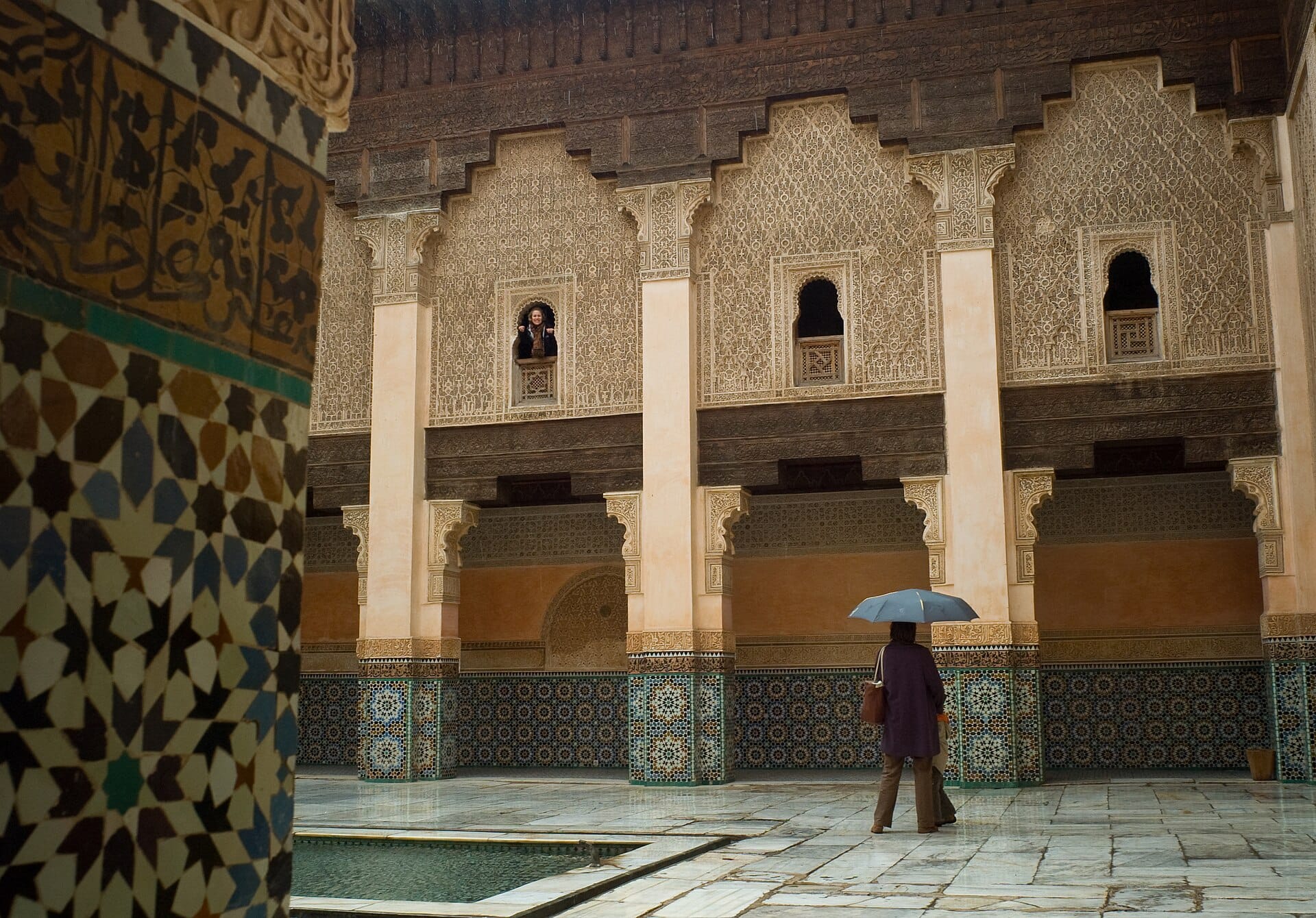
- The Ben Youssef Madrasa: just steps away, this former Quranic school is an absolute jewel of Moroccan art, with its marble courtyard, its zellige tilework, its chiselled stucco and its carved cedar. It is the ideal complement to the Koubba, since it shows where Almoravid art led, a few centuries later. See our guide to the Ben Youssef Madrasa.
- The Marrakech Museum: housed in the sumptuous Dar Menebhi Palace, it presents collections of Moroccan art in a spectacular architectural setting. Discover the Marrakech Museum (Dar Menebhi).
- The Maison de la Photographie: very close by, it brings together old photographs of Morocco and offers a terrace with a view over the medina. See it in our article on the Maison de la Photographie.
- The souks: the quarter is surrounded by the famous covered markets. An immersion in the souks of Marrakech pairs perfectly with a tour of the monuments.
- The medina as a whole: beyond the monuments, take the time to wander through this listed maze. Our tips for exploring the medina of Marrakech will help you not to miss a thing.
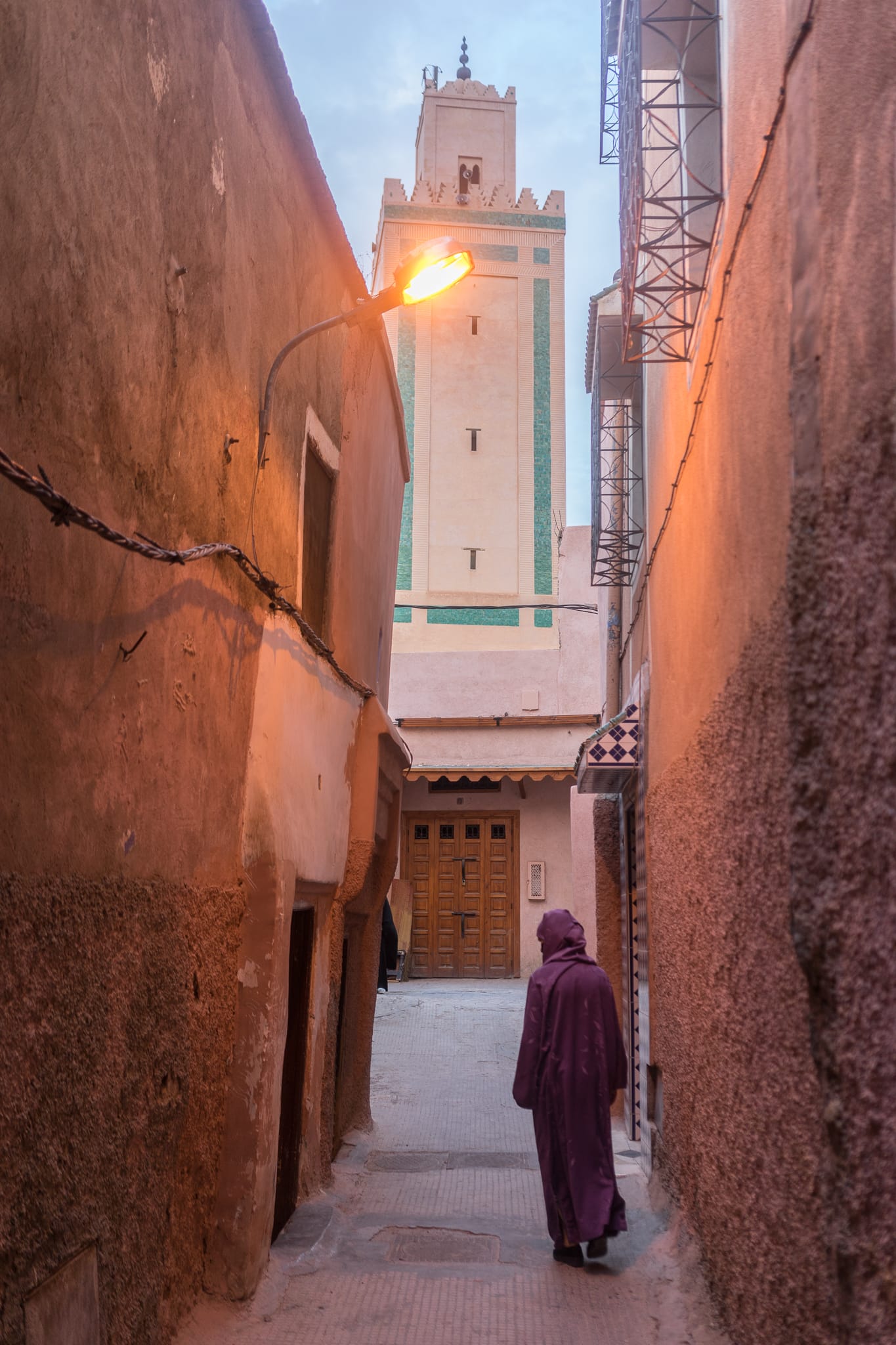
In practice, the most logical itinerary is to set aside a whole morning or afternoon for this area: Ben Youssef Madrasa, Almoravid Koubba, Marrakech Museum, Maison de la Photographie, then a stroll through the souks. In this way, you cover an essential part of the city’s heritage in a single outing.
Visiting tips to make the most of the Almoravid Koubba
- Adjust your expectations: the Koubba is small and the space is an archaeological enclosure, not a palace. Its magic is savoured in the detail. Approach it as you would admire a jewel, not a grand setting.
- Look up: the essential lies beneath the dome. Take the time to observe the inner face of the cupola, the ribs, the central rosette and the transition from square to circle. That is where the genius of the monument resides.
- Get some guidance: without a minimum of context, you risk missing the interest of the place. A guide, an audio guide or simply reading this article beforehand transforms the experience.
- Combine it with Ben Youssef: don’t come only for the Koubba. Fit it into the Ben Youssef Madrasa + museum loop so that the visit takes on its full meaning.
- Photography: the natural light coming through the bays highlights the decoration of the dome. Midday, when the sun is high, lights the interior well.
- Comfort: bring water, a hat and good shoes, as you will be walking through the alleyways to reach the site. The enclosure has a few steps.
- Respect for the site: this is a fragile historic monument, sometimes undergoing restoration. Follow the marked path and do not touch the carved decoration.
- Plan your overall stay: to fit this monument into a balanced programme, lean on our 3-day Marrakech itinerary, which spreads out the visits without overload.
How much time to set aside for the visit?
The visit to the Almoravid Koubba itself is short: allow 15 to 25 minutes to walk around it, observe the dome from inside, examine the arches and the decoration, and explore the enclosure where the remains of the hydraulic system come to the surface. It is a monument to be savoured rather than “covered”: better to slow down and look carefully than to make repeated back-and-forth trips.
If you fit it into a loop with the Ben Youssef Madrasa and the Marrakech Museum — which we strongly recommend — plan on a half-day for the whole thing: roughly two to three hours once you add up the visiting times, the walks and the inevitable pauses in the souks. This is the best way to give meaning to this small monument and to make it a highlight of your discovery of the medina, rather than just a box to tick.
FAQ: your questions about the Almoravid Koubba
Why is the Almoravid Koubba so important?
Because it is the only surviving Almoravid monument in Marrakech and one of the rare remnants of this dynasty in Morocco. The Almohads, who succeeded the Almoravids in the 12th century, destroyed almost all of their constructions. The Koubba, buried by chance, survived and today constitutes a unique reference for understanding the art and architecture of the city’s origins.
What is the difference between the Almoravid Koubba and the Koubba Ba’adiyn?
None: these are two names for the same monument. “Almoravid Koubba” refers to the dynasty that built it, while “Koubba Ba’adiyn” (or Qoubba el-Baadiyn) refers to a confederation of Berber tribes associated with the quarter. You will also come across the spellings “qoubba” or “qubba”. It is always the same small 12th-century ablutions pavilion.
Is the Almoravid Koubba really worth the detour?
Yes, provided you adjust your expectations. It is a small, intimate monument whose interest is historical and architectural rather than spectacular. For enthusiasts of history and Islamic art, it is a must. For others, it is above all worth the detour because it lies a few steps from the Ben Youssef Madrasa and the Marrakech Museum: you naturally visit it while stringing together these sites.
How do you get to the Almoravid Koubba from Jemaa el-Fna?
On foot, allow about 15 to 20 minutes heading north through the medina, towards the Ben Youssef Madrasa, through the souks. You can also take a petit taxi to the edge of the quarter, bearing in mind that cars do not enter the pedestrian heart of the medina. The monument is located just opposite the former Ben Youssef Mosque, in an enclosure below street level.
How much is entry and what are the opening hours?
Entry is inexpensive, in the region of a few dozen dirhams (indicative, to be confirmed on site), and sometimes included in a combined ticket with the neighbouring monuments. The site is generally open every day, with hours that vary by season (closing earlier in winter, later in summer) and adjustments during Ramadan. Always check the up-to-date information before your visit.
Which monuments should you visit together with the Koubba?
The Koubba combines ideally with the Ben Youssef Madrasa (adjoining), the Marrakech Museum housed in the Dar Menebhi Palace (nearby), the Maison de la Photographie and the surrounding souks. This quarter concentrates several of the finest sites in the medina: set aside half a day to enjoy it fully.
In summary
The Almoravid Koubba, or Koubba Ba’adiyn, is a small monument with an immense history. The only Almoravid remnant in Marrakech, rediscovered by chance in 1948 after centuries of oblivion underground, this 12th-century ablutions pavilion is a distillation of the art of the city’s origins: a carved dome, varied arches, refined decoration and an ingenious hydraulic system. You don’t come here for grandeur, but for authenticity and rarity. Combined with the Ben Youssef Madrasa and the Marrakech Museum, a visit to this Almoravid monument in Marrakech becomes one of the finest gateways into the history of the ochre city. To go further, find all our monument guides in our complete guide to Marrakech.
To delve deeper into the history of the monument, you can consult the entry for the Almoravid Koubba on Wikipedia.
Images under free licence via Wikimedia Commons: © Oumaima Loudini (CC BY 4.0); © Lars Plougmann (CC BY-SA 2.0); © Omalihy (CC BY-SA 4.0). Sources: Wikimedia Commons.Photo credits: illustrative images of the Almoravid Koubba, the Ben Youssef Madrasa and the medina of Marrakech. Please credit the respective authors and sources of the visuals used.