Travelling with a drone in Morocco is far from a simple formality: unlike many destinations, the kingdom has enforced a de facto ban on importing and using drones since 2015. In practice, if you arrive with a drone in your luggage, the device is almost always detected by X-ray scanners and then held (impounded) by customs at the airport, before being possibly returned to you on departure. This guide explains, factually and cautiously, the legal framework, what really happens at customs, how to recover your equipment, the risks involved and the legal alternatives for obtaining aerial footage. Because the rules can change, always verify the information with official authorities before you travel.
In brief: the essentials on drones in Morocco
- Import banned without authorisation: since 2015, bringing a drone into Morocco requires prior authorisation from the competent authorities, rarely granted to tourists.
- Held at customs: on arrival, the drone is usually impounded against a deposit slip (receipt) and kept until your departure.
- Return on departure: you can generally recover the device by presenting the original deposit slip at the customs office, within the set deadline — with no absolute guarantee.
- Real risks: an undeclared device means seizure, a fine, or even prosecution, because the matter touches national security.
- Use on site: flying a drone without authorisation is prohibited and can lead to prosecution.
- Alternatives: licensed production companies, authorised local operators, or buying stock footage.
- Caution: figures and procedures can change; check with Moroccan customs (ADII) and your embassy before travelling.
Can you really travel with a drone in Morocco?
The short answer is: not freely. Bringing a drone into Morocco means importing goods whose entry is subject to prior authorisation. In practice, for a leisure traveller, that authorisation is almost never issued. This does not mean you will be arrested at the mere sight of a drone, but that the device will very likely be intercepted at customs and kept until you leave the country. Understanding this framework prevents nasty surprises and helps you plan the best course of action.
A de facto ban since 2015
Since 2015, the Moroccan authorities have made the import of drones and remote-controlled flying devices subject to authorisation, for security reasons. Foreign diplomatic services confirm this clearly. The French Ministry for Europe and Foreign Affairs states that it is inadvisable, indeed prohibited, to bring a drone into Moroccan territory without prior authorisation, and recalls that finding a drone in luggage exposes its owner to a fine and confiscation of the device. Belgium’s federal public service for Foreign Affairs likewise specifies that “since March 2015, the import of drones is prohibited for security reasons” and that “the private use of drones is prohibited”.
Bear in mind two distinct, cumulative prohibitions: importing the device (bringing it into the territory) and using it (flying it) without authorisation. A tourist who managed, hypothetically, to smuggle a drone in would therefore remain in breach the moment they used it.
The legal basis: foreign trade and security
From a regulatory standpoint, importing drones is subject to obtaining prior authorisation, within the framework of the foreign trade law (Law No. 13/89). Applications fall under the ministry responsible for Foreign Trade and are granted only after approval by the Ministry of the Interior, which assesses the security dimension. Any unauthorised import of these devices leads to their seizure and to penalties under the applicable legislation. This restriction covers all customs regimes, including temporary admission and transit: in other words, there is no automatic exemption for a simple tourist stay.
Authorisations do exist for specific professional needs (audiovisual production, mapping, etc.), and the Moroccan authorities have approved a significant number of applications over the years. But these authorisations are regulated, personal and subject to validation; they do not apply to the leisure traveller filming their holiday.
Leisure vs professional: what changes
For leisure use, consider that import and flight are, in practice, closed off. For professional use, a door exists but it requires an administrative process in advance, lengthy and with no guarantee, to be started from abroad through official channels (the competent ministries and, where relevant, the support of the Moroccan embassy in your country). Never count on improvised clearance at the airport.
Why this restriction?
The rationale is essentially about security. A drone can overfly and film sensitive areas (military installations, strategic sites, official buildings), which is why the authorities treat the matter firmly and involve the Ministry of the Interior in reviewing applications. This framework is not unique to Morocco: several countries strictly regulate, or even ban, the entry of drones. For the traveller, the key is to understand that the issue falls under national security, not a mere customs formality: that is what explains the strictness of checks and the potential severity of penalties.
Drone, GoPro, camera: what’s the difference?
The restriction targets remote-controlled flying devices, not ordinary cameras. A camera, an action cam such as a GoPro or a smartphone is not covered by this specific ban and travels normally, subject to the usual baggage rules. It is precisely the capacity for autonomous or remote-controlled flight that causes the problem. Be careful with accessories, though: some motorised gimbals and above all lithium batteries follow air-transport rules (in the cabin, protected), independently of the Moroccan question. If in doubt about a hybrid device, check before departure.
What happens at customs with a drone in Morocco
This is the heart of the matter, because most travellers discover the rule on arrival. The most common scenario with a drone in Morocco is impoundment: the device is held at the border and kept until your departure. Here is how it plays out in practice and how to limit unpleasant surprises.
X-ray detection and baggage checks
Moroccan airports (Casablanca-Mohammed V, Marrakech-Menara, Agadir, Fez, Rabat, Tangier, etc.) have X-ray scanners on both arrival and departure flows. A drone, with its battery and distinctive shape, is easily spotted. Concealing it is neither effective nor advisable: beyond seizure, hiding goods subject to authorisation makes the situation worse. The safest course is transparency: if you travel with a drone regardless, declare it voluntarily.
The impoundment procedure and the deposit slip
When the drone is detected or declared, the customs officer usually proceeds to impound it: the device is registered and placed in storage, and a deposit slip (receipt) is issued to you. This document is essential: it evidences the custody of your property and conditions its return on the way out. Keep it carefully, in its original form, and note the details of the relevant customs office. Depending on the case, storage fees or a security deposit may be requested.
Stay clear-headed: return is frequent but not guaranteed 100%. Travellers report difficulties on the way back (office closed, opening hours, delays). Allow extra time on departure and keep a written record of every step.
How long does the impoundment last?
In principle, impoundment covers the length of your stay: the device remains in customs’ custody until your departure, when it is returned to you. The point to watch is the deadline stated on the deposit slip: beyond it, recovery can become complicated and, in some cases, the device could be treated as abandoned. If your itinerary involves leaving through a different airport from the one you arrived at, flag it at the time of impoundment and ask how to recover the drone at the right place. Never leave a doubt unresolved: it is better to ask the officer at the moment of deposit than to discover a problem on the day of your return flight.
| Situation on arrival | What usually happens | Consequence for you |
|---|---|---|
| Drone declared voluntarily | Impoundment + issue of a deposit slip | Return possible on departure, under conditions |
| Drone detected by scanner, undeclared | Device held, customs procedure | Risk of a fine on top of impoundment |
| Drone concealed and discovered | Seizure, official report | Aggravated penalties, possible prosecution |
| Valid professional authorisation | Document check, possible temporary admission | Regulated entry per the authorisation |
What about temporary admission for non-residents?
The temporary admission regime allows, in theory, the entry of goods intended to leave again. For drones, this regime still requires prior authorisation from the authorities: it does not activate automatically at the airport. In the customs practice described for Moroccans living abroad and for tourists, the impounded device is returned on departure against the original deposit slip, within the set deadline. So do not assume you can “declare and fly”: declaring mainly secures the return, it does not grant a right to use.
How to recover your drone on departure
Recovering a drone in Morocco that was impounded on arrival is a step to prepare carefully, because it happens at the most stressful moment of the trip: departure. A few simple habits markedly improve your chances.
The deposit slip and the set deadline
Return relies on presenting the original deposit slip at the customs office, usually at the same airport as arrival, and within the stated deadline. Without this document, the process becomes much harder. Check in advance, if possible, where and when to collect the device, as some posts have specific hours or require going to the arrivals side.
Practical tips for departure day
- Arrive at the airport much earlier than usual (allow one to two extra hours).
- Keep the original deposit slip, your passport and your ticket to hand.
- Photograph the deposit slip and note the file number and the officer’s name/office.
- Locate the customs office as soon as you arrive at the airport, before check-in.
- Stay courteous and cooperative; if a problem arises, ask for written confirmation and contact your embassy if needed.
- Check the condition of the device and battery at the moment of return.
To plan your trips to and from the airport smoothly that day, our comparison of airport transfers in Morocco can help you build in the right time buffer.
Risks and penalties for a drone in Morocco
Underestimating this topic can be costly. The authorities treat a drone in Morocco as sensitive goods related to security, not as a mere electronic gadget. Here are the main risks to know.
Fine, seizure and prosecution
Finding an undeclared drone exposes you to a fine and confiscation of the device. In cases of proven concealment, an official report may be drawn up and prosecution initiated. Foreign diplomatic services recall that the unauthorised introduction of a drone, like its use without authorisation, can give rise to legal proceedings. The exact amount of fines is not reliably public and depends on the situation: do not rely on figures circulating online, and above all weigh the risk of losing the equipment permanently.
Flying a drone without authorisation
Even assuming the device entered the territory, flying it without authorisation remains prohibited. The surroundings of sensitive sites (military installations, airports, official buildings, certain heritage sites) are particularly monitored. Filming from a drone without approval can trigger the intervention of law enforcement, seizure and prosecution. Simply carrying the device on you may be enough to prompt a check.
Before any trip, it helps to know the general framework of entry checks: see our guide to Morocco customs and what you can bring to place drones among other regulated goods.
Getting an import or use authorisation
If your project is professional (filming, reporting, mapping, inspection), an authorisation is still possible, but it must be prepared well in advance and from abroad. Here are the broad lines, to be confirmed without fail with the authorities.
The administrative circuit
The import application falls under the ministry responsible for Foreign Trade and is validated only after approval by the Ministry of the Interior. For actual aerial use, the approval of aeronautical and security authorities is also required. The file is personal and tied to a specific project (dates, locations, equipment, purpose). Expect significant delays and plan a fallback in case the authorisation is not granted in time.
| Step | Contact / framework | What to prepare |
|---|---|---|
| Import application | Ministry responsible for Foreign Trade (Law 13/89) | File justifying the professional need |
| Security approval | Ministry of the Interior | Mandatory validation before import |
| Flight authorisation | Aeronautical / local authorities | Precise zones, dates and conditions |
| Customs clearance | ADII (possible temporary admission) | Presentation of authorisations and documents |
The embassy’s role
To start the process, it is advisable to contact the Moroccan embassy or consulate in your country of residence in advance; they can point you to the right forms and contacts. Never treat an informal reply as an authorisation: only an official document is valid at customs.
Legal alternatives for aerial footage
Giving up your drone does not mean giving up great footage. Several legal solutions exist to obtain aerial views of Morocco without risking seizure or a fine.
Hire a licensed production company
Production companies and audiovisual providers based in Morocco hold the authorisations needed to operate drones legally. For a wedding, a real-estate project, a documentary or marketing content, subcontracting to a licensed operator is the safest route: you get professional footage without exposing your own equipment.
Buy stock footage
To illustrate a blog, a video or a presentation, stock image and video libraries offer many aerial views of Morocco (Marrakech, the desert, the coast, the Atlas) already shot legally. It is affordable, immediate and free of customs risk.
Rethink your ground-level shots
High vantage points (terraces, ramparts, Atlas passes), a phone gimbal or pole, or supervised hot-air balloon rides near Marrakech: there are many ways to get spectacular framing without a drone. These options spare you any airport hassle and remain fully compliant.
Checklist before you leave
- Ideally, leave the drone at home for a tourist stay.
- If you travel with it anyway, plan to declare it on arrival and accept impoundment.
- Keep the original deposit slip and photograph it.
- Check the return deadlines and the location of the customs office.
- For a professional project, start the authorisation application well in advance through official channels.
- Read your country’s travel advice and the Moroccan customs website just before departure.
- Prepare your other formalities: see also our guides on carry-on baggage in Morocco and the visa and entry requirements.
FAQ: drone in Morocco
Can I bring a drone to Morocco for my holiday?
In practice, no, not freely. Without prior authorisation, the drone will very likely be impounded at customs on arrival. For leisure use, authorisation is almost never granted. The simplest option is to leave it at home.
What happens if customs find my drone?
The device is usually held (impounded) against a deposit slip and kept until your departure. If it was undeclared, you also expose yourself to a fine; in cases of concealment, to seizure and possible prosecution.
Will I get my drone back on departure?
This is the most common outcome: return is made against the original deposit slip, at the customs office, within the set deadline. It is not, however, guaranteed 100%. Allow time and keep all your documents.
Can I fly a drone if I declared it?
No. Declaring it secures impoundment and return, not a right to use it. Flying a drone without specific authorisation remains prohibited and punishable.
Are any drones allowed without any formality?
There is no “free” drone category on entry for tourists. The restriction targets remote-controlled flying devices in general. Even small models can be impounded. If in doubt, check with Moroccan customs before you travel.
How do I obtain a professional authorisation?
The application goes through the ministry responsible for Foreign Trade, with approval from the Ministry of the Interior, and the go-ahead of the aeronautical authorities for the flight. Contact the Moroccan embassy in your country in advance and expect long delays.
How can I film Morocco from the sky legally?
Hire a licensed local production company, buy stock footage already shot legally, or favour ground-level shots from high vantage points. These solutions avoid any customs risk.
Can the rules change?
Yes. Figures, procedures and customs practices evolve. Always verify the information with Moroccan customs (ADII) and official travel advice just before your trip.
In summary
Travelling with a drone in Morocco calls for caution: import and use have been subject to authorisation since 2015, and a tourist arriving with a drone almost always sees the device impounded at customs, then returned on departure against the original deposit slip — with no absolute guarantee. Failing to declare it exposes you to a fine, seizure or even prosecution, because the matter touches national security. For aerial footage, it is better to go through a licensed provider, buy stock footage, or film from the ground. For a professional project, start the official process well in advance. And in all cases, check the up-to-date information with official sources before you leave: the rules can change.
Official sources
- France Diplomatie — Travel advice: Morocco
- Belgian FPS Foreign Affairs — Local legislation in Morocco
- ADII — Moroccan Customs and Indirect Taxes Administration
- Customs guide for Moroccans living abroad (ADII)
Photo credit
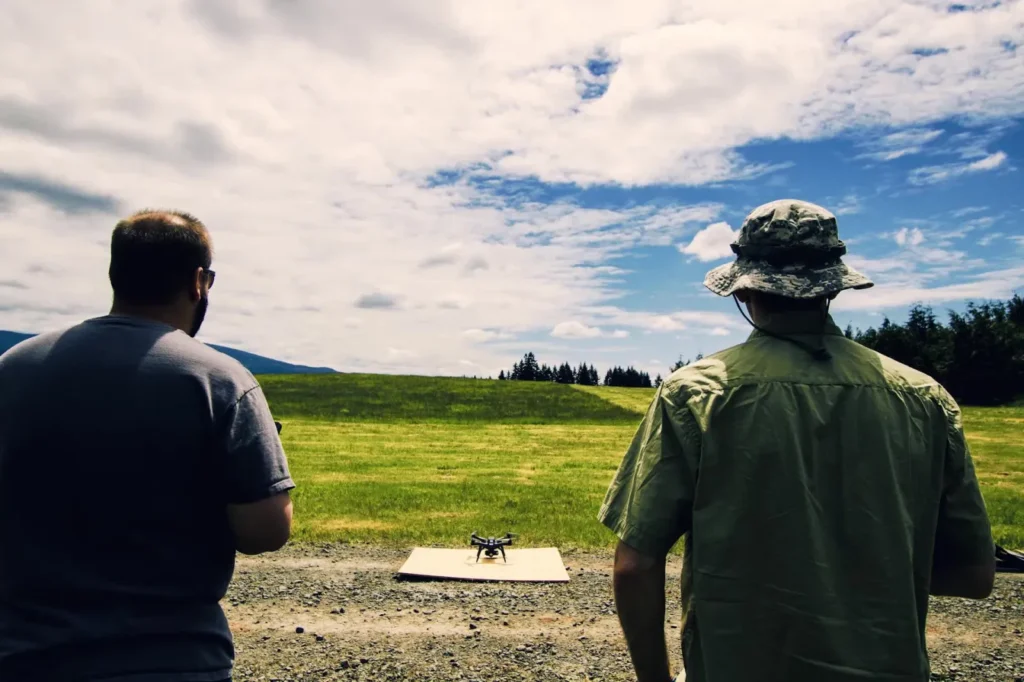
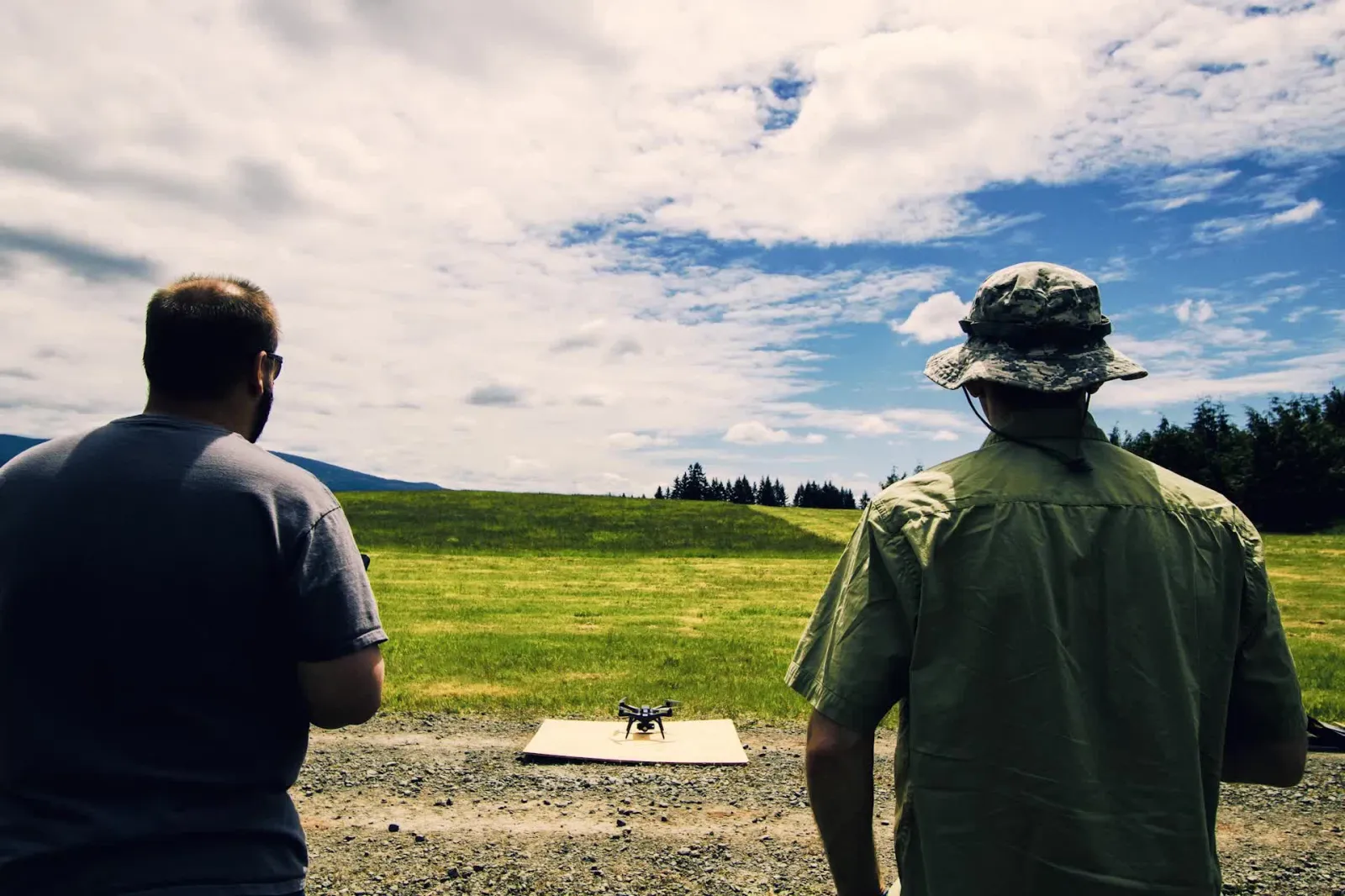
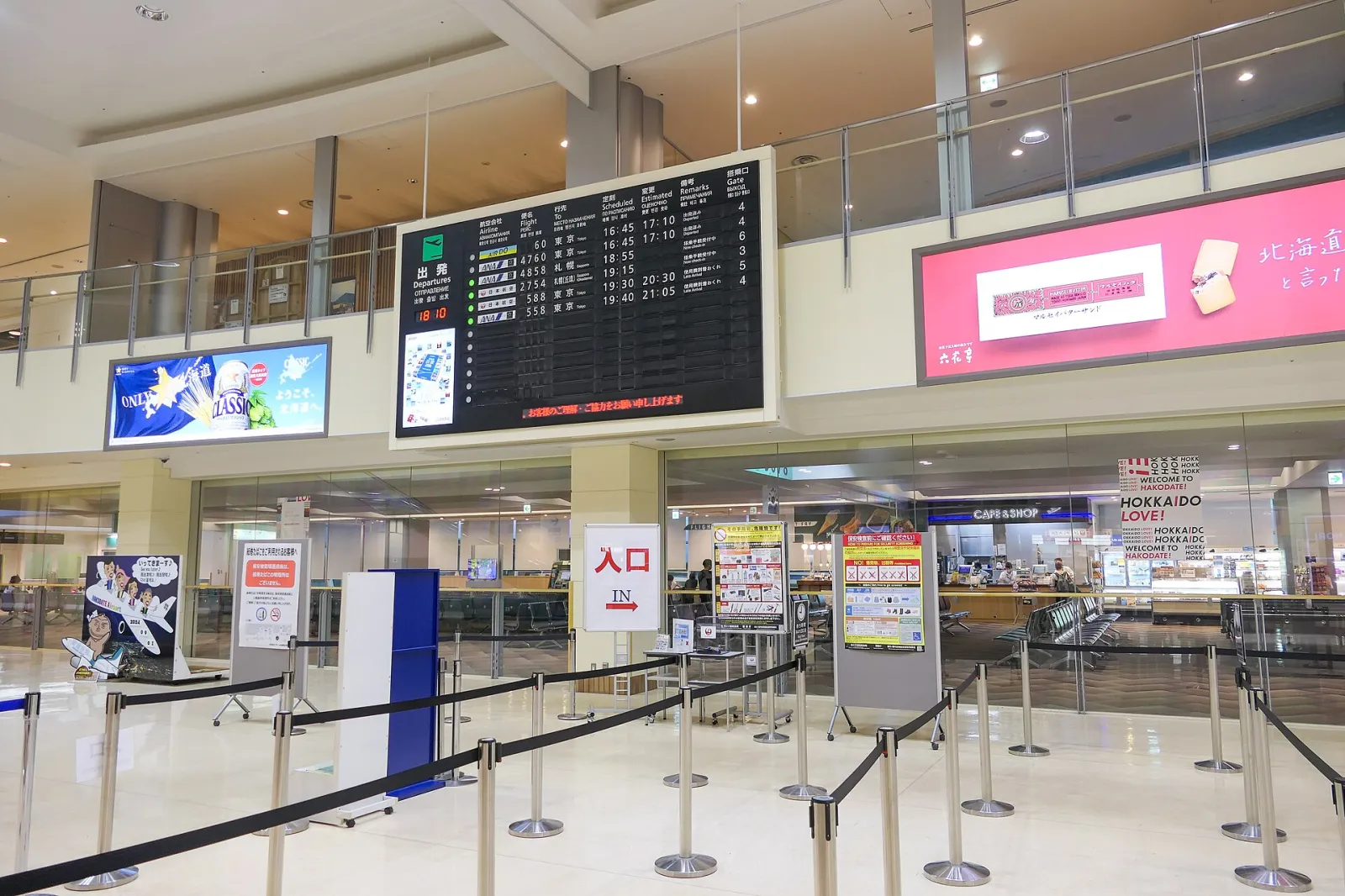
Illustrations : « BLM drone training » — BLM Oregon & Washington (domaine public) ; « Hakodate Airport security check » — MaedaAkihiko (CC0), via Wikimedia Commons.