You have a weekend ahead of you and a single question on your mind: is it possible to see Marrakech in two days without feeling like you’re constantly rushing? The answer is yes, provided you structure your stay well. Two full days are enough to discover the historic heart of the ochre city, feel the buzz of its medina, admire its iconic monuments and treat yourself to a taste of its surroundings, from refined gardens to stony desert. It’s obviously not enough to see everything — Marrakech deserves a longer stay — but it’s more than enough to fall under its spell and come home with a head full of memories.
This weekend in Marrakech itinerary was designed to be realistic: packed but manageable days, short journeys, and time to savour a mint tea between two visits. The principle is simple: Day 1 is devoted to the medina and its historic monuments, and Day 2 to the gardens, relaxation and a first taste of the landscapes surrounding the city. Whether you’re travelling as a couple, with friends or solo, this plan adapts to your pace. Follow the guide to know exactly what to do in Marrakech over a weekend.
In brief: Marrakech in two days
- Ideal duration: 2 full days and 2 nights (arrive the evening before if possible).
- Day 1: medina, Jemaa el-Fna square, souks, Bahia Palace, Saadian Tombs, Koutoubia.
- Day 2: Majorelle Garden or Menara in the morning, hammam or a half-day excursion (Agafay or Ourika) in the afternoon.
- Where to stay: a riad in the medina for the atmosphere, or Hivernage/Guéliz for modern comfort.
- Indicative budget: from £90 to £250 per person for the weekend depending on standard (excluding flights).
- Best season: spring (March–May) and autumn (September–November).
A useful reminder: MoroccoAirport.com is an independent travel guide, not affiliated with ONDA or any official tourist board; the information and prices quoted are indicative and may change. Remember to check opening hours before your visit. For an overview of the must-sees, our complete guide to things to do in Marrakech perfectly complements this itinerary.
Day 1: the medina and the monuments
The first day of your Marrakech two-day itinerary plunges you straight into the soul of the city: the medina, a UNESCO World Heritage Site. This maze of alleys, souks and palaces concentrates the essence of what has made Marrakech famous. The idea of the day isn’t to visit everything in depth, but to move smoothly from one highlight to the next, from morning to evening.
Morning: Jemaa el-Fna square and the souks
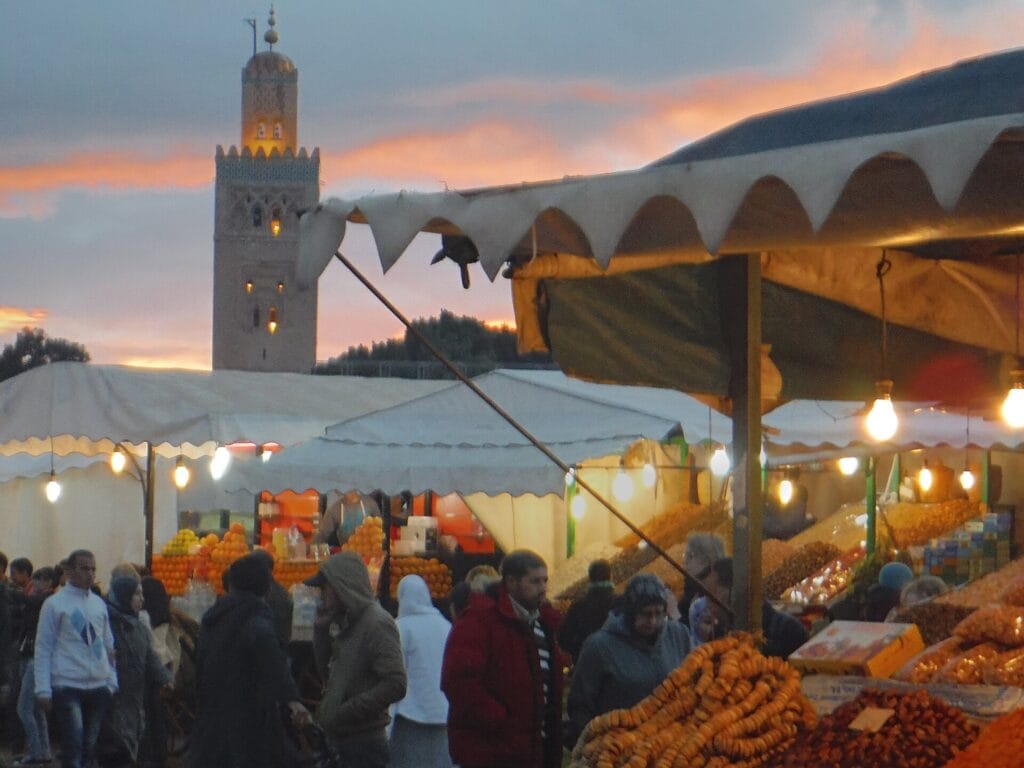
Start early, around 8:30–9am, to enjoy the cool air and a still-quiet medina. Head to Jemaa el-Fna square, the true beating heart of Marrakech. In the morning it’s peaceful: a few freshly squeezed orange juice sellers (around 10 to 15 MAD, roughly £0.80 to £1.20), the first snake charmers and golden light perfect for photos. Take time for a coffee on the upstairs terrace of one of the cafés bordering the square: the sweeping view is worth the detour.
From there, dive into the souks. Each sector has its speciality: babouche slippers, rugs, chiselled metal lanterns, spices, leather goods. Don’t try to avoid getting lost — it’s the best way to discover authentic workshops. Just keep in mind the direction of the Koutoubia, whose minaret serves as a landmark. Haggling is part of the game: offer half the quoted price and find a fair middle ground in good spirits. To learn all about this fascinating district, read our dedicated article on the Marrakech medina.
Midday: lunch in the medina
For lunch, you have two options. The first: a terrace overlooking Jemaa el-Fna for the atmosphere (budget 80 to 150 MAD, around £6 to £12, for a main dish). The second, more local and economical: a small restaurant tucked away in the alleys, where a chicken tagine with preserved lemon or prunes will cost you around 50 to 70 MAD (£4 to £6). Don’t linger too long at the table: the afternoon is busy.
Afternoon: Bahia Palace and the Saadian Tombs
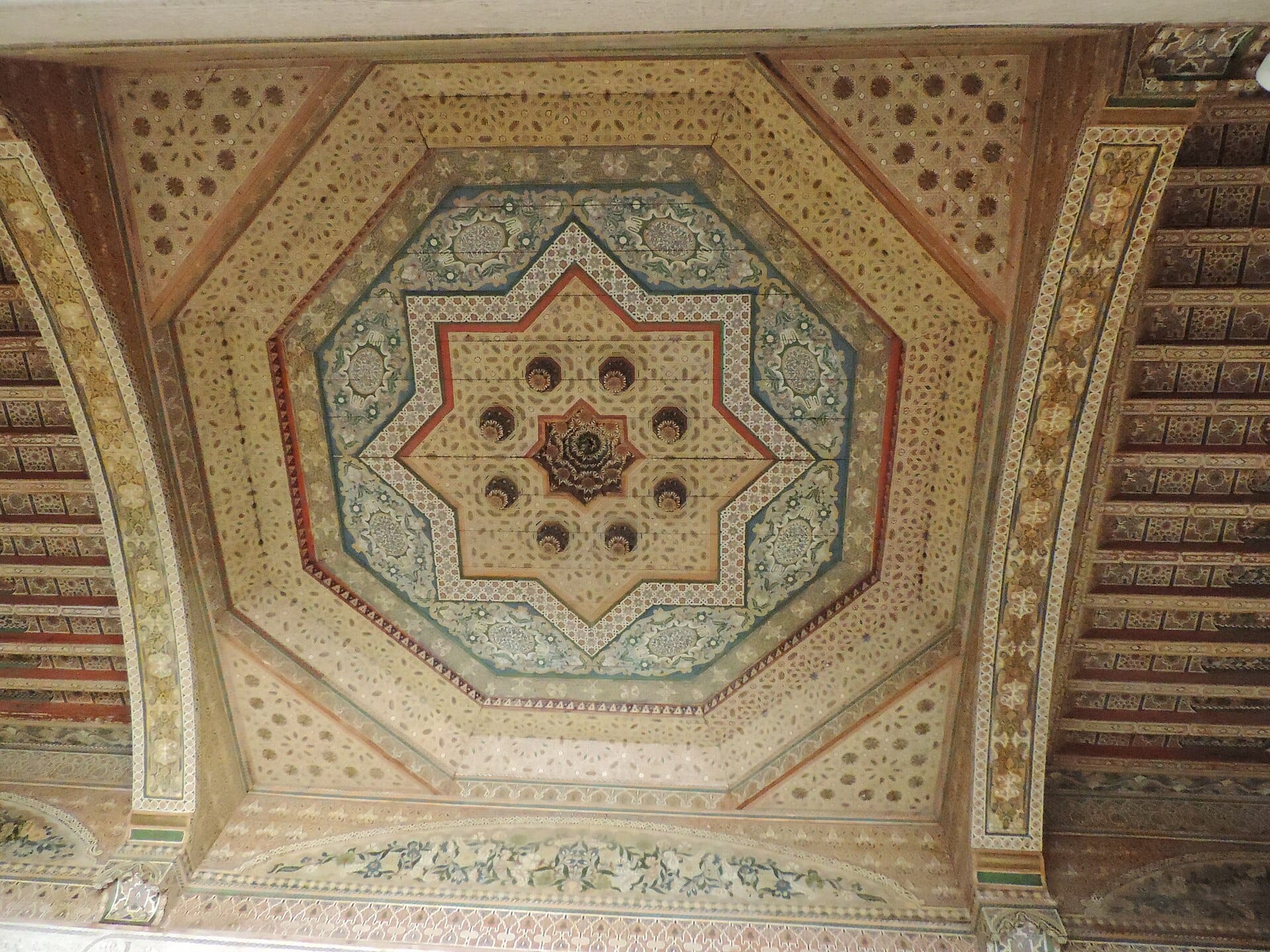
The afternoon is dedicated to the great monuments of the southern medina. First head to the Bahia Palace, a masterpiece of 19th-century Moroccan architecture. Its patios planted with orange trees, its painted cedar ceilings and its multicoloured zellige tiles make it one of the most photogenic visits in the city. Admission costs around 100 MAD (£8) and the visit takes 45 minutes to 1 hour. For the full history and practical tips, read our guide to the Bahia Palace.
A few minutes’ walk away are the Saadian Tombs, a 16th-century royal necropolis rediscovered in 1917. The main mausoleum, adorned with Carrara marble and finely chiselled stucco, is a jewel. Admission is modest (around 70 MAD, £6) but expect a short queue. If time allows, add a glance at the neighbouring El Badi Palace, now in ruins but spectacular, where storks nest. These three sites form a triangle that’s easy to string together in half a day.
End of the day: the Koutoubia and sunset
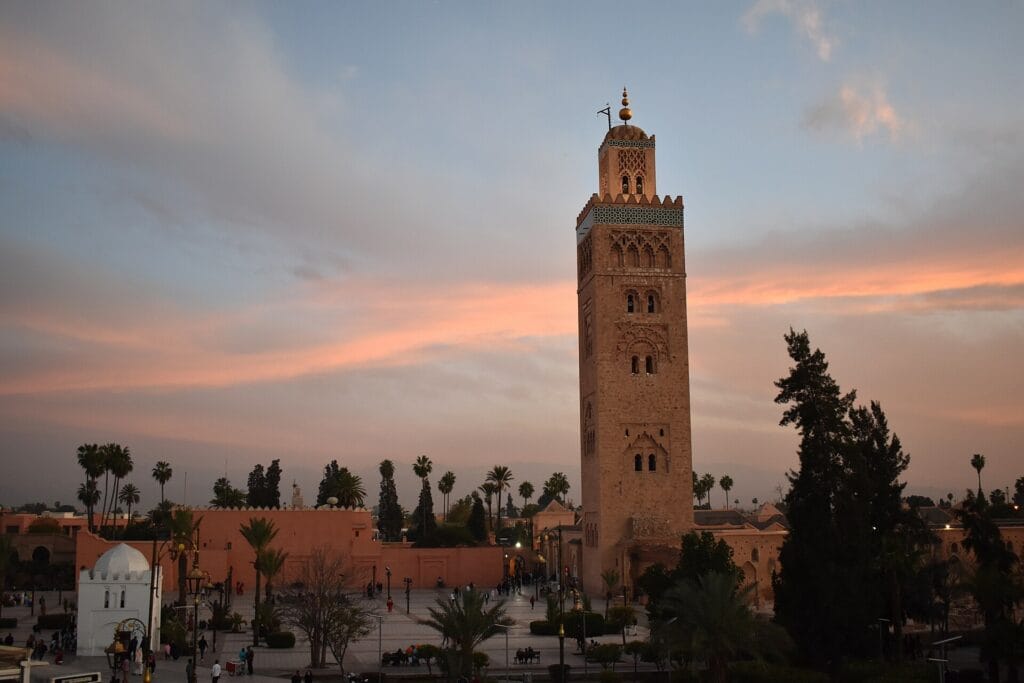
Heading back towards the square, stop at the Koutoubia Mosque, the symbol of Marrakech with its 77-metre minaret dating from the 12th century. The interior isn’t accessible to non-Muslims, but the surrounding gardens offer a magnificent setting at sunset, when the pink stone takes on orange reflections. It’s the perfect moment to catch your breath after an intense day.
Evening: Jemaa el-Fna by night
As night falls, Jemaa el-Fna square transforms. The food stalls set up, the smoke from the grills rises into the air, and the storytellers, Gnaoua musicians and acrobats take over the space. It’s a living spectacle, listed as UNESCO intangible heritage. Dine on the spot at one of the numbered stalls (skewers, harira, fried fish) for an authentic and inexpensive experience (60 to 100 MAD, around £5 to £8), or settle on a terrace to watch the scene from above. This first evening alone sums up why so many travellers fall in love with the city.
Only have a single day? Our Marrakech in one day itinerary condenses these must-sees into an express version, without an excursion.
Day 2: gardens, relaxation and surroundings
After an intense first day in the city, the second day of your weekend in Marrakech changes pace. The morning is devoted to the soothing beauty of the gardens; the afternoon leaves you the choice between the relaxation of a traditional hammam and a half-day escape into the surroundings. This structure gives you a genuine glimpse of what lies around the city, while keeping time to recover.
Morning: Majorelle Garden or the Menara Gardens
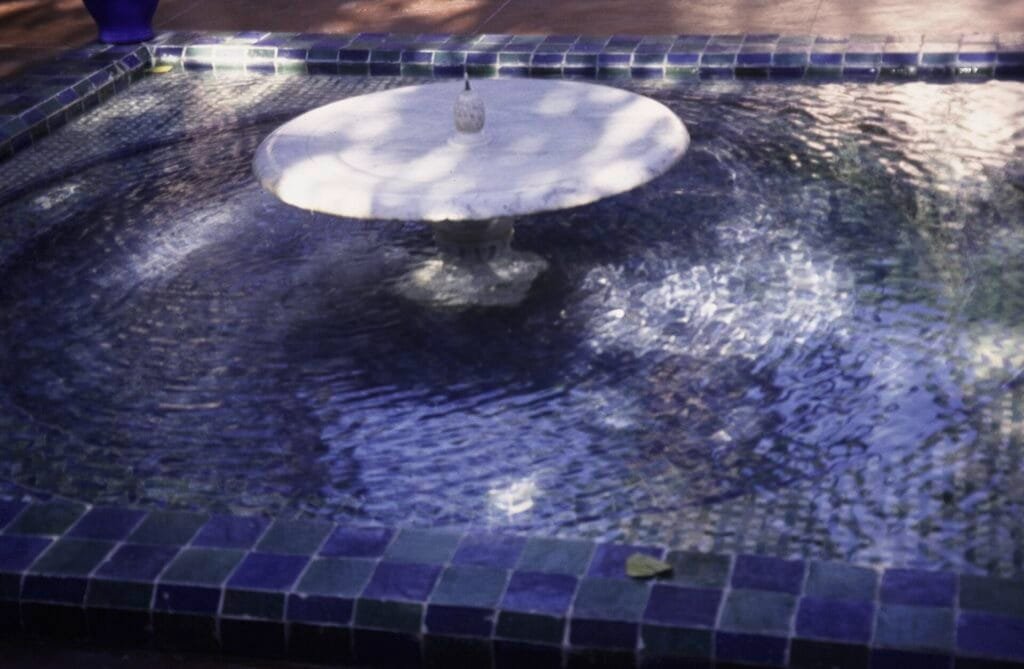
Begin the morning at one of Marrakech’s two iconic gardens, depending on your mood. The Majorelle Garden, located in the Guéliz district, is the most famous: this botanical garden created by the painter Jacques Majorelle and later saved by Yves Saint Laurent enchants visitors with its intense cobalt blue, its bamboo, its cacti and its pool. Admission costs around 170 MAD (£14), and it’s strongly advised to book online and arrive as soon as it opens (8am) to avoid the crowds. The neighbouring Yves Saint Laurent Museum can be visited for an extra fee.
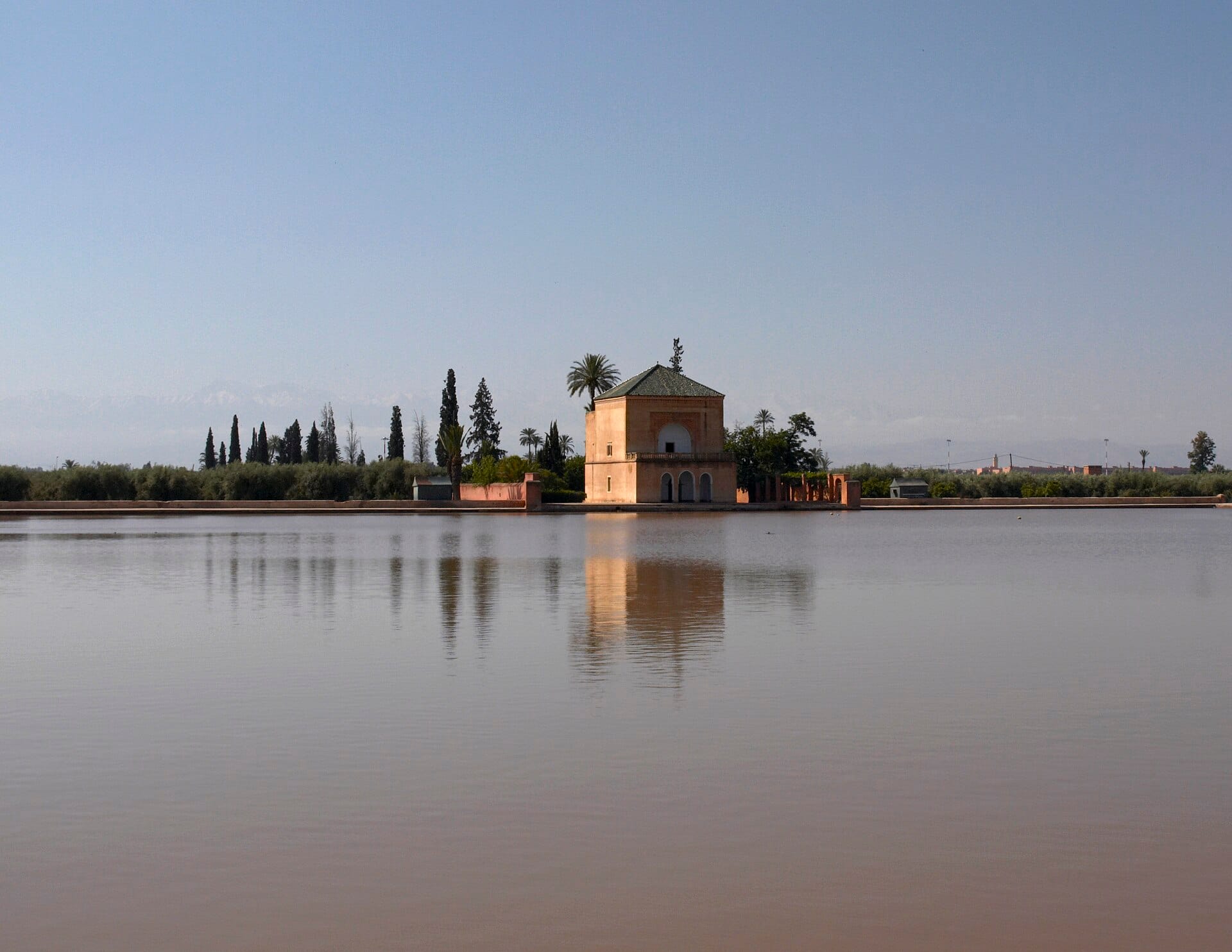
If you prefer somewhere larger, more peaceful and free of charge, opt for the Menara Gardens. This large basin lined with olive trees, dominated by a Saadian pavilion with the Atlas Mountains as a backdrop, offers one of the most famous postcards of Morocco. Access to the park is free (a small fee for the pavilion), which makes it an ideal option for a tight budget. Discover all the details in our guide to the Menara Gardens. Whether you choose Majorelle or Menara, allow around 1.5 to 2 hours for the visit.
Afternoon, option A: unwind at the hammam
If you want to stay in the city and recharge, there’s nothing like a traditional hammam for the afternoon. It’s an institution in Morocco, both a purification ritual and a moment of pure relaxation. You can choose between a popular neighbourhood hammam (a few pounds, authentic atmosphere) and an upscale hammam-spa in a riad, with black-soap scrub, ghassoul clay wrap and argan oil massage. Budget from 200 to 600 MAD (£16 to £48) depending on the package and the standard.
It’s the ideal opportunity to relax your legs after miles of alleys the day before. Book in advance if possible, especially at the weekend. Our selection in the hammam and spa in Marrakech guide will help you choose the right address for your budget. After this wellness interlude, you can devote your evening to one last Moroccan dinner, this time in a more refined setting.
Afternoon, option B: a half-day excursion (Agafay or Ourika)
If you prefer adventure and discovering a completely different landscape, a half-day excursion at the gates of Marrakech is perfect. Two destinations are ideally suited to a short format:
- The Agafay Desert: just a 40-minute drive away, this stony, moon-like desert offers spectacular panoramas with the Atlas in the background. A camel ride, quad biking, lunch or dinner under a Berber tent at sunset: it’s the closest escape from the city. An organised half-day generally costs between 250 and 600 MAD (£20 to £48) depending on the services. All the details are in our guide to the Agafay Desert.
- The Ourika Valley: about an hour’s drive into the High Atlas, this lush valley follows a river, with Berber villages and pretty waterfalls. The air is cool and the contrast with the city is striking. Allow half a day to a full day depending on the package.
For a half day, Agafay is the most practical choice because of its proximity. Book a transfer or an excursion with a reliable local operator, and plan to be back for dinner. It’s precisely this little taste of the surroundings that sets a two-day stay apart from a simple day in the city.
Where to stay for two nights in Marrakech
For a weekend in Marrakech, the choice of district makes a real difference, as it shapes your journeys and the atmosphere of your stay. Here are the three main options:
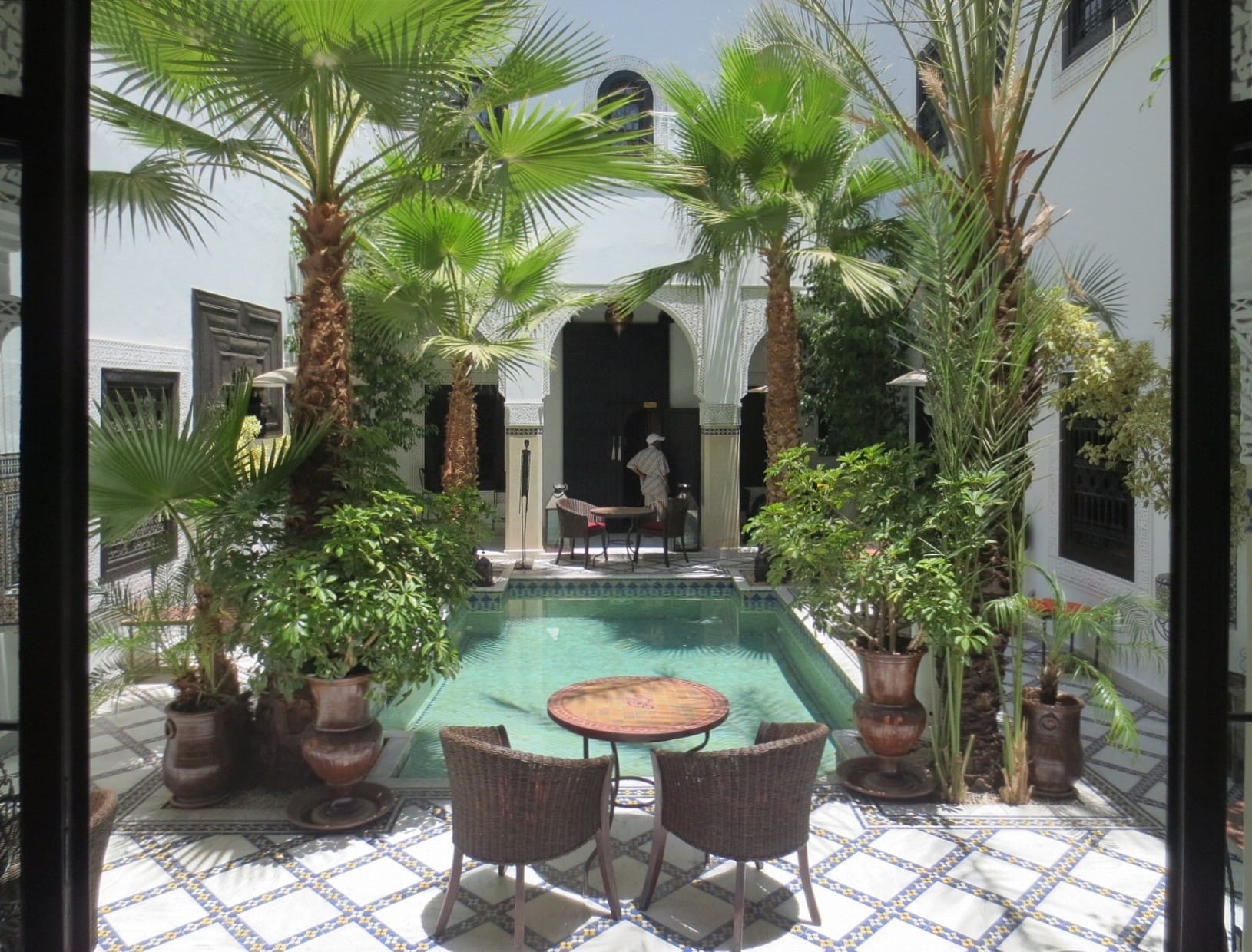
- The medina (in a riad): this is the choice of authenticity. Sleeping in a riad — a traditional house organised around a patio — is an experience in itself: calm behind thick walls, a rooftop terrace, a Moroccan breakfast. You’re within walking distance of all the Day 1 monuments. The downside: cars can’t reach the door, and you sometimes have to walk with your luggage through the alleys.
- Guéliz (the new town): a modern district with its cafés, shops and restaurants. Ideal if you’re looking for comfort, proximity to the Majorelle Garden and a more Western atmosphere. Well served by transport.
- Hivernage: a chic residential district between the medina and Guéliz, renowned for its upscale hotels, spas and tranquillity. Perfect for a relaxing weekend.
For a first two-day stay, a riad in the medina remains the best compromise between charm and location. Our detailed where to stay in Marrakech guide compares the districts and suggests addresses for every budget. Remember to book early: the good riads go fast at the weekend.
Where to eat during your weekend
Food is an integral part of the Marrakech experience. In two days, vary the pleasures to taste the city’s full culinary palette:
- The Jemaa el-Fna stalls: the must-do evening experience, popular and inexpensive. Skewers, tagines, harira (traditional soup) and honey pastries.
- The traditional restaurants of the medina: for a dinner in a riad setting, with live music and refined cuisine (tagines, Friday couscous, pastilla). Budget 150 to 350 MAD (£12 to £28) per person.
- The Guéliz terraces: for more international or fusion cuisine, in a modern atmosphere.
- Cafés and fresh juices: essential for a break. Mint tea (“Berber whisky”) is a ritual not to be missed.
Don’t leave without having tasted a real pastilla and a homemade couscous. For addresses tested and approved by district and by budget, see our where to eat in Marrakech guide. A word of caution: drink bottled water and favour busy stalls, a guarantee of freshness.
Budget for a weekend in Marrakech
How much does a weekend in Marrakech cost? The city has a reputation for being affordable, and that’s true — but it all depends on your level of comfort. Here is an indicative estimate for 2 days and 2 nights, per person, excluding flights:
- Small budget (backpacker): around £75 to £110 — a night in a simple riad or hostel, meals in the souks and stalls, petit taxi transport, essential visits.
- Mid-range budget (comfort): around £125 to £185 — a charming riad, a mix of local and refined restaurants, one excursion or a hammam, admission to all the monuments.
- High budget (premium): from £210 — an upscale hotel or riad, spa, private excursion, gourmet restaurants.
Typical expenses to plan for: monument admissions (70 to 170 MAD each), petit taxis around town (usually 20 to 50 MAD per trip, to be negotiated or on the meter), tips (common practice in Morocco), and of course shopping in the souks. For the transfer from Marrakech-Menara Airport to your accommodation, budget around 150 to 250 MAD depending on the option chosen; our airport transfer comparison helps you choose the most suitable solution. For detailed management of your spending, our Marrakech travel budget guide breaks down each expense.
Adapting your itinerary to the season
Marrakech can be visited all year round, but the climate strongly influences the comfort of your Marrakech two-day itinerary. Here’s how to adapt your programme:
- Spring (March–May): the best period. Mild temperatures (20 to 28°C), gardens in bloom, ideal light. No adjustment needed, make the most of it.
- Summer (June–August): it gets very hot, often more than 38°C. Concentrate your medina and monument visits in the morning (before 11am) and in the late afternoon. Save the hammam or a pool for the hottest hours, and hydrate constantly. An excursion to Ourika, which is cooler, is particularly pleasant.
- Autumn (September–November): the second-best season, pleasant temperatures and falling crowds. Ideal for the whole programme.
- Winter (December–February): mild, sunny days (18 to 20°C) but cool, sometimes cold nights. Bring a jacket for the evening and for excursions into the Atlas, where you can glimpse the snow-capped peaks.
Whatever the season, wear comfortable shoes: you’ll walk a lot in the medina. A hat and sunscreen are essential for much of the year.
Mistakes to avoid on a weekend
To make sure your weekend in Marrakech goes without a hitch, here are the most common pitfalls and how to get around them:
- Trying to do everything: two days is not three. Don’t overload your programme; leave room for the unexpected and for wandering.
- Following a spontaneous “guide”: in the souks, people offer to show you the way or an “exceptional” workshop. This often ends with a tip being demanded or a detour to a commission-paying shop. Politely decline.
- Neglecting to haggle: the first prices quoted are heavily inflated. Bargaining is expected, so do it with a smile.
- Taking a taxi without a prior agreement: agree on the price before getting in, or insist on the meter.
- Underestimating fatigue: the pace, the heat and the stimulation are intense. Plan breaks (tea, a terrace, a hammam).
- Disrespecting customs: dress appropriately in religious places, ask before photographing people, and remember that the interior of mosques is reserved for Muslims.
Extending to a third day?
If you’re lucky enough to have an extra day, it changes everything. A third day lets you add a full-day excursion: the Ourika Valley in its longer version, the Ouzoud Waterfalls (about a 2.5-hour drive), the coastal town of Essaouira, or an immersion in the High Atlas and its Berber villages. You can also slow the pace in the city, exploring less touristy districts such as the Mellah (the former Jewish quarter) or venturing out to the Secret Garden in the medina.
Where the two-day format offers you a taste of the surroundings, the three-day format lets you truly immerse yourself in them. If your schedule allows, discover our detailed Marrakech in three days itinerary, which includes a full excursion and a more relaxed pace. It’s the logical next step after this weekend.
FAQ: Marrakech in two days
Are two days enough to visit Marrakech?
Yes, two days are enough to discover the essentials of the city: the medina, Jemaa el-Fna square, the main monuments (Bahia, Saadian Tombs, Koutoubia), an iconic garden and a first glimpse of the surroundings. You won’t have time for a full-day excursion, but you’ll leave with a rich and complete picture of Marrakech.
What is the best time for a weekend in Marrakech?
Spring (March to May) and autumn (September to November) offer the best conditions: mild temperatures, pleasant gardens and moderate crowds. Summer is very hot and winter is cooler in the evenings, but the city can be visited all year round by adapting your pace.
Should you choose a riad or a hotel for two nights?
For a first weekend, a riad in the medina is ideal: charm, authenticity and proximity to the monuments. If you prefer modern comfort, a pool or a more Western atmosphere, opt for a hotel in Guéliz or Hivernage. Both options are easy to book in advance.
How much does a two-day weekend in Marrakech cost?
As a guide, budget £75 to £110 per person for a budget stay, £125 to £185 for a comfortable stay, and from £210 for a premium weekend, excluding flights. Marrakech remains an affordable destination, particularly for food and local transport.
Can you do an excursion in just two days?
Yes, but favour a half day rather than a full excursion. The Agafay Desert, 40 minutes from the city, is perfect for an afternoon escape. The Ourika Valley is also possible as a half day. For a full-day excursion (Ouzoud, Essaouira, Atlas), you’ll need to plan a third day.
How do you get around Marrakech over a weekend?
The medina is entirely walkable. To reach the gardens or the new town, the petit taxis (beige) are economical: agree on the price or insist on the meter. From Marrakech-Menara Airport, a private transfer or a taxi brings you to the city centre in 15 to 20 minutes. See our airport transfer comparison to choose the best option.
With this well-honed plan, you have everything you need to make a success of your visit to Marrakech in two days. Two days are enough to grasp the essence of the ochre city — its energy, its scents, its architecture — and to come home with a firm desire to return. Have a wonderful weekend in Marrakech!
Images under free licence via Wikimedia Commons: © Vassia Atanassova – Spiritia (CC BY-SA 4.0); © Ymblanter (CC BY-SA 4.0); © Arnaud 25 (CC BY-SA 3.0). Sources: Wikimedia Commons. Photo credits: royalty-free illustrative images. Information and prices provided for guidance only; check official opening hours and prices before your visit. MoroccoAirport.com is an independent guide not affiliated with ONDA.