Dreaming of the medina, burnt-orange sunsets and mint tea, but a little passenger under three is coming along for the trip? Good news: Marrakech with a baby is entirely possible, and often simpler than you might imagine. In Morocco, children are treated like royalty. An infant in your arms opens doors, softens negotiations and draws almost constant kindness. You will never feel like a nuisance; on the contrary, people will spontaneously offer you a chair in the shade, a glass of water or a knowing smile.
That said, travelling to Marrakech with a baby does call for a minimum of organisation. The heat, the narrow and unpaved medina lanes, the question of water, milk and nappies: nothing is insurmountable, but everything is worth preparing for. This practical, independent guide walks through every logistical aspect — carrier or pushchair, where to sleep, where to find baby essentials, how to handle the heat, health, meals and arriving at the airport — so your stay stays a pleasure. For older children (activities, games, outings), see instead our Marrakech with the family guide, which is the perfect companion to this one.
In brief: the essentials before you leave
- Welcome: exceptional — Moroccans adore babies and young children.
- Getting around: a baby carrier is essential in the medina and the souk; a pushchair is only useful in the modern districts (Guéliz, Hivernage).
- Nappies, milk, baby food: easy to find in pharmacies and supermarkets (Marjane, Carrefour, Acima).
- Heat: enemy number one in summer. Head out early in the morning or late in the afternoon, with a shaded break at the riad.
- Water: use bottled water only to prepare bottles.
- Where to sleep: a quiet riad with a shaded patio, or a hotel with a pool to unwind.
- Best time to go: spring (March–May) and autumn (October–November).
Is Marrakech really suitable for babies?
Yes, without hesitation — provided you set the right pace. The first thing that strikes parents on arrival is the welcome reserved for little ones. In Moroccan culture, the child holds a central, almost sacred place. A baby is never seen as a burden in a restaurant, a shop or a taxi. People will let you go first, hold the door, pull faces to make your infant smile, and it is not unusual for a shopkeeper to offer the little one a piece of fruit or a biscuit. This general kindness makes the trip surprisingly relaxed on a social level.
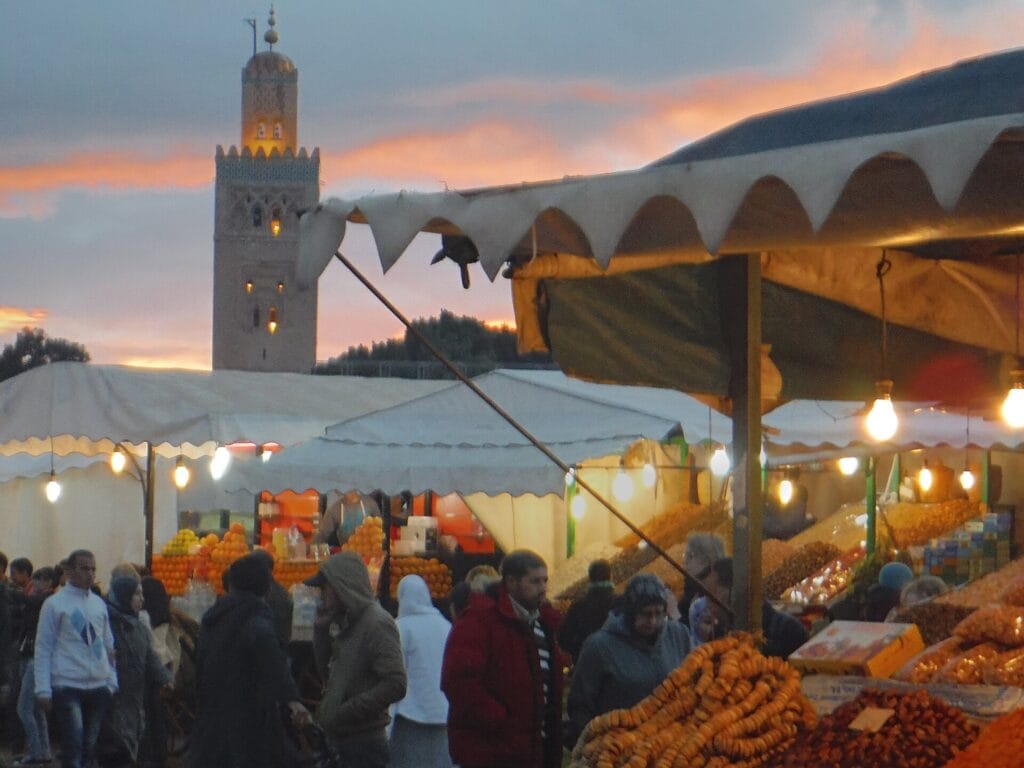
The atmosphere of the city itself is more mixed. Marrakech is lively, colourful, sometimes intense: the car horns, the mopeds, the crowds of Jemaa el-Fna square, the smells of spices and the constant solicitations can surprise a sensitive toddler — and tire out the parents. The key is therefore to alternate: a few hours of exploring, then a return to the calm of the riad for a nap and a nappy change. Unlike a European capital, Marrakech is not designed for pushchairs nor fully “accessible”, but it lends itself wonderfully to slow, contemplative travel punctuated by breaks. For a stay with an infant, it is better to aim for two or three activities a day at most rather than a packed programme.
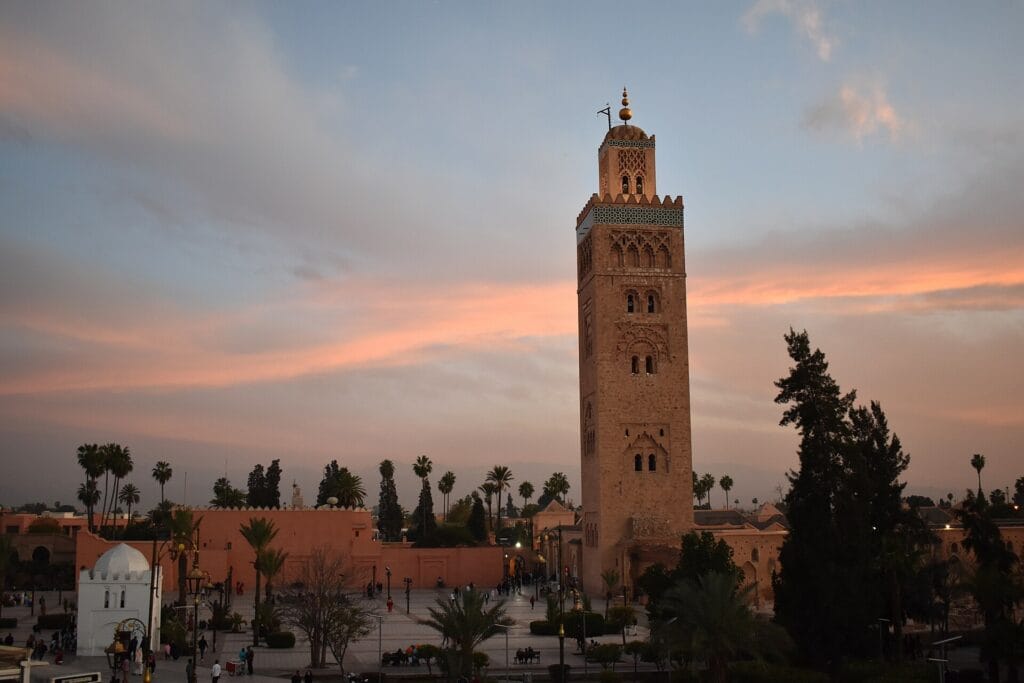
Another reassuring point: the city has everything a baby needs. Pharmacies on every corner, well-stocked supermarkets, good-quality private clinics, riads and hotels used to families. You will never be caught short. To plan your general itinerary and pinpoint the major sights, our complete guide to Marrakech will give you an overview to then adapt to your baby’s rhythm.
Pushchair or baby carrier: the choice that changes everything
This is the most important question when travelling to Marrakech with a baby, and the answer is clear: in the medina, the baby carrier wins hands down. The lanes of old Marrakech are neither smooth nor evenly paved; you will find uneven stones, steps, thresholds, puddles, mopeds weaving through, and a density of crowds that makes a pushchair frankly impractical in the souks. A physiological baby carrier (or a wrap sling if you are used to one) leaves your hands free, shields your baby from the bustle and lets you slip through without stress. It is also the ideal option at the airport and for visits that involve stairs or uneven ground.
That does not mean the pushchair is useless. In the modern districts — Guéliz, Hivernage, Avenue Mohammed VI — the pavements are wide and smooth, and pushing your baby there becomes pleasant, especially for long strolls and outdoor naps. Many parents therefore choose to bring both: a carrier for the medina and excursions, and a light, foldable pushchair for the new town, the gardens and the airport. If you can only take one, take the carrier: it is the one you truly cannot do without.
- Medina and souks: carrier or sling, a must.
- Guéliz, Hivernage, gardens: pushchair comfortable and practical.
- Airport and plane: carrier (hands free for the formalities).
- Tip: go for a light, foldable pushchair with good wheels; skip the pram and heavy models.
To plan your journeys between the riad, the new town and the more distant sights, take a look at our getting around Marrakech guide: petits taxis, precautions and good habits with a little one.
Where to find nappies, milk and baby food in Marrakech
This is one of the most common worries for parents, and it is quickly put to rest: in Marrakech, baby essentials are available everywhere. There is no need to load your suitcase with three weeks’ worth of nappies. Bring enough to last the first two days (the journey, the arrival, the first night), then stock up on site.
Supermarkets
Morocco’s large supermarkets are well stocked with baby products. The chains Marjane, Carrefour (Carrefour Market in the city centre, a hypermarket at Menara Mall and Al Mazar) and Acima offer complete aisles: nappies (Pampers and local brands), stage 1, 2 and 3 infant formula, baby food jars, cereals, wipes, bottles and packs of mineral water. Prices are close to those in Europe, sometimes slightly lower. As an indicative figure, expect around 70 to 120 MAD (7 to 12 €) for a pack of nappies, and 90 to 160 MAD (9 to 15 €) for a tin of infant formula depending on the brand.
Pharmacies
Moroccan pharmacies are plentiful, well run and an excellent landmark. There you will find infant formula (brands such as Nidal, Guigoz, Nutriben, Bledilait, as well as imported organic milks like HiPP or Physiolac), saline solution, paediatric paracetamol, nappy creams, baby-friendly sunscreen and oral rehydration solutions (very handy in case of a minor digestive upset caused by the heat). The pharmacist generally speaks French and knows how to advise. On arrival, locate the nearest duty pharmacy (pharmacie de garde) to your riad: the rotating on-call system ensures a pharmacy stays open at night and on public holidays in every district.
- Nappies: supermarkets and hypermarkets (wide choice, best prices).
- Infant formula: pharmacy (advice) and supermarket (choice + price).
- Baby food jars / meals: mainly supermarkets; otherwise home-cooked meals at the riad.
- Bottled water: everywhere, including neighbourhood grocers (hanout) open late.
A small tip if your baby is used to a very specific brand of milk: bring a sufficient reserve from home. The most common brands are easy to find, but a particular reference (a specific hypoallergenic or anti-reflux formula) may be harder to track down in the exact format you use.
Managing the heat with a baby
This is the real challenge of a stay in Marrakech with a little one. In the height of summer (June to September), the thermometer regularly climbs above 38–40 °C, and an infant regulates their temperature far less well than an adult. Dehydration and heatstroke are the risks to watch closely. The good news: with a few reflexes, the situation is very manageable.
The golden rule is to schedule outings around the cooler hours: early in the morning (7–11 am) and late in the afternoon (from 5–6 pm). The middle of the day — between noon and 4 pm — is spent in the shade, at the riad, by the pool or in a covered, cool place. The Bahia Palace, museums and shaded gardens make perfect refuges when the sun is beating down. Keep your baby hydrated regularly (bottles of water, more frequent feeds if breastfeeding), and don’t wait for them to ask.
- A wide-brimmed hat, sunglasses, light cotton clothing covering the arms and legs.
- Very high-factor sunscreen (SPF 50+) on exposed areas, reapplied regularly.
- A parasol or pushchair hood — never a cloth draped over the pushchair (oven effect).
- A water mister, cool wipes, and a small portable fan, much appreciated.
- A permanent water supply in the bag.
If you have the option, simply avoid the peak of summer. Spring and autumn offer far gentler temperatures for a baby. To choose your ideal window, see our guides on the best time to visit Marrakech and, if you go during the hot season anyway, Marrakech in summer, which explains how to survive the heatwave.
Where to sleep with a baby in Marrakech
The choice of accommodation weighs heavily on the success of a trip with an infant. Two main options are open to you, each with its own strengths.
The riad in the medina
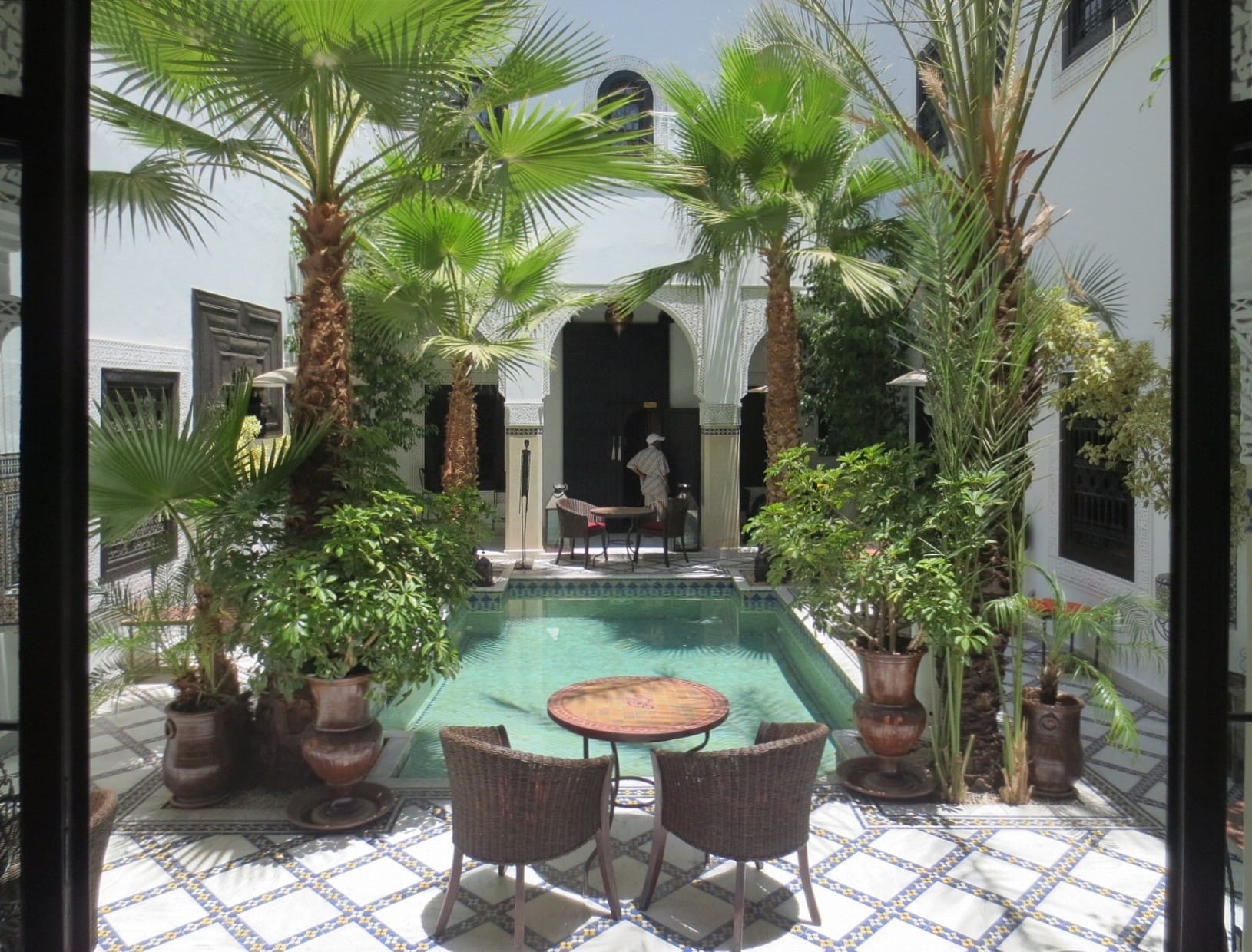
A riad is a traditional house organised around a central patio. The huge advantage for a baby: the quiet. Sheltered behind thick walls, you no longer hear the din of the city, the temperature is milder, and the shaded patio offers a safe space to lay your baby down on a rug. Staying in the medina also makes it easy to pop back between visits for a change or a nap, which is precious with a little one. Do, however, check a few points before booking: the number of steps up to the room (riads often have narrow, steep staircases and no lift), whether a cot is available, and the distance from the medina entrance (taxis do not enter the lanes; arrange a porter for the luggage).
The hotel with a pool
In the Hivernage and Guéliz districts, or along the Ourika road, many hotels and resorts have pools, gardens, air-conditioned rooms, lifts and sometimes family-friendly services (cot, high chair, babysitting). This is the comfort option par excellence, especially in the hot season: the pool becomes the best ally of scorching afternoons, and access is easier with a pushchair. In return, you are a little further from the soul of the medina.
Many families opt for a mixed formula: a few nights in a riad for authenticity, then a few nights in a hotel with a pool to rest. In any case, explicitly request a cot when booking and confirm its availability. To compare districts and types of accommodation, our where to sleep in Marrakech guide details the advantages of each area.
What to do with a little one in Marrakech
With a baby, you forget the long days of intensive sightseeing: you favour short, gentle, shaded outings. The pleasant surprise is that Marrakech is full of places perfect for exactly that.
The gardens
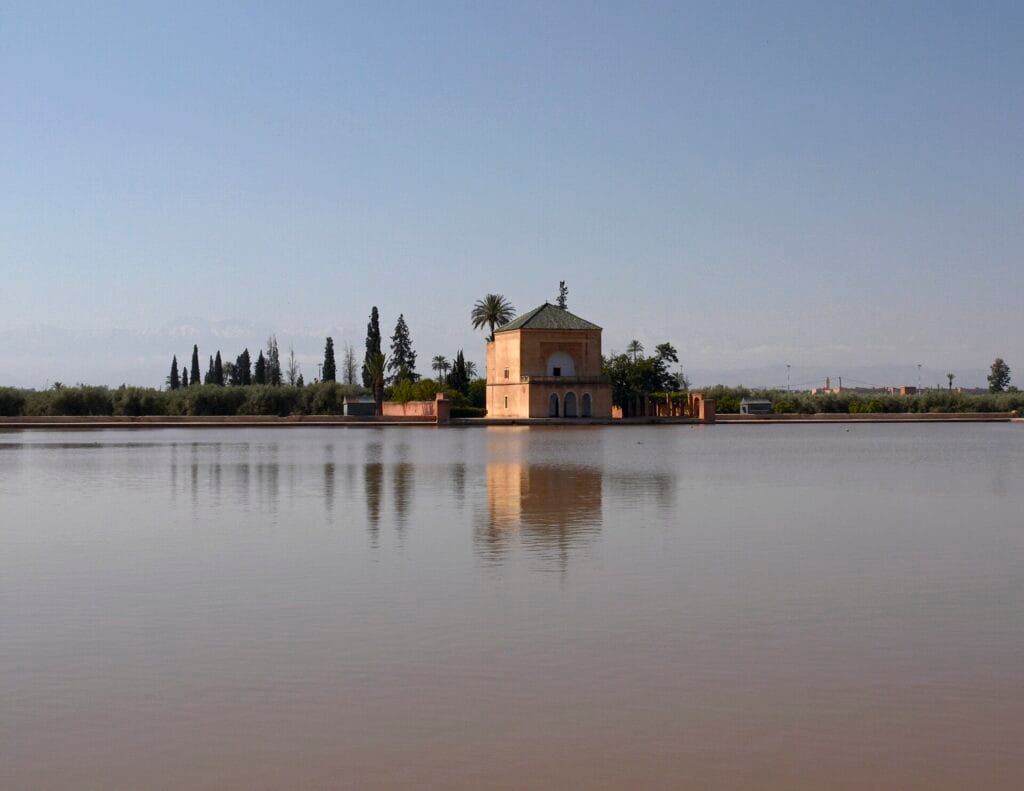
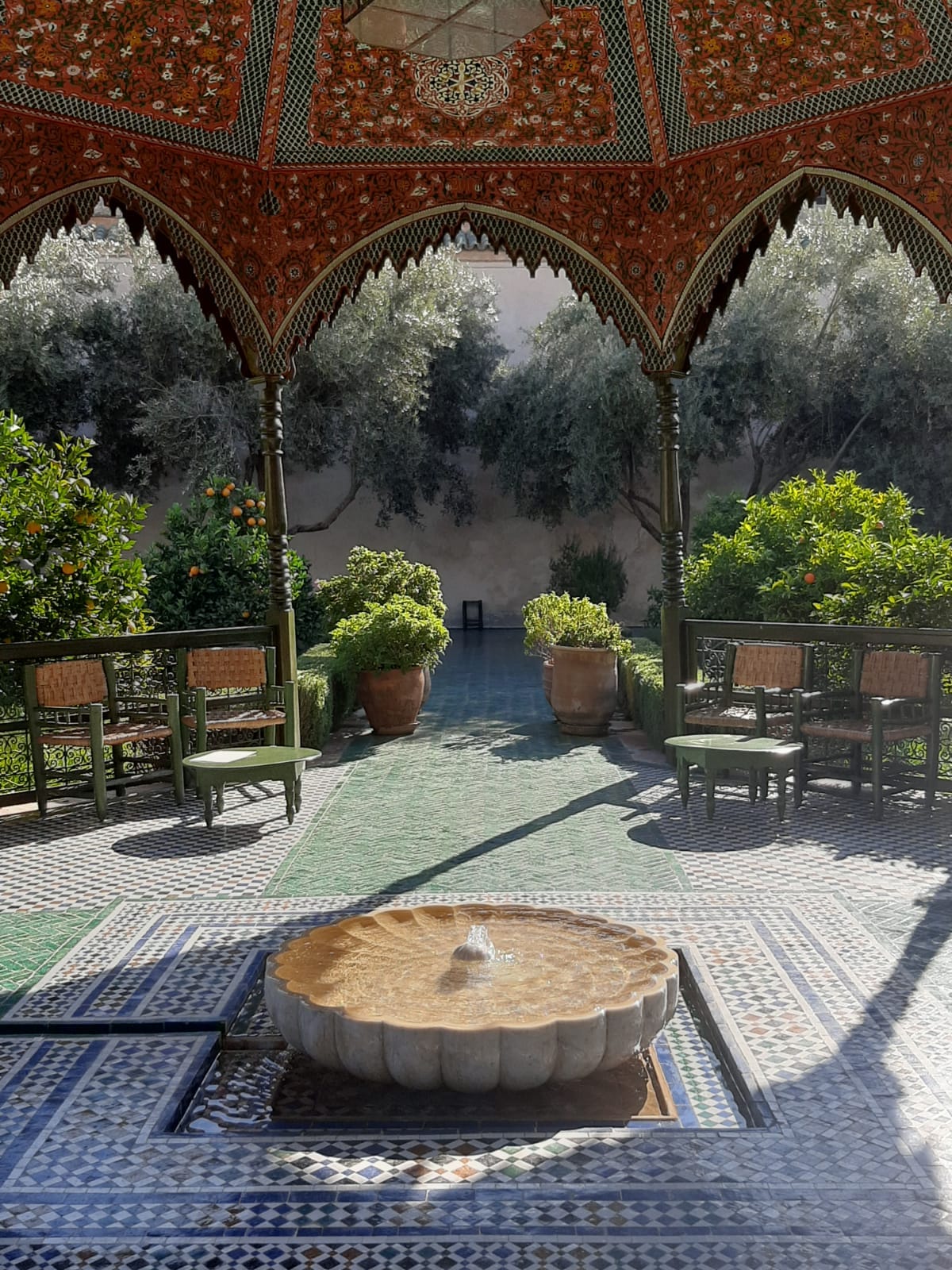
Green spaces are a parent’s best friend. The Menara Gardens, with their large basin and olive trees, offer shade, air and room to set your baby down and let an older sibling run around. The Majorelle Garden is busier but superb, while gardens such as El Harti in Guéliz are peaceful and free. These green strolls are easy to do with a pushchair and provide a break away from the hustle of the centre.
The horse-drawn carriage and the Palmeraie
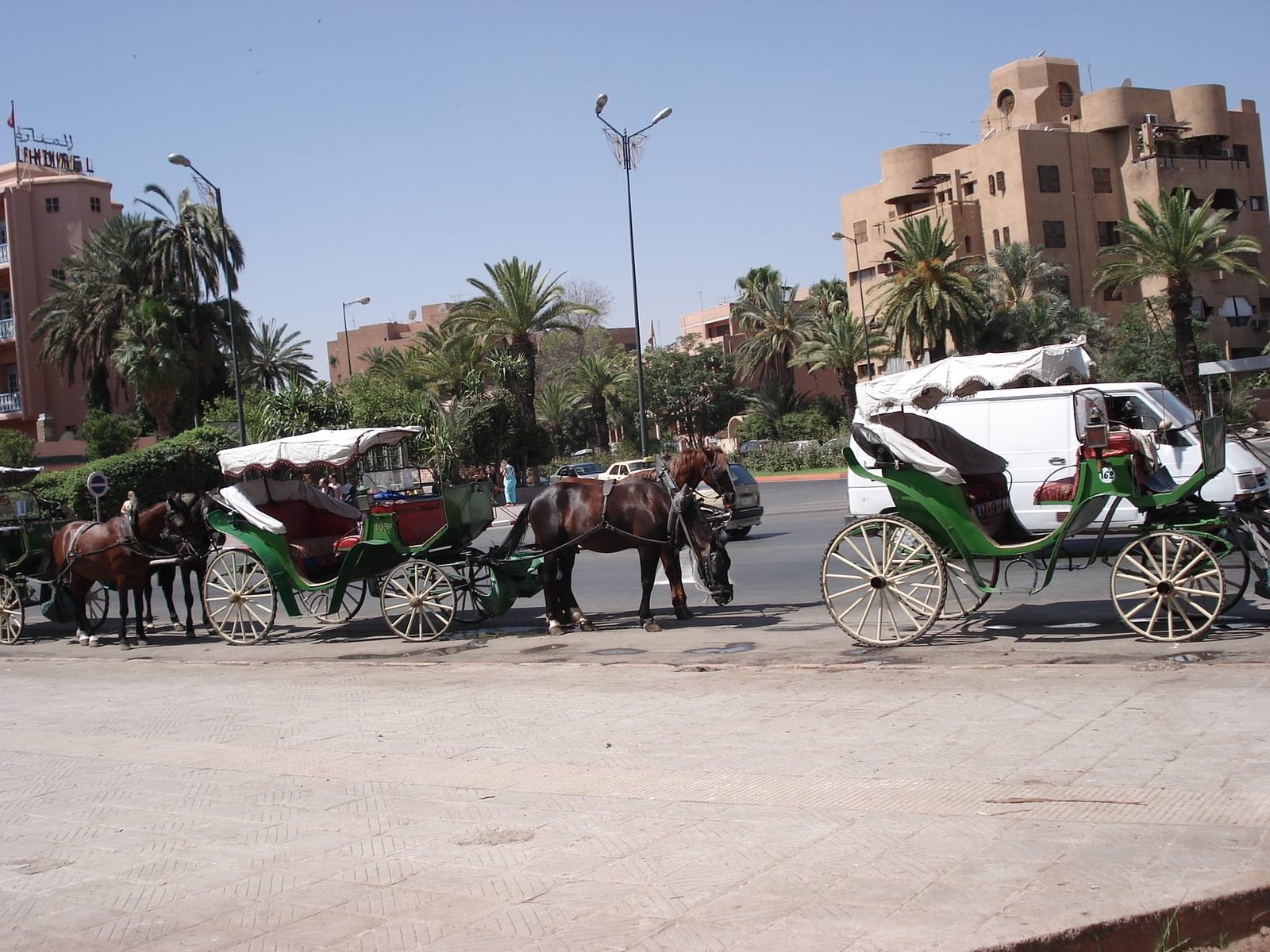
A ride in a horse-drawn carriage (calèche) around the ramparts is a gentle, original activity that little ones often enjoy (the movement lulls them). Expect around 150 to 250 MAD (15 to 25 €) an hour, to be negotiated before you climb aboard, and plan for an early-morning slot to avoid the heat. Over in the Palmeraie, the setting is greener and more open than the centre: ideal for a quiet morning, perhaps at an establishment with a pool and shaded space.
Palaces and covered museums
When the sun is too strong, covered, cool places save the day. The Bahia Palace, with its patios and shaded courtyards, can be explored at a leisurely pace (be careful, though: a carrier is advised, as the floors are uneven). The Marrakech Museum, the House of Photography or the Yves Saint Laurent Museum offer air-conditioned or shaded spaces perfect for a cultural break. For a full overview of sights to combine according to your children’s ages, our Marrakech with the family guide offers activity ideas that grow with them.
Health and safety: the essential precautions
Travelling with a baby involves a few simple but important health precautions. The first concerns water: never give tap water to your infant, and use bottled water to prepare bottles, rinse teats and, to be safe, even for brushing older children’s teeth. Mineral water is available everywhere and cheap. Also avoid poorly washed raw vegetables, unpasteurised juices and dubious homemade ice cream for the whole family: little stomachs are sensitive to traveller’s diarrhoea.
The sun is the other point of vigilance, already mentioned: maximum protection, constant hydration, and watching for signs of heatstroke (a red, listless baby, hot and dry skin, unusual crying). If in doubt, move them to a cool place, hydrate and don’t hesitate to seek medical advice.
As for care, Marrakech has good-quality private clinics, often the best choice with a child: the Polyclinique du Sud, the Clinique Internationale de Marrakech or the Hôpital Privé de Marrakech, among others, where paediatricians are available. Also note the emergency numbers (SAMU ambulance: 141; police: 19). Before leaving, be sure to take out travel insurance covering medical costs and repatriation for the whole family, and bring your baby’s health record along with a small kit (thermometer, paediatric paracetamol, saline solution, rehydration solution, plasters). Finally, the city is generally safe, but stay alert in crowds; our advice on safety and scams in Marrakech applies to families too.
Eating out with a baby: what you need to know
Moroccan restaurants welcome babies with open arms, but two practical details deserve your attention. First, high chairs are rare: few traditional establishments provide them. A portable, foldable travel booster seat that is light and easy to slip into your bag is a life-changing accessory that lets you feed your baby anywhere, from the riad to the terrace.
Next, the question of the baby’s meals. If your child already eats solid food, Moroccan cuisine offers plenty of gentle, suitable options: melting vegetable tagines, semolina, purées, yoghurts, fruit (peeled), fresh bread. Most riads will happily prepare a simple dish or warm a bottle if you ask nicely. For the youngest, supermarket baby food jars and cereals are a perfect backup. Bring a flask or thermos for warm water for bottles when out and about, and a few familiar snacks your baby recognises, to reassure their palate in a new environment.
- Bring a portable travel booster seat (high chairs are rare).
- Ask the riad to warm a bottle or a small dish: they do it gladly.
- Favour cooked and peeled foods; bottled water only.
- Pack bibs, wipes and a set of baby cutlery.
The flight and arriving at Marrakech airport
The flight is often dreaded, but with a baby it usually goes well if you plan ahead. When booking, ask if possible for a bassinet (sky cot) for long flights, or at least the front rows. Plan to breastfeed, give a bottle or a dummy at take-off and landing: sucking relieves the pressure in the ears. Keep everything you need for a flight and a half in your cabin bag (nappies, milk, a full change of clothes, bags), as the unexpected happens fast. Baby liquids (milk, water, food jars) are allowed beyond the usual limit at security, upon presentation.
On landing at Marrakech-Menara airport, keep the baby carrier on you: it frees your hands for border control, luggage and formalities. An independent guide, this site is neither affiliated with nor managed by ONDA (the National Airports Office). The most important thing for a young child is the journey to your accommodation: after a flight, with a tired baby and the heat, the ideal is a private transfer booked in advance, with a driver waiting for you and, if you request it, a suitable car seat (rarely provided by default — specify it when booking). This saves you from negotiating with taxis at the airport exit, which is exhausting with an infant in your arms. To compare the options and prices, see our comparison of airport transfers in Morocco.
Mistakes to avoid
A few pitfalls come up often among parents discovering Marrakech with a little one. Knowing them is already half the battle to avoiding them.
- Trying to do everything: an overloaded programme exhausts baby and parents alike. Two or three activities a day are more than enough.
- Relying on the pushchair in the medina: it is the surest way to struggle in the lanes. Carrier, always.
- Underestimating the heat: going out at midday in summer with an infant is risky. Respect the cooler hours.
- Forgetting bottled water for bottles and teeth-brushing.
- Not booking the transfer and negotiating a taxi while exhausted on arrival, with a crying baby.
- Booking a riad without checking the stairs and the access from the car.
- Leaving without insurance or the health record: two absolute must-haves.
- Bringing too many nappies and not enough sunscreen: it should be the other way round — everything is available on site except your very specific brand.
FAQ: Marrakech with a baby
What is the best age to take a baby to Marrakech?
There is no universally ideal age, but many parents find trips simpler before the baby walks (they stay in the carrier) or, conversely, when they are more independent. The key is to avoid the extreme heat of summer and to adjust the pace. An infant a few months old travels very well if breastfed or if their milk brand is available on site. Always ask your paediatrician’s advice before you leave.
Are any particular vaccines needed to go to Morocco with a baby?
No compulsory vaccine is required to enter Morocco from Europe. It is simply recommended to be up to date with the routine vaccinations on the immunisation schedule (including your baby’s). Consult your doctor or paediatrician before departure for personalised advice, particularly regarding hepatitis A for older children.
Can you find infant formula and nappies easily?
Yes, very easily. Supermarkets (Marjane, Carrefour, Acima) and pharmacies offer nappies, stage 1/2/3 milk, baby food jars and wipes. If your baby uses a very specific milk (hypoallergenic, anti-reflux), bring a reserve as a precaution, as the exact format may occasionally be out of stock.
Pushchair or baby carrier in Marrakech?
The baby carrier is essential in the medina and the souks, where a pushchair is impractical. The pushchair remains useful in the modern districts (Guéliz, Hivernage) and the gardens. The ideal is to have both; if you take only one piece of equipment, choose the carrier.
How can you protect a baby from the heat?
Go out early in the morning and late in the afternoon, and reserve the middle of the day for the riad, the pool or covered places. Hydrate very regularly, dress your baby lightly but with good cover, a hat and SPF 50+ sunscreen, and always keep water within reach. In summer, the hotel pool becomes your best ally.
How long should you stay in Marrakech with a baby?
Three to five days make for a good balance: enough to discover the essentials without wearing out your baby, with light days. If you stay longer, alternate visits with “rest” days at the riad or by the pool, and think about a cool getaway (gardens, the Palmeraie) to vary the moods.
In summary
Marrakech with a baby is an entirely accessible and often unforgettable adventure, carried along by an exceptionally warm welcome for little ones. The key comes down to three words: carrier, shade and slowness. Choose the right season and quiet accommodation, always keep water and sunscreen within reach, book your transfer in advance, and let yourself be carried along by the gentle rhythm of travel at a baby’s pace. Everything your child needs is available on site, the city is kind, and the memories will be immense. Have a wonderful trip to Marrakech with your infant!
To go further into the history and culture of the city, you can consult the Marrakech page on Wikipedia.
Images under free licence via Wikimedia Commons: © Abdeaitali (CC BY-SA 4.0); © Arnaud 25 (CC BY-SA 3.0); © mwanasimba (CC BY-SA 2.0). Sources: Wikimedia Commons.Photo credits: royalty-free illustrative images (Unsplash / Pexels). Information and prices given for indication only and subject to change; always check with the establishments and your paediatrician before departure.