The honest answer to things to do in Nador depends on what you expect from a north-eastern Moroccan city. Nador is not a heritage destination: it has no ancient medina and no major monument. What it does have is a remarkable setting, squeezed between a Mediterranean lagoon of more than a hundred square kilometres, a mountain that looms over the town and a rugged Rif coastline that few foreign visitors know. Nador works best as a base, and almost everything worth seeing lies twenty, forty or sixty kilometres away. This guide sets out what to see, when to go and how to organise a trip, including the flights, the airport transfer and the car hire question that so many visitors ask about.
In short
- The Marchica lagoon is the heart of the matter: a stretch of water of more than 100 square kilometres, separated from the Mediterranean by a sandy spit.
- Nador is a modern town that grew up in the twentieth century, so nobody comes for ancient sights.
- Cape Three Forks is the most spectacular natural site in the region, with sea cliffs and small coves.
- Mount Gourougou rises above the town and gives the best overview of the lagoon.
- Two to three days cover the town and its immediate surroundings; allow a week if you want to explore the eastern Rif.
- Summer is very busy, especially July and August, when Moroccan families living in Europe come home.
- The mild seasons run from April to June and from September to October, and the sea is still pleasant in early autumn.
- The airport lies about 30 kilometres south of the town, near Al Aroui, and there is no direct flight from the UK or Ireland.
- A car changes everything: the beaches and capes are not served by regular public transport.
- Tarifit, the Berber language of the Rif, is widely spoken alongside Arabic.
The Marchica lagoon: the sight that defines Nador
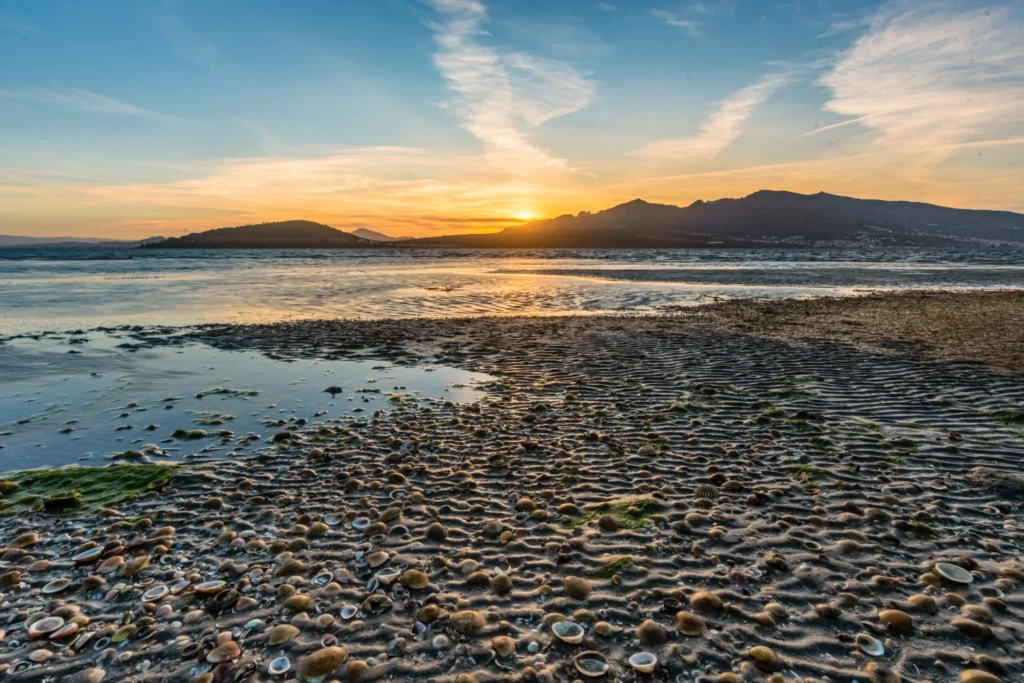
The Marchica, also written Mar Chica or known as Sebkha Bou Areg, is one of the largest lagoons on the Mediterranean. It stretches about twenty kilometres from end to end and up to seven or eight kilometres across, cut off from the open sea by a long sandy bar with a single channel through it. Nador is built on the northern shore, which gives the town a façade of calm water rather than a seafront pounded by waves.
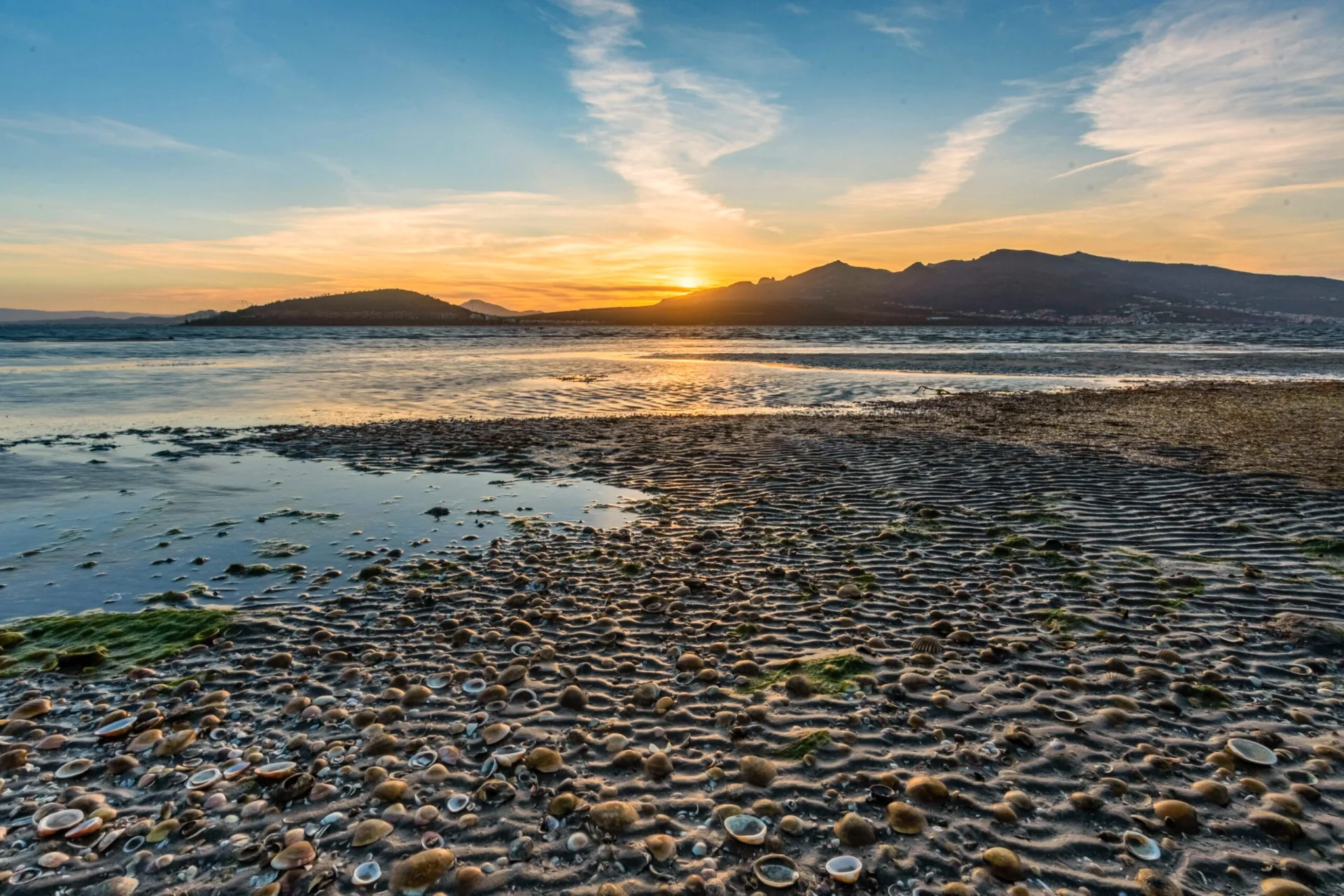
For a visitor this means a landscaped promenade along the waterfront, sheltered water that suits dinghy sailing and paddleboarding, and plenty of birdlife: flamingos, waders and migrating birds gather here in numbers that change with the seasons. For several years the lagoon has been the subject of a large development programme, with a marina, walkways and property projects that are gradually transforming its shores. If you search for the Marchica lagoon resort, this is the scheme people are talking about, and the edges of the water look different from one year to the next.
The corniche and the lagoon promenade
This is Nador’s main living room and the best way to take the pulse of the town. The promenade follows the water for several kilometres, lined with cafés, lawns and playgrounds. It comes alive in the late afternoon and evening, when families go out for a stroll. Allow one to two hours to walk it at an easy pace.
You quickly grasp a particular trait of Nador here: the town turns its back on the open sea and lives facing its lagoon. The water is calm, sometimes very shallow, and the view changes a great deal with the wind and the light. It is also the spot from which you see the outline of Gourougou best, above the rooftops.
Cape Three Forks, the finest day out
About sixty kilometres north-west of Nador, a long rocky peninsula pushes out into the Mediterranean. Cape Three Forks (Cap des Trois Fourches in French) is the most impressive natural site in the region: a winding road follows the crest, with sheer cliffs on one side and coves reached by tracks on the other, and a lighthouse stands at the tip of the cape.
Plan on half a day at the very least. The road is narrow and needs attention, particularly on the last stretch. Several small beaches nestle in the bays: some can be reached by car, others involve a walk of fifteen to thirty minutes. Take water and food with you, because shops are rare once you are past the first villages.
Mount Gourougou: the best view for the least effort
The massif above Nador peaks at a little over eight hundred metres and can be climbed by car along a forest road. From the top you take in the town, the lagoon, the sandy bar and the Mediterranean beyond in a single sweep. It is the most rewarding outing in the region for the time it takes: under an hour on the road for the most complete view you will get.
The slopes are wooded with pines and oaks, and a few picnic areas have been set up. In summer the difference in temperature from the town is clearly noticeable, which makes Gourougou a popular escape for locals during the hot hours. Anyone searching for Gourougou forest or mountain will find the same thing: a green hillside with the lagoon laid out below it.
Nador beaches: lagoon side or open sea
The area offers two very different kinds of swimming. On the lagoon side the water is calm and shallow, ideal for children; on the Mediterranean side there are proper open-sea beaches along the sandy bar and beyond. The best known are at Kariat Arekmane (often written Kariat Arkmane), on the southern shore of the lagoon, and on the strip of sand that separates the two bodies of water.
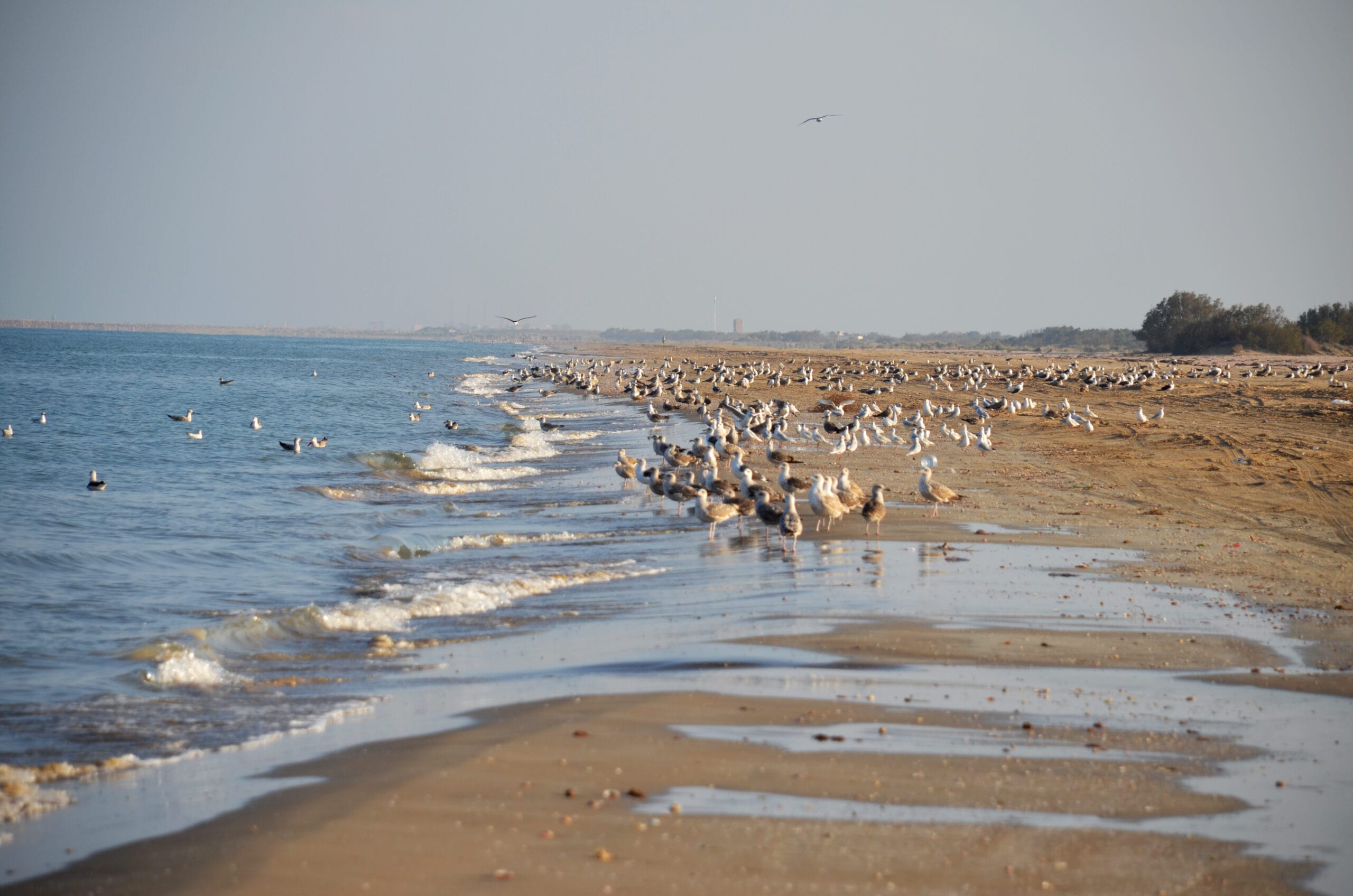
In July and August these beaches are very crowded. If you want some peace, aim for the coves of Cape Three Forks or move your trip to June or September, when the sea is still good and the crowds are noticeably thinner.
The town itself: what to expect
Let us be clear: Nador has no monumental sights to tick off. It is a town of trade and services, laid out around wide avenues, with a lively centre, a busy market and an intense café life. Its appeal for a visitor lies in the atmosphere and its role as a base, not in a list of sights.
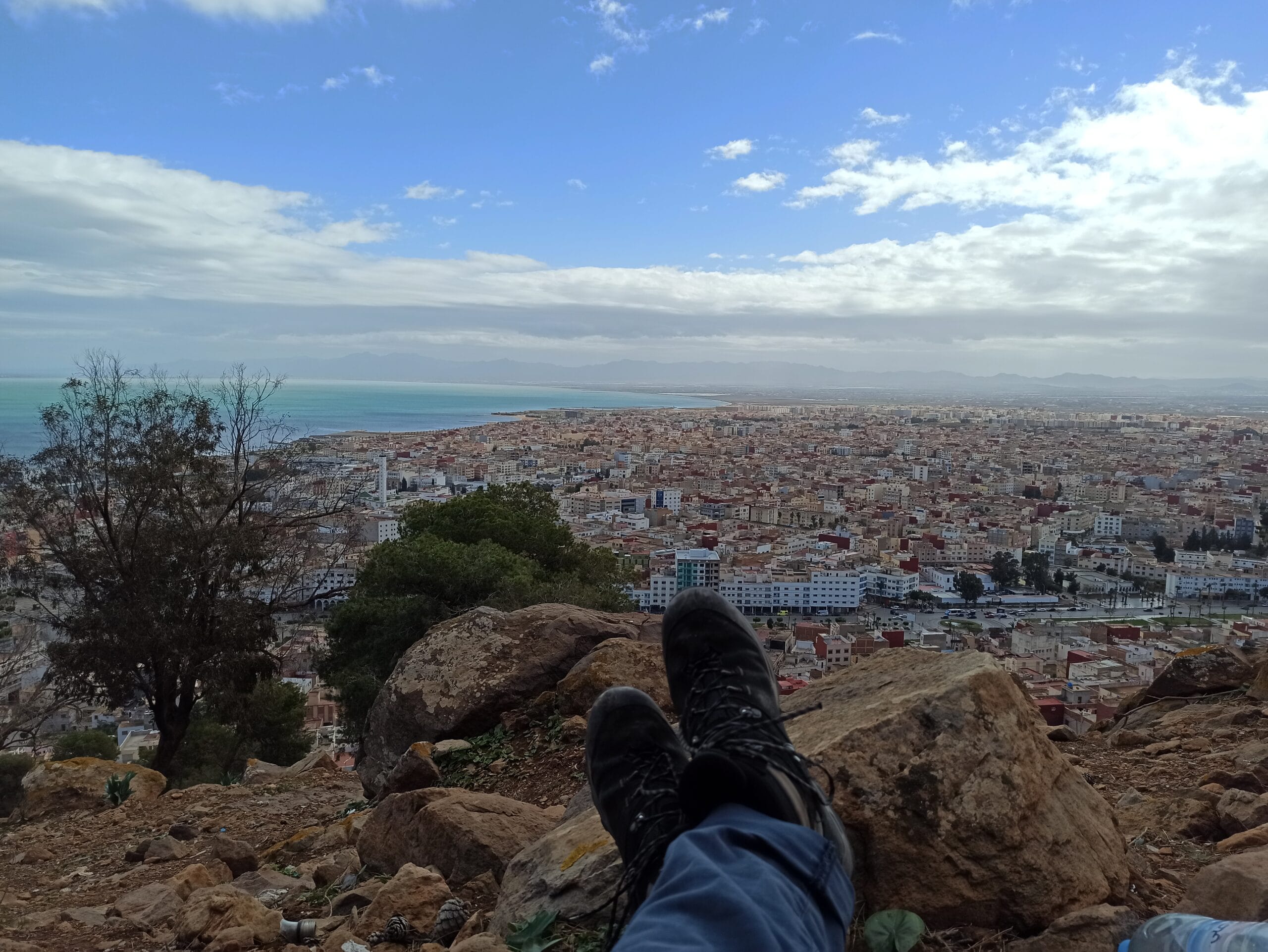
The lack of old buildings has a simple explanation: Nador grew up during the twentieth century from a small core to become one of the main towns of the north-east. It therefore has none of the layers of history found in Fes, Meknes or Tetouan. If a historic medina is high on your list, look elsewhere in Morocco and keep Nador for the landscape.
Birdwatching on the lagoon
This is a little-known side of the destination and one of its most dependable. The lagoon, its mudflats and its salt pans form an important stopover on the migration routes between Europe and Africa. Depending on the season you may see greater flamingos, avocets, stilts, terns and many waders, sometimes in their hundreds on a single mudflat.
The best times are early morning and late afternoon, when the birds gather to feed and the light is low. The southern and eastern shores, which are less built up, offer the quietest observation spots. A pair of binoculars is enough, no special facilities are needed and the activity is free.
A word of common sense: keep your distance from resting groups and do not try to make them fly up for a photograph. Repeated disturbance on a migration stopover is costly to birds that are there precisely to regain their strength.
How many days to stay in Nador
| Length of stay | Realistic plan | Best for |
|---|---|---|
| 1 day | Corniche, Gourougou, one lagoon beach | A stopover before heading west |
| 2 to 3 days | Add Cape Three Forks and Arekmane | The most common length |
| 5 to 7 days | A beach holiday with excursions to Berkane and Saidia | Family summer holidays |
| Regional base | Day trips into the eastern Rif and along the coast | Travellers with their own car |
Nador weather: when to go
People often search for the weather in Nador by month, from December and January to February and April, and the pattern is easy to summarise. The climate is Mediterranean, with hot, dry summers and mild, damp winters. But the deciding factor is not the temperature: it is the summer crowds, which change the experience completely.
| Period | Conditions | Good to know |
|---|---|---|
| April to June | Mild and bright, the sea is warming up | The best window for visiting without the crowds |
| July and August | Hot, with pleasant sea water | Very busy, so book accommodation early |
| September and October | The sea is still warm and the crowds are thinning | An excellent seaside compromise |
| November to March | Mild, with some showers | Good for walking and scenery, not for swimming |
For the whole country month by month, read our best time to visit Morocco, and if you are planning a winter trip, our pages on Morocco in November and Morocco in December cover conditions and prices.
What the summer season is like
You should know what to expect if you come in July or August. The north-east is one of the main destinations for Moroccan families settled in Europe who return home for the summer, and the influx is felt everywhere: heavy traffic on the main roads, full beaches, packed restaurants in the evening, no vacancies and prices that lean upward.
That is not necessarily a drawback. The atmosphere is cheerful, events multiply and the town lives at a pace it does not have the rest of the year. But if you want quiet, empty coves and the freedom to decide in the morning what to do in the evening, choose another period. June and September offer almost the same swimming conditions with far fewer people.
Flying to Nador: the airport and the routes
Nador-Al Aroui Airport sits about thirty kilometres south of the town. It has a particular place in the Moroccan network: much of its traffic is linked to routes to western Europe, where a large community with roots in the region lives. For today’s flights, use our live page of Nador departures and arrivals, and for the terminal, the access roads and the services on site, our Nador Al Aroui Airport guide brings the essentials together. If you have time before boarding, we also list where to eat at Nador airport.
| Airline | Examples of cities served from Nador |
|---|---|
| Royal Air Maroc | Casablanca, Tangier, Amsterdam, Brussels, Madrid, Barcelona, Rotterdam, Frankfurt, Dusseldorf |
| Ryanair | Madrid, Barcelona, Malaga, Charleroi, Weeze, Hahn, Marseille, Toulouse, Beauvais |
| Air Arabia Maroc | Amsterdam, Brussels, Barcelona, Cologne, Montpellier, Strasbourg, Rabat, Tangier |
| Iberia and Vueling | Madrid, Malaga, Alicante, Palma and Barcelona |
| TUI fly Belgium | Brussels, Antwerp, Eindhoven, Rotterdam |
| Transavia, Corendon, Eurowings, Brussels Airlines | Paris-Orly, Rotterdam, Cologne, Dusseldorf, Brussels |
From the UK and Ireland
None of the airlines in our route records flies nonstop between the UK or Ireland and Nador, so you will need one connection. The hubs that do appear on the Nador network are Madrid, Barcelona, Brussels, Amsterdam and Casablanca, and the usual approach is to reach one of them first and continue on a second flight. If you book the two legs separately, leave a generous gap, because a missed connection is then your own risk. Our guide to direct flights to Morocco from the UK lists what does fly nonstop from British airports, which is useful if you would rather land in Casablanca or Marrakech and travel on by air or road.
One more practical point concerns clocks. Since 20 September 2026 Morocco has stayed on GMT (UTC+0) all year round, with no change during Ramadan. For British and Irish visitors that means the same time as home in winter, and in summer, when your clocks are an hour ahead, Morocco is one hour behind you. Flight times on arrival and departure boards are in Moroccan local time. People searching for the time in Nador get the same answer as for the rest of the country.
Nador airport to the town centre
Three options. The taxi is the simplest and the most usual, and the journey takes about half an hour depending on traffic. Hiring a car is the better choice if your stay includes Cape Three Forks or the beaches. Last come the shuttle or transfer run by some hotels, which you should confirm before you travel. In high season the wait for taxis can stretch when several flights land together, so build in some slack if you have an onward road connection. Agree the fare before you set off, and read our guide to taxis and Uber in Morocco for how it works in practice. Many people search for a Nador airport bus; the options we can confirm are the taxi, a hire car and a hotel transfer, so check anything else locally before relying on it.
Car hire in Nador
Car hire is one of the most common searches around Nador, and with good reason. Public transport does not reach the cape, Gourougou or most beaches in a form that suits a visitor, so for a stay of more than two days a car is almost always the best balance between cost and freedom. You can read how it works at the airports in our guide to car rental at Morocco’s airports. Another approach is to negotiate a big taxi for the day, or to book through a local operator. For a short stay in town only, small taxis solve everything.
Reaching Nador by road and rail
Nador is linked to the rest of the country by a decent road network. From Oujda allow about two hours; from Al Hoceima the coast road crosses the Rif through fine scenery but takes time; from Fes the route goes through Taza. The train also serves the town on a line from Taourirt. For a trip through the north, Nador sits naturally between Saidia to the east and Al Hoceima to the west.
| Journey | How | What to expect |
|---|---|---|
| Airport to Nador | Taxi or hire car | About 30 km, around half an hour |
| Oujda to Nador | Road | Around two hours |
| Fes to Nador | Road via Taza | A long day, better broken up |
| Nador to Al Hoceima | Coast road through the Rif | Beautiful but slow, allow plenty of time |
| Nador to Cape Three Forks | Car or big taxi | About 60 km, half a day with stops |
Getting around once you are there
In town, small taxis do everything and the distances are short. Outside the town the situation changes: neither Cape Three Forks, nor Gourougou, nor most beaches are served by a regular service that suits a visitor. You have three solutions: hire a car, negotiate a big taxi for the day, or go through a local provider. For our wider overview, see getting around Morocco.
Where to stay in Nador
The town centre and the corniche concentrate the traditional hotels, with the advantage of being within walking distance of cafés and restaurants. Towards the lagoon and the marina the offer is newer and quieter. For a purely seaside stay, accommodation at Arekmane and along the coast puts the beach on your doorstep, but you will need a vehicle for everything else.
One calendar point not to overlook: in July and August demand is strong and the rooms fill up long in advance. Book early if you travel then.
Eating in Nador
The nearness of the sea and the lagoon shows on the plate: grilled fish, seafood and simple preparations dominate the menus of the waterside places. In town you will find everyday Moroccan cooking, grills and a very developed fast-food offer. Cafés play a central part in social life, and an hour slips by easily at the end of the day.
Two local habits are worth pointing out. First, people dine late, particularly in summer: before eight in the evening many places are still empty, and the buzz only really starts after that. Second, fish is often chosen at the counter before it is weighed and grilled; ask the price per kilo before your choice goes to the kitchen. That is the custom, and it avoids any misunderstanding when you pay.
For sweets, the region shares with the rest of the north a marked taste for almond and honey pastries, sold in specialist shops rather than in restaurants. The best are found in the market and the shopping streets of the centre, not on the corniche.
Things to do in Nador with children
The setting is favourable. The lagoon water is calm and shallow over wide areas, which is reassuring with small children. The corniche has lawns and playgrounds, and the drive up Gourougou is effortless. Cape Three Forks, on the other hand, suits toddlers less well: narrow roads, access that is sometimes steep and little shade.
Language and local customs
Tarifit, the Berber language of the Rif, is widely spoken in the region, alongside Moroccan Arabic. Spanish and Dutch are often heard, a direct result of the long-standing links between the region and Europe. French is understood, but less consistently than along the Casablanca to Rabat axis. A few words of Arabic or Tarifit are always well received.
Combining Nador with another stop
Three sequences work well. Eastwards, Berkane and the coast as far as Saidia, with its long sandy beaches, and on the way you can read things to do in Oujda for the regional capital. Westwards, the Rif coast road towards Al Hoceima, long but spectacular. Southwards, Taza and Fes, to switch from the coast to the interior. For a complete contrast with the Mediterranean, the Atlantic coast has a quite different feel: see our guide to Essaouira, or, for the far south, Laayoune in the Moroccan Sahara.
The most common mistakes
- Expecting a historic town. The first is to expect an old city and to be disappointed by the centre.
- Coming without a vehicle. You end up stuck between the corniche and the market, when all the interest lies in the surroundings.
- Choosing July or August without a booking. You then find there is no accommodation left.
- Underestimating the drive to Cape Three Forks. It easily takes half a day there and back with stops.
Frequently asked questions about Nador
What is there to see in Nador in one day?
The most efficient plan combines the climb up Mount Gourougou in the morning for the overview, a swim or a walk on a lagoon beach in the middle of the day, and the corniche in the late afternoon, when the town comes alive.
Can you swim in the Marchica lagoon?
Yes, on the equipped beaches along its shores. The water is calm and shallow, which suits families. For open-sea swimming you need to head for the sandy bar or the beaches of the Mediterranean coast.
Do you need a car to visit the Nador area?
For the town, no: small taxis are enough. For Cape Three Forks, Gourougou and most beaches, yes. No regular public transport serves these sites in a way that is practical for a visitor.
When is the best time to visit Nador?
April to June and September to October. The sea is good in September, the light is lovely in spring and the crowds stay reasonable. July and August give the best swimming conditions but attract very large numbers of visitors.
How long does it take to get from Nador airport to the town?
The airport is about thirty kilometres south of the town, so the drive takes around thirty minutes in normal conditions. Allow longer when several flights arrive at the same time in high season.
Is there a direct flight from the UK to Nador?
Not in our route records. From the UK or Ireland you connect through a hub such as Madrid, Barcelona, Brussels, Amsterdam or Casablanca. Check the live departures and arrivals page, because airlines change their networks from season to season.
Is Nador safe for visitors?
It is a large, busy and ordinary Moroccan city, and visitors use the same common-sense precautions as anywhere: keep valuables out of sight, agree taxi fares in advance and avoid isolated tracks after dark. For up-to-date official advice, read the UK Foreign Office travel advice for Morocco, and see our summary in Is Morocco safe?
Is Nador suitable for a family holiday?
Yes, provided you have a vehicle and accept a seaside destination rather than a cultural one. The calm lagoon water, the beaches and the playgrounds on the corniche make a comfortable base with children.
In summary
Nador comes down to an immense lagoon, a mountain above it, a jagged cape an hour’s drive away and beaches on both sides of the sandy bar. The town itself is a base, not a sight. Allow two to three days, hire a car, aim for spring or September, and keep a whole half-day for Cape Three Forks.
Sources
Location and regional background: Encyclopaedia Britannica, Nador. Airport information: ONDA, Morocco’s airports authority. The air services mentioned come from our continuously updated record of scheduled routes; frequencies vary by season and must be checked with the airlines.
Image credits
Photographs of the Marchica lagoon, the birds on the shore and the town of Nador: via Wikimedia Commons, under the licences stated on each file page.