Things to do in Essaouira start with a fact nobody mentions before you arrive: the wind. The old port of Mogador faces the Atlantic and is swept by the trade winds for most of the year, and that wind explains almost everything about the town: its massive ramparts, its cooler air compared with the interior, its kitesurfing beaches, and the fact that you will be wearing a jumper in August while Marrakech swelters. This guide brings together what to see, how long to stay, when to come and how to arrive, whether it is your first visit or a return trip.
In short
- The medina is a UNESCO World Heritage Site (listed in 2001). It is the heart of any stay and can be explored entirely on foot.
- Two to three days are plenty for the town itself. Beyond that, people stay for the rhythm of the place rather than to tick off sights.
- It is cooler than elsewhere in Morocco, and it is windy. Pack an extra layer even in summer.
- The working fishing port is the liveliest spectacle in town, early in the morning and again in the late afternoon.
- The beach is huge, but the wind is strong. It suits windsurfing and kitesurfing far better than lazy sunbathing.
- Essaouira-Mogador airport has direct flights from Europe, including London Stansted, but many visitors arrive by road from Marrakech.
- You do not need a car in town. The medina is pedestrianised and everything is close.
- Thuya-wood craft shops are an old local speciality, clustered around the Skala.
- Essaouira fits neatly into a circuit, and many people slot it in between Marrakech and Agadir.
- A Gnaoua music festival is traditionally held in early summer and transforms the town.
Is Essaouira worth visiting?
It is the question travellers type most often, and the honest answer is yes, provided you want the right kind of trip. Essaouira is not a showcase of grand monuments. It is a small, walkable, breezy seaside town where the pace drops within an hour of arriving. Visitors who come from Marrakech usually describe the contrast first: the climate, the light, the lower pressure from sellers and the sound of the sea at the end of every street.
If you want palaces, tombs and vast souks, this is not the place. If you want a break from the intensity of the big imperial cities, a plate of grilled fish by the harbour and an evening on the ramparts, it is one of the most rewarding stops in the country. That is also why it is such a good first stop for people new to Morocco, a point we come back to in the questions at the end of this guide.
The UNESCO-listed medina, and why it feels different
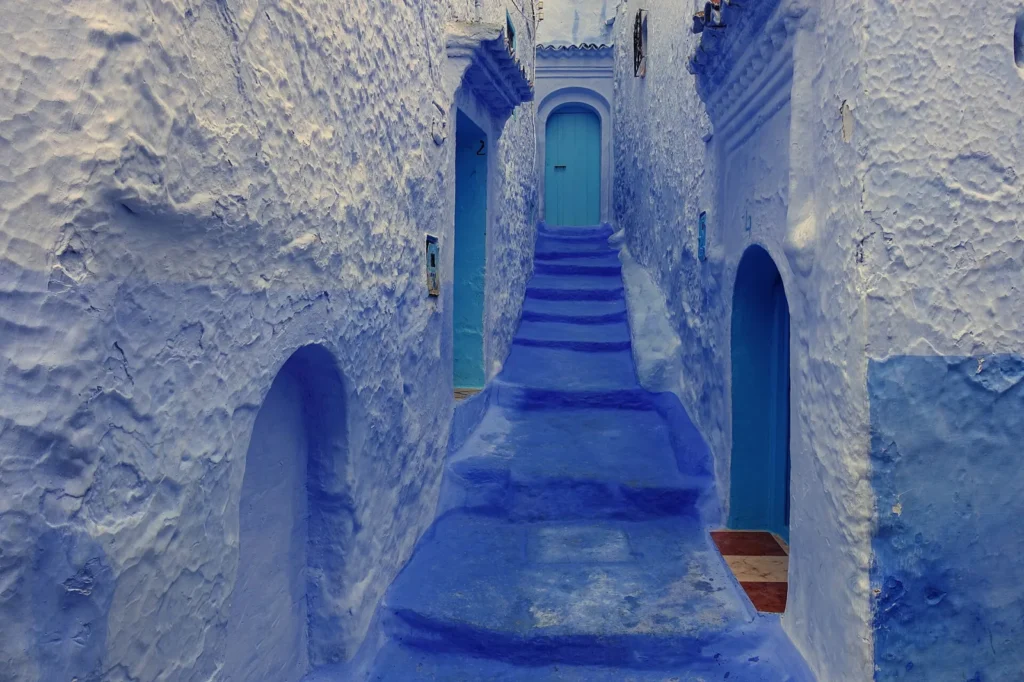
Many travellers who arrive from another Moroccan city notice the same thing within the hour: the medina of Essaouira does not feel like the others. It did not grow by accumulation over centuries. It was designed. The streets meet at right angles, the main axes are wide, and you get lost far less than in Fes or Marrakech. For a first trip to Morocco, it is a much gentler introduction.
UNESCO inscribed the medina of Essaouira on the World Heritage List in 2001, highlighting precisely this regular layout, which was rare in the Arab-Muslim world of its day, and the town’s role as an international trading port open to the Atlantic.
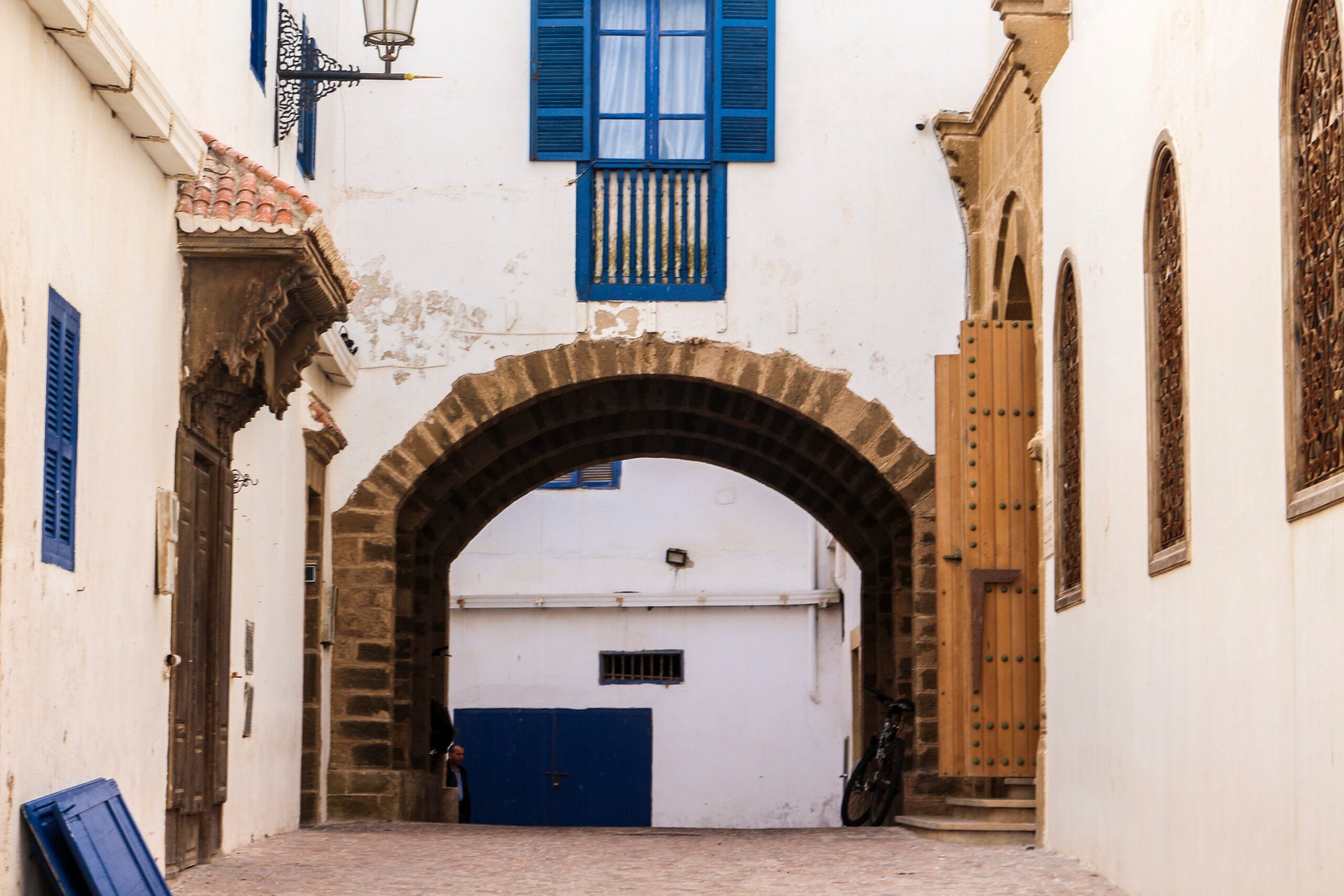
In practice, set aside half a day with no fixed goal. The two main streets cross the medina from end to end and are enough to keep your bearings; everything else is found by stepping a few metres off them. The workshops making marquetry from thuya wood, a local speciality handed down from generation to generation, are concentrated in the vaulted arcades near the ramparts. If you want a souvenir that is genuinely local, this is the place to look, and the craftsmen are usually happy to explain how the wood is cut, polished and inlaid.
The ramparts and the Skala: the viewpoint not to miss
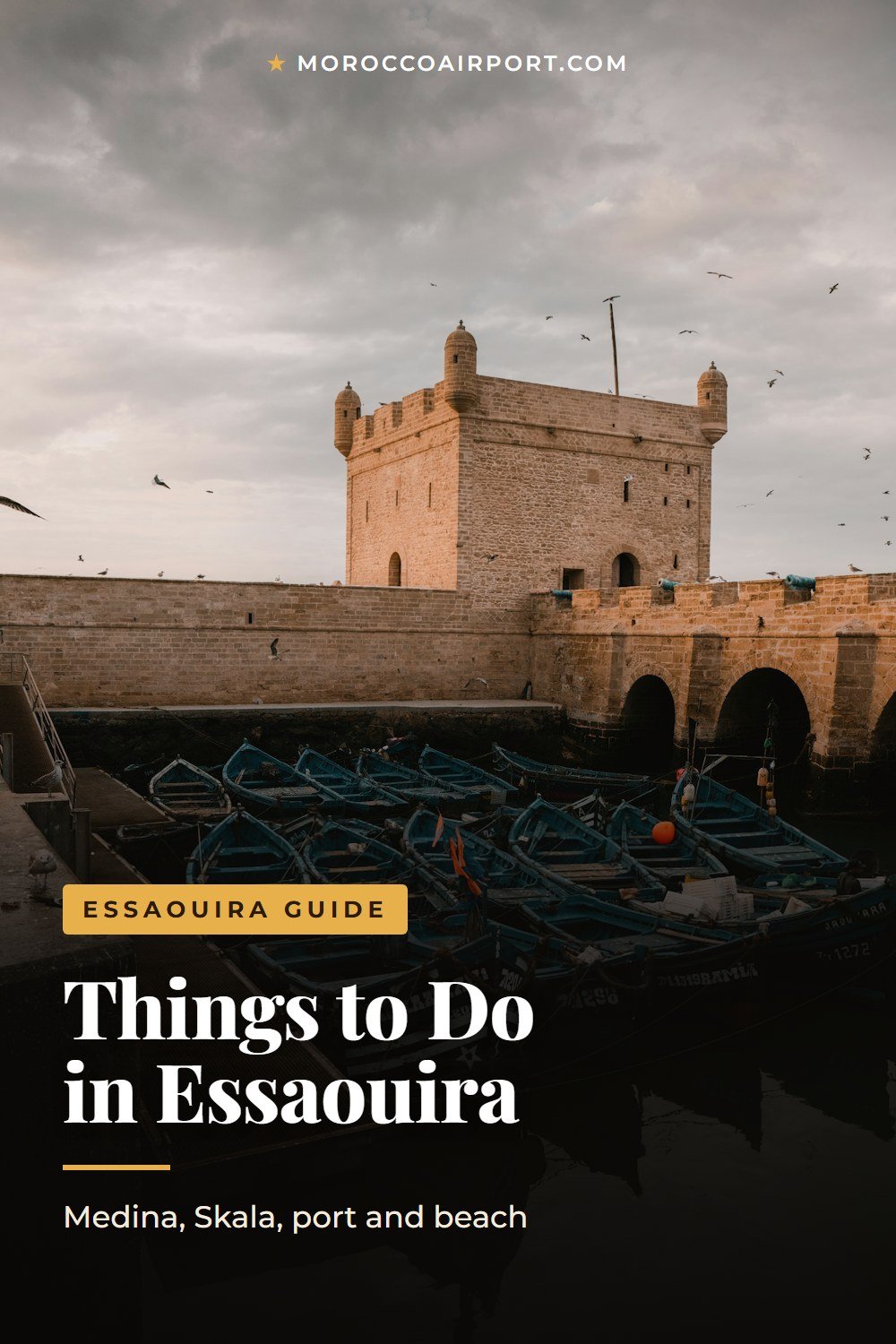
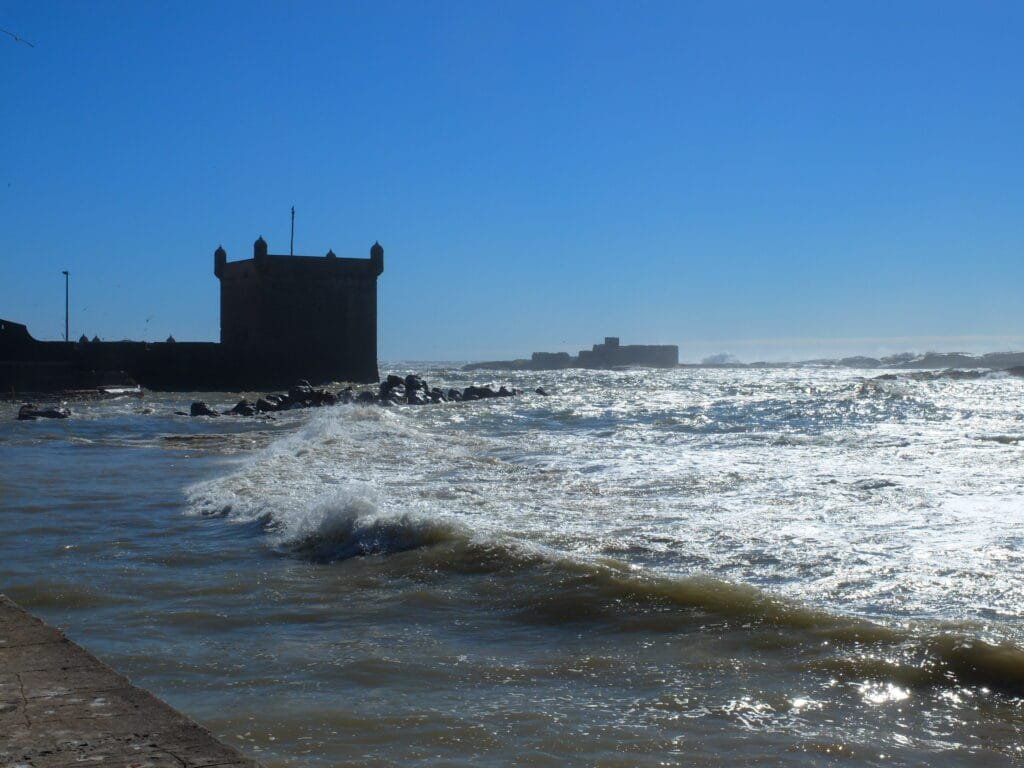
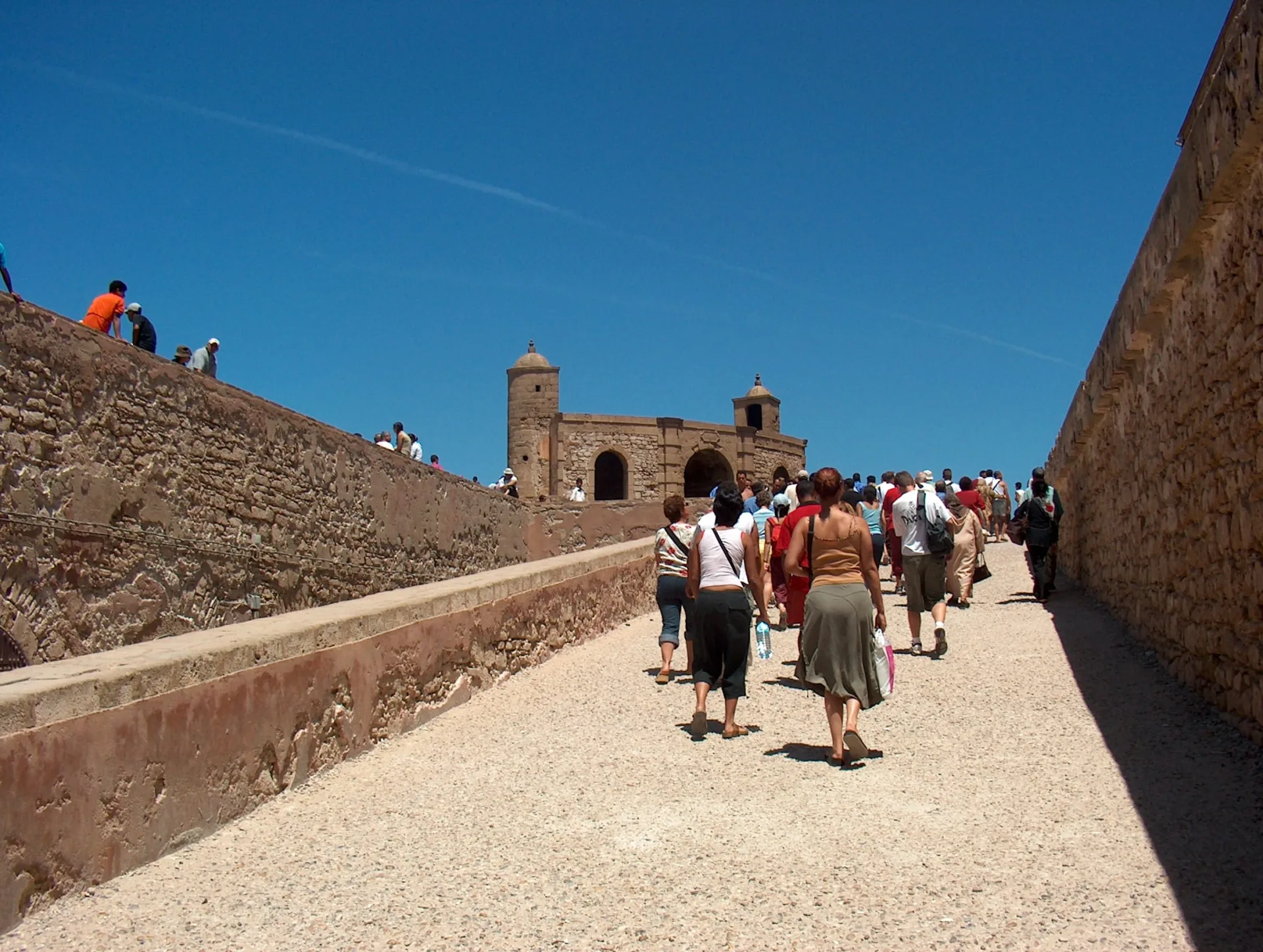
The Skala de la Ville is an artillery platform built along the northern rampart, facing the ocean. You can climb up freely and walk for several hundred metres between old bronze cannons, and the whole town is spread out below you in a single glance: white roofs, blue shutters, gulls, and waves crashing against the wall beneath.
It is the most photographed moment of any stay, and also the windiest. Go in the late afternoon: the low light is better, and the wind often drops a little before sunset. Take a windproof layer and keep a firm hold on your hat.
The fishing port, the liveliest place in town
Essaouira is not a museum town: its port works. The blue boats you see in every photograph are working boats, and the comings and goings of the catch happen for real, every single day. It is noisy, it smells of fish and tar, and that is exactly what makes it the most memorable spot in town.
Two moments are worth the detour: early in the morning, when the boats come in, and in the late afternoon, when the nets are being mended. Between the two, the port is quiet. The open-air grills at the entrance are a local institution. Prices are agreed before you order, as everywhere, and the fish is chosen by the piece, so you can see exactly what you are getting before it goes on the fire.
The beach, the wind and the water sports
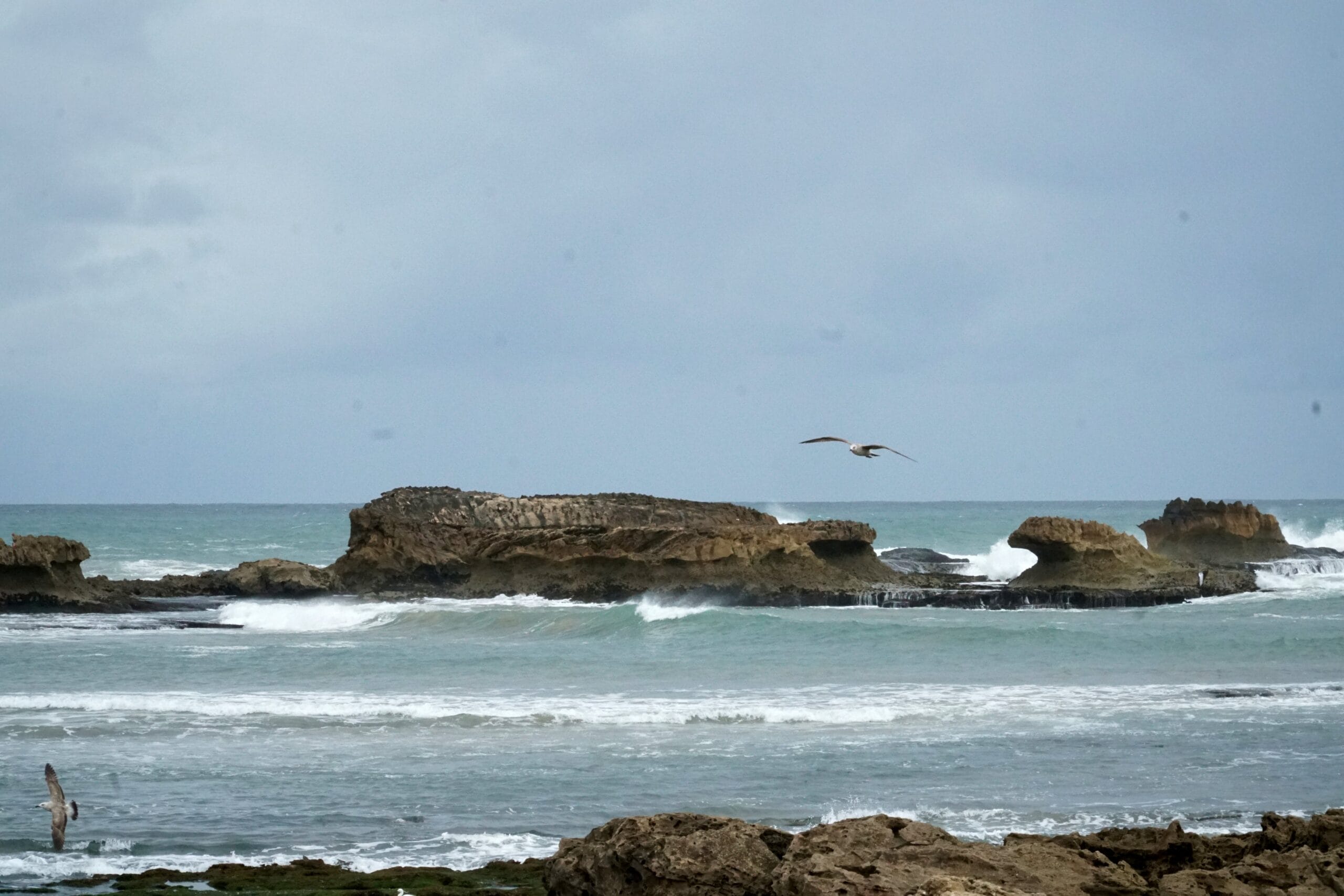
The bay of Essaouira stretches for several kilometres south of the medina. It is a very large sandy beach, easy to reach on foot from the town, but you need to understand what the wind does to it: this is not a sunbathing beach. In the afternoon the trade winds rise almost every day, and the sand flies.
What it is, however, is one of the reference destinations in Morocco for windsurfing, kitesurfing and wing foiling. Schools are set up along the beach and offer lessons and equipment rental. If you search for kitesurf lessons in Essaouira, you will find plenty of choice, so compare what each school includes, such as equipment, insurance and group size, before you book. For a quiet swim, choose the morning, when the air is often calmer.
Swimming at Essaouira beach
Yes, but the Atlantic is cool and the wind picks up in the afternoon, so the morning is the best time for a dip. Swim where other people are swimming, avoid the areas used by kitesurfers, and respect any flags or advice from lifeguards or local people. The same wind that makes swimming less relaxing in the afternoon is exactly what water-sports enthusiasts come for.
How many days to stay in Essaouira
This is the question that comes up most often, and the answer depends on what you are looking for. Essaouira is quick to see and slow to live in. Here is how most stays work out in practice.
| Length of stay | What you see | Who it suits |
|---|---|---|
| One day | Medina, Skala, port, one fish meal | A day trip from Marrakech |
| Two days | All of the above, plus the beach and a sunset on the ramparts | A balanced first visit |
| Three days | Add a kitesurfing taster or a trip out of town | A relaxed break |
| Four days or more | The rhythm of the town, cafés and markets, with no schedule | A return visit or a restful stay |
If you cannot decide between a day trip and a night on the spot, bear in mind that the town changes completely once the day-trip coaches have left. It is the argument most often put forward by people who have stayed overnight. Our guide to Essaouira from Marrakech as a day trip sets out both options.
When to go: wind, temperature and crowds
Essaouira is the climatic exception among Morocco’s tourist destinations. The ocean and the trade winds keep temperatures moderate all year round: it is rarely very hot and rarely very cold. This has two practical consequences.
First, in high summer, when the interior of the country becomes hard going, Essaouira stays comfortable. That is why so many Moroccans spend their holidays here. Second, in spring and autumn the evenings are cool and the wind can catch you out. A windproof jacket is more useful than an extra swimsuit.
| Season | What to expect | What to pack |
|---|---|---|
| Spring | Mild days, cool evenings, wind most afternoons | Light layers and a windproof jacket |
| Summer | Comfortable compared with inland cities, strongest wind in the afternoon | Sun protection, plus a jumper for the evening |
| Autumn | Pleasant, quieter, cool evenings | A windproof jacket and closed shoes |
| Winter | Mild but can be damp and blustery | A waterproof layer and warm clothing |
What to wear in Essaouira
Think in layers. A windproof jacket will probably be the garment you wear most, even in summer. Closed shoes are more comfortable than sandals: the beach sand blows about, and the medina lanes are paved unevenly. Add sunglasses that stay on in the wind and a scarf or hat that you can secure.
To compare the months across the whole country, our guide to the best time to visit Morocco sets the regions side by side.
Things to do in Essaouira with kids
It is one of the easiest Moroccan towns to visit as a family, for three practical reasons. The medina is flat and pedestrianised, so you can use a pushchair on the main streets. Distances are short, so you do not spend the day in transport. And the pressure from sellers is much lower than in the big medinas, which makes walking around far more restful with children.
The port nearly always appeals to young children, provided you go at the right time. The huge beach lets them run about freely. Camel and horse rides offered along the beach are a classic activity; as with any service, agree the price before you get on.
Essaouira at night
The town does not have the nightlife of Marrakech, and that is generally what people come for. The evening falls into three stages: sunset from the ramparts or the beach, dinner, often fish, then the terraces on the main square, where you can stay late without anything speeding up.
Gnaoua music, deeply tied to the history of the town, can be heard all year round in certain venues, not only during the summer festival devoted to it. It is one of the most authentic experiences of a stay, and it often costs no more than the price of a drink.
Getting to Essaouira by air
Essaouira-Mogador airport (code ESU) is about 15 kilometres south of the town. It has a single terminal, it is quiet, and formalities are quick. It receives direct flights from several European cities, mainly on low-cost carriers, with frequencies that vary strongly by season.
| Airline | Departure cities served |
|---|---|
| Ryanair | Beauvais, Charleroi, London Stansted, Madrid, Marseille, Weeze |
| Transavia | Paris-Orly, Nantes |
| easyJet | Bordeaux, Lyon, Nantes |
| Vueling | Barcelona, Seville |
| Air Arabia Maroc | Rabat |
Live departures and arrivals are on our page for Essaouira-Mogador airport, which also lists the services in the terminal, and on the departures and arrivals board.
Flying from the UK and Ireland
For British travellers the picture is simple. According to our route data, the only direct service from the UK is Ryanair from London Stansted, and it is seasonal, so check the current timetable before you commit. There is no direct link from Ireland in our data. Everyone else usually flies to Marrakech, which has a far wider choice from British and Irish airports, and continues by road.
Time is not an issue: since 20 September 2026 Morocco has stayed on GMT all year, so the clocks in the UK and Ireland show the same time as Morocco in winter and one hour more in summer. Remember that the British Global Health Insurance Card does not cover Morocco, so take out proper travel insurance, particularly if you plan water sports.
Getting there from Marrakech by road
This is by far the most common route. The road links the two cities across a plain of argan trees, and the journey is made by coach, long-distance taxi or private transfer. The coach is the cheapest and most used option; a private transfer has the advantage of leaving straight from the arrivals hall if you are connecting from a flight.
If you land in Marrakech and head straight to Essaouira the same day, our guide to the transfer from Marrakech airport to Essaouira compares the options, the journey times and what to watch for on the way. To compare all the alternatives across the country, see our airport transfers comparison.
Getting around once you are there
The short answer is on foot. The medina is pedestrianised, the beach is at the end of the avenue, and the port touches the ramparts. A car is more of a handicap than an asset in the centre; if you have one, it will stay parked.
The small blue taxis cover trips to the airport, the outer districts and the beaches to the south. As anywhere in Morocco, agree the price before you get in or ask for the meter. For the general rules on arrival, money and luggage, our guides to money in Morocco and to taxis and Uber in Morocco cover the essentials.
Around Essaouira: what is worth the journey
The coast south of the town is lined with much quieter beaches, reached by taxi or on a half-day excursion. Inland, argan oil cooperatives dot the road to Marrakech; the region is one of the cradles of this production.
A few kilometres to the north, the mouth of the river and the dunes make a very different walk from the town. And if you have a whole day free, heading up the Atlantic coast lets you string together several fishing villages without ever leaving the ocean.
Where to stay: in the medina or by the sea
This is the choice that shapes the whole stay, and the two options suit different travellers. Sleeping in the medina means being within walking distance of everything: you step out of the door and you are already in the town. Traditional houses there are built around a patio, often on three floors, with a roof terrace. The downside is that the lanes are pedestrianised, so you carry your luggage on the last stretch, sometimes for a few hundred metres.
Sleeping by the sea, along the bay, is the opposite: direct access by car, views of the ocean, more space, but about ten minutes’ walk to reach the medina. It is the choice of most families and water-sports fans, who have equipment to carry.
One practical point that is often overlooked is the wind. Terraces facing due west, wonderful in photographs, can be unusable in the afternoon. If a terrace matters to you, ask about its orientation and whether there is a windbreak. If you are looking for a riad, remember that a room on the roof level will be the most exposed.
Eating in Essaouira: what is local and what is not
The town lives off fish, and that is what you should eat here. Three styles coexist, very different in price and atmosphere.
First, the port grills: open-air stalls at the entrance to the harbour where you pick your fish by the piece before it is grilled in front of you. It is the most direct experience, as long as you agree the price and the quantity before sitting down, which is the custom rather than excessive caution.
Second, the restaurants of the medina, which range from small family places to refined tables set in an old house. Finally, the terraces of the main square, handy for a quick meal or a tea, more touristy but well placed for watching the town go by.
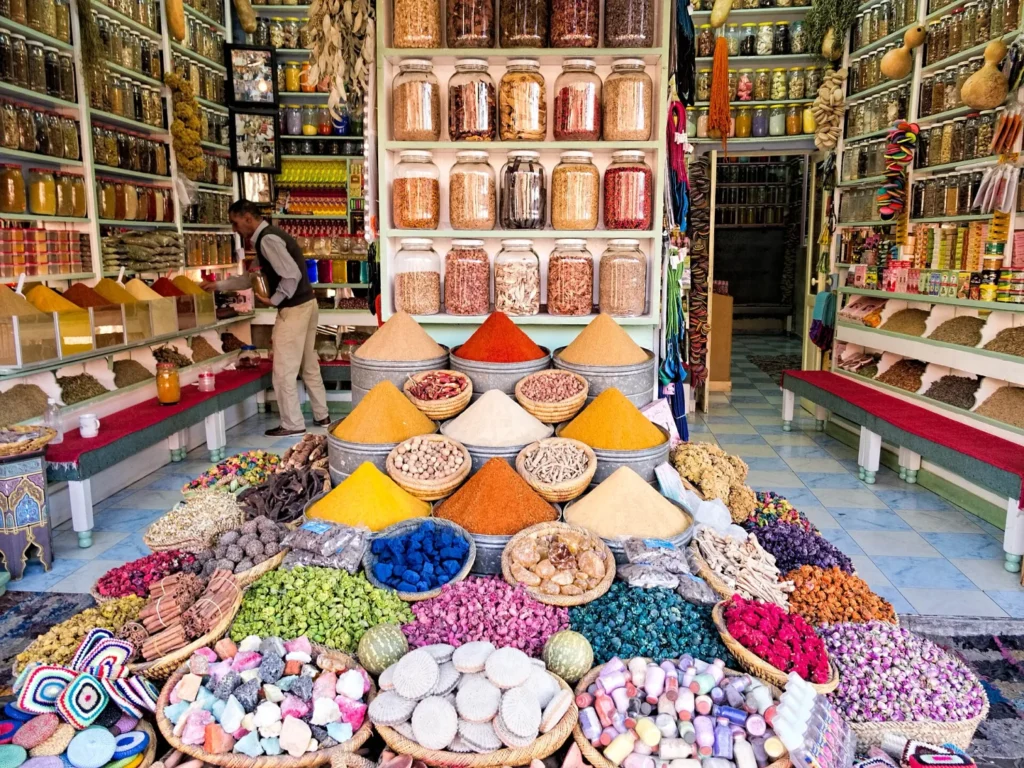
As for specialities, look for simply grilled fish, sardines, and the culinary argan oil produced in the region, not to be confused with the cosmetic oil, which is pressed differently. The spice market in the medina is the easiest place to bring some home.
Combining Essaouira with another stop
Essaouira slots naturally into a circuit because it lies between two major tourist hubs. The table below sums up the most common combinations and what they involve in practice.
| Combination | Usual transport | Good to know |
|---|---|---|
| Marrakech to Essaouira | Coach, long-distance taxi or private transfer | The busiest route, several departures a day |
| Essaouira to Agadir | Coach along the coast | Lets you continue south without going back through Marrakech |
| Essaouira to Casablanca | Coach, or a flight via another airport | A long road journey: flying can be justified |
| Open-jaw Marrakech and Essaouira | Arrive and depart from two different airports | Avoids driving the same road in reverse |
The last arrangement deserves a closer look. Landing in Marrakech and flying home from Essaouira, or the other way round, removes a pointless round trip. Most booking engines allow it without a significant extra cost, and it turns a loop into a straight line. If you would rather add a bigger city afterwards, our guides to things to do in Agadir and things to do in Marrakech will help you plan the next stage, and the getting around Morocco guide explains how trains, coaches and flights fit together.
Essaouira also makes a good counterpoint to the other destinations in this series. The capital offers a calm, heritage-rich contrast on the same Atlantic coast: see things to do in Rabat. If you want kasbahs and film studios instead of sea air, things to do in Ouarzazate covers the gateway to the south. And for a windier, wilder version of the same ocean, far to the south, there is things to do in Dakhla.
Before you go
Three things are best sorted out from home. First, entry formalities: the document required, passport validity, length of stay allowed. Second, money: the dirham cannot be bought in decent conditions in the UK, so withdraw on arrival, starting with a small amount. Third, luggage, if you are flying with a low-cost airline, where the cabin bag rule is strict and charged at the boarding gate.
Two points specific to Essaouira come on top. A windproof jacket, even in summer, which will be the garment you use most. And closed shoes: the beach sand blows about, and the lanes of the medina are unevenly paved. Our guides to the visa and entry requirements for Morocco and the cabin baggage rules cover the first and third points in detail.
Is Essaouira safe?
Essaouira is generally regarded as one of the more relaxed towns for visitors. The usual common-sense precautions apply, as in any busy place: keep an eye on your bag in crowded spots, agree prices before you take a service, and be prudent in the water. For an overview of the official advice, see our guide on whether Morocco is safe.
Frequently asked questions about Essaouira
Is Essaouira worth a day trip from Marrakech?
Yes, especially if you want a contrast. The atmosphere, the climate and the pace have nothing in common with Marrakech, even though the road is relatively short. It is one of the few Moroccan towns where you can spend a whole day without being rushed.
How long does it take to see the medina?
Half a day is enough to go round it without hurrying, ramparts included. It is much smaller and easier to read than the medinas of Fes or Marrakech, and its regular plan makes it hard to get lost.
Can you swim in Essaouira?
Yes, but the Atlantic water is cool and the wind rises in the afternoon. The morning is the best time for a swim. For water sports, it is the reverse: the afternoon wind is exactly what kitesurfers and windsurfers are looking for.
Does Essaouira have an airport?
Yes, Essaouira-Mogador (ESU), about 15 kilometres south of the town. It has direct flights from Europe, including Ryanair from London Stansted, Transavia and easyJet, with a very seasonal timetable. Many travellers still arrive via Marrakech.
Do you need to hire a car to visit Essaouira?
Not for the town itself, which you cover on foot. A car is only useful if you plan to explore the coast to the south or to link Essaouira with another stop in the country.
Is Essaouira a good choice for a first trip to Morocco?
It is one of the best gateways. The medina is easy to read, distances are short, the pressure from sellers is moderate and the climate stays temperate. Many travellers recommend it as a first stop before a big city.
What should you wear in Essaouira?
Layers. A windproof jacket is the most useful item at any time of year, along with closed shoes for the sand and the uneven lanes, and sunglasses that stay on in the wind.
Are there things to do in Essaouira when it rains?
Rain is not the norm, but the medina offers shelter: thuya workshops, cafés, small galleries and restaurants can fill a damp afternoon. Keep a waterproof layer for the winter months, and do not expect the ramparts to be pleasant in a gale.
In summary
Essaouira comes down to a listed medina you can walk without a map, ramparts facing the ocean, a fishing port that still works and a beach made for the wind. Two to three days cover the town comfortably; beyond that, people stay for its rhythm. Arrive with one more layer than you think you need, visit the port early in the morning, keep the ramparts for the end of the afternoon, and choose between the direct flight and the road from Marrakech according to the season.
Sources
Listing of the medina of Essaouira as a World Heritage Site: UNESCO World Heritage Centre. The air services mentioned come from our database of regular routes, updated continuously; frequencies vary by season and should be checked with the airlines.
Image credits
Photos: Mounir Neddi (CC0), AlexandrDmitri (CC BY-SA 3.0) and Adam Harangozó (CC BY-SA 4.0), via Wikimedia Commons.