Few guides take things to do in Oujda seriously, and that is exactly what makes the city interesting. The capital of the Oriental region, in the far east of Morocco, is a large university and market town founded more than a thousand years ago, which international tourism has largely ignored. You will find a living medina, historic gates, a recognised musical tradition and, above all, a central position for exploring a little-known corner of the country: the beach at Saidia, the Beni Snassen mountains and the Zegzel gorges. This guide covers what to see in the city and around it, how the journeys work and what the weather is like.
In short
- History: Oujda was founded at the end of the tenth century and is one of the oldest towns in eastern Morocco.
- The medina is small, lively and very little visited by tourists, so you can wander without being pestered to buy.
- Bab Sidi Abdelwahab is the city’s emblematic gate, opening on to the central square.
- Sidi Yahya oasis, a few kilometres away, is a shaded palm grove that doubles as an old place of pilgrimage.
- Saidia and its fourteen kilometres of beach lie about an hour’s drive to the north.
- The Zegzel gorges and the Beni Snassen offer the finest scenery in the region, towards Berkane.
- Music: Oujda is a cradle of rai, the genre born in this border region.
- Time: two days are enough for the city, four to five with the coast and the mountains.
- The airport is about twelve kilometres to the north, with many European routes but no direct flight from the UK or Ireland.
- The land border with Algeria is closed, and every itinerary must allow for that.
Where Oujda is, and what that means
Oujda sits on a plain in the far east of the country, some sixty kilometres from the Mediterranean and close to the eastern frontier. That position has shaped its history: a staging post on the caravan routes, a market town and then a large administrative city. Today it is the regional capital of the Oriental and home to an important university.
One practical point to know before you plan a route: the land border with Algeria has been closed since the 1990s. No road crossing is possible from Oujda towards the east. Travellers who want to visit both countries have to fly via a third country, and overland itineraries are organised only towards the west and the north.
The medina and its gates
The medina of Oujda is modest in size but very much alive. It works first of all for its own residents: you will find food markets, haberdashers and workshops, and very few shops aimed at visitors. If you have already walked through Fes or Marrakech, the contrast is striking. Nobody calls out to you and you can move around freely.
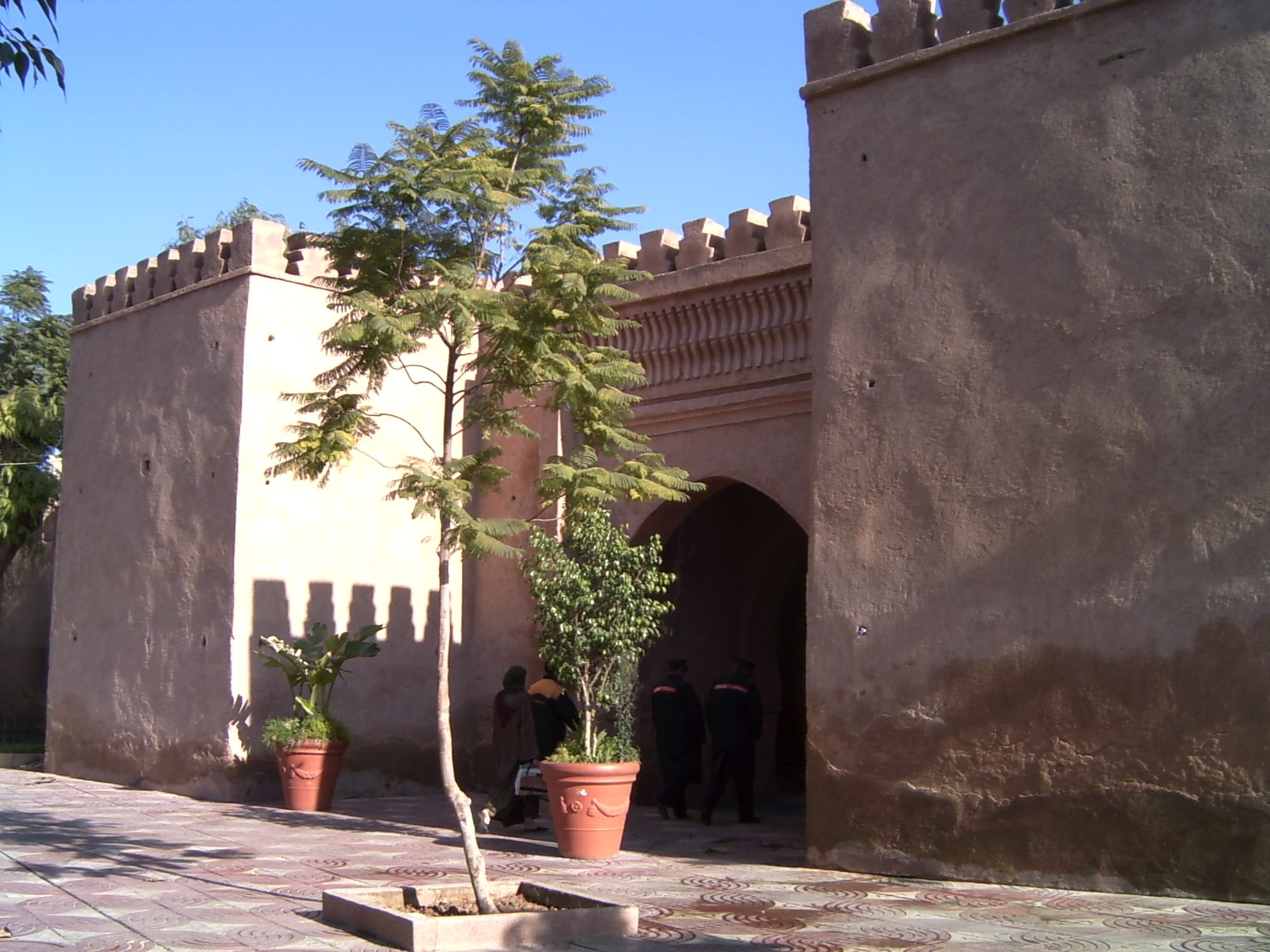
The gates are the main reference points. Bab Sidi Abdelwahab, the best known, opens on to the large square and marks the traditional entrance to the old town. Bab El Gharbi, to the west, and several other openings punctuate the walls. The great mosque, of medieval origin, stands at the heart of it; as everywhere in Morocco, the interior is not open to non-Muslim visitors, but you can admire the outside and the minaret from the lanes.
If shopping is on your mind, people often search for the Oujda medina souk. It is a working market rather than a souvenir bazaar, so expect everyday goods, food and fabrics at local prices, not stalls built for tourists.
The central square and the modern city
In front of the medina lies the large square that acts as Oujda’s centre of gravity. Cafés, terraces, kiosks and tree-lined paths make it the place where the city gathers, above all in the late afternoon. Around it the modern town unrolls its straight avenues, its administrative buildings and its shops.
Lalla Aicha Park, south of the centre, offers welcome breathing space: gardens, ponds and playgrounds. It is the kind of place where you realise that Oujda is above all a town where people live, not one that people visit.
Sidi Yahya oasis
A few kilometres east of the centre, a palm grove fed by springs forms an unexpected urban oasis in an otherwise dry landscape. The site holds a very old shrine that has drawn pilgrims for a long time, and the whole area is a favourite family stroll at weekends.
For the visitor the appeal is twofold: shade and coolness, precious in summer, and the contrast with the arid plain around the town. Allow one to two hours, and prefer the morning or the end of the day.
Saidia: the region’s big beach
This is the most popular outing from Oujda. Saidia lines up about fourteen kilometres of fine sand on the Mediterranean, an hour’s drive to the north. For a long time just a local seaside resort, it now has a marina and a cluster of hotels that make it one of the main beach destinations of north-eastern Morocco.
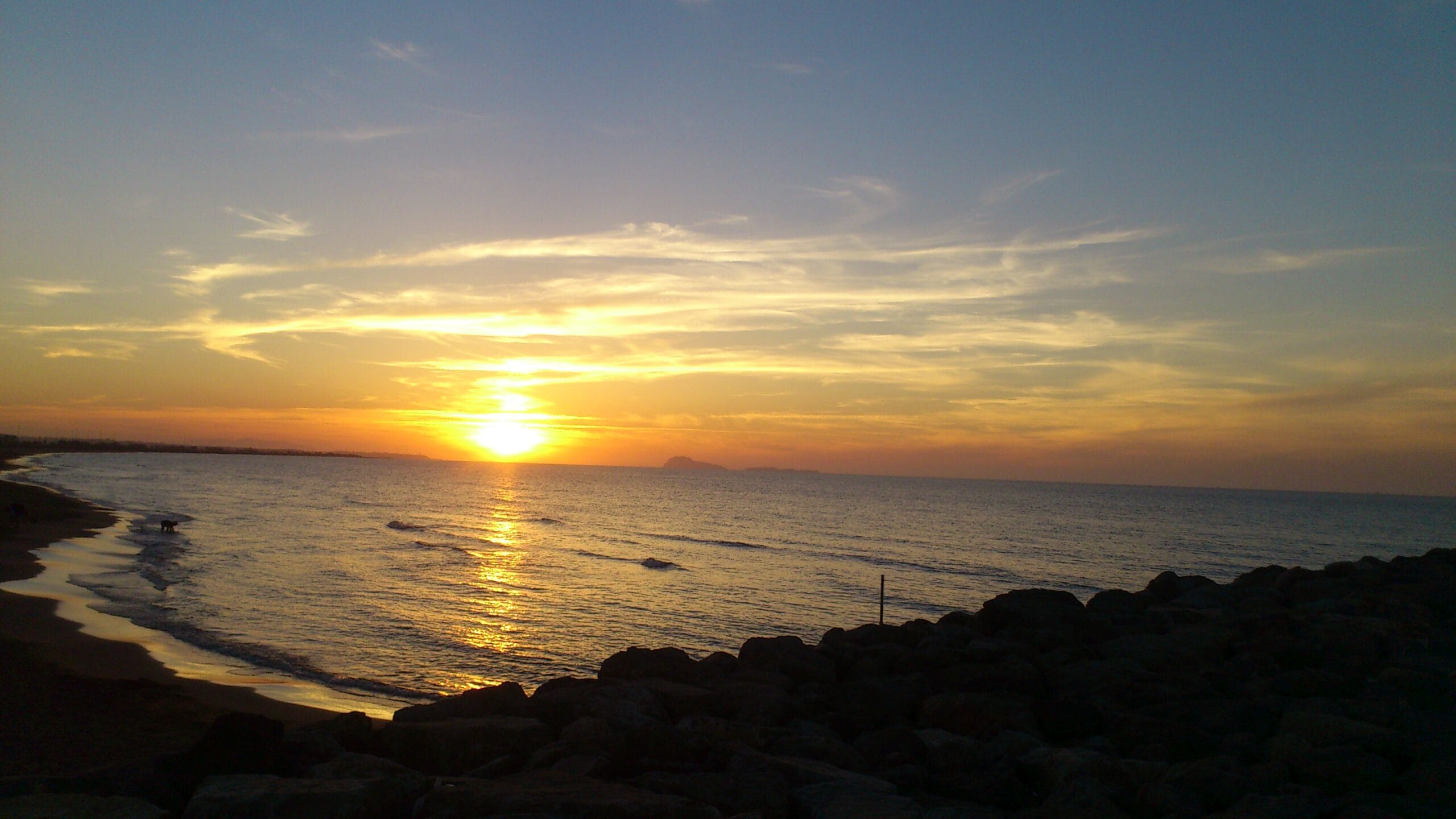
The beach is very wide and gently sloping, which makes it comfortable with children. In July and August it is packed; in June and September the sea is still good and there is plenty of space. Out of season the resort falls almost completely quiet, which some will enjoy and others will find deserted. If you are searching for the Saidia weather, the same pattern applies as along the rest of this coast: warm and dry in summer, mild and showery in winter.
The Zegzel gorges and the Beni Snassen
This is the most remarkable landscape in the region, and it remains little visited. North-west of Oujda, towards Berkane, the Beni Snassen massif is cut by the Zegzel gorges: a narrow road follows the valley floor between limestone walls, through cultivated terraces, olive trees and citrus orchards.
Along the way, the cave known as the Camel Cave, formed of mineral deposits, can be visited at certain times of year. Higher up, the village of Tafoughalt sits on a balcony overlooking the plain, and the air is noticeably cooler than below. Plan a full day from Oujda, and be aware that a car is essential. Drive carefully: the road is narrow and the bends are tight.
Oujda and rai music
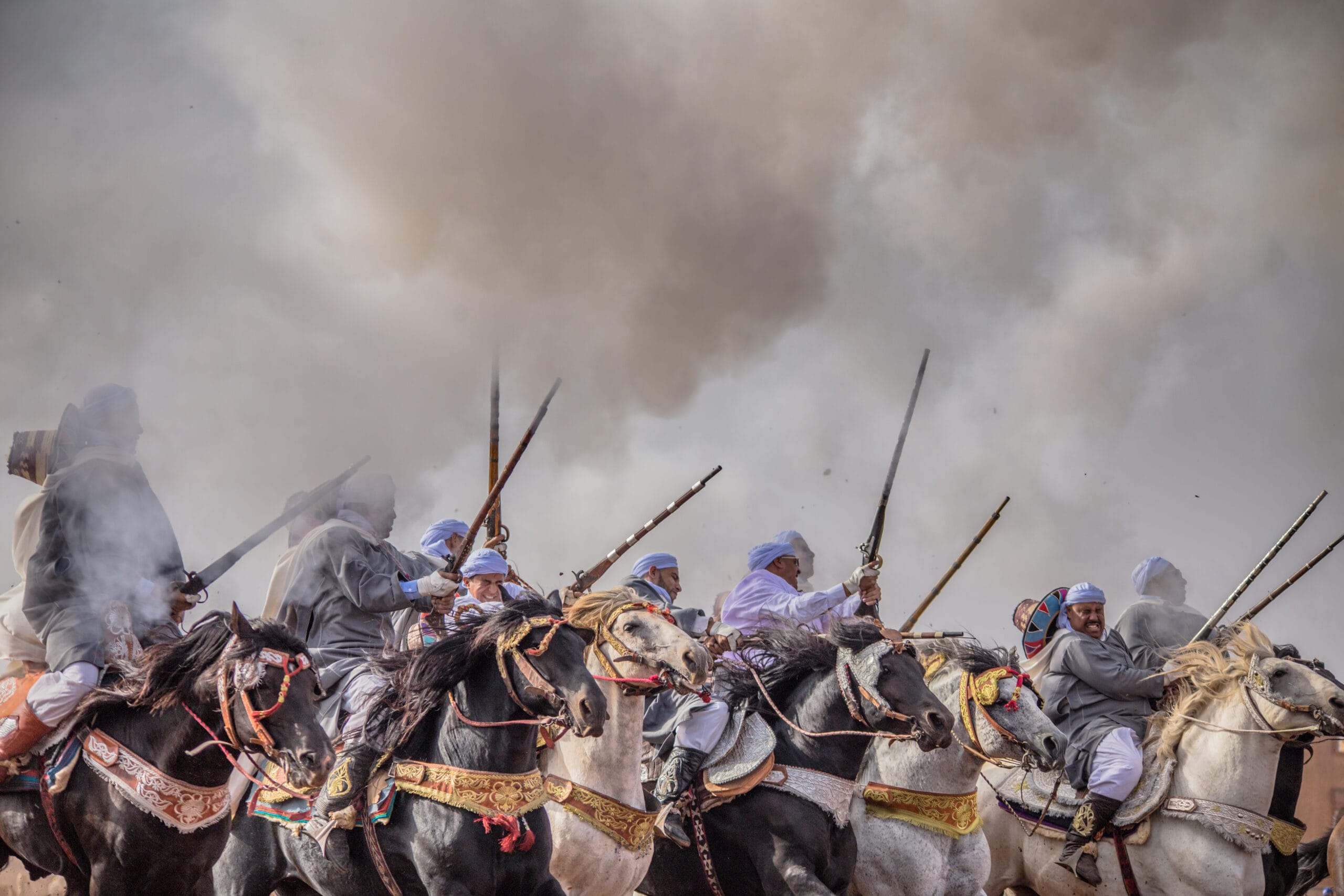
The border region of the east played a central part in the birth and spread of rai, a popular musical genre that has become international. Oujda is one of its recognised homes, and the city claims that heritage through its venues, its festivals and a local scene that is still active. For a visitor it is an interesting way into an urban culture that has nothing to do with the usual tourist image of Morocco.
Find out what is on during your stay: concerts do not follow a regular calendar, but the summer season is generally the richest.
Berkane and the citrus plain
Between Oujda and the sea stretches the Trifa plain, irrigated by the Moulouya, one of the longest rivers in the country. It is the great farming region of the Oriental, given over largely to citrus, and the town of Berkane is its centre. In spring the orange blossom scents kilometres of road; in autumn and winter the stalls are heaped with fruit.
The plain is crossed naturally on the way to Saidia, and it deserves a stop. The mouth of the Moulouya, protected for its ecological value, holds a wetland used by many birds, and the contrast between irrigated fields, dunes and sea gives a fair idea of the variety of this region.
Hammams and neighbourhood life
Because Oujda sees few tourists, daily habits remain those of an ordinary Moroccan city, which is exactly what some travellers are looking for. Neighbourhood hammams, communal bread ovens and street cafés still structure everyday life. The prices are those paid by residents, with no separate scale for visitors.
Two tips to enjoy it without a slip. Check the opening hours, since establishments generally alternate between men’s and women’s sessions through the day. And bring your own toiletries: unlike the places in the tourist quarters of the big cities, nothing is supplied by default.
Oujda in one day: an itinerary that works
If you only have one day, start early in the medina, before the heat builds and while the markets are working. Enter through Bab Sidi Abdelwahab, let the shopping lanes carry you along, then come out on the side of the great mosque. An hour and a half is enough, and it is when the city is at its liveliest.
Follow with the main square and a coffee on a terrace, then head for Sidi Yahya oasis in the middle of the day: the shade of the palms makes the hot hours bearable, and the site can be covered without effort. Come back to town late in the afternoon for Lalla Aicha Park, then finish on the square, which becomes much livelier at dusk.
This order has one advantage: it puts the two outdoor moments with no shade, the medina and the square, at times when the sun is low, and the palm grove at the moment when it is most useful. Reversed, the same programme becomes a trial from May to September.
How many days to spend in Oujda
| Length of stay | Realistic plan | Best for |
|---|---|---|
| 1 day | Medina, central square, Sidi Yahya oasis | A stopover between two flights |
| 2 days | The city, plus a day at Saidia | A first visit |
| 4 to 5 days | Add the Zegzel gorges, Berkane and the coast | A full discovery of the Oriental |
| Base for a longer stay | Day trips towards Nador and the eastern Rif | Travellers with a car |
Oujda weather: when to go
The climate of Oujda is much more continental than that of the coastal cities: summers are hot and dry, winters cool with cold nights. The gap between day and night is large all year round. That is why searches for the Oujda weather in December and winter are so common, and the answer is to pack warm layers for the evenings.
| Period | Conditions | Good to know |
|---|---|---|
| March to May | Mild, green countryside, citrus in flower | The best time for the mountains |
| June to August | Hot and dry in town | Good for Saidia, heavy in the medina at noon |
| September and October | Pleasant, the sea is still warm | An excellent compromise between city and beach |
| November to February | Cool by day, cold at night | Bring warm clothes, showers are possible |
For other regions and months, our best time to visit Morocco guide compares the whole country.
Flying to Oujda
Oujda-Angads Airport lies about twelve kilometres north of the city. It has an important place in the Moroccan network thanks to its links with western Europe, where a large community with roots in the Oriental lives. For the day’s flights, check the live Oujda departures and arrivals page.
Our Oujda-Angads Airport guide details the services, access roads and layout of the terminal, and our page on Oujda airport restaurants lists the options before boarding. The airport is about fifteen to twenty minutes from the centre by road, depending on traffic, and taxis meet the flights.
| Airline | Examples of cities served from Oujda |
|---|---|
| Royal Air Maroc | Casablanca, Paris, Brussels, Dusseldorf, Rotterdam |
| Ryanair | Agadir, Marrakech, Tangier, Barcelona, Charleroi, Marseille, Toulouse, Weeze, Beauvais |
| Air Arabia Maroc | Rabat, Brussels, Charleroi, Barcelona, Murcia, Lille, Lyon, Marseille, Montpellier, Paris |
| Transavia and TUI fly Belgium | Paris-Orly, Lyon, Nantes, Rotterdam, Brussels, Antwerp, Eindhoven, Lille |
| Air Nostrum | Lisbon and Porto |
From the UK and Ireland
None of the airlines in our route records flies nonstop between the UK or Ireland and Oujda. You will need to connect, and the hubs on the Oujda network are Casablanca, Brussels, Barcelona and Paris. If you buy the legs on separate tickets, leave a long margin, because a missed connection is then your problem. Our guide to direct flights to Morocco from the UK shows what flies nonstop from British airports if you would rather land elsewhere in Morocco and continue by air or train.
On the clock: since 20 September 2026 Morocco has been on GMT (UTC+0) all year, with no change in Ramadan. For travellers from the UK and Ireland that is the same time as at home in winter, and one hour behind you in summer. Times on airport boards are Moroccan local time, so the question of the time in Oujda has the same answer as everywhere else in the country.
Reaching Oujda by road or train
Oujda is the terminus of the east-west railway, linked to Fes, Meknes, Rabat and Casablanca. The journey is long but comfortable, and the night train is a popular way to cross the centre of the country. By road, allow about two hours from Nador and an hour from Berkane. The roads are good and the signing is clear. For fares and timetables across the network, see our guide to getting around Morocco.
| Journey from Oujda | How | What to expect |
|---|---|---|
| Saidia | Big taxi, road services in season, or car | About one hour to the north |
| Berkane | Road | About one hour |
| Nador | Road | About two hours |
| Zegzel gorges and Tafoughalt | Car, essential | A full day, narrow road and tight bends |
| Fes, Meknes, Rabat, Casablanca | Train | A long but comfortable journey, with a night train |
Getting around: taxis and car hire in Oujda
In town, small taxis cover most journeys and the centre can be explored on foot: the medina, the square and the park are neighbours. For Saidia, big taxis leave from a dedicated station, and road services run in season. For the Zegzel gorges and the Beni Snassen, however, a car is practically essential: no regular service takes you properly into these valleys.
Many people look up car hire at Oujda airport before they travel. Our guide to car rental at Morocco’s airports explains how to compare offers and what to check at the desk, and our page on taxis and Uber in Morocco covers fares and how to avoid disputes.
Where to stay in Oujda
Oujda has a hotel offer aimed at business customers and at the diaspora more than at leisure tourism. The city centre holds most of it, with the advantage of being right next to the medina and the cafés. If your stay is built around the beach, stay directly in Saidia: the daily round trip from Oujda is two hours of driving.
Eating in Oujda
The cuisine of the Oriental has much in common with the rest of the country, but the region has its own specialities: grilled meat dishes, thick soups and bread baked in the neighbourhood oven. The stalls of the medina market are the best place for a straightforward tasting in the middle of the day. The avenues of the centre also offer plenty of grills and everyday restaurants.
Worth noting: the citrus fruit of the nearby Berkane plain is famous across the country. In season, the freshly pressed juices sold in town are well worth the detour.
Mint tea is drunk here as everywhere in Morocco, but the region also has a tradition of herbal infusions made from mountain plants gathered in the Beni Snassen, sold by the herbalists in the market. Ask for advice instead of choosing at random: the blends vary greatly and some are very concentrated. With citrus and local honey, it is one of the few genuinely local edible souvenirs you can bring home from Oujda.
Things to do in Oujda with children
The city offers few attractions designed for children, but Lalla Aicha Park, with its playgrounds and ponds, fills that role well. The real answer lies outside: Saidia, with its very flat beach, suits small children perfectly, and Sidi Yahya oasis offers a short shaded walk. The Zegzel gorges, by contrast, mean a long day in the car that is not well suited to the youngest.
Combining Oujda with another stop
Two itineraries work well. To the north and west, the loop through Berkane and Saidia, then things to do in Nador and the Rif coast, gives a coherent coastal circuit over four to six days. To the west, the train to Taza and Fes carries you from the Oriental to the imperial cities. If you want a total contrast with this dry, continental region, the Atlantic coast has a quite different climate: see our guide to Essaouira, or head far south to Laayoune.
The most common mistakes
- Expecting an imperial city. Oujda has neither the monuments of Fes nor the souks of Marrakech, and judging it on those terms means missing the point.
- Staying in town without a vehicle. The three finest sites in the region are outside.
- Planning an overland crossing to the east. It is impossible while the border stays closed.
- Underestimating the swing in temperature. The gap between day and night regularly surprises visitors in autumn and winter.
Frequently asked questions about Oujda
Is Oujda worth visiting?
Yes, as long as you are looking for something other than monumental heritage. The city offers an authentic medina with no commercial pressure, real urban life and, above all, easy access to Saidia, the Zegzel gorges and the Beni Snassen, three remarkable and little-visited places.
How long does it take to get from Oujda to Saidia?
About an hour by road to the north. Big taxis run the link, and the service picks up in the summer season. For a beach stay it is more comfortable to sleep there than to make the round trip each day.
Can you cross into Algeria from Oujda?
No. The land border has been closed since the 1990s and no road crossing is possible. Travellers who wish to visit both countries must fly via a third country and plan their itinerary accordingly.
What is the best time to visit Oujda?
Spring, from March to May, for the city and especially for the mountains, when the countryside is green. September and October are an excellent compromise if you combine the city and the beach, because the sea stays warm at that time.
Does it snow in Oujda?
Winters are cool with cold nights, so bring warm layers. Snow in the city itself is not something to plan a trip around, and the forecast for your dates is the only reliable guide.
How far is the airport from the centre of Oujda?
About twelve kilometres north of the city, or fifteen to twenty minutes by road depending on traffic. Taxis run continuously when flights arrive.
Do you need a car to explore the region?
Not for the city. For Saidia, big taxis are enough. For the Zegzel gorges, Tafoughalt and the Beni Snassen, a car is practically essential, because these valleys are not served in a way a visitor can use.
Is there a direct flight from the UK to Oujda?
Not in our route records. From the UK or Ireland you connect via a hub such as Casablanca, Brussels, Barcelona or Paris. Frequencies change by season, so check the live departures and arrivals page for your dates.
In summary
Oujda is a city where people live more than a city you visit, and that is its interest: a medina without pressure, a lively square and an oasis a few kilometres away. The real programme lies around it, between the fourteen kilometres of sand at Saidia and the Zegzel gorges. Allow two days for the city, four to five with the region, hire a car and aim for spring or early autumn.
Sources
Historical and location background: Encyclopaedia Britannica, Oujda. Airport information: ONDA, Morocco’s airports authority. The air services mentioned come from our continuously updated record of scheduled routes; frequencies vary by season and must be checked with the airlines.
Image credits
Photographs of Bab El Gharbi, the beach and marina at Saidia and the tbourida in Oujda: via Wikimedia Commons, under the licences stated on each file page.