Things to do in Al Hoceima can be summed up in one sentence: come for the coast. Backed by the Rif and open to the Mediterranean, the town has one of the finest shorelines in Morocco, with limestone cliffs dropping straight into very clear water, coves reached by tracks, and a national park that protects a good part of the coast. Yet it remains discreet on tourist maps, visited mostly by Moroccans and by the diaspora in summer. This guide brings together what to see, when to come, how long to stay and how to organise the trip, including how to get there from the UK and Ireland.
In short: Al Hoceima at a glance
- National park: Al Hoceima National Park protects a coastline of cliffs and coves, among the most remarkable in the country.
- Quemado beach: it lies in town, in a bay framed by hills.
- Cala Iris and Badis: to the west, they rank among the finest spots on the Rif coast.
- The town: founded in the 1920s, it has no old medina.
- Relief: hills are everywhere, the town is built on slopes and viewpoints multiply.
- How long: three to four days are enough to see the town and the main coves.
- Season: summer is very busy, especially in July and August.
- Airport: about 20 kilometres east of town; our route data shows no direct flight from the UK or Ireland.
- Car: essential to reach the coves in the park.
- Language: Tarifit, the Berber language of the Rif, is the most widely spoken in the region.
Where Al Hoceima is
Al Hoceima occupies a bay on the Mediterranean coast in the north of Morocco, between Nador to the east and Tetouan to the west. The Rif mountains drop directly into the sea here, which gives the coastline its character: few plains, many cliffs, and access to the water that is often indirect.
This geography isolated the region for a long time, and it still explains the journey times today: the coast roads are superb but slow. It also explains why so much of the shoreline has been preserved, as it is hard to build on along long stretches.
Al Hoceima National Park
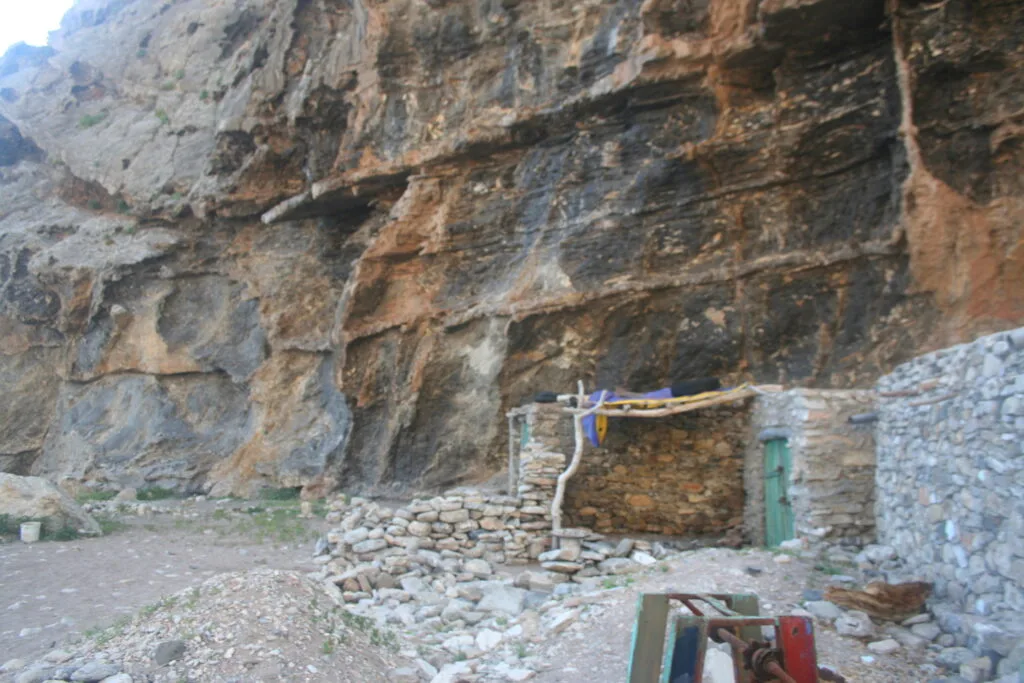
Created to protect a combined land and marine area, the park extends west of the town along several tens of kilometres of coast. It brings together limestone cliffs among the highest on the Moroccan Mediterranean, sea caves, islets and a hinterland of scrub and thuja forest.
It is also an important area for wildlife: ospreys nest here, cetaceans visit the waters offshore, and the flora includes several remarkable species. Seagrass meadows and the clarity of the water make it a favourite for diving and snorkelling.
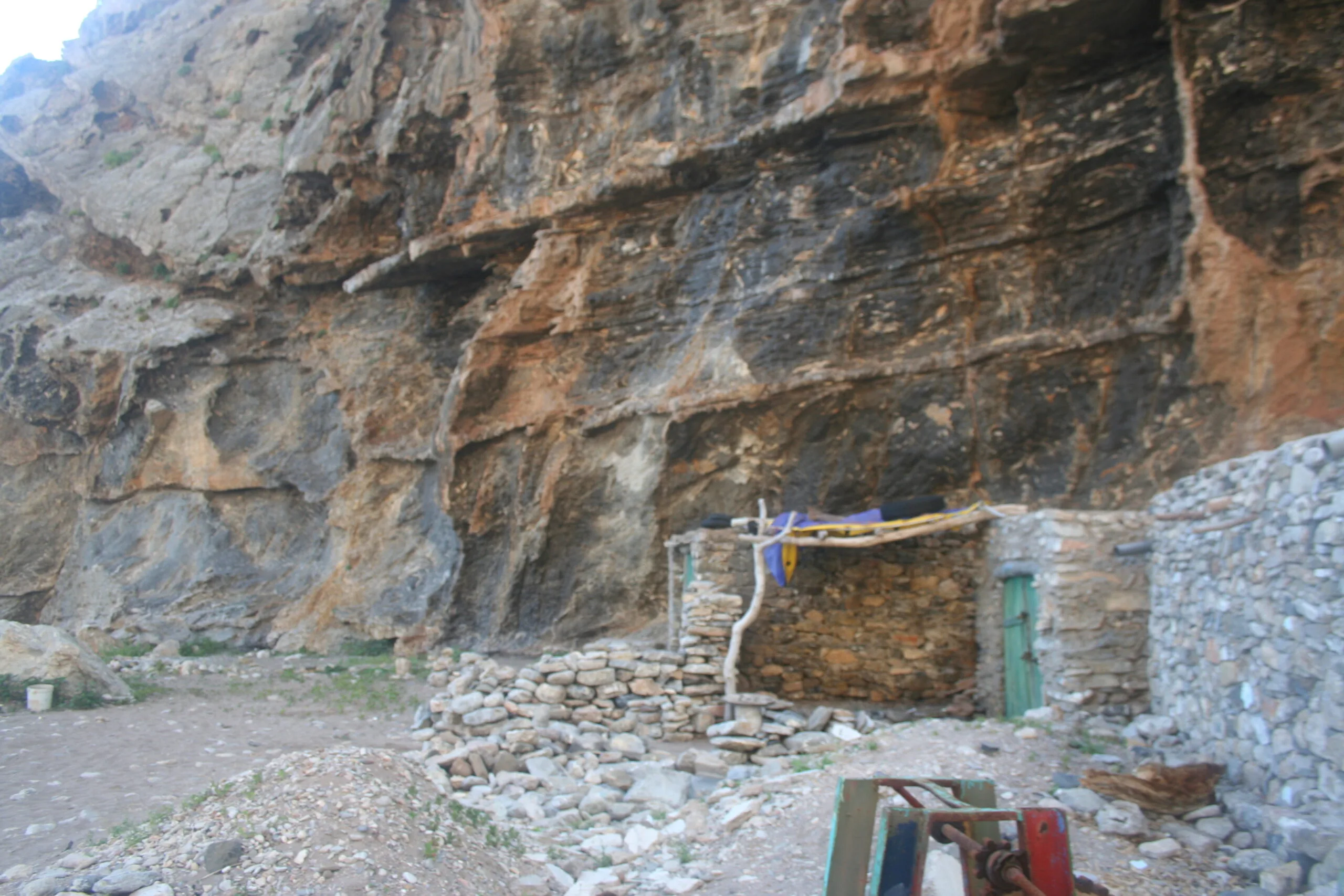
In practice, you visit by the coast road, stopping at viewpoints and walking down to the accessible coves. Several viewpoints are on the cliff edge with no safety barrier: approach the edge with care, especially in strong wind.
Quemado beach and the bay
This is the town beach, set in a bay framed by hills and overlooked by terraced neighbourhoods. The sand is dark, the water is clear, and the whole scene forms the most recognisable image of Al Hoceima. You can walk to it from the centre.
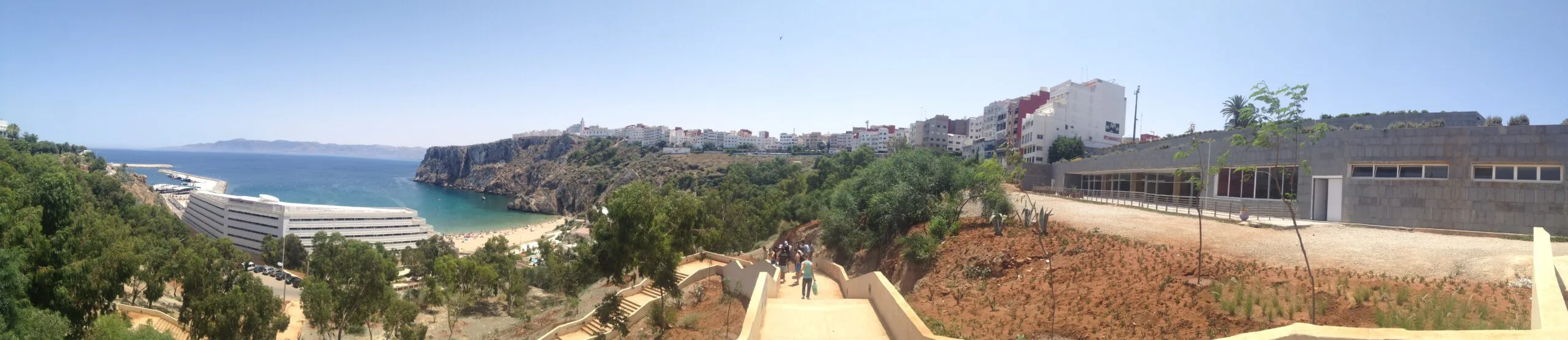
In summer it is very busy and the atmosphere is family-oriented until late in the evening. Out of season it returns to complete calm and becomes a good place for a stroll, especially at the end of the day when the sun lights the cliffs on the opposite side.
The coves of the west: Cala Iris and Badis
About sixty kilometres to the west, Cala Iris is a small fishing port tucked into an inlet, facing an islet. The water is transparent and the atmosphere very different from that of the town: a few boats, a beach of pebbles and sand, and almost nothing else.
Not far away, the site of Badis and the Torres de Alcalá tell of a long coastal history, with remains of fortifications. The road is winding and takes time, but the scenery on the descent to the sea ranks among the finest in the north.
Allow a full day for this sector, with water, food and a full tank of petrol before you leave. Services are scarce on this stretch of coast.
The best beaches around Al Hoceima
East of the town, Sfiha and Souani offer long strips of sand that are easier to reach and better equipped, popular with families in summer. Closer to the centre, several small coves are reached by steps or short paths. The choice depends on what you are looking for: comfort and services to the east, raw nature to the west.
| Beach or cove | Where | What it offers |
|---|---|---|
| Quemado | In town, on foot from the centre | Dark sand, clear water, the classic view of the bay |
| Sfiha and Souani | East of the town | Long strips of sand, easier access, better equipped, popular with families |
| Small coves near the centre | Close to town | Reached by steps or short paths |
| Cala Iris and Badis | West, about 60 kilometres | Raw nature, a small fishing port, transparent water and very few services |
One point of caution applies everywhere. The Mediterranean is generally calm here, but some coves have floors that shelve quickly and no lifeguard. Ask residents before swimming in an isolated spot.
The town and its architecture
Al Hoceima was founded in the 1920s, and its plan bears the mark: a regular grid, open squares and low, often white buildings. There are elements of Spanish architecture from the first half of the twentieth century, mainly around the central square and in the first neighbourhoods.

The most pleasant walk links the central square to the port by way of the viewpoints over the bay. Allow one to two hours, preferably in the late afternoon. The fishing port below comes alive when the boats return.
The Rif as a backdrop
Behind the town the mountain rises quickly. The roads that head into the Rif pass villages clinging to the slopes, cultivated terraces and forests. Mount Hammam, which overlooks the bay, offers an overview that can be reached by car for anyone who wants to take in the whole site at a glance.
These roads demand time and attention: narrow, winding, sometimes without crash barriers. They repay the effort, though, and are the best way to understand why this coast has stayed away from the main tourist flows.
How many days to stay
| Length of stay | Realistic programme | Who it suits |
|---|---|---|
| 1 day | Town, Quemado beach, viewpoints | A stop on the coast road |
| 2 to 3 days | Add the beaches to the east and a viewpoint in the park | A first stay |
| 4 to 5 days | A full day to Cala Iris and Badis, snorkelling | The most complete format |
| Beach holiday | A fixed base, beaches and relaxing | A family summer holiday |
When to go: Al Hoceima weather month by month
The climate is Mediterranean, with hot dry summers and mild wet winters. As elsewhere on this coast, the deciding factor is less the temperature than the summer crowds. Anyone checking the weather in Al Hoceima for September, October, November or April will find the pattern in the table below.
| Period | Conditions | Good to know |
|---|---|---|
| April to June | Mild, green landscapes, the sea warming up | The best window for walking and the coves |
| July and August | Hot, ideal sea | Very busy: book well in advance |
| September | Sea still warm, crowds falling | Often the best month |
| October to March | Mild, with possible rain | Lovely scenery, few people, cool swimming |
Flying to Al Hoceima from the UK and Ireland
Cherif Al Idrissi airport lies about 20 kilometres east of the town. It is a small facility, with traffic closely linked to services from Western Europe and strongly seasonal. In our route data the services are Royal Air Maroc Express to Casablanca, Tangier and Tetouan, Royal Air Maroc to Amsterdam and Brussels, and flights from Rotterdam, Maastricht and Brussels. There is no direct flight from the UK or Ireland.
For British and Irish travellers, the practical solution is to fly to Tangier, which has direct services from London Stansted and London Gatwick, and then continue with the Royal Air Maroc Express link from Tangier to Al Hoceima. Casablanca, where the same carrier connects on to Al Hoceima, is the other option. Fes, with a direct Ryanair flight from London Stansted, is a starting point if you prefer to cross the Rif by road. Networks vary by season, so always confirm the current schedule on the Al Hoceima airport departures and arrivals page before you book. If you are comparing this with travel from the Low Countries, our page on flights from the Netherlands to Al Hoceima shows how the direct network works.
For timing: since 20 September 2026 Morocco has been on GMT all year, with no change during Ramadan. The UK and Ireland are therefore on the same time as Morocco in winter and an hour ahead of it in summer. Flight times on our airport pages are in Moroccan local time. Our Al Hoceima airport guide details the services, the access and the layout of the terminal. Given its size, plan a pre-booked transfer or a taxi: the offer on the spot is limited outside flight arrivals.
Getting to Al Hoceima by road
Two routes dominate. From the east, the coast road from Nador runs along the Mediterranean on a spectacular but slow route; if you are starting from Nador, see its airport departures and arrivals page for the flights. From the south, the road comes from Taza and crosses the Rif. From the west, the link to Chefchaouen and Tetouan also takes a mountain road. In every case, count on much more time than the distance suggests: fifty kilometres in the mountains can take an hour and a half.
If you combine the coast with the blue city, our guide to things to do in Chefchaouen helps you plan the other end of the journey.
Getting around and car hire
The town centre, the square and Quemado beach can be covered on foot, although the slopes are real: the town is built on hills and some streets are steep. Petits taxis serve the urban area. For the coves in the park, the viewpoints and Cala Iris, however, nothing replaces a car: there is no regular service suited to a visitor.
If you are hiring, arrange it in advance, especially in July and August, when demand is high. Our guide to car rental at Morocco’s airports explains what to compare and what to check when you pick up the car. The car is the single spending item that changes the quality of the stay most.
Al Hoceima in three days: a plan that works
The first day is spent in town and nearby: a walk from the centre to the viewpoints, down to the port in late morning when the boats come back, an afternoon on Quemado beach, then a drive up Mount Hammam for sunset over the bay. It is the least demanding day and useful for getting your bearings.
The second day is the big trip west: leave early, take the coast road through the national park with stops at the viewpoints, go down to Cala Iris for a swim and lunch, then Badis and the towers on the way back. Count on the whole day, returning late in the afternoon.
The third day is for adjustment, and that is the one to keep flexible: the equipped beaches to the east if you are travelling with family, snorkelling in a cove if the sea is calm, or a mountain road into the Rif if the wind has spoilt things on the coast. This reserve of flexibility is better than a fixed programme on a coast where the sea conditions change quickly.
Where to stay
The accommodation is concentrated in the town and along the nearby coast. Staying in the centre means you can do everything on foot in the evening and enjoy urban life. Seafront accommodation to the east offers more calm and direct access to the beach, but means getting around to go out. In high season demand is strong and availability shrinks quickly, so book early.
Eating in Al Hoceima
Fish dominates, logically, in a town whose port supplies the restaurants overnight. Simple grills with salads make up the typical seaside meal. In town you will find standard Moroccan cooking and a well-developed fast-food offer. Cafés are central to social life, as everywhere in the north.
As elsewhere on the coast, fish is often chosen at the stall, then weighed and cooked: ask the price per kilo before you let your choice go, as is the custom.
Rif cooking has its own hallmarks, found mostly in homes and small neighbourhood places: flatbreads cooked on a griddle, pulse soups and a generous use of olive oil produced in the hinterland. Fresh goat’s cheese from the Rif, sold in the markets, is a curiosity rare elsewhere in Morocco and worth tasting.
As for hours, people dine late in summer, rarely before nine in the evening. Out of season, however, many places close early and some shut completely: ask during the day rather than setting out on the off chance after dark in November.
Language and customs
Tarifit is the most widely spoken language in the region, alongside Moroccan Arabic. Spanish is often heard, a legacy of local history and of links with Europe, as are Dutch and German because of the diaspora. French is understood, but less consistently than on the Casablanca-Rabat axis. A few words of Arabic or Tarifit are always appreciated.
What the summer season changes
Every summer, the north of Morocco is the destination for a large population living in Europe who return home. Al Hoceima is no exception: in July and August the town’s activity nearly doubles. Beaches fill up, restaurants are full in the evening, traffic becomes heavy on the corniche, and accommodation has to be booked several months ahead.
This is not a fault in itself: the atmosphere is warm, the terraces are lively late into the night, and cultural events punctuate the season. But if you are after deserted coves and the freedom to decide in the morning what to do in the afternoon, this is not the right time. June and September offer almost as good a sea with incomparably fewer people.
One practical effect to anticipate: in high season queues form at the petrol stations on the coast roads, and small village shops can run out of stock late in the day. Do your shopping in the morning if you are setting out for a full day to the west.
Al Hoceima with children
The equipped beaches to the east, with their calm water and services, suit families very well. The seafront promenade and the town’s play areas complete the programme. The coves of the park, on the other hand, call for walking, sometimes on steep paths, and the mountain roads are long: keep those outings for older children, and plan breaks.
Snorkelling and diving
The clarity of the water and the rocky nature of the coast make it a good place for a mask and snorkel. The seagrass meadows and drop-offs shelter a varied Mediterranean fauna, and several coves are suitable for exploring from the shore, without a boat.
Boat trips also let you follow the cliffs and reach sea caves that cannot be reached by land. They are arranged at the port or through your accommodation and depend a great deal on the state of the sea: a north-easterly wind can cancel everything overnight. Build some flexibility into your programme. If you want to dive with a qualified instructor, ask locally about operators and conditions rather than relying on a website.
Combining Al Hoceima with another stop
The most coherent loop follows the Mediterranean coast: Nador and its lagoon to the east, Chefchaouen and Tetouan to the west, with Al Hoceima in the middle. To the south, Taza and Fes let you swing inland, and our guide to things to do in Fes covers that side. For a complete contrast with the Mediterranean, the Atlantic coast offers a different register, for example Essaouira, which we cover in our guide to Essaouira from Marrakech.
The most common mistakes
The first is to come without a car, and never see what gives the destination its value. The second is to underestimate journey times on mountain roads, where fifty kilometres can take an hour and a half. The third is to choose August without booking. The fourth is to plan only one day: the town can be seen quickly, but the coast needs time.
Frequently asked questions about Al Hoceima
Is Al Hoceima worth a detour?
For its coastline, yes, without hesitation: cliffs, coves and clear water make it one of the finest coasts in the country. The town itself, founded in the twentieth century, has no monumental heritage.
How many days should I allow?
Three to four days let you see the town, the nearby beaches and still give a full day to the coves of the west. A single day is enough if you are only making a stop on the coast road.
What is the best time of year to go?
September is often the best month: the sea is still warm and the summer crowds have gone. Spring, from April to June, is ideal for scenery and walking, with the sea still cool.
Do I need a car in Al Hoceima?
For the town and its beach, no. For the national park, Cala Iris and the viewpoints, yes: no regular service allows you to reach them comfortably. It is the item of spending that changes the quality of the stay most.
How far is the airport from town?
About twenty kilometres east of the town. The journey takes twenty to thirty minutes. With transport on the spot limited, it is better to book a transfer if you arrive late.
Can you go snorkelling in Al Hoceima?
Yes, and it is one of the best activities in the region. The water is clear and the rocky coast shelters a varied fauna. Several coves can be explored from the shore, without a boat or a guide.
Are there direct flights from the UK to Al Hoceima?
Not in our route data. The direct services are from Amsterdam, Brussels, Rotterdam and Maastricht, plus domestic links. From the UK, most travellers fly to Tangier and continue on the Royal Air Maroc Express flight, or fly to Casablanca and connect. Check the live board for the current schedule.
What is the time difference between Morocco and the UK?
None in winter: since 20 September 2026 Morocco has been on GMT all year. During British Summer Time the UK is one hour ahead of Morocco.
In summary
Al Hoceima comes down to a coast: cliffs that fall into very clear water, a national park that protects them, and coves that you reach at the price of a winding road. The town serves as a comfortable base, not as a sight. Allow three to four days, hire a car, aim for September or spring, and keep a full day for Cala Iris. From the UK, plan on a connection through Tangier or Casablanca.
Sources
Location data and regional background: Encyclopaedia Britannica, Al Hoceima. The flights mentioned come from our monitoring of scheduled services, which is revised continuously; frequencies vary by season and should be checked with the airlines.
Image credits
Al Hoceima National Park: Boudra2015 (CC BY-SA 3.0). Al Hoceima beach: Simo El H (CC BY-SA 4.0). View of the town: Brahim Faraji (CC BY-SA 4.0). All via Wikimedia Commons.