Yes, you absolutely can visit Marrakech in summer — as long as you plan your day around the heat rather than trying to fight it. From June to August, the red city turns into a furnace in the afternoon, with highs that regularly top 40 °C and heatwaves that sometimes brush 45 °C. That’s no reason to give up: travellers who come in summer enjoy lower prices, less crowded sites and spectacular light at sunrise and sunset. The key is pacing: you sightsee early in the morning and in the late afternoon, take a siesta (like the locals) during the hottest hours, and lean on shaded gardens, riads with patios and swimming pools to get through the peak heat without suffering.
In this guide, we’re not talking about “the best time of year” in general: we focus solely on Marrakech in July and August, the most scorching months, to show you how to survive the heat and genuinely enjoy your stay. Month-by-month temperatures, how to organise your day, “cool-down” activities, excursions to the Atlas or the coast to escape the heatwave, hydration, suitable clothing, the unexpected upsides of the low tourist season and the classic mistakes to avoid: you’ll know exactly what to do when the thermometer goes wild.
In brief: Marrakech in summer
- Heat: highs of 37 to 39 °C on average, often above 40 °C, up to 45 °C and more during heatwaves (record close to 47 °C).
- Nights: milder, around 20-22 °C, very dry air and almost no rain.
- Best timing: sightseeing from 7 a.m. to 11 a.m., then from 5.30 p.m. until nightfall; siesta or somewhere cool between 1 p.m. and 5 p.m.
- Advantages: lower hotel/riad prices, less crowded sites, easy availability.
- To escape the heatwave: the Ourika Valley, the Atlas, waterfalls, or the coast at Essaouira (much cooler).
- Essentials: water, sunscreen, a hat, loose linen/cotton clothing, a hotel with a pool.
What are the temperatures in Marrakech in summer (month by month)?
Before you pack your bags, you need to understand the kind of heat in Marrakech you’ll be facing. The Marrakech summer is a semi-arid continental climate: very hot, very dry, with big swings between day and night. Unlike humid coastal destinations, the air doesn’t cling to your skin — it’s a dry heat, more bearable in the shade than a tropical 32 °C, but one that can dehydrate you without you even visibly sweating, because the perspiration evaporates instantly.
June: the start of the real heat
In June, highs hover around 33 to 37 °C, with peaks that easily reach 40 °C towards the end of the month. Nights stay pleasant (around 18-20 °C) and the days are long and bright. It’s still the most “forgiving” month of summer: if you want the low season without the harshest heatwave, it’s the best compromise. Be aware, though, that early heatwaves can occur as soon as late June, as during recent episodes when several Moroccan cities broke monthly records.
July and August: the heart of the heatwave
Marrakech in July and August is the peak of the year when it comes to heat. Average maximum temperatures sit between 37 and 39 °C, but in practice topping 40 °C in the afternoon is the norm several days a week. During heatwaves, the thermometer regularly climbs to 43-45 °C, and the city record approaches 47 °C (a reading close to 46.9 °C on 26 June). The good news: nights often drop back to around 21-22 °C, which makes evenings on the terrace perfectly liveable, and the dryness of the air makes the shade noticeably cooler than direct sun.
The chergui: the wind that sends the thermometer soaring
The main culprit behind heatwaves in Marrakech has a name: the chergui. It’s a hot, dry wind from the Sahara, to the east and south-east, that blows towards the plain. As it crosses the High Atlas ranges, this desert air heats up further through a föhn effect and can push the temperature up by several degrees in just a few hours. A stay that started at 36 °C can suddenly find itself at 44 °C during a chergui episode. These spells usually last from two to five days. The right reflex: check the local forecasts two days ahead, and schedule your most “indoor” days or your high-altitude excursions during these peaks.
Also worth noting: the chergui sometimes carries suspended dust or sand, which veils the sky and irritates the eyes and throat. One more reason to keep water, sunglasses and, if you’re sensitive, a light scarf over your mouth while you’re out and about.
How to organise your day to avoid the heat
The golden rule for visiting Marrakech in summer fits in one sentence: match your schedule to that of the locals. The city slows to a crawl during the hot hours and comes back to life as soon as the sun goes down. Adopting this rhythm changes everything — you’ll see the same sites, but without suffering.
Morning (7 a.m. – 11 a.m.): time for sightseeing
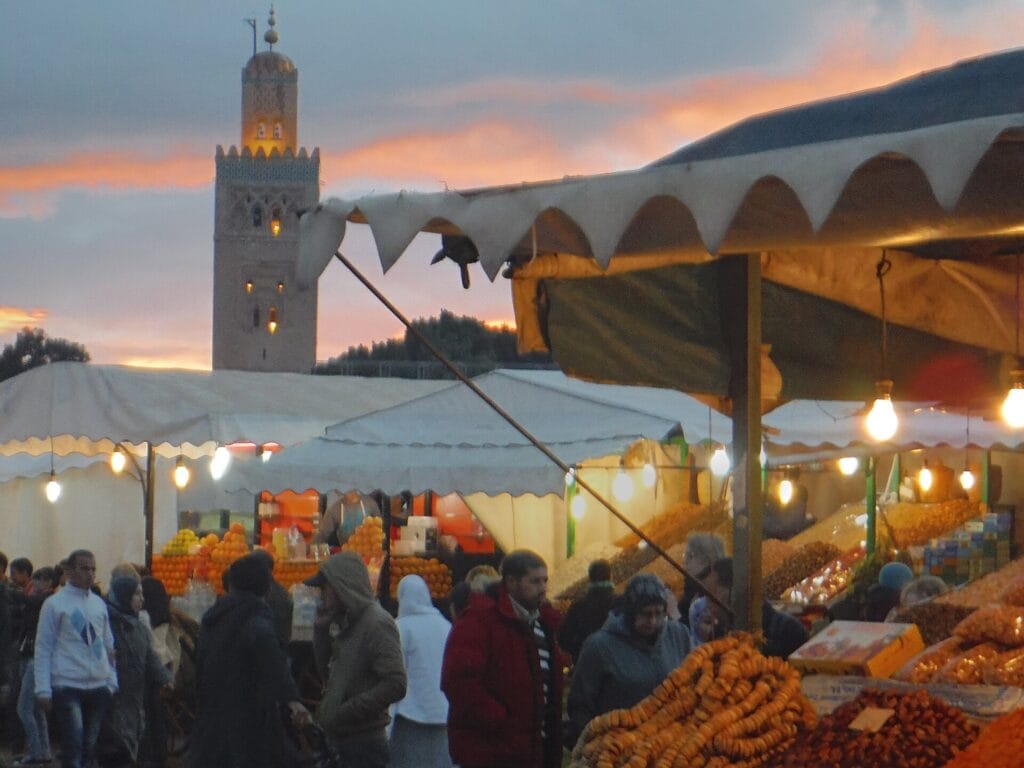
This is the golden window. The air is still cool (25-28 °C around 8 a.m.), the light is soft and gorgeous for photos, and the monuments are almost empty. Reserve this time for outdoor or poorly air-conditioned sites: the medina and its souks as they wake up, the Saadian Tombs, the Bahia Palace, Jemaa el-Fna square before it bakes, or a stroll through the palm grove. Have an early breakfast on a riad terrace, then get going before 8.30 a.m. By around 11 a.m., when the sun turns biting, you’ll already have done the essentials.
Midday (12 p.m. – 5 p.m.): the strategic siesta
These five hours are the most dangerous. The sun is at its zenith, shade grows scarce and this is when you’ll get heatstroke if you push on. The smart move isn’t to “tough it out” but to get somewhere cool: a leisurely lunch in the shade of a patio, a nap in your air-conditioned room, a dip in the riad pool, or a hammam followed by a glass of tea. This break isn’t wasted time: it’s what lets you set off again in top form in the evening. Locals don’t brave the 2 p.m. heat — and neither should you.
Late afternoon and evening (5.30 p.m. – midnight)
From around 5.30-6 p.m., the city is reborn. The light turns golden, the terraces fill up, the souks fully reopen. It’s the best time to wander around Jemaa el-Fna, dine on a rooftop, go shopping or enjoy a garden that stays open late. Summer evenings in Marrakech are one of its great pleasures: mild air, buzz, scents of spices and grilled food. Many travellers end up preferring this nightlife to the daytime programme. Just pack a light layer in case the wind drops very late — but in high summer, the night stays warm.
For a full sightseeing plan, must-see sites and day-by-day itineraries, rely on our complete guide to what to do in Marrakech, which you can then adapt to the summer rhythm described here.
The “cool-down” activities to prioritise
Marrakech is full of refuges from the heat. The trick is to build your programme around shaded, air-conditioned or water-based spots, alternating an outdoor site in the morning with a cool place in the afternoon.
Shaded gardens and pools
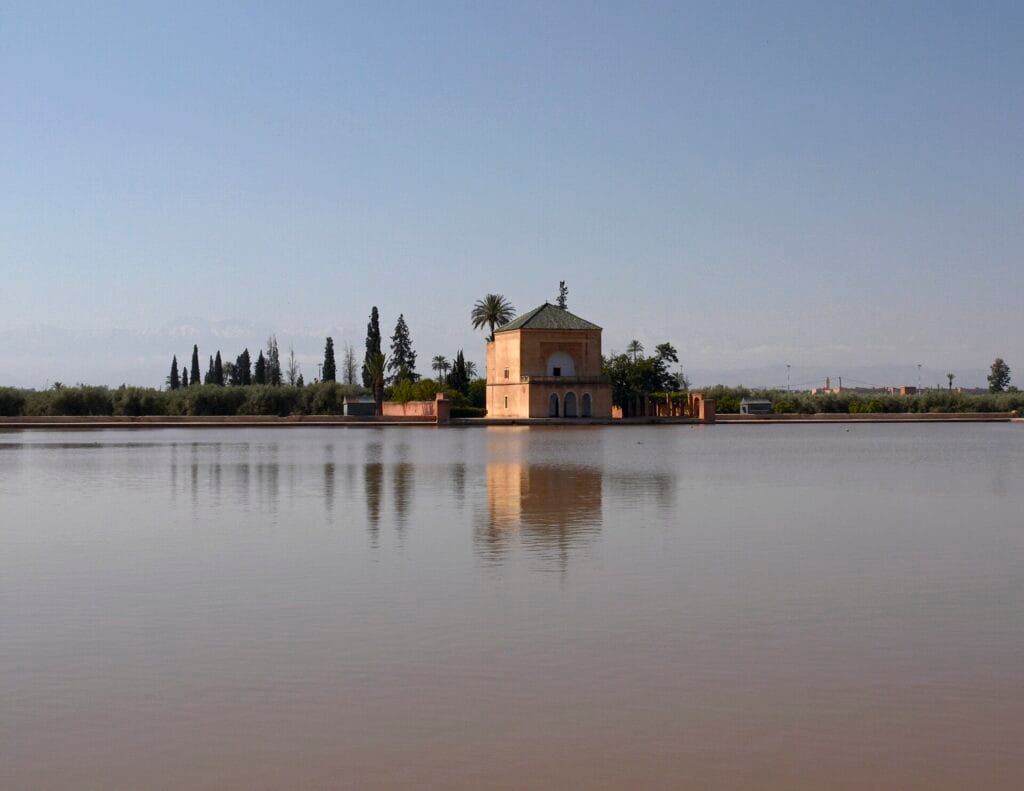
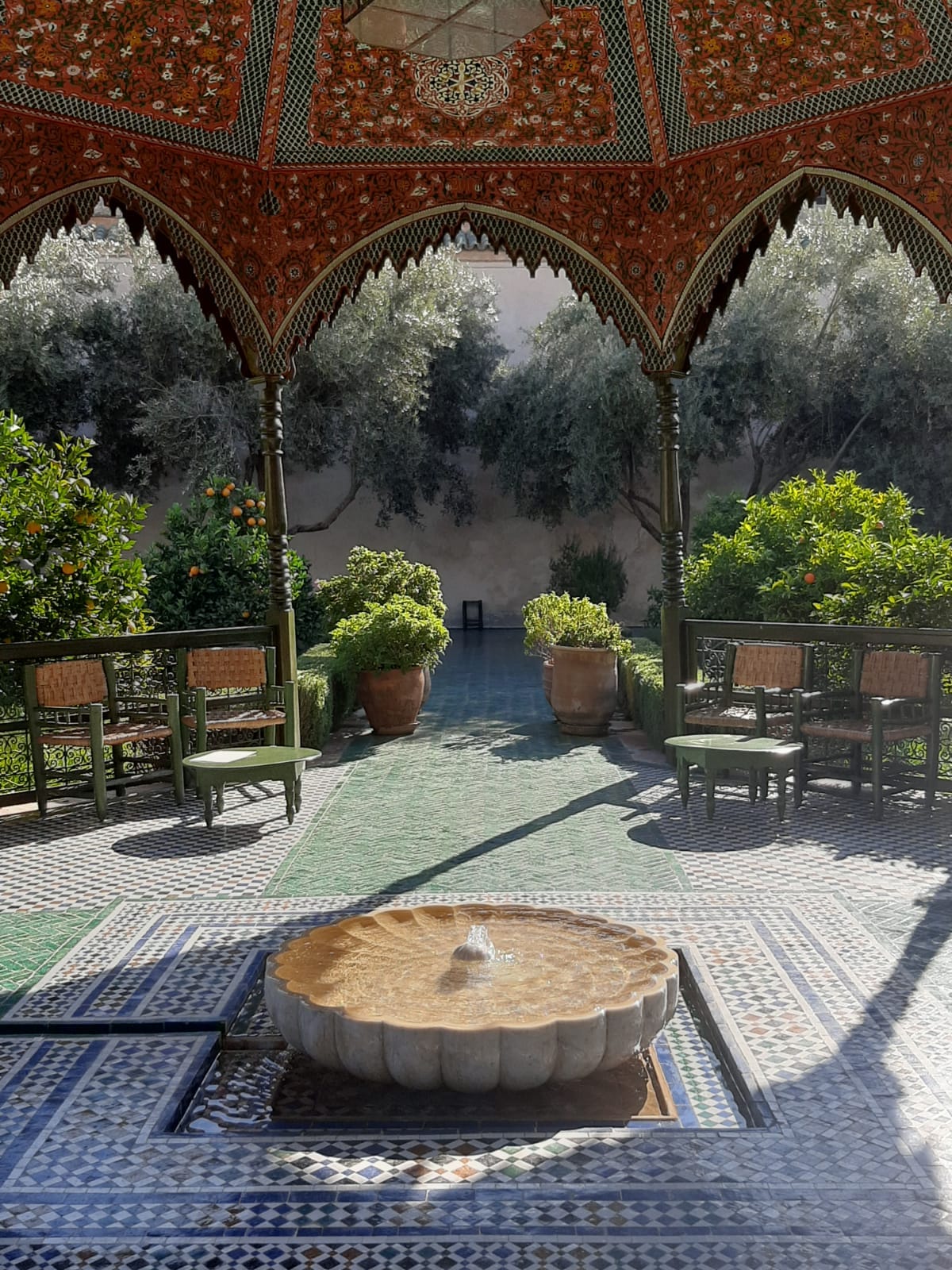
Marrakech’s gardens are oases of coolness, designed for centuries to combat the heat. The Menara Gardens, with their large basin and olive grove, offer shade and a pleasant breeze at the end of the day — ideal at sunset facing the Atlas. Further out, the Marrakech palm grove offers walks in the shade of the palms, best done early in the morning. The historic gardens inside the palaces (Bahia, the Secret Garden in the medina) combine heritage and coolness. Simple rule: visit these spaces before 11 a.m. or after 5 p.m., never at high noon.
Museums and air-conditioned venues
When the furnace sets in, museums become your best allies: air conditioning, shade and culture. Marrakech has several high-quality ones — museums of art, of photography, of Berber heritage, as well as the modern exhibition spaces of the new town. Doing two museums back to back between 1 p.m. and 4 p.m. is an excellent way to “burn through” the hot hours while enriching your stay. The museum shops and air-conditioned concept stores of Guéliz serve the same purpose for shopping lovers.
Hammam, spa and riads with patios
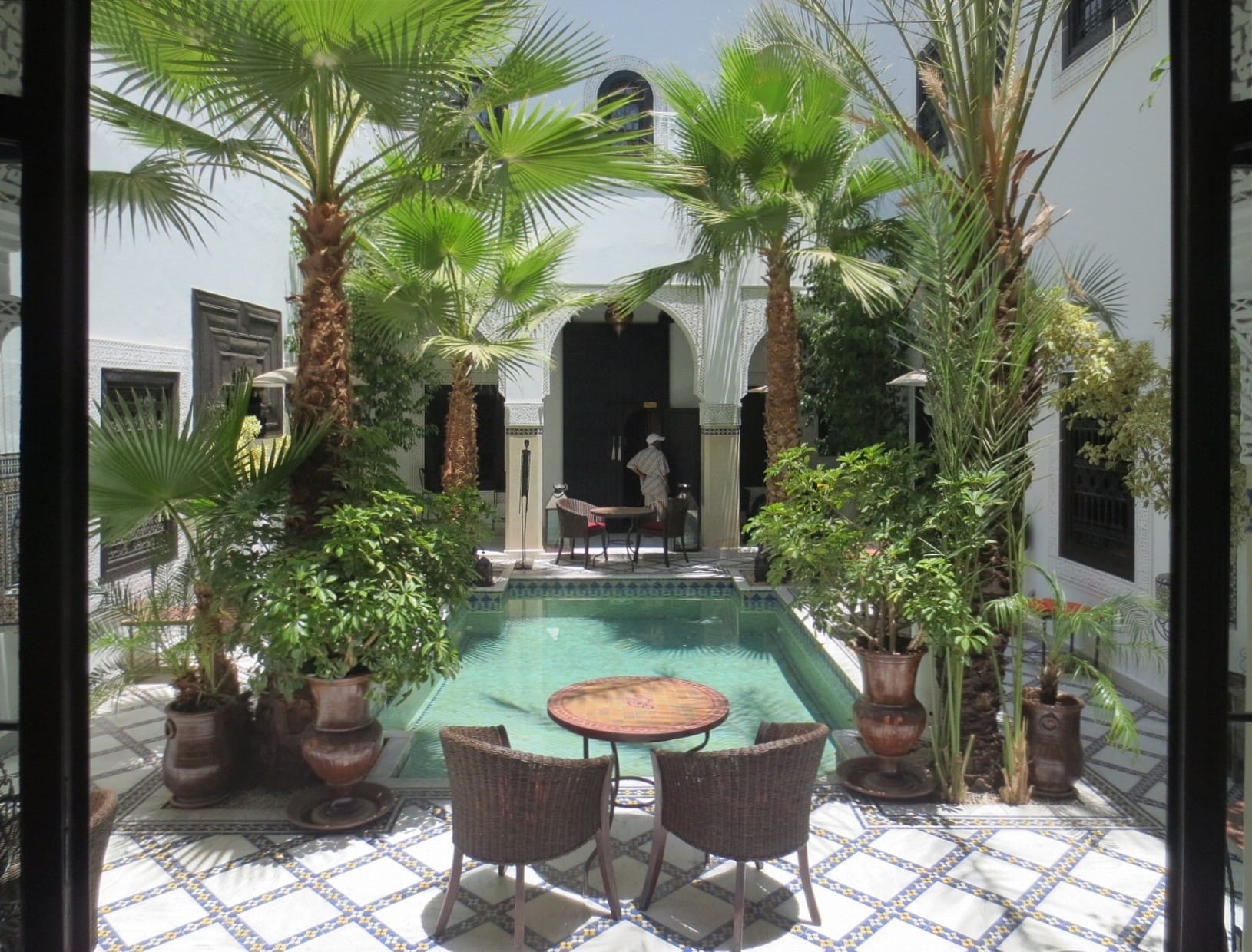
Paradoxically, the hammam is a marvel against the heat: after the steam-and-scrub ritual, you come out with clean skin and a body that feels surprisingly refreshed and relaxed. Schedule a session of hammam and spa in Marrakech in the early afternoon: it’s the ideal activity to turn the heat peak into a wellness interlude. As for accommodation, the traditional riad is brilliantly designed for summer: its central patio, often with a fountain and orange trees, creates a cool microclimate, and its thick walls keep the interior shaded all day. Choosing the right riad already gains you several degrees — see our tips on where to stay in Marrakech and go for patio + pool.
What to do in the afternoon when it’s too hot
If you’re not the napping type, the most effective way to survive the heatwave in Marrakech comes down to one word: water. The city has developed a whole range of options for cooling off during the hot hours, from a simple dip to a full leisure complex.
The pool, priority number one
In summer, a pool isn’t a luxury, it’s a necessity. If your riad or hotel has one, it will become the centre of gravity of your afternoons. Otherwise, know that many hotels and resorts offer day passes giving access to the pool, loungers and sometimes lunch or a dining credit. As a rough guide, expect 150 to 400 MAD (about €14 to €38) per person depending on the standard of the establishment, more at the palace hotels. It’s one of the best investments of your summer stay.
Water parks and beach clubs
On the outskirts of the city, several water parks and “beach clubs” with large pools, slides and dining areas are a hit with families and groups of friends. Admission costs, as a rough guide, between 200 and 350 MAD (about €19 to €33) for an adult, often less for children. It’s a safe bet for happily filling a whole afternoon away from the heat. If you’re travelling with children, these venues are detailed in our Marrakech with the family guide, which also lists activities suited to younger ones.
Shopping malls and air-conditioned cafés
A more urban option: Marrakech’s modern shopping malls, fully air-conditioned, let you stroll, shop, catch a film or have lunch without ever facing the sun. The big cafés and tea rooms of Guéliz play the same role. It’s not the most “exotic” part of the trip, but it’s a precious lifeline on a chergui day at 45 °C, especially with children or older travellers.
Excursions to escape the heat: mountains, waterfalls and sea
Marrakech’s greatest asset in summer is its geographical position: in under two hours, you can gain several degrees of coolness, either by heading up into the Atlas or down towards the ocean. Save these outings for your heatwave days: it’s the best way to turn a constraint into an adventure.
The Ourika Valley and the Atlas
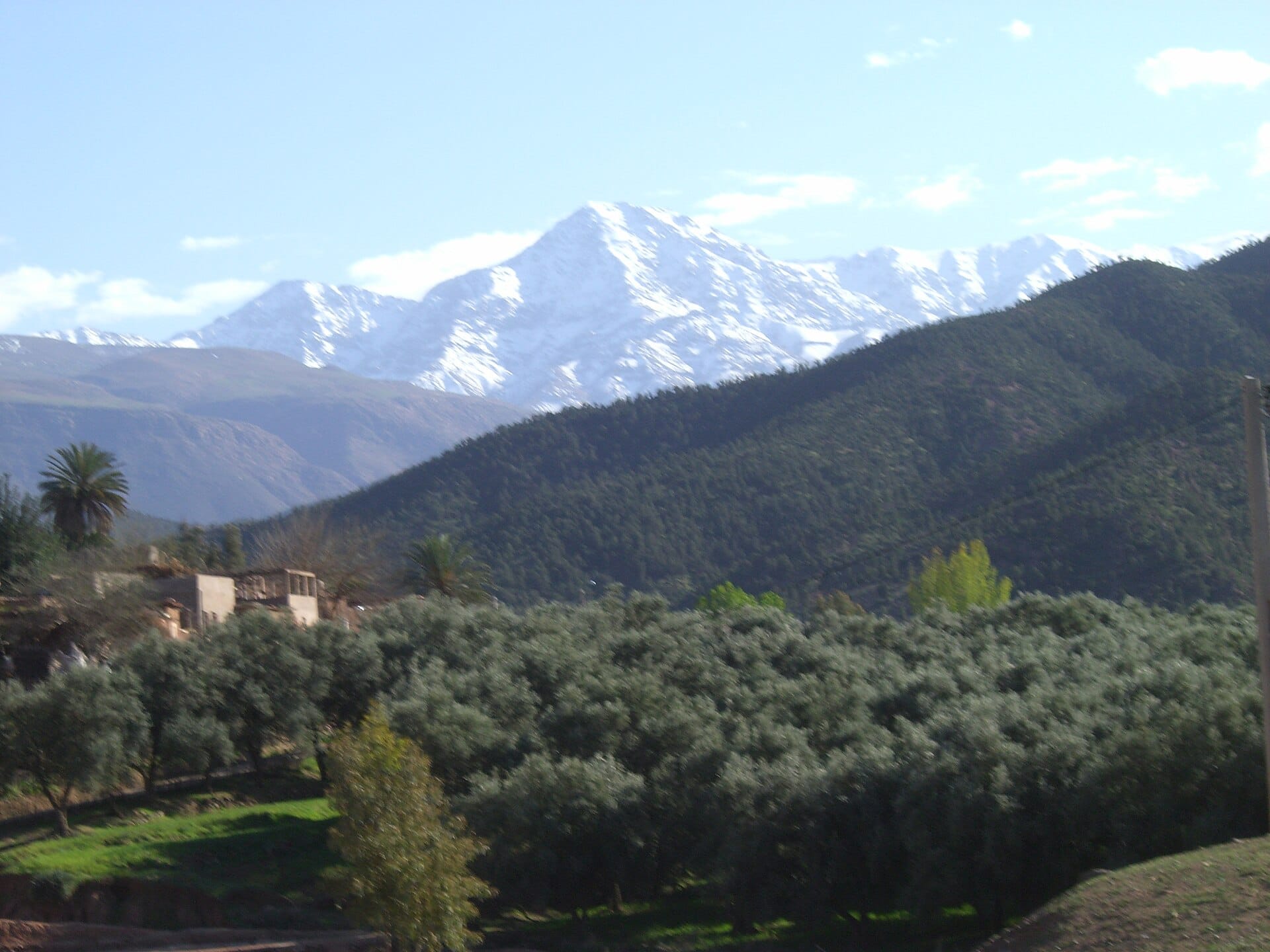
About an hour’s drive away, the Ourika Valley is the locals’ favourite escape in summer. At altitude, along the river, the air is 5 to 10 °C cooler, the shade of the trees is generous and the Setti Fatma waterfalls invite you to dip your feet in the icy mountain water. You often lunch with your feet in the water, at tables set up in the stream. Climbing higher into the Atlas (Oukaïmeden, Imlil), the coolness increases even more: it’s the perfect outing on a day when Marrakech tops 42 °C.
Essaouira and the Atlantic coast
Another direction, another climate: the sea. About 2 hr 30 min drive away, Essaouira from Marrakech offers a striking contrast. Swept by the trade winds, the city of winds often shows 22 to 26 °C in high summer when Marrakech is baking at 42 °C. Its cool medina, its ramparts, its port and its long beach make it the anti-heatwave excursion par excellence, on a day trip or, better still, an overnight stay. Agadir, further south, plays the same seaside role with big beaches and a mild oceanic climate. If you’re staying several weeks in summer, alternating Marrakech and the coast is the winning formula.
Hydration and health: avoiding heatstroke
The dry heat of Marrakech is treacherous: you dehydrate without necessarily feeling very thirsty, because the perspiration evaporates at once. Taking care of your body is therefore the absolute priority for enjoying your stay without ending the day with a migraine — or worse.
Drink, again and again
Aim for at least 2 to 3 litres of water a day, more if you’re walking a lot. Always keep a bottle on you and drink regularly in small sips, without waiting for the sensation of thirst. Go for sealed bottled water, and don’t hesitate to add fresh fruit juices (orange pressed at Jemaa el-Fna, for about 10-15 MAD) and water-rich fruits like watermelon and melon, everywhere in summer. Mint tea, though hot, also promotes perspiration and thermal regulation — a proven local habit. On the other hand, go easy on alcohol and coffee, which dehydrate you.
Recognising and preventing heatstroke
Heatstroke is an emergency: headache, nausea, dizziness, burning skin, confusion, a halt in perspiration. At the first signs, get into the shade or somewhere cool immediately, drink, wet the back of your neck and your wrists, and lie down. To avoid it: never stay in the sun during the hot hours, take frequent breaks, and keep a particular eye on children and older people, who are more vulnerable. A wet cap and a water spray work wonders. If symptoms persist, seek help without delay — pharmacies are plentiful and competent in Marrakech.
Protecting your skin
The Marrakech sun is intense and the UV index very high in summer. Apply a high-factor sunscreen (SPF 50) in the morning and reapply every two hours, not forgetting the back of the neck, the ears and the tops of the feet. A wide-brimmed hat and quality sunglasses are essential. Sunburn happens fast, even in weather slightly hazy with dust.
What to wear in Marrakech in summer
Dressing well means protecting yourself from both the heat and the sun, while respecting local customs. The right summer instinct isn’t to strip down but to cover up lightly: locals wear loose garments that protect the skin while letting the air circulate.
- Fabrics: go for linen, cotton and natural fibres, breathable and light. Avoid synthetics, which cling and make you sweat.
- Cuts: loose and flowing rather than tight. A long tunic, a linen shirt, wide trousers protect from the sun better than a tank top.
- Colours: light tones reflect the heat, dark tones absorb it. White and pastel colours are your friends.
- Local respect: in the medina and traditional places, it’s better to cover shoulders and knees, especially for women. Keep the very light outfits for the pool and the beach clubs.
- Accessories: a hat or cap, sunglasses, a light scarf (useful against the sun and the chergui dust), and good comfortable sandals — you’ll be walking a lot on scorching ground.
- In the evening: since the nights stay mild, a simple overshirt is enough; there’s no need to pack warm clothes in high summer.
The advantages of visiting Marrakech in summer
It’s not said often enough: the summer low season has real upsides. If you’re willing to play the game with the heat, summer gives you a different and often more authentic experience of the red city.
- Gentler prices: with July and August being quiet for Western tourism, riads and hotels often lower their rates. You find lovely charming rooms at prices that would be impossible in high season, and last-minute deals abound.
- Fewer crowds: the monuments, gardens and souks are noticeably less packed than in spring. You visit the Saadian Tombs or the Bahia Palace almost in peace, and tourist-free photos become easy in the early morning.
- Maximum availability: the best restaurants, the well-known hammams and the pool day passes can be booked stress-free, sometimes on the same day.
- Magical evenings: summer nightlife, with its terraces buzzing late and its mild ambient air, is one of the great pleasures of the season.
- Cool escapes close by: the Atlas and the coast within reach give a flexibility that few destinations offer in a heatwave.
The mistakes to avoid in summer
Most bad summer experiences in Marrakech come from a lack of organisation in the face of the heat. Here are the most common pitfalls — and how to outsmart them.
- Trying to do all your sightseeing in the afternoon: this is mistake number one. Walking through the medina at 3 p.m. in August means guaranteed exhaustion. Shift your visits to early morning and evening.
- Booking accommodation without a pool or good air conditioning: in summer, these two criteria are non-negotiable. Check them before you book.
- Underestimating hydration: not drinking enough “because you’re not sweating” is a dangerous classic in Marrakech’s dry air.
- Neglecting sun protection: without a hat or cream, sunburn and sunstroke are lurking within hours.
- Ignoring the chergui forecasts: not anticipating a heatwave means risking scheduling a long outdoor visit on the worst day of the week.
- Staying shut indoors all day for fear of the heat: conversely, depriving yourself of the sumptuous mornings and evenings would be a shame. The secret is rhythm, not confinement.
- Forgetting the cool excursions: spending a whole week baking in the city when the Ourika or Essaouira are within reach would be a waste.
And if, against all odds, a summer thunderstorm should turn up (rare but possible), our guide on what to do in Marrakech in the rain will give you ideas for indoor activities. Finally, to place summer in relation to the other seasons and fine-tune your dates, see our comparison of the best time to visit Marrakech.
FAQ: Marrakech in summer
Is it too hot to visit Marrakech in July and August?
No, but you have to organise yourself. With highs of 38 to 45 °C, you don’t sightsee during the hot hours: you concentrate your outings in the morning and the evening, take a siesta or enjoy the pool in the afternoon. If you respect this rhythm, July and August remain perfectly doable, with the bonus of low prices and quiet sites.
What is the maximum temperature in Marrakech in summer?
Average highs in July-August hover around 37-39 °C, but often exceed 40 °C. During heatwaves caused by the chergui, the thermometer reaches 43 to 45 °C, and the city record approaches 47 °C. Nights, on the other hand, drop back pleasantly to around 21-22 °C.
Where to go near Marrakech to find it cooler?
Two directions: the mountains and the sea. The Ourika Valley and the Atlas (Setti Fatma, Imlil, Oukaïmeden), about an hour away, offer 5 to 10 °C less and waterfalls. Towards the ocean, Essaouira (2 hr 30 min) often stays around 22-26 °C thanks to the trade winds, as does Agadir. These are the ideal excursions on heatwave days.
Do you absolutely need a hotel pool in summer?
It’s strongly recommended. A pool turns heatwave afternoons into moments of pleasure and lets you recharge your batteries for the evening’s sightseeing. If your accommodation doesn’t have one, many hotels offer day passes (about 150 to 400 MAD, or €14 to €38) giving access to the pool and loungers for the day.
What to wear when it’s 45 °C in Marrakech?
Go for loose, light-coloured clothing in linen or cotton, which protects from the sun while letting the air circulate. Add a wide-brimmed hat, sunglasses and a light scarf against the chergui dust. In the medina, it’s better to cover shoulders and knees. Keep the very light outfits for the pool and the beach clubs.
Is summer cheaper for visiting Marrakech?
Yes, it’s one of its great advantages. With July and August being quiet for tourism, riads and hotels often lower their rates, and you find lovely last-minute deals. The sites are also less crowded and bookings (restaurants, hammams, excursions) much easier than in high season.
Marrakech in summer isn’t a destination to avoid, but one to tame. By matching your rhythm to that of the city — active mornings, cool afternoons, festive evenings — and keeping the Atlas and the ocean as coolness valves, you’ll enjoy an authentic, affordable and surprisingly pleasant experience, despite the thermometer. To dig deeper into a specific point about the Moroccan climate, you can consult the Marrakech page on Wikipedia.
Independent, informational guide, not affiliated with ONDA or any official body; prices are given as an indication and may vary.
Images under free licence via Wikimedia Commons: © Abdeaitali (CC BY-SA 4.0); © Arnaud 25 (CC BY-SA 3.0); © Tonkie (CC BY-SA 3.0). Sources: Wikimedia Commons.