About thirty minutes south of Marrakech, along the Ourika road, there is a place that throws off anyone who thought they had seen everything Moroccan gardens have to offer. Anima Garden is neither a classic botanical garden nor a simple landscaped park: it is a total work of art, a botanical and sculptural dream conceived by Austrian artist André Heller. Here, every bend in the path reveals a surprise, a hidden sculpture, an unexpected splash of colour, all set against the snow-capped peaks of the Atlas. If you are looking for a different kind of escape, poetic and a touch psychedelic, this contemporary art garden is well worth the detour.
Quick answer: Anima Garden is a dreamlike art garden located about 27 km south of Marrakech, in the Ourika Valley, at the foot of the Atlas. Created by artist André Heller and opened in 2016, it blends lush vegetation (cacti, palms, bamboo, banana trees) with sculptures and contemporary artworks. You can get there by car, by taxi or via the free shuttle that departs from central Marrakech, near the Koutoubia. Allow roughly two to three hours for the visit, coffee included. It makes an ideal outing to combine with a day in the Ourika Valley.
In brief: the essentials on Anima Garden
- What: a contemporary art garden, part botanical garden, part open-air museum.
- Who: a creation by Austrian artist André Heller, opened to the public in 2016.
- Where: about 27 km south of Marrakech, on the Ourika road, at the foot of the Atlas.
- How to get there: free shuttle from Marrakech, private car, taxi or organised excursion.
- Duration: allow 2 to 3 hours to wander and enjoy the café.
- Atmosphere: dreamlike, colourful, almost psychedelic, contemplative.
- Combine with: the Ourika Valley, Setti Fatma and its waterfalls, or a stop in the Agafay desert.
This guide is independent and is not affiliated with Anima Garden, ONDA or any official body. Practical information (opening hours, prices, shuttle) is given for guidance only and may change: always check the most recent details before your visit.
What is Anima Garden?
Anima Garden is a place that is hard to pin down. You could describe it as a botanical garden, so impressive is the richness of its vegetation, but that would sell it short. You could also call it an open-air museum, so numerous are the artworks it holds, yet that does not do justice to the feeling of being inside a living organism. In truth, Anima is a total work of art: a space conceived as a three-dimensional painting, where nature and human creation are in constant dialogue. The name itself, “Anima,” refers to the soul, to the breath of life, and neatly sums up its creator’s intention: to give a space a soul, to turn a stroll into an inner experience.
Spread over more than two hectares, the garden is explored along winding paths that build suspense. You never take it all in at a single glance: each lane conceals the next, each flower bed hides a sculpture or a colourful bench. This staging of gradual revelation is deliberate. André Heller did not want a garden that gives itself away all at once, but a journey of initiation in which the visitor moves from surprise to surprise. The vivid tones — deep blues, sun-drenched yellows, dazzling pinks — contrast with the dense green of the vegetation and create a joyful, at times frankly dreamlike, atmosphere.
Opened in 2016, Anima Garden quickly carved out a distinctive place in the tourist landscape of the Marrakech region. Whereas the Menara Gardens or the Secret Garden immerse the visitor in the city’s historical and Andalusian heritage, Anima offers a resolutely contemporary and personal take on the garden. It is this singularity that today draws very varied crowds: art lovers, families, couples seeking a change of scene, photographers or simply curious visitors weary of the bustle of the medina.
The contrast with the immediate surroundings reinforces the sense of stepping into another world. As soon as you leave the Ourika road and pass through the entrance, the arid, mineral landscape gives way to an explosion of greenery and colour. In the distance, the ridges of the Atlas — often snow-covered in winter and early spring — provide a spectacular backdrop. This encounter between the lush vegetation of the foreground and the rugged mineral quality of the mountains is an integral part of the experience: the garden converses with its setting as much as with the works it shelters.
André Heller, the artist behind Anima
You cannot understand Anima Garden without taking an interest in its creator. André Heller is an Austrian artist born in Vienna in 1947, whose career is as abundant as his garden. Poet, singer, performer, director, visual artist: he has turned his hand to almost every form of expression over the course of his life. We owe him large-scale shows, monumental installations and, above all, several artist’s gardens around the world. Anima is therefore not a first attempt for André Heller, but the culmination of a long reflection on what a garden conceived as a work of art in its own right can be.
Heller has a long and deep connection with Morocco. Won over by the light, the colours and the atmosphere of the Marrakech region, he chose the Ourika Valley to give shape to his vision. The project demanded years of patience: the land had to be prepared, thousands of plants brought in and acclimatised, and the vegetation given time to settle before the garden could open to the public. This slow gestation partly explains the density and maturity you feel today as you walk the paths. Nothing seems improvised; everything appears to have been carefully considered.
André Heller’s approach stands out for its taste for wonder. Far from a cold or conceptual art reserved for insiders, he seeks to provoke an immediate emotion, a smile, a rediscovered piece of childhood. That is why Anima never takes itself entirely seriously: between two solemn or poetic sculptures, you come across amusing shapes, knowing winks, touches of humour. The garden belongs to a long tradition of spaces created by artists who wanted to offer the public a place of dreams, a colourful refuge away from the world. To learn more about its creator’s journey, you can consult his dedicated Wikipedia page.
One area of the garden pays tribute to a close friend of the artist, the German painter Hans Werner Geerdts, who also fell in love with Marrakech, where he found a source of inspiration. This personal, friendly dimension pervades the whole place: Anima is not a purely commercial project, it is first and foremost an artist’s intimate garden, generously opened to those willing to lose themselves in it.
What to see at Anima Garden: vegetation, sculptures and artworks
Anima’s first treasure is its vegetation. The garden brings together species from the four corners of the world, cleverly combined to create contrasting moods along the walk. You can admire great forests of cacti and succulents with their graphic silhouettes, bamboo groves that filter the light, slender palms, banana trees with broad leaves, bougainvilleas cascading in fuchsia curtains, as well as a multitude of fragrant flowers and shrubs. This profusion is anything but random: the beds are designed as living paintings, with plays of texture, height and colour that shift with the seasons.
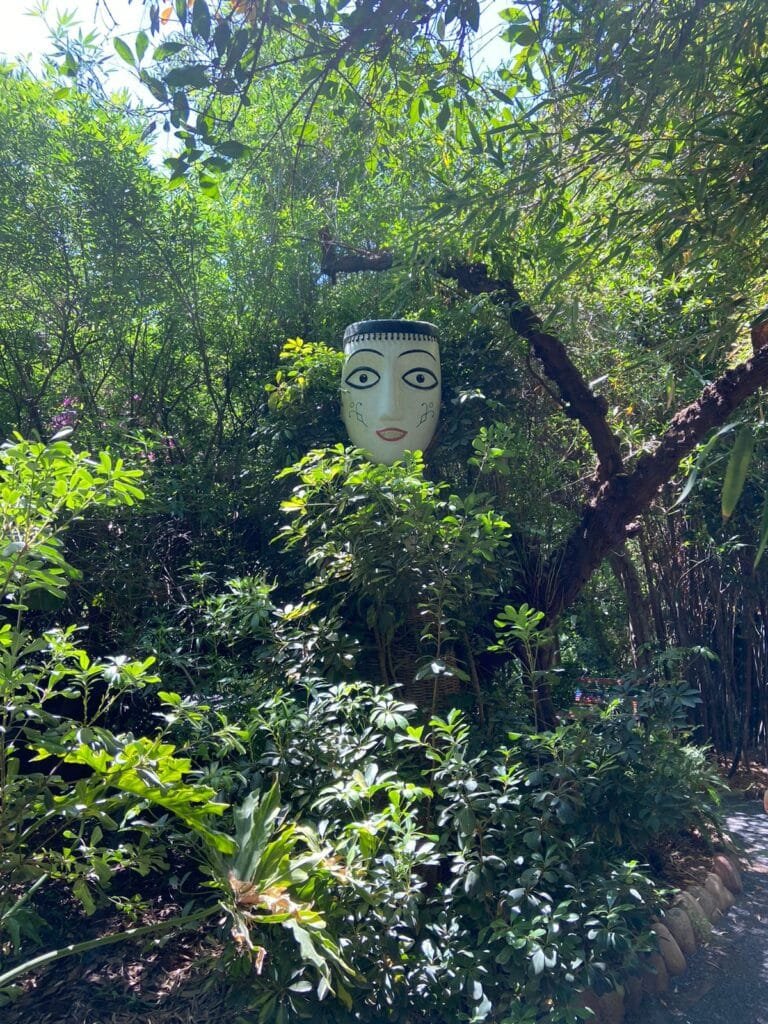
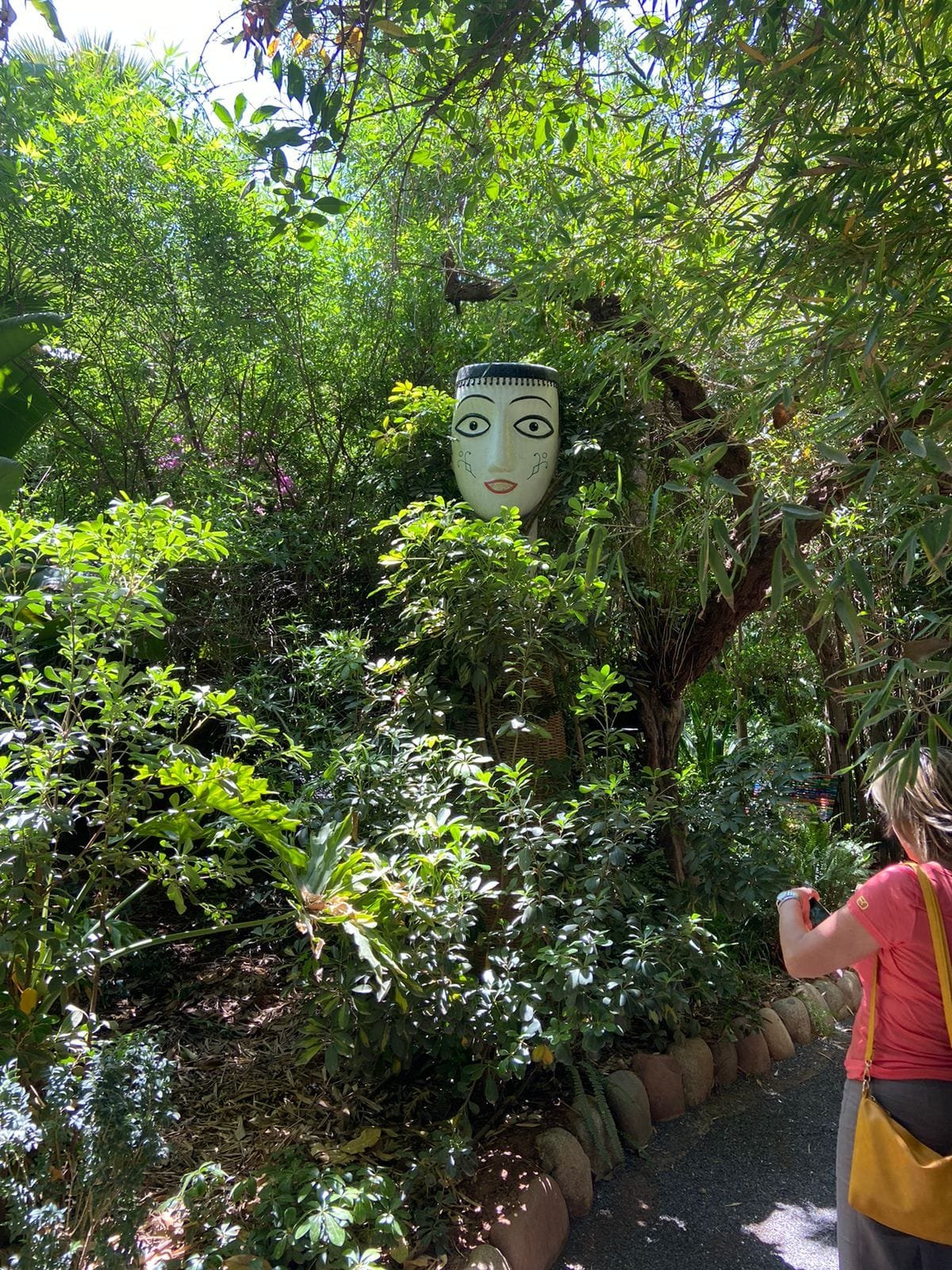
In the midst of this exuberant nature, the artworks appear. This is the whole singularity of Anima Garden: the sculptures are not lined up along an exhibition route, they are scattered, sometimes half-hidden, and you stumble upon them at the turn of a path. Some are monumental and command attention, others are discreet and reward the attentive eye. You will find giant faces, colourful shapes, whimsical characters, totems and installations that play with perspective. The aesthetic swings between pop, surrealist and naïve, in a joyful mix of references.
The garden openly embraces its dialogue with the great names of modern and contemporary art. You sense echoes of Keith Haring’s world, with its dynamic figures and bold colours, or nods to the spirit of Picasso and other twentieth-century masters. These references are not mere copies: they are reinterpreted, staged within the landscape, integrated into the vegetation so as to create a conversation between art and nature. The knowledgeable visitor will enjoy recognising these influences, while the newcomer will simply let themselves be carried along by the beauty and strangeness of the forms.
Pavilions and covered spaces dot the route, offering shady areas and resting points. There is also a room that showcases works and pays tribute to the creator’s painter friend. These interiors extend the experience and let you discover a more pictorial side of André Heller’s approach. Take the time to step inside: they provide a welcome breather during the walk and reveal details you would miss if you stuck only to the main paths.
A final word on the light, which is perhaps the garden’s true star. Depending on the time of day, the colours of the sculptures and flowers change dramatically. In the morning, the light is soft and low; at midday, the tones explode under the sun; in the late afternoon, a more golden atmosphere envelops the whole. Photography enthusiasts will find an almost inexhaustible playground here, provided they contend with the crowds at peak times.
The Paul Bowles café and the atmosphere of the place
At the heart of the garden, the Paul Bowles café is an unmissable stop on the visit. Its name pays tribute to the American writer and composer who lived for many years in Morocco and helped make the country known through his books. The venue offers contemporary architecture, shaded spaces and reinterpreted Moroccan cuisine with a touch of international influence. You can pause for a mint tea, enjoy a pastry or sit down for a light lunch, taking in the view over the greenery and, in fine weather, the peaks of the Atlas.
This break is more than a convenience: it is an integral part of the Anima experience. After walking the paths and engaging your eye, it is pleasant to sit down, slow the pace and let the accumulated impressions settle. The café is conceived as an extension of the garden, with the same care given to aesthetics and atmosphere. Many visitors spend far more time there than planned, won over by the calm of the place.
The overall atmosphere of Anima Garden is markedly different from that of the city’s great historical gardens. Where the Marrakech Palm Grove evokes tradition and history, Anima cultivates a more intimate, contemplative and slightly offbeat mood. The pace is deliberately slow: you do not come here to tick a box on a list of monuments, but to let yourself be carried along, to marvel and disconnect. Many visitors leave with the feeling of having enjoyed a moment out of time, a bubble of poetry just a few kilometres from the buzz of the medina.
Where Anima Garden is and how to get there
Anima Garden is located about 27 kilometres south of Marrakech, on the Ourika road, in the Aghmat area, at the foot of the High Atlas. In practice, the journey from the city centre takes between thirty and forty-five minutes, depending on traffic and your starting point. The garden is therefore close enough for a half-day outing, yet far enough from the urban bustle to offer a genuine change of scene. Several options are available to reach the site.
The free shuttle from Marrakech
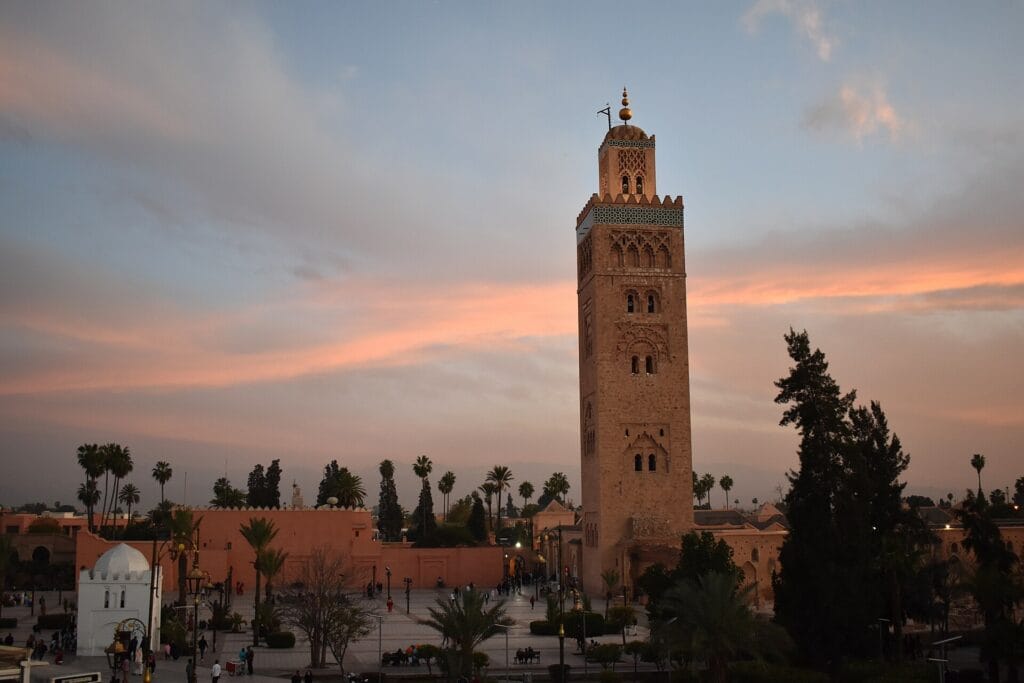
A welcome plus, the garden offers a free shuttle departing from Marrakech, which greatly simplifies logistics for travellers without a vehicle. The meeting point is usually near the Koutoubia, in the car park area behind the mosque. The shuttle generally runs twice a day, once in the morning (often around 9:30 a.m.) and once in the early afternoon (around 2:30 p.m.), with returns in the late morning and late afternoon. Exact times may vary by season: it is strongly advised to confirm them in advance and to arrive a little early, as places are limited.
By car or taxi
If you have a rental car, the route is straightforward: simply follow the Ourika road (route P2017) heading south. The drive is pleasant and the garden has a car park. This is the most flexible option, especially if you plan to continue with other stops in the valley. A grand taxi is another common solution: negotiate the price in advance, possibly for a round trip with waiting time. To fully understand the different transport options in the region, our dedicated guide on getting around Marrakech will help you make an informed choice.
On an organised excursion
Finally, some excursions combine a visit to the garden with other sites in the Ourika Valley. This turnkey option suits those who prefer not to deal with logistics and want to make the most of their day. Just make sure the time allotted on site is sufficient: Anima is best savoured unhurried, and a rushed forty-minute visit would miss the essentials.
Anima Garden opening hours and prices (for guidance)
The garden is open every day, with hours that vary slightly by season. In winter, roughly from 1 November to 15 April, it generally welcomes visitors from 9 a.m. to 5 p.m. In summer, from 16 April to 31 October, opening is extended until 6 p.m. to make the most of the longer days. The last entry is a little before closing time: plan to arrive at the latest an hour and a half to two hours before, so you have time to see everything without stress.
As for the budget, entry to Anima Garden is chargeable. As a guide, the adult ticket for foreign visitors is around 140 Moroccan dirhams (roughly 13 to 14 euros), with a reduced rate for residents and nationals, often around 60 dirhams. Children benefit from discounts: free entry for the youngest and half-price for teenagers, depending on the conditions in force. These amounts are given purely for guidance and may change; check the most recent information before you set off. Note that the shuttle is, in principle, free, which lightens the overall bill for those who use it.
- Hours (winter, approx. 1 Nov – 15 Apr): 9 a.m. – 5 p.m.
- Hours (summer, approx. 16 Apr – 31 Oct): 9 a.m. – 6 p.m.
- Adult ticket (foreigners): about 140 MAD (~€13–14), indicative.
- Residents / nationals rate: about 60 MAD, indicative.
- Children: free for the youngest, half-price for teenagers.
- Shuttle from Marrakech: in principle free, limited places.
How much time to set aside for the visit?
The right duration depends on your pace and your wishes, but reasonably allow between two and three hours to fully enjoy the garden. An hour is technically enough to do a quick loop, but that would be a shame: Anima is designed for wandering, and its magic lies precisely in taking it slow. Set aside time to sit down, observe the details, retrace your steps and let the surprises work their charm. Add a break at the Paul Bowles café, and you easily reach a well-filled half-day.
If you come by shuttle, your window will be partly determined by the return times, which naturally structures the visit. By car, you are freer to stay as long as you like. In any case, avoid squeezing Anima between two other tightly packed visits: this garden is best approached without a watch, like a breath of air in the middle of a stay often packed with discoveries. To plan all your days, our complete guide to things to do in Marrakech will help you balance cultural highlights with moments of relaxation.
Combining Anima with the Ourika Valley
One of the great advantages of Anima Garden is its position on the Ourika road, which makes it an ideal stop within a fuller day in the valley. Many visitors choose to start with the garden in the morning, when the light is soft and the crowds more moderate, before continuing towards the green landscapes of the Ourika. This combination lets you experience two complementary moods: the art and cultivated vegetation of Anima on one side, raw nature and the mountains on the other.
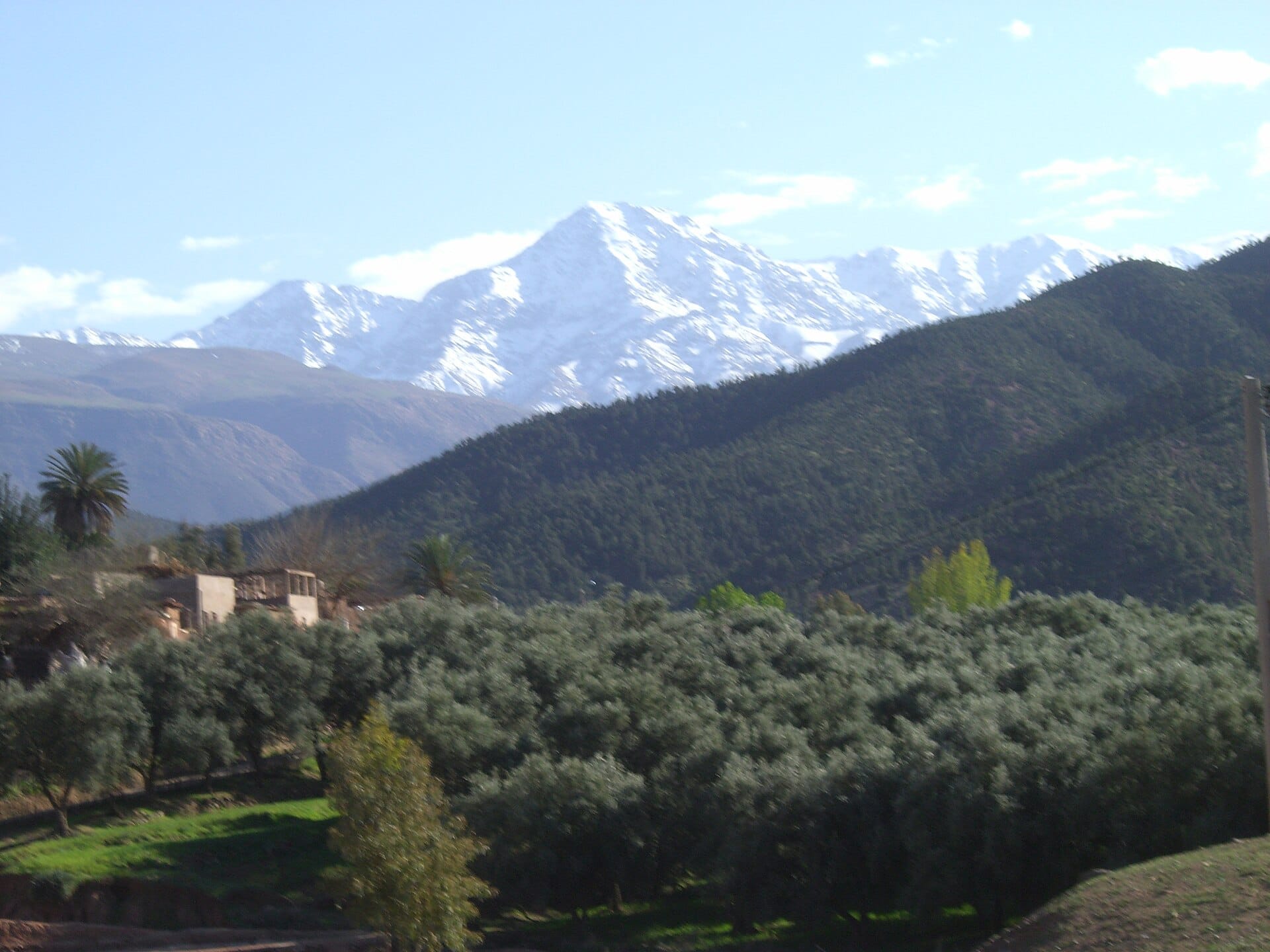
Continuing south, you will reach the village of Setti Fatma, renowned for its waterfalls and hiking trails in the heart of the Atlas. It is a lovely way to round off the artistic visit with an immersion in nature. Our dedicated article on the Setti Fatma waterfalls in the Ourika will give you all the keys to plan this part of the day. For an overview of the region, also check out our guide to the Ourika Valley.
Those looking for even more contrasting landscapes could consider, on another day, an escape to the Agafay desert, west of the city. Combining a lush art garden with vast desert expanses gives an idea of the incredible diversity of Marrakech’s surroundings. Each cardinal direction around the city holds its own world, and Anima is one of the most original gateways to this variety.
Is Anima Garden suitable for families?
Good news for parents: Anima lends itself very well to a family visit. Children are often captivated by the bright colours, the surprising shapes and the treasure-hunt feel of the sculptures hidden in the vegetation. Unlike a classic museum where you have to stay quiet and touch nothing, the garden invites movement, exploration and wonder, which suits the energy of younger visitors well. Looking for the next sculpture around a flower bed quickly becomes a game.
A few precautions are nonetheless in order. The paths are shaded in places but exposed in others: in strong heat, make sure children stay hydrated and protected from the sun. The pace of the visit should stay flexible, with breaks at the café to recharge. Finally, keep an eye on little ones near water features and artworks. Overall, Anima is one of the most family-friendly cultural outings around Marrakech. For more ideas for outings with children, our Marrakech with family guide is full of suggestions suited to all ages.
Visiting tips to make the most of the garden
To get the best from your time at Anima Garden, a few simple recommendations make all the difference. The first concerns timing: favour the morning or the late afternoon. At these moments, the light is more flattering, the heat more bearable and the crowds generally thinner. The middle of the day in summer can be trying, with the sun beating down hard on the garden’s open areas.
- Comfortable shoes: the garden is explored on foot along sometimes uneven paths; forget the heels and go for trainers or closed sandals.
- Protection from the heat: a hat, sunglasses, sunscreen and a bottle of water are essential, especially in summer.
- A charged camera or phone: the opportunities for spectacular shots are endless.
- Allow enough time: do not squeeze the visit between two tight appointments; the place deserves lingering over.
- Check the shuttle and hours: confirm the shuttle departures and the last entry time in advance.
- Season: spring and autumn offer an ideal climate; see our guide on the best time to visit Marrakech.
Also remember to bring a little cash for the café or any purchases on site, and to pack a light jumper in winter or early morning, as temperatures at the foot of the Atlas can be cool before the sun warms the valley. Finally, adopt the spirit of the place: do not try to see or understand everything. Anima is lived as much as it is visited. Let yourself be surprised, slow down, and the garden will gradually deliver its poetry.
Frequently asked questions about Anima Garden
Where exactly is Anima Garden?
Anima Garden is located about 27 km south of Marrakech, on the Ourika road (Aghmat area), at the foot of the High Atlas. Allow between thirty and forty-five minutes’ drive from the city centre depending on traffic.
Who created Anima Garden?
The garden is a creation of the Austrian artist André Heller, a figure of many talents (poet, visual artist, director). Anima opened to the public in 2016, after several years of preparation and acclimatising the vegetation.
How do you get to Anima Garden from Marrakech?
Three main options: the free shuttle departing from central Marrakech (Koutoubia area, generally with two departures a day and limited places), a car or grand taxi via the Ourika road, or an organised excursion combining several sites in the valley.
How much does entry to Anima Garden Marrakech cost?
As a guide, the adult ticket for foreign visitors is around 140 dirhams (about 13–14 euros), with a reduced rate of around 60 dirhams for residents and nationals. Children benefit from discounts. These prices may change: check the up-to-date information before your visit.
How much time should you set aside for the visit?
Allow two to three hours to wander at leisure, discover the sculptures and take a break at the Paul Bowles café. The garden is best savoured slowly; too quick a visit would miss its contemplative atmosphere.
Is Anima Garden suitable for children?
Yes, absolutely. The colours, playful shapes and hidden sculptures turn the visit into a treasure hunt that children love. Just take care with sun protection, hydration and keeping an eye on little ones near water features.
Images under free licence via Wikimedia Commons: © Zinelife05 (CC BY 4.0); © Tonkie (CC BY-SA 3.0). Sources: Wikimedia Commons.Photo credits: the images illustrating this article come from royalty-free image banks (Unsplash, Pexels) or from contributors under a Creative Commons licence. They are used purely for illustrative purposes and do not necessarily depict the exact places described.